



Login
Get Instant Pricing On 23,000+ Aircraft

>

Choosing the right jet method can mean the difference between overpaying for idle assets and flying smarter on every trip. In private aviation, "jet methods" describes the range of service models travelers use to access private flights—on-demand charter, memberships, jet cards, fractional shares, co-ownership, and full aircraft ownership. Each comes with its own cost structure, level of flexibility, and operational responsibility. This guide breaks down how each jet method works, what it costs, and how to match the right approach to real travel needs.
The term "jet method" represents distinct techniques depending on context. In engineering, a jet is a high-velocity stream of fluid or gas used in applications from cooling systems to manufacturing. Jet grouting is a soil-improvement technique that uses high-velocity jets of grout to stabilize ground. In high-energy physics, a "jet" is a cone of particles produced from quark or gluon hadronization, and the jet method in physics uses algorithms to reconstruct jets from particle collisions. The physics jet method also analyzes jets for applications in cooling and manufacturing processes. Jet milling reduces materials to ultra-fine powders using high-speed gas streams.
Even in mathematics, a jet is a coordinate-free representation of Taylor polynomial expansion, and mathematical jet methods capture information about a function and its derivatives. Jet methods in numerical analysis solve partial differential equations using derivative information. The JET method can also refer to specialized frameworks used in project management, where the JET approach emphasizes speed and agility in problem solving. Civilians use the JET method in problem-solving to streamline operations and enhance results.
But in aviation—the focus of this article—jet methods are the practical approaches people use to get airborne on private aircraft. Here is what that landscape looks like:
Common Jet Methods in Private Aviation:
On-demand charter: Book a single flight with no long-term commitment.
Membership or subscription: Pay a recurring fee for preferred rates and priority access.
Jet cards: Pre-purchase a block of flight hours at fixed rates.
Fractional ownership: Buy a share of a specific aircraft for guaranteed annual hours.
Full aircraft ownership: Purchase and operate a jet outright.
Co-ownership: Split ownership among a small group with shared scheduling.
Some operators specialize in one or two of these models. Jet Methods Inc., for example, is a Carlsbad, CA-based operator led by Jon Lash that has offered private aircraft charter services since 2003, serving clients in San Diego, Los Angeles, and Palm Springs from its base near Palomar Airport. Jet Methods offers access to 8,000+ aircraft with detailed information and operates its own curated fleet.
Jettly takes a different approach as a digital marketplace. Rather than owning and operating aircraft, Jettly offers access to over 20,000 unique aircraft across approximately 4,500 operators in roughly 190 countries. That global scale means customers can compare multiple jet methods—charter, membership, or beyond—through a single platform, with transparent pricing on every option.
The rest of this article walks through how each jet method works, what aircraft management looks like behind the scenes, and how to pick the model that matches a traveler's routes, budget, and flight hours per year. Common use cases include frequent flights between Los Angeles and San Diego, weekend trips from Orange County to Las Vegas, cross-country hops from New York to Miami, and business commutes on the Toronto–Vancouver corridor, all easily mapped and planned with Jettly's airport locator and booking platform.
Travelers generally choose between flexible access models (charter, memberships, jet cards) and more committed models (fractional and full aircraft ownership). The right pick depends on how many hours someone flies per year, how predictable their routes are, and how much operational responsibility they want to take on.
Here is how each major jet method breaks down.
On-demand charter is the simplest entry point into private aviation. Customers book individual flights as needed, pay per trip, and walk away with zero long-term obligation. Digital booking allows on-demand private jet rentals, and platforms like Jettly provide instant pricing for private charter aircraft so travelers know what a trip costs before they commit.
Private jet charters provide flexibility for business and leisure travel. A user selects a route, date, and aircraft category—and receives a quote covering billable flight hours, fuel surcharges, landing fees, crew costs, and applicable taxes, with Jettly offering tools to understand affordable private jet charter pricing in detail.
Typical hourly rates through Jettly in 2026:
Turboprops: ~$1,800–$2,800/hr
Very Light Jets: ~$2,000–$3,500/hr
Light Jets: ~$2,800–$4,500/hr
Midsize / Super-Midsize: ~$4,000–$8,000/hr
Heavy / Ultra-Long-Range: ~$8,000–$15,000+/hr
On-demand charter makes the most sense for travelers logging roughly 10–50 flight hours per year with irregular routes—say, San Diego to Aspen one week and New York to Nassau the next. The trade-off is that per-hour costs are higher than ownership models, and last-minute availability can be limited during peak travel seasons.
For a step-by-step walkthrough, Jettly's guide on how to charter a private jet covers the booking process in detail.
Membership or subscription models sit between pure on-demand charter and prepaid jet cards. Members pay a recurring fee—monthly or annual—to unlock preferred hourly rates, priority booking, and sometimes capped surcharges. Unlike jet cards, members do not pre-buy hours or own any share of an aircraft.
Jettly's own membership program (Flyt by Jettly) follows this structure. Subscribers choose an aircraft category and gain access to better rates and booking infrastructure without locking capital into a block of hours.
Ideal profiles for membership-based jet methods include travelers who also want to benchmark their options using tools like Jettly's jet card flight cost estimator:
Regional business travelers flying 25–100 hours annually on routes like San Diego–San Francisco or Dallas–Houston.
Families doing recurring leisure trips—Los Angeles to Cabo, Toronto to Montreal, or London to Nice—who want rate stability without upfront deposits.
Digital booking enhances flexibility for private jet travelers in this model because they retain the freedom to fly when and where they want, while paying less per hour than pure on-demand customers.
A jet card is a pre-purchase of a block of flight hours at a fixed hourly rate. Cards typically require a minimum commitment—often 25 hours—and may include monthly management fees. In return, cardholders get rate certainty and, in many programs, guaranteed aircraft availability within a specified booking window.
Deposits for jet cards generally fall between $190,000 and $500,000 depending on hours and aircraft category, with all-in hourly costs ranging from roughly $7,000 to $16,500 depending on the class of aircraft and demand period. For a deeper breakdown, see Jettly's jet card pricing guide and comprehensive overview of jet card costs and pricing structures.
Jet cards work well for travelers flying 25–75 hours per year who value predictability, and Jettly's own jet card program for private travel is designed around fixed hourly rates and broad fleet access. However, unused hours can represent wasted capital, and some programs impose blackout dates or peak-day surcharges. At the upper end of the hour range, total annual costs begin to rival entry-level fractional ownership—making it worth running the numbers before committing.
Digital booking eliminates the need for traditional jet cards for some travelers, since membership and on-demand models can now deliver comparable rate stability through platforms like Jettly without requiring large upfront deposits.
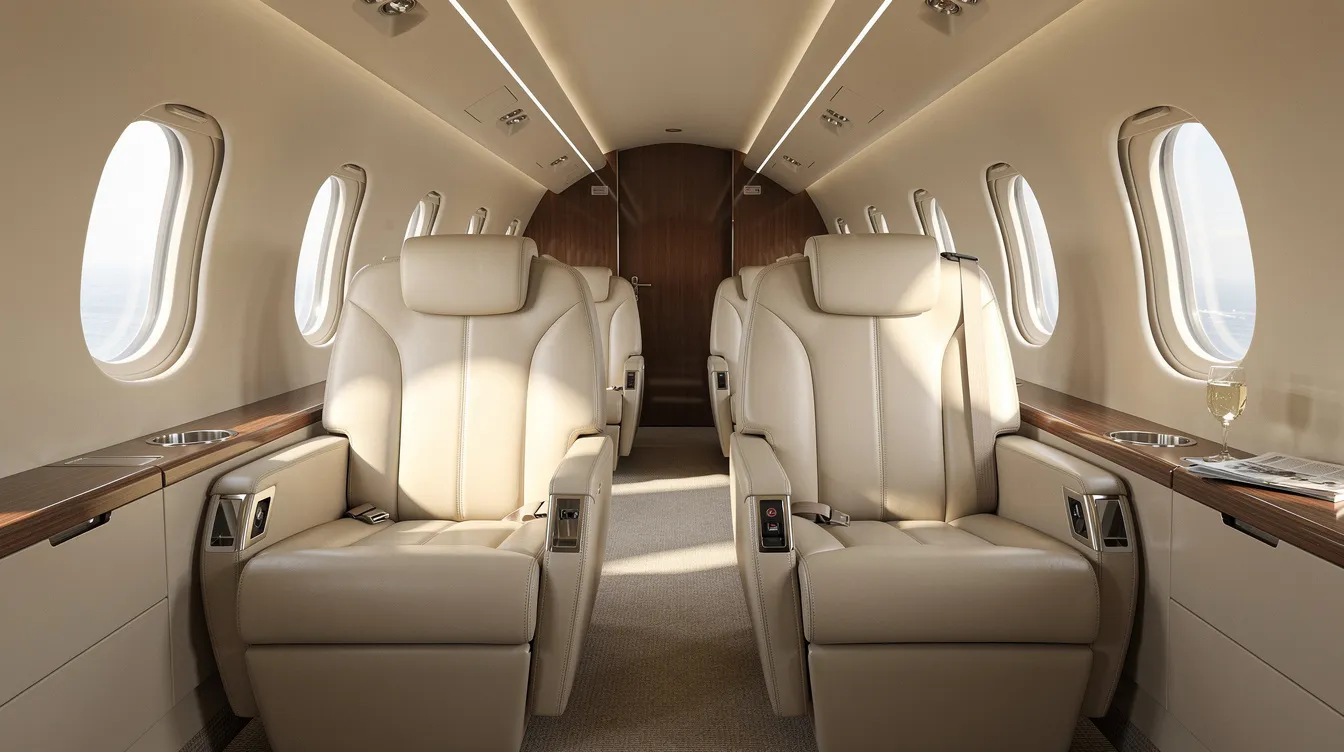
Fractional ownership means buying a share—typically 1/16 or 1/8—of a specific aircraft through providers such as NetJets or Flexjet. Owners receive a guaranteed number of annual flight hours corresponding to their share, and the provider handles crew, maintenance, scheduling, and insurance, following the basic fractional jet ownership model.
Fractional programs generally involve several distinct cost components that are explored in Jettly's analysis of fractional jet ownership costs:
An upfront equity purchase for the share.
A monthly management fee covering fixed costs.
A per-hour occupied flight charge for variable costs.
Multi-year contracts (usually 3–5 years).
This jet method can be cost-effective for 100–200 hours of flying per year, especially on predictable city pairs such as New York–Miami or Dallas–Aspen. According to NBAA data, fractional share or lease usage grew from about 5% of surveyed operators in 2021 to roughly 20% by 2023—a sign that more travelers see value in shared aircraft ownership and are comparing top fractional jet ownership companies to find the right fit.
The downsides: capital is tied to a depreciating asset, exit strategies must be planned, and scheduling conflicts with other share owners can limit flexibility. For a full comparison, Jettly published a detailed look at fractional share vs. whole aircraft ownership.
Outright aircraft ownership means purchasing a jet—new or pre-owned—and taking on all fixed and variable operating costs: hangar fees, crew salaries, insurance, maintenance reserves, regulatory compliance, and depreciation.
Common aircraft in private ownership fleets include the Embraer Phenom 300E (light jet), Bombardier Challenger 605 (super-midsize), and Gulfstream G450 (heavy). Acquisition costs range from roughly $2–$12 million for a light jet to $30–$55 million for a heavy or ultra-long-range aircraft.
Annual fixed costs alone—before a single hour is flown—run approximately $450,000 for a light jet and $800,000+ for a super-midsize. When variable costs (fuel, hourly maintenance, landing fees) are layered in, ownership only becomes cost-competitive above roughly 200–300 flight hours per year.
Full ownership is usually suited for organizations or individuals flying 300+ hours annually or needing specialized configurations such as corporate shuttles, medical evacuation setups, or custom cabin interiors. For a detailed cost analysis, see Jettly's guide on the real cost of aircraft ownership alongside its breakdown of private jet operating costs.
Co-ownership is a more flexible variant of fractional ownership. A small group—typically two to four parties—jointly purchases an aircraft, divides usage hours, and sets up scheduling agreements. Many co-owners outsource aircraft management to a professional firm or list idle hours for charter through a marketplace like Jettly to offset operating costs.
Practical scheduling often looks like this: one owner focuses on weekday business travel (Monday–Friday departures from Orange County to Phoenix or San Diego to Denver), while a partner owner uses the aircraft on weekends for leisure routes (Carlsbad to Cabo or Palomar Airport to Palm Springs). A shared calendar, clear priority rules, and a management company that mediates conflicts are essential to making the arrangement work.
For more on how shared aircraft ownership structures compare, Jettly's resource center covers legal, financial, and scheduling considerations, including a candid look at fractional private jet ownership pros and cons.
Throughout all six jet methods, three dimensions consistently drive the decision:
|
Dimension |
Charter / Membership |
Jet Card |
Fractional |
Full Ownership |
|---|---|---|---|---|
|
Cost structure |
Mostly variable |
Fixed hourly, some variable |
Mixed fixed + variable |
Mostly fixed |
|
Flexibility |
High (any route, any time) |
Moderate (notice windows) |
Moderate (shared scheduling) |
Highest (your aircraft) |
|
Operational responsibility |
None (operator handles all) |
Minimal |
Provider manages |
Owner manages or outsources |
Aircraft management is the backbone of every jet method that involves owning, co-owning, or regularly using a specific aircraft. Many owners partner with professional management companies or digital platforms rather than building in-house teams—and the quality of that management directly affects safety, cost control, and the overall journey experience.
Professional aircraft management includes regulatory compliance (FAA Part 135 in the U.S. or equivalent abroad), pilot recruitment and training, maintenance tracking, and regular safety audits. Management practices vary by aircraft type and mission profile.
Consider the differences across a typical North American fleet:
A Phenom 100 (very light jet, 4 passengers) has lower maintenance costs and simpler crew requirements than a Challenger 605 (super-midsize, 10+ passengers) with more complex avionics and engine systems.
A Pilatus PC-12 NG turboprop is often the most economical choice for short regional hops under two hours, with lower fuel burn and the ability to operate from shorter runways.
Jet Methods Inc operates a fleet including 8 unique aircraft. The fleet includes 3 Embraer Phenom 100 jets, 1 Bombardier Challenger 605, and 1 Pilatus PC12NG turboprop aircraft. Charter services are available at Carlsbad and Orange County airports, giving Southern California travelers convenient access without driving to LAX.
Jettly, as a broker marketplace, only connects customers with licensed air carriers or operators that meet national safety and maintenance standards. Travelers can filter by safety ratings (ARGUS, IS-BAO, Wyvern) when browsing aircraft, making the selection process safer and more transparent. For guidance on evaluating management partners, Jettly's article on the best private jet management company is a useful starting point.
Management companies or digital platforms support aircraft owners with budgeting, fuel procurement, crew payroll, insurance placement, and annual operating cost forecasts. This administrative layer is critical—without it, owners risk cost overruns and compliance gaps.
Indicative annual cost ranges illustrate the scale:
|
Aircraft Class |
Annual Fixed Costs |
Variable Cost per Hour |
Total at 100 hrs/yr |
Total at 200 hrs/yr |
|---|---|---|---|---|
|
Light Jet (e.g., Phenom 300E) |
~$450,000 |
~$1,800/hr |
~$630,000 |
~$810,000 |
|
Super-Midsize (e.g., Challenger 605) |
~$800,000 |
~$3,600/hr |
~$1,160,000 |
~$1,520,000 |
As utilization increases, the fixed cost per hour drops sharply—which is why ownership economics only work at higher annual flight hours.

Some aircraft owners list their jets for charter through platforms like Jettly when the aircraft would otherwise sit idle, turning downtime into revenue and offsetting operating expenses by crowdsourcing private jet flights and sharing empty seats.
Example scenario: a Southern California-based owner in Carlsbad or Orange County places a Phenom 300E on charter to serve routes such as Carlsbad to Las Vegas, Carlsbad to San Jose, or Orange County to Scottsdale. Revenue from these flights can meaningfully reduce the net annual cost of ownership, though owners must ensure the aircraft is certified and insured for charter operations under the relevant regulatory framework.
Digital platforms centralize trip requests, instant pricing, crew scheduling, flight tracking, and customer communication in one interface. Over 23,465 unique private aircraft are available worldwide through digital booking, reflecting broader trends in the global private jet fleet, and digital booking offers access to over 23,465 unique aircraft with instant pricing capabilities.
Travelers can compare multiple aircraft types and operators for a given route—say, San Diego to Palm Springs or Los Angeles to Jackson Hole—the same way they might compare commercial flights on a consumer travel site. Jettly's Smart Match feature uses AI to ingest a user's preferences (route, budget, aircraft category) and return a shortlist of vetted, priced aircraft within 24 hours, compressing what historically took three to five days of manual sourcing. Instant pricing is a key feature of Jettly's digital platform, and it removes much of the friction that once made chartering feel opaque.
Customers can also reach Jettly's support team by email or through the platform's messaging tools to coordinate complex itineraries or multi-leg trips, including arranging tailored in-flight catering for private jets when required.
Efficient aircraft selection and route planning can reduce fuel burn and emissions significantly. Choosing a turboprop like the Pilatus PC-12 NG for a 45-minute hop from Palomar Airport to Palm Springs instead of positioning a heavy jet saves fuel, cost, and carbon.
Some operators and platforms offer carbon offsetting or sustainable aviation fuel (SAF) options. For corporate travelers with ESG reporting requirements, these options are becoming an important factor in selecting both the jet method and the specific operator, especially as they compare a broad list of private charter airlines and operators.
The takeaway: the right combination of jet methods and aircraft management determines the overall experience, cost, and safety for both occasional charter clients and long-term aircraft owners. A well-managed aircraft makes every private journey more enjoyable and more efficient.
There is no single "best" jet method. The right choice depends on flight hours per year, typical routes, budget, and appetite for the responsibilities of aircraft ownership.
Here is a simple decision framework:
Fewer than 25 hours/year: On-demand charter through Jettly. Minimal commitment, maximum route flexibility.
25–100 hours/year: Charter plus a membership (like Flyt by Jettly) for better rates and priority access.
100–200 hours/year: Evaluate jet cards or fractional ownership. Run the numbers against charter costs for specific routes. Jettly's charter cost estimator can help with the comparison.
200–300+ hours/year: Full aircraft ownership with professional aircraft management support becomes cost-competitive—if routes are consistent and the owner is ready for the fixed-cost commitment.
Real-World Use Cases
A San Diego-based executive traveling twice monthly to San Francisco logs roughly 30–40 hours per year. On-demand charter is likely the most cost-effective option, with a membership upgrade delivering modest savings and priority booking during busy travel windows.
A family flying Los Angeles to Maui every school holiday and occasional weekend trips to Cabo might total 35–50 hours annually. A membership or jet card begins to deliver meaningful rate stability, especially for longer over-water legs that require midsize or super-midsize aircraft.
A Toronto business team commuting to New York and Chicago weekly could easily exceed 150 hours per year. At that volume, fractional ownership or a cloud-fraction program starts to outperform charter and jet cards on total cost—while still avoiding the full burden of outright ownership, particularly when using a NetJets alternative like Jettly that offers flexible access without long-term lock-in.
Why Jettly Fits Across the Spectrum
Jettly serves business and leisure travelers seeking cost transparency across all of these scenarios. Transparent pricing models enhance customer flexibility, and the platform's global inventory of 20,000+ unique aircraft means travelers are not locked into a single fleet or operator. Instant pricing allows for on-demand private jet rental without waiting days for quotes, which can be compared against other affordable aircraft rental options. And for those who want structured access without the capital outlay of a jet card, Jettly's membership options provide a middle path.

Understanding jet methods—from flexible on-demand charter through smart aircraft management to thoughtful aircraft ownership planning—helps travelers make decisions that are safer, more cost-effective, and better aligned with how they actually fly. Resources that explain how much a private jet really costs provide important context here. Whether someone needs a turboprop for a quick hop from Carlsbad to Las Vegas or an ultra-long-range jet for transatlantic travel, the right jet method turns every private flight from a transaction into a well-planned journey.
On-demand charter allows booking individual flights with no long-term commitment, paying per trip. Jet cards require pre-purchasing a block of flight hours at fixed rates, offering rate certainty and sometimes guaranteed availability.
Jettly provides instant pricing, access to over 20,000 unique aircraft worldwide, and transparent cost comparisons. This digital approach eliminates traditional barriers like jet card deposits and long quote wait times.
Fractional ownership suits travelers flying 100–200 hours annually on predictable routes who want guaranteed access to a specific aircraft without full ownership responsibilities.
Yes, many operators and platforms, including those accessible through Jettly, offer carbon offsetting and sustainable aviation fuel options to reduce environmental footprints.
Turboprops like the Pilatus PC-12 NG are economical and efficient for short hops under two hours, especially when operating from smaller airports with shorter runways.
Co-ownership involves a small group sharing an aircraft with flexible scheduling agreements, often outsourcing management, while fractional ownership is typically managed by a provider with fixed shares and usage hours.
Consider your annual flight hours, route predictability, budget, and willingness to manage operational responsibilities. Jettly's resources and tools can help analyze these factors to find the best fit.
Choosing the right jet method is essential for optimizing private aviation travel. Whether opting for flexible on-demand charter, membership programs, prepaid jet cards, fractional ownership, or full aircraft ownership, each approach offers distinct advantages tailored to different travel frequencies, budgets, and operational preferences. Platforms like Jettly simplify this decision by providing transparent pricing, instant digital booking, and access to a vast global fleet, making private jet travel more accessible and convenient than ever.
By understanding the costs, benefits, and responsibilities associated with each jet method, travelers can select the solution that best fits their unique needs—whether it’s a quick regional trip, a business commute, or a long-haul flight. With professional aircraft management and technology-driven booking tools, private aviation becomes a seamless, efficient experience.
Ready to compare jet methods for your specific routes? Explore aircraft options, get instant quotes, and find the right fit at https://www.jettly.com. If you also serve clients who might benefit from private aviation, Jettly's ULTRA high-ticket affiliate program offers a way to earn by referring travelers to these services.
Share this post:
Jeff Ryan Serevilla
Oct 22, 2026
|
5
min read
Discover tips and trends in the industry.

5
min read
Zimex Aviation: Specialist Missions, Fleet, and Career Opportunities
Zimex Aviation, established in 1969, specializes in flying to remote and challenging environments where conventional airlines often cannot operate. With a diverse fleet of turboprop aircraft, Zimex provides essential services such as oil and gas logistics, humanitarian airlift, and express cargo. The company emphasizes safety and operational excellence, making it a key player in the global logistics and humanitarian support sectors.
Read More
5
min read
Air X: Private Aviation, Diversified Fleets, and Jet Support Explained
Air X represents a category of private jet charter operators known for their diversified fleets and integrated jet support, ensuring flexibility and safety. With over 7,050 flights in 2023, AirX Charter exemplifies excellence in private aviation, catering to corporate executives and high-net-worth individuals. Digital platforms like Jettly enhance access to these services, allowing travelers to book tailored flights effortlessly.
Read MoreStay updated with our latest insights and tips to elevate your journey with us.
MEMBERSHIPS AND ASSOCIATIONS



Disclaimer: Jettly operates as a charter broker, offering access to a global digital jet charter marketplace. Jettly is not a direct air carrier and does not own or operate aircraft. All advertised flights are conducted by third-party air carriers that are fully licensed and hold the appropriate Part 135 or Part 121 certifications issued by the Federal Aviation Administration (FAA) or equivalent regulatory authorities under U.S. or foreign law. Jettly complies fully with the U.S. Department of Transportation's Part 295 and Part 298 Charter Broker regulations. Jettly does not carry additional liability insurance. Passengers are covered by aircraft operator insurance. TICO: 50023770


