


Login
Get Instant Pricing On 23,000+ Aircraft

>
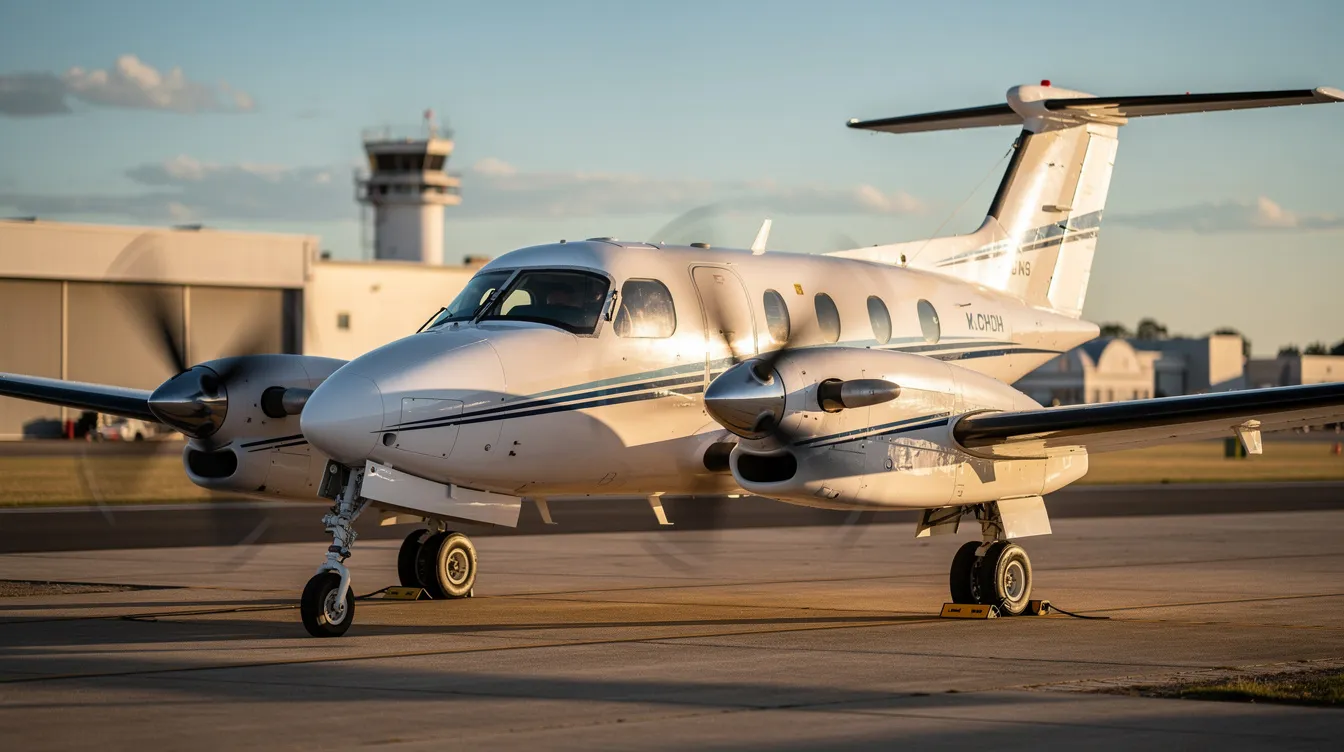
This guide provides a comprehensive overview of the Beechcraft King Air 250, covering its performance, cabin features, operating costs, and charter options. It is designed for travelers, charter clients, and aviation enthusiasts seeking detailed information on this versatile and cost-effective turboprop. The King Air 250 is a popular choice for regional travel due to its flexibility, comfort, and efficiency.
The King Air 250 is a twin-engine turboprop built for regional private travel, corporate transportation, and flexible charter missions. The Beechcraft King Air 250 offers up to 1,720 nautical miles of maximum range, seating for 6–9 passengers, and strong short-field performance for shorter runways.
Maximum cruise speed: 310 knots
Service ceiling: 35,000 feet
Practical charter range: About 1,051–1,400 nm
Maximum range: 1,720 nautical miles (depending on conditions)
Chartering a King Air 250 through Jettly avoids $1M+ annual ownership costs and a typical $3.5M–$6.8M purchase commitment.
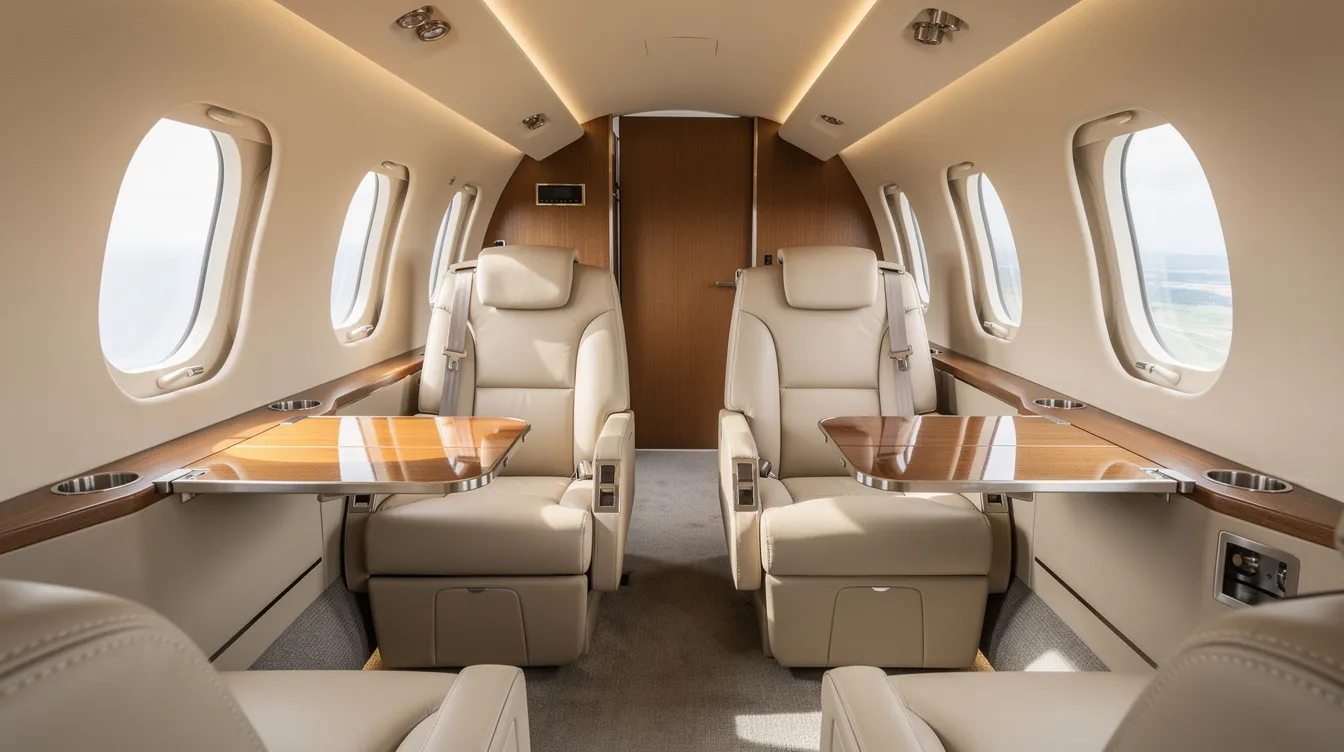
The cabin usually seats 6 in a club layout, with capacity up to nine passengers in some interiors, plus leather seating, fold-out tables, and in-flight baggage access.
Jettly users can compare King Air 250 and King Air 260 charter options and request instant pricing at https://www.jettly.com.
The King Air 250 is part of the Beechcraft King Air 200 series, a rugged twin turboprop used for business, charter, government, and special missions since FAA certification in 2011. The aircraft is popular for corporate transportation and private charter due to its efficiency and comfort, and Beechcraft is the manufacturing company behind the model.
It is powered by two Pratt & Whitney PT6A-52 engines, rated at about 850 shp each. The powerplant is often described in listings as Pratt Whitney Canada PT6A family hardware or Whitney Canada PT6A-52 engines. These powerful engines give the airplane a cruise speed near 310 KTAS, or about 574 km/h.
The King Air 250 has a maximum takeoff weight of 12,500 lb and can fly distances up to 1,720 nautical miles in ideal long-range conditions. In real charter use, range is usually lower once fuel, passengers, baggage, weather, and reserves are combined, which is why many travelers compare it against other cross-country aircraft options when planning long missions. The aircraft carries a full fuel capacity that supports its maximum range capabilities.
Its reputation comes from reliability, runway accessibility, and cost efficiency compared to jets. It can use smaller, more remote airports that many light jets cannot reach, and its rugged versatility allows it to handle both paved and unpaved runways when approved by the operator.
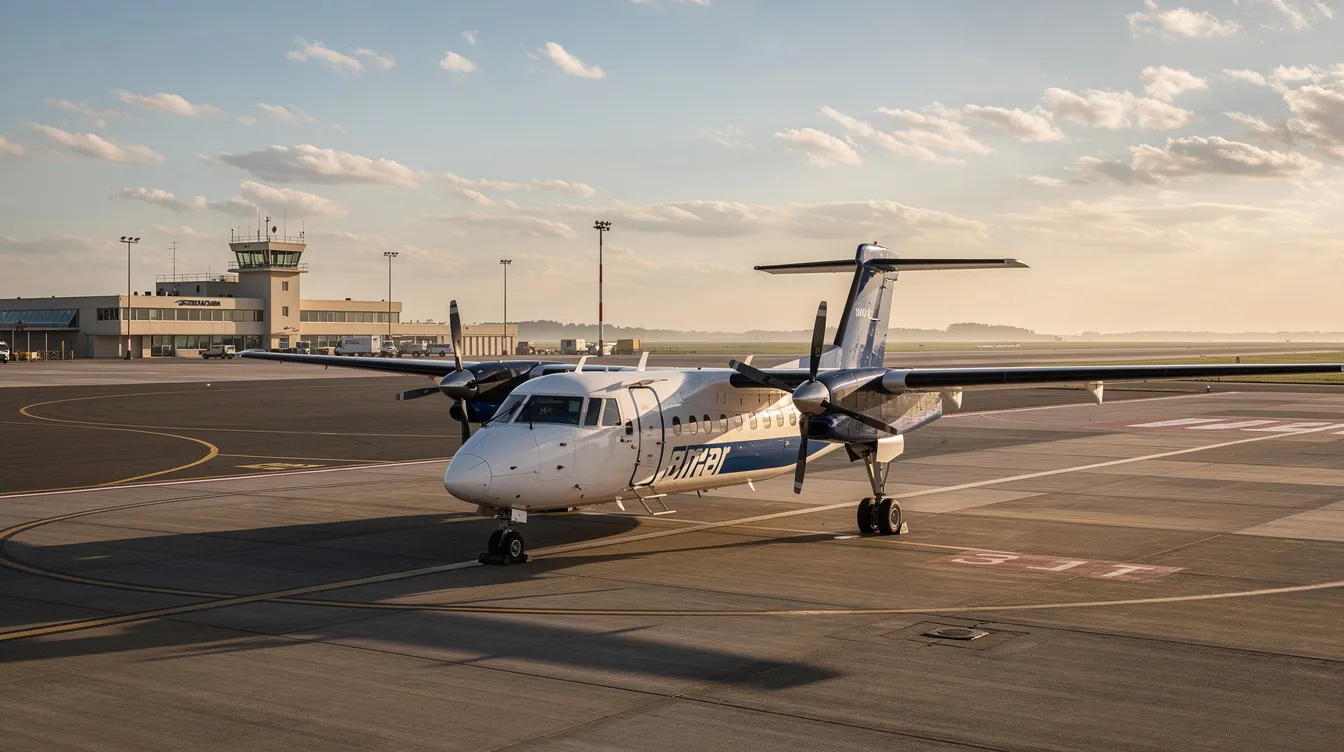
The Beechcraft King line began with the King Air 200 family in the 1970s and developed through upgrades in engines, avionics, cabin comfort, and operating efficiency, with later versions adopting more powerful engines as part of the series’ evolution. Hawker Beechcraft, later under Textron Aviation, refined the platform rather than replacing it.
The B200GT received FAA approval on 16 November 2007. The King Air 250 was unveiled around 2010 and certified on 9 June 2011. When Hawker Beechcraft announced the model, it was initially marketed as a smarter evolution of the B200GT for operators needing better short-field and hot-and-high performance.
The Air 250 entered production with composite propellers, BLR winglets, and aerodynamic improvements. Production continued through the 2010s before the King Air 260 replaced it in 2021 with updates such as ThrustSense autothrottle and improved pilot workload management.
At a high level, the B200GT, 250, and King Air 260 share the same basic airframe and engine family. The differences are mainly in avionics, systems, cabin finish, and incremental efficiency.
The King Air 250 cabin is sized for efficient short- and mid-range charters of about 2–4 hours. Cabin length is 16 ft 8 in, with about 4 ft 9 in of height and 4 ft 6 in of width.
Most charter layouts seat six passengers in comfort, often with a four-seat club and two forward-facing seats. The King Air 250 seats up to nine passengers in higher-density configurations, sometimes using a side-facing seat or semi-enclosed lavatory seat. In commuter category layouts, exact occupancy depends on certification and operator rules.
The interior typically includes leather executive seats, two stow-away work tables, cabin lighting, USB or power outlets on later refurbishments, and electronically dimmable windows or tinted windows on some examples, creating a complete executive space for typical regional charter use. The wingspan is roughly 57 ft, helping balance stability with airport flexibility.
Baggage capacity is about 55.3 cubic feet and roughly 550 lb. The heated, pressurized baggage area is accessible in flight, which helps passengers carry skis, golf bags, samples, or business equipment without waiting on the ground.
The King Air 250 features Collins Pro Line Fusion avionics on later examples, while earlier aircraft may have Pro Line 21. It includes large touchscreen displays for enhanced situational awareness, and the avionics suite supports single-pilot operations, although most charter operators use two pilots.
The Collins Pro Line Fusion avionics suite includes three large displays, synthetic vision, weather tracking capabilities, graphical planning, and electronic checklists. The King Air 250 includes an automated flight guidance system, dual FMS, advanced autopilot functions, and engine monitoring in the cockpit.
Safety equipment can include integrated terrain awareness, a Terrain Awareness and Warning System, traffic alert functions, TCAS, weather radar, and a warning system for crew alerts. On Jettly, operators are expected to follow applicable charter regulations, such as FAA Part 135 or equivalent rules, and travelers can verify operator credentials before booking.
The King Air 250 is ideal for short- and mid-range charters because it combines speed, range, runway flexibility, and lower operating costs than many jets. Its maximum cruise speed is about 310 KTAS, with long-range cruise slightly lower for better fuel economy. The service ceiling is 35,000 ft.
Performance is a core strength. Takeoff and landing distances are as follows:
Takeoff distance: About 2,111 ft over a 50-ft obstacle in standard conditions
Landing distance: About 2,845 ft
This short-field performance allows operation from shorter runways and makes the aircraft capable of accessing smaller, more remote airports that jets cannot reach, especially when paired with tools like Jettly’s airport locator for private flights.
Typical Jettly-style routes include New York to Chicago, Dallas to Denver, Toronto to Halifax, and London to Madrid, subject to payload and weather, with popular city pairs also including hubs like Houston private jet charter routes. A light jet may be faster, but the King Air 250 can reduce ground travel time by using airports closer to the final destination.
|
Metric |
King Air 250 figure |
|---|---|
|
Maximum cruise speed |
310 knots |
|
Maximum range |
1,720 nautical miles |
|
Service ceiling |
35,000 feet |
|
Maximum takeoff weight |
12,500 lb |
|
Typical passengers |
6, up to 9 |
Annual operating cost: $1,062,863 (based on a 300-hour ownership model; can exceed $1M with crew, hangar, insurance, maintenance, fuel, and training)
Direct operating costs: $1,300–$1,500 per hour (depending on fuel price, maintenance program, utilization, and airport fees)
These figures are intended as a general ownership overview and can vary by utilization and market conditions, and they also illustrate why Jettly’s high-ticket affiliate program for private aviation emphasizes the value of referring charter clients instead of owning an aircraft outright.
Charter rates for King Air 250 vary by journey length, positioning, airport charges, and operator availability, and travelers can approximate trip pricing in advance using Jettly’s private jet charter cost estimator tool.
Used King Air 250 price range: $3.5 million to $5.5 million (mid-2020s transactions; varies with avionics, maintenance status, and interior condition)
Broader private jet charter cost guides can help frame where turboprops like the 250 fit versus light jets.
First pair of engine overhauls: $500,000–$550,000
Second engine overhauls: $800,000–$1.2 million
Jettly customers avoid capital expenditure, depreciation, and fixed ownership costs by booking on demand or through private jet membership plans.
The King Air 250 sits between the B200GT and the King Air 260. These Beech King models share twin PT6A-52 engines, similar cabin dimensions, and broadly similar speed and range.
The King Air 260 adds factory-standard Pro Line Fusion, ThrustSense autothrottle, updated environmental control, revised interior details, and newer cockpit refinements. It is a better fit for some operators, but the King Air 250 remains cost-effective for many charter missions and continues to sell well on the pre-owned market for suitable charter missions, much like the related King Air 200 charter aircraft that many operators also deploy.
Compared with larger Super King Air 300/350 aircraft, the 250 has less cabin length and fewer seats, but it usually costs less to operate. For 4–6 passengers, moderate baggage, and limited runway length, the 250 is often the smarter charter choice.
Jettly is a digital private aviation platform that gives travelers on-demand access to King Air 250 turboprops and other private charter aircraft worldwide. The digital platform for charter services enhances flexibility and cost transparency for private jet travel without requiring jet cards, fractional ownership, or long-term contracts.
Users enter route and dates, compare the King Air 250 with other turboprops, midsize jets, and light jets, review flight times and pricing, then confirm digitally using either on-demand quotes or tools such as the private jet charter cost estimator or jet card flight cost estimator. Learn more about Jettly’s charter options at https://www.jettly.com.
The platform is useful for regional business trips, family weekends, cargo plus passenger flights, and urgent travel where airline schedules do not work. Jettly offers access to more than 20,000 aircraft across its global fleet, including turboprops and jets suited to different missions, working with vetted operators such as Dexter Air Taxi private jet services.
The King Air 250 performs best on regional sectors of 300–900 nm. Examples include New York Teterboro to Nashville, Los Angeles to Aspen, Toronto to New York, London to Geneva, and Sydney to Melbourne, subject to load, runway, fuel, and weather, with similar regional missions served by private jet charter in Kolkata and Eastern India.
For business flying, the cabin supports a morning departure, meetings in one or two cities, and a same-day return, similar to how regional travelers use private jet charter in New Delhi for dense business schedules. The club layout gives passengers space to work, speak privately, and use fold-out tables during the cruise.
For leisure, the aircraft fits ski trips, island golf weekends, and multi-stop regional tours, which can be further customized with services like Jettly’s in-flight catering platform.
The aircraft is utilized for government and special missions, including utility transport and medevac, and the aircraft can be equipped for air ambulance and evacuation missions in specialized fleets.

Travelers often compare the King Air 250 with Citation or Phenom light jets and turboprops such as the PC-12 or smaller King Air models, as well as large fractional providers like NetJets’ private aviation services. The 250 offers twin-engine redundancy, solid speed, and excellent runway accessibility.
Against jets, trade-offs are clear. A jet is usually faster and may have a quieter cabin, but the King Air 250 often has lower hourly cost, better fuel efficiency on short sectors, and more airport choices. Its design allows for better operating costs for short to medium-range flights compared to light jets, particularly when you compare on-demand models like Jettly as a NetJets alternative.
Compared with a single-engine turboprop, the King Air 250 offers two engines and a strong aviation industry track record for reliability. Choose it when the passenger number is 4–6, runway length is limited, and cost-efficiency matters more than absolute speed, especially if you prefer flexible marketplaces like instant-book private jet platforms over ownership or long-term commitments.
Turboprops like the King Air 250 can be more fuel efficient than comparable jets on short sectors, especially under 500–800 nm. Selecting the right aircraft size for the route and passenger count reduces unnecessary fuel burn, and broader overviews of private and charter airlines and aircraft types can help travelers understand where turboprops fit in the market.
Efficient routing, direct air traffic clearances, and using airports closer to the destination can also reduce ground transfers. Some operators on Jettly’s marketplace may offer carbon offset options or fuel-efficiency programs, which travelers can ask about at the quote stage, and others may enable crowdsourced and shared private flights to increase seat utilization and lower per-passenger emissions.
Most charter versions carry six passengers comfortably. Some configurations accommodate eight or up to nine occupants, including a belted lavatory or side-facing seat, depending on the specific aircraft and certification.
For most real-world charters, 800–1,200 nm is a practical planning range with passengers and baggage. The published maximum range is 1,720 nautical miles under ideal long-range conditions.
Yes. The King Air 250 is recognized for its ruggedness and versatility, with strong takeoff and landing numbers. Final suitability depends on runway length, elevation, temperature, surface condition, and operator performance calculations.
Ownership can require millions in acquisition cost plus more than $1M per year in fixed and variable expenses, which helps explain why some owners choose sales over continuing to operate an aircraft full-time. Charter customers pay for the flight and trip-related charges instead of carrying full ownership risk.
Visit https://www.jettly.com, enter the route, dates, and passenger count, then compare available King Air 250 options with other aircraft. Ready to experience private travel on your terms? Explore flights or request a quote at https://www.jettly.com.
The Beechcraft King Air 250 remains a versatile and efficient choice for regional private travel, offering a balance of speed, comfort, and operational flexibility. Its ability to access shorter runways and remote airports, combined with advanced avionics and a comfortable cabin, makes it well-suited for business, leisure, and special missions.
For travelers seeking cost-effective private aviation without the burdens of ownership, chartering a King Air 250 through Jettly provides transparent pricing, instant booking, and access to a global fleet of aircraft. Explore flight options or request a personalized quote at https://www.jettly.com to experience private travel on your terms.
Share this post:
Jay Franco Serevilla
Jun 14, 2026
|
5
min read
Discover tips and trends in the industry.
5
min read
Private Jet Makes: Key Manufacturers, Jet Types, and How to Choose the Right Aircraft
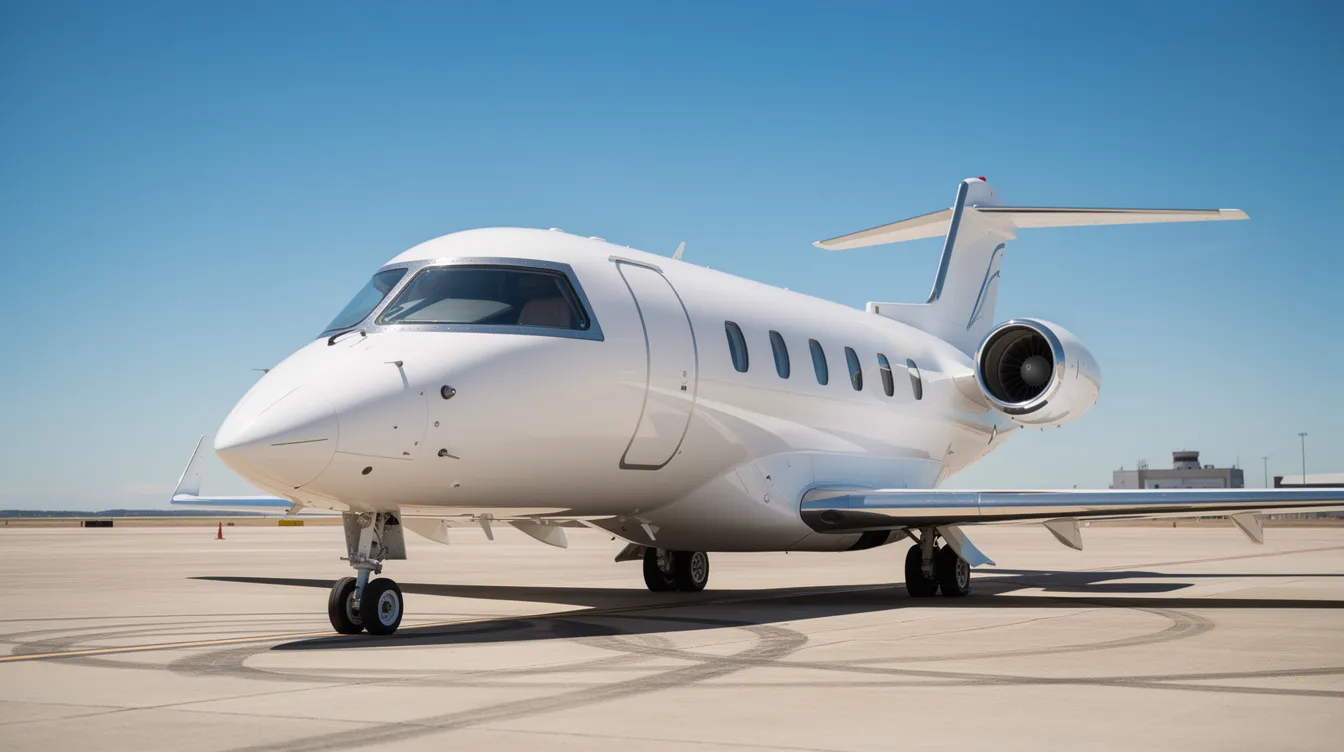
The private jet industry features various manufacturers, each with unique aircraft designed for specific missions. This guide provides insights into key brands, jet categories, and practical tips for selecting the right aircraft for your travel needs. Understanding these factors can enhance your private flying experience, whether for business or leisure.
Read More
5
min read
How to Fly Private: A Complete Guide to Flying Private in 2026
Flying private in 2026 is more accessible and efficient than ever before. This comprehensive guide covers everything from booking your first charter flight to understanding pricing and aircraft types, making private aviation a practical choice for both business and leisure travelers. Discover how to navigate the world of private jets and make informed decisions for your travel needs.
Read MoreStay updated with our latest insights and tips to elevate your journey with us.
MEMBERSHIPS AND ASSOCIATIONS



Disclaimer: Jettly operates as a charter broker, offering access to a global digital jet charter marketplace. Jettly is not a direct air carrier and does not own or operate aircraft. All advertised flights are conducted by third-party air carriers that are fully licensed and hold the appropriate Part 135 or Part 121 certifications issued by the Federal Aviation Administration (FAA) or equivalent regulatory authorities under U.S. or foreign law. Jettly complies fully with the U.S. Department of Transportation's Part 295 and Part 298 Charter Broker regulations. Jettly does not carry additional liability insurance. Passengers are covered by aircraft operator insurance. TICO: 50023770


