


Login
Get Instant Pricing On 23,000+ Aircraft

>
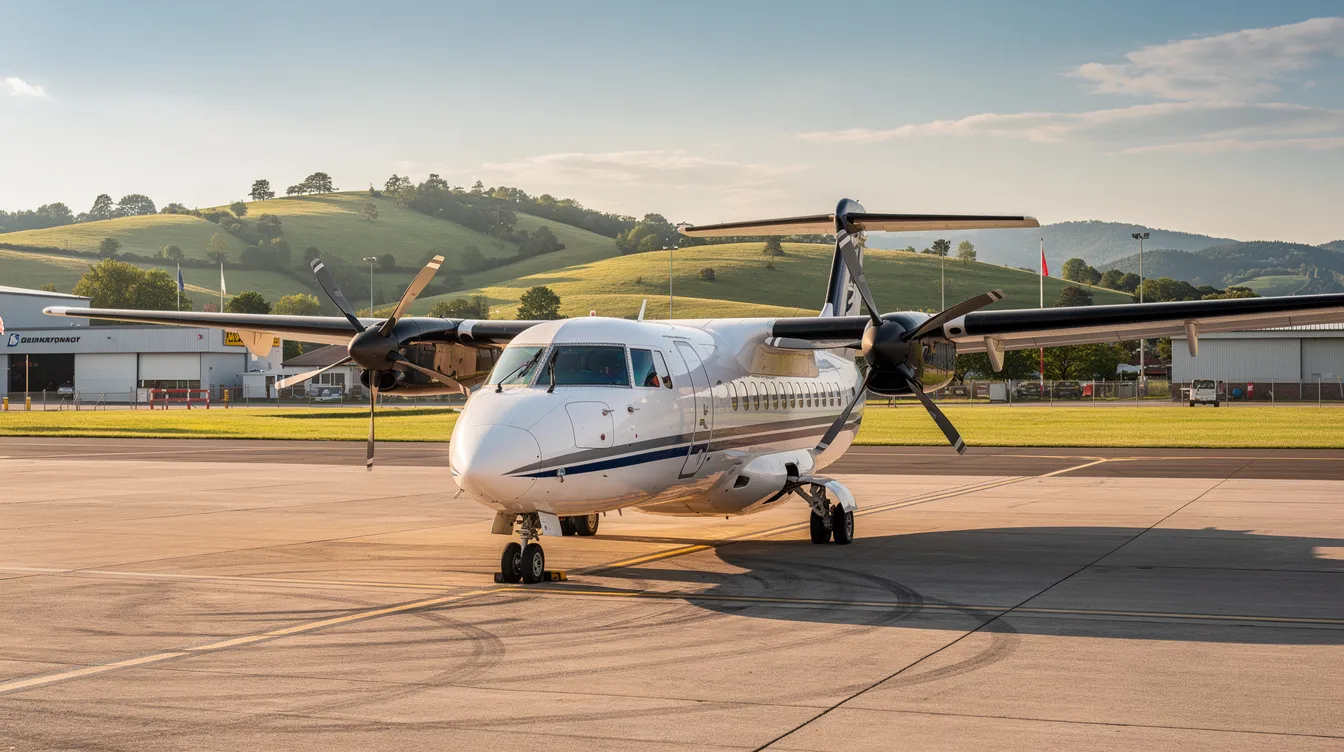
The Beechcraft King Air 350 is one of the most chartered turboprops in the world, and the first question most travelers ask is simple: how many seats does it have? The answer depends on the cabin configuration, but the King Air 350's seating capacity in a standard executive layout typically ranges from eight to nine passengers. This article breaks down every layout option, from double-club executive interiors to high-density commuter setups, and explains how seating decisions affect comfort, baggage, and charter cost.
The Beechcraft King Air 350 seats up to nine passengers in its standard executive configuration: eight seats in the main cabin arranged in two opposing club formations, plus an optional belted lavatory seat at the rear.
High-density commuter or special-mission layouts can push total seating into the low teens (up to 13 in some configurations), but these trade passenger comfort and luggage space for headcount and are uncommon in private charter.
The cabin measures roughly 19 feet in length, 4.5 feet in width, and nearly 4 feet 9 inches in height, with a cabin volume around 355 cubic feet, making it one of the roomiest turboprops in the King Air series.
King Air 350's seating capacity can be adapted for business travel, family trips, or medical missions; Jettly can source different cabin layouts depending on route, passenger count, and baggage needs.
Readers can compare King Air 350 options and get instant charter pricing on Jettly's digital platform at jettly.com.
The Beechcraft King Air 350 is a twin-turboprop aircraft in the broader Beechcraft King Air family. It entered production in 1990, and its history traces to a stretched development of the Super King Air 300 and 200 line, adding roughly three feet of fuselage length over its predecessor. In standard executive configuration, King Air 350 seating capacity is eight to nine passengers, placing it firmly in the upper tier of the turboprop charter category.
Within the King Air series, the 350 sits above the King Air 200 and 250 in cabin size, and it served as the direct predecessor to the King Air 350i and later the King Air 360. The aircraft is powered by two Pratt & Whitney PT6A-60A engines, is equipped with the core avionics and systems expected in this model family, reaches a maximum cruise speed of 312 knots, and has a maximum range of 1,806 nautical miles. Its service ceiling is 35,000 feet, and the cabin volume is roughly 355 cubic feet with about 55 cubic feet of internal pressurized baggage space.
Corporate operators, air ambulance services, military organizations (several air force fleets operate King Air variants for reconnaissance and transport), and charter providers around the world fly the King Air 350. That breadth of use comes down to a balance of runway performance, operating efficiency, and a spacious cabin that accommodates most small-group missions.
In a typical private charter layout, the Beechcraft King Air 350 seats eight passengers in the main cabin, plus a ninth in the belted lavatory. A belt-certified lavatory seat at the rear can be used as an additional passenger position, giving a practical range of eight to nine seats.
Most executive King Air 350 cabins are configured with two sets of double-club seats: four facing four. The seating arrangement often includes fold-out tables between each club for dining or working during flights. Some layouts add a side-facing seat near the entry door or a forward-facing seat aft, but the double-club pattern dominates the charter market.
While the aircraft's type certificate allows configurations up to 17 people (including crew), private charter trips almost always prioritize legroom, workspace, and baggage capacity over maximum headcount. A passenger entering through the main entry door walks past the cockpit partition into the forward club of four seats, then past the fold-out tables into the aft club. Overhead shelving, side ledges, and a refreshment center line the cabin. Compared to light jets or smaller turboprops, the seat pitch feels generous; passengers seated in club formation have enough room to cross their legs.
Children can safely use the same seats as adults with proper restraints, but operators often limit bookings to eight or nine passengers based on weight-and-balance calculations for the specific route and conditions.
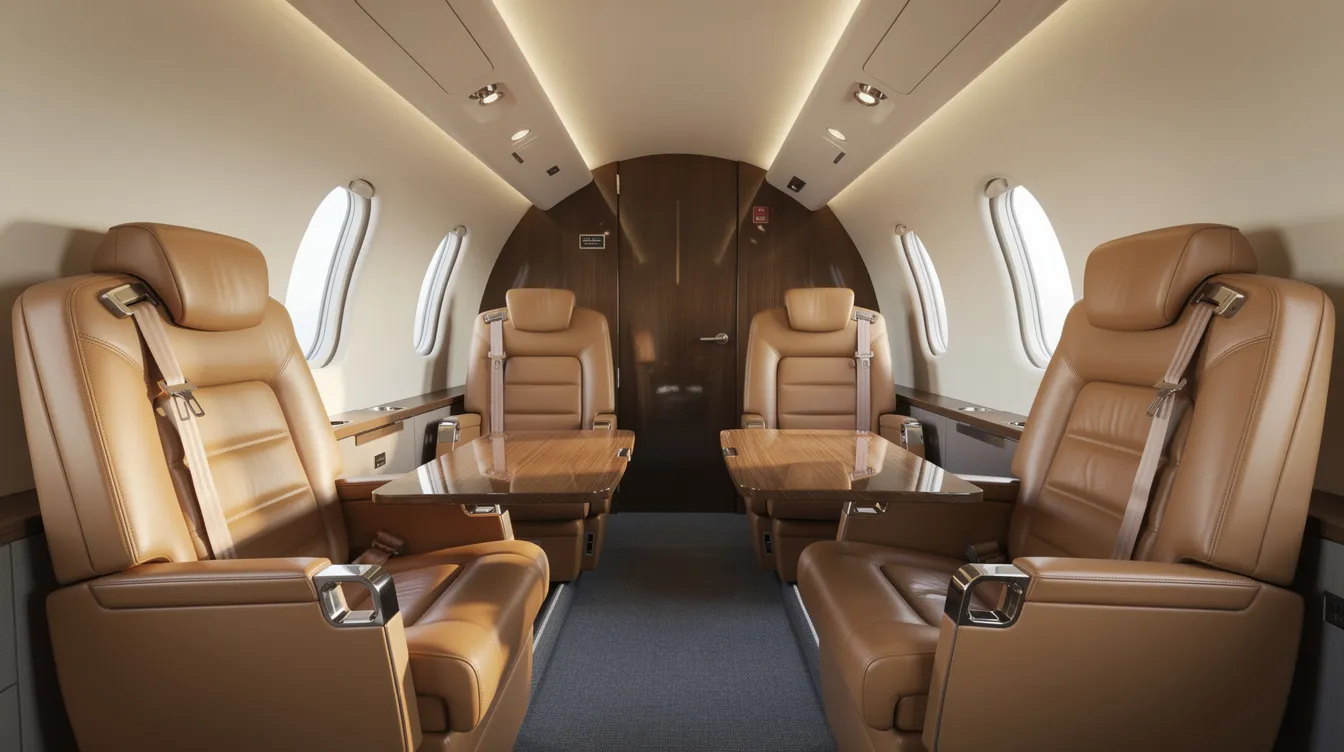
The King Air 350 and related Super King Air variants support multiple cabin layouts. The gap between "executive" and "commuter" configurations is wide enough to change the entire flying experience.
The typical executive layout used by business travelers and commercial customers features eight leather seats in two opposing clubs, fold-out tables, and a belted lavatory seat. This setup prioritizes comfort and workspace. The aircraft can also be reconfigured for special missions such as air ambulance or cargo transport, and these mission-specific interiors look nothing like a standard charter cabin.
Some operators configure the Beechcraft King Air 350 in a high-density shuttle style, using rows of lightweight forward-facing seats (some weighing as little as 26 pounds each versus 60-80 pounds for an executive seat). One documented 350ER high-density layout installed up to 13 seats, including a belted lavatory and folding chairs. The King Air 350's maximum certified occupancy can reach up to 17 people depending on the configuration, per FAA type certificate data.
Air ambulance configurations may reduce passenger seat count to two to four seated positions, creating space for stretchers, medical equipment, and attendant stations. In these special mission operations, "seating capacity" reflects crew plus limited passengers.
A quick comparison of layout types:
|
Layout Type |
Seating Capacity |
Features |
Typical Use Cases |
|---|---|---|---|
|
Executive |
8-9 |
Double-club seats, fold-out tables, belted lavatory seat |
Business travel, family trips |
|
Commuter/High-Density |
Up to 13 |
Forward-facing lightweight seats, reduced luggage space |
Shuttle, commuter flights |
|
Air Ambulance |
2-4 seated plus stretchers |
Medical equipment, attendant stations |
Medical transport |
Jettly can request specific layouts from its operator partners when travelers need something beyond the standard executive arrangement.
More seats do not always mean a better flight. Passenger comfort depends on how those seats relate to the cabin's physical dimensions and the number of people on board.
The cabin dimensions of the Beechcraft King Air 350 are about 19 feet long and 4.5 feet wide, with a height of approximately 4 feet 9 inches. Most adults under six feet tall can walk the aisle without ducking. The King Air 350's cabin is designed for comfort with ergonomic leather seats, and the double-club arrangement means passengers face each other, which is ideal for business discussions or family interaction. Large oval windows, standard across the Super King Air line, let in more natural light than many light jets in the same class.
Standard layouts in the King Air 350 include storage areas and a refreshment center. Later models and refurbished cabins often add power outlets, USB ports, and Wi-Fi availability. Modern soundproofing packages reduce the characteristic turboprop hum, though the cabin will never be as quiet as a jet at altitude.
Flying with fewer than the maximum seats filled makes a noticeable difference. Six passengers in an eight-seat cabin have room to spread out, use the tables freely, and stow bags within arm's reach. Jettly can match passenger count to aircraft size; sometimes a smaller turboprop or a light jet fits a group of four better than a half-empty King Air 350, drawing on access to a broad range of private charter aircraft.
The King Air 350 evolved into the Beechcraft King Air 350i (improved interior, upgraded avionics) and then the King Air 360 and 360ER, introduced by Textron Aviation in late 2020. Seating capacity across these models remains broadly similar, with incremental comfort and technology upgrades rather than layout changes.
King Air 350i and 360 models generally retain the eight- to nine-passenger executive seating norm. The differences show up in interior materials, LED lighting, improved soundproofing, synthetic vision on the flight deck, and sometimes more flexible seating rails. The cockpit avionics shifted to newer Rockwell Collins Pro Line Fusion displays, but the cabin footprint stayed the same.
Smaller Beechcraft King Air variants tell a different story. The King Air 90 and 100 series typically seat five to seven. The King Air 200/250 handles six to eight. The "super king" 300/350 family is the preferred choice when occupancy is seven to nine travelers, and the route requires range beyond 1,000 nautical miles.
The King Air 360ER can accommodate up to 15 occupants under certain government or special-mission configurations, but those layouts are not standard for business charter and rarely appear on consumer-facing inventory. For charter travelers, the King Air 350 remains the sweet spot in the King Air series for both seating capacity and operating cost on sectors under 1,500 nautical miles.
Legal seating capacity is only one constraint. The real passenger limit on any given flight depends on weight-and-balance, baggage volume, fuel load, and runway length at both ends of the route.
The King Air 350 has a useful load of over 5,000 pounds (approximately 5,145 lb in the 360 variant). Maximum takeoff weight sits around 15,000 lb. After accounting for crew, full fuel, and the aircraft's empty weight, the remaining payload for passengers and luggage can drop to roughly 1,500-2,000 lb on longer routes. That math matters: nine adults averaging 200 lb each plus bags can push close to the limit on a 1,400 nm sector.
In practical terms, the King Air 350's internal pressurized baggage compartment holds about 55 cubic feet and up to 550 lb. Wing lockers on some configurations add more external storage. Eight passengers with standard rolling suitcases and carry-ons fit comfortably. Eight passengers with golf bags or ski equipment may require planning; operators sometimes cap the passenger count at seven to stay within weight limits.
Common scenarios:
8 adults with light luggage on a 600 nm route: no issue
8 adults with golf bags on a 1,200 nm route: likely needs fuel stop or one fewer passenger
6 adults with heavy cargo or film equipment: comfortable fit with room to spare
Jettly asks travelers to provide headcount, approximate weights, and baggage details during quoting so operators can confirm safe loading, while also outlining the key factors that drive one private flight’s cost. The pilot in command and operator always have final authority on whether the planned load is acceptable for conditions on the day.
Groups between four and nine passengers cover most King Air 350 charter bookings, fitting neatly within common private jet passenger capacity ranges for light and midsize aircraft. Here is how different trip types use the cabin.
Corporate shuttle: Six to eight executives flying between regional business centers (Dallas to Houston, Toronto to Ottawa) use the double-club layout for in-flight meetings. The fold-out tables accommodate laptops, documents, and catering. The King Air 350 can land at smaller airports closer to final destinations, saving ground transfer time, and corporate flyers can estimate trip budgets in advance with tools like Jettly's jet card flight cost estimator.
Family or leisure travel: A multi-generation family of up to eight heading to a ski destination or island resort. Children sit across from parents in the club formation, and the baggage compartment handles skis or surfboards with advance planning. Capable of operating from high-altitude airports and short runways, the aircraft reaches destinations that many jets cannot, while savvy travelers apply tips for booking the cheapest private jet flights to keep family trips within budget.
Air ambulance and medical transport: Operators remove or reconfigure seats to accommodate stretchers, ventilators, and medical staff. The King Air 350's large entry door, pressurized cabin, and climb performance make it a workhorse for medical missions around the world, similar to how the King Air 200 charter aircraft is used for versatile corporate and special-mission flying.
Jettly's platform can filter available aircraft, including King Air 350, 350i, and similar Super King Air types, by passenger count, route distance, and prices, and also supports travelers who simply want to buy a seat on a private jet rather than charter the entire aircraft.
Jettly is a digital private aviation marketplace connecting travelers to a global fleet that includes many Beechcraft King Air and Super King Air aircraft, and offers advice on how to get a seat on a private jet easily for those exploring different access models. The King Air 350 charter guide on Jettly's site covers performance, comfort, and costs in detail.
The booking flow is straightforward: enter departure and arrival airports, dates, passenger count, and baggage requirements. Review instant pricing results informed by Jettly's detailed guidance on how much it costs to rent a private jet. Compare King Air 350 options with light jets or other turboprops. Complete booking online or through a concierge.
Jettly's transparent pricing lets users see how choosing a King Air 350 instead of a light jet can lower the per-hour cost while still supporting business-class seating for shorter routes, and tools like the private jet charter cost estimator help clarify those trade-offs. Optional private jet membership plans and structured jet card programs can further reduce charter costs for frequent flyers who regularly transport groups of six to nine passengers on regional routes.
Ready to fly? Compare King Air 350 options and request a quote at jettly.com, where Jettly outlines how it offers affordable private jet charter by optimizing aircraft type and route.
The King Air 350 often matches or exceeds the seating capacity of popular light jets while costing less per flight hour and performing better on short runways. The trade-off is speed.
Many light jets (Citation CJ series, Embraer Phenom 300) seat six to eight passengers. The King Air 350's cabin comfortably handles eight to nine. The turboprop cabin is wider at the floor and offers more generous headroom. Light jets typically cruise 50-100 knots faster and operate at higher altitudes with a quieter ride, and platforms like Jettly position themselves as a flexible NetJets alternative for accessing these aircraft on demand.
For flights under 500-700 nautical miles with seven to nine passengers, the time difference between a King Air 350 and a small jet may only be 15-30 minutes gate-to-gate, especially when the turboprop can use a closer airport. Direct operating costs for the King Air 350 run around $1,300 to $1,500 per hour, often lower than comparable light jets on the same sector, which can materially influence the cost of a single private flight.
Jettly's platform allows side-by-side comparison of King Air 350 vs light jet options for the same route, displaying both seating capacity and estimated flight time, and can also help travelers share empty seats on private flights to reduce per-passenger cost.
Some readers may be evaluating whether to purchase a Beechcraft King Air 350 or charter one on demand. Seating capacity is a factor, but the financial math usually decides.
Owners typically select the King Air 350 when they move six to nine passengers between secondary cities with short runways on a near-daily basis and are comfortable with the total private jet ownership costs involved. The aircraft's rugged landing gear and efficient engines support that kind of short-field operation. Hawker Beechcraft (now Textron Aviation) built the aircraft with exactly these operators in mind.
The purchase price and ongoing costs are substantial. Used King Air 350 aircraft continue to sell on the market, with prices ranging from $2.5 million to $3.8 million. King Air 350i costs between $4.1 million and $6.5 million on the current market; in 2019, a new King Air 350i listed at $7.755 million from the factory. Annual operating cost for the King Air 350 is approximately $1,163,166, covering crew, maintenance, insurance, hangar, and other modifications, figures that make guides to affordable planes and budget-friendly aircraft choices particularly relevant for cost-conscious buyers.
For businesses or families that only need eight to nine seats a few times per month, chartering through Jettly offers better financial flexibility than buying and managing a Beechcraft King Air outright, and guides on how much it costs to rent a private jet can help frame that decision.
For readers weighing both paths, Jettly's King Airs for Sale guide and broader resources on aeroplane rental costs and options provide pricing context, or speak with a charter specialist to model annual travel needs against charter vs. ownership.
These questions address practical seating details not fully covered above.
Most chartered Beechcraft King Air 350 aircraft are configured for eight passengers in the main cabin plus an optional ninth seat in the belted lavatory. The final allowed count depends on operator configuration, weight-and-balance, and route specifics. Flights from high-altitude airports or on longer sectors may require fewer passengers to stay within performance limits.
The rear lavatory seat is certified for use during taxi, takeoff, and landing. Many operators reserve it as an occasional seat. Some charter clients prefer to treat the King Air 350 as an eight-seat cabin for comfort, keeping the lavatory area free for its intended purpose throughout the flight.
Many Super King Air 350 interiors use modular seating rails that allow removal or repositioning of seats between missions. Changes must be performed by the operator's maintenance team with proper documentation; passengers cannot rearrange seats on the day of flight. Elliott Aviation and similar MRO providers handle these interior reconfigurations.
With eight to nine passengers, luggage capacity is generally adequate for standard suitcases and carry-ons. The internal pressurized baggage compartment holds about 55 cubic feet and 550 lb. Bulky items like skis, golf clubs, or film equipment may require advance planning. Jettly advises travelers to provide detailed baggage information during quoting.
The Beechcraft King Air 350 offers a versatile seating capacity that balances passenger comfort, operational efficiency, and mission flexibility. With a standard executive layout seating eight to nine passengers and the ability to adapt to high-density or special-mission configurations, it remains a popular choice for private charter travelers.
Its spacious cabin, combined with practical baggage capacity and reliable performance, makes it suitable for business trips, family travel, and medical missions alike. For those seeking an affordable yet comfortable turboprop option, the King Air 350 stands out as a smart choice.
Travelers interested in experiencing the benefits of the King Air 350's seating capacity and cabin configurations can explore available flights or request a personalized quote at jettly.com.
Jettly's transparent pricing and wide aircraft access ensure a seamless private aviation experience tailored to individual travel needs. Learn more about King Air 350 charter options at https://www.jettly.com/private-jet/king-air-350
Share this post:
Jay Franco Serevilla
Sep 26, 2026
|
5
min read
Discover tips and trends in the industry.
5
min read
Fokker F100 for Sale: Buying, Chartering, and Operating the Classic Regional Jet
The Fokker F100 is a versatile regional jet available for purchase or charter. With a capacity of up to 122 passengers, it offers a cost-effective solution for organizations needing reliable air travel. This guide explores the intricacies of buying, chartering, and operating the Fokker 100, helping you make an informed decision.
Read More
5
min read
N701DB Gulfstream G-IV Heavy Jet: Registration, Ownership & Charter Guide
The N701DB is a 1987 Gulfstream G-IV heavy jet known for its impressive range and speed, making it a popular choice for private charters. With advanced avionics and spacious cabins, it caters to both executive and group travel needs. Available for charter through Jettly, this aircraft offers a seamless booking experience and instant pricing for travelers seeking luxury in the skies.
Read MoreStay updated with our latest insights and tips to elevate your journey with us.
MEMBERSHIPS AND ASSOCIATIONS



Disclaimer: Jettly operates as a charter broker, offering access to a global digital jet charter marketplace. Jettly is not a direct air carrier and does not own or operate aircraft. All advertised flights are conducted by third-party air carriers that are fully licensed and hold the appropriate Part 135 or Part 121 certifications issued by the Federal Aviation Administration (FAA) or equivalent regulatory authorities under U.S. or foreign law. Jettly complies fully with the U.S. Department of Transportation's Part 295 and Part 298 Charter Broker regulations. Jettly does not carry additional liability insurance. Passengers are covered by aircraft operator insurance. TICO: 50023770


