


Login
Get Instant Pricing On 23,000+ Aircraft

>
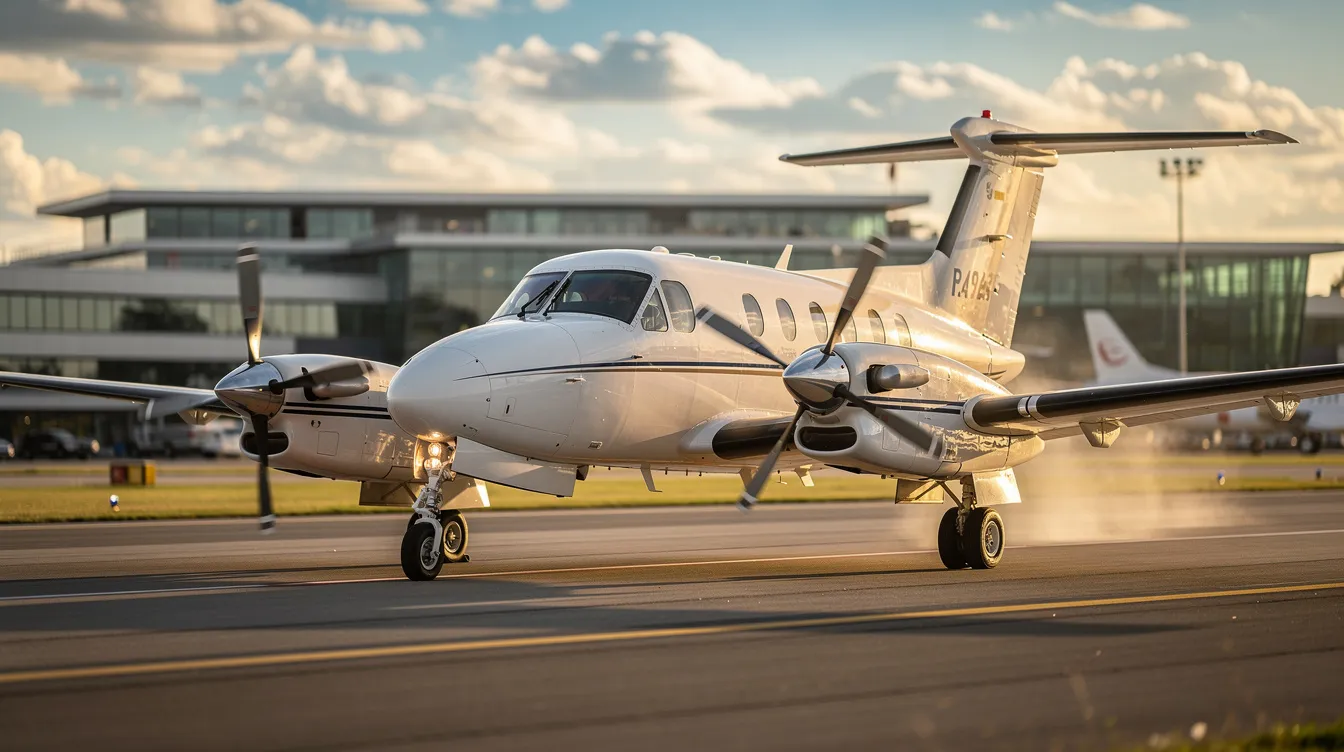
The Beechcraft King Air C90B is a twin-engine turboprop built for efficient regional travel, with short-field capability, lower operating costs than many light jets, and the ability to reach smaller or remote airports that jets often cannot. For business and leisure travelers—especially corporate executives, families, and other private flyers comparing flexible, cost-conscious charter options—the King Air C90B stands out as a practical way to get private aviation benefits without paying for more aircraft than the mission requires.
This guide covers the King Air C90B’s design and onboard technology, performance, passenger comfort, operating and ownership costs, charter options through Jettly's digital marketplace, regional use cases such as private jet charter services in Atlanta, Georgia, comparisons with other King Air models, and the trip profiles where this aircraft makes the most sense.
The King Air C90B cruises at 240–260 knots with a normal range of 828 nautical miles, seating up to five passengers comfortably in a pressurized cabin with an enclosed aft lavatory.
Annual operating cost for a King Air C90B runs approximately $851,383, making on-demand charter through Jettly a far more practical option for most travelers.
The C90B can operate from shorter runways compared to most jets, opening access to thousands of regional and remote airports thanks to its short-field capability.
Common use cases include regional business hops, family trips, air ambulance missions, and multi-stop itineraries.
Jettly lists King Air C90B aircraft within its turboprop category—explore real-time pricing and charter options at https://www.jettly.com.
The Beechcraft King Air C90B is a twin-engine turboprop in the Model 90 series, one of two families that make up the broader King Air production line. Production lasted from 1982 until 2005, with a total of 456 C90B models produced under Raytheon and Hawker Beechcraft (now Textron Aviation). The C90B is often cited as a reliable 'workhorse' in private aviation, valued for its twin-engine redundancy and higher operational reliability than many light jets.
The aircraft typically seats up to six passengers comfortably, though most charter configurations optimize for five passengers to allow adequate baggage space. It is widely used for corporate travel and private charter, as well as frequently modified for air ambulance services. The C90B’s versatility and comfort make it a practical choice for a variety of mission profiles.
The C90B introduced several improvements over earlier King Air 90 series models. It features four-bladed, fully reversible Hartzell propellers that reduce cabin noise by up to 15 dB compared to its predecessors. Propeller synchrophasing and dynamic vibration absorbers further enhance passenger comfort.
Powered by two Pratt & Whitney Canada PT6A-21 engines, each producing about 550 shaft horsepower, the C90B can climb to 30,000 feet and cruise effectively at speeds between 240 and 260 knots. Additionally, C90 Series aircraft can be re-engined with PT6A-135A engines for improved climb and cruise performance.
Safety features include autofeather and rudder boost systems that support continued flight on one engine, enhancing operational reliability. Aftermarket firms offer engine and avionics upgrades, and many C90B aircraft in charter service feature modern glass cockpit avionics from Garmin or Collins. A Wing Front Spar Reinforcement Kit is also available to extend the airframe’s service life.
The CargoLiner modification replaces the rear door with a large cargo door, enabling specialized cargo or litter transport for air ambulance or cargo missions.
The King Air C90B is designed for regional missions typically ranging from 300 to 700 nautical miles, with a maximum range of approximately 640 to 920 nautical miles depending on payload. Its service ceiling is 30,000 feet.
Key performance metrics:
|
Metric |
Value |
|---|---|
|
Cruise speed |
240–260 knots |
|
Normal range |
828 nautical miles |
|
Maximum range |
640–920 nautical miles |
|
Service ceiling |
30,000 feet |
|
Takeoff distance |
~4,500 feet |
|
Landing distance |
~2,200 feet |
|
Fuel burn |
80–90 gallons per hour |
The C90B’s short-field capability allows it to operate from airports unavailable to most light jets, thanks to its reversible propellers and robust landing gear. This opens access to thousands of smaller regional and remote airports, and tools like Jettly’s airport locator for private charter flights help travelers identify suitable departure and arrival points, ideal for business travelers and leisure flyers seeking convenience and flexibility.
The C90B cabin is a quiet, pressurized environment sized for up to six passengers, though five passengers is typical in charter configurations to optimize baggage space. The cabin includes an enclosed aft lavatory, four-blade propellers for noise reduction, and improved soundproofing compared to earlier models.
Standard interior layouts feature club seating for four passengers with sidewall tables, a small refreshment center, and a fifth forward-facing seat. The combination of soundproofing, propeller synchrophasing, and vibration dampening ensures a comfortable and versatile cabin experience for both business and leisure missions.
Through Jettly, travelers can review specific cabin photos and seat counts and request amenities such as Wi-Fi, in-flight catering through Jettly Eats private jet catering, and ground transportation.
The average price of a pre-owned King Air C90 is approximately $560,000 USD, though prices vary based on condition and upgrades. Ownership involves high fixed and variable costs.
Estimated annual operating costs for 300 flight hours:
|
Cost Category |
Annual Estimate |
|---|---|
|
Fixed costs (crew, hangar, insurance) |
~$290,000–$300,000 |
|
Variable costs (~$1,400+/hr × 300 hrs) |
~$420,000+ |
|
Total annual operating cost |
~$851,383 |
Fuel burn is a major expense, with 80–90 gallons consumed per hour. The C90B’s operational cost advantage over jets makes it an economical choice for short regional flights. Jettly’s private jet charter cost estimator can help you compare indicative pricing for the C90B against other aircraft types. Charter rates vary by journey length, typically ranging from $1,800 to $3,000 USD per hour.
Chartering through Jettly eliminates capital outlay, depreciation, and hangar fees. Users pay only for hours flown, with transparent pricing and no hidden fees, and Jettly’s guidance on affordable private jet charter pricing highlights strategies to keep costs in check, making on-demand charter a cost-effective alternative to ownership.
The C90B is frequently selected for missions where runway length, cost, and flexibility are critical. Charter options include both business and leisure travel, and travelers can review a detailed guide on how to buy a seat on a private jet when considering shared or on-demand options.
Common use cases, including those arranged through crowdsourced private jet flights and shared empty seats:
Regional business trips: Routes like Dallas to Houston or Toronto to Montreal, where the King Air’s speed and airport access beat commercial flights.
Family vacations: Destinations with shorter runways, such as Caribbean islands or mountain resorts.
Multi-stop itineraries: Sales tours or site visits covering multiple cities in one day.
Medical and humanitarian missions: Modified for air ambulance use, including CargoLiner configurations for cargo or litter transport.
Many operators accommodate golf bags, ski equipment, or light cargo, making the C90B versatile for various traveler needs. Jettly’s platform enables easy comparison of the C90B with other private charter aircraft types by price, availability, and safety ratings.
The King Air family spans over 55 years, divided into the 90/100 and 200/300/350 series. The C90B brought key upgrades over earlier 90-series models, including four-blade propellers, improved cowling design, and quieter cabins.
Compared to larger models like the King Air 250 or 360, the C90B is smaller, with fewer seats, but offers lower operating costs and better access to short runways. For travelers evaluating the broader private aviation landscape, a comprehensive guide to charter airlines and private flights can provide additional context. It remains the entry-level King Air for smaller groups valuing twin-engine redundancy and turboprop efficiency without the higher charter rates of larger aircraft, while Jettly’s jet card programs for private flyers can further streamline costs for frequent travelers.
Jettly’s digital platform provides access to a global fleet of over 20,000 private charter aircraft, including King Air C90B turboprops. Booking is simple:
Enter your route and dates on Jettly’s website.
Compare available King Air C90B aircraft by price, model year, and operator.
Review transparent pricing and confirm your booking securely online or through an account manager.
Jettly offers instant pricing, dynamic routing, and empty-leg flights with significant discounts for cost savings. Safety is prioritized with vetted operators holding FAA Part 135 or equivalent certifications.
Experience private travel tailored to your preferences. Frequent flyers may also consider Jettly’s private jet membership options for greater flexibility. Discover available flights or request a quote at https://www.jettly.com.
The King Air C90B typically seats up to five passengers comfortably, though some configurations accommodate six. Most charters optimize for five to allow adequate baggage space. Jettly listings provide exact seat counts and cabin photos.
The King Air C90B has a normal range of 828 nautical miles, with a maximum range between 640 and 920 nautical miles depending on payload. Typical nonstop city pairs include Los Angeles to Salt Lake City or London to Berlin.
Yes. The C90B features four-blade propellers, improved cowling design, and enhanced soundproofing, reducing cabin noise by up to 15 dB compared to earlier 90-series aircraft.
Chartering a King Air C90B is generally more cost-effective than light jets on short routes under 500–600 nautical miles due to lower fuel burn and maintenance costs. Jettly’s charter cost estimator provides transparent pricing for comparison.
Yes. The C90B’s short-field capability and reversible propellers allow it to operate from many shorter or less-developed runways that are inaccessible to most light jets. For travelers simply looking to access private flights efficiently, guides on getting a seat on a private jet can clarify the most accessible options. Jettly’s platform automatically checks airport suitability for specific aircraft types.
The Beechcraft King Air C90B remains a versatile and cost-effective choice for private charter travelers seeking reliable regional transportation. Its redesigned engine cowlings and four-bladed propellers reduce drag and cabin noise, enhancing passenger comfort on flights up to 828 nautical miles. With a typical configuration seating five passengers, the C90B offers full fuel payload flexibility and access to smaller airports thanks to its short-field capability and robust operational features. Whether for business trips, family vacations, or specialized missions, the King Air C90B combines proven performance with efficient operation and lower costs compared to many light jets. Explore Jettly’s platform to compare charter options, pricing, and aircraft availability and experience private travel tailored to your needs.
Experience private travel tailored to your needs. Discover available flights or request a quote at https://www.jettly.com.
Share this post:
Jay Franco Serevilla
Jul 1, 2026
|
5
min read
Discover tips and trends in the industry.
5
min read
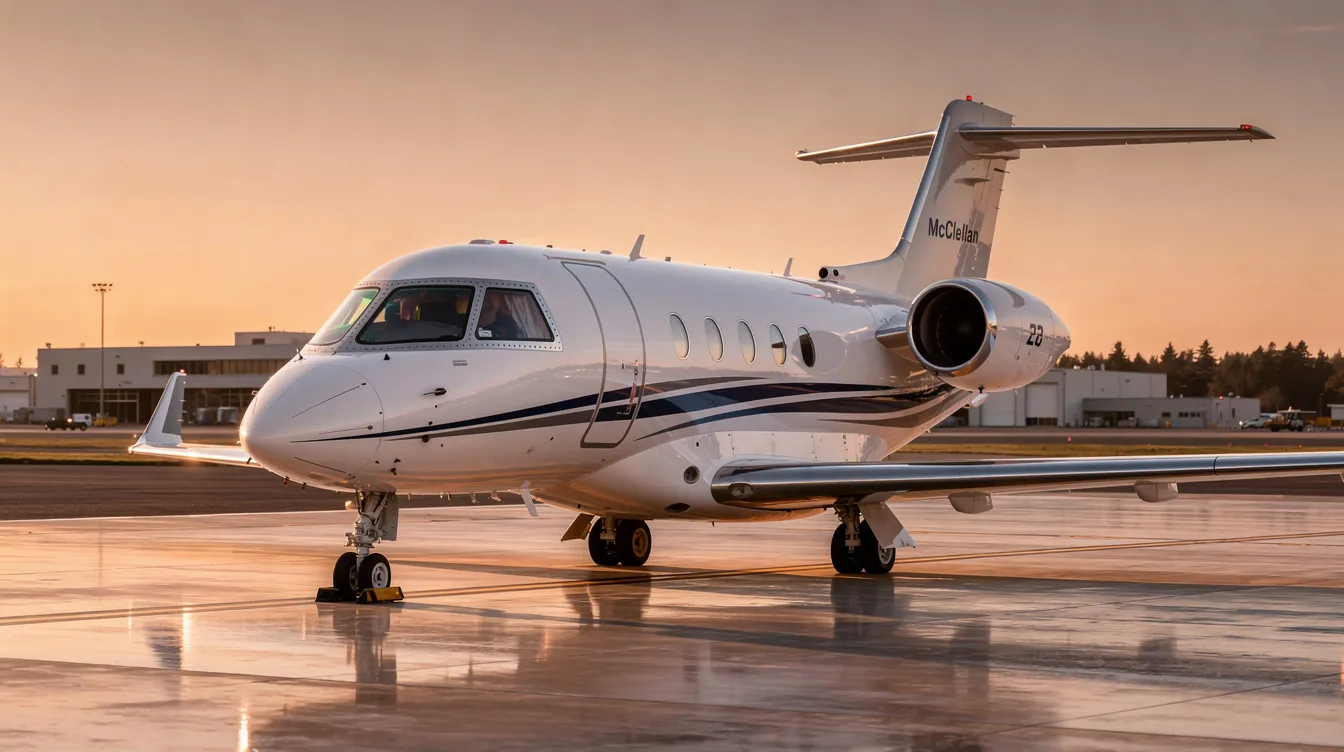
McClellan Jet Services: FBO Facilities, Jet Services, and Charter Alternatives
McClellan Jet Services is a premier fixed-base operator (FBO) at McClellan Airport, offering comprehensive ground support and amenities for private jet travelers. With 24/7 operations, it provides fueling, ground handling, and passenger services, while Jettly's digital platform facilitates seamless private jet charter bookings. Together, they enhance the private aviation experience for business and leisure travelers in Northern California.
Read More
5
min read
Arrow Jets: How Jettly Makes Private Jet Travel Simple, Fast, and Transparent
Jettly revolutionizes private jet travel by offering a digital platform that simplifies the booking process for over 20,000 aircraft worldwide. With instant pricing and transparent cost breakdowns, travelers can easily access fast, direct flights tailored to their needs. This on-demand model eliminates the complexities of traditional jet ownership, making private aviation more accessible and efficient.
Read MoreStay updated with our latest insights and tips to elevate your journey with us.
MEMBERSHIPS AND ASSOCIATIONS



Disclaimer: Jettly operates as a charter broker, offering access to a global digital jet charter marketplace. Jettly is not a direct air carrier and does not own or operate aircraft. All advertised flights are conducted by third-party air carriers that are fully licensed and hold the appropriate Part 135 or Part 121 certifications issued by the Federal Aviation Administration (FAA) or equivalent regulatory authorities under U.S. or foreign law. Jettly complies fully with the U.S. Department of Transportation's Part 295 and Part 298 Charter Broker regulations. Jettly does not carry additional liability insurance. Passengers are covered by aircraft operator insurance. TICO: 50023770


