


Login
Get Instant Pricing On 23,000+ Aircraft

>
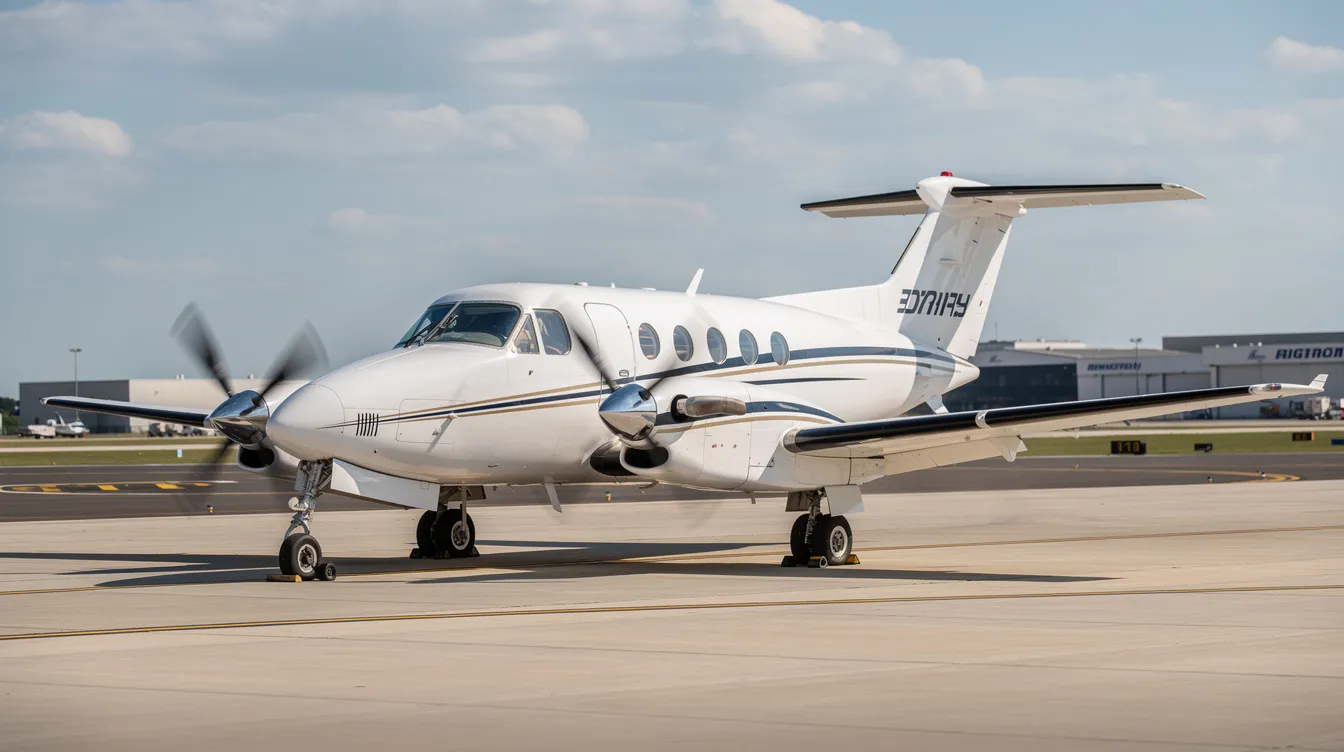
The Beechcraft King Air F90 is a high-performance twin-engine, pressurized turboprop built from 1979 to 1985 that combines the smaller 90-series fuselage with E90 wings and the King Air 200’s T-tail. In practical terms, it sits between entry-level King Air 90 variants and the larger Super King Air 200, typically seats 6 to 8 passengers, cruises at up to 265 knots, and delivers roughly 1,200 to 1,600 nautical miles of range for regional private flying.
That makes the F90 relevant to business and leisure travelers, corporate executives, high-net-worth flyers, and charter clients comparing efficient alternatives to light jets for shorter trips. The aircraft fills common private aviation roles such as corporate shuttle, regional charter, air-taxi service, and, in some configurations, medical evacuation. While Textron Aviation no longer produces the F90, many well-maintained examples remain active in charter, corporate, and special-mission fleets today because the type pairs short-field capability with lower operating costs and access to smaller airports.
It is powered by two Pratt & Whitney PT6A-135 engines and features a pressurized cabin that enhances passenger comfort on flights up to its 31,000-foot service ceiling. From here, we’ll look at the King Air F90’s development history, cabin and design, engine and operating performance, current market availability, typical charter use cases, and how to book this aircraft—or a comparable turboprop—through Jettly’s digital charter platform with transparent pricing and on-demand access.
The King Air F90 is a high-performance turboprop variant produced between 1979 and 1985, combining the Model 200 T-tail with the smaller 90-series fuselage and E90 wings for strong speed, climb, and flexibility.
Cruise speed sits in the mid-260-knot range (up to 265 knots max cruise), with a practical range of roughly 1,200 to 1,600 nautical miles and seating for about 6–8 passengers depending on cabin layout.
The F90 remains attractive on the charter market thanks to efficient operating costs, short-field capability for regional airports, and a pressurized cabin that keeps passengers comfortable at altitude.
Less than 240 F90 models were built across all sub-variants, making it a relatively rare aircraft on the pre-owned market.
Jettly can source King Air and comparable turboprop aircraft through its global charter marketplace, with instant pricing and digital booking at jettly.com.
|
Specification |
Detail |
|---|---|
|
Maximum Takeoff Weight |
10,950 lb |
|
Engines |
2 × Pratt & Whitney PT6A-135 |
|
Maximum Cruise Speed |
265 knots |
|
Typical Cruise Speed |
260–270 knots |
|
Range |
1,200–1,600 nautical miles |
|
Service Ceiling |
31,000 feet |
|
Passenger Capacity |
6–8 |
|
Cabin Dimensions (L×W×H) |
12 ft 8 in × 4 ft 8 in × 4 ft 10 in |
|
Fuel Burn at Cruise |
Approx. 88 gallons per hour |
|
Direct Operating Cost |
$864 per hour |
|
Cost per Mile |
$3.00 |
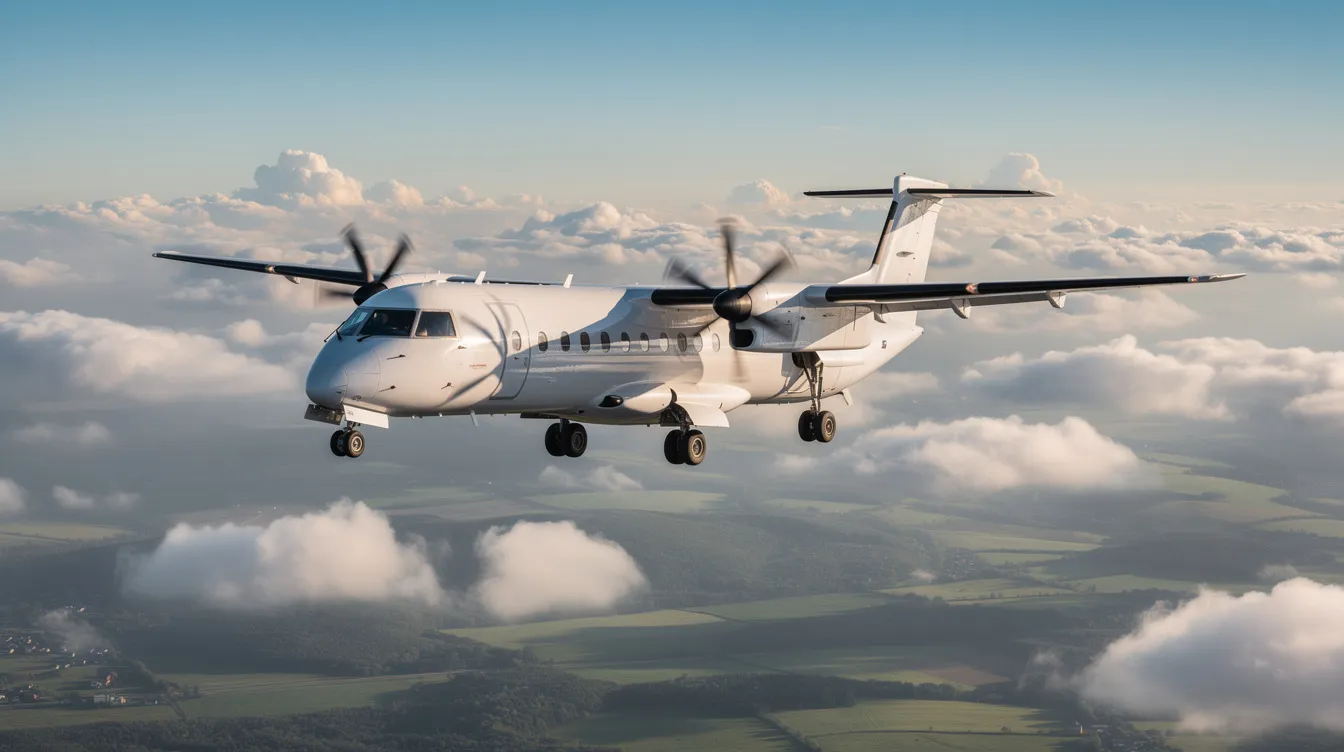
The F90 merges features of several different King Air models, combining the fuselage of the C90 with the T-tail of the King Air 200 and the E90 wings.
The Beechcraft King Air line traces its roots to the early 1960s, when Beech Aircraft evolved the Queen Air platform into the first pressurized turboprop for business use. Over the following decades, the King Air family split into two families of aircraft: the compact 90-series and the larger 200/300-series models. The F90 sits squarely at the intersection.
The F90 program began under Beech Aircraft Corporation in the late 1970s. The F90 prototype first flew on January 16, 1978, marking the first time this variant took to the air and a key milestone in its development. The King Air F90 was introduced in 1979, with deliveries starting shortly after. The F90 combined the Model 200 T-tail with E90 wings, and the F90 merges features of several different King Air models into a single airframe. Production of the King Air F90 ended in 1982 for the initial variant, with the follow-on model F90-1 continuing through the mid-1980s.
Build numbers were modest. Only 32 King Air F90 aircraft were built between 1979 and 1983 in the first production run, while all F models combined—including approximately 33 F90-1 units—totaled under 240 airframes during the full production window. That low volume was partly because the F90's performance encroached on the lower end of the Super King Air 200, which offered more cabin space and range. Still, the F90 has a lower acquisition cost compared to the larger King Air 200, which made it an appealing step-up model that has been operated by corporate, charter, and special-mission operators over time.
The F90 features a low-wing airframe with retractable hydraulic landing gear, a T-tail mounted atop the vertical stabilizer, and a clean fuselage profile that keeps drag low during cruise. The cabin dimensions are 12 ft 8 in long and 4 ft 8 in wide, with an interior height of roughly 4 ft 10 in. The cabin is configured to comfortably seat passengers and crew, and the typical passenger capacity of the F90 is 6–8 occupants in a business layout.
Most charter-configured F90S use a four-place club seating arrangement over the wing with fold-out tables, plus two additional seats aft. Some operators include an aft lav for longer flights, though this reduces seating by a seat or two. The aircraft's cabin windows provide natural light throughout, and the F90 has a pressurized cabin that maintains a sea-level cabin altitude up to moderate cruise altitudes before gradually climbing at higher flight levels.
The F90's triple-fed electrical bus supports reliable power distribution for avionics and cabin systems. Many refurbished examples feature upgraded interior materials, improved soundproofing, and modern in-flight conveniences like USB power outlets. For operators who have invested in a complete restoration, the cabin experience can rival newer turboprops in comfort, if not in raw dimensions.
At the heart of the F90 sits a pair of powerful Pratt & Whitney Canada PT6A-135 engines, each flat-rated to 750 shaft horsepower, driving four-bladed propellers. The four-bladed propellers provide smooth, efficient thrust and contribute to the aircraft's reputation as a hot rod among King Air 90-series variants. The F90 is praised for its climb performance and efficient cruise, with an initial climb rate of approximately 2,380 feet per minute.
The F90 can cruise at speeds of approximately 260–270 knots, with a maximum cruise speed of 265 knots under standard conditions. The normal range of the King Air F90 is 1,235 nautical miles, though the full range of the King Air F90 is between 1,200 and 1,600 nautical miles depending on fuel capacity, payload, and reserves. The F90's service ceiling is 31,000 feet, allowing pilots to fly above most weather and turbulence.
The design of the F90 allows for short-field performance. Takeoff distances over a 50-foot obstacle are around 2,800 to 3,000 feet at sea level, making the aircraft well-suited for regional and secondary airports. The King Air F90 has a maximum takeoff weight of 10,950 lb, with an empty weight in the neighborhood of 7,200 lb. The aircraft allows owners to fly with a useful load of around 3,750 pounds, which translates to a solid combination of passengers, baggage, and fuel.
Fuel burn at cruise power is around 88 gallons per hour. That means the F90's engines result in higher fuel consumption compared to the C90, but the tradeoff is meaningfully better speed and altitude performance. Gross weight management is important for operation into shorter strips, particularly on hot days or at higher-altitude airports.
Many King Air F90 aircraft have received aftermarket modifications over the decades to stay competitive in the modern age. Performance upgrades include engine programs, ram air recovery system enhancements, and redesigned engine cowlings that improve cooling and reduce drag. Aerodynamic improvements combined with four-blade propeller retrofits can add several knots of cruise speed and better climb rates.
The F90 can be outfitted with modern avionics like Garmin glass cockpits, WAAS/LPV approach capability, ADS-B Out compliance, and digital autopilots. These cockpit upgrades bring older airframes in line with current regulatory and safety expectations, which matters for both pilots and charter customers, while services like in-flight catering for private jets can further enhance the onboard experience.
On the pre-owned market, F90 models are rare, with recent listings remaining limited, and just six King Air F90 listings found for sale recently, typically advertised in the USA. King Air F90 prices range from $800,000 to $1.4 million depending on condition, avionics, and engine time. The average used price for King Air F90 is approximately $932,000, while current listings show F90 prices up to $1,200,000 for well-equipped examples. Jettly focuses on sourcing aircraft for charter rather than aircraft sales, but many operators on the platform fly private charter aircraft, including King Air and comparable turboprops with similar capabilities.
The Beechcraft King Air F90 and similar turboprop private jet options remain popular in charter for straightforward reasons: cost-efficiency, short-field performance, and cabin comfort for regional missions. The F90 was designed to handle unpaved or short runways, which opens up access to airports that many jets simply cannot reach.
Common mission profiles include:
Same-day business trips between regional hubs (300–600 nm stage lengths)
Connecting smaller cities that lack frequent airline service
Family or small-group leisure travel to vacation destinations
Multi-leg itineraries where three people or more need to fly to several stops in a single day
When comparing two aircraft side by side—say, an F90 and a light jet—turboprops may be slightly slower in cruise but can access shorter runways and often carry a lower hourly rate, especially when travelers apply tips for booking the cheapest private jet flights. On legs under roughly 500–600 nm, total trip time is often comparable once ground transfer savings are factored in. Jettly's platform can display a variety of turboprop options so travelers can compare pricing and flight times instantly before booking or even choose to crowdsource private jet flights and share empty seats to reduce individual costs.
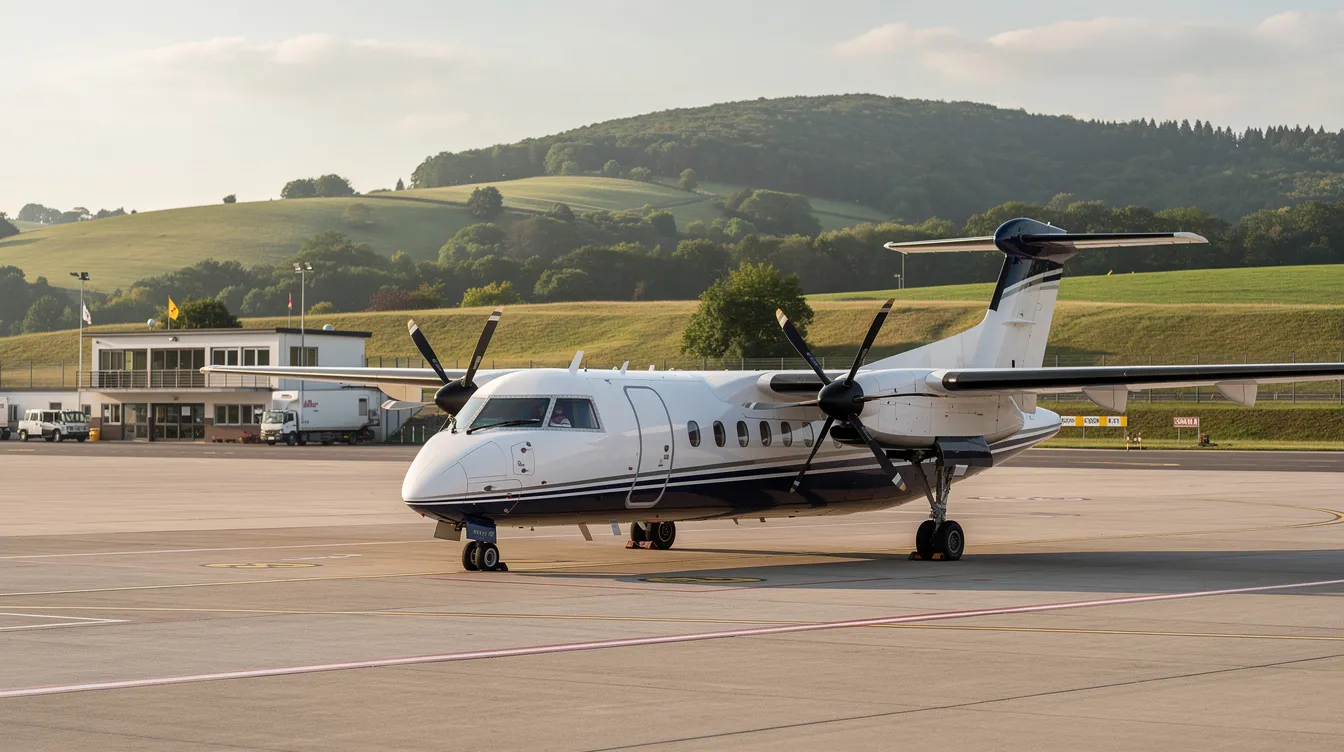
Jettly operates as a digital private aviation marketplace connecting travelers with a large inventory of turboprops, jets, and other aircraft worldwide. Searching for a King Air or similar aircraft is simple: enter your route, dates, and passenger count, then view instant pricing, use the airport locator tool, and see available categories on the platform.
Exact King Air F90 availability can vary by region and operator, but Jettly's network includes many Beechcraft King Air variants across the 90, 200, and 300 families—all equipped with comparable or improved performance. The platform's value for turboprop charter comes down to transparent pricing, the ability to compare multiple aircraft types side-by-side, and no long-term ownership or jet card commitment, especially when paired with flexible private jet memberships.
To learn more about how to charter a private jet, explore Jettly's membership models, or review its world-class corporate jet card programs, visit jettly.com.
No. The King Air F90 was built in the late 1970s and early 1980s, with production ending in the mid-1980s for all sub-variants. Modern King Air models—such as later 90-series aircraft, the King Air 250, and the King Air 360—continue to be supported by Textron Aviation and are common in charter fleets. Customers are more likely to charter these later-model King Airs or other turboprops with similar performance rather than a classic F90 specifically, though some operators still fly well-maintained F90 airframes delivered decades ago.
A typical King Air F90 cabin layout seats about 6–8 passengers in a comfortable business configuration. Charter operators may limit passenger numbers to balance comfort, baggage weight, and performance—particularly on hotter days or when operating from shorter runways at higher altitude. Confirm exact seating and baggage limits for any proposed flight through the Jettly platform or support team before booking.
Turboprops like the King Air F90 and similar models usually carry a lower hourly charter rate than comparable light jets. The operating cost figures for the F90 are:
Direct operating cost per hour: approximately $864.00
Cost per mile: about $3.00
Annual operating cost: estimated at $920,924 for a typical owner-operator profile
While turboprops cruise slightly slower, total trip time on legs under 500–600 nm is often quite similar once airport access and ground time are factored in. Use Jettly's private jet charter cost estimator to see real-time price comparisons for specific routes.
King Air-class turboprops are well suited for regional and secondary airports, often operating safely on runways in the 3,000-foot range under suitable conditions. This gives travelers access to airports closer to final destinations, which can significantly reduce ground transfer time compared with major commercial hubs. Exact runway requirements depend on aircraft weight, temperature, elevation, and runway surface—factors that operators evaluate during flight planning for every sale of a charter trip, as outlined in many guides to charter airlines and private flights.
Visit jettly.com, enter your departure and arrival points, date, time, and passenger count, then review instant pricing and available aircraft categories. You can indicate a preference for turboprops or King Air-type aircraft, and Jettly's platform or support team can help match the request with suitable operators. For additional information on available routes and membership options, the site provides detailed resources on every page, including a jet card flight cost estimator for one-way trips. Ready to experience private travel on your terms? Explore flight options or request a quote at jettly.com.
The Beechcraft King Air F90 remains a compelling choice for travelers seeking a balance of speed, efficiency, and versatility in a turboprop aircraft. Its combination of a pressurized cabin, strong performance, and short-field capability makes it well-suited for regional business and leisure travel. While no longer in production, the F90’s enduring popularity in the pre-owned and charter markets reflects its value and reliability.
For those interested in chartering a King Air F90 or exploring similar turboprop options, Jettly offers a transparent, tech-driven platform that simplifies the booking process. With instant pricing, access to a global network of aircraft, and flexible membership options, Jettly enables travelers to experience private aviation on their terms.
Ready to experience private travel on your terms? Explore flight options or request a quote at https://www.jettly.com.
Share this post:
Jay Franco Serevilla
Jul 1, 2026
|
5
min read
Discover tips and trends in the industry.
5
min read
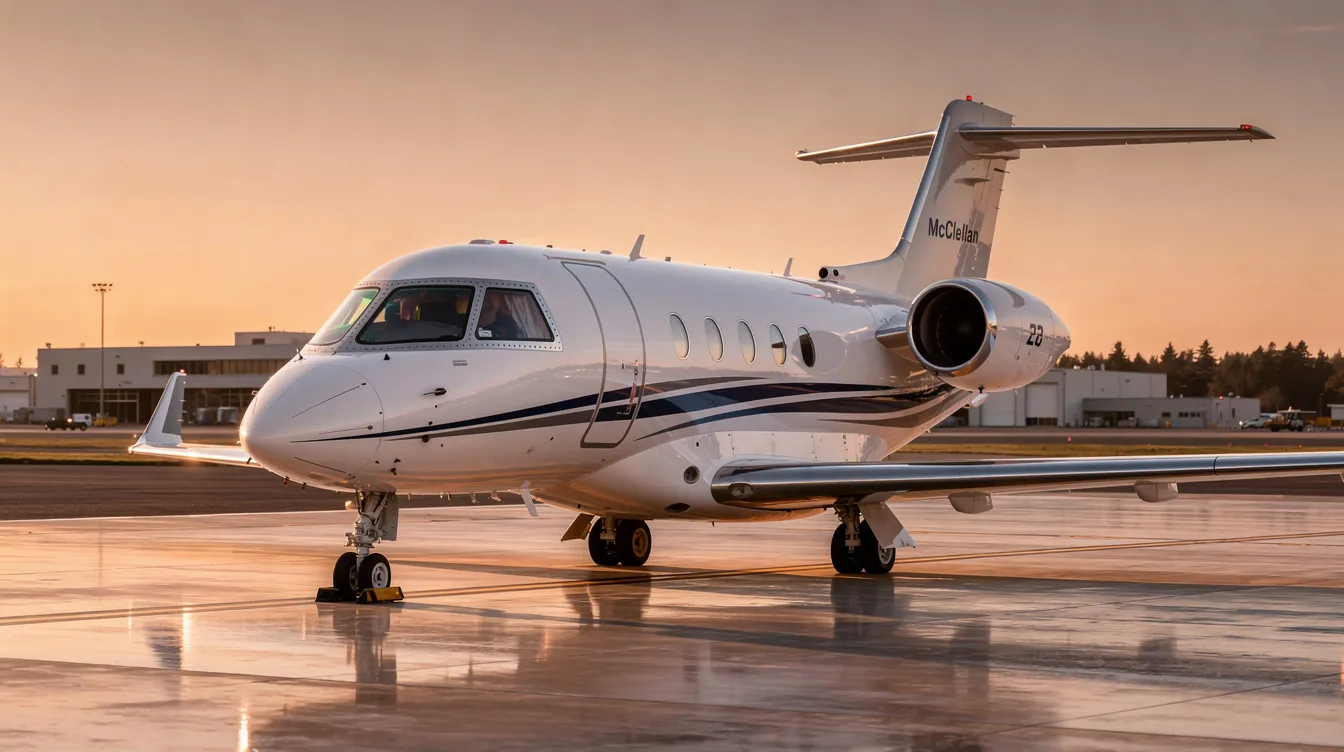
McClellan Jet Services: FBO Facilities, Jet Services, and Charter Alternatives
McClellan Jet Services is a premier fixed-base operator (FBO) at McClellan Airport, offering comprehensive ground support and amenities for private jet travelers. With 24/7 operations, it provides fueling, ground handling, and passenger services, while Jettly's digital platform facilitates seamless private jet charter bookings. Together, they enhance the private aviation experience for business and leisure travelers in Northern California.
Read More
5
min read
Arrow Jets: How Jettly Makes Private Jet Travel Simple, Fast, and Transparent
Jettly revolutionizes private jet travel by offering a digital platform that simplifies the booking process for over 20,000 aircraft worldwide. With instant pricing and transparent cost breakdowns, travelers can easily access fast, direct flights tailored to their needs. This on-demand model eliminates the complexities of traditional jet ownership, making private aviation more accessible and efficient.
Read MoreStay updated with our latest insights and tips to elevate your journey with us.
MEMBERSHIPS AND ASSOCIATIONS



Disclaimer: Jettly operates as a charter broker, offering access to a global digital jet charter marketplace. Jettly is not a direct air carrier and does not own or operate aircraft. All advertised flights are conducted by third-party air carriers that are fully licensed and hold the appropriate Part 135 or Part 121 certifications issued by the Federal Aviation Administration (FAA) or equivalent regulatory authorities under U.S. or foreign law. Jettly complies fully with the U.S. Department of Transportation's Part 295 and Part 298 Charter Broker regulations. Jettly does not carry additional liability insurance. Passengers are covered by aircraft operator insurance. TICO: 50023770


