



Login
Get Instant Pricing On 23,000+ Aircraft

>
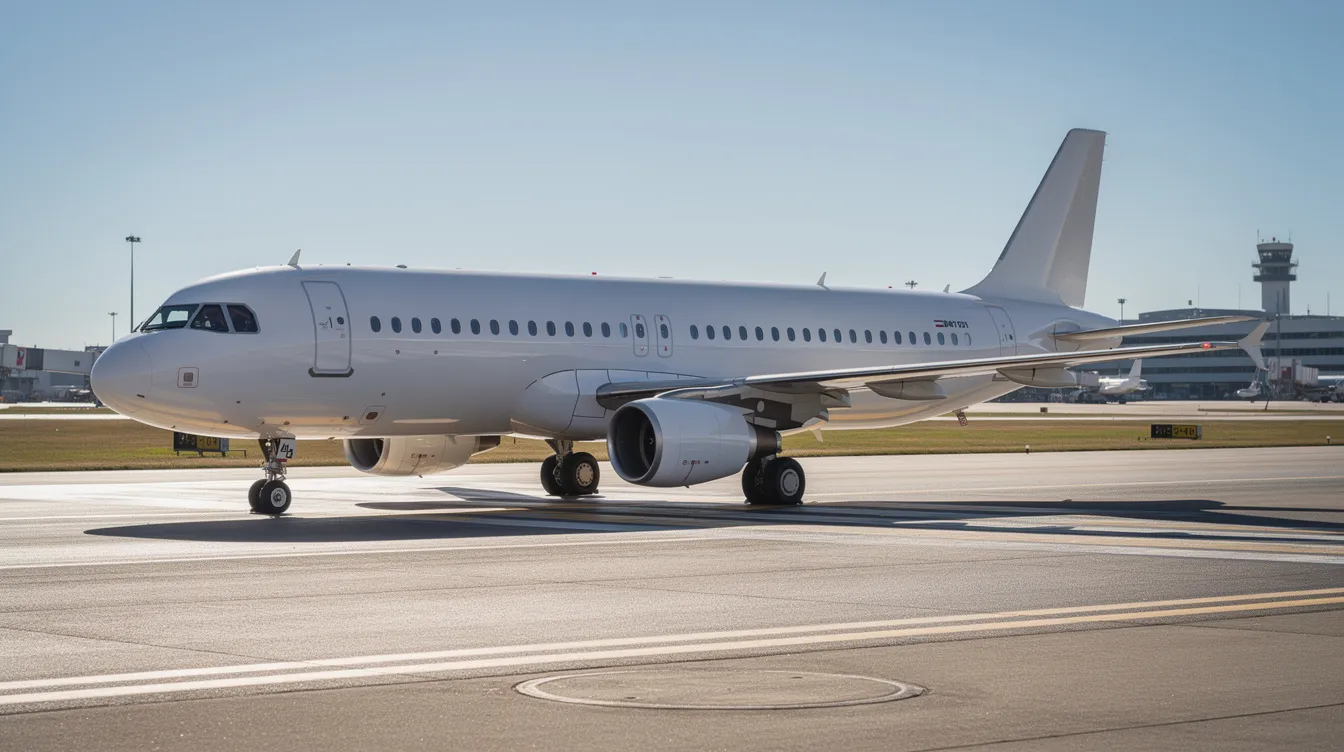
The Boeing 737-800 measures 129 ft 6 in (39.47 m) from nose to tail, making it one of the most widely operated single-aisle airliners in the world. This guide is intended for airlines, airport planners, and charter customers interested in the Boeing 737-800’s dimensions and operational suitability. Understanding the length of the 737-800 and its related dimensions is essential for these groups because it directly impacts route planning, airport compatibility, passenger capacity, and overall operational efficiency. This guide breaks down the exact figures, explains how the 737-800 compares to similar aircraft, and covers what its dimensions mean for everything from fuel efficiency to charter pricing.
The Boeing 737-800 has an overall length of 129 ft 6 in (39.47 m), a figure that directly influences its passenger capacity, fuel efficiency, and compatibility with airports around the world.
The fuselage length of the Boeing 737-800 is exactly 129 ft 6 in (39.47 m), placing it in the heart of the Boeing 737 Next Generation family between the shorter 737-700 and the longer 737-900ER.
The aircraft can carry up to 189 passengers in a high-density single-class layout, while typical two-class configurations seat around 160 passengers. Six-abreast seating in a single aisle makes this possible within the cabin width of roughly 11 ft 7 in.
The 737 MAX 8 has an almost identical fuselage length (~39.52 m), but uses newer LEAP-1B engines for better fuel economy. The Airbus A320 is shorter at approximately 37.57 m.
Jettly brokers charter access to 737-800 and similar airliners for large groups, sports teams, and corporate travel, connecting aircraft dimensions directly to real-world trip planning.
The precise overall length of the Boeing 737-800 is 129.5 feet, or 39.47 meters. Some Boeing reference materials round this to 39.5 m, but the standard specification is 129 ft 6 in.
Both "fuselage length" and "overall length" refer to the nose-to-tail measurement of the aircraft, which for the 737-800 is 129.5 feet (39.47 meters). This measurement does not include the wingspan, which is measured separately. It is important to note that the fuselage length and overall length are used interchangeably in this context, both representing the distance from the tip of the nose to the end of the tail.
Fuselage length refers to the nose-to-tail distance of the airframe. It does not include wingspan, which is measured separately. This distinction matters because airlines, airports, and charter planners use fuselage length to determine gate compatibility, cabin capacity, and structural performance.
At 39.47 meters, the Boeing 737-800 supports:
A six-abreast seating arrangement in a single-aisle cabin
Typical configurations accommodating around 160 passengers in two-class layouts
High-density configurations seating up to 189 passengers
The Boeing 737-800's fuselage length is very close to that of the 737 MAX 8 (~39.52 m), but the MAX uses newer engines and delivers roughly 14–20% better fuel efficiency per seat
The Boeing 737 has evolved through four main generations: the Original series (737-100 and -200), the Classic series (737-300, -400, -500), the 737 Next Generation (737-600, -700, -800, -900ER), and the 737 MAX. The Boeing 737-800 sits squarely in the third generation series, the Next Generation lineup, which introduced improved wings, upgraded avionics, and greater fuel capacity.
Key fuselage lengths across the family:
737-700: approximately 33.63 m (110 ft 4 in)
737-800: 39.47 m (129 ft 6 in)
737-900ER: approximately 42.11 m (138 ft 2 in)
Earlier 737-400 (Classic): approximately 36.5 m (119 ft 7 in)
The 737-800 became the workhorse of the Next Generation series thanks to its balance of fuselage length, range, and seating capacity. It effectively replaced the 737-400 on many routes, offering more seats and better economics without stepping up to a widebody airliner. Airlines like American Airlines, United Airlines, and Alaska Airlines all adopted the model in large numbers across commercial aviation for domestic and short-haul international flying.
This section covers the technical specifications directly related to the physical size and geometry of the aircraft, rather than performance figures like range or speed.
Core dimensions:
Overall length: 129 ft 6 in (39.47 m)
Wingspan without winglets: 112 ft 7 in (34.32 m)
Wingspan with blended winglets: approximately 117 ft 5 in (35.8 m)
Height at tail: 41 ft 2 in (12.55 m), or about 12.5 meters
Fuselage outer diameter: approximately 12 ft 4 in (3.76 m)
Cabin internal width: approximately 11 ft 7 in (3.54 m)
The cabin width of 3.54 m enables the standard six-abreast seating layout (3-3) found on virtually every 737-800 in service. The external dimensions also drive gate compatibility, hangar sizing, and taxiway clearances at airports worldwide. An aircraft with a wingspan exceeding 34 meters and a fuselage length approaching 40 meters requires Code C-compatible stands and taxiways.
Additional fuselage length primarily allows more seat rows, which directly determines how many passengers the aircraft can accommodate both legally and comfortably.
In a two-class layout (business and economy), the 737-800 typically seats around 160–162 passengers
In a high-density, single-class economy layout favored by low-cost carriers, the maximum passenger capacity reaches 189
Regulatory evacuation requirements tie directly to fuselage length: over-wing exits and door placement must allow all passengers to evacuate within certification time limits
Airlines vary cabin layouts within the same fuselage length to target different markets, adjusting the split between business class, extra-legroom economy, and standard economy
For real-world examples, American Airlines typically configures its 737-800 fleet with around 160–172 seats in a two-class arrangement, while Ryanair pushes the fuselage to its certified limit with 189 seats in an all-economy setup. Both operators use the same 39.47 m airframe, but the passenger experience differs significantly based on seat pitch and service philosophy.
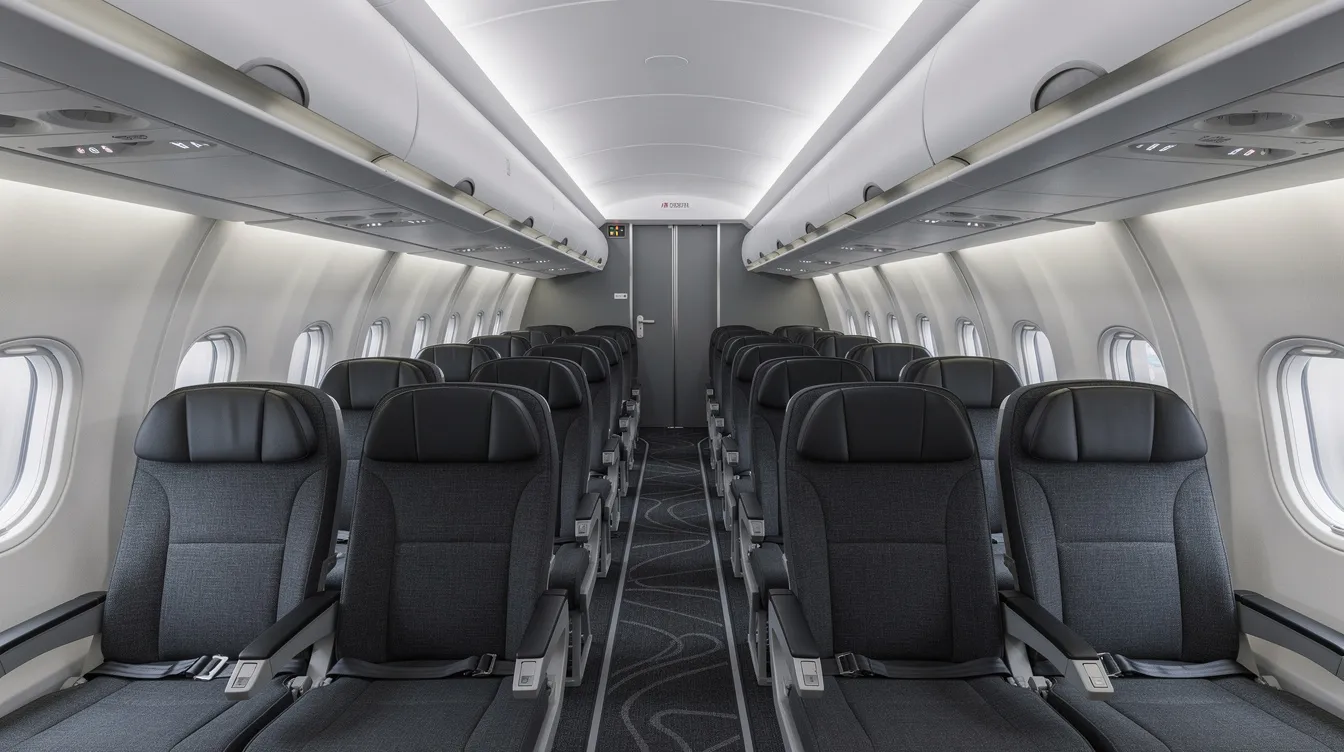
The standard 3-3 single-aisle layout is universal on the 737-800, but the aircraft's length allows considerable flexibility in cabin zoning. Airlines can allocate front rows to premium cabins, designate mid-cabin sections for extra legroom, and fill the aft cabin with standard economy seating.
Common seating configurations include:
All-economy high-density: 186–189 seats with 28–30 in seat pitch, typically used by low-cost operators
Mixed business and economy: 12–16 business seats at 36–40 in pitch plus 140–160 economy seats at 31–34 in pitch
Premium-heavy layouts: used on longer routes where airlines want to maximize revenue per seat with fewer passengers in more spacious seating
Seat pitch is the primary lever airlines pull within a fixed fuselage length. At 28 inches, a carrier can squeeze in more seat rows; at 34 inches, the same fuselage yields noticeably fewer rows but better passenger comfort.
Galley and lavatory placement also follows the cabin length. Most 737-800 configurations include forward and aft galleys and two to three lavatories distributed along the fuselage to manage passenger flow. Southwest Airlines configures its 737-800 with an all-economy layout that maximizes throughput while maintaining reasonable spacing.
The 737-800 cabin has evolved considerably since the type first entered service. Later-build aircraft and retrofitted examples feature the Boeing Sky Interior, which modernized the passenger environment along the extended fuselage.
Key cabin features include:
LED mood lighting that allows airlines to adjust color and intensity by flight phase
Sculpted sidewalls that create a wider visual impression in the mid cabin and throughout the aircraft
Larger pivot-bin overhead compartments that accommodate more carry-on luggage
Improved acoustic insulation that reduces cabin noise compared to earlier 737 Classic models
The longer cabin length allows airlines to create distinct zones: a front premium cabin with more generous pitch, extra-legroom rows near overwing exits, and standard economy aft. These zones target different fare segments within the same flight.
By contrast, VIP-configured 737-800 variants and large private jets accessible through Jettly offer a fundamentally different approach. Instead of maximizing seating capacity, these aircraft prioritize a spacious interior with lounges, private suites, and conference areas, all within the same 39.47 m airframe. The aircraft can be configured for VIP comfort or high-density seating depending on the mission.
This section covers the key technical specifications that interact with aircraft length but are not geometric dimensions themselves.
Core specs:
Maximum takeoff weight: 79,010 kg (approximately 174,200 lb)
Engines: two CFM56-7B high-bypass turbofans, each producing up to approximately 27,300 lbf of thrust
Cruise speed: Mach 0.785, approximately 453 knots (523 mph)
Maximum range: approximately 3,377 nautical miles
Service ceiling: 41,000 feet
Empty weight: approximately 41,413 kg (91,300 lb)
Fuel capacity: roughly 6,875 US gallons
The aircraft is equipped with modern systems including digital flight decks, autobrake, and windshear detection. While a longer fuselage adds structural weight and aerodynamic drag, the improved wing design and efficient engines offset this to maintain competitive fuel efficiency per seat.
These technical specifications matter for charter planners who must match aircraft capabilities to route distance and payload. A charter from New York to Cancún, for example, falls well within the 737-800's maximum range, while a transatlantic sector would require a different aircraft type entirely.
Fuel efficiency is driven by a combination of factors: engine technology, aerodynamic design, aircraft weight, load factor, and fuselage length. No single variable determines fuel economy in isolation, but length plays a more significant role than many travelers realize.
A longer fuselage increases empty weight and frontal drag, which raises fuel burn in absolute terms. However, it also increases seating capacity. When the aircraft flies near its maximum of 189 passengers, fuel burn per seat drops significantly compared to a shorter, lower-capacity model covering the same route.
The 737 Next Generation series, including the 737-800, improved fuel efficiency over 737 Classic models through several means:
Redesigned supercritical wings with greater span
Blended winglets that reduce drag and improve fuel efficiency by lowering induced drag at the wingtips
More efficient CFM56-7B engines compared to earlier CFM56-3 variants
Later retrofits added split scimitar winglets for additional drag reduction
The 737 MAX series keeps a similar fuselage length (the MAX 8 is nearly identical to the 737-800) but gains substantially better fuel economy through LEAP-1B engines and advanced technology winglets. Boeing and independent analyses estimate the MAX achieves roughly 14–20% lower fuel burn per seat compared to the NG on equivalent sectors.
For charter customers, fuel efficiency directly influences hourly rates and overall trip cost. A fully loaded 737-800 on a longer range sector will deliver far better cost effectiveness per seat than a half-empty flight, making load factor a critical variable in charter pricing.
The 737-800's fuselage length connects directly to runway performance, tail-strike risk, and airport compatibility.
Key performance figures under standard conditions:
Typical takeoff distance at maximum takeoff weight: approximately 2,200–2,300 m (7,300–7,600 ft)
Landing distance: approximately 1,600–1,700 m (5,300–5,600 ft)
These figures vary with altitude, temperature, runway slope, and aircraft weight
A longer fuselage increases tail-strike risk during rotation on takeoff. Pilots must manage rotation rate carefully, and the flight control logic includes protections to prevent the tail skid from contacting the runway. The main wheels and landing gear geometry are designed to provide adequate clearance at normal rotation angles.
Some smaller airports with runways under 6,000 ft or limited apron space are unsuitable for fully loaded 737-800 operations. Light and midsize private jets, which can be chartered through Jettly, often access these smaller airports without restriction. Airport gate length and taxiway geometry must also accommodate the 39.47 m fuselage, which influences which stands and terminals can handle the type.
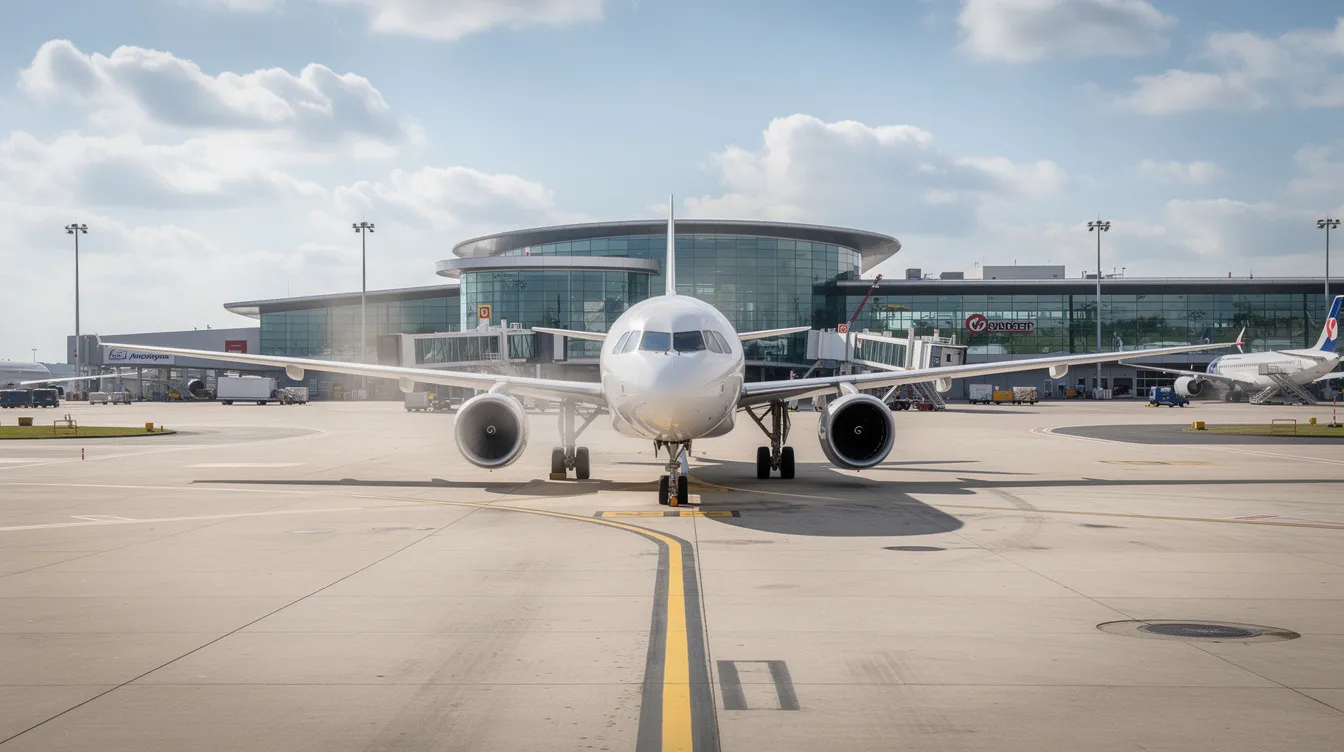
The Boeing 737 family has progressively stretched from the compact original models of the 1960s to the longer variants of the Next Generation and MAX lines. Each generation reflected airline demand for more seats on popular routes.
Milestone fuselage lengths through the generations:
737-100 (Original): approximately 28.6 m
737-200 (Original): approximately 30.5 m
737-300 (Classic): approximately 33.4 m
737-400 (Classic): approximately 36.5 m - the stretched version of the Classic line
737-500 (Classic): approximately 31 m, trimmed back for shorter routes
737-800 (Next Generation): 39.47 m
Airlines requested longer fuselages because more seats on each departure meant higher revenue per flight and better slot utilization at constrained airports. A stretched fuselage on the same type rating also reduced crew costs by avoiding the need to train pilots on entirely new aircraft types.
As the fuselage length increased, structural reinforcements became necessary. Additional frames, longer stringers, and a modified wing-box were required to manage the greater bending loads and fatigue cycles that come with an extended fuselage. The engineering challenge was to add length without adding disproportionate weight or compromising structural life.
The 737 MAX 8 is almost the same length as the 737-800, measuring approximately 39.52 m compared to 39.47 m. The differences between these two models are primarily in technology and efficiency, not size.
Key comparisons:
Cabin cross-section: identical single-aisle, six-abreast layout
Passenger capacity: similar ranges (162–189 depending on configuration)
Engines: CFM56-7B on the 737-800 versus LEAP-1B on the MAX 8
Winglets: blended winglets (or split scimitar winglets on retrofitted NGs) versus advanced technology winglets on the MAX
Fuel burn: the MAX 8 delivers approximately 14–16% better fuel efficiency on most sectors
From a passenger perspective, the cabin experience is broadly similar. Both aircraft share comparable cabin features and layout dimensions, though newer MAX cabins may feel quieter thanks to improved acoustic treatment and the lower noise signature of LEAP-1B engines.
Charter customers evaluating a 737-800 versus a 737 MAX 8 primarily see differences in operating cost, environmental footprint, and availability rather than cabin size. The 737-800 remains more widely available on the charter market and is often priced lower, while the MAX 8 offers newer technology and improved fuel economy for operators willing to pay a premium.
The same 39.47 m fuselage underpins multiple specialized aircraft beyond the standard airliner configuration.
BBJ2 (Boeing Business Jet 2): based on the 737-800 airframe, this variant retains the same overall length but features a VIP interior with private suites, lounges, and conference areas, typically seating 19–50 passengers in premium comfort
P-8 Poseidon: a maritime patrol and anti-submarine aircraft derived from the 737-800 platform, where the fuselage length accommodates internal mission systems, operator stations, and equipment bays
Freight and combi variants: some operators have converted aging 737-800 passenger aircraft to cargo or mixed configurations, leveraging the fuselage volume for parcel and freight operations
VIP-configured 737-800s are sometimes available on the charter market and can be sourced through brokers like Jettly for heads of state, touring artists, corporate roadshows, or large delegations seeking a spacious interior with fewer passengers and premium amenities.
Comfort on a 737-800 depends not only on the 129 ft 6 in fuselage length but on seat layout, pitch, and onboard service. The same aircraft can feel spacious or cramped depending on how an airline or charter operator configures the cabin.
Airlines can use the fuselage to create generous business cabins with 36–40 in pitch, extra-legroom sections at 34 in, or very dense layouts with 28–30 in pitch and up to 189 seats
Passengers seated over the wing, near the center of gravity, generally feel the least motion during turbulence. Those in the far front or rear of the longer fuselage may notice more pronounced pitch and heave
Noise levels tend to be higher near the engines (mid cabin to rear) and quieter in forward sections
Boarding flow in a single-aisle cabin nearly 40 m long can create congestion; airlines manage this with zone boarding and dual-door operations where available
Compared to large private jets and VIP airliners, the 737-800 in standard configuration trades personal space for per-seat economics. A heavy jet seating 10–16 passengers offers dramatically more room per person, but at a correspondingly higher cost per seat.
At approximately 39.5 m, the 737-800 is much longer than most private jets, which typically range from 14 to 30 m. Both categories serve fundamentally different mission profiles.
Size comparisons across aircraft types:
Light jet: approximately 15–17 m length, 4–7 passengers
Midsize jet: approximately 17–20 m, 7–9 passengers
Large-cabin jet: approximately 25–30 m, 10–16 passengers
737-800: 39.47 m, 162–189 passengers
The 737-800 offers unmatched per-seat economics for large groups of 80 passengers or more. Private jets provide greater privacy, schedule control, and the ability to fly direct flights into smaller airports that cannot accommodate a 737-800.
Jettly can arrange 737-800 or similar airliner charters for sports teams, touring artists, and corporate groups, or source smaller jets for executive shuttles and family trips. A common hybrid approach involves flying trunk routes on a 737-800 charter, then connecting to a smaller private jet for shorter legs into secondary airports.
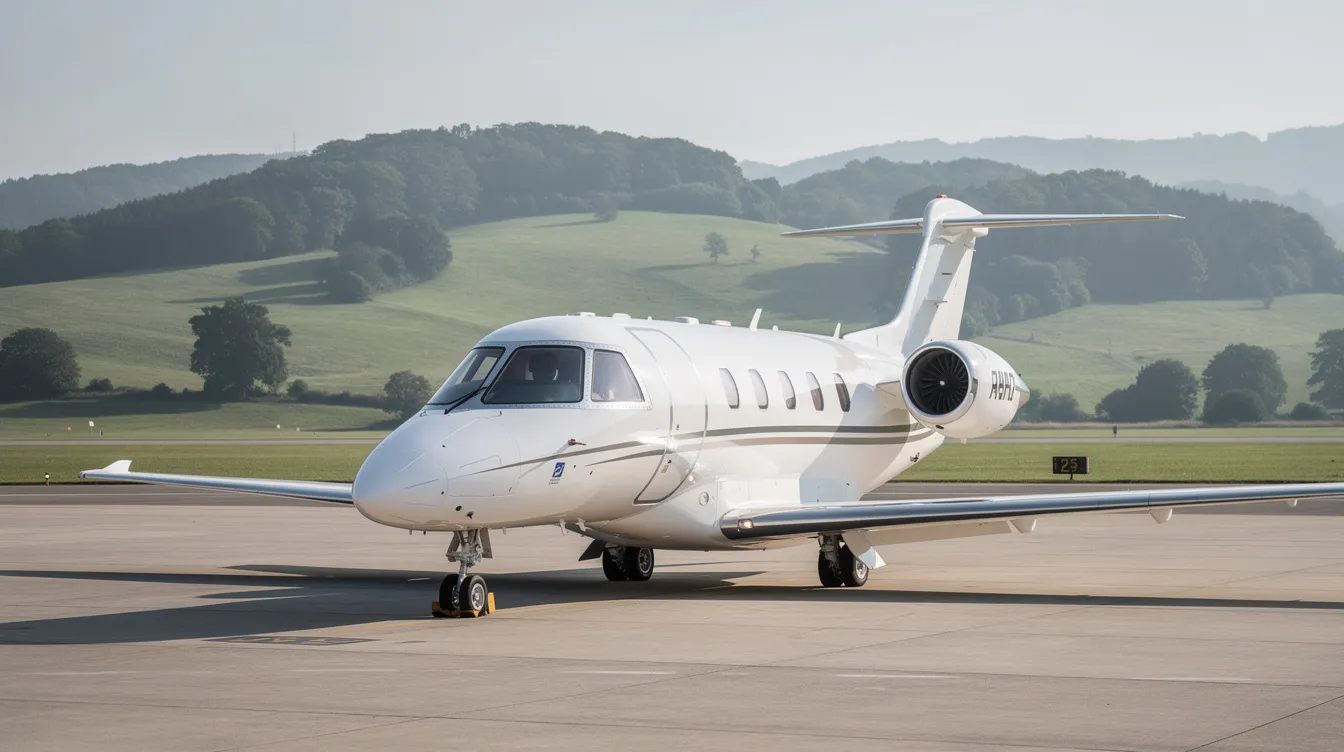
The 737-800's length and passenger capacity make it the right choice when group size and route length align. Chartering a single aircraft for 100–180 people is far simpler than coordinating multiple smaller planes.
Specific scenarios where the 737-800 excels:
Corporate roadshows: moving a large team across multiple cities on a tight schedule, with the longer cabin configured for mixed seating and meeting areas
Sports team transport: professional leagues regularly charter 737-800s during seasonal play, keeping the entire roster, coaching staff, and support personnel on one flight
Music tours: artists and crew travel with equipment, using the cabin's length for both seating and additional galley space for catering
Event shuttles: high-profile events like conferences, product launches, or incentive trips where coordinating a single direct charter saves hours of logistics
The longer cabin also allows more galley space and service areas, enabling onboard productivity, catering, and comfort that a cramped regional jet or turboprop cannot match.
Jettly's digital platform lets planners compare 737-class airliners with smaller jets in real time based on group size, luggage requirements, and route distance. Operators can evaluate whether a single 737-800 or a combination of smaller aircraft delivers better cost effectiveness for each specific trip.
Aircraft length and size connect directly to environmental performance through load factor and fuel burn per passenger.
The 737-800 can be very efficient on a per-passenger basis when flying at or near its capacity of 162–189 passengers. A full flight spreads fixed fuel burn across more seats, delivering strong fuel economy per person-mile
Efficiency drops sharply on lightly loaded flights. A 737-800 carrying only 60 passengers burns almost the same fuel as one carrying 180, making the per-seat environmental impact significantly worse
Private jets have higher fuel burn per passenger in most scenarios but offer route flexibility and the ability to avoid positioning large, half-empty aircraft
Emerging sustainability practices relevant to both 737-800 operations and private aviation include sustainable aviation fuel (SAF), carbon offsetting programs, and optimized routing to reduce total fuel burn. Jettly encourages efficient aircraft choice and route planning as part of responsible charter planning, helping clients match the right-sized aircraft to each trip rather than defaulting to the largest available option.
Jettly's platform relies on precise technical and dimensional data, including fuselage length, range, and passenger capacity, to match aircraft with customer needs.
Here is how the process works in practice:
Charter planners input passenger count, route length, and baggage requirements. The platform determines whether a 737-800, another Boeing 737 variant, or a smaller jet type is the best fit
The 737-800's cabin layout options and fuel efficiency profile impact charter pricing estimates. A fully loaded 737-800 on a medium-range route will typically produce a lower per-seat cost than multiple smaller aircraft
Jettly sources 737-800s from certified operators globally, providing rapid quotes that account for performance, extended range capabilities, and airport constraints
Charter rates for a Boeing 737-800 generally range from $11,000 to $18,000 per hour. Rates depend on route, season, and repositioning costs. Most quotes include occupied flight hours plus additional fees for crew costs, landing charges, and ground handling. Peak travel periods typically increase charter costs.
Empty leg flights can significantly reduce charter costs when a 737-800 is repositioning without passengers. These opportunities are time-sensitive but can offer substantial savings for flexible groups.
Learn more about Jettly's charter options and pricing tools at jettly.com.
These FAQs address common questions not fully covered in the sections above, particularly for travelers and planners considering charter options.
The Boeing 737-800 measures approximately 39.47 m, while the Airbus A320 comes in at roughly 37.57 m. That makes the Boeing about 1.9 m longer. For passengers, the difference is subtle. Both aircraft support similar seating capacities in standard configurations, but the 737-800 can accommodate slightly more seats in high-density layouts due to its additional length. In practice, comfort is more affected by airline seat pitch and cabin design choices than by this small dimensional gap. From an airport and operator perspective, the length difference influences gate allocation and turnaround handling more than the onboard experience.
Fuselage length can modestly affect how turbulence is felt along the cabin, but seat position relative to the wing and center of gravity is far more important. Mid-cabin seats over or near the wing typically experience the least motion, while the front and rear sections of a longer fuselage may feel more pronounced pitch and heave during rough air. Pilots and flight control systems are trained and designed to manage turbulence loads regardless of aircraft length. Choosing a seat near the wing remains the most effective way to minimize discomfort on any 737 variant.
Safety is not determined by aircraft length. All Boeing 737 variants must meet the same global certification standards before entering service. The 737 Next Generation family, including the 737-800, has a strong safety record measured by hull losses per million departures. Maintenance quality, crew training, and operator oversight play a far larger role than modest differences in fuselage length. Jettly works only with properly certified operators that meet strict maintenance and safety requirements under applicable regulations.
For groups of 80–180 passengers, the 737-800 often delivers a lower cost per seat and simpler logistics than using multiple large private jets. A 16-seat private jet would require 10 or more aircraft to move 160 people, creating coordination challenges and multiplying crew costs. Common use cases for 737-800 charters include sports teams, film productions, corporate conferences, and incentive trips where everyone benefits from traveling together. Jettly advisers can help compare total trip cost and practicality of a 737-800 charter versus multiple smaller jets based on group size and route.
Start by estimating your passenger count, luggage volume, and route length. Compare these against the 737-800's capacity (up to 189 seats), maximum range (3,377 nautical miles), and runway requirements (7,300–7,600 ft for takeoff at full weight). Factors like airport runway length, local restrictions, and desired onboard experience also influence whether the 737-800 is a practical fit. Travelers can use Jettly's online tools or speak with a charter specialist to input exact trip details and receive suitable aircraft options. Ready to explore flight options or request a quote? Visit jettly.com for tailored recommendations.
The Boeing 737-800's length of 129 ft 6 in (39.47 m) positions it as a versatile and efficient aircraft within the Next Generation family, balancing passenger capacity, range, and operational flexibility. Its spacious cabin supports configurations from high-density economy to VIP layouts, making it suitable for a wide range of charter needs, from corporate groups to sports teams and large events.
Its dimensions influence airport compatibility, fuel efficiency, and onboard comfort, while its similarity in length to the newer 737 MAX 8 highlights how technology upgrades can enhance performance without altering fundamental size. For travelers and planners seeking reliable, cost-effective private charters for larger groups, the 737-800 remains a top choice.
Jettly’s platform offers transparent access to 737-800 charters and similar aircraft, helping clients match aircraft size and capabilities precisely to their mission. Ready to experience private travel on your terms? Explore flight options or request a quote at https://www.jettly.com.
Share this post:
Jay Franco Serevilla
Oct 17, 2026
|
5
min read
Discover tips and trends in the industry.
5
min read
Business Class in Flight: Comfort, Cost, and Private Jet Alternatives with Jettly
Flying business class offers travelers enhanced comfort, priority services, and access to airport lounges, making long-haul flights more enjoyable. However, for those seeking ultimate privacy and flexibility, private jet charters through platforms like Jettly present a compelling alternative. This guide explores the benefits, costs, and comparisons between business class and private jet travel.
Read More
5
min read
Price of Helicopter Fuel: What It Really Costs to Fly
Understanding helicopter fuel prices is essential for charter flight customers, as fuel is the largest variable cost in helicopter operations. This article details current fuel prices, burn rates across various helicopter models, and regional price variations, helping customers make informed decisions. Jettly's transparent pricing model incorporates these factors, ensuring no surprises during booking.
Read MoreStay updated with our latest insights and tips to elevate your journey with us.
MEMBERSHIPS AND ASSOCIATIONS



Disclaimer: Jettly operates as a charter broker, offering access to a global digital jet charter marketplace. Jettly is not a direct air carrier and does not own or operate aircraft. All advertised flights are conducted by third-party air carriers that are fully licensed and hold the appropriate Part 135 or Part 121 certifications issued by the Federal Aviation Administration (FAA) or equivalent regulatory authorities under U.S. or foreign law. Jettly complies fully with the U.S. Department of Transportation's Part 295 and Part 298 Charter Broker regulations. Jettly does not carry additional liability insurance. Passengers are covered by aircraft operator insurance. TICO: 50023770


