



Login
Get Instant Pricing On 23,000+ Aircraft

>
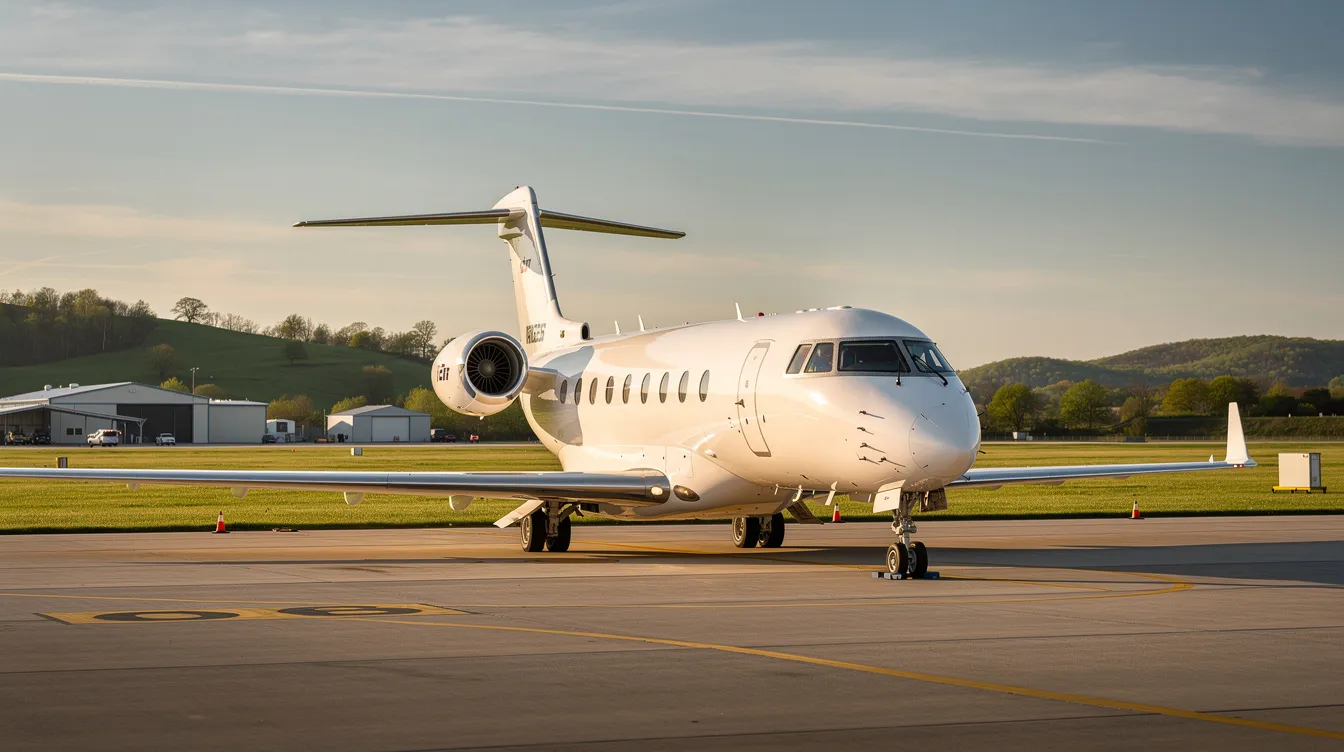
Chartering a light jet remains one of the most practical ways to fly private on regional routes across North America and Europe. But how much does it cost, really? This guide breaks down light jet charter cost in 2026 with concrete numbers, real route examples, and strategies to keep your spend in check - whether you're flying for business or leisure.
Chartering a light jet typically costs between $3,000 and $6,000 per hour for the entire aircraft, not per person. Most travelers on popular routes should expect $3,500–$5,000 per hour as a realistic range for well-maintained aircraft with vetted operators.
Total private jet cost depends on aircraft category (light jets vs super light jets vs midsize), route distance, airport choices, and timing - not just the published per-hour rate. Taxes, landing fees, crew expenses, and repositioning can add 20–50% to the base calculation.
A typical same-day business trip (e.g., New York–Boston round trip) on a light jet usually falls in the $16,000–$25,000 range all-in, while a 2–3 hour one-way leg (e.g., LA–Denver) can run $16,500–$21,000 depending on dates and aircraft availability.
Jettly's digital marketplace lets travelers compare live prices on 20,000+ aircraft, avoid hidden fees, and see instant price ranges before speaking to an agent.
Readers can learn more or request a live quote for light jets and other private jet charters at https://www.jettly.com, reinforced throughout this guide.
A light jet is a business jet that generally accommodates 4 to 8 passengers, with a typical nonstop range of about 1,200 to 2,000 nautical miles. These aircraft sit in the middle of the private aviation spectrum - larger and more capable than very light jets, but smaller and more affordable per hour than midsize jets or heavy jets.
Light jets are built for regional missions. Think 1–3 hour flights: New York to Miami, Los Angeles to Vail, Toronto to Chicago, or London to Ibiza. On these routes, a light jet delivers speed, privacy, and access to smaller airports without the cost of a larger cabin you don't need.
In 2026, the most commonly chartered light jet models include the Cessna Citation CJ3+ (seating 7–9, range about 1,875 nm), the Embraer Phenom 300E (6–8 seats, range roughly 2,010 nm, cruise speed near 464 knots), the Learjet 75 (7–8 seats), and the Hawker 400XP (7–8 seats). These aircraft feature compact, functional cabins optimized for speed and efficiency, with basic power outlets and modest refreshment centers - everything a small group needs without excess.
What separates light jets from very light jets and super light jets? Very light jets typically seat 4–5 passengers with shorter range (800–1,300 nm) and lower hourly rates. Super light jets push performance higher - better climb, more baggage room - but stay below midsize territory. Standard light jets hit the balance point: enough seats for a small executive team or family, enough range for most domestic flights, and a price point that keeps the charter cost-effective compared to stepping up a full category.
On the Jettly platform, private charter aircraft like light jets are often the "workhorse" choice for 3–6 passengers needing fast, same-day out-and-back trips at a competitive private charter price.
In 2026, light jet charter cost typically ranges from about $3,000 to $6,000 per hour for the entire aircraft. Well-maintained jets from reputable private jet charter operators (those with safety ratings like ARGUS Gold) tend to quote between $4,200 and $6,200 per hour as a block rate, excluding landing fees, positioning, and taxes.
But hourly rate alone doesn't tell the full story. Total trip cost includes minimums (operators often require a minimum of 1.5–2 billable hours per day), taxi time, repositioning of the aircraft if it isn't already at your departure airport, and various airport and government fees. On very short flights, these extras can push the effective hourly rate significantly higher.
Here are a few concrete scenarios to help you budget:
A 2-hour flight at $3,500/hour produces a base aircraft cost of roughly $7,000. Add fuel surcharges, handling, and Federal Excise Tax, and the all-in figure often lands between $9,000 and $11,000.
A 4-hour total mission (out and back on the same day) at $4,000/hour yields a $16,000 base. With taxes, positioning, and add-ons, expect $19,000–$22,000 or more.
For comparison, ultra long-range jets can exceed $20,000 per hour, and super midsize jets range from $5,000 to $10,500 per hour. Right-sizing to a light jet when your passenger count and distance allow it is one of the best ways to control private jet travel costs.
Jettly's instant pricing tool surfaces these ranges in real time for specific routes, helping travelers see how much it costs before speaking to support.
The following 2026 route examples give a realistic picture of what a light jet charter costs door-to-door. All estimates assume standard airport fees, normal demand conditions, and 4–6 passengers.
New York (TEB) to Miami (OPF)
This is one of the most popular private jet routes in the U.S. - roughly 1,000 nautical miles, about 2.5 hours of flight time on a light jet. One-way pricing typically falls between $14,000 and $19,000 depending on season and the specific aircraft. Peak winter demand (November through March) pushes quotes toward the higher end.
Los Angeles (VNY) to Las Vegas (LAS)
A short hop of about 230 nautical miles, this route is popular for weekend getaways and business events. A same-day light jet round trip usually runs $8,000–$12,000 all-in. The short distance means minimum billable hours play a bigger role in total cost here.
Los Angeles (VNY) to Denver (DEN)
At roughly 729 nautical miles and about 2 hours of block time, one-way estimates for a light jet on this route land between $16,500 and $21,000. Mid-week, shoulder-season bookings tend to come in at the lower end.
Toronto (YYZ) to Montreal (YUL)
A quick 300-nautical-mile hop within Canada, this route is priced around $7,000–$10,000 one-way on a light jet. It's a common executive shuttle route where light jets outperform commercial airlines on total door-to-door time.
London (LTN) to Nice (NCE)
For European travelers, this roughly 600-nautical-mile route from London Luton to Nice Côte d'Azur costs approximately €12,000–€18,000 one-way on a light jet. International flights may incur additional head taxes (around $23.40 per passenger on U.S.-bound legs) and customs fees depending on destination.
Real-time Jettly quotes reflect exact dates and aircraft availability for each of these routes and many more.
Very light jets, light jets, and super light jets sit next to each other on the private jet charters spectrum, but they serve different missions at different price points. Understanding where each fits helps travelers avoid overpaying - or underestimating what they need.
Very light jets (VLJs) like the Embraer Phenom 100EV and HondaJet Elite II typically seat 4–5 passengers with a range of 800–1,200 nautical miles. Hourly rates for VLJs run about $2,000–$3,000 per hour, making them attractive for quick 1–1.5-hour hops. But cabin space is limited, baggage capacity is tight, and performance at hot or high-elevation airports can be restricted.
Standard light jets (Phenom 300E, Citation CJ3+, Learjet 75) accommodate six to eight passengers with ranges of 1,200–2,000+ nautical miles and hourly rates of roughly $2,500 to $4,000 per hour on published comparator rates, or up to $6,200 per hour for premium-vetted operators. These are the go-to for regional business routes where you need more cabin room, more range, and better runway performance.
Super light jets offer upgraded performance - faster climb, more baggage, slightly longer legs - at rates around $3,500–$6,000 per hour. Aircraft like the Learjet 60 sometimes fall into this class. They bridge the gap when a standard light jet is almost enough but not quite, and stepping to a full midsize jet would be overkill.
On Jettly, passengers can see multiple aircraft categories side by side for a route, making it straightforward to decide whether the added cost of a super light or super midsize makes sense for the trip, and broader overviews of charter airlines and private flight options provide additional context when choosing providers.
While many cost factors apply across private charter, certain elements affect light jets in particular.
Minimum billable hours. Operators may impose minimum flight time requirements, usually around 2 hours. On a 40-minute hop like New York to Boston, that means you're paying for at least twice the actual airborne time, making the effective per-mile cost much higher than on a 2–3 hour leg.
Runway and elevation constraints. Not every light jet can operate safely at every airport. Short runways or high-altitude fields (like Aspen or Telluride) may require a larger aircraft category - and a higher private jet cost - even if the passenger count fits a light jet.
Seasonal pricing patterns and multiple legs increase overall charter costs. Peak travel seasons - holiday weekends, major sports events, ski season - raise both aircraft availability pressure and pricing. Charter pricing can vary based on demand during holidays and peak travel seasons, sometimes by 30% or more on identical routes.
Fuel prices and operating costs significantly influence charter pricing. Light jets burn less fuel than midsize jets or heavy jets, but fuel still accounts for a significant share of the direct cost on any flight.
Passenger count determines the required aircraft size. If you need seats for seven to nine passengers (or eight to ten passengers with tight configurations), you may be pushed from a light jet into a midsize category, which changes the pricing equation entirely.
Choosing already-positioned aircraft cuts repositioning fees significantly. A broker or digital platform like Jettly can sometimes solve these constraints by sourcing a nearby alternative aircraft or airport.
Flight distance is one of the strongest cost drivers for any charter flight. Longer legs mean more fuel burn, more crew time, and higher total per hour charges.
Most cost calculators use estimated flight time (in hours) multiplied by the aircraft's hourly rate, plus taxi time. Winds, routing, and air traffic control can adjust actual block time slightly, but the calculation follows a consistent pattern.
Here's how that plays out in practice:
300–400 nm hops (e.g., Houston–Dallas): About 1 hour of airborne time, but typically billed at 1.5–2 hours due to minimums. Flight distance increases fuel consumption and costs, but the minimum-hour floor is the bigger factor here.
1,000–1,200 nm flights (e.g., Chicago–Miami): These require 2.5–3.0 billable hours on a light jet, and the cost aligns more closely with actual flight time, making these routes more efficient on a per-mile basis.
Beyond roughly 1,500–1,800 nautical miles, most travelers shift from light jets to super midsize or ultra long-range jets to avoid fuel stops. A refueling stop adds 30–60 minutes on the ground, extra handling fees, and sometimes a higher total cost than simply booking a larger, longer-range aircraft, so understanding how much a private jet costs overall is key when comparing categories.
Jettly's instant pricing already incorporates typical route times so customers don't have to estimate flight hours themselves.
Aircraft type affects hourly rates significantly across the private aviation industry. Moving up in size increases not just hourly rate but total trip cost.
Cabin volume, range, baggage capacity, and amenities- stand-up cabins, enclosed lavatories, Wi-Fi, full galleys, and dedicated flight attendants - all influence the base per-hour charge. Light jets generally feature compact cabins ideal for short missions. Midsize jets and above offer more cabin space, longer range, and more onboard services.
Here are high-level 2026 benchmark ranges across categories:
|
Aircraft Category |
Typical Hourly Rate |
Seats |
Range |
|---|---|---|---|
|
Turboprop aircraft |
$1,500–$3,500/hr |
4–9 |
800–1,600 nm |
|
Very light jets |
$2,000–$3,000/hr |
4–5 |
800–1,200 nm |
|
Light jets |
$3,000–$6,000/hr |
6–8 |
1,200–2,000 nm |
|
Midsize jets |
$4,000–$8,000/hr |
7–9 |
2,000–3,000 nm |
|
Super midsize jets |
$5,000–$10,500/hr |
8–10 |
3,000–4,000 nm |
|
Heavy jets |
$8,500–$14,000+/hr |
10–16 |
4,000–6,000 nm |
|
Ultra long-range jets |
$10,500–$20,000+/hr |
12–19 |
6,000+ nm |
Private jet hourly rates range from $2,300 to $22,900 across the full spectrum. Turboprops cost about $2,300 to $3,500 per hour at the low end. Heavy jets typically start around $8,500 per hour. Ultra-long-range jets cost between $10,500 and $20,000 per hour - and can exceed $20,000 for the largest ultra-long-range aircraft.
If passengers or baggage exceed light jet limits, stepping to a super light or midsize jet may actually be cheaper than taking two light jets or making extra fuel stops. For buyers comparing ownership and charter, guides to the cheapest private aircraft options help frame when upgrading size still makes economic sense. Jettly's interface flags aircraft category constraints (aircraft weight limits, runway requirements, range) so travelers see only realistic options with accurate pricing.

Beyond the visible per-hour rate, the final cost of a light jet charter incorporates various operational and logistical factors grouped into an all-in figure. Here's what's typically included.
Aircraft and flight crew costs form the base - this covers the pilots, the aircraft lease or operating cost, insurance, and standard maintenance reserves. Crew overnight expenses range from $200 to $600 per crew member when a trip requires an overnight stay.
Fuel is billed within or alongside the hourly rate, though some operators add fuel surcharges separately. Fuel prices and operating costs significantly influence charter pricing, especially on longer legs.
Landing and handling fees vary by airport. Landing fees vary from $150 to over $2,000 depending on the airport. Airports charge varying fees for landing and handling based on location and demand - a private FBO at Teterboro charges differently than a regional field in the Midwest. Hangar fees may also apply for overnight parking.
Taxes. In the United States, Federal Excise Tax is 7.5% for domestic flights. Segment fees are $5.30 per passenger for domestic flights. International flights incur a $23.40 head tax per passenger. These taxes and fees add to the final charter cost.
Optional services. Additional services like catering can increase the overall cost of a charter flight. Premium catering, ground transportation, and cabin attendants on certain aircraft are usually itemized so clients can choose what to include.
On Jettly, quotes are structured to show what's included upfront so the number you see is as close as possible to the number you pay, barring unusual operational changes.
Cost per hour is only the starting point and can be misleading if travelers don't account for repositioning, taxi time, or minimums. Minimum daily billable requirements affect pricing for short flights - and this is where the gap between "per hour rate" and "actual spend" becomes clear.
Example 1: Short hop. A 1-hour flight on a light jet at $3,500 per hour may bill at 2 hours due to minimums, plus roughly $1,000 in airport fees and taxes. The actual trip cost comes to approximately $8,000 instead of $3,500. The hourly rate was accurate, but the total cost is more than double.
Example 2: Longer day trip. A 3-hour leg each way (6 hours total) on the same aircraft at $3,500/hour yields $21,000 in flight time charges. Add $2,000 in fees and taxes, and the total is around $23,000. But the effective hourly cost including fees is now about $3,833 - much closer to the published rate. Longer missions dilute fixed costs more efficiently.
Jettly's instant pricing engine uses real-world billable hours, not just block time, helping clients budget closer to their actual spend, while its jet card flight cost estimator lets frequent flyers preview typical one-way pricing under membership-style programs.
Even experienced private jet travelers can be surprised by fees that weren't disclosed in the initial quote. Here's a practical checklist of potential hidden fees to ask about before signing.
After-hours airport handling: FBOs that stay open past normal hours may charge premium rates for late arrivals or early departures.
De-icing: In winter, unexpected de-icing charges can add $1,000–$5,000 depending on aircraft size and conditions.
Wi-Fi surcharges: Some aircraft charge per-flight or per-MB for onboard connectivity.
Short-notice schedule changes: Rescheduling within 24–48 hours of departure often triggers fees.
Pet cleaning: Operators who allow pets may add cleaning surcharges of a few hundred dollars.
Extra catering: Going beyond standard refreshments into full meal service is almost always billed separately.
Tax treatment also differs by jurisdiction. Federal Excise Tax is 7.5% for U.S. domestic flights, while European charters may carry different segment fees or VAT structures. Some quotes look cheaper initially but add these later.
Jettly emphasizes transparent pricing, surfacing these potential charges upfront wherever possible, and working with operators that avoid last-minute add-ons; its guides on affordable private jet charter costs explain how these fees show up in real-world quotes. The best practice for any traveler: always ask any provider for a written, itemized quote and confirmation that no other mandatory fees will be added post-flight.
The economics of one-way versus round-trip pricing for light jets revolve around one concept: repositioning. When you book a one-way charter flight, the aircraft typically needs to fly back to its base or next mission - and that empty "ferry" leg costs the operator money. Repositioning flights can significantly increase total costs, and operators often pass some of that cost to the client.
A same-day out-and-back (e.g., LA–San Diego–LA) can be priced more efficiently than two fully independent one-way private charters because the same aircraft stays with you throughout. There's no ferry leg, no second positioning fee, and crew expenses are contained within a single duty day.
Some operators and aircraft are part of "floating fleets" - they don't return to a fixed base after every trip. These operators tend to offer more competitive one-way pricing because repositioning fees apply only if the aircraft is not nearby, and broader strategies for booking the cheapest private jet flights often build on this kind of fleet flexibility.
Jettly's marketplace can surface discounted one-way and empty leg opportunities for light jets when aircraft need to move along popular routes anyway.
For multi-leg itineraries - say, New York to Washington, D.C., then on to Charlotte, and back to New York - the total cost is typically computed as the sum of each leg's billable time plus a single set of crew expenses, rather than three independent charter bookings. This usually saves 15–25% compared to booking each segment separately.
Empty leg flights are pre-scheduled positioning flights with no passengers. Operators need to move aircraft from point A to point B for their next booking, and rather than fly empty, they offer these legs at steep discounts. Empty leg flights can save up to 75% off standard rates - though 25–50% discounts are more common in practice, especially when travelers crowdsource private jet flights and share empty seats instead of chartering the entire aircraft alone.
The catch: routes, timing, and aircraft type are fixed or only moderately flexible. Empty leg flights can offer substantial discounts for travelers if their itinerary aligns, but they work best for people whose schedule can adapt to available segments rather than the other way around.
A realistic 2026 example: a New York–Florida empty leg on a light jet might be available for $6,000–$9,000 instead of the standard $15,000+. As of late 2026, platforms like UpLeg show over 2,500 active empty legs across 67 U.S. markets.
Jettly aggregates empty leg inventory from multiple operators, allowing customers to browse deals by route, date range, and aircraft category, including light jets.
The trade-off is real: exceptional savings come with lower control over exact departure time and the possibility of last-minute schedule changes if the primary mission changes. For travelers who can stay flexible, it's one of the best ways to fly private jet at a fraction of the normal cost.
Light jets are efficient for many trips, but there are clear thresholds where a midsize, super midsize, or even ultra long-range jet is the smarter choice.
Concrete triggers to consider moving up:
More than 6–7 adult passengers
Nonstop legs above roughly 1,500–1,800 nautical miles
Unusually heavy baggage (ski gear, film equipment, trade show materials)
The need for a fully stand-up cabin or enclosed lavatory
Long-haul flights where comfort over 4+ hours matters
Comparing costs on a long sector is instructive. A light jet making a fuel stop on a 1,600 nm route adds 30–60 minutes of ground time plus $500–$1,500 in extra handling fees. A super midsize jet flies the same route nonstop at a higher per-hour rate but may end up competitive on total cost when factoring in time saved and reduced handling.
Jettly's pricing comparison by aircraft category lets users immediately see the cost delta between light jets and super midsize or heavy options for the same route. Think of it as a value decision rather than purely a luxury upgrade - sometimes paying more per hour lowers total cost and improves productivity.
Jettly is a global digital private jet charter marketplace connecting travelers with 20,000+ aircraft, including a large inventory of light jets available across North America, Europe, and beyond, positioning itself as a flexible, cost-effective NetJets alternative for many private flyers.
The platform sources instant prices from a network of safety-vetted operators, rather than using generic third-party averages. When a customer enters a route and dates, filters by aircraft category (e.g., light jets only), the system combines per-hour rates, positioning costs, and airport fees into a transparent all-in estimate.
Jettly operates as a charter broker rather than an owner-operator. That means unbiased comparison between different aircraft and operators for each mission - the platform has no incentive to push one tail number over another.
Customers can either book on-demand per trip or explore private jet memberships if they fly frequently but don't want traditional jet cards or fractional ownership. The focus is competitive pricing and transparent pricing first, with membership as an optional layer for travelers who want rate consistency.
On-demand charter means pay-as-you-go: each trip is quoted and booked independently. Membership or jet card models lock in rates or reduce service fees in exchange for upfront commitment or annual volume.
On-demand works best for travelers flying fewer than roughly 25–50 flight hours per year. There's no upfront financial commitment, no expiration clocks, and full flexibility to choose any suitable aircraft for each trip.
Membership models - including Jettly's and its structured jet card programs - can provide benefits like lower service fees, priority access to aircraft, or improved rate consistency for travelers with more regular private jet travel patterns.
Here's a quick numeric scenario: a client flying 35 hours a year on light jets at an average on-demand rate of $4,500/hour pays roughly $157,500 annually. A membership that reduces the effective rate by $200–$300/hour through fee reductions or rate caps could save $7,000–$10,500 per year, and in-depth breakdowns of jet card costs and pricing structures help clarify whether those savings justify the commitment. Whether that justifies the membership fee depends on the specific program.
Jettly's focus is transparent per-trip pricing first, with membership as an optional optimization rather than a requirement. For a detailed comparison, see Charter vs Membership vs Jet Card.
Here are seven concrete cost-saving strategies that don't compromise regulatory or operational safety:
Use secondary airports. Using secondary airports can reduce landing and ramp fees. Flying from Teterboro instead of LaGuardia, or Van Nuys instead of LAX, often saves hundreds on airport fees while placing you closer to FBO-style service.
Travel off-peak. Tuesday through Thursday flights typically cost less than Friday or Sunday. Avoiding major holiday weekends helps even more.
Consolidate trips. Combining two short trips into one multi-leg day reduces the number of positioning legs and minimizes crew expenses.
Share the cost. Sharing the aircraft cost among passengers lowers individual rates. A $16,000 round trip split among four colleagues is $4,000 per person - competitive with last-minute business class on many routes.
Right-size the aircraft. Choosing a light jet or super light jet instead of an oversized super midsize or heavy jet is often the single biggest lever for savings.
Book ahead. Booking 30 to 60 days in advance offers the best rates. Popular business routes fill up, and early booking gives operators time to position the most efficient aircraft.
Use empty legs. When your schedule allows flexibility, empty leg opportunities can cut 25–75% off a standard charter cost, and broader guides to affordable aeroplane rental options explain how to combine such tactics with other cost-saving approaches.
Jettly's advisors can flag cost-efficient route options and aircraft choices while still adhering to strict safety vetting standards.
Many new private aviation customers start by comparing light jet charter cost to buying multiple first-class or business class tickets on commercial airlines. The math is closer than most people expect.
Consider a family of five flying from New York to Orlando during peak holiday season. Five first-class fares can easily reach $8,000–$10,000 combined. A light jet charter on the same route runs approximately $14,000–$18,000, but includes schedule flexibility, no security lines, direct access to secondary airports, and 2+ hours of time savings each way, especially compared with owning or operating affordable planes for personal use on longer trips.
For business use cases, the equation shifts further. A team of 4–6 executives on a light jet can visit two or three cities in a single day - something impractical on commercial flights. The productivity gained from avoiding connections, delays, and airport waits often outweighs the price premium, particularly on time-sensitive itineraries such as private jet charter in Kolkata and other major business hubs.
The real value of private flights isn't just cabin comfort. It's time savings, schedule control, and access to smaller airports closer to final destinations. A 45-minute FBO experience versus 2.5 hours of commercial airport passenger transport changes the calculation for anyone whose time has a measurable cost, whether they're flying to U.S. hubs or arranging private jet charter to cities like Lagos with complex commercial connections.
For a deeper comparison of private plane rates versus commercial fares, Jettly's resource center covers several common routes and highlights some of the best private jet charter companies for travelers weighing different providers.
Growing environmental concerns around private jet travel are worth addressing directly. Aircraft size and range affect fuel burn per passenger, and light jets sit in an interesting position.
Light jets, when fully occupied with 6–8 passengers, can be among the most efficient aircraft in the charter fleet on short missions. Per-passenger fuel burn on a full Phenom 300 covering 500 nautical miles is materially lower than the same mission on a half-empty heavy jet. That said, any private flight carries a higher per-passenger carbon footprint than commercial economy travel - that's a trade-off buyers should understand.
The private aviation industry is making progress on Sustainable Aviation Fuel (SAF), more efficient routing, and carbon offset programs. Some of these options are already available through charter bookings, though they're not yet standard across all operators, and leading private plane manufacturers increasingly design aircraft with efficiency and lower emissions in mind.
Jettly can help environmentally conscious travelers choose the most efficient aircraft categories, consolidate trips to reduce total flight hours, and participate in offset initiatives where available. The approach is practical rather than performative - present options and trade-offs honestly.
Corporate multi-city day trip. In March 2026, a four-person executive team used a Phenom 300 to visit clients in Indianapolis, Columbus, and Pittsburgh in a single day. Total flight time across three legs was approximately 4.5 hours. The all-in charter cost came to roughly $22,000. The alternative - two days of commercial flights with hotel stays - would have cost $6,000+ in business class fares and hotels while consuming 16 hours of executive time. The light jet paid for itself in productivity.
Family ski weekend. A family of five booked a Citation CJ3+ from Van Nuys (Los Angeles) to Eagle County Airport (Vail) in February 2026. The one-way trip took about 2 hours. The total round-trip cost was approximately $32,000. Flying into Eagle County - just 30 minutes from the slopes - saved 3 hours of driving compared to flying commercial into Denver, making the entire aircraft worth the premium.
Urgent same-day relocation. In July 2026, a consulting firm needed to get a project lead from Atlanta to Dallas by the end of the business day after a morning meeting wrapped late. No direct commercial flights fit the timeline. A light jet was sourced through Jettly and departed within 3 hours of the request. Total cost was about $11,000 for the one-way leg. The client closed a deal worth multiples of the jet charter cost that evening.
Getting a quote through Jettly is straightforward. Enter your route, travel dates, passenger count, and luggage requirements into the platform's interface. Select your preferred aircraft category - in this case, light jets - and receive instant price ranges within seconds.
The platform allows users to adjust airports, departure times, and cabin size to immediately see how these changes affect private jet rental cost. Swapping from a primary airport to a nearby secondary field, or shifting departure by a day, can produce meaningfully different quotes.
After reviewing instant pricing, users can request a firm quote that locks in a specific aircraft and flight schedule, usually within a short response window. Support is available to explain line items in the quote, discuss alternatives like super light jets or turboprop aircraft, and identify empty leg options if flexibility exists.
These FAQs address common questions not fully covered above, each answered succinctly. All pricing reflects 2026 data and aligns with Jettly's value proposition of transparent, accessible private aviation.
Most light jets fly about 1,200–1,800 nautical miles nonstop, which covers routes like New York–Miami, Chicago–Dallas, or London–Málaga under typical conditions. The Embraer Phenom 300E pushes that to roughly 2,010 nautical miles, while the Citation CJ3+ reaches about 1,875 nautical miles.
Trips beyond the aircraft's range may require a fuel stop, adding roughly 30–60 minutes of ground time plus extra handling fees. In some cases, these additional costs make it more cost-effective to book a super midsize aircraft that can fly the route nonstop. When requesting a quote through Jettly, travelers should specify nonstop preferences so the system or advisors can suggest the right aircraft category.
For most non-holiday trips, booking 7–21 days in advance often balances aircraft availability and pricing for light jets, especially on popular business routes. That said, booking 30 to 60 days in advance offers the best rates, particularly during busy corridors and peak seasons.
Peak periods - major holidays, big sports events, summer weekends - may require 30+ days' notice to avoid surge pricing. Jettly can still arrange same-day or next-day private flights in many regions, but prices will reflect short-notice repositioning needs and the reality that fewer aircraft are available.
Many light jets do allow pets, but policies vary by operator and destination country. Some operators require advance documentation, while others restrict breed size or number of animals on board.
Base charter rates usually stay the same, but pet cleaning fees - often a few hundred dollars - can be added to the invoice. Travelers using Jettly should indicate pet travel during the quote process so compatible aircraft and accurate pricing can be presented upfront.
All charter flights arranged through reputable brokers and platforms like Jettly operate under strict civil aviation regulations. In the United States, this means FAA Part 135 rules covering pilot qualifications, aircraft maintenance, inspection cycles, and crew duty time. European operations follow equivalent EASA standards.
Jettly works with licensed operators whose aircraft and pilots undergo regular audits, maintenance checks, and recurrent training. Clients can request details on operator safety ratings - such as ARGUS Gold or Wyvern Wingman - and aircraft management history. Choosing an appropriately vetted operator matters more than chasing the absolute lowest private jet rental cost when it comes to safety.
From the operator's perspective, the charter is priced for the entire aircraft, regardless of how many seats are filled. How passengers divide the cost among themselves is a private arrangement - there's no per-seat pricing on a true private charter.
Some Jettly customers share light jet costs within a company, between business partners, or among friends and family traveling together. Jettly typically issues a single contract and invoice to one lead customer. Anyone planning cost-sharing should agree on payment terms internally in advance, while the platform handles aircraft sourcing, pricing, and flight logistics.
Light jets occupy a sweet spot between cost and capability for many private jet travelers, especially on 1–3 hour regional routes. They deliver the core benefits of private aviation - schedule control, time savings, access to smaller airports - without the expense of a midsize or heavy cabin you don't need.
The key numbers for 2026: typical light jet charter cost runs $3,000–$5,000 per hour, with total trip costs ranging from roughly $8,000 for short hops to $25,000+ for same-day round trips on popular routes. These figures compare favorably to super midsize jets at $5,000–$10,500 per hour or ultra long-range jets at $10,500–$20,000+ per hour.
The real value isn't cabin luxury - it's reclaiming time, eliminating connections, and reaching destinations that commercial airlines can't serve efficiently. For business travelers and families alike, a light jet often delivers the best return on every dollar spent in private aviation.
Jettly's transparent, digital-first private charter model reduces pricing uncertainty, surfaces hidden fees early, and makes it easy to compare light jets with other options across 20,000+ aircraft.
Ready to experience private travel on your terms? Explore light jet availability or request a tailored quote at https://www.jettly.com.
Share this post:
Jay Franco Serevilla
Nov 2, 2026
|
5
min read
Discover tips and trends in the industry.
5
min read
XO's, Private Jets, and a Different Kind of Life: How Jettly Compares to XO
This guide compares Jettly and XO, two private jet services, highlighting their unique offerings. Jettly provides an on-demand marketplace with access to over 20,000 aircraft, while XO focuses on membership tiers and shared flights. Travelers can choose based on their flying frequency and flexibility needs.
Read More
5
min read
MSP to Key West: How to Get from Minneapolis–St. Paul to Key West (EYW) with Commercial and Private Flights
Traveling from Minneapolis–St. Paul (MSP) to Key West (EYW) requires planning, as there are no year-round nonstop commercial flights. Travelers can choose between connecting flights through major hubs or opt for a private jet charter for a quicker, more direct route. This guide provides insights on flight options, pricing, and tips for a smooth journey to the sunny shores of Key West.
Read MoreStay updated with our latest insights and tips to elevate your journey with us.
MEMBERSHIPS AND ASSOCIATIONS



Disclaimer: Jettly operates as a charter broker, offering access to a global digital jet charter marketplace. Jettly is not a direct air carrier and does not own or operate aircraft. All advertised flights are conducted by third-party air carriers that are fully licensed and hold the appropriate Part 135 or Part 121 certifications issued by the Federal Aviation Administration (FAA) or equivalent regulatory authorities under U.S. or foreign law. Jettly complies fully with the U.S. Department of Transportation's Part 295 and Part 298 Charter Broker regulations. Jettly does not carry additional liability insurance. Passengers are covered by aircraft operator insurance. TICO: 50023770


