



Login
Get Instant Pricing On 23,000+ Aircraft

>
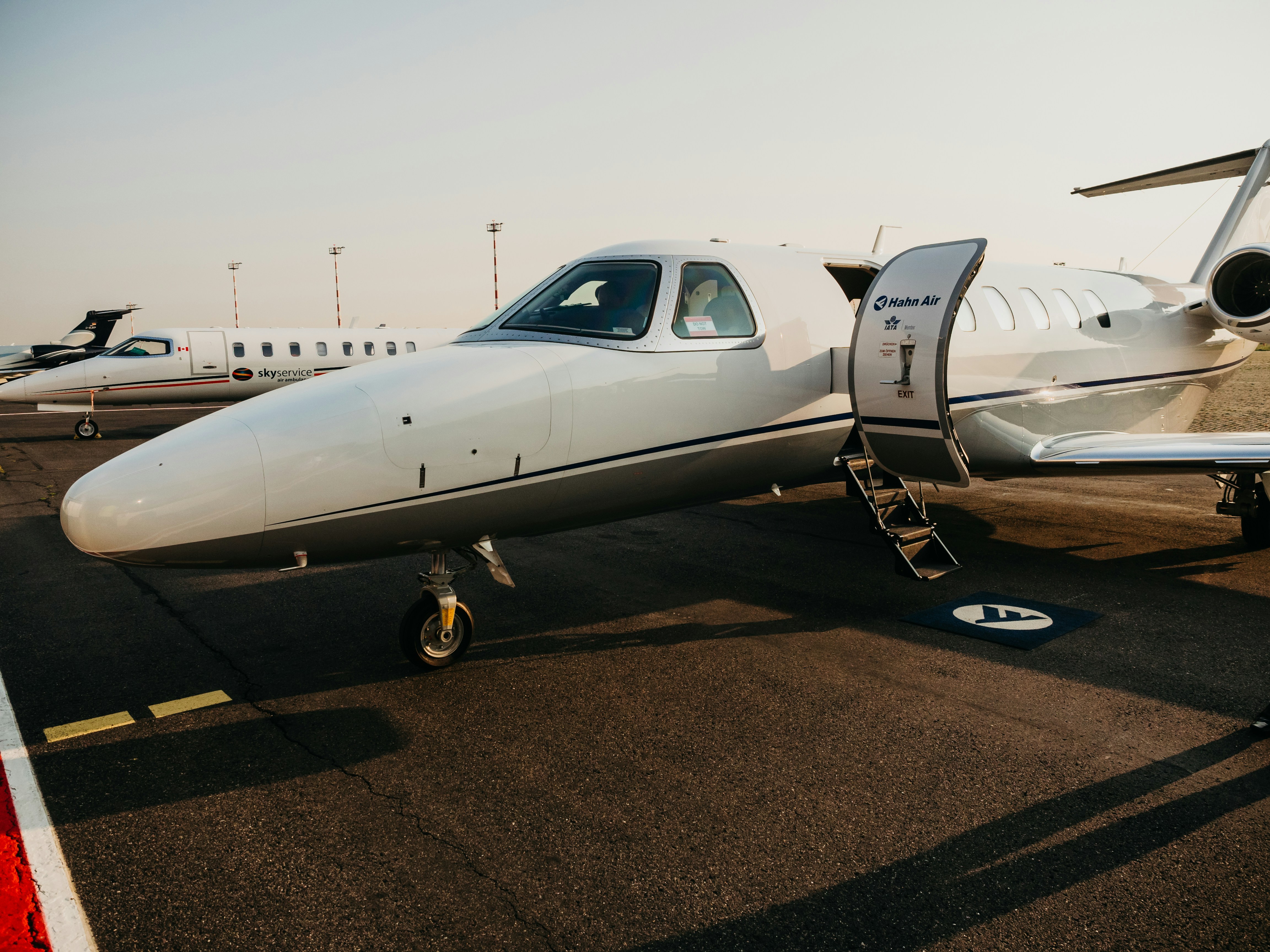
This article provides a comprehensive cost comparison between light jets and heavy jets for private travel. Whether you are a frequent traveler, a business user, or a charter client, understanding the differences in cost, value, and operational suitability between these two categories is essential for making informed decisions. We break down the key factors that influence private jet pricing, including hourly rates, trip distance, passenger count, and total mission cost, to help you choose the right aircraft for your needs and budget.
Choosing between a light jet and a heavy jet comes down to how far you're flying, how many people are on board, and what you're willing to spend per flight hour. The cost gap between these two categories is significant—light jets run roughly $2,900 to $4,600 per hour, while large jets range from $8,500 to $17,000 per hour—but hourly rate alone doesn't tell the full story. Trip distance, fuel stops, passenger count, and total mission cost all shape which aircraft type actually delivers better value. This comparison breaks down every cost factor so you can choose the right aircraft for your budget and mission profile.
The short answer: For most private jet travel—domestic flights under 2,500 nautical miles with groups of eight or fewer—light jets offer substantially better value, saving thousands per flight hour with minimal sacrifice in comfort. Heavy jets justify their premium only when you need nonstop transcontinental or international flights, are traveling with 10 or more passengers, or require stand up cabins and full amenities for long haul flights. The decision hinges on flight distance and group size more than any other factors.
Light jets are small private aircraft optimized for short to mid-range missions, typically under 2,000 nautical miles. They fill a critical niche in the private aviation industry for regional hops, intra-country business trips, and weekend leisure travel where cost efficiency matters more than cabin size, and they are also commonly used for chartering a private jet when travelers want flexibility without ownership.
Their defining strengths include:
Lower operating costs – fuel burn, maintenance costs, and crew expenses are substantially reduced compared to larger categories
Access to smaller airports and regional airports – shorter runway requirements open up hundreds of additional airfields, often closer to final destinations, reducing ground transportation time
Ideal short-range performance – well-suited for flights of 2–4 hours, covering most domestic routes efficiently
Faster turnaround – quicker boarding, fueling, and departure processes at many facilities, often through the local fixed base operator rather than the main terminal
Popular models include the Embraer Phenom 300E (with a published range of approximately 2,010 nautical miles), Citation CJ3+, and Citation CJ4. Very light jets seat 3 to 4 passengers, while super light jet models can accommodate up to seven passengers comfortably.
Light jets are ideal for:
Regional and domestic business trips
Leisure travel for small groups
Charter clients seeking cost efficiency and flexibility
Heavy jets are large-cabin, long-range private aircraft built for intercontinental travel, extended nonstop segments, and premium comfort. They represent the upper tier of business jets, designed for travelers who need to cover serious distance without compromise, and are often chosen for private flights where range and cabin experience matter more than hourly savings.
Their defining strengths include:
Nonstop long-range capability – coast-to-coast or transatlantic flights without fuel stops, saving hours of total flight time
Large passenger capacity – seating for 10–16+ travelers with ample baggage space
Luxury amenities – stand up cabins, multiple cabin zones, full galleys, enclosed lavatories, and sleeper configurations
Time efficiency – fewer stops means tighter schedules are achievable, particularly for business and leisure travel across continents
Examples include the Gulfstream G550, Bombardier Global series (Global 6000, Global 7500 with ranges exceeding 7,700 nautical miles), and Dassault Falcon 7X. Ultra long range heavy jets can seat 12–19 passengers depending on cabin configuration, and they can be the better fit when booking the entire aircraft for larger groups traveling long distances.
Heavy jets are best suited for:
Transcontinental and international business travel
Large group charters
Luxury travel requiring maximum comfort and amenities
|
Factor |
Light Jet |
Heavy Jet |
|---|---|---|
|
Best for |
Regional/domestic flights, small groups, budget-conscious travelers |
Transcontinental/international trips, large groups, luxury requirements |
|
Hourly charter rate |
$2,900–$4,600/hr |
$8,500–$17,000/hr |
|
Passenger capacity |
4–8 seats |
10–16+ seats |
|
Nonstop range |
~1,500–2,200 nautical miles |
~4,000–7,500+ nautical miles |
|
Typical routes |
Regional hops, 2–4 hour domestic flights |
Coast-to-coast, transatlantic, transpacific |
|
Cabin comfort |
Compact; limited baggage, smaller lavatory |
Full stand-up cabin, multiple zones, full galley |
Light jets deliver better value per hour on shorter missions with smaller groups, while heavy jets justify their cost only when range, capacity, or cabin comfort are non-negotiable requirements.
This is where the private jet charter costs diverge most dramatically. Private jet rental costs range from $2,300 to $17,000 per hour depending on aircraft type, and the gap between light and heavy categories accounts for most of that spread.
Light jets rent for $2,900 to $4,600 per hour. Heavy jets—classified among large jets—range from $8,500 to $17,000 per hour, with ultra long range models pushing toward the top of that band. For context, midsize jets cost $4,700 to $7,500 per hour, sitting squarely between the two categories. At the extremes, turboprop aircraft cost $2,300 to $3,500 per hour, while VIP airliners cost $18,000 to $23,000 per hour.
What's typically included in these hourly rates: fuel, crew salaries or duty time, engine reserve programs, insurance, and standard maintenance. Those standard inclusions are separate from any direct cost pass-throughs, such as unusual airport fees or exceptional fuel-related charges. However, chartering often incurs additional charges for repositioning flights, catering, and de-icing. De-icing costs alone can vary from $1,500 to $15,000 depending on conditions and aircraft size. Fuel surcharges can significantly increase the cost of private jet services, especially during price spikes, and larger jets incur higher operating and maintenance costs due to fuel consumption and crew requirements. Fluctuating fuel prices are one reason quotes can move between booking and departure.
Fully burdened costs—including fixed cost allocation—push these numbers higher. A light jet flying 200 flight hours per year might carry approximately $450,000 in annual fixed costs (crew, insurance, hangar fees) plus around $1,800/hr in variable costs, yielding an effective cost per hour near $4,050. A heavy jet at similar utilization might carry $1,000,000+ in fixed costs and $4,800/hr in variable costs, landing around $9,800 per hour all-in when broader operational costs are accounted for.
Winner: Light Jets - by a wide margin on pure hourly cost. A light jet charter saves $5,000–$12,000+ per flight hour compared to a heavy jet. The trade-off is that heavy jets provide substantially more cabin space, range, and amenities for that premium—value that matters on longer missions.
Hourly rates only tell part of the story. Private jet rental prices depend not just on the hourly rate, but also on airport and crew-related trip charges. How much does it cost for the entire mission—including positioning legs, landing fees, crew overnights, and fuel stops?
Total Trip Cost Formula:
(Hourly rate × hours in use)
Plus dead-head or repositioning legs
Plus landing fees
Plus handling charges
Plus crew overnight fees
Plus any surcharges (e.g., de-icing, fuel surcharges)
Airport landing fees range from $100 to $2,000 depending on the airport, and some of those charges are set by the airport authority, which is why they vary so much by field. Crew overnight fees range from $200 to $600 per night. A 7.5% Federal Excise Tax applies to all US domestic flights, along with domestic segment fees of $5.30 per passenger per leg, and international itineraries may also include government taxes beyond those domestic levies. Short leg fees apply to flights under 60 minutes to offset maintenance costs.
For a New York to Chicago round trip (~730 nm each way), a light jet at $4,000/hr for roughly 2 hours each way totals approximately $16,000–$20,000 including fees. The same trip in a heavy jet at $10,000/hr runs $40,000–$50,000—more than double, with no range advantage since a light jet handles this flight distance easily.
However, for a New York to London route (~3,500 nm), the calculus shifts. A heavy jet flies nonstop in approximately 7 hours, costing $80,000–$120,000 one-way. A light jet cannot make this crossing without one or more fuel stops, adding landing fees, handling, customs, and 2–3 additional hours. Those inefficiencies can push the light jet's total cost uncomfortably close to heavy jet territory while delivering a far worse experience.
Floating-fleet aircraft can cut repositioning fees by up to 30%, which benefits both categories but particularly helps frequent private charter users who fly out of smaller markets. Transparent operators should spell out these trip items clearly rather than burying them in hidden fees.
Winner: It depends on the route. For domestic flights under 3–4 hours, light jets win decisively on total cost. For transcontinental or international trips where fuel stops are required, heavy jets often deliver comparable or better total value despite their higher hourly rate—because they eliminate the compounding costs and time penalties of intermediate stops.
Light jets typically accommodate 4–8 passengers comfortably, while heavy jets seat 10–16+. Very light jets typically seat 3 to 4 passengers. This difference transforms the per-person economics significantly.
|
Jet Type |
Total Cost (4-hour flight) |
4 Passengers |
8 Passengers |
12 Passengers |
|---|---|---|---|---|
|
Light Jet |
$18,000 |
$4,500 |
$2,250 |
N/A |
|
Heavy Jet |
$40,000 |
$10,000 |
$5,000 |
$3,333 |
Consider a 4-hour light jet mission at $4,500/hr. Total cost: $18,000. With four passengers, that's $4,500 per person. Now take a heavy jet for the same route at $10,000/hr: total cost $40,000. With four passengers, cost per person jumps to $10,000—more than double. But fill that heavy jet with 12 passengers, and cost per person drops to $3,333, actually less than the light jet option. That assumes one group is paying for the whole aircraft, so the more seats you fill, the better heavy-jet economics look.
Sharing costs among passengers can lower per-person rates significantly, making the heavy jet surprisingly competitive for larger groups even on shorter routes.
Beyond raw numbers, comfort differences matter. Heavy jets offer stand up cabins with 6+ feet of headroom, multiple cabin zones for work and rest, full galley service, enclosed lavatories, and substantially more baggage capacity. Light jets may have limited headroom, compact lavatories (sometimes not fully enclosed on very light jets), and strict baggage limits. On longer missions with higher service expectations, larger cabins also give crew members more room to operate effectively. For longer flight duration, these comfort gaps become increasingly meaningful.
Winner: Light jets for groups of 8 or fewer; heavy jets for groups of 10+. The break-even point sits around 9–10 passengers, where per-person costs begin to favor the larger private aircraft. Even below that threshold, groups flying longer legs may prefer a heavy jet for comfort—but they'll pay a steep premium for it.
Range capability is arguably the most decisive factor when comparing these categories, because fuel stops don't just cost money—they cost time.
Light jets typically cover 1,500–2,200 nautical miles nonstop. The Phenom 300E, one of the most capable super light jets on the market, publishes approximately 2,010 nautical miles in standard reserve configuration. Heavy jets normally reach 4,000–6,000 nautical miles, with ultra long range models like the Bombardier Global 7500 stretching beyond 7,500 nautical miles nonstop.
Each fuel stop adds landing fees ($100–$1,500+), ground handling charges, possible customs processing, crew ground time, and 30–90 minutes of delay. On a mission requiring two fuel stops, these extras can add $5,000–$15,000 or more to the total trip cost while extending travel time by 2–3 hours. That also makes the itinerary feel more like a commercial flight connection, which undercuts the time advantage. For time-sensitive business travelers flying on their own schedule, those delays erode the core advantage of flying private.
For flights under approximately 2,000 nautical miles—covering most domestic flights in the continental U.S.—light jets handle the mission without stops, making them the clear value play. Beyond 2,500–3,000 nautical miles, the fuel stop penalty begins to tilt total cost and time efficiency toward heavy jets. For true international flights—transatlantic, transpacific—heavy or ultra long range jets become the only practical private jet service option, which is also where private jet charter services become more compelling because nonstop capability preserves schedule control.
Winner: Light jets under 2,000 nm; heavy jets beyond 3,000 nm. The 2,000–3,000 nm range is the gray zone where a midsize jet or super midsize jet might actually represent the best compromise, depending on passenger count and schedule flexibility.
Choose a light jet if your flights are primarily regional or domestic (under 2,000 nautical miles), your travel group is 4–8 people, you value airport access to smaller airports closer to your destination, you're flying fewer than 50 to 100 hours annually, or you're prioritizing lower private jet pricing over cabin luxury. Renting is more cost-effective for individuals or businesses flying under 50 to 75 hours per year, and light jets pair well with this usage pattern, especially for travelers comparing charter with ownership or jet card programs who want lower commitment and lower spend.
Choose a heavy jet if you need nonstop transcontinental or international range, you're traveling with 10+ passengers, flight duration exceeds 5–6 hours and cabin comfort becomes essential, or your schedule demands eliminating fuel stops. Private jet ownership generally becomes financially sensible at 150 to 200 flight hours per year, and full ownership is best for entities flying 300 or more hours per year—both thresholds where heavy jet economics improve relative to chartering. They're also the better fit for travelers who need access to aircraft worldwide for long-range missions through global charter networks.
For the most common private jet charter flights—domestic routes with small groups—light jets deliver the best value by a substantial margin. The break-even on passenger count sits around 9–10 travelers, and the distance break-even falls near 2,500–3,000 nautical miles. Below those thresholds, a heavy jet is paying for capability you don't need, and private plane ownership rarely makes sense unless annual utilization is far higher than occasional charter.
Cost-saving tips regardless of category: Empty leg flights can save up to 75% on costs. Booking 30 to 60 days in advance offers the best rates. Using secondary airports can reduce landing and ramp fees. Concierge services can add convenience, but confirm whether they're included when comparing quotes. And for those considering ownership, fractional ownership is suitable for fliers between 75 and 150 hours per year, while the break-even point for private jet ownership typically occurs around 200 to 300 flight hours annually—with upfront capital costs ranging from $2 million to over $100 million and annual fixed costs from $500,000 to over $2 million.
Heavy jets begin to outperform light jets on total trip cost at approximately 2,500–3,000 nautical miles, which is the threshold where most light jets require at least one fuel stop. For coast-to-coast U.S. missions (e.g., New York to Los Angeles at ~2,150 nm), a light jet may need to stop depending on payload and conditions, while a heavy jet flies nonstop. For true international trips—New York to London at ~3,500 nm—a heavy or ultra long range jet is effectively the only option for nonstop private travel. Once stops are factored in (landing fees, handling, ground time, crew delays), the light jet's lower hourly rate advantage erodes significantly, sometimes making the total cost to charter comparable between the two categories while the heavy jet saves hours of travel time. Aircraft age can also increase rental costs by $100 to $1,000 per hour, so newer light jets on longer, multi-stop missions can approach heavy jet territory in total expense.
The per-person break-even generally falls around 9–10 passengers. Below that, light jets almost always deliver lower cost per person for flights within their range capability. With 12+ travelers on a 4-hour flight, a heavy jet's cost per person can actually drop below a light jet carrying just 4 passengers. That said, even groups of 6–8 sometimes opt for a heavy jet on longer flights where the stand-up cabin, full galley, and proper rest areas justify the premium. For aircraft owners considering fixed costs—insurance, pilot salaries, and hangar fees—higher passenger utilization helps amortize annual fixed costs that can exceed $1 million for heavy jets versus $250,000–$350,000 for light jets. Major depreciation can also occur for aircraft ownership, often losing hundreds of thousands annually, which makes maximizing passenger utility per flight even more important.
Most light jets have nonstop ranges under 2,200 nautical miles, which limits their international capability. Flights from the U.S. East Coast to Europe, for example, require at least one fuel stop—typically in Iceland, Newfoundland, or the Azores—adding significant cost and time. Weather conditions, headwinds, and regulatory fuel reserves further reduce effective range, sometimes requiring two stops. When you factor in the additional landing fees, customs processing, overflight charges, crew overnight fees ($200–$600 per night), and schedule disruption, a light jet making a transatlantic crossing can cost nearly as much as a heavy jet doing it nonstop in 7 hours. For shorter international flights—U.S. to Caribbean, or intra-European routes—light jets remain a viable and cost-effective option since these routes typically fall within their range envelope. Chartering is generally preferred for those flying fewer than 50 to 100 hours annually on such routes, with on demand charter or flexible charter services offering access without the commitment of ownership.
Share this post:
Jeff Ryan Serevilla
Sep 8, 2026
|
5
min read
Discover tips and trends in the industry.
5
min read
Stewardess: From Classic Airline Icon to Modern Flight Attendant
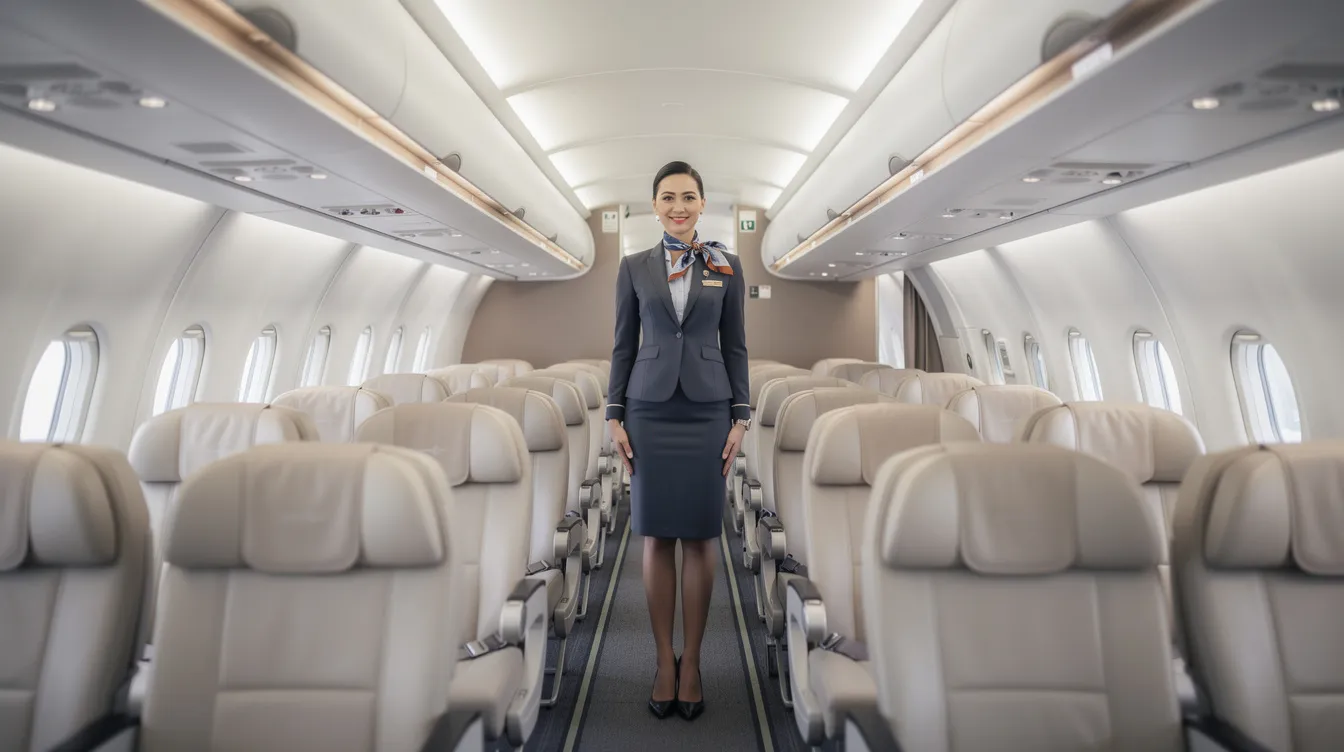
The term 'stewardess' has evolved into the more inclusive 'flight attendant,' reflecting the significant changes in the role from the mid-20th century to today. Modern flight attendants are trained safety professionals responsible for passenger safety, emergency response, and in-flight service, contrasting sharply with the outdated stereotypes of glamorous service. This article explores the history, training, and responsibilities of today's cabin crew across commercial and private aviation.
Read More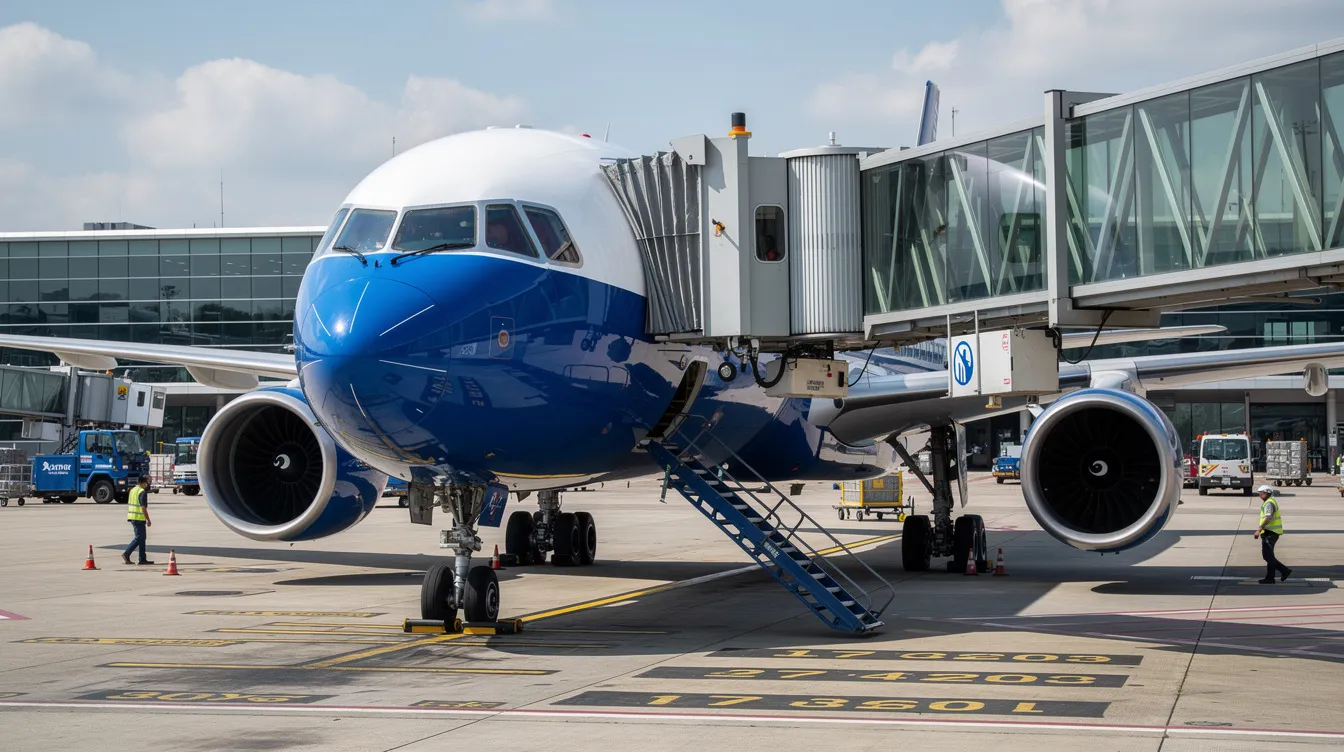
5
min read
DL 767: Delta Air Lines Flight DL767, Boeing 767‑300ER & Private Jet Alternatives
Delta Air Lines Flight DL 767 connects New York and Los Angeles using a Boeing 767-300ER, known for its reliability and comfort. This article explores the flight's features, the aircraft's specifications, and private jet alternatives for travelers seeking flexibility. With Delta planning to retire the 767-300ER by 2030, understanding your options is crucial for future travel.
Read MoreStay updated with our latest insights and tips to elevate your journey with us.
MEMBERSHIPS AND ASSOCIATIONS



Disclaimer: Jettly operates as a charter broker, offering access to a global digital jet charter marketplace. Jettly is not a direct air carrier and does not own or operate aircraft. All advertised flights are conducted by third-party air carriers that are fully licensed and hold the appropriate Part 135 or Part 121 certifications issued by the Federal Aviation Administration (FAA) or equivalent regulatory authorities under U.S. or foreign law. Jettly complies fully with the U.S. Department of Transportation's Part 295 and Part 298 Charter Broker regulations. Jettly does not carry additional liability insurance. Passengers are covered by aircraft operator insurance. TICO: 50023770


