



Login
Get Instant Pricing On 23,000+ Aircraft

>
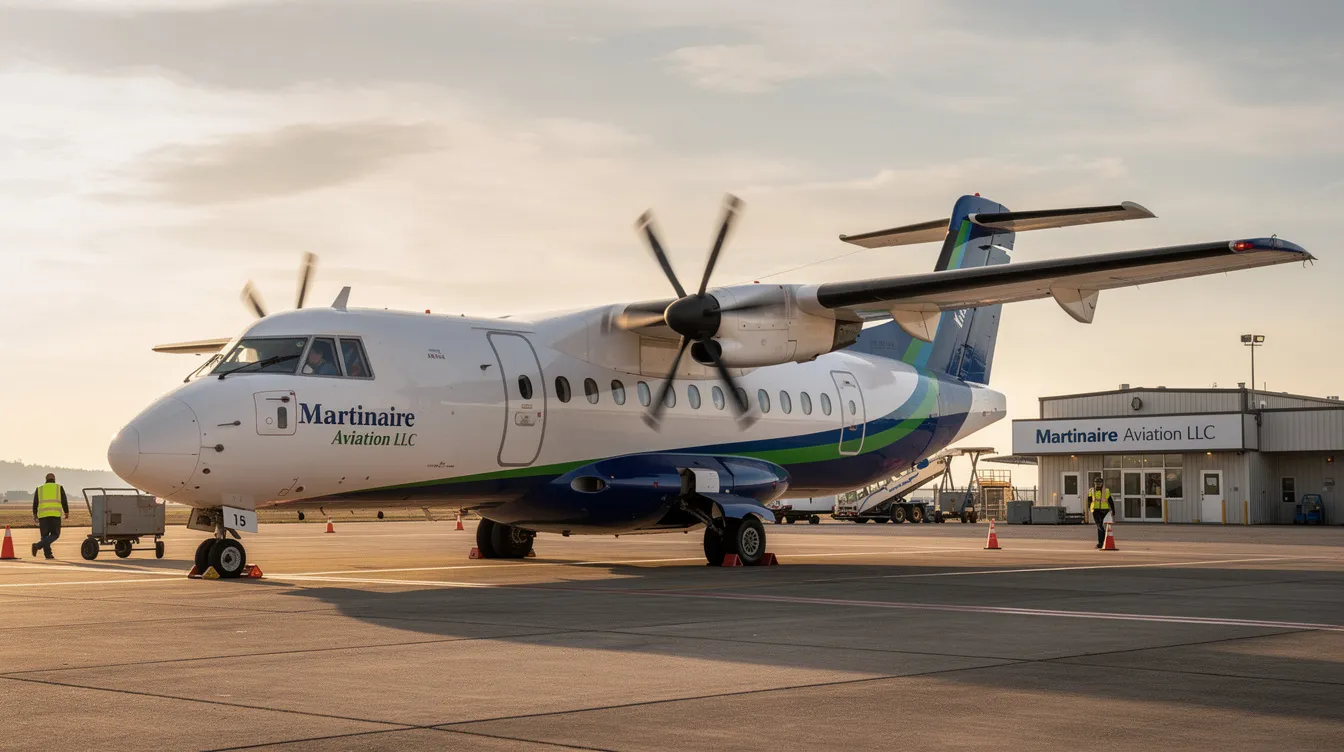
Martinaire Aviation LLC is one of the longest-running cargo feeder carriers in the United States. Founded in 1978 and headquartered near Dallas in Addison, Texas, this air cargo carrier has spent decades connecting smaller regional airports to the sorting hubs that power overnight package delivery. For anyone exploring aviation careers, freight logistics, or wondering how cargo operations differ from on-demand private passenger charter, this article breaks down Martinaire's history, fleet, pilot career pipeline, and how its model compares to digital charter platforms like Jettly.
Martinaire Aviation, L.L.C. is a Texas-based FAR Part 135 air cargo carrier founded in 1978, headquartered at Addison Airport (KADS) near Dallas, specialising in overnight feeder cargo flights for integrators like UPS.
The company operates a fleet of Cessna 208B Caravan / Super Cargomaster aircraft and Beechcraft 1900C turboprops, serving more than 40 U.S. cities through scheduled and on-demand air freight services.
Martinaire offers aircraft maintenance, parts sales and support, and internal flight training for its Part 135 pilots, with hiring and training centred at 4553 Glenn Curtiss Drive in Addison, TX.
Martinaire's cargo and pilot-career focus differs significantly from on-demand private passenger charter platforms such as Jettly, which operates a digital private jet charter marketplace connecting business and leisure travellers with over 20,000 aircraft worldwide.
This article covers company history and operations, careers and pilot qualifications, and how cargo-focused aviation LLCs differ from passenger charter solutions.
Martinaire Aviation, L.L.C. is a Texas-based aviation LLC that specialises in FAR Part 135 cargo feeder operations from Addison, Texas. In practical terms, a cargo feeder carrier handles the "last mile by air"—flying packages from a large sorting hub to smaller regional airports (and back) so that ground delivery trucks can reach customers by morning. Founded in 1978, Martinaire is a Part 135 air cargo carrier that originally focused on regional air freight routes within Texas.
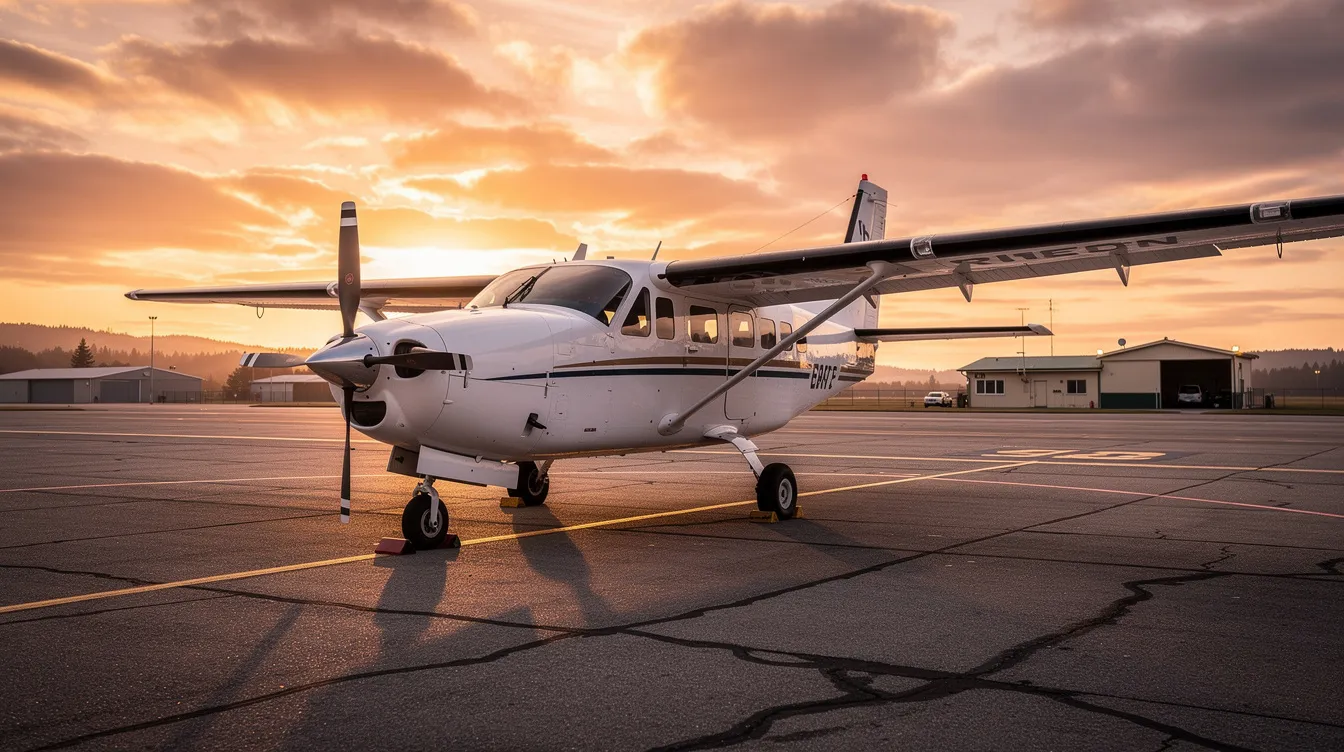
Over the following decades, Martinaire expanded aggressively through acquisitions. The company took over CCAir Cargo in January 1990, acquired Mid-Atlantic Freight in 2005, and added Superior Aviation of Lansing, Michigan, in 2006. Each acquisition pushed the airline's network further east and north, transforming it from a regional Texas operator into a national feeder carrier. In July 2022, Martinaire was itself acquired by Xwing, a San Francisco-based developer of autonomous flight systems, signalling a new chapter focused on data collection for future autonomous cargo operations.
The company is headquartered at Addison Airport (KADS), located at 4553 Glenn Curtiss Drive in Addison, Texas, just north of Dallas. Operations run primarily at night to align with the overnight package delivery networks of integrators like UPS. Most flights depart in the evening, arrive at a hub for sorting, and return to regional cities by early morning.
Martinaire operates 35 Cessna 208B aircraft for freight, along with a small number of Beechcraft 1900C turboprops. These aircraft are well suited for short- to medium-haul cargo routes—capable of operating into smaller runways that larger freighters cannot reach. The Cessna Caravan, powered by a Pratt & Whitney PT6 turboprop engine, remains the workhorse of the fleet.
All operations fall under FAA Part 135 regulations, which govern on-demand and commuter operations. Unlike Part 121 airlines (think Delta or FedEx's mainline jets), Part 135 operators fly smaller aircraft, use more flexible routing, and access communities that major carriers skip entirely.
Martinaire provides scheduled and on-demand air freight services. The service mix includes:
Scheduled feeder flights contracted by major integrators (primarily UPS)
On-demand cargo charter for urgent or time-critical shipments
AOG (Aircraft on Ground) parts transport for customers needing rapid logistics support when an aircraft is grounded
Aircraft maintenance is handled in-house. Martinaire maintains its Caravan and Beech 1900 fleet at facilities in Addison, Texas and Lansing, Michigan, performing comprehensive inspections, line maintenance, and heavy checks to keep aircraft in nightly freight rotation. The cost of aircraft maintenance on ageing turboprop fleets is a significant operational consideration—the average age of Martinaire's fleet is approximately 34 years, according to independent tracking by AceJet.
Additionally, Martinaire's technicians and parts inventory support other Caravan operators. Parts sales, troubleshooting, and AOG support for third-party aircraft help offset fleet costs and keep the maintenance team productive across shifts.
While Martinaire is built entirely around cargo, other companies in the aviation ecosystem focus on passenger travel. Jettly's global digital private jet charter platform, for example, serves a completely different market—connecting travellers with passenger-configured aircraft rather than freight turboprops.
Martinaire functions as a "secondary leg" provider in U.S. logistics. Its aircraft connect regional airports to larger distribution hubs overnight, completing a supply chain that starts with sorting centres and ends with delivery trucks.
By the early 2010s, industry reports described Martinaire as the second-largest single feeder carrier in the country among Caravan-based cargo operators. Martinaire supports major freight carriers with overnight services, moving packages along tight schedules where a missed flight can cascade into delayed ground deliveries across multiple ZIP codes.

A typical route pattern looks like this:
|
Phase |
Timing |
Activity |
|---|---|---|
|
Evening departure |
~8:00–10:00 PM |
Aircraft depart regional cities loaded with outbound packages |
|
Hub arrival |
~10:00 PM–12:00 AM |
Freight is unloaded at integrator sorting facilities |
|
Overnight sorting |
12:00–4:00 AM |
Packages are sorted and reloaded for return flights |
|
Morning return |
~4:00–6:00 AM |
Aircraft return to regional cities with inbound deliveries |
Cities historically or typically served include secondary markets across Texas, the Midwest (Michigan, Indiana), and the Southeast (North Carolina, Virginia). Specific routes shift over time based on freight contracts—when a contract with UPS adds or drops a city, the Martinaire network adjusts accordingly.
Reliability is everything in this model. Cargo integrators monitor on-time performance closely when selecting or retaining feeder partners. Dispatch efficiency, aircraft maintenance standards, and crew readiness directly affect whether Martinaire keeps or loses routes.
This time-sensitive freight model shares a structural similarity with on-demand private charter air freight networks and broader private charter aircraft marketplaces, where the "freight" is passengers and their schedules rather than packages. Both demand route flexibility and punctual operations—the difference is what (or who) is on board.
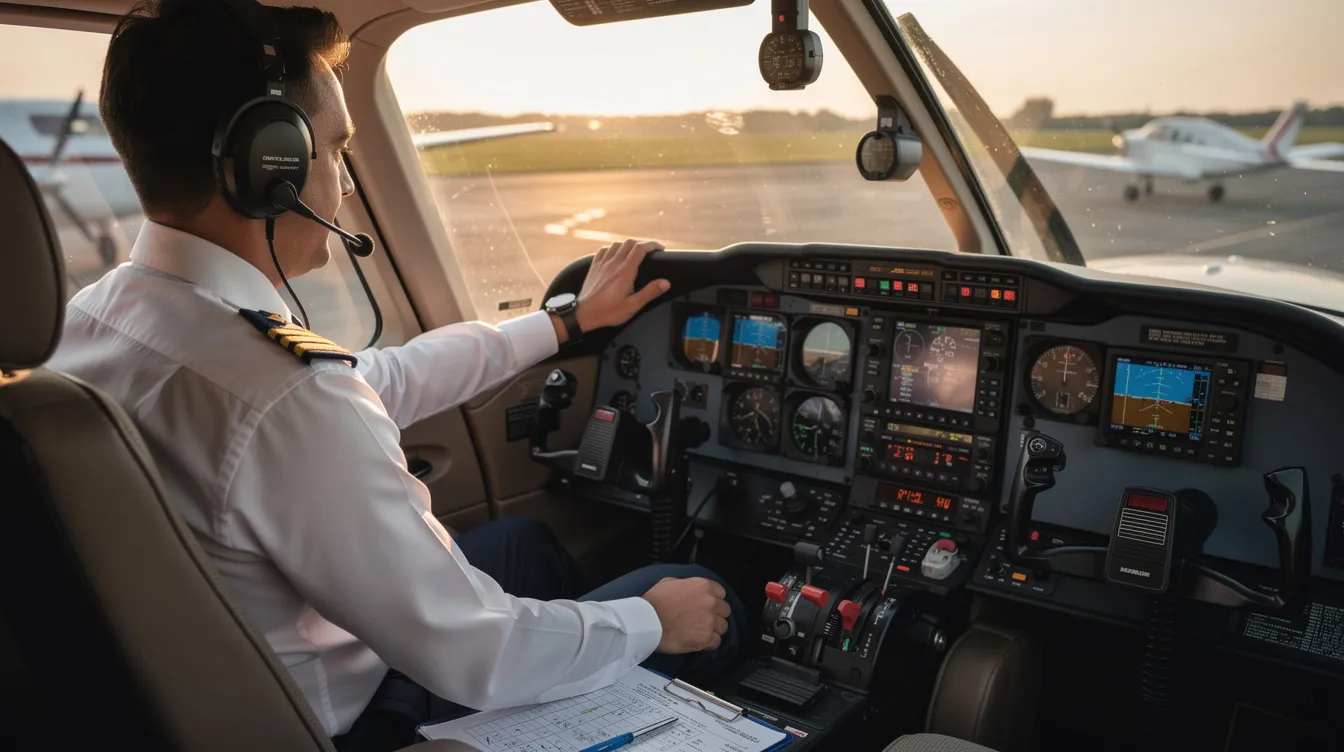
Martinaire Aviation regularly recruits and hires pilots, dispatchers, and maintenance personnel for its operations in Addison, Texas, and across its network. The majority of the hiring pipeline centers on Cessna Caravan Part 135 cargo flying—single-pilot, night operations that build turbine PIC time quickly.
The main base at 4553 Glenn Curtiss Drive in Addison, TX serves as the hub for flight operations, human resources, and initial training. Many new pilots begin their careers there, joining the company through initial training at Addison before being assigned to domiciles in other states across the country.
Pilot hiring minimums:
Pilots need 1,200 total flight hours to be eligible. Beyond the hour count, Martinaire typically requires:
500 hours cross-country time
100 hours night flying
75 hours instrument time (approximately 50 in actual aircraft, not simulators)
A Commercial Pilot License with Single-Engine Land rating
Pilots must hold a valid FAA Pilot License
An FAA Second Class Medical certificate
Candidates must be legally eligible to work in the U.S.
The hiring process:
Candidates must pass an interview and evaluations before they can join the company. The workflow generally follows this sequence:
Initial phone or video interview
Online instrument-knowledge test
In some cases, an introductory evaluation flight near the candidate's domicile
Acceptance and travel to Addison, Texas for training
Training program:
Training includes ground school and flight training, typically spanning about two weeks:
Week 1: Ground school covering aircraft systems, performance calculations, weight and balance, Part 135 regulations, and company procedures
Week 2: Flight training in the Cessna Caravan, culminating in a Part 135 checkride with a company or FAA-designated examiner
This flight training is job-specific—designed exclusively for employees hired to fly Martinaire's cargo routes. It is not a general-purpose flight school for aspiring pilots. Outside student pilots complete their private, instrument, and commercial training at independent schools before applying to cargo or charter operators.
Compensation and benefits:
Pilot pay at Martinaire has evolved over the years. Older internal pay scales showed first-year Caravan captains earning approximately $47,300 annually, rising to around $64,000 after 15 years. More recent data from external salary sources like Salary.com indicates captain roles in the $120,000–$165,000 range, depending on flight hours, responsibilities, and domicile. For context on how this compares across the industry, see this breakdown of how much a pilot makes in 2026 alongside broader guidance on affordable aeroplane rental costs and options.
Benefits typically associated with these roles include:
Major medical and prescription coverage
Dental insurance
Disability and life insurance
Paid vacation and sick time
401(k) matching (limited or unavailable at some bases, according to public data)
Many pilots join Martinaire to build turbine PIC time before moving on to larger airlines or corporate aviation. Flying the Caravan builds turbine PIC time and Part 135 experience, which supports later transitions to passenger charter, corporate jets, or major commercial airlines within the broader ecosystem of charter airlines and private flight providers.
Maintenance and technician roles:
A&P-licensed mechanics perform inspections, troubleshooting, avionics work, and scheduled maintenance on the Cessna 208B and Beechcraft 1900C. These roles often involve overnight shifts aligned with the cargo schedule—aircraft come in from routes, get inspected and serviced, and go back out the same night.
Martinaire career paths stand in contrast to those at private charter operators, where pilots and crew fly passengers rather than cargo, operate a broader mix of aircraft types (from turboprops to long-range business jets), and connect with customers through instant digital booking and transparent pricing. The chief pilot at a cargo feeder manages route assignments and crew scheduling around freight contracts, while chief pilots at charter operators coordinate around passenger demand.
Public review platforms document evolving employee satisfaction at Martinaire, with ratings fluctuating year to year based on changes in management, pay scales, and schedule quality.
Available data shows overall ratings hovering around the mid-3s out of 5. Scores reportedly dipped to around 2.0 in 2023 before improving to approximately 4.5 in 2024, suggesting ongoing operational and cultural adjustments under Xwing ownership.
Most roles are based in Addison, TX, or in smaller regional domiciles across the USA. Addison is often cited as a relatively well-rated location, benefiting from proximity to Dallas–Fort Worth's broader aviation community and its talent pool. Public hiring snapshots can vary by month, with some listings appearing in January or February depending on staffing needs.
Common job titles from employee reviews include:
Part 135 cargo pilot
Captain
Dispatcher
Aircraft maintenance technician
Day-to-day work involves night flying, tight schedules, and close coordination with major freight customers. Employees who hear about openings often learn through aviation community forums and word of mouth before they formally apply or join the company.
Candidates evaluating Martinaire careers usually compare them with other cargo operators—Ameriflight, Mountain Air Cargo, Berry Aviation—and, in some cases, with passenger-focused charter or private aviation roles, where factors like the overall cost of private jet travel play a major part in decision-making. Those interested in passenger flying often look at opportunities available through platforms like Jettly's partner operators, where the work environment centres on daytime travel, varied destinations, and direct passenger interaction, similar to roles at leading private jet charter companies.
While Martinaire Aviation is an aviation LLC built around scheduled and on-demand air cargo, platforms such as Jettly operate global digital marketplaces connecting travellers with private passenger aircraft for charter, often positioning themselves as a flexible NetJets alternative for flying private. They are complementary but fundamentally different parts of the aviation ecosystem.
Martinaire's primary customers are freight companies and shippers. The aircraft are configured exclusively for cargo—no passenger seats, no cabin amenities, no windows beyond the cockpit. Jettly serves business and leisure travellers seeking luxury private jet travel, providing access to passenger-configured aircraft designed for comfort and productivity and promoting affordable private jet charter pricing tailored to different trip profiles.
Here is how the two models compare across key dimensions:
|
Dimension |
Martinaire Aviation |
Jettly |
|---|---|---|
|
Customer type |
Freight integrators, shippers |
Individual and corporate travelers |
|
Aircraft config |
Cargo-only turboprops |
Passenger jets, turboprops, helicopters |
|
Scheduling |
Fixed overnight freight rotations |
On-demand, traveller-driven departure times |
|
Fleet scope |
~35 Cessna 208B Caravans |
Access to over 20,000 unique aircraft |
|
Booking method |
Freight contracts and dispatch |
Instant digital booking and pricing |
|
Revenue model |
Long-term service agreements |
Per-trip quotes, memberships, empty-leg deals |
|
Pilot training |
Internal Caravan-specific training |
Pilots already typed on business jets |
Martinaire's aircraft maintenance focus is on keeping a uniform cargo fleet airworthy for repetitive overnight routes. Charter operators accessible via Jettly maintain diverse fleets—light jets, midsize jets, heavy jets, turboprops, helicopters—each requiring different maintenance programs to serve varied passenger mission profiles from short hops to transcontinental flights.
Martinaire's internal flight training prepares pilots specifically for Caravan cargo operations under Part 135. Pilots flying for charter operators in Jettly's network must already meet higher experience and type-rating requirements to captain complex business jets carrying passengers.

Scheduling differences are stark. Martinaire crews usually operate regular night flying patterns serving the same freight hubs month after month. Private charter crews work highly variable schedules driven by customer bookings—daytime corporate trips, weekend leisure flights, and last-minute on-demand missions.
Digital tools differ as well. Martinaire's freight customers work through contracts, dispatch systems, and direct telephone coordination, whereas Jettly's passengers can use features like an airport locator and on-demand charter platform to plan trips online. Jettly offers real-time search, instant pricing, and online booking, plus options like membership programs, empty-leg deals, crowdsourced private jet flights with shared seats, and integrated ground transportation. Jettly's platform provides instant pricing and booking for private jets, making the process transparent before a traveller commits and helping them understand how much it costs to rent a private jet for different routes and aircraft types.
Jettly's model promotes cost transparency in private jet rental—travellers can check pricing with a cost calculator or a dedicated jet card flight cost estimator, where they can click through options before selecting an aircraft. Jettly offers private jet memberships that provide flexible access to private jet travel without traditional ownership burdens, and it caters to frequent flyers such as corporate executives and high-net-worth individuals who strive for convenience without long-term commitments.
For an individual or company comparing options, Martinaire is not a solution for personal passenger travel. Someone needing to move people privately between cities like Dallas, New York, or Miami would use a charter marketplace like Jettly, which focuses on cost transparency, safety-vetted operators, and flexible trip planning, including options for buying a single seat on a private jet rather than chartering an entire aircraft.
Both cargo operators like Martinaire and charter platforms like Jettly rely on strong aircraft maintenance, FAA safety oversight, and experienced crews, even as they use different tools to help travellers get a seat on a private jet easily. They simply serve different needs—packages versus people—within the wider aviation landscape.
Below are answers to common questions not fully covered in the sections above.
No. Martinaire Aviation is a cargo-focused operator using turboprop aircraft configured for freight, not passengers. The company does not provide private jet charter services for travellers. Its aircraft have no passenger seats or cabin amenities—they carry boxes, not people.
Travellers seeking private flights for business or leisure would use passenger-oriented charter providers or platforms such as Jettly, which connect them with certified operators and private charter aircraft configured for passengers. Jettly operates a digital private jet charter marketplace that makes finding and booking these flights straightforward.
Martinaire's flight training is in-house, designed exclusively for pilots the company hires to fly its Cessna Caravan and Beechcraft 1900C aircraft on Part 135 cargo routes. It is not operated as a standalone public flight school, and you cannot contact them to sign up for lessons as a student pilot.
Aspiring pilots typically complete their private, instrument, and commercial training at independent flight schools or universities before applying to Martinaire or other cargo and charter operators, including premium brands such as NetJets and other leading private aviation providers. For more on aviation career paths, check out this guide to private airline pilot training.
Martinaire Aviation is based at Addison Airport in Addison, Texas, near Dallas. The company website lists its address as 4553 Glenn Curtiss Drive, Addison, TX. It operates primarily in the United States, linking regional cities with major freight hubs through scheduled and on-demand cargo flights to more than 40 cities.
Specific routes and domiciles change over time as freight contracts evolve. Historically, the network has included cities across Texas, the Midwest (including Lansing, Michigan), and the Southeast. Corrections to route data happen regularly as contracts are sold, renewed, or adjusted.
Yes. In addition to scheduled feeder services, Martinaire can arrange on-demand cargo charters for time-critical shipments, subject to aircraft availability, route feasibility, and regulatory requirements. This includes AOG parts transport and other urgent freight where standard ground shipping is too slow.
Companies with urgent freight needs should contact Martinaire directly by email or telephone through the contact page on the company's website. Note that this is distinct from booking passenger flights—if you need to move people rather than packages, a private charter platform like Jettly is the appropriate solution.
Cargo airlines like Martinaire cannot carry passengers on their freight-configured aircraft. Individuals and companies needing to transport people between secondary airports should look at private charter solutions designed for that purpose.
A digital charter marketplace such as Jettly lets travellers compare aircraft types, check instant prices, and book on-demand private flights that depart from and arrive at convenient local airports—on the traveller's schedule, any day of the week—while frequent flyers may also consider structured jet card programs for predictable hourly rates. You can agree to a quote, use tools like a jet card flight cost estimator, select your preferred aircraft, and provide your itinerary details in minutes. To understand what this process looks like in practice, see this guide on how to charter a flight step by step.
Ready to experience private travel on your terms? Explore flight options or request a quote at https://www.jettly.com, add bespoke dining through Jettly Eats in-flight catering, or plan region-specific trips such as private jet charter in Kolkata, West Bengal using vetted operators like DEXTER AIR TAXI and ZENFLIGHT.
Martinaire Aviation LLC stands as a key player in the U.S. air cargo feeder industry, specialising in overnight freight operations using a focused fleet of turboprop aircraft. Its long-standing history, dedicated pilot training, and reliable scheduled services make it a cornerstone for integrators like UPS seeking efficient regional package distribution. However, Martinaire's cargo-centric model differs fundamentally from passenger-focused private jet charter platforms such as Jettly.
Jettly offers a modern, tech-driven solution for business and leisure travellers who want flexible, transparent access to private jet travel worldwide. Through its digital marketplace, Jettly connects customers with over 20,000 passenger-configured aircraft, providing instant pricing, online booking, and membership options without the traditional complexities of jet ownership.
For those needing to move freight quickly and reliably, Martinaire Aviation provides essential overnight feeder services. For travellers seeking convenience, comfort, and flexibility in private air travel, Jettly is the platform designed to meet those needs efficiently.
Ready to experience private travel on your terms? Explore flight options or request a quote at https://jettly.com.
Learn more about Martinaire's pilot hiring process, discover how private jet charters work, compare private vs. commercial aviation, explore Jettly's membership options, and check out popular private jet routes for your next trip.
Share this post:
Jay Franco Serevilla
Sep 4, 2026
|
5
min read
Discover tips and trends in the industry.

5
min read
Passenger Airline Crashes: History, Safety, and What Modern Travelers Should Know
Passenger airline crashes are rare, with commercial aviation being the safest mode of mass transportation today. In 2023, there were zero fatal accidents involving passenger jets, highlighting the effectiveness of safety regulations and advancements in technology. This article explores the history of airline crashes, safety measures, and what travelers should know about aviation safety.
Read More
5
min read
Worldwide Jet Charter: A Practical Guide to Global Private Flights with Jettly
Worldwide jet charter has transformed private air travel into a practical solution for executives, families, and urgent travelers. With access to over 20,000 aircraft globally, Jettly offers flexible, efficient, and direct flights that save time and enhance the travel experience. This guide outlines how jet charter works, its benefits, and how to navigate the booking process seamlessly.
Read MoreStay updated with our latest insights and tips to elevate your journey with us.
MEMBERSHIPS AND ASSOCIATIONS



Disclaimer: Jettly operates as a charter broker, offering access to a global digital jet charter marketplace. Jettly is not a direct air carrier and does not own or operate aircraft. All advertised flights are conducted by third-party air carriers that are fully licensed and hold the appropriate Part 135 or Part 121 certifications issued by the Federal Aviation Administration (FAA) or equivalent regulatory authorities under U.S. or foreign law. Jettly complies fully with the U.S. Department of Transportation's Part 295 and Part 298 Charter Broker regulations. Jettly does not carry additional liability insurance. Passengers are covered by aircraft operator insurance. TICO: 50023770


