


Login
Get Instant Pricing On 23,000+ Aircraft

>
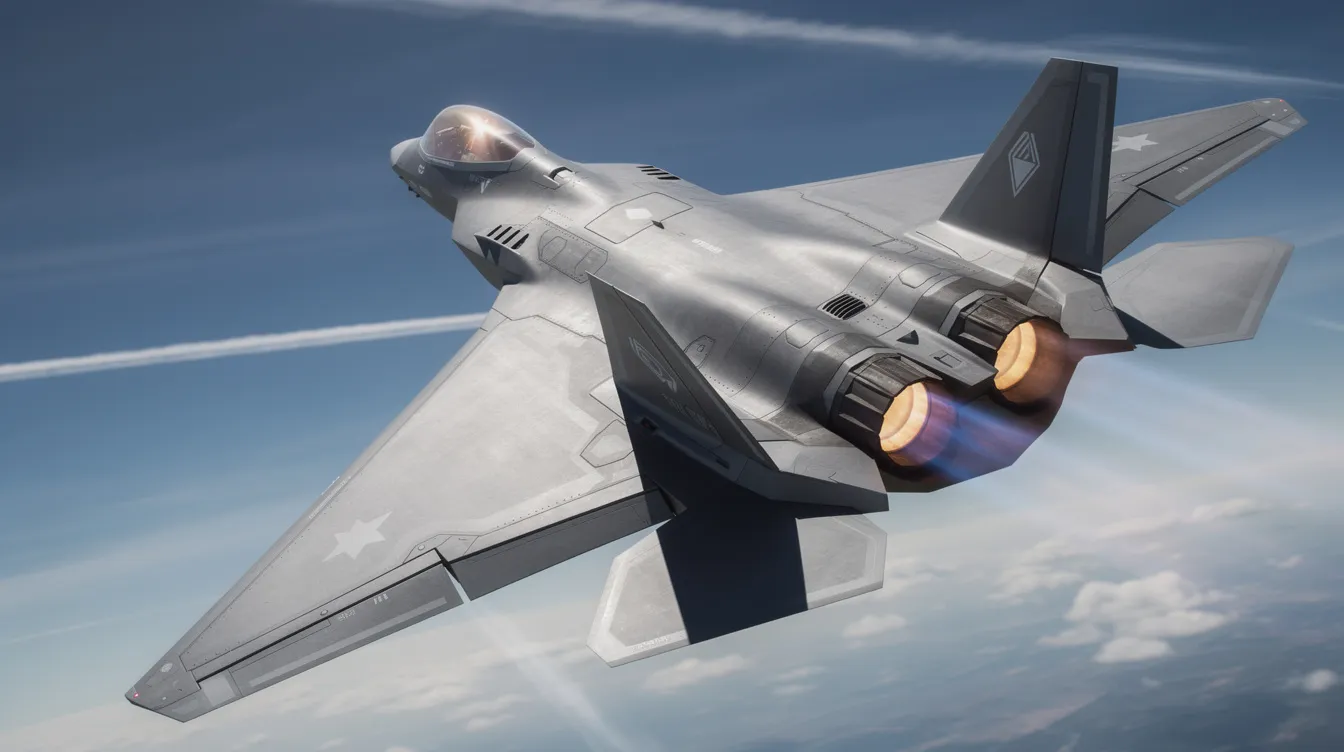
The F-35 Lightning II is widely regarded as the most advanced fighter jet in active service in 2026. This article is intended for aviation enthusiasts, defense professionals, and anyone interested in the future of air combat, providing an in-depth look at what makes the F-35 Lightning II the most advanced fighter jet and why it is central to global security. Built by Lockheed Martin, this fifth-generation, stealth, multirole fighter jet serves as the backbone of the U.S. Air Force and allied air forces worldwide. Its combination of advanced stealth, sensor fusion, networked warfare capabilities, and multirole flexibility sets it apart from every other aircraft in the skies today.
The F-35 Lightning II is the most advanced fighter jet in 2026, combining stealth technology, sensor fusion, and network-centric warfare into a single connected fighter aircraft that redefines air superiority for the United States and its allies.
With over 1,150 aircraft in service, more than one million flight hours logged, and operations spanning 12 nations, the F-35 is the most widely deployed fifth-generation stealth fighter in history.
Its unmatched situational awareness, advanced avionics, and ability to integrate air, land, sea, space, and cyber operations make the F-35 central to modern global security strategies and national defense planning.
The F-35 program drives economic growth and industrial partnerships across the U.S., Europe, Israel, South Korea, Japan, and other partner nations, supporting tens of thousands of jobs and advancing manufacturing technology.
The same spirit of aviation innovation that produced the F-35 is visible across the broader industry, including digital platforms like Jettly that are transforming on-demand access to modern aircraft in private travel.
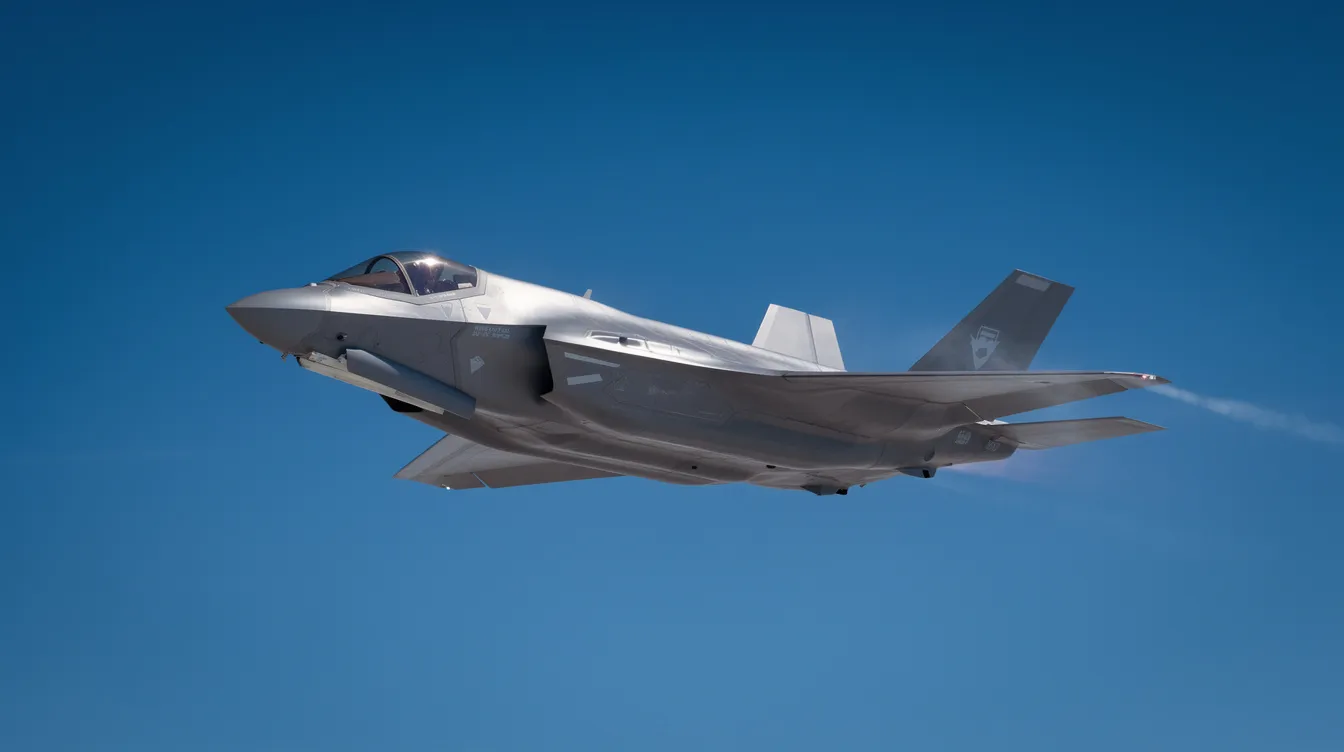
Most defense analysts and air forces consider the F-35 Lightning II the most advanced fighter jet currently in service. The reason is straightforward: no other operational aircraft combines stealth, sensor fusion, network-centric warfare, advanced avionics, and multirole flexibility at the same level of maturity and scale.
Advanced fighter jets are defined by stealth, sensor fusion, and network-centric warfare. Stealth technology minimizes radar cross-section to make detection difficult. Sensor fusion combines data from various onboard and external sensors into a cohesive tactical picture. Network warfare enables advanced jets to share targeting information with other assets. These features together define the most advanced fighter jets.
Fifth-generation fighter aircraft prioritize information dominance over speed and maneuverability. The F-35 embodies all of these traits. Modern fighters emphasize long-range, networking, and integrated weapon systems over traditional dogfighting, and the F-35 was designed from the ground up around this philosophy.
The most advanced fighter aircraft currently in service include the F-35, F-22, Chengdu J-20, and Sukhoi Su-57. While the F-22 Raptor excels in raw air-to-air agility and supercruise, the Su-57 offers thrust-vectoring maneuverability, and the J-20 brings long-range interception capability, none of them match the F-35's combination of operational maturity, global deployment, allied interoperability, and continuous software-driven upgrades.
The F-35 program traces its roots to the Joint Strike Fighter (JSF) initiative of the 1990s, moving through years of development before formal approval by the U.S. Department of Defense in 2001. The goal was ambitious: replace an aging fleet of fighters like the F-16 Fighting Falcon, A-10 Thunderbolt II, AV-8B Harrier, and F/A-18 Super Hornet across the Air Force, Navy, Marine Corps, and allied nations with a single advanced fighter platform.
Lockheed Martin, Northrop Grumman, and BAE Systems were chosen as core industrial partners. The program aimed to balance affordability, lethality, survivability, and global interoperability in one airframe.
Key milestones in the program's history include:
2000: First flight of the X-35 demonstrator
2006: First F-35A flight
2015: Initial Operational Capability (IOC) for the F-35B with the USMC
2016: F-35A IOC with the USAF
2019: F-35C IOC with the U.S. Navy
Rather than static, one-time designs, the F-35 has evolved through "blocks" of software and hardware upgrades. This software-defined aircraft concept allows capabilities to grow over decades without complete redesigns. The F-35 has now conducted over one million flight hours globally.
The F-35 family includes three main variants. Each is tailored to a different branch and mission profile, but all share common stealth, sensors, and avionics architecture.
F-35A (CTOL): The conventional takeoff and landing model used by the Air Force and many allied nations. It offers 9g maneuverability, an internal GAU-22/A gun, and operates from standard runways. Countries like the Netherlands, Norway, Denmark, Belgium, Poland, Finland, Switzerland, South Korea, Japan, and Australia fly the A variant.
F-35B (STOVL): The short takeoff and vertical landing variant built for the U.S. Marine Corps and the UK. It uses a lift fan and swivel nozzle to operate from amphibious ships and austere forward airstrips, giving pilots the ability to fly from locations other aircraft cannot reach.
F-35C (CV): The carrier variant designed for the U.S. Navy. It features larger wings, reinforced landing gear, and folding wing tips for catapult launches and arrested recoveries aboard aircraft carriers.
Italy operates both A and B variants, while Israel fields the F-35A under the designation "Adir." Each variant can carry both U.S. and non-U.S. weapons, giving allied nations flexibility in how they equip and keep their jets equipped for national requirements.
Advanced avionics and high-performance capabilities define modern fighter aircraft. Here is what the F-35A brings to the table:
Propulsion: A single Pratt & Whitney F135-PW-100 augmented turbofan producing approximately 43,000 pounds-force of thrust with afterburner. While the F-35 family uses a single-engine layout, advanced propulsion across modern fighter programs depends on powerful engines for thrust, performance, and easier maintenance in stealth-era operations.
Dimensions: Wingspan of roughly 35 feet, length of about 51.4 feet, height around 14.4 feet. Maximum takeoff weight is approximately 70,000 pounds, making it compact yet powerful for a stealth aircraft of this class.
Speed and ceiling: Top speed around Mach 1.6 in a clean configuration. Service ceiling above 50,000 feet. These supersonic speeds allow the F-35 to reach contested space quickly.
Combat radius: Approximately 650 600 nautical miles on internal fuel for the F-35A, depending on mission profile and loadout.
Weapons capacity: Internal bays preserve stealth during penetration missions, while external hardpoints allow the aircraft to carry up to about 18,000 pounds of combined stores when stealth is less critical.
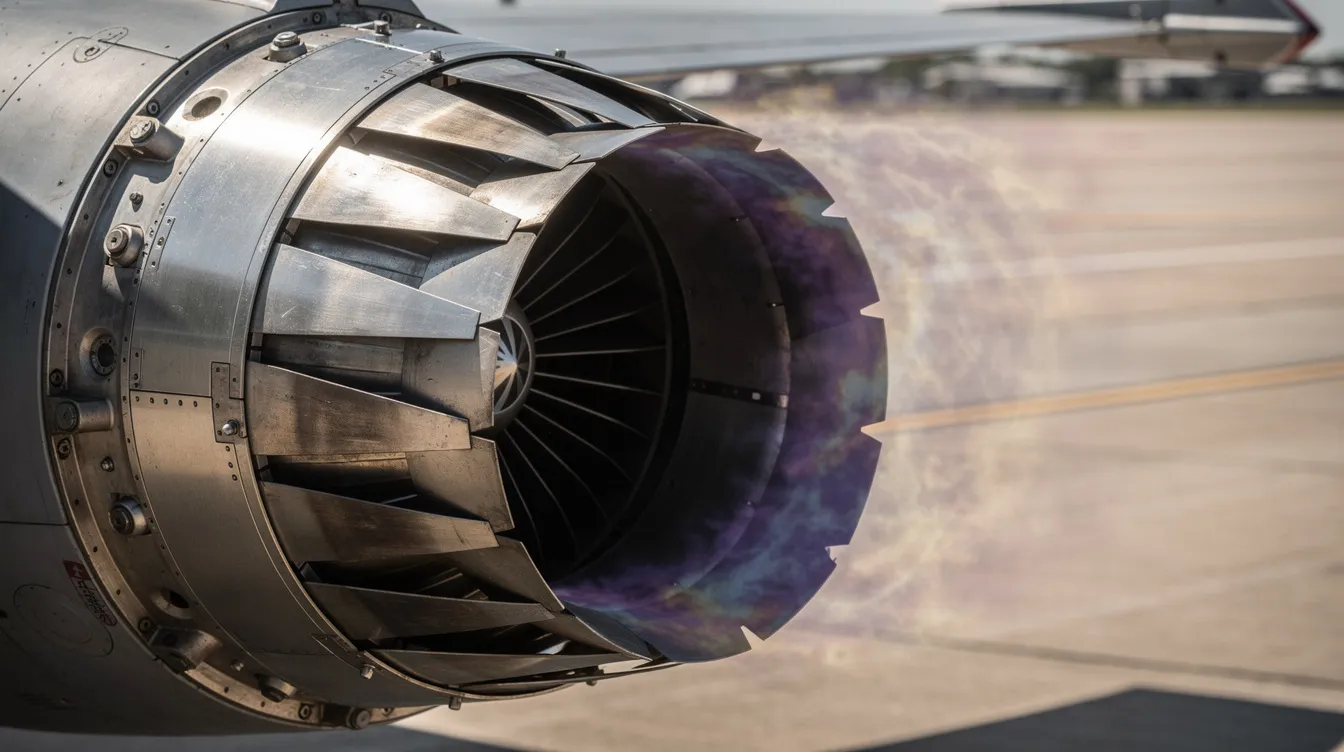
Low-observable stealth combined with advanced sensors and sensor fusion is what truly elevates the F-35 to most advanced fighter jet status. Stealth technology minimizes radar cross section to make detection difficult, and the F-35's radar cross section is equivalent to a golf ball. By contrast, the F-22 has a radar cross section comparable to a marble, optimized for all-aspect air superiority.
Stealth technology complicates adversaries' ability to target the F-35 and allows fighters to engage before being detected. This decisive advantage comes from careful shaping, edge alignment, radar-absorbent material (RAM) coatings, and internal weapons bays that keep the aircraft's surface clean.
The F-35 integrates advanced sensors and information fusion capabilities through its core sensor suite:
AN/APG-81 AESA radar: Long-range detection and tracking across multiple modes
Distributed Aperture System (DAS): Six infrared cameras providing 360-degree coverage around the aircraft
Electro-Optical Targeting System (EOTS): Precision targeting without external pods
Electronic warfare suite: Integrated threat detection, jamming, and countermeasures
Sensor fusion combines data from various onboard and external sensors into a cohesive tactical picture. Instead of forcing pilots to interpret raw feeds from separate systems, the F-35's software merges everything into one display, dramatically improving situational awareness and reducing cockpit workload.
The helmet-mounted display system (HMDS) replaces a traditional heads-up display. Pilots can "look through" the aircraft using DAS imagery, cue weapons by head movement, and maintain awareness in all directions. The J-20 is one of only four operational stealth fighters today, but none of its competitors have demonstrated this level of integrated pilot-machine interface at operational scale.
The F-35 is as much a flying computer as a stealth fighter. Millions of lines of code control sensor fusion, electronic warfare, weapons integration, and data-link functions. Fifth-generation fighters use software-defined avionics for sensor fusion, and the F-35 leads this approach.
New software drops can significantly enhance combat performance without changing hardware. The F-35's Block 4 upgrades enhance its avionics capabilities, expanding weapons compatibility, processing power, and threat libraries. These software upgrades depend on Technology Refresh 3 (TR-3), which delivers upgraded core processors, memory, and panoramic cockpit displays.
TR-3 has faced delays. Originally targeted for completion around 2023, many functions are still maturing as of 2026. Full Block 4 capabilities are now expected to stretch into the early 2030s due to power, thermal, and engine constraints.
Network warfare enables advanced jets to share targeting information with other assets, and the F-35's datalinks (MADL and Link-16) are central to this mission. Sukhoi's Su-57 features an integrated modular avionics system since 2017, but the F-35's ecosystem of allied operators gives it a broader networked reach.
On the sustainment side, the transition from the Autonomic Logistics Information System (ALIS) to the Operational Data Integrated Network (ODIN) uses data analytics to improve maintenance planning, readiness, and mission support across the global fleet.
The F-35 has become the centerpiece of Western and allied air forces, fundamentally changing how air campaigns are planned and executed. As of mid-2026, over 1,335 aircraft have been delivered worldwide to approximately 3,440 trained pilots and more than 20,950 maintainers.
Key operators in 2026 include the United States, United Kingdom, Italy, Netherlands, Norway, Denmark, Australia, Japan, South Korea, Israel, Belgium, Poland, Finland, Switzerland, and Singapore. Poland received its first F-35A Block 4 jets in May 2026 as part of its "Husarz" squadron, and the UK completed its last F-35B procurement the same month.
The F-35 operates as a "quarterback of the skies," supporting coalition service and integrated mission operation by linking air, land, sea, space, and cyber forces through secure communications. This makes it a powerful force multiplier for allies in NATO and coalition operations. Shared platforms enable joint training, common tactics, and integrated air defense systems.
The F-35 is designed to carry both U.S. and non-U.S. weapons, giving allied nations the flexibility to equip their jets with locally developed munitions. This interoperability strengthens global partnerships and reinforces collective deterrence against peer adversaries. For global security and national defense, few platforms offer the same breadth of capability.
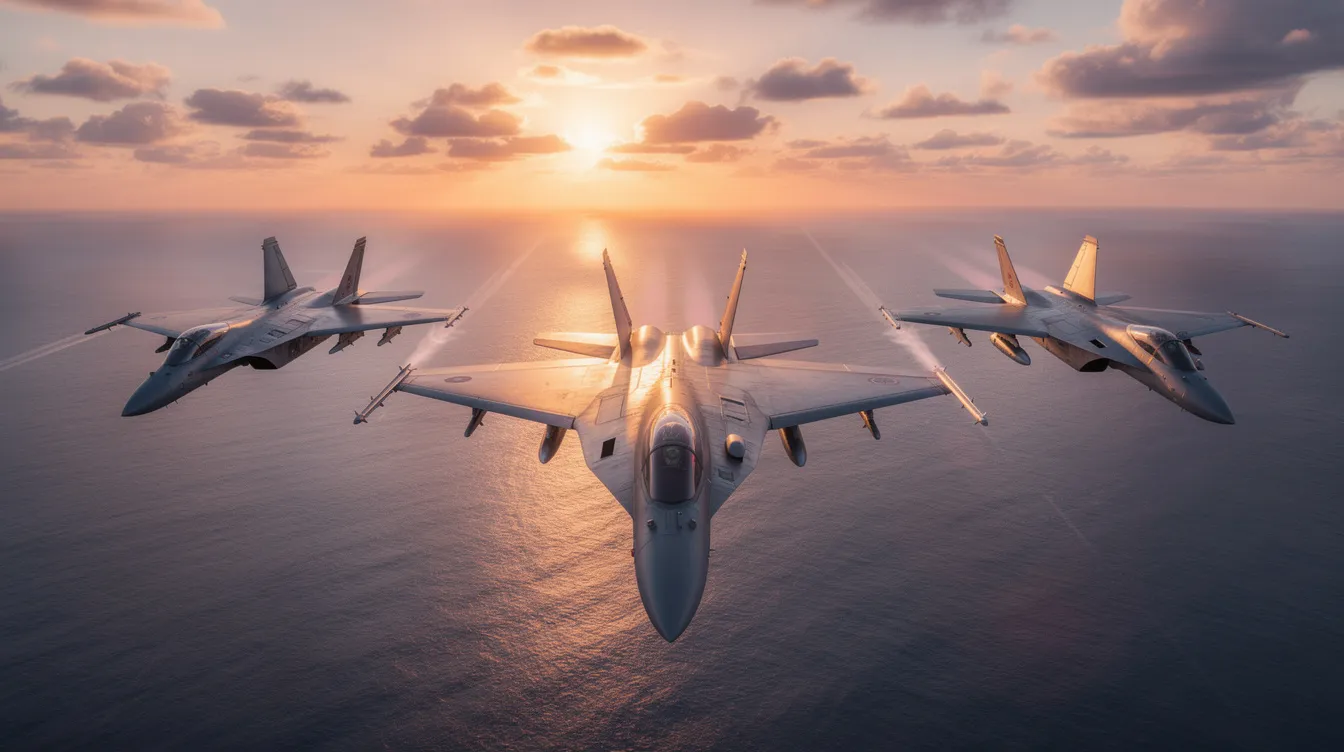
The F-35 program is one of the largest defense and aviation projects in history. It supports tens of thousands of jobs across the U.S., Europe, Israel, and Asia through a global supply chain of more than a thousand companies.
Industrial participation takes many forms. Italy operates a Final Assembly and Check-Out (FACO) facility. South Korea engages in offsets and technology transfer. The UK manufactures key components including aft fuselage sections and fuel system elements. These partnerships contribute to economic growth through advanced manufacturing, composites, avionics, and software engineering capabilities that spill into civil aerospace and other industries.
The same innovation cycle that drives military aviation forward is visible in the broader aviation ecosystem. Digital platforms like Jettly reflect similar trends in connectivity, data-driven operations, and on-demand access, bringing technology-first thinking to private jet charter.
While the F-35 is the most advanced multirole fighter jet in service, other aircraft excel in specific areas.
|
Fighter Jet |
Top Speed (Mach) |
Stealth Level |
Weapons Payload (lbs) |
Key Strengths |
Number in Service (2026) |
|---|---|---|---|---|---|
|
F-35 Lightning II |
1.6 |
Very High (Golf ball RCS) |
~18,000 (internal/external) |
Sensor fusion, network-centric warfare, multirole flexibility |
1,150+ |
|
F-22 Raptor |
2.25 |
Extremely High (Marble RCS) |
~8,000 |
Air superiority, supercruise, stealth |
~187 |
|
Su-57 Felon |
~2.0 |
Moderate |
~15,000 |
Thrust vectoring, agility, affordability |
~30 |
|
Chengdu J-20 |
2.0 |
High |
24,000 |
Long-range interception, stealth, payload |
~250 |
|
F-15EX Eagle II |
2.5 |
Low |
~30,000 |
Weapons payload, speed, modernization |
~25 |
The F-35 is expected to remain in service beyond 2070, but it will eventually operate alongside sixth-generation systems. Emerging sixth-generation fighter concepts focus on autonomy, directed energy weapons, and advanced networking.
Major future projects include:
U.S. NGAD / PCA: The Next Generation Air Dominance program includes a crewed sixth-generation fighter (sometimes called "F-47") expected to enter service in the early 2030s alongside unmanned collaborative combat aircraft.
GCAP: The UK, Italy, and Japan are jointly developing the Global Combat Air Programme.
FCAS: France, Germany, and Spain are pursuing the Future Combat Air System.
South Korea's KF-21 Boramae and Turkey's TAI KAAN represent transitional "4.5 to 5+ generation" projects preparing national industries for the future. The definition of the most advanced fighter jet will keep evolving, but the F-35's software-first architecture and continuous upgrade path position it to lead for decades to come.
Fighter jets like the F-35 prioritize stealth, survivability, and weapons systems. Private jets serve a completely different mission: safety, comfort, time savings, and flexibility for travelers. But both worlds share a growing reliance on digital technology, data, and connected systems.
Private jet charter works through on-demand booking, with travelers selecting from aircraft categories ranging from light jets and midsize jets to heavy jets and turboprops, all supported by a broad inventory of private charter aircraft. Routes span thousands of airports that commercial airlines don't serve, and tools like an airport locator platform help match travelers with the most convenient departure and arrival points.
Digital charter platforms such as Jettly use technology, real-time data, and global aircraft inventories to provide transparent pricing, instant quotes, and flexible scheduling through tools like a private jet charter cost estimator and guides that explain how much it costs to charter a jet. Corporate executives and high-net-worth travelers can book a private jet with the same speed and clarity that defines modern aviation at every level.
Just as advanced fighters rely on connected networks and software, modern private aviation is becoming more digital and data-driven, from flight planning to safety oversight and carbon offset options, while models such as crowdsourced shared private flights and comparisons of shared charter flights vs. full charters make access to private aviation more flexible and cost-effective.

Most defense analysts and operators consider the F-35 the most advanced operational fighter because of its combination of stealth, sensor fusion, and networking. While certain jets surpass it in individual metrics (the F-22 in speed at Mach 2.25, or the J-20 in weapons payload at 24,000 pounds), no other aircraft matches the F-35's overall system maturity, global deployment, and continuous upgrade path. With over 1,150 aircraft delivered and operations in 12 nations, it has the broadest operational footprint of any fifth-generation platform.
As of mid-2026, over 1,335 F-35s have been delivered globally. Operators include the United States, United Kingdom, Italy, Netherlands, Norway, Denmark, Australia, Japan, South Korea, Israel, Belgium, Poland, Finland, Switzerland, and Singapore, with additional nations in the process of receiving or ordering the aircraft.
Fourth-generation fighters like the F-16 and Su-27 emphasize aerodynamic performance and basic avionics. Fifth-generation fighters add low-observable stealth, sensor fusion, advanced datalinks, and comprehensive situational awareness as core design features. The difference is fundamentally about information dominance rather than just flight performance.
Front-line fighter jets such as the F-35 are strictly military platforms. They are not available for private charter or civilian ownership. Civilian flight experiences are limited to demilitarized trainers, aerobatic aircraft, or museum displays, whereas private travelers typically turn to on-demand business jets and the broader ecosystem of charter airlines and private operators.
While Jettly focuses on private jet charter rather than combat aircraft, both military and civilian aviation increasingly rely on digital platforms, real-time data, and networked systems to operate efficiently. Readers interested in on-demand private travel can explore flight options or request a quote at https://www.jettly.com.
The F-35 Lightning II stands as the most advanced fighter plane in 2026, embodying the future of air combat through its unmatched stealth, sensor fusion, and network-centric warfare capabilities. Its widespread deployment among allied nations and continuous software-driven upgrades ensure it remains at the forefront of global security for decades to come. While other advanced fighters excel in specific areas such as speed, agility, or payload, the F-35’s holistic approach to information dominance and operational flexibility sets the standard for modern air forces.
For those interested in aviation innovation beyond military applications, platforms like Jettly are transforming how private jet travel operates—leveraging digital technology, transparent pricing, and instant booking to bring the convenience and flexibility of advanced aviation to business and leisure travelers worldwide. Learn more about private jet charter and explore the variety of aircraft categories available.
Ready to experience the convenience and efficiency of modern private travel? Explore flight options or request a quote at https://jettly.com/.
Share this post:
Jay Franco Serevilla
Sep 23, 2026
|
5
min read
Discover tips and trends in the industry.

5
min read
Cap Jet: Private Jet Charter, Salary Caps, and Travel Flexibility Explained
The term 'cap jet' encompasses both private jet charter services and salary cap discussions in sports, particularly the New York Jets. This article explores how travelers can navigate private jet options while managing budgets, highlighting platforms like Jettly that enhance travel flexibility. It also touches on the industrial applications of cap jets in various fields.
Read More
5
min read
Jet Mgmt: What It Means Today in Aviation and the Music Industry
Jet management encompasses two distinct areas: private aviation and the music industry. In aviation, it refers to the comprehensive oversight of aircraft operations, while in music, it involves managing artist careers. Platforms like Jettly bridge these worlds by offering accessible private jet charter services, catering to the unique needs of both frequent travelers and touring musicians.
Read MoreStay updated with our latest insights and tips to elevate your journey with us.
MEMBERSHIPS AND ASSOCIATIONS



Disclaimer: Jettly operates as a charter broker, offering access to a global digital jet charter marketplace. Jettly is not a direct air carrier and does not own or operate aircraft. All advertised flights are conducted by third-party air carriers that are fully licensed and hold the appropriate Part 135 or Part 121 certifications issued by the Federal Aviation Administration (FAA) or equivalent regulatory authorities under U.S. or foreign law. Jettly complies fully with the U.S. Department of Transportation's Part 295 and Part 298 Charter Broker regulations. Jettly does not carry additional liability insurance. Passengers are covered by aircraft operator insurance. TICO: 50023770


