



Login
Get Instant Pricing On 23,000+ Aircraft

>
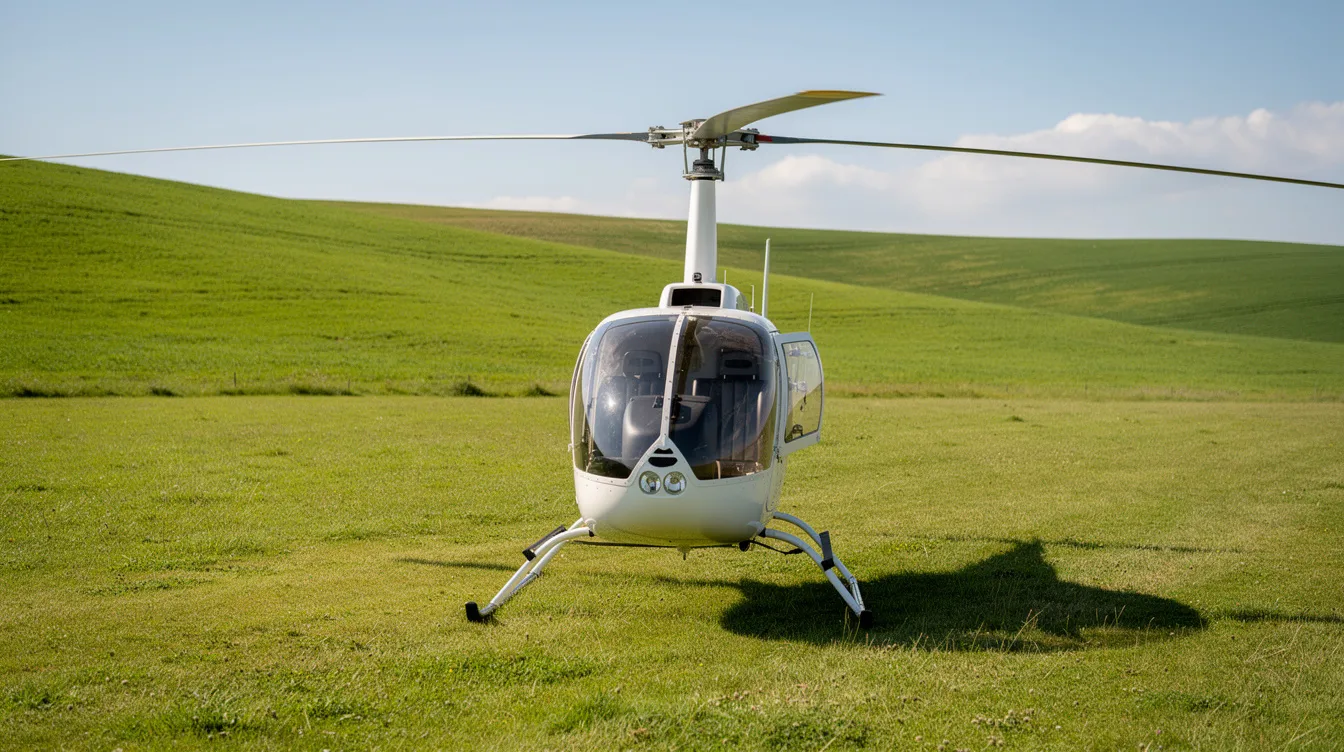
Finding the most affordable helicopter is about much more than scanning price tags. The real question is what it costs to buy, build, fly, maintain, insure, and store a rotorcraft over the years you plan to own it. This guide breaks down every category-from ultralight kits to certified trainers-so aviation enthusiasts and prospective owners can make an informed decision in 2026.
The phrase "most affordable helicopter" means different things depending on whether you are diving into sticker price alone or looking at the true cost of ownership across purchase price, maintenance costs, insurance, training, and storage.
The most affordable helicopters fall into ultralight kits and certified models. Helicopter prices range from $22,000 for ultralight kits to over $300,000 for certified models.
The cheapest factory-built helicopter is the Composite FX XE at roughly $55,000 finished, while the HeliCycle kit helicopter costs around $67,000.
Certified entry-level machines like the Robinson R22 typically cost $350,000 to $450,000, and the Robinson R44 costs about $500,000 when new.
Operating costs for helicopters can easily reach $15,000 to $60,000 annually depending on flight hours-often rivaling or exceeding loan payments.
Many travelers are better served by on-demand charter through platforms like Jettly, which offer helicopters, turboprops, and jets with transparent pricing and zero ownership burden.
The cheapest helicopter can refer to several distinct categories: ultralight helicopters governed by FAR Part 103, experimental kit helicopters assembled in home workshops, and certified piston or turbine engine models sold through established manufacturers. Each sits on a different point along the cost and capability spectrum.
Initial purchase price is only part of the equation. Availability of parts, the manufacturer support network, and the regulatory category all strongly affect long-term affordability. Most low-cost helicopters are built for specific missions such as training or recreation, not cross-country transport.
In 2026, realistic entry prices start at roughly $35,000 for the most basic single-seat ultralight kits and climb past $300,000 for certified two-seat trainers. This article compares models along five axes: upfront cost, build time (for kits), running costs, utility (seats, range, top speed), and resale value on the used market.
Many prospective owners eventually compare these costs to simply booking helicopter or private charter aircraft through platforms like Jettly-especially when they realize how seldom they would actually fly.
Under U.S. regulations, FAR Part 103 defines ultralight helicopters as single-seat aircraft with a maximum empty weight of 254 pounds, a top speed of 55 knots, and a fuel capacity of five gallons. Ultralight helicopters can be flown without a pilot's license, which is one reason they dominate "cheapest helicopter" lists worldwide.
Why so cheap? Minimal structure, small engines, and limited avionics reduce both the purchase price and the cost to operate. Annual maintenance costs for ultralight helicopters can be just a few thousand dollars-dramatically less than certified rotorcraft.
The trade-offs are real, though:
Single seat only—no passengers
Tight weight limits and fair-weather flying
Very short range (often under 100 miles)
Restricted performance compared with certified helicopters
Most ultralight owners fly for personal recreation from private property rather than for serious transport or training missions. And while no license is required, proper dual instruction with a qualified person is strongly recommended before any solo flight. A machine that costs $40,000 can still cause a life-altering accident if the pilot has never learned to manage rotor dynamics.
For buyers who want more capability while keeping costs down, kit helicopters are the logical next step.
Experimental amateur-built and kit helicopters let the buyer assemble a large portion of the aircraft, trading labor and time for a lower purchase price. Ultralight helicopters can be built from kits, costing $20,000 to $80,000 depending on the model and engine package.
Under the FAA's "51% rule," builders must complete at least 51 percent of the work themselves. Typical build times run 500 to 1,000-plus hours—equivalent to several months of full-time effort. That sweat equity is a real cost, even if it does not appear on a receipt.
Kit helicopters are often marketed as affordable helicopters because they skip much of the certification overhead. Certified helicopters are usually more expensive to buy and maintain than experimental kits, which is the primary appeal. But there are trade-offs:
Mechanical skill and dedicated workspace required
Lower resale value than factory-certified models
Dependence on the kit manufacturer for long-term parts and support
Operating limitations in some countries
Two-seat experimental kits like the Safari 400 can approach certified utility while staying under many budget thresholds. Anyone considering a kit should factor in tools, paint, avionics, registration, and inspection costs when comparing a "list kit price" to certified used helicopters.
This section provides model-by-model snapshots of some of the most popular helicopters commonly cited as affordable in 2026, separated by category-ultralight/kit and certified.
Specific prices vary by build year, component times, and avionics, so all figures are approximate and assume typical U.S. or global market conditions. The selection focuses on representative, widely discussed models rather than obscure one-off designs. Detailed specs and current listings should always be verified through specialized aircraft marketplaces or brokers. Subsequent subsections group helicopters so readers can compare apples to apples.
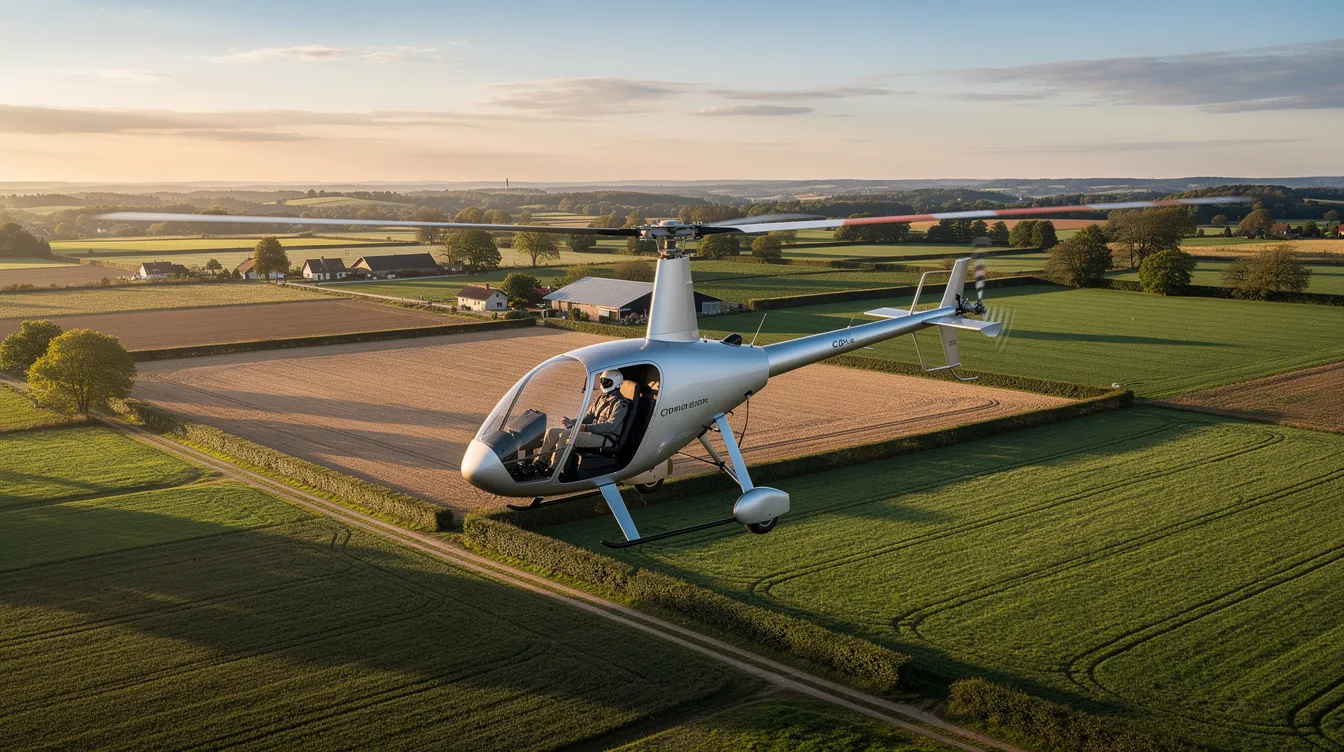
This subcategory covers the very cheapest helicopters by sticker price. They offer limited capacity and target solo aviation enthusiasts.
|
Model |
Type |
Approx. Kit Price |
Approx. Finished Price |
Engine |
Cruise Speed |
|---|---|---|---|---|---|
|
Mirocopter SCH-2A |
Ultralight |
~$35,000–$38,000 |
N/A (factory) |
Small piston |
~55 mph |
|
Composite FX XE |
Ultralight/Experimental |
~$46,000 |
~$55,000 |
MZ202 air-cooled |
~75 mph |
|
Composite FX XE 290 |
Experimental |
~$55,000 |
~$70,000 |
CFX 800 fuel-injected (~90 hp) |
~80 mph |
|
HeliCycle |
Experimental (turbine) |
~$67,000 (airframe) |
Higher w/ engine |
Modified T62 gas turbine |
~95 mph |
The Composite FX XE is a benchmark in the world of cheap rotorcraft. The Composite-FX XE is priced at $46,000 as a kit, with a factory-finished version near $55,000-the cheapest factory-built helicopter available. The airframe weighs about 298 lb empty, and the mosquito-like cockpit fits a single pilot with minimal baggage. Adding floats for water operations is possible but adds weight and cost.
The Composite FX XE 290 costs $55,000 as a kit and bumps power to roughly 90 hp via an 800cc fuel-injected engine, delivering a cruise of about 80 mph with roughly two-hour endurance.
The Mirocopter SCH-2A costs around $35,000 to $38,000, making it one of the cheapest ultralight helicopters in the world.
The HeliCycle kit is available for around $67,000 (airframe only, excluding the turbine engine), offering a compact gas turbine powerplant with a cruise near 95 mph. Avionics and radios add extra expense.
These machines make sense for weekend flying from private strips, practicing basic maneuvers after proper training, or as an entry into rotorcraft ownership for mechanically inclined pilots. Insurance availability, storage, and local regulations can still add high cost even when purchase price is relatively low.
Many readers searching for the most affordable helicopter really want at least two seats-which rules out true FAR Part 103 ultralights and pushes them into kit or experimental categories.
Here’s a quick comparison of three main models:
|
Model |
Type |
Seats |
Approx. Price Range (2026) |
Engine Type |
Notable Features |
Model |
Seats |
New Price (2026) |
Used Range (2026) |
Engine Type |
|---|---|---|---|---|---|---|---|---|---|---|
|
Mirocopter SCH-2A |
Ultralight |
1 |
$35,000–$38,000 |
Small piston |
Ready-to-fly, coaxial rotors, no pilot license required in the US |
Robinson R22 |
2 |
~$375,000 |
$250,000–$450,000 |
Lycoming piston |
|
Composite FX XE |
Ultralight/Experimental |
1 |
$46,000 (kit), $55,000 (finished) |
MZ202 air-cooled |
Cheapest factory-built helicopter |
Robinson R44 |
4 |
~$500,000 |
$150,000–$300,000+ |
Lycoming piston |
|
Composite FX XE 290 |
Experimental |
1 |
$55,000 (kit), $70,000 (finished) |
CFX 800 fuel-injected |
Improved power and speed |
Guimbal Cabri G2 |
2 |
~$450,000+ |
~$350,000 |
Lycoming piston |
|
HeliCycle |
Experimental (turbine) |
1 |
$67,000 (airframe only) |
Modified T62 gas turbine |
Experimental turbine kit |
Enstrom F-28 |
2–3 |
~$360,000 |
Varies |
Lycoming piston |
|
Phoenix A600 Turbo |
Two-seat kit |
2 |
$108,000–$110,000 |
Turbocharged piston |
FADEC engine, straightforward build |
Brantly B-2 |
2 |
N/A (used only) |
~$100,000 |
Lycoming piston |
|
Safari 400 |
Two-seat kit |
2 |
$142,000 (kit), $183,000 (finished) |
Lycoming O-360 piston |
Reliable, partially pre-assembled |
Safari 400: Approximately $142,000 as a kit, with a flight-ready factory version starting near $183,000. Powered by a reliable Lycoming O-360 piston engine, it offers two seats, a useful load around 650 lb, and a cruise near 85 mph. Partially pre-assembled components reduce build complexity. The safari community is active, and parts are available through the manufacturer's website.
Hummingbird 300L: Priced roughly $220,000–$230,000, this four-seat kit traces its lineage to the proven Sikorsky/Schweizer 269/300 design, making it a great option for family or utility flying.
Phoenix A600 Turbo: Estimated at $108,000–$110,000 in 2026, this two-seat kit uses a turbocharged piston engine with FADEC and is known for straightforward homebuilding with basic tools.
European or international two-seat designs-like the HeliWhale Afalina and Konner K1-carry indicative prices of roughly $120,000 and up. Import duties and certification rules can raise costs for U.S. buyers.
While these aircraft are cheaper than many certified helicopters, buyers still face training, insurance, and maintenance costs comparable to other light rotorcraft. Build-completion time should be factored into any honest budget, much like when evaluating affordable aeroplane rental options.
Certified helicopters cost more than experimental kits but offer recognized training value, established support networks, and broader insurance acceptance. Used aircraft often represent a better value due to lower upfront costs and slower depreciation.
|
Model |
Seats |
New Price (2026) |
Used Range (2026) |
Engine Type |
|---|---|---|---|---|
|
Robinson R22 |
2 |
~$375,000 |
$250,000–$450,000 |
Lycoming piston |
|
Robinson R44 |
4 |
~$500,000 |
$150,000–$300,000+ |
Lycoming piston |
|
Guimbal Cabri G2 |
2 |
~$450,000+ |
~$350,000 |
Lycoming piston |
|
Enstrom F-28 |
2–3 |
~$360,000 |
Varies |
Lycoming piston |
|
Brantly B-2 |
2 |
N/A (used only) |
~$100,000 |
Lycoming piston |
The Robinson R22 typically costs $350,000 to $450,000 and dominates flight schools thanks to low operating costs per hour and a massive global support network. Its two-seat cockpit is tight but functional for training. For a detailed breakdown of helicopter pricing across categories, Jettly's guide covers the broader landscape.
The Robinson R44 costs about $500,000 when new and provides four seats, making it a famous "family helicopter" among private owners. Used R44 Raven I and Raven II models on the market can land between $150,000 and $300,000 depending on hours and component times.
The Guimbal Cabri G2 costs about $350,000 on the used market and has gained traction as a modern, composite-airframe trainer. The Enstrom F-28 is priced around $360,000 and appeals to pilots who prefer a wider cabin. The Brantly B-2 is priced at $100,000 on the used market- a budget-certified option, though parts and factory support are more complex to source.
For student pilots or small operators, the decision between an R22, Cabri G2, or Enstrom often comes down to acquisition cost, training mission, and familiarity of the local maintenance shop with that brand, while others may compare these to modern light utility helicopters like the Eurocopter EC30.
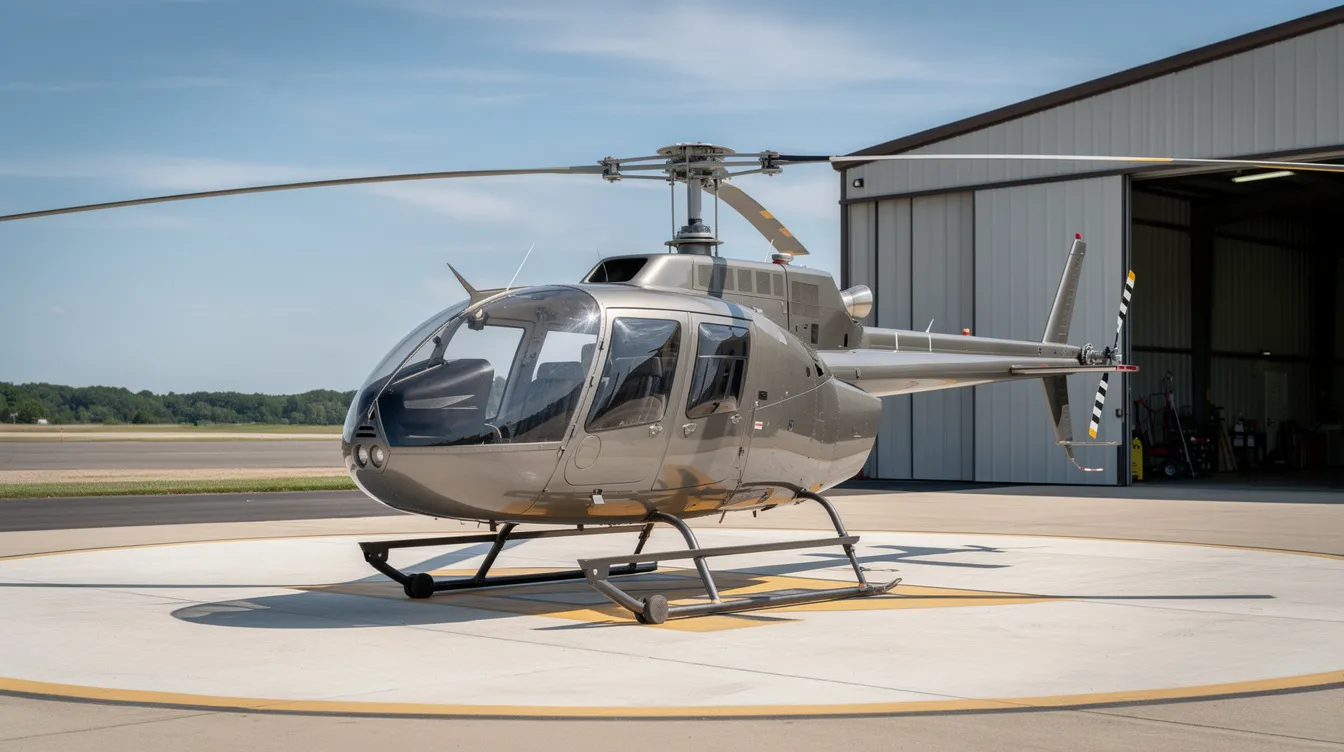
Owning the most affordable helicopter can still be far from cheap once annual and hourly costs are tallied. Ownership costs include insurance, hangar fees, and maintenance beyond the purchase price. Here are the recurring expenses that every prospective owner should understand:
Scheduled maintenance and overhaul reserves: Helicopters require strict, time-based component replacements known as Time Between Overhaul (TBO). An R22 engine TBO is roughly 2,200 hours; gearboxes, rotor systems, and transmissions each carry their own limits.
Fuel and oil: The R22 burns about 8 gallons per hour of 100LL avgas at roughly $6.50/gallon in 2026.
Insurance: Hull and liability coverage on an R22 can run approximately $9,000/year. Experimental or ultralight helicopters can be harder or more expensive to insure.
Storage: Helicopters typically require a hangar or tie-down space due to vulnerability to weather. Annual hangar costs range from $6,000 to $18,000 depending on location.
Inspections and training: Annual inspections, recurrent checkrides, and currency flying add thousands more.
According to Robinson's 2026 operating cost sheet, the total cost to operate an R22 at 500 hours per year is roughly $214 per hour. At a more typical private-owner pace of 100–150 hours annually, the fixed costs spread thinner, pushing the effective per-hour rate even higher.
A pre-purchase inspection is essential for used helicopter buyers to assess maintenance history-especially how many hours remain before major overhauls. A cheap airplane or helicopter on the used market can become very expensive if the engine or transmission is near its life limit.
Compared to a single-seat ultralight-where annual operating costs may stay under $5,000-the gap in capability is matched by a gap in ongoing expense. Understanding the full cost of aircraft ownership and how much a private jet really costs is critical before committing.
Many people search for the cheapest helicopter because they want flexibility and time savings, not necessarily the responsibility of owning a complex machine. For those who fly fewer than 50–100 hours a year, chartering almost always wins on cost, especially when using a flexible NetJets alternative like Jettly.
Helicopter and fixed-wing charter work on an on-demand model: book a flight, pay per trip, and skip the hangar rent, insurance premiums, and overhaul reserves, often by choosing among the best private jet charter companies. Jettly operates as a digital private aviation marketplace connecting travelers to over 20,000 aircraft worldwide-including helicopters and private jets-with instant pricing and transparent cost breakdowns. Readers can explore helicopter charter options, review Jettly’s guide to affordable private jet charter pricing, or compare them against helicopter rental costs directly on the platform.
Consider the math: owning and operating even a modest R22 can run $30,000–$60,000 per year in total costs. That same budget could fund dozens of charter flights-helicopters for short hops, or turboprops and jets when range and speed matter most- once you understand what drives the cost of a single private flight. For routes like New York–Boston or Toronto–Muskoka, a plane or jet charter may be faster and cheaper than helicopter ownership.
With Jettly, there are no long-term ownership risks, no resale worries, and no maintenance downtime. Travelers can select helicopters when vertical access is essential, use tools like Jettly’s private jet charter cost estimator to plan fixed-wing trips, or switch to affordable private jet charters when the mission changes.
The right choice depends on primary mission (training, recreation, commuting, or business), flight frequency, comfort with complex technical projects, and financial tolerance for ongoing costs.
A simple decision flow can sit alongside broader considerations like choosing the best cross-country aircraft for long trips:
Low-cost recreational solo flying + mechanical skills → Consider ultralight or single-seat kit helicopters like the Composite FX XE or HeliCycle.
Training for a rotorcraft career or regular passenger carry → Look at certified two- or four-seat helicopters like the Robinson R22 or Robinson R44.
Infrequent flying or long-distance routes → Charter through Jettly instead of owning.
Factor in local support: nearby maintenance organizations experienced with your chosen model and reliable parts availability in your country or region. Budget realistically-include a reserve per flight hour for overhauls, plus training and insurance-rather than focusing solely on the initial sticker price.
Speaking with existing owners, flight schools, and charter brokers to validate assumptions about cost, performance, and practicality before committing to a purchase or build is strongly recommended, and resources such as industry overviews of charter airlines and private flights can also help frame expectations.
Below are concise answers to common questions that go beyond the main article, covering regulations, financing, safety, and charter alternatives. Specific regulatory and financial details vary by country and should be verified with local aviation authorities.
In the U.S., true FAR Part 103 ultralight helicopters-like some Composite FX XE variants configured within weight and fuel limits-do not legally require a pilot license or medical certificate. This exemption is one reason ultralights top budget lists for aviation enthusiasts.
However, the exemption does not make training optional. Proper flight instruction with a qualified rotorcraft instructor is strongly recommended before solo flight. Other countries may not recognize similar exemptions, so pilots outside the U.S. should consult their national aviation authority before flying any ultralight rotorcraft.
Traditional aircraft lenders are most comfortable financing certified helicopters like the Robinson R22 and Robinson R44, where values and logbook standards are well established. Experimental and kit helicopters are harder to finance; buyers often rely on personal loans, home equity, or staged payments spread across the build period.
Prospective owners should speak with aviation-focused lenders early and compare the total cost of financing an aircraft to simply chartering flights when needed through services like Jettly, taking into account everything that goes into one flight’s cost.
Ownership typically becomes more financially sensible than charter when annual utilization is fairly high-often 150 to 300-plus hours per year, depending on the model and local costs- and some high-frequency flyers may benefit from structured jet card programs for predictable private flying. At 50–100 hours per year, many private owners find that charter or fractional access provides better value and fewer headaches than owning even the cheapest helicopter, particularly when using tools like Jettly’s jet card flight cost estimator.
Build a basic cost-per-hour model that includes all fixed and variable ownership costs, then compare it to charter quotes or even shared and crowdsourced private flights with empty seats from platforms such as Jettly.
Safety depends more on design quality, maintenance standards, pilot training, and operating discipline than on price alone. Certified helicopters undergo rigorous testing and regulatory oversight, while experimental and ultralight helicopters rely more heavily on builder quality and adherence to best practices.
Buyers should prioritize reputable manufacturers with strong owner communities and robust training programs, rather than chasing the very lowest purchase price at the expense of safety margin.
Yes. Jettly's marketplace includes access to helicopters alongside turboprops and private jets, allowing users to book point-to-point helicopter flights where local operators and regulations permit. The platform offers instant pricing, transparent cost breakdowns, and access to a global fleet-making it simple to compare helicopters with other aircraft types for each trip.
The market's cheapest helicopters range from ultralight kits like the Composite FX XE (under $60,000 finished) to certified trainers like the Robinson R22 and light four-seat models like the Robinson R44. But the true cost of owning any rotorcraft-maintenance, training, insurance, hangar fees-is substantially higher than the purchase price alone.
For many travelers whose primary goal is efficient transport-whether short-hop helicopter transfers or regional private jet flights-on-demand charter via platforms like Jettly can be more cost-effective and flexible than owning the cheapest helicopter on the market.
Ready to skip the ownership burden and fly on your terms? Explore Jettly's global charter options, compare aircraft categories including helicopters, turboprops, and jets, request instant quotes, or even learn about Jettly’s ULTRA high-ticket affiliate program if you want to earn by referring travelers, all at https://www.jettly.com.
Share this post:
Jay Franco Serevilla
Jul 20, 2026
|
5
min read
Discover tips and trends in the industry.
5
min read
Bell 407 Operating Cost Per Hour: Complete Owner and Charter Guide
The Bell 407 is a versatile light helicopter known for its reliability and efficiency. Understanding its operating cost per hour is crucial for potential owners and charter operators, as it varies based on fixed and variable expenses. This guide provides a comprehensive breakdown of costs, helping you make informed decisions about ownership or chartering.
Read More
5
min read
Medevac Flight Cost: What a Medical Evacuation Really Costs in 2026
In 2026, medevac flight costs range from $25,000 for short domestic transfers to over $200,000 for complex international missions. Factors influencing pricing include distance, aircraft type, and patient medical needs. Understanding these costs is crucial for families facing urgent transport decisions, especially when insurance coverage varies significantly.
Read MoreStay updated with our latest insights and tips to elevate your journey with us.
MEMBERSHIPS AND ASSOCIATIONS



Disclaimer: Jettly operates as a charter broker, offering access to a global digital jet charter marketplace. Jettly is not a direct air carrier and does not own or operate aircraft. All advertised flights are conducted by third-party air carriers that are fully licensed and hold the appropriate Part 135 or Part 121 certifications issued by the Federal Aviation Administration (FAA) or equivalent regulatory authorities under U.S. or foreign law. Jettly complies fully with the U.S. Department of Transportation's Part 295 and Part 298 Charter Broker regulations. Jettly does not carry additional liability insurance. Passengers are covered by aircraft operator insurance. TICO: 50023770


