



Login
Get Instant Pricing On 23,000+ Aircraft

>

This guide is for travelers, business executives, and adventure seekers interested in private aviation to mountain destinations. Whether you’re a family planning a ski weekend, an executive seeking efficient access to a second home, or an outdoor enthusiast looking for direct routes to remote lodges, this article will help you understand how private charter flights—like those offered by Mountain Lion Aviation and Jettly—can save time, increase flexibility, and provide safer, more convenient access to mountain regions. Learn how digital charter platforms and specialized operators are transforming mountain travel, making it easier than ever to reach high-altitude airports and adventure destinations.
When travelers hear “mountain lion aviation,” they might picture wildlife rather than aircraft. In this article, mountain lion aviation refers to private flying focused on mountain regions—a style of service inspired by operators like Mountain Lion Aviation in Truckee, California. This lion aviation approach connects urban centers to ski resorts, lakes, and high-altitude destinations with efficiency that commercial airlines simply cannot match.
Jettly’s digital marketplace brings this same flexibility to travelers worldwide, offering a personalized model of private aviation that emphasizes tailored services and customization for mountain travelers and positions the platform as a NetJets alternative for flexible private flying. With access to over 20,000 aircraft suited for mountain missions, whether flying from the Bay Area to Truckee or Denver to Aspen, the platform delivers instant pricing and on-demand booking without the friction of traditional charter brokers.
Mountain Lion Aviation describes private flying focused on accessing mountain airports and regions efficiently, not wildlife. Jettly replicates this model globally through its digital charter marketplace.
Jettly connects travelers to 20,000+ aircraft from vetted operators, ideal for routes similar to Mountain Lion Aviation’s operations around Truckee, Reno, and Western mountain hubs.
Time savings: The average U.S. resident spends over 60 hours a year in traffic; mountain charters can reduce a 4–7-hour drive to a 45–60-minute flight.
Core benefits: Direct access to smaller mountain airports like Truckee Tahoe (KTRK), flexible schedules for executives and families, and the ability to travel with sports equipment.
Jettly’s features: Instant pricing, on-demand charter booking, membership options for frequent travelers, and transparent, tech-driven service—this guide covers aircraft types, safety protocols, pricing models, and step-by-step booking instructions.
The term "mountain lion aviation" in this article refers to private aviation serving mountain regions, inspired by companies like Mountain Lion Aviation, based at Truckee Tahoe Airport in California. This is not about wildlife—it describes a category of charter flying built around high-frequency access to mountain destinations.
Executive commuting: Professionals flying between San Francisco, Sacramento, or Los Angeles and second homes in Tahoe, Mammoth, or Park City.
Family weekend trips: Parents and children heading to ski resorts without enduring mountain pass traffic and winter driving hazards.
Adventure travel: Skiers, mountain bikers, hikers, and anglers seeking direct access to trailheads and remote lodges.
Oakland to Truckee (45–60 minutes vs. 4–7 hours by car)
Los Angeles to Mammoth Yosemite (under an hour vs. 5–6 hours driving)
Denver to Jackson Hole (about 90 minutes in the air)
From 2020–2023, remote work flexibility drove significant growth in demand for private mountain travel as executives adjusted their schedules around second homes. Charter activity to mountain destinations increased by double digits compared to 2019 levels, according to industry tracking from organizations like ARGUS and NBAA.
Jettly replicates this flexibility across North America and Europe, allowing users to access similar point-to-point services without being tied to a single operator or region, supported by a broad portfolio of private charter aircraft.
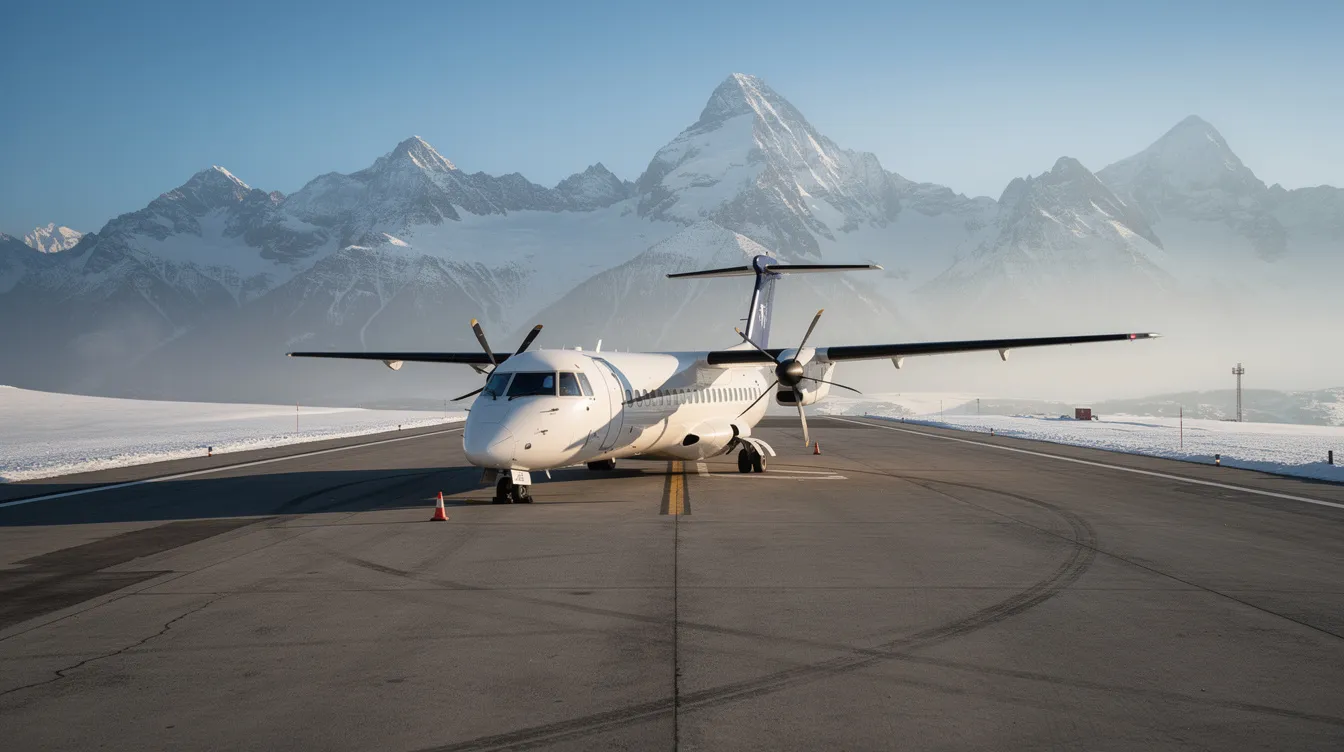
On-demand charter means travelers request a flight on a specific date, time, and route without being subject to airline schedules or advance commitments. Jettly is a digital marketplace that connects travelers with charter operators with available aircraft and helps them identify suitable airports through its airport locator tool.
Step-by-Step Booking Process:
Enter route and dates: Input origin and destination (e.g., San Jose to Truckee, Reno to Vancouver) along with preferred travel date and time.
View instant pricing: The platform returns real-time quotes based on aircraft availability and current market rates, similar to Jettly’s private jet charter cost estimator.
Compare aircraft options: Review multiple categories—turboprops, light jets, midsize jets—with estimated flight times, passenger capacity, and amenities.
Confirm passenger details: Enter names, approximate weights, baggage information (including skis, snowboards, and bikes), and any pet requirements.
Complete secure payment: Pay by credit card through Jettly’s platform and receive confirmation with the operator's details and FBO instructions.
Jettly does not own aircraft. The platform operates an asset-light marketplace model, sourcing flights from FAA Part 135 certified operators in the U.S., Transport Canada–approved carriers in Canada, and EASA-compliant operators in Europe.
Access to 20,000+ aircraft globally, including turboprops and light jets that perform well at high-altitude airports with shorter runways.
Redundancy: If one aircraft becomes unavailable or weather requires changes, Jettly can often locate alternatives quickly.
Example:
A Friday afternoon trip from San Jose to Truckee takes 45–60 minutes by turboprop. The same journey by car—battling I-80 traffic, potential chain controls, and Sierra weather—often requires 4–7 hours. Door-to-door, private charter saves 3–5 hours each way while eliminating winter driving stress.
Private charter flights allow travelers to:
Fly on their own schedule
Avoid crowded airports and long security lines
Enjoy greater control over their travel experience, including the choice of departure times and destinations
Mountain aviation hinges on access to strategically located regional airports close to ski resorts, lakes, and national parks. These airports often have specific operational characteristics: high elevation, terrain-driven approaches, and sometimes shorter runways.
|
Airport Name |
Location |
Elevation |
Runway Length |
Key Destinations |
|---|---|---|---|---|
|
Truckee Tahoe Airport (KTRK) |
California |
5,904 ft MSL |
~7,000 ft |
North Lake Tahoe, Northstar, Palisades Tahoe |
|
Reno-Tahoe International Airport (KRNO) |
Nevada |
4,415 ft |
Long |
Tahoe access (major hub) |
|
Eagle County Regional Airport (KEGE) |
Colorado |
6,547 ft MSL |
~9,000 ft |
Vail, Beaver Creek |
|
Aspen–Pitkin County Airport (KASE) |
Colorado |
7,820 ft MSL |
~8,000 ft |
Aspen, challenging terrain |
|
Jackson Hole Airport (KJAC) |
Wyoming |
6,451 ft MSL |
~6,300 ft |
Grand Teton National Park |
|
Telluride Regional Airport (KTEX) |
Colorado |
9,070 ft MSL |
Short |
Telluride requires special qualifications |
San Francisco Bay Area to Truckee: 45–60 minutes by turboprop, 35–45 minutes by light jet
Los Angeles (Van Nuys) to Mammoth Yosemite: 45–60 minutes by turboprop
Truckee to Cabo San Lucas: Approximately 3–3.5 hours by midsize jet
Reno to Vancouver: Around 2–2.5 hours by light jet
Denver to Jackson Hole: Roughly 1–1.5 hours, depending on aircraft
Jettly lets users search and book these routes year-round, often including empty leg flights for cost savings during shoulder seasons when aircraft reposition without passengers.

Not every aircraft performs well at high-altitude airports with shorter runways. Choosing the right category is essential for safety, comfort, and mission success.
Pilatus PC-12NG: Single-engine turboprop, pressurized, up to 9 passengers, range 1,500–1,800 nm, large cargo door for skis and gear, excellent short-field performance.
King Air 350: Twin turboprop, 8–11 seats, similar range to PC-12, robust systems, twin-engine redundancy.
Daher TBM 930/940: High-speed, single-engine, modern avionics, fast cruise, strong high-altitude performance.
Mountain Lion Aviation utilizes a fleet of high-safety turboprops and light aircraft, primarily Pilatus PC-12NG and Cirrus SR-22T, known for reliability and safety.
Cessna Citation CJ3/CJ3+: 6–8 passengers, range 1,800–2,000 nm, good speed and runway performance.
Embraer Phenom 300: 6–8 passengers, range 1,800–2,000 nm, high climb performance, stand-up cabin in some configurations.
Light jets suit longer routes like Reno to Vancouver or Los Angeles to Jackson Hole while remaining capable at many mountain airports.
Citation XLS+: 8–9 seats, range 1,800–2,100 nm, comfortable for longer legs.
Learjet 60: 7–8 seats, range 2,000+ nm, suited for cross-border routes like Reno to Cabo.
Cirrus SR-22T: Features the Cirrus Airframe Parachute System (CAPS), a whole-aircraft parachute for emergencies. All Cirrus aircraft in the fleet are equipped with CAPS for enhanced safety.
Examples: Airbus H125, Bell 407, Sikorsky S-76.
Use cases: Last-mile transfers, heliskiing, remote lodges, private helipads. Limited range compared to fixed-wing aircraft.
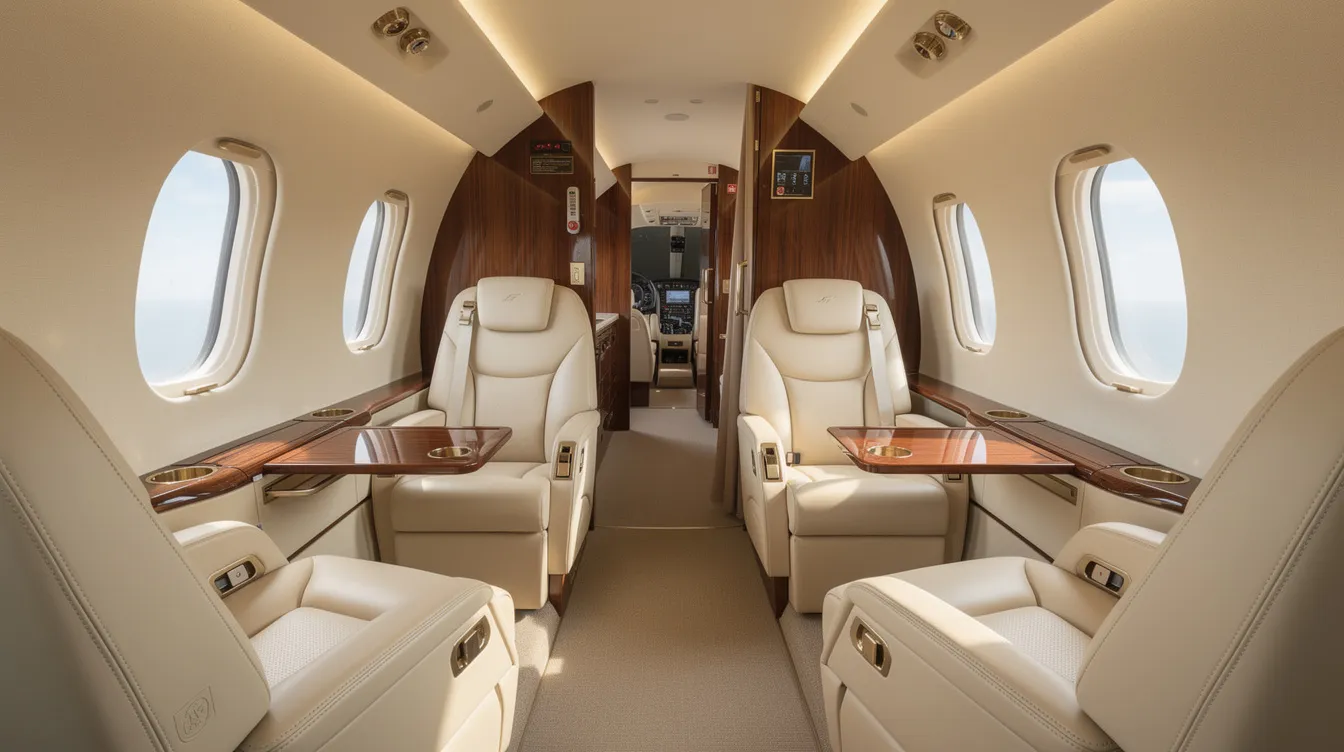
Mountain flying involves unique challenges that standard flight training doesn’t fully address. Density altitude reduces aircraft performance, terrain creates obstacles and turbulence, and weather can change rapidly in the Sierra Nevada, Rockies, and Cascades.
Jettly lists only charter flights operated by certified air carriers:
FAA Part 135 certificate holders in the United States
Transport Canada–approved operators in Canada
EASA Air Operator Certificate holders in Europe
Travelers can and should verify operator credentials and ask about mountain-specific experience before booking.
Mountain Lion Aviation is the only Certified Cirrus Training Center in the Tahoe region, offering structured instruction for high-terrain operations.
Many flight schools offer free or subsidized training courses to local pilots to promote safety and proficiency in specific flying conditions.
Flight training programs typically require a combination of ground school and flight hours to ensure comprehensive pilot education.
Topics Covered:
High-altitude takeoff and landing performance calculations
Terrain-aware arrival and departure routes
Weather pattern recognition in mountain environments
Noise abatement procedures at sensitive airports like Truckee
Expert pilots at Mountain Lion Aviation are trained to navigate challenging terrains and conditions. Aircraft maintenance services include annual inspections and pre-buy examinations to keep aircraft in peak condition.
Best Practices for Mountain Charters:
Conservative performance margins with reduced weight on hot/high days
Adequate climb gradients relative to the surrounding terrain
Fuel reserves with alternates on both sides of a mountain range
Contingency fuel for holds or route deviations
From 2017–2026, industry focus on mountain flying safety has intensified as charter activity into busy mountain airports has grown. The FAA and NBAA have published resources addressing density altitude awareness, stabilized approaches, and controlled flight into terrain (CFIT) prevention.
Mountain Lion Aviation supports environmental projects through a partnership with the Tahoe Fund, demonstrating commitment to the mountain communities it serves.
Pricing for mountain lion aviation missions depends on aircraft type, distance, season, and airport fees at places like Truckee or Aspen, but Jettly also focuses on offering affordable private jet charter options through smart routing and pricing tools.
|
Aircraft Category |
Mission Type |
Approximate Range |
|---|---|---|
|
Turboprops (PC-12, King Air) |
Regional hops under 400 nm |
Low to mid thousands USD |
|
Light jets (CJ3, Phenom 300) |
1–3 hour missions |
Mid to upper thousands USD |
|
Midsize jets (XLS+, Learjet 60) |
Cross-border routes |
Tens of thousands USD |
Peak ski weeks—Christmas through New Year, Presidents’ Day weekend, March school breaks—see higher demand and pricing. Shoulder seasons (late April–May, October–early November) typically offer lower rates, and travelers can apply tips for booking the cheapest private jet flights to further optimize their budgets.
Empty legs arise when aircraft reposition without passengers, and they can be a useful way to buy a seat on a private jet at a lower cost.
Common Scenarios:
An aircraft flies from Los Angeles to Mammoth, then returns to Van Nuys empty
Aircraft drops clients in Truckee and must return to Oakland
Empty leg flights are often discounted 25–75% below standard charter rates. Jettly makes these segments visible within search results, allowing flexible travelers to find deals on mountain routes or participate in crowdsourced private jet flights by sharing open seats.
On-demand charters: Any user can search, compare, and book with transparent, upfront pricing
Membership tiers: Optional private jet memberships that reduce per-flight costs, include concierge support for complex itineraries (e.g., Los Angeles to Mammoth to Truckee to San Jose), and provide dedicated trip planning assistance
Splitting a charter among 4–6 travelers or considering shared charter flights versus full charters can make per-person pricing competitive with last-minute business-class airline tickets:
|
Scenario |
Per-Person Cost |
|---|---|
|
Peak holiday commercial business class (LA to Aspen) |
$1,000–$2,000+ |
|
Private turboprop charter ($10,000 for 6 passengers) |
~$1,700 per person |
Charter flights are increasingly popular for various travel needs, including business trips, family vacations, and special events, due to their flexibility and convenience. Understanding how renting a plane works helps travelers choose the right option.
|
Aspect |
Commercial Journey |
Private Charter Alternative |
|---|---|---|
|
Departure |
Drive to a major hub (SFO, DEN, LAX) |
Drive to the nearby GA airport |
|
Arrival Time |
Arrive 1.5–2 hours before departure |
Arrive 20–30 minutes before departure |
|
Flight |
Fly to a regional airport (Reno or Denver) |
Fly directly to Truckee, Eagle/Vail, or Jackson Hole |
|
Post-Flight |
Wait for baggage, rent a car |
Short transfer to the resort or cabin |
|
Final Leg |
Drive 45–90 minutes to the final destination through potential snow and traffic |
- |
|
Total Time |
5–8 hours door-to-door |
2–3 hours door-to-door |
Flexible departure times changed within hours if needed
Business productivity: hold confidential meetings in a private cabin
Sports equipment: skis, snowboards, bikes, golf clubs, travel without fees or damage risk
Pets welcome on most charters with advance notice
Private aviation has a higher per-passenger emissions footprint when aircraft are lightly loaded. Mitigation strategies include:
Choosing efficient aircraft (turboprops with high load factors)
Flying with full passenger loads
Participating in carbon offset programs or sustainable aviation fuel (SAF) initiatives
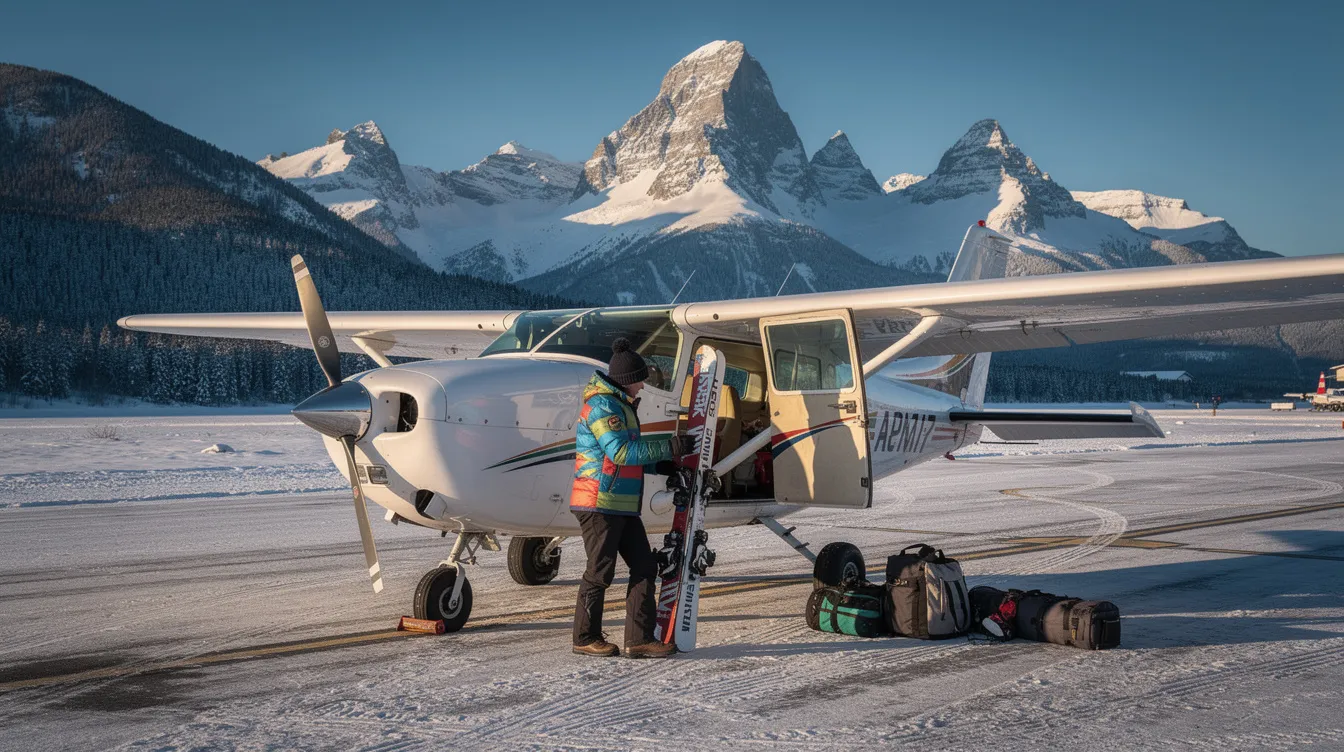
Choose dates and backups: Select primary travel dates with alternatives, especially during peak season. Friday afternoon and Sunday evening slots fill fastest.
Identify suitable airports: Compare options based on proximity and performance requirements:
Tahoe: Truckee (KTRK) vs. Reno (KRNO) vs. South Lake Tahoe (KTVL)
Vail area: Eagle (KEGE) vs. Aspen (KASE)
Count passengers and inventory baggage: Estimate traveler weights and list all equipment—skis, snowboards, bikes, strollers, car seats. This data affects aircraft selection.
Select aircraft category: Prioritize based on needs:
Cost-focused: turboprops for short regional hops
Speed-focused: light jets for 1–3 hour flights
Comfort-focused: midsize jets for longer routes
Input origin, destination, dates, and preferred times
Review instant pricing across aircraft categories
Sort by price, speed, aircraft size, or operator ratings
Check cabin layout images and baggage capacity notes
Confirm sports gear fits before selecting
Ground transportation: Pre-book SUVs with snow tires or shuttle service from FBO to resort
In-flight catering: Breakfast items for early departures, dinners for late returns, or custom menus arranged through Jettly Eats in-flight catering
Pet policies: Confirm requirements for dogs or cats traveling to mountain homes
For major events like the 2026 FIFA World Cup, Jettly’s private aviation services help you beat the countdown to kickoff, ensuring you arrive at high-demand destinations quickly and conveniently, even as anticipation builds. Fans can also review a broader guide to affordable aeroplane rent options when exploring different ways to access aircraft.
Personalized travel services focus on catering to individual schedules and needs, providing flexibility and convenience for travelers, especially when paired with structured jet card programs that lock in hourly rates and benefits. Personalized travel services often include a personal concierge who understands the client’s travel needs and is available on their schedule, ensuring a tailored experience through Jettly’s membership options and tools like the jet card flight cost estimator to plan trips efficiently.
Ready to experience mountain travel on your terms? Explore flight options or request a quote at https://www.jettly.com for your next mountain trip.
This FAQ covers common questions not fully addressed in the main sections, focusing on safety, availability, costs, and seasonality of mountain aviation, and complements other resources on how to get a seat on a private jet easily.
Safety depends on certified operators, experienced crews with mountain training, and conservative weather decisions. Jettly connects users only to licensed charter operators (FAA Part 135, Transport Canada, EASA), and travelers can ask about mountain experience, de-icing capabilities, and alternate routing when conditions are marginal. Flights may be rescheduled or rerouted during severe storms—this is normal and reflects responsible mountain flying practices, not service failure.
For peak ski periods (Christmas through New Year, Presidents’ Day weekend, March school breaks), booking 2–4 weeks ahead improves aircraft selection and scheduling. Regular winter weekends typically require several days’ notice, though availability can tighten as storms drive last-minute charter demand. Same-day or next-day bookings are often possible through Jettly, but aircraft options and departure times may be more limited during high-demand periods. Early booking secures popular aircraft like Pilatus PC-12s and Phenom 300s commonly used for these routes.
Most turboprops and light jets used for mountain missions accommodate skis, snowboards, and bulky equipment. Aircraft like the Pilatus PC-12 feature large cargo doors specifically designed for oversized items. Travelers should provide a detailed gear list with approximate dimensions and weights during booking so Jettly can recommend suitable aircraft. Accurate information matters because overloading or poor load distribution affects safety and performance at high-altitude airports.
Costs vary by aircraft type, distance, and season. Short turboprop hops (like Bay Area to Truckee) typically run in the low thousands USD, while multi-hour light or midsize jet flights cost more. Peak ski weeks generally command higher rates than shoulder seasons. Splitting the charter among 4–6 passengers makes per-person pricing competitive with—and sometimes lower than—last-minute premium cabin airline tickets during holidays. Use Jettly’s instant pricing tool for up-to-date, route-specific quotes without phone calls or negotiations.
Jettly routinely facilitates international routes, including U.S.–Mexico and U.S.–Canada flights, by sourcing operators authorized for cross-border operations. Travelers need valid passports and applicable visas, with customs clearance at designated international airports on each end. Jettly and the operator coordinate routing to meet requirements while optimizing for mountain airport access. First-time private international travelers can get guidance when requesting quotes—learn more at https://www.jettly.com.
Mountain lion aviation offers a smart, efficient way to access mountain destinations, saving travelers significant time and providing unmatched flexibility compared to commercial flights. Operators like Mountain Lion Aviation set the standard for safe, personalized mountain flying, while platforms like Jettly extend this convenience globally through instant pricing, diverse aircraft options, and seamless digital booking. Whether traveling for business, family trips, or outdoor adventures, private charter flights to mountain airports deliver control over schedules, direct access to remote locations, and the ability to travel with specialized gear comfortably and safely.
For those seeking a reliable, tech-driven private aviation experience tailored to mountain travel, Jettly provides a comprehensive marketplace with access to over 20,000 aircraft worldwide. Explore flight options or request a quote today at https://jettly.com/ and take control of your next mountain journey with confidence and ease.
Share this post:
Jay Franco Serevilla
May 14, 2026
|
5
min read
Discover tips and trends in the industry.
5
min read
Charter Airline: How Private Charter Flights Work in Modern Air Travel
Charter airlines provide flexible, on-demand flights tailored to travelers' needs, allowing them to choose routes, timings, and passenger lists. Platforms like Jettly connect users to a vast network of certified operators, offering a range of aircraft options from turboprops to heavy jets. This guide explores the benefits of private charters, including cost comparisons and safety standards, making it easier for travelers to navigate the world of private aviation.
Read More
5
min read
Widebody Airliners: Twin Aisle Aircraft, Iconic Jets, and Long-Haul Travel
Widebody airliners, also known as twin-aisle aircraft, are crucial for long-haul travel, accommodating 200 to 850 passengers. This guide explores their evolution, key models, and how they enhance passenger comfort while connecting global cities. Discover how private jet charters complement these commercial flights for seamless travel experiences.
Read MoreStay updated with our latest insights and tips to elevate your journey with us.
MEMBERSHIPS AND ASSOCIATIONS



Disclaimer: Jettly operates as a charter broker, offering access to a global digital jet charter marketplace. Jettly is not a direct air carrier and does not own or operate aircraft. All advertised flights are conducted by third-party air carriers that are fully licensed and hold the appropriate Part 135 or Part 121 certifications issued by the Federal Aviation Administration (FAA) or equivalent regulatory authorities under U.S. or foreign law. Jettly complies fully with the U.S. Department of Transportation's Part 295 and Part 298 Charter Broker regulations. Jettly does not carry additional liability insurance. Passengers are covered by aircraft operator insurance. TICO: 50023770


