


Login
Get Instant Pricing On 23,000+ Aircraft

>
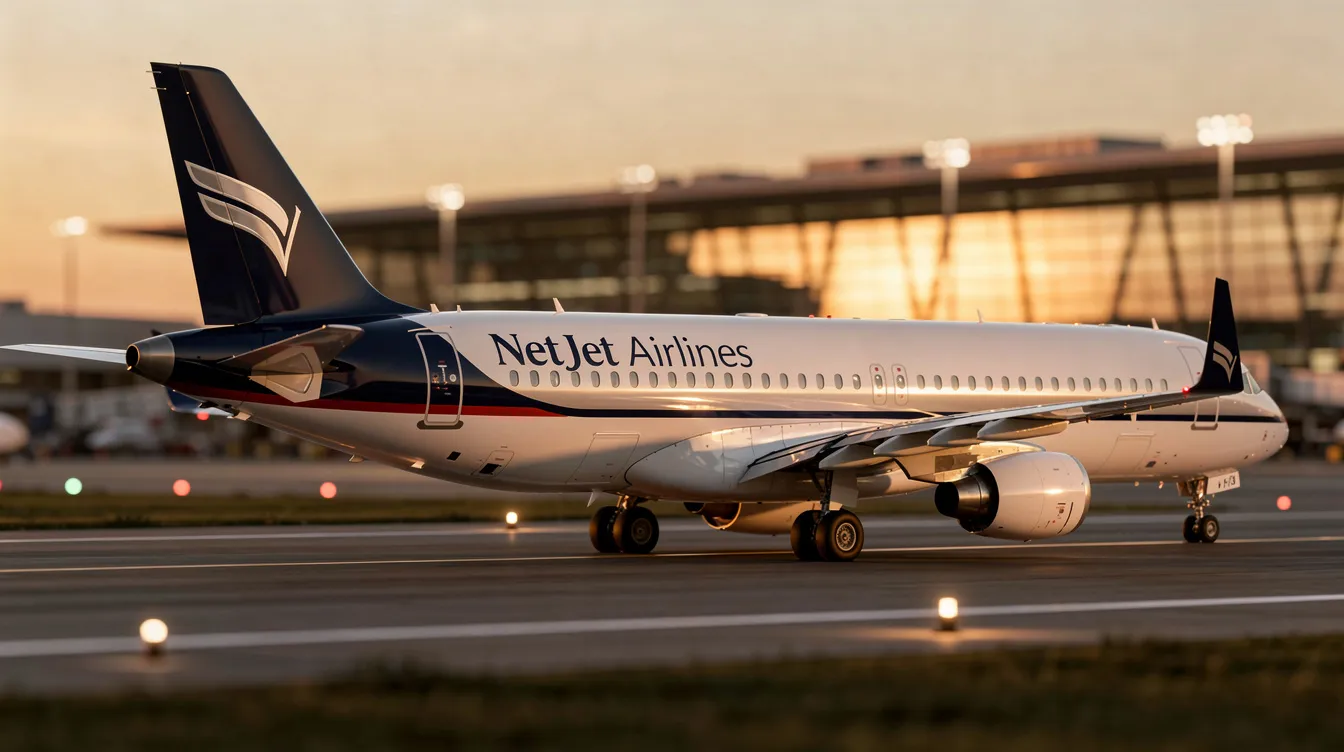
Despite what the phrase "NetJets Airlines" might suggest, NetJets is not a commercial airline. It is a private aviation operator - and one of the biggest in the world - offering fractional ownership, leasing, and jet card programs through a global fleet of more than 800 private jets. For frequent flyers, corporate executives, and high-net-worth travelers comparing private aviation options in 2026, that distinction shapes cost, flexibility, and how you book. This guide breaks down how NetJets works, its ownership model, fleet, safety standards, and pricing, and compares it with on-demand digital charter platforms like Jettly so you can decide whether a traditional private aviation program or a more flexible charter service better fits your travel needs.
NetJets is a global leader in private aviation, not a commercial airline. It operates over 800 private jets worldwide and completes over 300,000 flights per year through fractional ownership, leasing, and jet card programs.
Originally founded as Executive Jet Aviation in 1964 near Columbus, Ohio, NetJets became a Berkshire Hathaway subsidiary in 1998. It pioneered the concept of fractional aircraft ownership and now fields aircraft from the Embraer Phenom 300 to the Citation Ascend.
NetJets specializes in long-term programs for frequent flyers, while Jettly focuses on on-demand private jet charter with instant pricing, broad aircraft access, and no ownership commitments.
Discerning travelers often compare NetJets, NetJets Europe, and Executive Jet Management against flexible marketplaces like Jettly when evaluating cost, commitment, and fleet selection.
Readers looking for a transparent, commitment-free charter alternative can explore options at Jettly.
There is no "NetJets Airlines" in the way Delta or Lufthansa operates. NetJets is a private aviation company that provides aircraft access to its members through ownership shares, leases, and jet cards. It does not sell individual tickets, run fixed schedules, or operate commercial airline routes.
NetJets competes with other private jet providers and digital charter platforms - including Jettly - rather than with commercial airlines. The distinction shapes everything from how you book to what you pay.
Here is a quick comparison:
|
Feature |
Commercial Airlines |
NetJets Private Aviation |
Digital Charter Platforms (Jettly) |
|---|---|---|---|
|
Booking |
Scheduled, fixed routes |
Membership-based, on-demand |
Instant online quotes, trip-by-trip |
|
Aircraft Access |
Limited to the airline fleet |
Access to 800+ private jets |
Access to 20,000+ aircraft worldwide |
|
Flexibility |
Low (fixed schedules) |
Moderate (48 hrs notice typical) |
High (as little as 4 hrs notice) |
|
Ownership Model |
None |
Fractional ownership, leasing, cards |
None (charter only) |
|
Airport Access |
Major commercial airports |
3,000+ airports worldwide |
Thousands of airports globally |
|
Pricing |
Ticket-based, variable |
Fixed hourly rates, upfront costs |
Per-trip pricing, transparent quotes |
|
Cabin Privacy |
Shared cabin |
The entire aircraft for the member |
Entire aircraft per trip |
Key concepts you will see throughout this article include fractional ownership, executive jet management, the NetJets fleet, jet card programs, the broader NetJets offer, and how platforms like Jettly offer a different model for accessing private jets.
NetJets traces its private aviation history back to 1964, when it was founded as Executive Jet Aviation near Columbus, Ohio. Richard Santulli pioneered the fractional aircraft ownership model in 1986–1987, giving clients shared access to private planes without buying a whole aircraft. In 1998, Berkshire Hathaway acquired the company, providing financial backing and investment that fueled rapid expansion.
Key milestones in the company's history:
1987: NetJets pioneered the concept of fractional aircraft ownership, creating an entirely new category of aircraft ownership.
2010: Acquisition of Marquis Jet Partners expanded the company's jet card offerings.
Mid-2020s: The NetJets fleet grew to over 800 aircraft globally, with operations spanning the U.S. and Europe.
Under CEO Adam Johnson, NetJets Inc operates more than 300,000 flights annually. NetJets ensures operational reliability through fleet management, with roughly 1,000+ daily aircraft movements during peak periods. The company evolved from a single entity into divisions including NetJets Europe, Executive Jet Management, and QS Partners to cover global access and aircraft management needs.
This scale makes NetJets a natural benchmark when potential customers compare private aviation options - including Jettly's marketplace model and broader overviews such as all about NetJets as the industry leader in private aviation.

NetJets operates the world's largest private jet fleet, offering access to over 120 different aircraft types across every major cabin category. NetJets allows customers to choose from multiple aircraft types depending on mission, group size, and range.
Light jets: The Embraer Phenom 300 seats 6–8 passengers with a range of 1,800–2,100 nm - ideal for regional trips. Cessna Citation CJ3+ models also serve this category.
Midsize: The Textron Aviation Citation XLS is being phased out as the new Citation Ascend enters service. The first three Ascends were delivered in May 2026, with fifteen expected by year-end. Citation Latitude fills the midsize role alongside newer models.
Super-midsize: Citation Longitude jets can fly 3,400–4,000 nm, covering coast-to-coast and select transatlantic routes. Bombardier Challenger 350/3500 aircraft also serve this segment.
Large/long-range: Challenger 650 jets typically accommodate 10–14 passengers. Larger jets like the Bombardier Global 6000 and Global 7500 handle intercontinental flights.
NetJets operates over 800 private jets worldwide, but its fleet is still a single-operator inventory. Digital platforms like Jettly aggregate 20,000+ private charter aircraft globally - from turboprops and helicopters to long-range jets - giving travelers broader per-trip selection without being restricted to one company's fleet. Learn more about what is available in Jettly's global fleet of private jets.
NetJets Europe launched in the late 1990s, with headquarters in Lisbon and operational support hubs in London (Luton), Paris (Le Bourget), Munich, and key airports like Geneva and Milan Linate. This arm gives European aircraft owners and cardholders dedicated access to business aviation across the continent, while digital tools like Jettly's airport locator platform for private jet charter help travelers identify optimal departure and arrival fields worldwide.
NetJets Europe serves airports that commercial airlines handle less efficiently for time-sensitive business schedules - places like London Farnborough and Nice Côte d'Azur.
Cross-border operations require navigating EASA regulations, airport slot constraints, and crew duty rules. NetJets has dedicated international trip planning teams for complex itineraries, particularly during peak summer and event seasons.
Transatlantic missions connect cities like New York and Miami to London, Paris, and Geneva using larger jets from the Bombardier Global series.
Jettly's model takes a different approach: its global network of certified operators covers North America, Europe, and beyond without tying members to region-specific programs or a single operator.
Executive Jet Management (EJM) is a NetJets subsidiary focused on aircraft management for owners who hold whole aircraft rather than fractional shares.
Core services: Crewing, maintenance coordination, regulatory compliance, insurance, and hangar arrangements for individual aircraft owners.
Charter availability: EJM places managed planes into third-party charter when owners are not flying, generating revenue and ensuring fleet utilization, often alongside other leading private jet charter companies.
Jet charter access: EJM also offers jet charter and jet cards to clients who do not want fractional aircraft, broadening the NetJets program beyond ownership.
QS Partners and QS Security Services: QS Partners handles aircraft sales - including whole aircraft sales and share transactions - managing the lifecycle from buying an executive jet to when owners sell, and raising related questions about how much a private jet costs. QS Security Services supports operational security.
Jettly removes the operational complexities of ownership and aircraft management entirely. Travelers get flexible charter access when needed, with transparent digital pricing instead of long-term management contracts.
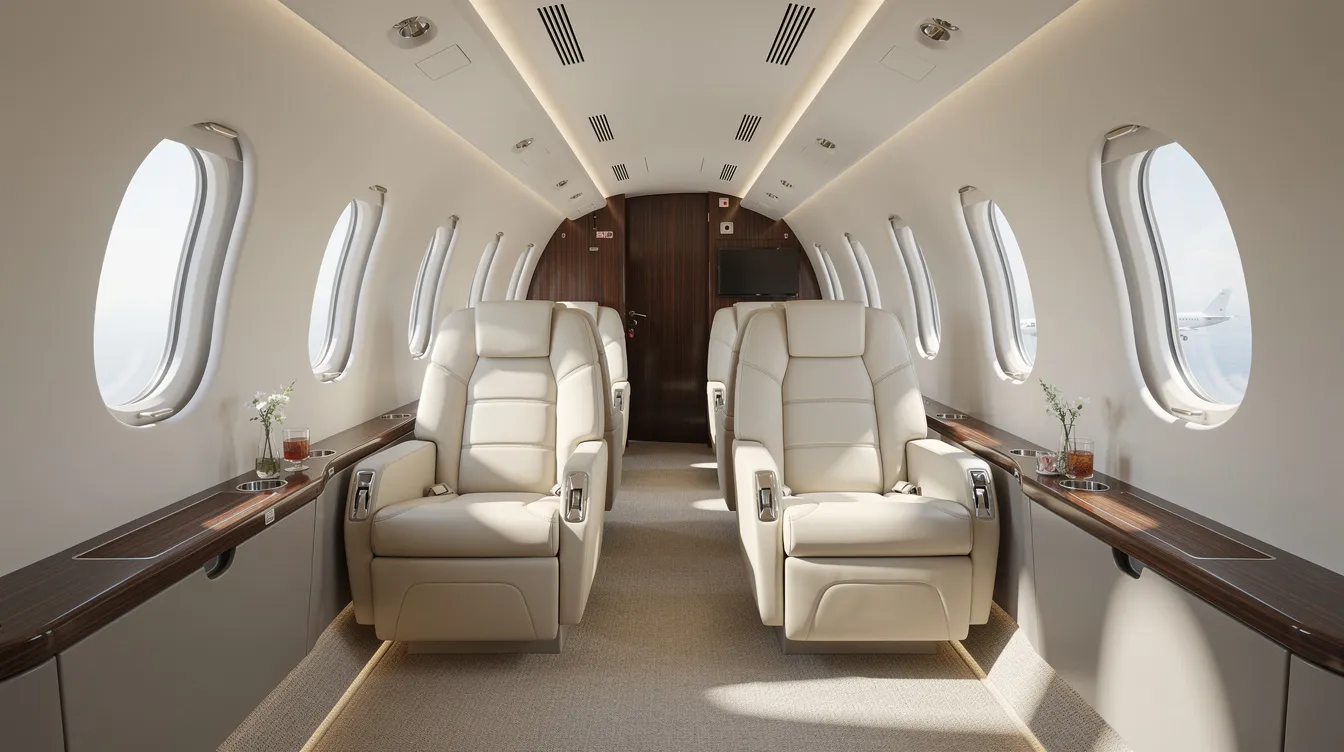
The NetJets program gives frequent flyers three main access models, each designed for different usage patterns and budgets.
Fractional ownership: Buying a share (1/16th, 1/8th, etc.) of a specific aircraft type. NetJets offers fractional ownership starting at one-eighth share, involving upfront capital and a monthly management fee (often $12,000–$15,000/month for light jets), plus hourly charges. This is true fractional jet ownership - you hold equity in the plane, with pros and cons similar to those outlined in guides on fractional private jet ownership.
Leasing: Similar guaranteed access and dispatch priority without equity. No large acquisition cost, but ongoing lease payments.
Jet cards: Prepaying for blocks of flight time. Jet cards at NetJets start from $100,000 per year, with NetJets' jet card hourly rates beginning at $8,600 per hour. NetJets offers 50-hour and 100-hour jet card options, with detailed NetJets card costs and pricing available for prospective members. Members typically pay for access through upfront costs and hourly charges.
NetJets offers clear, predictable pricing with no hidden expenses across these models. Jet cards and fixed programs appeal to users flying 50–150+ hours per year who want predictable pricing and priority scheduling, while accepting blackout dates, peak surcharges, and minimums. For context on what a jet card involves and how competing jet card programs from Jettly are structured, the structure differs significantly from that of on-demand charter.
Jettly's alternative: no fractional ownership, no upfront capital, no monthly fees. Travelers can instead use private jet memberships from Jettly and book a charter on a trip-by-trip basis with instant digital quotes and the flexibility to scale flying up or down without long-term commitments.
Flying NetJets under a program agreement is a different experience from booking a private flight through a digital charter platform like Jettly. The key differences come down to how you book, how quickly you can fly, and what you commit to financially.
Booking process: NetJets uses a concierge-style service via phone or app for existing members. Jettly offers a fully digital interface where anyone can request instant quotes online.
Notice periods: NetJets provides guaranteed availability with as little as 48 hours' notice for jet card holders. Share owners sometimes get access with as little as 10 hours' lead time. Private jets offer flexible scheduling with as little as 4 hours' notice through on-demand platforms.
Aircraft guarantee: NetJets guarantees aircraft availability within service areas for program members. Jettly searches multiple operators for the best match, offering a broader pool but subject to real-time market demand.
Cost structure: NetJets locks in rates through programs; Jettly provides per-trip pricing that can be compared across aircraft and operators, supported by tools such as its jet card flight cost estimator.
For typical routes - New York to Miami, Los Angeles to Las Vegas, Dallas to Los Angeles - travelers can compare NetJets program rates against Jettly's per-trip charter pricing. Use Jettly's cost estimator to see real numbers for your routes.
Why do travelers choose private aviation over commercial airlines? In 2026, the reasons remain practical. Private jets save significant time compared to commercial airlines, and private travel allows point-to-point flights without layovers.
Time: Arrive 20–30 minutes before departure. Fly direct to smaller airports - Teterboro instead of Newark, Van Nuys instead of LAX. Skip security lines, baggage carousels, and connections.
Comfort: A private cabin for your group, quiet workspace, tailored catering, and personalized service - without the constraints of airline seating classes.
Access: Private jets can access over 3,000 airports worldwide. NetJets markets access to 3,000+ airports worldwide. Private aviation can access thousands more airports than commercial airlines, which is critical for regional business trips or remote destinations.
Private aviation completes over 300,000 flights annually across the industry. Platforms like Jettly let travelers capture these benefits without buying into a long-term program, making private flight accessible to those flying fewer hours per year. For broader context on how renting a plane works, see how to charter a private jet for a step-by-step guide.

Both traditional operators like NetJets and charter marketplaces like Jettly must prioritize safety to earn traveler trust. NetJets has a commitment to high safety standards and reliability, backed by a strong safety reputation with independent audits.
Crew standards: Pilots receive recurrent training and type ratings. Dual-pilot crews operate most private jets, with strict flight time and rest requirements.
Audits and certifications: Leading operators use ARGUS, Wyvern, or IS-BAO standards. Accident rates are lowest among disciplined operators who adhere to these frameworks. NetJets holds ARGUS Platinum certification and has received the FAA Diamond Award for maintenance excellence.
Jettly's network: Operators in Jettly's marketplace meet regulatory baselines such as FAA Part 135 in the U.S. or EASA equivalents in Europe, plus additional quality criteria. Learn more about private jet safety standards.
Technology: Real-time flight monitoring, digital itineraries, and transparent pre-flight data - including pilot logbooks and aircraft records - help travelers make informed decisions.
Sustainability: Newer aircraft like the Citation Ascend and Praetor 500 offer improved fuel efficiency. Interest in sustainable aviation fuel (SAF) and carbon offset programs continues to grow across the industry, even as travelers weigh these considerations alongside cost factors when evaluating fractional jet ownership companies.
There is no single "best" solution. The right choice depends on annual flight hours, budget, route patterns, and tolerance for long-term commitments. NetJets is not the only choice for private travel.
NetJets fractional ownership and leases suit travelers consistently flying 100–200+ hours per year on similar routes. Jet cards work for 25–100+ predictable hours. On-demand charter via Jettly fits flexible, variable usage or occasional private trips, while resources on fractional jet ownership pros and cons can help frame the trade-offs.
Quick checklist: Estimate your annual flight hours. Identify your typical group size. Decide on preferred cabin type (light jet, midsize, super-midsize, or larger jets). Determine whether guaranteed access or maximum flexibility matters more when considering a NetJets alternative like Jettly.
Jettly's instant online pricing and broad aircraft inventory make it easy to test private aviation on key trips before committing to any long-term structure.
Compare real quotes - for example, a New York to Miami round trip - across the company's offerings and Jettly's per-trip charters to see where each model delivers better value for your specific travel pattern, keeping in mind the broader landscape of charter airlines and private aviation providers.
These questions address practical points that come up most often when researching NetJets and charter alternatives.
No. NetJets is not a commercial airline. It operates private jets for fractional owners, lessees, and jet card holders. There are no scheduled ticket sales to the general public. NetJets operates under private aviation regulations (FAA Part 135 and Part 91K in the U.S.), not commercial airline rules.
NetJets typically requires significant minimums. Jet card programs start at 25 hours with six-figure upfront costs. Fractional shares can represent 50+ hours per year and require substantial acquisition capital plus ongoing monthly management fees. Platforms like Jettly can arrange individual flights with no long-term contract.
A NetJets jet card pre-purchases a block of hours on a defined cabin type at fixed rates and program terms. Jettly lets travelers request real-time quotes for each trip, choose from multiple aircraft options across many operators, and pay per flight instead of committing capital upfront.
Leading private aviation operators and curated charter networks maintain strong safety records through licensed operators, dual-pilot crews, recurrent simulator training, and third-party audits from organizations like ARGUS and Wyvern. When using reputable providers, safety levels are comparable to those of commercial airlines.
Many operators - including those in Jettly's network - offer carbon offset options. The industry is also exploring sustainable aviation fuel more actively. Travelers can choose flights with published emissions data and add offsets to reduce their environmental footprint.
NetJets remains a dominant, program-based private aviation provider - not a traditional "NetJets airline." Its extensive fleet, deep history, and strong Berkshire Hathaway backing make it a benchmark in luxury travel and fractional aircraft ownership. For travelers flying 100+ hours annually with predictable patterns, NetJets aviation programs deliver reliability and guaranteed access, while others may find shared charter flights versus full charters a better fit for their needs.
But the landscape has shifted. Digital charter platforms like Jettly offer discerning travelers a way to fly privately without ownership, monthly fees, or multi-year contracts, and even enable crowdsourced private-jet flights with shared empty seats to further reduce costs. The choice between NetJets-style jet card and ownership programs versus trip-by-trip jet charter comes down to flight time, commitment tolerance, and how much flexibility you need.
Ready to experience private travel on your terms? Whether you're looking to buy a seat on a private jet, want tips on getting a private jet seat easily, or are interested in Jettly's ULTRA high-ticket affiliate program, you can explore flight options or request an instant quote at Jettly.
Share this post:
Jay Franco Serevilla
Jul 3, 2026
|
5
min read
Discover tips and trends in the industry.

5
min read
Best Time to Buy International Airline Tickets to Europe
Finding the best time to buy international airline tickets to Europe can save travelers hundreds of dollars. Booking 3 to 7 months in advance typically yields the best prices, especially during shoulder seasons. This guide offers insights on timing, fare tracking, and alternative airports to maximize savings and flexibility.
Read More
5
min read
When Do Plane Tickets Get Cheaper? Timing Your Booking for Better Flight Prices
Understanding when plane tickets get cheaper is essential for travelers looking to save on airfare. Generally, booking domestic flights 1 to 3 months in advance and international flights 2 to 8 months ahead yields the best prices. Factors like travel dates, day of the week, and seasonality significantly impact ticket costs, making it crucial to stay flexible and track fare changes.
Read MoreStay updated with our latest insights and tips to elevate your journey with us.
MEMBERSHIPS AND ASSOCIATIONS



Disclaimer: Jettly operates as a charter broker, offering access to a global digital jet charter marketplace. Jettly is not a direct air carrier and does not own or operate aircraft. All advertised flights are conducted by third-party air carriers that are fully licensed and hold the appropriate Part 135 or Part 121 certifications issued by the Federal Aviation Administration (FAA) or equivalent regulatory authorities under U.S. or foreign law. Jettly complies fully with the U.S. Department of Transportation's Part 295 and Part 298 Charter Broker regulations. Jettly does not carry additional liability insurance. Passengers are covered by aircraft operator insurance. TICO: 50023770


