


Login
Get Instant Pricing On 23,000+ Aircraft

>
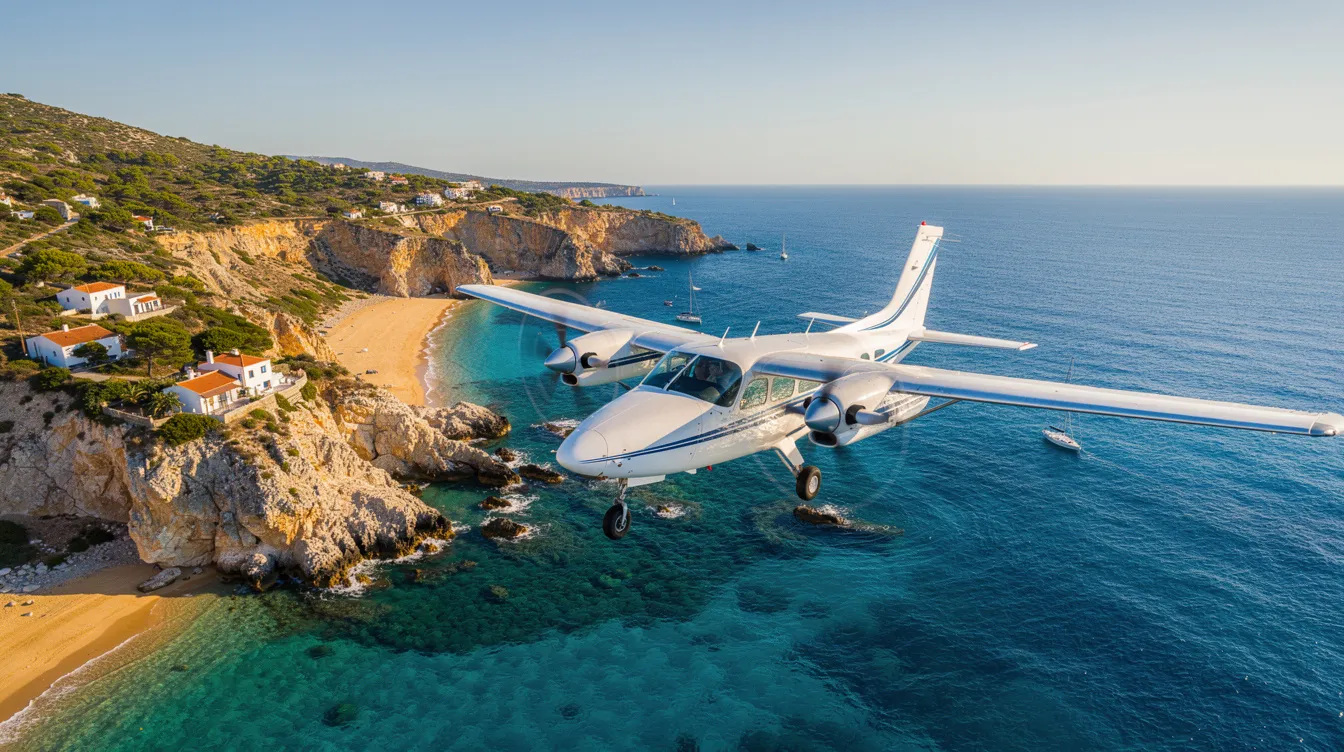
The Vulcanair P68 is one of aviation's most adaptable light twin-engine aircraft, yet it rarely gets the spotlight it deserves. Originally designed in Italy for utility and training work, the P68 family now serves private charter operators, police forces, military units, and survey companies across six continents. This guide breaks down everything a prospective charter client or aviation enthusiast should know-from the aircraft's development history and design features to its many variants and how to book one through Jettly's on-demand charter marketplace.
The term "p68" refers to the Vulcanair P68, an Italian-designed twin-engine, high-wing light aircraft family that has been in continuous production since the early 1970s. It is widely used for private charter, aerial surveillance, and special missions, and often features in jet card and corporate charter programs.
The P68 delivers strong short-runway performance (capable of operating from strips under 700 m), efficient cruising speeds around 180 kts (322 km/h), and an operational range near 2,043 km-making it a practical choice for regional private flights and observation work.
Specialist variants such as the Observer models feature a transparent fuselage nose and larger fuel tanks, tailoring the aircraft to law-enforcement and survey operators who need extended endurance and downward visibility.
Jettly can arrange on-demand access to P68 and comparable light twin aircraft through its global charter marketplace, offering instant pricing and fully digital booking with no hidden fees, while also supporting partners through its high-ticket affiliate program.
This article covers the P68's development, design, variant breakdown, operational use (including operators such as the Bophuthatswana Air Force), and how the aircraft fits into Jettly's private charter offering for cost-conscious regional travel.
The Vulcanair P68 is an Italian twin-engine, high-wing light aircraft originally developed by Partenavia in the late 1960s. The plane is now produced and supported by Vulcanair at its facilities in Casoria, near Naples, Italy. Since its introduction, the P68 platform has found its way into a wide range of roles-passenger transport, aerial surveillance, freight, parachuting, and pilot training-and has become a dependable workhorse for government agencies and private operators alike.
In terms of headline specifications, the P68 can reach a maximum speed of 322 km/h (about 180 kts), cover a range up to roughly 2,043 km, and fly at a service ceiling close to 5,850 m (approximately 20,000 ft). Depending on configuration, it can seat up to five passengers plus the pilot, though some variants accommodate six occupants in total.
A quick note on naming: the original designation was Partenavia P.68, while current production models carry the Vulcanair P68 branding. The shorthand "p68" is frequently used informally to describe the entire family, from baseline Victors to turboprop Viators. If you search for prop planes in a charter context, the P68 often appears alongside single-engine turboprops and other light twins.
The abbreviation "p68" also appears in molecular biology. In that field, p68 is commonly known as DDX5, a protein that belongs to the DEAD-box family of RNA helicases. It has an approximate molecular weight of 68 kilodaltons, which is how it got its name. DDX5/p68 uses energy from ATP hydrolysis to unwind RNA secondary structures, and its activity can be altered by cellular modifications such as phosphorylation. In biological research, p68 functions as a transcriptional co-activator or co-repressor for major transcription factors, and it interacts with the p53 tumor suppressor protein. It is also involved in RNA metabolism, including pre-mRNA splicing and microRNA processing. Because p68 can act as an RNA regulatory hub, influencing RNA production, abnormal regulation of p68 is associated with cancer progression-in fact, p68 is implicated in the development of various cancers. This article, however, focuses exclusively on the aviation meaning: the Vulcanair P68 aircraft.
In private charter, the P68 fills a specific niche. It is best suited for short regional hops, utility missions, and cost-efficient access to small airports that may sit much closer to a traveler's final destination than a major hub. On a route where a light jet would need a 1,200 m runway, a P68 can land at a smaller field with a fraction of that length-cutting ground travel time and sometimes killing hours of driving in the process.
Jettly can connect travelers with P68 or similar light twin aircraft on routes where larger jets or helicopters are less efficient, with transparent pricing and on-demand booking available through its platform, including tools like an airport locator for private charter planning.
Understanding how the P68 evolved from a prototype to a globally operated aircraft helps explain why the type is trusted for both civil and governmental missions today.
The P68 was designed by Italian aeronautical engineer Luigi Pascale in the late 1960s. His goal was to create a stable, economical twin-engine aircraft for utility and training roles-something that could handle short runways, offer simple systems, and provide excellent visibility for observation tasks.
The P.68 Victor was initially certified on January 22, 1969, marking the formal beginning of the program. The prototype then flew for the first time on May 25, 1970, taking to the skies over Naples, Italy. Early test flights confirmed the aircraft's short-field capability and favorable handling characteristics.
Type certification from the Italian Civil Aviation Authority followed on November 17, 1971. The FAA granted its own approval shortly after, on December 7, 1971, opening the door to international sales and exports. These dual certifications gave operators in Europe and North America confidence in the P68's airworthiness from an early stage.
Early production took place at new facilities in Casoria, with roughly a dozen pre-production aircraft built in the initial run. Through the 1970s, production ramped up as demand grew from police forces, flying schools, and charter operators who needed a reliable, twin-engine plane for daily operations.
The program continued to evolve through the 1980s. Development expanded into turbocharged piston variants for improved high-altitude performance and turboprop derivatives for missions requiring greater payload and speed. In 1998, Vulcanair acquired the type certificates, manufacturing rights, and production tooling from Partenavia, taking ownership of the entire P68 family.
By the mid-2020s, approximately 431 units of the Vulcanair P68 have been produced across all variants, with production visibility shaped not only by aircraft already built but also by what remains on order. These aircraft remain in active service across Europe, the Americas, Africa, and the Caribbean-a testament to the design's long-lasting relevance.
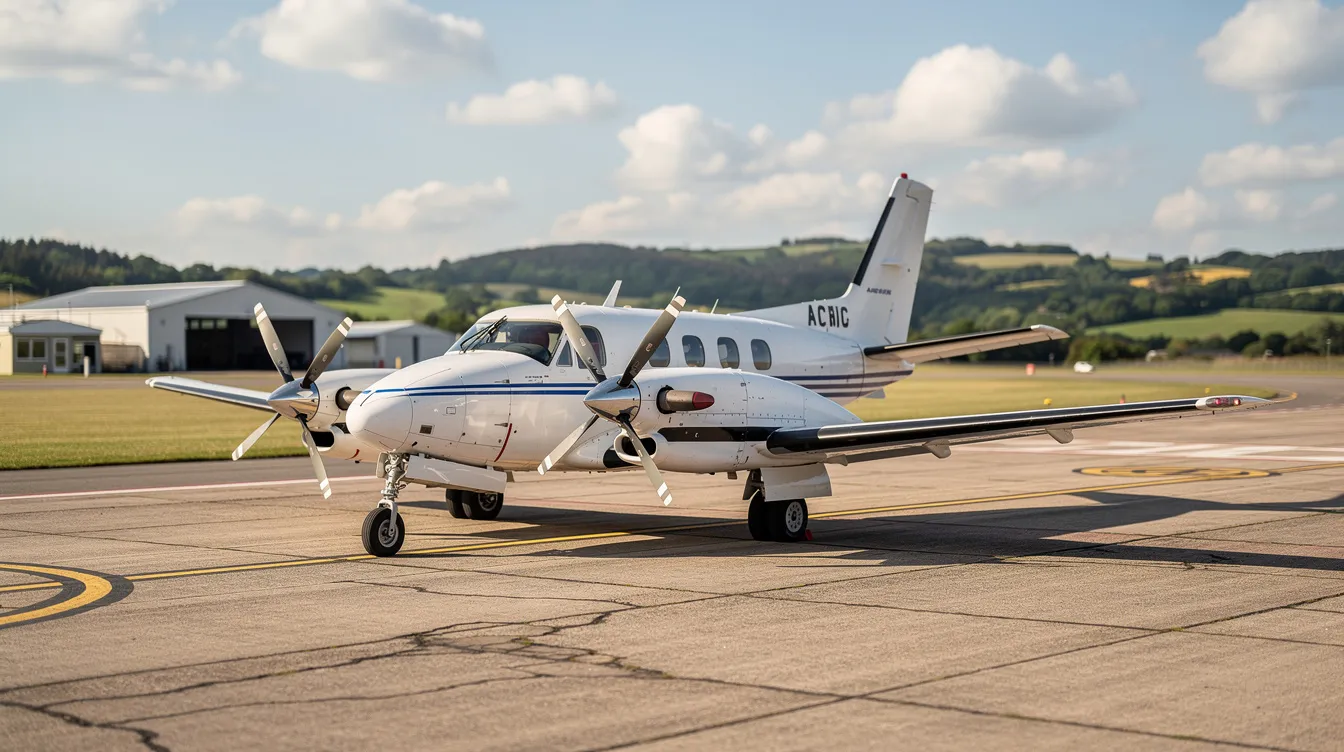
This section explains the P68's core design choices-high wing, twin engines, and flexible cabin layout-and why they matter to both private travelers and special-mission operators.
The P68 is a high-wing monoplane with all-metal stressed-skin construction. Original Victor models feature fixed tricycle landing gear, a design choice that simplifies maintenance and reduces cost. Later variants like the P.68R introduced retractable gear to cut drag and boost cruise speed. The wing uses a NACA 63-3515 aerofoil with Hoerner tips and slight dihedral, contributing to stable, predictable handling.
Standard piston variants are powered by two Lycoming IO-360-A1B6 engines producing approximately 200 hp each. The turbocharged P.68C-TC steps up to around 210 hp per engine, improving climb rate and maximum altitude performance at higher-elevation airports.
Turboprop variants in the family use Allison 250-B17C engines at 328 hp each, significantly increasing payload capacity and cruise efficiency. For a deeper look at how turboprop aircraft compare in charter, Jettly's Turboprop Private Jet Guide covers the category in detail.
The typical cabin layout seats up to five passengers plus one pilot, though some configurations accommodate six occupants total. The P.68B introduced a lengthened fuselage offering more space in both the cockpit and the passenger area, which charter operators found attractive for short regional routes where passengers wanted to feel comfortable rather than cramped.
In Observer configurations, seats can be removed and replaced with mission equipment racks, sensor consoles, or camera mounts-making the cabin highly adaptable.
Large side windows are a standard feature across all P68 variants. Observer models go further with a transparent fuselage nose that provides downward and forward views, ideal for aerial photography, surveillance, and search operations. Door arrangements on some variants also facilitate parachute drops and observation work.
Key performance figures relevant to charter customers include:
|
Metric |
Value |
|---|---|
|
Cruise speed |
~180 kts (322 km/h) |
|
Range (best economy) |
~2,043 km |
|
Service ceiling |
5,850 m (~19,200 ft) |
|
Maximum takeoff weight (MTOW) |
1,990 kg |
|
Takeoff distance over 50 ft obstacle |
~400 m (~1,312 ft) |
|
Minimum runway length |
Under 700 m |
Fuel burn is modest compared to light jets, and the P68 can use runways less than 700 meters long-an area where many business jets simply cannot operate.
Over the decades, Vulcanair introduced several refinements across the P68 line:
Larger fuel tanks on versions like the P.68C and Observer series for extended endurance
Modified noses to accommodate weather radar for all-weather capability
Upturned wing tips on the Observer 2 to improve stability and efficiency
Modern avionics suites (Garmin G1000 NXi, G950) for improved situational awareness and IFR operations
These enhancements make the P68 a more capable and comfortable platform for charter clients. Jettly can match travelers to P68 or similarly equipped aircraft when missions prioritize access to small aerodromes, low operating costs, and good visibility for sightseeing or aerial work, drawing from its extensive private charter aircraft network.
The P68 family includes multiple piston and turboprop variants tailored to different missions-from basic transport to intensive surveillance. Understanding the differences helps charter clients and operators find the right configuration for the job.
The original P.68 Victor was the foundation: twin piston engines, high wing, fixed tricycle gear. Initially marketed as a six-seat light transport and trainer, it attracted private owners and flying schools. The powerplant consisted of two 200 hp Lycoming IO-360 engines, and the aircraft was built at Partenavia's factory near Naples.
Certified in 1974, the P.68B Victor introduced a lengthened fuselage-9.35 m long-with increased weights and an MTOW of 1,960 kg. The extra cabin space proved attractive to charter operators flying short regional routes where passengers needed more room for bags or simply wanted to stretch out during a one- to two-hour flight.
The P.68R Victor, derived from the P.68B, added retractable landing gear. Certified in 1978, this variant reduced drag and improved cruise performance, making it better suited to longer-range or time-sensitive flights. Operators who needed to cover more ground quickly without stepping up to a turboprop found the P.68R to be a practical middle ground.
The P.68C brought a re-shaped nose designed to house weather radar, along with larger fuel tanks for extended range and endurance. With increased maximum weights, the P.68C became effective for all-weather charter, mapping, and maritime patrol missions.
The P.68C-TC variant introduced turbocharged 210 hp engines and was certified in 1980. This powerplant upgrade gave the aircraft better climb performance and higher service ceiling figures, particularly useful for operations in mountainous terrain or at elevated airfields.
The observation-focused variants represent some of the P68's most distinctive configurations:
P.68 Observer (certified ~1980): Featured a transparent fuselage nose, adapted systems for avionics and electrical loads, and larger fuel tanks. Originally adopted by German law-enforcement agencies in Germany for border surveillance and observation.
P.68TC Observer (mid-1980s): Added turbocharged engines for higher-altitude patrols, with a slightly shorter fuselage length than the original Observer.
P.68 Observer 2 (certified 1989): Introduced increased weights, upturned wing tips for better stability, and refined systems. This variant became popular among police and coast-guard operators across Europe.
Two turboprop variants extended the P68 family into heavier payloads and faster operations:
AP68TP-300 Spartacus: Fixed gear, 9-seat configuration, two 328 hp Allison turboprops. Certified in 1983 with an MTOW around 2,600 kg. Designed for regional commuter and utility roles.
AP68TP-600 Viator: Retractable gear, stretched fuselage (approximately 10.9–11.3 m in length), and a maximum takeoff weight of 3,000 kg. Certified on October 16, 1986, the Viator carried a 2023 equipped price around USD 3.5 million. For context on turboprop charter rates, Jettly offers a dedicated pricing guide and a real-time private jet charter cost estimator that helps travelers understand route-specific pricing.
Vulcanair, having acquired production rights in 1998, currently markets several variants-including the P.68R, P.68C, P.68C-TC, P.68TC Observer, P.68 Observer 2, and AP68TP-600 Viator-as the versions most relevant to buyers and agencies tracking current availability or aircraft on order, primarily to government agencies and commercial operators.
On Jettly's platform, the P68 typically falls under light twin piston or light turboprop categories. It suits missions where passengers are happy to trade jet-level speed for versatility, cost control, and access to remote aerodromes that larger aircraft cannot reach.
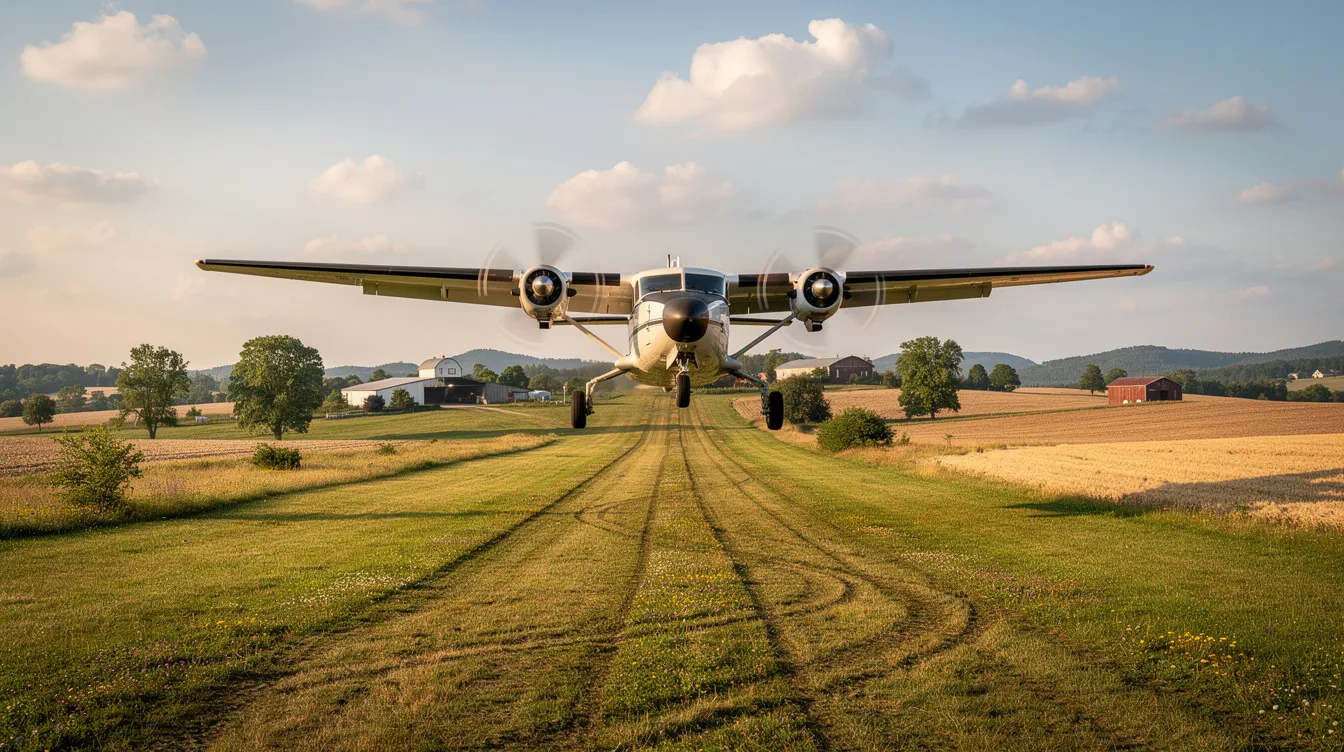
The P68 has built a long track record with military, government, and civilian operators worldwide. Those same operational strengths translate directly into benefits for private charter clients looking for flexible, cost-efficient regional travel.
The aircraft is used by law enforcement agencies for surveillance across multiple countries. Key operators include:
German Hesse State Police (Observer 2 variants)
Italian State Police
UK National Police Air Service (P.68R Victors)
California Department of Fish and Wildlife
New York State Police
Various mapping and survey companies across Europe and North America
These agencies agree that the P68's combination of endurance, low fuel burn, and excellent downward visibility makes it a strong fit for patrol and observation work.
The Vulcanair P68 is operated by military forces in Chile and the Bahamas. The Chilean Navy uses the type for maritime patrol and coastal surveillance, while the Royal Bahamas Defense Force employs it for similar island-hopping missions across the Caribbean.
Historically, the Bophuthatswana Air Force in Southern Africa also operated the P68 for patrol, training, and liaison roles-a lesser-known chapter in the aircraft's long operational history.
The P68 excels in roles where endurance, low-level observation, and short-field access matter more than raw speed:
Border patrol and coastal surveillance
Pipeline and powerline inspection
Search and rescue coordination
Aerial photography and environmental monitoring
Maritime area surveillance
Over its five decades in service, the Vulcanair P68 has been involved in 86 accidents worldwide. For an aircraft with over 430 units built and decades of global operations in demanding environments-including low-level surveillance, mountainous terrain, and remote island stops-this figure should be considered in context. The design itself maintains a solid reputation when operated within its published limitations by qualified crews.
For private travelers, the P68's operational strengths open up several practical use cases:
Regional business trips between secondary cities where light jet access is limited or expensive, such as routes connecting to New Delhi private jet services
Family or small-group leisure flights to remote coastal or island airstrips, including popular regional hubs like Chennai private jet charters
Aerial sightseeing with panoramic visibility from large windows or an Observer-style nose
Specialist charters such as survey, photography, or inspection flights serving specific regions, for example private jet charter services in Kolkata
To understand how private jet charter works for these kinds of missions, Jettly's platform walks clients through the process step by step, including clear explanations of affordable private jet charter pricing.
Travelers sometimes weigh the P68 against a helicopter for short-distance flights. Here is how they compare:
|
Factor |
P68 |
Light Helicopter |
|---|---|---|
|
Cruise speed |
~180 kts |
~120–140 kts |
|
Fuel efficiency (per seat) |
Higher |
Lower |
|
Runway required |
Yes (~400–700 m) |
No (vertical landing) |
|
Passenger capacity |
4–5 |
3–5 |
|
Hourly cost |
Generally lower |
Generally higher |
The P68 can be roughly 30% faster than a typical light helicopter at cruise and offers better fuel economy per seat-mile. But it does require a runway, whereas helicopters can land vertically-a critical distinction for truly remote or urban destinations without a strip.
For someone seeking a P68 or similar light twin, the booking experience on Jettly follows a straightforward process:
Search by route and date on Jettly's website
Compare available aircraft-including P68-type light twins, turboprops, and jets-with instant pricing that factors in aircraft type, operator, season, and airport fees
Confirm booking digitally, with optional add-ons like catering through Jettly Eats, in-flight dining, and ground transportation
Jettly emphasizes safety by working only with licensed, regulated operators. P68 missions arranged through the platform are flown by professional crews who are familiar with the aircraft's capabilities and limitations. To get started, travelers can use the Private Jet Cost Calculator or Jettly's jet card flight cost estimator for a quick estimate.
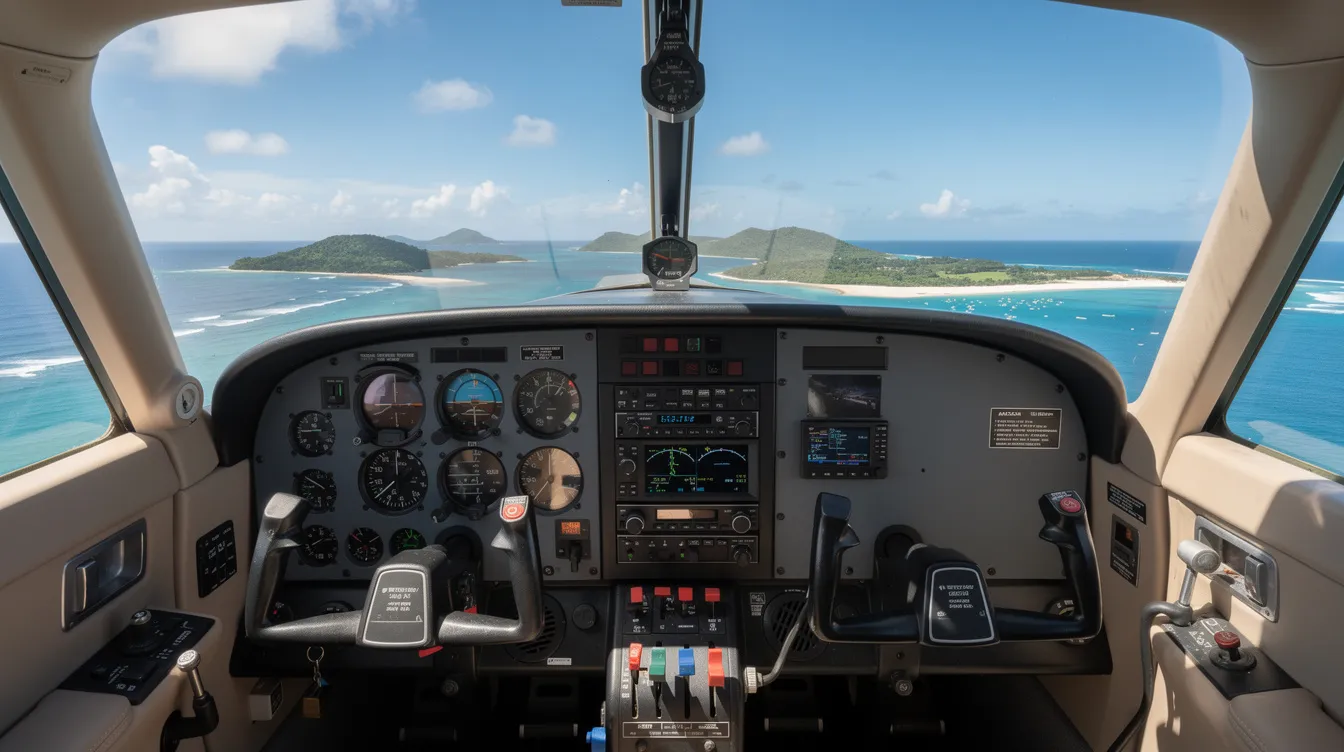
This section addresses practical questions about the P68 in private charter scenarios, covering points not fully explored above.
The P68's cabin is more compact than that of midsize or heavy business jets, but it is perfectly adequate for short regional legs of one to three hours. It seats up to five passengers with good window views and lower vibration levels than many single-engine aircraft. Passengers generally feel at ease on shorter hops, though there is no stand-up cabin height.
For executive teams needing more room or long-haul non-stops, Jettly typically recommends upgrading to a midsize or heavy jet, often paired with private jet membership options for frequent flyers. But for quick hops between nearby cities-say, a 45-minute hop to a meeting and back-the P68 can be a practical, cost-effective option. For a broader comparison, the Private Jets Comparison guide outlines how different categories stack up.
On many regional routes, chartering a light twin like the P68 costs significantly less per hour than a light jet. The difference is especially noticeable when fuel prices are high, and runway length at the destination is constrained-situations where a jet may not even be an option.
Exact pricing depends on aircraft availability, operator, season, and airport fees. Jettly's platform provides real-time quotes by route and date, including options to crowdsource and share private jet flights so travelers can see exactly what a P68-class charter would cost versus a light jet or turboprop before committing.
Piston P68 variants are designed for short-field operations. Takeoff and landing distances typically fall under about 700 m on suitable surfaces, opening up access to many small aerodromes that jets cannot reach.
That said, not all operators permit unpaved or rough strips. Availability for grass or gravel runways depends on the specific aircraft's equipment, local regulations, and the operator's policy, particularly when working with regulated Part 135 charter operators. Jettly's support team can help clarify which options are available for a given route and airfield.
Many P68 airframes are equipped for IFR (instrument flight rules) operations, including variants with weather radar housed in the modified nose. These aircraft are suitable for night flying and moderate weather conditions when flown by appropriately rated crews.
Actual capability varies by individual tail number and operator specifications. Jettly's platform surfaces aircraft and operators that meet the specific regulatory, equipment, and safety requirements for each requested mission-so travelers can book with confidence regardless of the time of day or forecast, similar to how broader charter airline comparison guides help travelers understand their options.
The process takes three steps, whether you are chartering the whole aircraft or buying a single seat on a private jet:
Search your route and travel date on Jettly's website
Compare available aircraft-including P68-type light twins, turboprops, and jets-using instant pricing
Confirm your booking digitally, adding extras like in-flight catering or ground transportation if needed
Ready to explore a P68 or comparable aircraft for your next regional flight? You can also review tips on getting a seat on a private jet easily to make the most of different booking models. Review live availability and request a quote at https://www.jettly.com. Jettly's platform is built around transparent pricing and flexible, on-demand private travel-so you can find the right aircraft for any mission, any time.
The Vulcanair P68 first took to the skies on May 25, 1970, and received its type certification on November 17, 1971. Since then, approximately 431 units have been produced. The aircraft has been involved in 86 accidents worldwide but remains a trusted platform for various missions.
The P.68 Victor, the original model, was certified on January 22, 1969. The P.68B Victor variant, measuring 9.35 meters in length with a maximum takeoff weight (MTOW) of 1,960 kg, offers increased cabin space. The P.68R Victor, certified in 1978, features retractable landing gear for improved performance. The turbocharged P.68C-TC, certified in 1980, is powered by 210 hp engines.
Observation variants such as the P.68 Observer include a transparent fuselage nose and larger fuel tanks, tailored for surveillance and law enforcement use. The AP68TP-600 Viator turboprop variant has a maximum takeoff weight of 3,000 kg, providing higher payload capacity.
Performance-wise, the Vulcanair P68 reaches a maximum speed of 322 km/h, with an operational range of 2,043 km and a service ceiling of 5,850 meters. It can operate from runways shorter than 700 meters, powered by two 200 hp Lycoming IO-360 engines.
The P68 is widely used by law enforcement agencies for surveillance and is operated by military forces in Chile and the Bahamas.
In molecular biology, p68 (also known as DDX5) belongs to the DEAD-box family of RNA helicases with an approximate molecular weight of 68 kilodaltons. Its activity can be modulated by cellular modifications such as phosphorylation. Functionally, p68 acts as a transcriptional co-activator or co-repressor for major transcription factors and interacts with the p53 tumor suppressor protein.
p68 plays a critical role in RNA metabolism, including pre-mRNA splicing and microRNA processing. It uses energy from ATP hydrolysis to unwind RNA secondary structures and can serve as an RNA regulatory hub influencing RNA production. Abnormal regulation of p68 is associated with cancer progression and is implicated in the development of various cancers.
This dual context highlights the distinct significance of the term "p68" in both aviation and molecular biology, with this article focusing exclusively on the Vulcanair P68 aircraft and its applications in private charter and special missions, including regional and, when appropriately configured, select international private jet operations.
The Vulcanair P68 remains a versatile and reliable choice for private charter and special missions, blending efficiency, short-field capability, and adaptable configurations. Its long operational history, with over 430 units produced, underscores its proven performance in diverse roles—from regional business travel to law enforcement surveillance. Through Jettly’s digital platform, travelers can easily join the growing number of private flyers who benefit from the P68’s cost-effective access to smaller airports and scenic routes while comparing top private jet charter companies and service models. Whether for quick regional hops or specialized observation flights, the P68 offers a practical alternative to jets and helicopters, making it a valuable option in today’s private aviation landscape.
Ready to experience private travel on your terms? Whether you are comparing a NetJets alternative like Jettly or simply using a private jet charter cost estimator to plan a regional P68 mission, you can explore flight options or request a quote at https://www.jettly.comExplore flight options or request a quote at https://www.jettly.com.
Share this post:
Jay Franco Serevilla
Aug 24, 2026
|
5
min read
Discover tips and trends in the industry.
5
min read
Dassault Falcon 20F: Legacy Midsize Jet and Modern Charter Alternatives
The Dassault Falcon 20F is a notable midsize business jet that played a crucial role in defining the charter category from the 1970s to the 1980s. While it offers a rich history and solid performance, modern jets surpass it in efficiency, comfort, and technology. Today, platforms like Jettly provide access to newer alternatives that better meet the needs of private travelers.
Read More
5
min read
Fastest Non-Military Jet: The Ultimate Guide to High-Speed Private Travel
Discover the fastest non-military jet, the Bombardier Global 8000, which reaches speeds of Mach 0.94 and offers an intercontinental range of 8,000 nautical miles. This guide explores the importance of speed in private aviation, comparing top contenders and highlighting how Jettly connects travelers with high-speed jets for efficient travel.
Read MoreStay updated with our latest insights and tips to elevate your journey with us.
MEMBERSHIPS AND ASSOCIATIONS



Disclaimer: Jettly operates as a charter broker, offering access to a global digital jet charter marketplace. Jettly is not a direct air carrier and does not own or operate aircraft. All advertised flights are conducted by third-party air carriers that are fully licensed and hold the appropriate Part 135 or Part 121 certifications issued by the Federal Aviation Administration (FAA) or equivalent regulatory authorities under U.S. or foreign law. Jettly complies fully with the U.S. Department of Transportation's Part 295 and Part 298 Charter Broker regulations. Jettly does not carry additional liability insurance. Passengers are covered by aircraft operator insurance. TICO: 50023770


