


Login
Get Instant Pricing On 23,000+ Aircraft

>
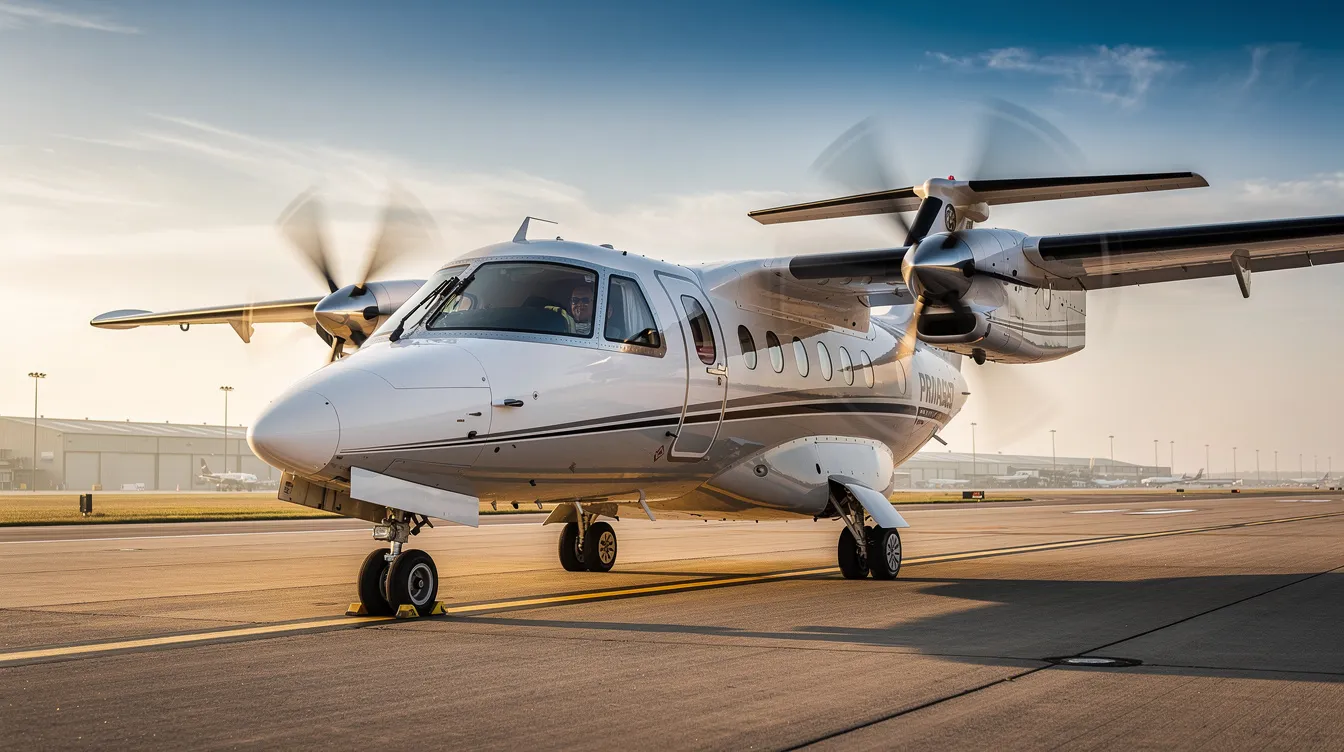
The Piaggio P180 Avanti is one of the most recognizable aircraft in private aviation. It looks different, flies fast, and gives many charter travelers a practical middle ground between a turboprop and a light jet. This guide covers its design, cabin, performance, costs, and how travelers can compare options through Jettly.
The Piaggio P180 Avanti and Avanti II are high-speed turboprops popular in private aviation and available on-demand through Jettly’s charter marketplace.
Typical charter pricing for a Piaggio P180 / Avanti II starts around 2,000–2,500 USD per flight hour, depending on route, operator, and availability.
The Avanti series offers jet-like cruise speed, with the Piaggio P180 Avanti II reaching a maximum cruise speed of 402 knots, while retaining turboprop-level fuel efficiency.
Most executive cabin layouts seat 6 passengers, while the aircraft can carry a maximum of nine passengers depending on configuration.
The Avanti is useful for short to medium business trips, family travel, and regional routes where smaller airport access matters.
Travelers can compare Piaggio Avanti charter options, see instant pricing, and request quotes directly through Jettly at https://www.jettly.com.
The Piaggio P180 Avanti is an Italian-designed executive turboprop aircraft manufactured by Piaggio Aerospace. The original Avanti first flew in 1986 and entered service around 1990 as a fast business airplane for owner, corporate, and charter operations, and it can be operated by one or two pilots.
The Piaggio Avanti concept is simple but unusual: a small forward wing (also called a canard), main wing, and conventional tailplane work together in a three-surface configuration. Add rear-mounted engines and pusher propellers, and the plane becomes visually distinct from most private jets and conventional turboprop models.
Terminology can vary. Piaggio P180, P 180, P 180 avanti, P180 avanti, Piaggio avanti, and Piaggio P180 all refer to the same aircraft family. The Avanti II, EVO, and NX are later versions with advanced technology, updated systems, and improved performance.
As a general overview, the fleet is used for executive transport, corporate shuttle work, air ambulance roles, surveillance, and private jet charter missions. More than 200 units have been delivered worldwide, and the NX keeps the platform relevant for a new generation.

The P180 Avanti was engineered for greater efficiency. Its distinctive design includes a small forward canard wing and a conventional tailplane, creating a combined lifting system that helps reduce drag and improve stability.
The forward wing, main wing, and tail spread lift along the fuselage. Piaggio’s engineering also uses the fuselage to contribute lift, allowing smaller wings than many comparable designs. In simple terms, the aircraft uses less power to achieve high speed.
Key design points include:
The foreplane area and horizontal stabilizer area are part of the three-lifting-surface system.
The pusher propellers sit behind the passenger cabin area, helping reduce sound and vibration for passengers.
The main wing benefits from cleaner airflow because the propellers are behind it.
The aircraft’s nose design contributes to aerodynamic efficiency, complementing the unique three-surface layout.
Typical cabin dimensions are generous for the class, supporting comfort on regional flight sectors.
Later variants have a service ceiling of 41,000 feet, giving the pilot more altitude options.
Its pusher propeller configuration reduces cabin noise by placing engines behind the passengers. Compared to traditional turboprops, the Avanti offers a more comfortable and quieter cabin experience.
The Avanti II refined the original P180 with better avionics, engines, and system upgrades for modern private aviation. It introduced Rockwell Collins Pro Line 21 avionics, improving situational awareness and cockpit workflow.
The aircraft is powered by two Pratt & Whitney Canada PT6A-66B engines, a powerplant rated at about 850 shp per side. These engines, combined with aerodynamic refinements, help the Avanti II deliver strong climb and near-jet speed.
The P180 Avanti EVO added winglets, updated interiors, noise reduction, and incremental efficiency gains. These upgrades matter in charter because fuel consumption, maintenance, and dispatch reliability all affect price.
On April 23, 2026, Piaggio Aerospace secured an order for two aircraft in the P.180 Avanti NX family for a European operator, including an executive cabin with stretcher modules for air ambulance missions, as reported by AIN.
For Jettly users, Avanti II, EVO, and NX aircraft serve similar missions. Differences may appear in range, interior amenities, connectivity, and operator-specific configuration.
Although the Piaggio P180 Avanti is technically a turboprop, its cabin feels closer to many light and some midsize private jets. The cabin is wide, quiet in cruise, and well-suited to business travelers who want space without paying for a larger jet.
Most charter aircraft are arranged for 6 passengers in club seating. The Avanti II has a maximum capacity of 9 passengers, and the aircraft can carry a maximum of nine passengers depending on seats and certification.
Typical features include leather seats, fold-out tables, overhead storage, a refreshment center, adjustable lighting, and window shades. Some Avanti II and EVO aircraft also include broadband connectivity or entertainment systems such as RosenView.
The cabin dimensions are 14' 11" long, 6' 1" wide, and 5' 8" high. The Avanti also has a spacious cabin with a standing height of 5 feet 9 inches in some published configurations, though taller travelers should not expect a full stand-up cabin.
One limitation is worth noting: the cabin layout of the Avanti is relatively fixed due to structural design limitations. Even so, the width and low cabin sound make it feel more comfortable than many older turboprops.
Compared with a typical light jet, the Avanti often offers more cabin width and lower trip cost, though some light jets may have more flexible cabin layouts.
The P180 Avanti blends turboprop efficiency with near-jet performance. It is recognized as one of the fastest civilian propeller-driven aircraft in the world.
Key performance figures include:
|
Metric |
Typical figure |
|---|---|
|
Maximum cruise speed |
402 knots |
|
Approximate top speed in km/h |
745 km/h |
|
Service ceiling |
41,000 feet |
|
Maximum range |
Approximately 1,500 nautical miles |
|
Avanti II range |
Up to 1,800 nautical miles |
|
Avanti II normal range |
752 nautical miles |
The published range can be higher under ideal weight, weather, and fuel capacity conditions. In normal charter planning, 700–1,200 nautical miles is often more realistic because reserves, baggage, passengers, and ground conditions matter.
Example nonstop routes may include New York–Chicago, Los Angeles–Denver, Milan–London, and Toronto–Atlanta. Longer routes may require a fuel stop or a different airframe, such as a Cessna 340 with similar regional range.
The Avanti offers excellent short runway performance, only needing around 3,291 feet for take-off. The aircraft can operate on shorter runways than many light jets, allowing access to smaller airports closer to the destination, much like other efficient types such as the Piper Matrix.
That airport access is a major charter benefit. Less time on the ground, fewer connections, and closer arrival points can make the whole trip faster than commercial aviation.
Jettly focuses on charter rather than ownership, but costs help explain hourly rates. The Annual operating cost for the Avanti II is $1,297,911 for a typical business-use profile, including crew, maintenance, insurance, fuel, and hangar expenses.
The P180 Avanti has a maximum take-off weight of 12,100 lbs. Operators also manage max takeoff weight, max landing weight, max zero fuel weight, baggage, and fuel planning before every flight. A higher useful load can improve mission flexibility, but real-world payload depends on route and reserves.
Cost benchmarks include:
The average hourly rental rate is around $2,300.
The new Avanti II purchase price is $7,200,000.
The pre-owned Avanti II average price is $5,450,000.
Charter customers pay a proportional share of these economics through hourly pricing, plus positioning, handling, and airport fees where applicable, and can use Jettly’s private jet charter cost estimator to model trip budgets in advance.
Safety also matters. The aircraft requires specialized pilot training due to its unique design. Jettly works with Part 135 charter companies and other certified operators subject to national aviation authority oversight, maintenance schedules, crew training, and regulatory compliance.
Jettly’s digital platform lets travelers search for P180 Avanti, Avanti II, and comparable turboprop or light jet options globally in a few steps.
Typical booking flow:
Enter route, date, passengers, and baggage.
Filter by aircraft type, cabin size, or budget.
Compare live or instant pricing where available.
Review operator and aircraft details.
Confirm the booking digitally or request help from Jettly support.
The Piaggio P180 Avanti often works well on sectors of 400–1,000 nautical miles for groups of 4–6 passengers. It can be a cost-effective alternative to small private jets while still offering strong speed and comfort.
Jettly supports both on-demand charter and private jet memberships. Frequent flyers may reduce per-trip friction with a suitable membership while still accessing aircraft like the Avanti.
Learn more about Jettly’s charter options at https://www.jettly.com.
The P180 Avanti suits short-to-medium private travel where speed, efficiency, and small-airport access matter more than ultra-long range.
A business team of 4–6 passengers could fly a same-day round trip such as Paris–Geneva or Dallas–Nashville and avoid commercial schedules. Using tools like Jettly’s airport locator, they can pair the Avanti’s speed and runway performance with airports closer to meetings to create a tighter day plan.
A family of five could use a Piaggio Avanti for a coastal resort or ski destination served by a shorter runway. The cabin, baggage space, and quiet ride make the flight practical without moving into a larger class of jet.
Special missions also show how versatile the aircraft is. Corporate shuttle, government transport, and air ambulance conversions all use the same core platform, and Jettly’s private charter aircraft network offers comparable options across many categories.
Choose an Avanti over a slower turboprop when time matters.
Choose an Avanti over a light jet when cost per seat and fuel efficiency are priorities, especially if you’re comparing it with offerings from major private plane manufacturers.
Choose a larger jet when passengers need more range, cabin height, or baggage volume, such as an Airbus A330-300 for long-haul trips or a Boeing 737-800 for higher-capacity regional missions.

Many Jettly customers compare the Piaggio P180 Avanti with Citation-class light jets and King Air-style turboprops for trips under about 1,500 nautical miles.
The Avanti is faster than many traditional turboprops and may be slightly slower than some light jets. However, its fuel efficiency can reduce operating costs in comparable sectors. It may consume 30–40% less fuel than some light jets on similar routes, depending on load and profile, which aligns with broader guidance on affordable private jet charter strategies.
Cabin comparison is also important. The Avanti’s width feels generous, and rear-mounted engines reduce forward cabin sound. Some light jets offer a more conventional layout, but not always more usable passenger space, as many charter airlines and operators differentiate themselves on interior comfort and layout.
Environmental impact depends on route, load factor, and operation. Efficient fuel burn can lower CO₂ per passenger on many missions, and Jettly can help arrange carbon offsetting or suggest crowdsourced and shared private jet flights when desired.
Typical hourly bands vary by market:
Conventional turboprops: often lower hourly cost, but slower.
Piaggio Avanti: commonly around 2,000–2,500 USD per hour, fitting into broader affordable airplane rental options for travelers who value cost control.
Light jets: often higher, depending on model, routing, and availability, though some appear among the cheapest private aircraft options when you compare acquisition and operating costs.
This section answers common Piaggio P180 Avanti and charter questions not fully covered above.
The Piaggio Avanti is a twin-turboprop aircraft, not a jet. It competes with light private jets because it has high cruise speed, a pressurized cabin, and strong range for regional routes.
Turboprop engines such as the PT6A series can be more efficient than jets at certain altitudes and stage lengths, which helps support competitive charter pricing and can appeal to travelers exploring affordable planes and budget-friendly aircraft choices.
Most P180 Avanti and Avanti II charter aircraft seat 6 passengers in a comfortable executive layout. Some configurations can accommodate 7–9 seats, which is similar to many personal plane choices for private owners.
Jettly’s flight advisors can confirm exact seating, baggage capacity, and cabin configuration before booking, or help evaluate whether a jet card program makes sense for frequent travelers.
A realistic planning range is approximately 2,000–2,500 USD per flight hour, with an average near $2,300 USD in many markets.
Actual pricing depends on region, season, repositioning, airport fees, aircraft availability, and operator terms, and Jettly’s high-ticket affiliate program lets partners earn commissions when they refer travelers who book such trips.
Brochure figures can reach up to 1,800 nautical miles for the Avanti II, while practical charter legs often fall in the 700–1,200 nautical mile band.
Routes such as New York–Chicago or Milan–London are usually suitable candidates. Jettly can advise if a specific route is nonstop-capable or needs a fuel stop, and members on certain private jet membership plans may access additional pricing benefits.
Visit https://www.jettly.com, enter trip details, browse available aircraft including Piaggio Avanti options, compare pricing, and submit a booking or quote request online.
Ready to experience private travel on your terms? Explore Piaggio P180 Avanti flights or request a quote at https://www.jettly.com.

The Piaggio P180 Avanti stands out as a practical and efficient choice for private travelers seeking a balance between turboprop economy and jet-like performance. Its unique design, spacious and quiet cabin, and ability to access smaller airports make it ideal for regional business trips, family travel, and special missions. With competitive charter pricing around $2,300 per hour and versatile range capabilities, the Avanti offers excellent value for those prioritizing speed, comfort, and convenience.
Jettly’s digital platform simplifies the process of booking a Piaggio Avanti or comparable aircraft by providing instant pricing, extensive aircraft options, and expert support. Whether flying on-demand or through membership plans, travelers can experience private aviation tailored to their needs with transparency and ease.
Explore private charter options and request a personalized quote for the Piaggio P180 Avanti at https://www.jettly.com today.
Share this post:
Jay Franco Serevilla
Jun 14, 2026
|
5
min read
Discover tips and trends in the industry.
5
min read
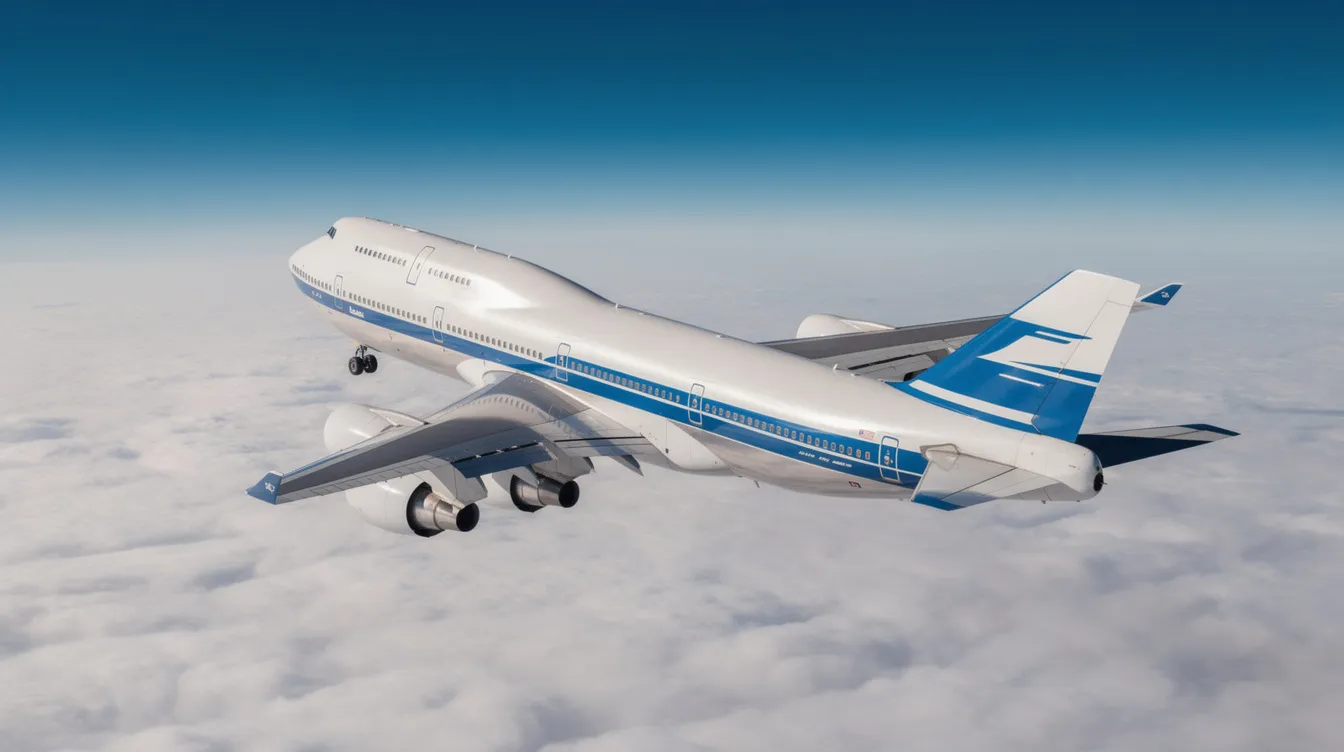
Fastest Commercial Jet: How Fast Passenger Planes Really Fly in 2026
In 2026, the Boeing 747-8i remains the fastest commercial jet, cruising at Mach 0.855. While modern airliners prioritize fuel efficiency over speed, private jets like the Bombardier Global 8000 offer competitive speeds and greater flexibility, often resulting in shorter total travel times. This guide explores the nuances of commercial jet speeds and the advantages of private aviation.
Read More
5
min read
Best Airlines to Work For in 2026: How to Choose the Right Fit for Your Aviation Career
Choosing the best airline to work for in 2026 is crucial for aviation professionals, as it impacts pay, culture, and career progression. This guide evaluates top U.S. and international carriers based on key factors like compensation, work-life balance, and employee satisfaction, helping candidates find the right fit for their aviation careers.
Read MoreStay updated with our latest insights and tips to elevate your journey with us.
MEMBERSHIPS AND ASSOCIATIONS



Disclaimer: Jettly operates as a charter broker, offering access to a global digital jet charter marketplace. Jettly is not a direct air carrier and does not own or operate aircraft. All advertised flights are conducted by third-party air carriers that are fully licensed and hold the appropriate Part 135 or Part 121 certifications issued by the Federal Aviation Administration (FAA) or equivalent regulatory authorities under U.S. or foreign law. Jettly complies fully with the U.S. Department of Transportation's Part 295 and Part 298 Charter Broker regulations. Jettly does not carry additional liability insurance. Passengers are covered by aircraft operator insurance. TICO: 50023770


