


Login
Get Instant Pricing On 23,000+ Aircraft

>
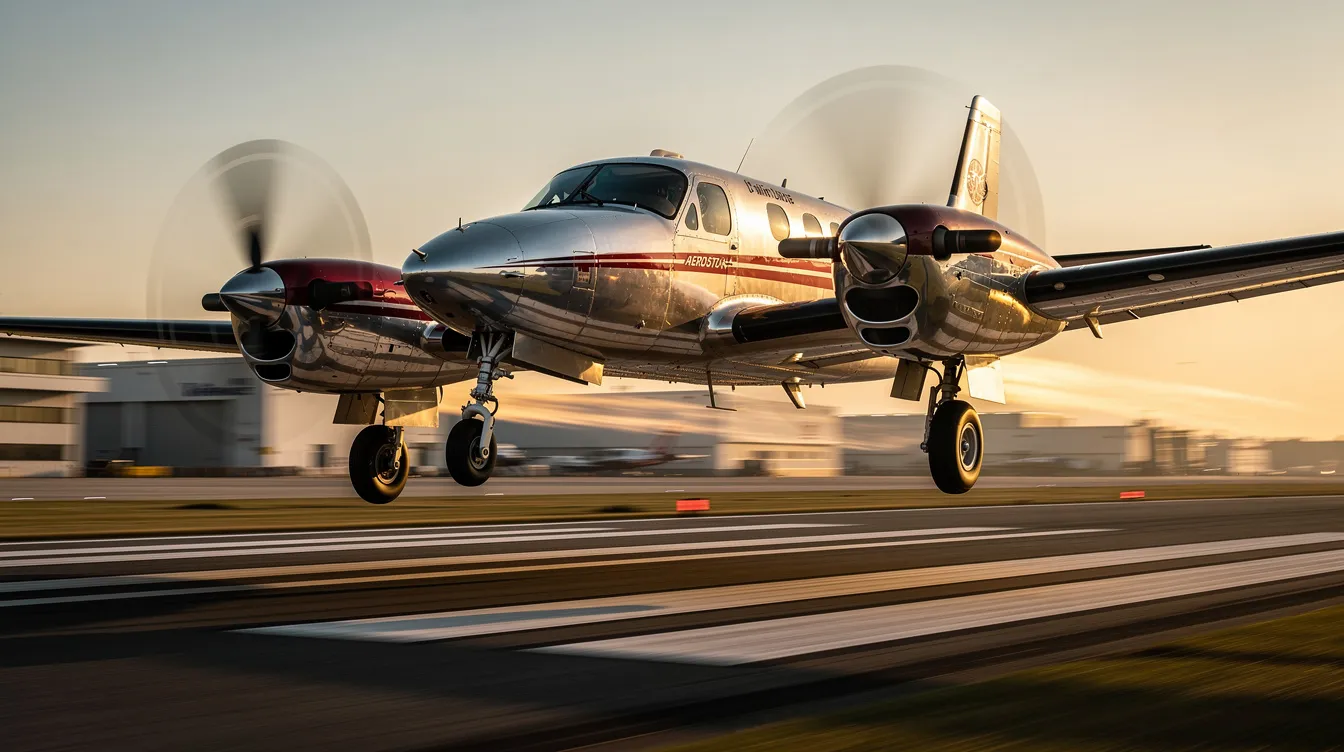
The Piper Aerostar is renowned for its impressive speed and performance among piston twin-engine aircraft. Since its introduction in the late 1960s, it has set benchmarks for cruise speed and efficiency, offering a compelling option for pilots and travelers who prioritize swift, high-altitude cross-country flights. This article explores Piper Aerostar speed across its various models, highlighting design features, real-world cruise numbers, and how this aircraft compares to other private aviation options. Whether you are an aviation enthusiast or considering private charter alternatives, understanding the Aerostar’s capabilities provides valuable insight into the evolution of fast piston twins and their place in today’s private flight market.
The Piper Aerostar holds a unique place in aviation history. Designed in the mid-1960s by Ted Smith, it remains one of the fastest piston-powered twin-engine aircraft ever produced, with cruise speeds ranging from 220 to 285 knots depending on the model. For speed-conscious travelers and aviation enthusiasts, understanding Piper Aerostar speed helps frame what piston twins can achieve and how those figures compare with the turboprops and light jets commonly available for private charter today.
The Piper Aerostar is one of the fastest piston twin aircraft ever built, with cruise speed figures spanning roughly 220 knots (Aerostar 600) to 285 knots (Aerostar 700 model) across the production line.
Later turbocharged and pressurized variants like the 601P and Super 700 regularly cruise above 245 knots at altitude, rivaling some entry-level turboprops on shorter legs.
The aircraft's exceptional speed comes from clean aerodynamics, high wing loading, and powerful Lycoming engines, but those same traits make it demanding to fly, especially near the runway.
While Jettly focuses on turbine and jet charter rather than piston twin ownership, knowing Aerostar performance helps travelers compare private aviation categories when planning time-sensitive trips.
Readers can compare fast piston twins with light jets and turboprops for charter at https://www.jettly.com.

The Piper Aerostar is a high-performance twin-engine aircraft designed by Ted Smith in the mid-1960s and originally built under the Ted Smith Aircraft Company banner. Smith, already known for the Shrike Commander and Jet Commander lines, set out to create a six-seat airplane that could eventually scale into a jet-powered Aerostar concept. The first model flew in 1967, and the aircraft changed hands multiple times before Piper Aircraft acquired the type certificate and production rights in 1978 from the Aerostar Aircraft Corporation.
Aerostar production began in 1967 and ended in 1984. About 1,000 Aerostars were produced, with roughly 700 still flying today. The aircraft set multiple speed records for piston aircraft during its production run, and the Aerostar remains a respected name among fast personal planes in the owner-pilot community.
Typical cruise speed figures for Aerostar aircraft range from about 210–220 knots for the early models to over 260 knots for pressurized turbo variants. The Piper Aerostar combines high cruising speed and comfortable high-altitude cross-country capability in a way that few other piston twins have matched. The family includes models designated 600, 600A, 601, 601B, 601P, 602P, 700P, and 702P, each with slightly different cruise speed and range characteristics, and the Piper Aerostar 600 specifications and charter details illustrate how the original model set the performance baseline.
Tragically, Smith died suddenly in 1976 before seeing the full evolution of his design under Piper's stewardship. His partner at American Cement had initially backed the project, and figures like Steve Speer and Jim Christy later contributed to the aircraft's development and aftermarket support.
This article covers how fast the Aerostar actually is, what determines its cruise performance, how different models compare, and how its speed stacks up against typical charter aircraft available through platforms like Jettly.
The Aerostar's cruise speed comes from an intentional "speed first" philosophy. Ted Smith drew on his existing design experience with the Jet Commander to create an airframe built around minimizing drag and maximizing speed per horsepower.
Key design elements that enable the Aerostar's exceptional speed include:
Mid-wing configuration. The mid-wing layout reduces interference drag between wing and fuselage, contributing to a cleaner overall aerodynamic profile than low-wing or high-wing alternatives.
Compact airframe dimensions. The fuselage is narrow and smooth, with minimal frontal area. The Aerostar's overall airframe dimensions are tight for a six-seat airplane, reducing parasitic drag at cruise.
Retractable landing gear. Fully retractable landing gear eliminates the drag penalty that fixed-gear twins carry, directly supporting higher cruise speeds.
Tightly cowled engines. The Lycoming engines sit in streamlined nacelles. Early models omitted cowl flaps entirely to reduce drag, though later models added them for cooling under turbocharging. Turbocharged variants use TIO-540 series engines, including the TIO-540-U2A in certain configurations.
High wing loading. With wing loading in the 30–35 lb/sq ft range, the Aerostar features high wing loading, resulting in smoother handling in turbulence and lower drag at cruise. The trade-off is higher approach and landing speeds.
No speed brakes on most variants. The original Aerostar designs relied on landing gear extension and full flaps for deceleration rather than dedicated speed brakes, keeping the wing clean during cruise.
The Aerostar is known for its strong climb performance and efficient aerodynamic design. Smith engineered the airframe so it could potentially accept turbine power, which partly explains why its piston twin versions deliver speeds that rival some prop planes in the turboprop category.
Real-world cruise speed depends on model, gross weight, altitude, and power setting. The numbers below reflect typical high-speed cruise figures reported by many owners and supported by published specifications.
Aerostar 600 / 600A
The first model in the line. Powered by twin normally aspirated Lycoming IO-540 engines producing 290 horsepower each. Model 600 typically cruises around 210–212 knots at economy settings and reaches approximately 220–230 knots at max cruise near 10,000–12,000 feet. Minor detail changes between the 600 and 600A improved the systems but did not significantly alter speed.
Aerostar 601 / 601B
Turbocharging allowed the 601 to maintain power at higher altitudes. Typical high-speed cruise sits around 230–240 knots at altitudes in the low 20,000-foot range. The 601B introduced minor detail refinements and improved handling characteristics over earlier variants.
Aerostar 601P / 602P
The 601P added a pressurized cabin, giving pilots access to comfortable cruising at higher flight levels. The Aerostar 601P achieves a maximum speed of 257 knots. Model 601P cruises at approximately 233–257 knots depending on power setting and altitude. The 601P has a maximum takeoff weight of 6,000 lb, and each engine in the 601P produces 290 horsepower. The 601P features retractable landing gear and a service ceiling near 25,000 feet. The 602P (marketed as the Sequoia) offered refined turbocharging and better single-engine ceilings.
Super 700 / 700P
The top of the line. With counter-rotating engines producing 350 hp each, the Aerostar 700 model achieves a maximum speed of 285 knots under ideal conditions. At 75% power, the Aerostar 700 can cruise at 261 knots at an altitude near FL230. The Aerostar 700 has a range of 1,300 nautical miles. Turbocharged Aerostars are designed to operate efficiently at higher altitudes with a ceiling around 25,000 feet.
|
Model |
Typical High-Speed Cruise |
Economy Cruise |
Max Speed |
Approx. Fuel Burn |
|---|---|---|---|---|
|
600/600A |
220–230 KTAS |
200–212 KTAS |
~230 KTAS |
30–35 GPH |
|
601/601B |
230–240 KTAS |
218–225 KTAS |
~250 KTAS |
32–36 GPH |
|
601P/602P |
233–257 KTAS |
220–235 KTAS |
~257–261 KTAS |
32–36 GPH |
|
700P/Super 700 |
250–261 KTAS |
225–245 KTAS |
~285 KTAS |
40–45 GPH |
While some marketing materials quote higher "book" or speed record numbers, travelers should focus on practical cruise figures for trip planning purposes.
The Aerostar 600 was the first production model and established the aircraft's reputation as a fast piston twin in the late 1960s and early 1970s. It was originally built as a proof of concept for Smith's speed-first design philosophy.
Basic specs:
Twin Lycoming IO-540 engines, normally aspirated, roughly 290 hp each
Retractable landing gear
Seating for up to six (pilot's seat plus five passengers)
Design maximum gross weight just under 6,000 lb
The Aerostar 600 model cruises at 220 knots in high-speed configurations at optimal altitude, with a practical range in the 900–1,000 nm bracket depending on reserves, payload, and auxiliary fuel tanks. The Aerostar outperforms most piston-twin competitors like the Beechcraft Baron and Cessna 310 in raw cruise speed, though it does so at the cost of more demanding handling qualities and tighter useful load margins.
Many Aerostar 600 and 600A aircraft today serve owner-pilot business travel and freight roles where speed between regional airports matters more than cabin size. The aircraft competes in a segment of light twins where speed is the primary selling point, similar in mission profile to other high-performance piston twins like the Cessna 340.

Cruise speed matters most when tied to actual missions. The Aerostar excels on business hops of 400–700 nm, family trips between regional cities, and high-altitude IFR cruising above weather where turbocharged models shine.
Practical block times:
A 601P or 700P cruising at 240–250 knots at FL210–FL230 covers a 600 nm leg in roughly 2.5 hours airborne. A route like New York to Chicago or Los Angeles to Denver falls comfortably in the 2.5–3-hour block time range at high-speed cruise.
Economy cruise trade-offs:
Pulling power back to 55–65% reduces fuel burn while still maintaining around 200–225 knots for normally aspirated models and 225–245 knots for pressurized variants. This extends the range, and the Aerostar's effective range is typically between 1,000 and 1,200 nautical miles, depending on the model and payload.
Key factors that affect real-world mission speed:
Fuel planning and reserves. Loading auxiliary fuel tanks extends range but increases gross weight, which reduces climb rate and fuel efficiency on shorter legs.
Winds aloft. Strong tailwinds at flight level can add 30–50 knots of groundspeed, while headwinds eat into block times and effective range.
Altitude selection. Turbocharged models perform best above FL200, where thinner air reduces drag and true airspeed climbs. Below 10,000 feet, even the Super 700 performs more like a conventional piston twin.
Useful load. Payload vs. fuel trade-offs are real. Many owners report that achieving maximum range requires leaving a seat or baggage behind.
The practical takeaway: many owners plan legs around 230–250 knots for turbocharged models, building in a 10–20-knot buffer below "book" max cruise for realistic flight time estimates.
The same features that give the Aerostar its cruise speed—high wing loading, a slim wing, and powerful engines—also demand disciplined flying techniques, particularly near the runway.
Approach and landing speeds. The Aerostar requires higher approach speeds than most light twins and many piston singles. Stall speeds with full flaps and gear down sit in the 74–81-knot range, depending on model and weight. Operational considerations for the Aerostar include demanding airspeed management during takeoff and landing. Pilots must avoid falling below target speeds on final approach, where the aircraft can quickly end up behind the power curve.
Engine-out performance. Engine failures on takeoff were a leading cause of Aerostar accidents. Losing one engine at high weight on a piston twin places enormous demands on pilot skill and aircraft performance. Single-engine service ceilings range from roughly 9,300 to 12,900 feet, depending on the model, and an engine shutdown near Vmc requires immediate, correct action.
Safety record. The Aerostar had an accident rate of 12.9 per 100,000 flight hours. For comparison, the Beechcraft Baron 58 had an accident rate of 4.9 per 100,000 hours. Over 260 fatalities have occurred in 191 Aerostar accidents since 1969. The Aerostar's high wing loading contributes to its unforgiving flying qualities, particularly for pilots transitioning from slower, more docile light twins. The fatal accident rate reinforced the need for type-specific training and experienced pilots at the controls.
Fuel system complexity. The Aerostar uses multiple tanks, including wing tanks and a fuselage tank, with electrically actuated crossfeed valves controlled via a rocker switch on the center console. Electrical power interruptions can affect valve positioning, which has indirect consequences for engine reliability if not managed properly.
Later models introduced improved handling characteristics and better cooling, but the aircraft remains a high-performance type that rewards disciplined airmanship.
For charter customers, these issues are the operator's responsibility rather than the passenger's. Jettly emphasizes aircraft operated under strict regulatory oversight and with pilots trained for high-performance types, so passengers benefit from the safety framework without needing to manage the complexity themselves, typically through vetted Part 135 charter operators and safety-focused companies.
Fast Aerostar models approaching 250+ knots in cruise can rival some turboprops on raw speed. A Beechcraft King Air typically cruises in the 250–310 knot range, while a Pilatus PC-12 sits around 260–280 knots. On a 400 nm leg, the difference in flight time between a Super 700 and a King Air 350 may be negligible, and travelers comparing these options may benefit from broader guidance on choosing the best cross-country aircraft for their mission.
But turbine aircraft offer several advantages beyond cruise speed:
Higher cruise altitudes (FL280–350 for turboprops, FL410+ for jets)
More cabin comfort and pressurization differential
Better short-field and single-engine performance
Simpler, more reliable powerplants
Modern light jets like the Embraer Phenom 300E commonly cruise in the 360–420-knot range. For context on how fast jets can go, a 700 nm business trip that takes around 3 hours in a high-speed Aerostar could be closer to 2 hours in a light jet under favorable conditions. Those time savings compound on round trips and multi-leg itineraries.
While Aerostar ownership appeals to pilots who value speed and hands-on flying, most high-net-worth travelers and corporate teams prefer chartering jets or turboprop private jets through digital platforms like Jettly to avoid maintenance complexity and training requirements, leveraging Jettly's access to a global fleet of private charter aircraft across multiple categories.
Understanding Piper Aerostar speed helps readers anchor expectations when evaluating charter options. What was considered "very fast" in the piston twin world is now matched or exceeded by many aircraft in Jettly's on-demand inventory.
Jettly offers access to more than 20,000 unique aircraft globally, spanning fast turboprops, very light jets, midsize jets, and large cabin aircraft that all cruise faster than a typical piston twin. Through flexible private jet membership programs, higher cruise speed translates into tangible benefits:
Later departures for morning meetings across time zones
Same-day returns on 800–1,200 nm routes
Less total time in the air compared with piston aircraft
Jettly's transparent, instant pricing and digital booking act as a speed advantage on the ground. Customers can compare aircraft categories and estimated flight time in minutes using tools like the private jet charter cost estimator, instead of calling multiple brokers.
For trips where an Aerostar aircraft might once have been the go-to speed machine, Jettly users can now choose from a spectrum of aircraft that balance cruise speed, operating cost, and cabin comfort for each mission. Even travelers shopping for affordable charter options can find turboprops and jets that outpace the fastest piston twin on the market.
Turbocharged and pressurized Aerostar models like the 601P and 700P achieve their best true airspeeds in the FL200–FL230 range—roughly 20,000 to 25,000 feet. At these altitudes, thinner air reduces parasitic drag, and the turbochargers maintain near-sea-level manifold pressure, pushing true airspeed well above what the aircraft achieves at lower altitudes. Above FL250, most variants begin losing available power unless specifically modified.
No. Most Aerostars are owner-operated rather than positioned in on-demand charter fleets. The aircraft's age, maintenance demands, and operational complexity mean few Part 135 operators include them in their fleets. Charter clients looking for similar or better speed more often encounter turboprops and light jets, which are widely available through platforms like Jettly, where guides on affordable private jet charter pricing and cost drivers help set realistic budget expectations.
Commercial airliners typically cruise at 450–480 knots at high altitude—roughly twice the speed of the fastest Aerostar variant. However, airlines offer far less flexibility on schedules, airport choice, and routing. Private charter arranged through Jettly gives travelers access to thousands of airports that airlines do not serve, often making total door-to-door travel time competitive despite lower cruise speeds, especially when using tools like its airport locator and route planning platform.
Consider four factors: route length, runway constraints, cabin requirements, and budget. For legs under 500 nm, a fast turboprop may match a light jet on block time once you factor in climb and descent. For legs over 600 nm, light jets pull ahead significantly. Shorter runways favor turboprops. Budget-conscious travelers may find turboprops offer better value per mile, while jets provide the speed advantage on longer routes, and frequent flyers may want to understand jet card costs and pricing structures before committing.
Yes. The Aerostar set multiple speed records for piston aircraft during its production years, cementing its reputation as the "Aerostar jet" of the piston world. These records reflected both the airframe's aerodynamic efficiency and the power output of its turbocharged Lycoming engines operating at optimal altitude.
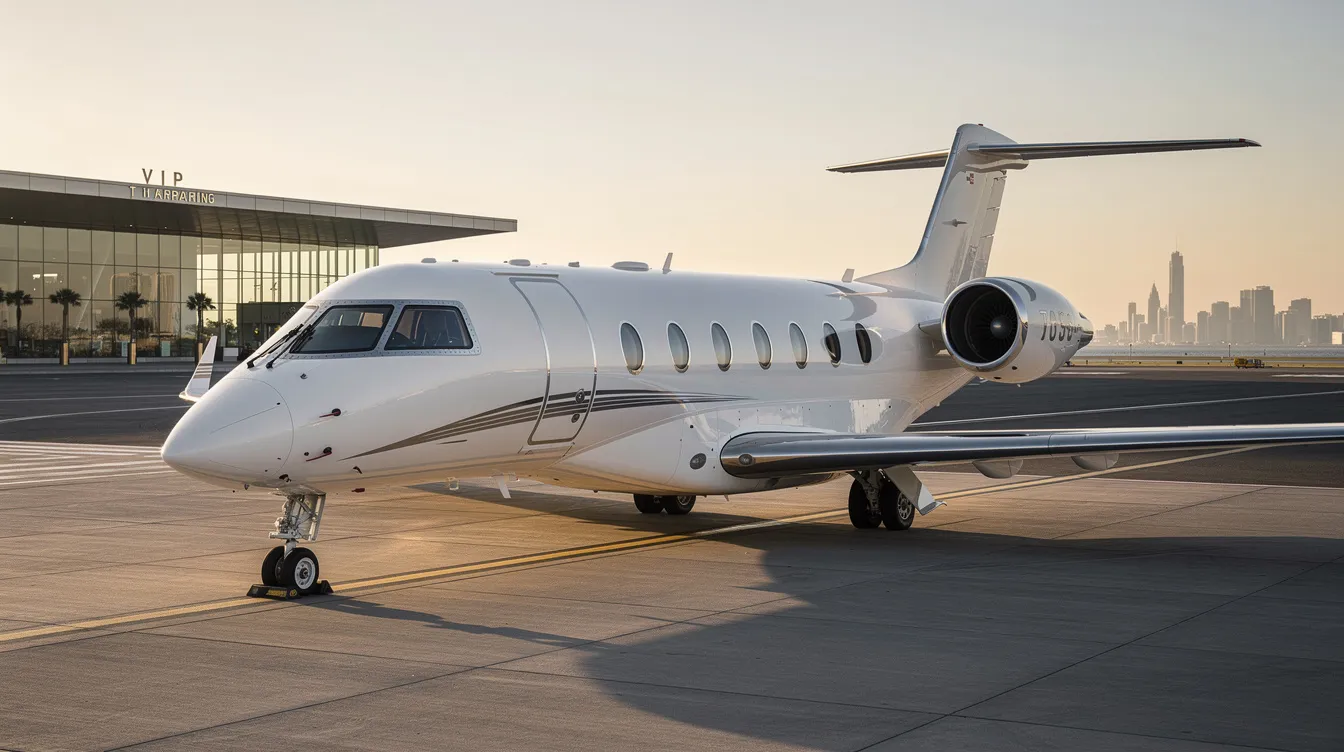
The Piper Aerostar earned its place in aviation history as a speed-focused piston twin. Cruise speed figures ranging from 220 knots in the Aerostar 600 to 285 knots in the Aerostar 700 model still command respect decades after production ended in 1984. Ted Smith's vision of a fast, efficient, cross-country machine delivered exactly what it promised—performance that no other piston twin of the era could match.
While the Aerostar remains a benchmark among light twins, travelers seeking similar or better speeds with more cabin space and comfort now typically turn to turboprops and jets available for charter. Understanding Piper Aerostar speed gives today's private aviation customers a useful reference point when evaluating how modern charter aircraft compare on time, comfort, and cost.
Ready to find aircraft that match or exceed Aerostar-level performance for your next trip? Explore routes, compare aircraft categories, or request instant quotes at https://www.jettly.com. Travelers can also lower per-seat costs by sharing or crowdsourcing private jet flights and empty seats, estimate one-way pricing with the jet card flight cost estimator, and review Jettly's corporate jet card programs and benefits. If you’re focused on buying a single seat rather than a whole aircraft, guides on how to buy a seat on a private jet and easy ways to get a private jet seat outline practical options. Those comparing aircraft types can look beyond piston twins to narrow- and wide-body options like the Boeing 737-800 specs and charter profile, and upgrade the onboard experience with Jettly Eats in-flight catering services. If your mission is city-specific, you can explore dedicated options for private jet charter in Houston, Texas. Finally, aviation and travel creators who appreciate Aerostar-level performance can monetize their audiences through Jettly’s ultra-high-ticket affiliate program.
Share this post:
Jay Franco Serevilla
Jul 3, 2026
|
5
min read
Discover tips and trends in the industry.
5
min read
Saudi Jet: Military Tensions, Regional Security, and What It Means for Modern Air Travel
The term 'Saudi jet' often refers to military aircraft incidents involving the Royal Saudi Air Force, particularly in the context of regional tensions with Iran and Yemen. These incidents impact not only military operations but also civilian aviation, as airspace management is crucial for ensuring safety. Despite the risks, private and commercial flights operate under strict regulations to navigate around conflict zones effectively.
Read More
5
min read
McClellan Jet Services: FBO Facilities, Jet Services, and Charter Alternatives
McClellan Jet Services is a premier fixed-base operator (FBO) at McClellan Airport, offering comprehensive ground support and amenities for private jet travelers. With 24/7 operations, it provides fueling, ground handling, and passenger services, while Jettly's digital platform facilitates seamless private jet charter bookings. Together, they enhance the private aviation experience for business and leisure travelers in Northern California.
Read MoreStay updated with our latest insights and tips to elevate your journey with us.
MEMBERSHIPS AND ASSOCIATIONS



Disclaimer: Jettly operates as a charter broker, offering access to a global digital jet charter marketplace. Jettly is not a direct air carrier and does not own or operate aircraft. All advertised flights are conducted by third-party air carriers that are fully licensed and hold the appropriate Part 135 or Part 121 certifications issued by the Federal Aviation Administration (FAA) or equivalent regulatory authorities under U.S. or foreign law. Jettly complies fully with the U.S. Department of Transportation's Part 295 and Part 298 Charter Broker regulations. Jettly does not carry additional liability insurance. Passengers are covered by aircraft operator insurance. TICO: 50023770


