


Login
Get Instant Pricing On 23,000+ Aircraft

>
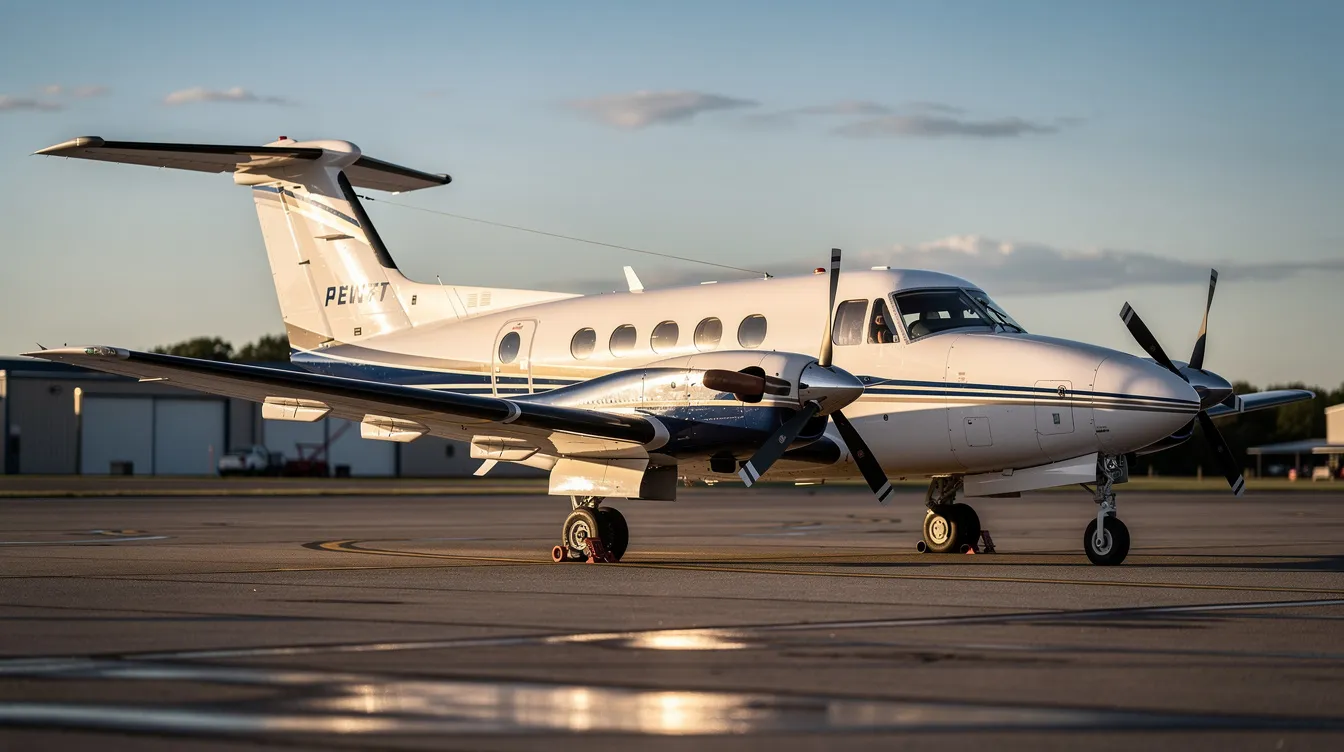
The Piper Cheyenne PA-31T is one of private aviation's most enduring turboprop platforms. Designed in the early 1970s and powered by twin Pratt & Whitney Canada PT6A engines, this pressurized aircraft continues to serve charter operators worldwide. For travelers comparing regional options on Jettly, the PA-31T Cheyenne sits in a practical sweet spot-faster and more capable than piston twins, yet significantly less expensive per hour than most light jets.
This guide is intended for private aviation travelers, charter customers, and aviation enthusiasts seeking detailed information on the Piper Cheyenne PA-31T’s capabilities, costs, and suitability for various missions.
This guide breaks down the Cheyenne family's models, real-world performance, cabin experience, operating economics, safety context, and the specific situations where booking a Piper PA-31T Cheyenne makes the most sense.
The Piper PA-31T Cheyenne is a pressurized, twin-engine turboprop that typically seats 6–8 passengers, offering a maximum cruise speed of 236 KIAS and a maximum range of 883 nautical miles.
The Piper Cheyenne series includes five basic models, spanning the Cheyenne I through Cheyenne IIXL, each powered by different Pratt & Whitney PT6A engine variants for varying mission profiles.
Piper Cheyenne models are considered a bargain for performance-delivering jet-like speed with turboprop fuel efficiency, making them ideal for regional business or family trips under 800 nm.
Charter customers can compare the Piper PA-31T Cheyenne to similar turboprops and light jets directly on Jettly's platform with instant pricing and transparent fee breakdowns.
This article covers model differences, cabin layout, operating costs, safety record, and when to choose a PA-31T Cheyenne for your next charter flight.
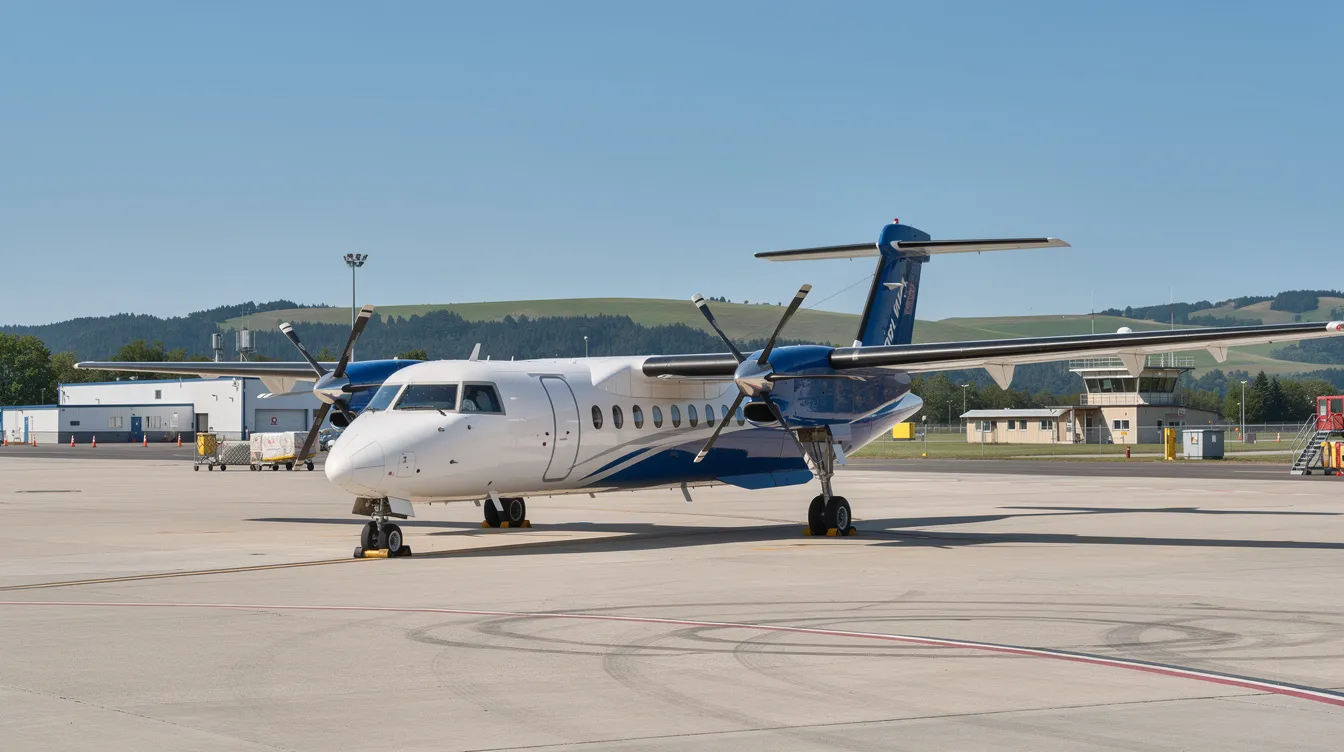
The Piper PA-31T Cheyenne series is a turboprop evolution of the PA-31 Navajo family. The Piper Cheyenne PA-31T is a pressurized twin-engine turboprop aircraft. The Cheyenne family includes several variants such as Cheyenne I, II, and IIXL. Piper Aircraft created it to give operators pressurized, turbine-powered performance in a familiar airframe that was originally designed around piston engines.
The lineage runs from the piston-powered Navajo through the pressurized PA-31P and finally into the turbine-powered Cheyenne. The prototype first flew on August 29, 1969, with certification completed around 1972 and production running from 1974 through approximately 1985. Over that span, roughly 823 units were built across all variants.
The move to Pratt & Whitney PT6A engines transformed the aircraft's climb capability, cruise speed, and dispatch reliability compared with the earlier piston models. Where the Navajo topped out at lower altitudes and slower speeds, the T Cheyenne could operate at flight levels above most weather, making it a genuine all-weather business tool.
The Cheyenne series includes five basic models: the Cheyenne I, Cheyenne IA, Cheyenne II, Cheyenne IIXL, and the larger Cheyenne III/IV (which use a different airframe designation). For charter customers on Jettly, the aircraft is typically categorized as a small turboprop, sitting between piston twins and light jets in both cost and altitude capability.
Both the Cheyenne I and Cheyenne II belong to the PA-31T Cheyenne family, but they are tuned for slightly different missions and budget levels. Understanding the differences helps charter customers pick the right aircraft for a given route.
The Cheyenne I is powered by two Pratt & Whitney Canada PT6A-11 engines producing approximately 500 shaft horsepower each. It delivers solid regional performance but with more modest cruise speeds and climb rates. The Cheyenne II steps up to PT6A-28 engines at around 620 shp, giving it better high-altitude performance, faster cruise capability, and improved single-engine climb margins.
From a cabin perspective, both variants typically seat 6–8 passengers in club-style seating. The Cheyenne II and its later sub-variants often feature updated avionics, refined cowlings, and minor interior improvements, similar in spirit to upgrades seen on single-engine models like the Piper Matrix with modern avionics. The IIXL variant adds roughly two feet of fuselage length, increasing both baggage volume and passenger legroom.
For charter purposes on Jettly, the distinction matters in practical terms: Cheyenne I suits cost-conscious regional hops under 500 nm, while the Cheyenne II handles slightly longer legs and higher-altitude routing with more power in reserve; some travelers may also compare it with other Piper twins like the Piper Aerostar 600 when evaluating speed and comfort.
|
Feature |
Cheyenne I (PT6A-11) |
Cheyenne II (PT6A-28) |
|---|---|---|
|
Engine power (per engine) |
~500 shp |
~620 shp |
|
Max cruise speed |
~230–250 kts |
~260–280 kts |
|
Typical range |
~700–800 nm |
~840–1,000+ nm |
|
Service ceiling |
~28,000–29,000 ft |
~29,000–31,000 ft |
|
Fuselage length |
Standard (~34 ft 8 in) |
Standard; IIXL adds ~2 ft |
|
Best charter fit |
Short regional hops |
Longer legs, higher altitude |
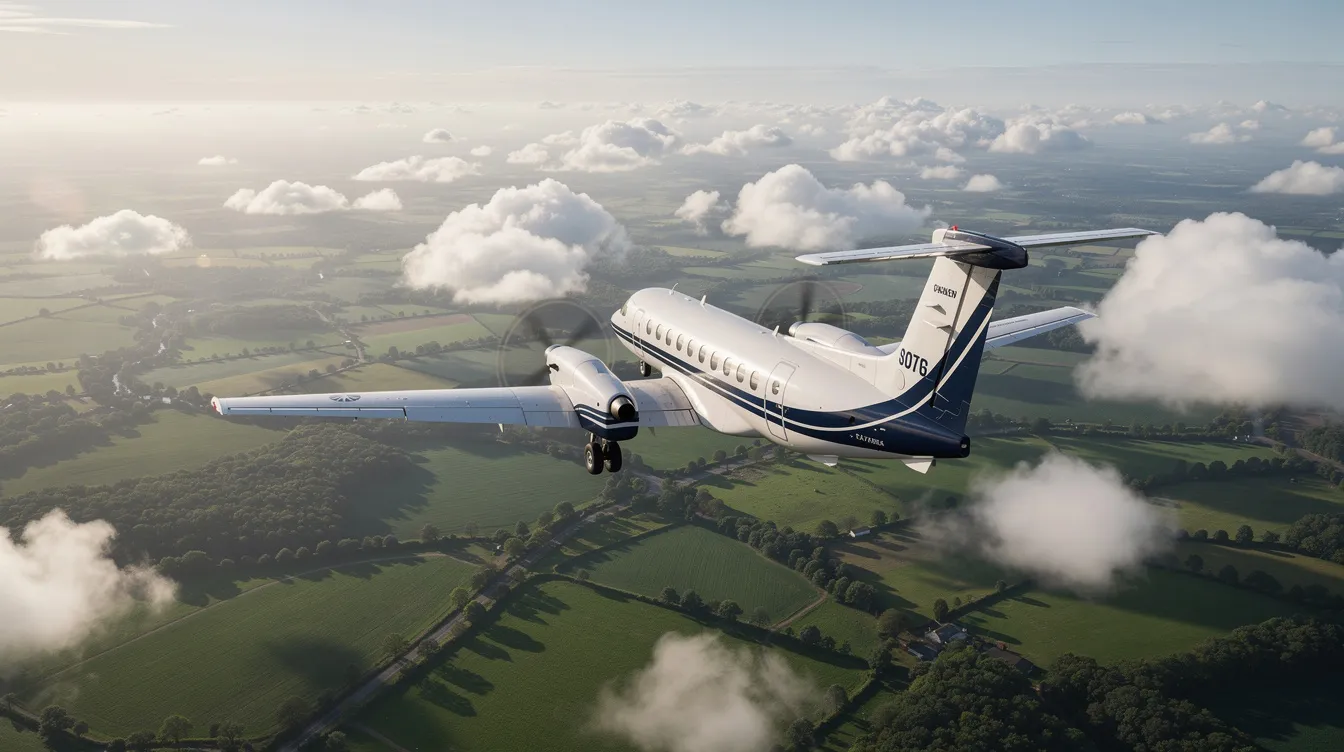
The Piper PA-31T is a conventional low-wing, T-tail turboprop with retractable landing gear and a pressurized fuselage designed for 6–8 passengers plus a crew of two. The airframe traces its roots to the proven Navajo platform, which provides a decades-long record of operational data.
At the heart of the aircraft are its Pratt & Whitney Canada PT6A engines, among the most widely operated and supported turboprop powerplants in the world. Whether equipped with the PT6A-11, PT6A-28, or PT6A-135 variants, operators benefit from a massive global support network for parts, overhaul, and field service. This is a meaningful detail for charter customers: engine reliability and maintenance access directly affect schedule dependability.
Here are the key performance numbers for the standard PA-31T:
Maximum cruise speed: 236 KIAS
Maximum range: 883 nautical miles
Rate of climb: 1,750 feet per minute
Service ceiling: 28,200 feet
Fuel burn: 65.5 gallons per hour (65.5 GPH)
Stall speed: approximately 80–85 knots (clean configuration, varies by weight)
The Piper Cheyenne offers a fuel burn of 65.5 GPH, which is notably efficient for a pressurized twin capable of cruising in the flight levels. Takeoff distances are manageable for most regional airports-approximately 2,400 feet under standard conditions for lighter weights-making the aircraft attractive for accessing smaller airfields that are closer to city centers or remote business sites, where Jettly's airport locator tool can help identify suitable departure and arrival options.
Pressurization and optional de-icing equipment allow PA-31T Cheyenne aircraft to operate comfortably above much of the weather. This improves ride quality and schedule reliability significantly compared with unpressurized prop planes that must pick their way around convective activity at lower altitudes.
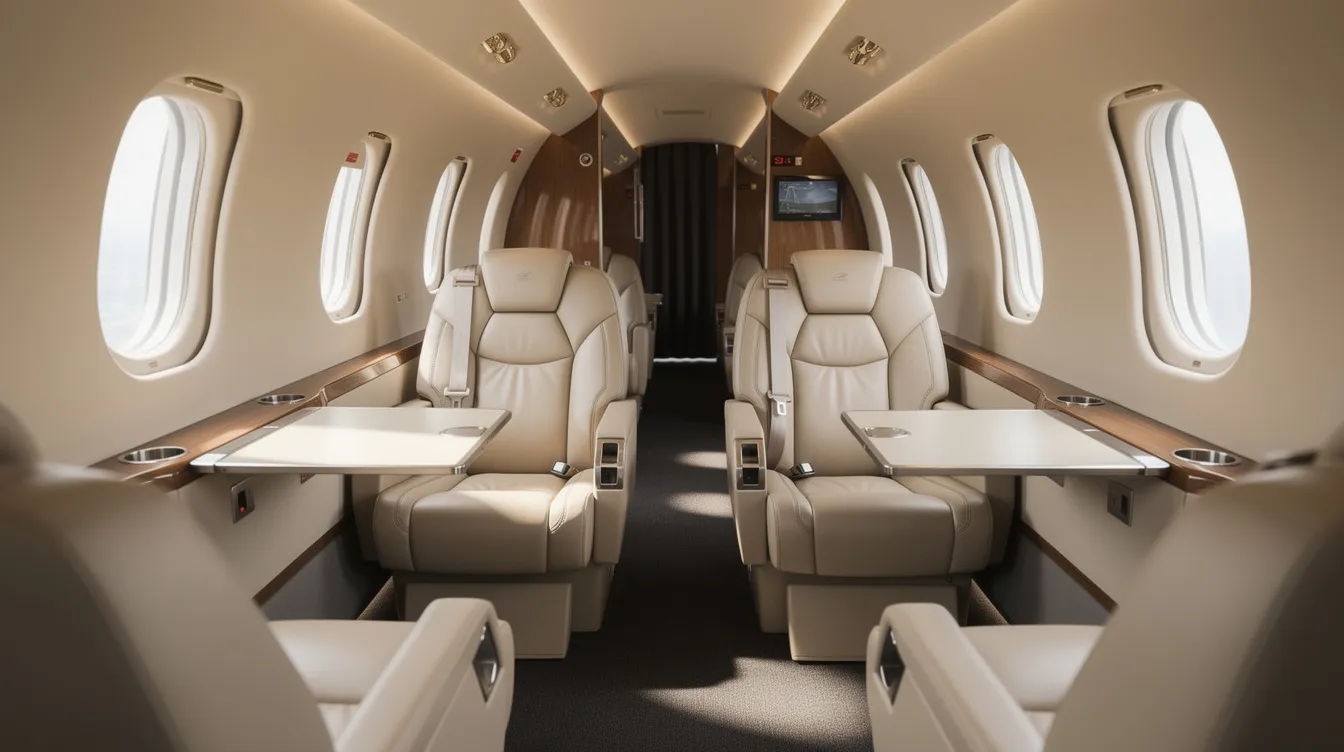
The typical Cheyenne cabin features 6–8 seats arranged in a club configuration with pairs of seats facing each other across a narrow aisle, sometimes supplemented by an aft bench or side-facing seat depending on the operator's specific layout.
Headroom is adequate for seated comfort but lower than what travelers would find in midsize jets. Most passengers can sit upright and work on a laptop without difficulty, but moving around the cabin is limited. For business travelers and families on flights under two hours, the cabin size is right for the mission without paying for unused space.
Features commonly found on chartered Piper PA-31T aircraft include:
Individual seats with armrests and recline
Reading lights and individual air vents
Small refreshment center or snack tray
Cabin noise levels typical of 1970s-era turboprop designs (earplugs or noise-canceling headphones recommended for longer flights)
Modern avionics retrofits in many airframes, including GPS and weather radar
Baggage capacity depends on configuration. Most Cheyenne I and II setups include internal baggage compartments behind the cabin. Some aircraft have nose or external baggage pods that add volume. For a group of 4–6 passengers, expect room for overnight bags, laptops, and a few medium suitcases. With all seats occupied, soft bags are preferred over rigid oversized cases.
Jettly's charter listings highlight interior photos and exact seating configuration for each available Cheyenne, so customers can view the cabin layout and match it to their group size before booking, or even consider crowdsourced private flights and shared empty seats when looking to reduce per-passenger costs.
The Piper Cheyenne family was designed to deliver strong altitude and speed performance at a comparatively low operating cost. That design philosophy still influences modern charter pricing, making the Cheyenne one of the more accessible turboprop options available, particularly when fuel-the largest variable cost factor in private aviation-is taken into account.
On the acquisition side, Piper PA-31T Cheyenne IA prices start at $694,000 for well-maintained examples on the used market. For charter customers, acquisition cost matters indirectly because it drives what operators need to charge per hour to cover depreciation, insurance, and return on capital.
Typical charter rate ranges for the Cheyenne, which fit within broader affordable private jet charter pricing trends:
Standard market rate: approximately $2,000–$2,500 per flight hour for well-equipped aircraft
Lower-end bookings: $800–$1,200 per hour for older airframes or less-demand regions
Fuel cost component: at 65.5 gal per hour, fuel represents a significant but manageable portion of variable costs
Several factors influence what customers see on a Jettly quote, many of which mirror the broader private jet operating cost breakdown:
Flight distance and routing
Airport fees and ground handling
Number of passengers (affects weight and range calculations)
Repositioning requirements (if the aircraft must fly empty to the departure point)
One-way versus round-trip pricing
Customers typically find the PA-31T Cheyenne priced below small jets on comparable routes, especially for segments around 300–700 nm where turboprop efficiency is highest; this aligns with broader private jet rental cost guidance for travelers. Jettly's private jet cost calculator provides instant pricing estimates and allows users to compare the PA-31T against other turboprops like the Beech C90 King Air and light jets in the same search results.
For travelers focused on affordable private charter options, the Cheyenne's combination of low hourly rate and usable speed makes it one of the most practical choices in the turboprop category; understanding the cost of a single private flight helps put those savings into clearer context. There are good reasons it remains in active service decades after production ended.
Like all long-serving aircraft families, the Piper PA-31T and its Cheyenne I and Cheyenne II variants have been involved in accidents over decades of worldwide operation. A transparent look at this record-and what it means for today's charter passengers-is important and is part of why Jettly works only with vetted operators, such as those featured in its private jet operator network.
Many documented incidents involve operational and environmental factors rather than systemic design flaws. Weather, pilot decision-making, challenging terrain, and maintenance lapses appear frequently in accident reports where the probable cause has been determined. The aircraft itself, when properly maintained and operated within its certified limits, has demonstrated the durability expected of a type with PT6A engines and a proven airframe.
Recent accident records include several incidents that underscore the importance of professional operations:
December 28, 2019: Five occupants killed in a PA-31T crash.
April 20, 2020: One person was killed in a separate incident.
June 5, 2020: Five people died in a crash.
January 23, 2024: Four occupants were killed in an accident.
May 7, 2025: Six people died in a crash in Venezuela.
October 22, 2025: Two occupants killed in a crash.
In each case, investigations sought to establish the probable cause, which frequently pointed to weather conditions, terrain awareness, or operational decisions on final approach rather than fundamental aircraft design issues. Additional information from regulatory databases shows that strict adherence to maintenance schedules and crew training standards significantly reduces risk across the fleet.
The type's twin-engine configuration, redundancy in critical systems, and proven Pratt & Whitney PT6A powerplants contribute positively to its safety profile when operated under proper oversight. Charter flights booked through Jettly rely on licensed operators that comply with national aviation regulations-such as FAA Part 135 or equivalent standards in Canada, Germany, and other countries-including recurrent crew training and scheduled inspections for older airframes.
For charter customers, the key takeaway is straightforward: operator quality matters more than aircraft age. A well-maintained Cheyenne flown by a trained crew under regulatory oversight remains a safe, capable platform. Jettly's vetting process helps ensure that operators listed on the site meet these standards, and passengers should always check the operator's credentials before confirming a booking.
The Piper Cheyenne fits a wide range of short- and medium-haul missions where cost efficiency and access to smaller airports matter more than cabin size or transcontinental range. Here are the scenarios where it makes the most sense.
Executives flying 300–600 nm between regional cities-think routes heading west from the East Coast to secondary markets, or connecting mid-sized metro areas not well served by direct commercial flights.
Site visits to industrial locations near smaller airfields where jet-length runways are not available.
Same-day round trips where schedule control is critical and the parking lot is steps from the aircraft, not a terminal away—whether you're flying into major hubs or regional destinations like those served by Jettly's private jet charter in Chennai, Tamil Nadu.
Family trips to coastal towns, ski destinations, or islands reachable via shorter runways, where a PA-31T Cheyenne can land at an airport closer to the resort than most commercial service.
Groups of 4–6 traveling together who want private convenience without paying light-jet rates.
Cheyenne I and II aircraft have historically been operated as air ambulance platforms. The cabin volume accommodates stretchers and medical personnel, and the aircraft's speed and ability to operate from regional field locations make it well-suited for medevac missions; in some scenarios, helicopter rental cost guides can help compare rotorcraft alternatives for point-to-point emergency access.
Jettly's marketplace allows users to search and filter for turboprops, compare Cheyenne II availability against similar aircraft like the King Air 350 or Pilatus PC-12, and select based on price, flight time, and departure airport flexibility, functioning much like the platforms highlighted in this guide to charter airlines and private flights. Enter your route, view the results, and select the option that matches your priorities.
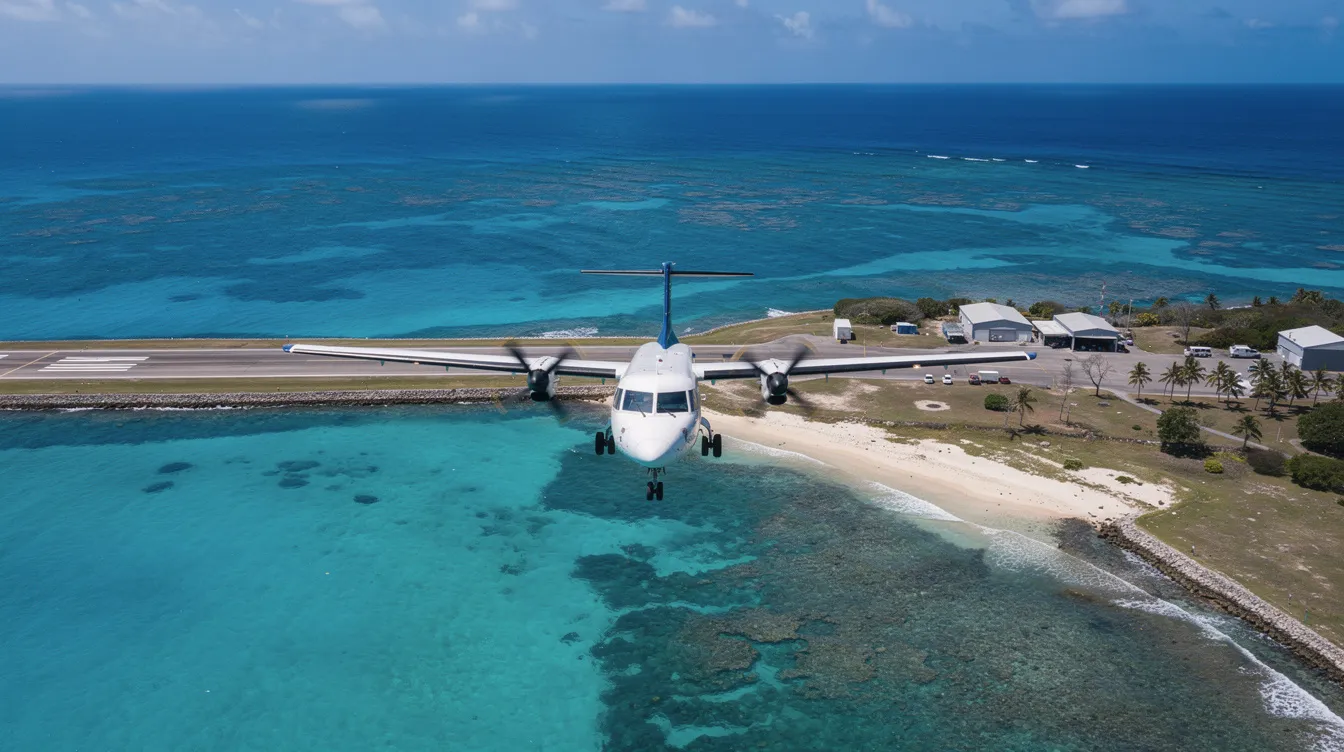
Jettly's digital platform connects travelers to a global network of more than 20,000 private charter aircraft, including Piper PA-31T models managed by certified operators across multiple regions. The platform was created to make private aviation booking as straightforward as possible-no jet card commitment, no hidden fees.
The booking flow is simple:
Visit jettly.com and enter your departure and arrival points plus travel dates.
Filter by turboprop as your preferred aircraft type.
Review Cheyenne offers alongside comparable aircraft in your search results.
Receive instant pricing or request a tailored quote for your specific itinerary.
Jettly's transparent pricing model means customers can evaluate whether a Cheyenne I or Cheyenne II is the right value for a specific route without guesswork, and tools like the jet card flight cost estimator provide additional visibility for frequent flyers. The platform displays fees clearly, so there are no surprises after booking.
For Cheyenne-specific trips, Jettly can also coordinate extras: in-flight catering through Jettly Eats, ground transportation at both ends, and multi-leg routing between smaller airports that commercial airlines have left underserved. Travelers who fly frequently can explore private jet membership options for additional benefits and priority access.
Every listing on the page includes operator details, aircraft year, interior photos, and equipped avionics, giving customers the data they need to make an informed decision. While every effort is made to provide accurate listings, Jettly notes that errors or omissions in operator-supplied information should be flagged to the platform's support team.
Ready to experience private travel on your terms? Explore Cheyenne availability and compare it to other turboprops and light jets directly at jettly.com, or consider locking in rates and benefits through Jettly's jet card programs.
Despite its 1970s-era production timeline, well-maintained Cheyenne I and II aircraft remain popular in charter fleets. The proven Pratt Whitney PT6A engines provide reliable performance, and many airframes have been upgraded with modern avionics-GPS, digital autopilots, and glass cockpit retrofits-improving situational awareness for the pilot and crew. Jettly only lists flights operated by licensed carriers meeting current maintenance and inspection standards, so passengers can fly older turboprops with confidence that the aircraft have been properly inspected and equipped for the mission, similar to the vetted operators discussed in its guide to private and charter airlines.
The Piper PA-31T generally offers a slightly smaller cabin than most King Air variants but can be more cost-effective for small groups on shorter routes. Compared with light jets, the Cheyenne is typically slower and less refined acoustically-but usually less expensive per hour, making it the right choice when budget and runway length are key constraints. Jettly's aircraft charter guide and broader private charter aircraft marketplace can help travelers compare specific route times and prices across all three categories before making a final decision.
Most Cheyenne I and II configurations comfortably handle small suitcases and soft bags for 4–6 passengers. If all seven or eight seats are occupied, baggage capacity becomes limited-especially with full fuel loads where weight trade-offs apply. Exact capacity depends on whether the aircraft has nose or external baggage compartments, so Jettly recommends confirming your expected luggage with the charter specialist during booking. Soft duffel bags work better than rigid oversized cases in the compact storage spaces typical of the Piper Cheyenne.
While brochure data lists a maximum range of 883 nautical miles for certain PA-31T Cheyenne configurations, most charter flights are planned in the 400–800 nm band to allow for fuel reserves, weather contingencies, and alternate airports. Real-world range varies with passenger count, baggage weight, cruising altitude, and winds aloft. Jettly's operators plan routes conservatively for safety and comfort. For longer itineraries, multi-leg routing with a quick fuel stop is a practical solution that keeps the aircraft operating within its optimal performance envelope, especially given how private jet fuel costs can fluctuate by region and airport.
Visit jettly.com, enter your departure and arrival airports plus your travel dates, and filter for turboprops to see available Cheyenne options, using tools like the airport locator to fine-tune your route. You can request on-demand quotes or explore membership options for frequent flying, both of which can include access to Piper PA-31T aircraft when available in the requested region. For travelers who value flexibility, regional airport access, and efficient performance, the Piper Cheyenne remains a versatile and practical choice for modern private charters.
The Piper Cheyenne PA-31T remains a practical and reliable choice for private charter travelers seeking efficient turboprop performance, the convenience of pressurized cabins, and access to smaller airports. Its balance of speed, range, and operating costs makes it well-suited for regional business trips, family travel, and urgent medical flights. Through Jettly’s platform, travelers can easily compare Piper Cheyenne options alongside other turboprops and light jets, benefiting from transparent pricing, instant booking, and access to vetted operators worldwide. Whether flying short hops or longer regional routes, the PA-31T Cheyenne offers a cost-effective, flexible solution for private aviation needs.
Ready to experience private travel on your terms? Explore Piper Cheyenne's availability or request a personalized quote today at https://jettly.com/.
Share this post:
Jay Franco Serevilla
Jul 3, 2026
|
5
min read
Discover tips and trends in the industry.
5
min read
Do Travel Agents Get Discounts on Flights? (And How That Compares to Private Jet Booking)
Travel agents do receive discounts on flights, but these are not as significant or universal as many believe. The landscape has changed, with most agents relying on service fees and negotiated rates rather than deep discounts. Private jet booking platforms like Jettly offer transparent pricing and alternatives for travelers seeking flexibility and convenience.
Read More
5
min read
How Long Is a Flight to London, England? (Private & Commercial Travel Times Explained)
Flight times to London vary significantly based on the departure city, ranging from 1 hour for nearby European cities to 14 hours for long-haul flights from Asia. Private jet travel can greatly reduce overall journey time by minimizing airport waiting and offering flexible routing. This guide provides insights into flight durations, airport choices, and the benefits of private versus commercial travel.
Read MoreStay updated with our latest insights and tips to elevate your journey with us.
MEMBERSHIPS AND ASSOCIATIONS



Disclaimer: Jettly operates as a charter broker, offering access to a global digital jet charter marketplace. Jettly is not a direct air carrier and does not own or operate aircraft. All advertised flights are conducted by third-party air carriers that are fully licensed and hold the appropriate Part 135 or Part 121 certifications issued by the Federal Aviation Administration (FAA) or equivalent regulatory authorities under U.S. or foreign law. Jettly complies fully with the U.S. Department of Transportation's Part 295 and Part 298 Charter Broker regulations. Jettly does not carry additional liability insurance. Passengers are covered by aircraft operator insurance. TICO: 50023770


