


Login
Get Instant Pricing On 23,000+ Aircraft

>

The Piper Matrix is the PA-46R-350T, a six-seat, unpressurized single-engine aircraft that delivers cabin-class comfort with a 350 hp turbocharged engine and lower operating complexity than pressurized PA-46 models. For private pilots moving up from smaller airplanes, small business owners and families evaluating regional private travel, and travelers considering on-demand charter, the Matrix stands out as a practical way to balance performance, cabin space, and cost.
This guide looks at the Matrix's design, specifications, performance, cabin experience, market history, ownership economics, safety, and technology upgrades, along with how it compares with other PA-46 variants and where it fits in real-world charter use. It also explains how platforms like Jettly connect travelers with PA-46 aircraft for convenient on-demand private flights, helping readers decide whether the Piper Matrix is the right cabin-class option for their flying needs.
The Piper Matrix is the unpressurized PA-46R-350T variant derived from the Piper Malibu and Malibu Mirage, introduced in 2008 as a lower-cost, cabin-class airplane for owner-pilots and small groups.
Key specs: six seats, standard useful load around 1,355 lbs, a Lycoming TIO-540 engine producing 350 hp, maximum cruise speed of 213 ktas, range of about 1,343 nm, and typical operating altitudes below the flight levels.
Compared to the Piper Malibu Mirage (M350), the Matrix trades pressurization for cost savings in both acquisition and maintenance. Compared to the turboprop-powered version of the PA-46 (Meridian/M500, M600, M700), it offers lower speed but significantly lower operating cost.
Jettly can source PA-46 aircraft, including the Piper Matrix with detailed specs and charter rates, Malibu, and Malibu Mirage, for private charter - details on quotes and aircraft options are available later in this guide.
The Piper Matrix is formally designated the PA-46R-350T - a six-seat, single-engine, retractable landing gear airplane built by Piper Aircraft. It sits within the broader PA-46 family, which includes the pressurized piston Malibu and Malibu Mirage (now M350), plus the turboprop Meridian, M500, M600, and M700.
Here's how the family evolved:
The original pressurized Piper Malibu entered production in the early 1980s with a Continental engine, establishing the PA 46 as a cabin-class piston single.
In 1988, Piper introduced the Malibu Mirage with the more powerful Lycoming TIO-540-AE2A engine producing 350 hp, improving reliability and high performance at altitude.
In October 2007, Piper announced the PA-46R-350T Matrix - an unpressurized derivative sharing the same airframe, engine, and cabin as the Mirage but without the pressurization system. Matrix deliveries began in early 2008.
By 2015, Piper rebranded its PA-46 lineup as the "M-Class," with the M350 (pressurized piston), M500 and M600 (turboprops), and later the M700. The Matrix was discontinued, with production ending in 2015 after several years of strong sales.
The result is a family of aircraft that share a common wing, cabin layout, and general mission profile, but span a wide range of capability and cost - from the Matrix at the entry point to the M700 at the top.
The Matrix is a low-wing, single-engine airplane with retractable landing gear, designed for owner-pilots and small groups who want more space and capability than a typical four-seat plane. For many pilots, it represents a genuine step up into cabin-class flying without the jump to turboprop or jet operating costs.
Cabin layout and comfort:
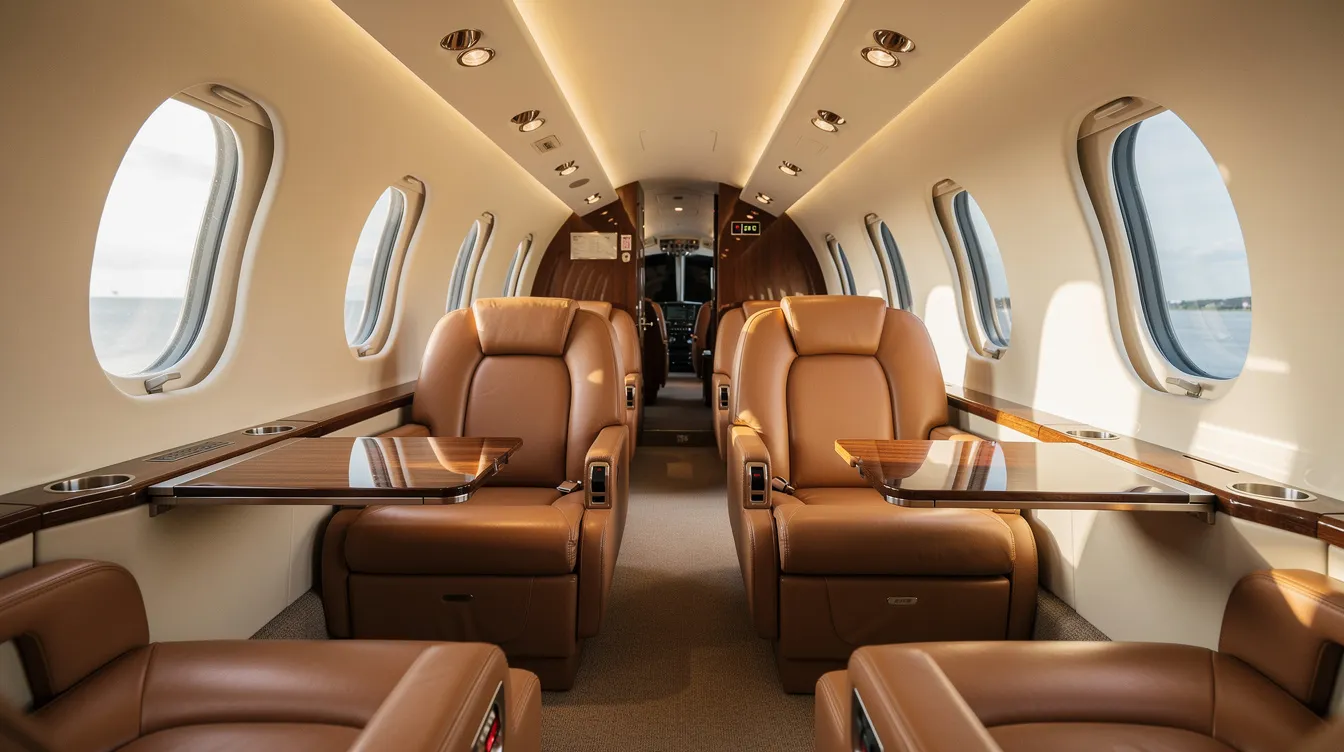
Six seats arranged in a club configuration, with two forward-facing and two rear-facing passenger seats behind the flight deck.
Cabin width of roughly 49.5 inches and height of about 47 inches - generous for a piston single and competitive with other aircraft in this class.
Airstair-style door for easier boarding. Passengers board directly into the cabin rather than climbing over a wing, which improves the experience for charter travelers and adds a sense of cabin class comfort.
Forward and aft baggage compartments suitable for regional trips, weekend getaways, or moderate business travel load requirements.
Unpressurized design:
Because the Matrix lacks a pressurization system, it typically cruises in the mid-teens (12,000–17,000 ft), with supplemental oxygen required above approximately 12,500 ft for extended periods. This is a meaningful difference compared to the pressurized Malibu Mirage, which can operate comfortably at higher altitudes. However, the trade-off delivers real cost savings: fewer maintenance tasks, lower empty weight, and no pressurization integrity inspections.
Avionics and flight deck:
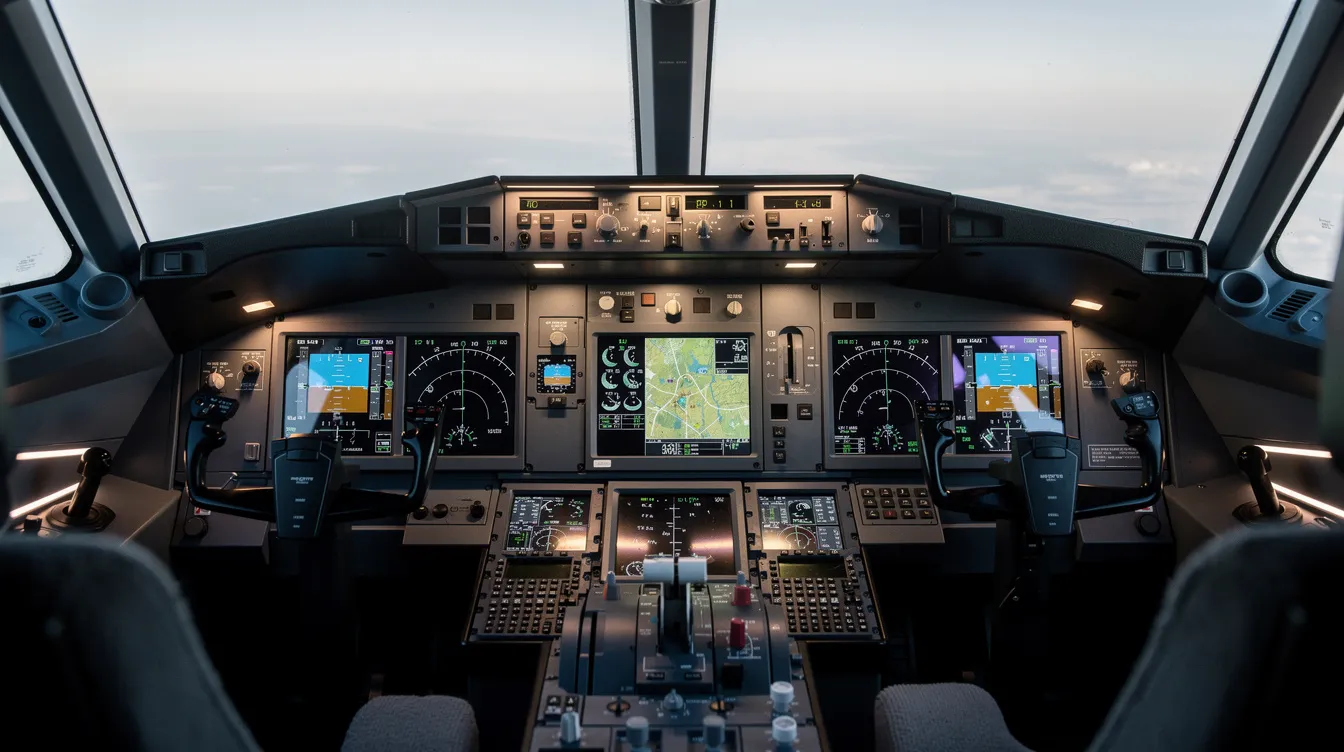
Many Matrix aircraft are equipped with the Garmin G1000 glass cockpit and GFC 700 autopilot, providing large integrated displays, synthetic vision, engine monitoring, and modern navigation capabilities for IFR and en route operations. Earlier models came with Avidyne Entegra avionics and the S-Tec 55X autopilot. Options include speed brakes, de-icing boots, weather radar, and air conditioning - features that any aviation consumer expects in this segment.
The Matrix delivers strong numbers for a piston single. Here are the key figures pilots and charter travelers should know:
|
Specification |
Piper Matrix (PA-46R-350T) |
|---|---|
|
Engine |
Lycoming TIO-540, 350 hp |
|
Maximum Cruise Speed |
213 ktas |
|
Typical Cruise Speed |
190–205 ktas |
|
Maximum Range (with reserves) |
1,343 nm |
|
Maximum Takeoff Weight (MTOW) |
4,340 lbs |
|
Standard Useful Load |
1,355 lbs |
|
Usable Fuel Capacity |
120 US gallons |
|
Takeoff Distance (over 50 ft) |
2,090 ft |
|
Landing Distance (over 50 ft) |
1,968 ft |
|
Maximum Approved Altitude |
25,000 ft |
Powerplant:
Turbocharged Lycoming TIO-540-AE2A producing 350 hp
Turbocharging allows the engine to maintain power output at higher altitudes, supporting cruise performance up to the aircraft's maximum approved altitude of 25,000 ft
Speed:
Maximum cruise speed of approximately 213 ktas at altitude
Normal cruise at economy power settings sits slightly lower, typically in the 190–205 ktas range depending on altitude and power setting
Fuel burn at 75% power runs around 20 gallons per hour; leaning for economy reduces this on longer legs
Range:
Maximum range of about 1,343 nautical miles with 45-minute reserves under ideal conditions
Real-world planning range with passengers and baggage typically falls between 700 and 1,000 nm, depending on fuel load, weather, and weight-and-balance considerations
Load:
Maximum takeoff weight of 4,340 lbs
Standard useful load of approximately 1,355 lbs
With full fuel (about 120 usable gallons, weighing roughly 720 lbs), payload drops to around 565–700 lbs - enough for 3–4 adults plus baggage, but not enough for six passengers with heavy luggage. One thing Matrix owners learn quickly is the importance of fuel-versus-payload planning.
Takeoff and landing:
Takeoff distance over a 50-ft obstacle: approximately 2,090 ft
Landing distance over a 50-ft obstacle: approximately 1,968 ft
Ground rolls under standard conditions run around 1,000–1,100 ft, making the Matrix suitable for smaller regional airports
These numbers mean the Matrix can access airports that commercial flights don't serve, which is a key advantage for charter travelers using platforms like Jettly and its airport locator and charter platform to cut total trip time.
Many buyers and charter clients evaluate the Matrix alongside the pressurized Piper Malibu and Piper Malibu Mirage (M350). The aircraft share an airframe, engine, and cabin - the core difference is pressurization.
Pressurization and altitude:
The Piper Mirage and M350 feature a pressurization system that allows routine flight in the low to mid-20s with a controlled cabin altitude, meaning passengers don't need supplemental oxygen.
The Matrix operates unpressurized, so flights above roughly 14,000 ft require oxygen for pilot and passengers, and passenger comfort at altitude is slightly greater concern.
Both share a service ceiling of 25,000 ft, but the Mirage/M350 is optimized for sustained cruise at those flight levels.
Speed and performance:
Both models use the same 350 hp Lycoming engine, so maximum cruise speed is broadly similar - around 213 ktas for the Matrix, with the Mirage performing comparably at altitude.
The Mirage's advantage shows at higher altitudes, where pressurization allows it to operate more comfortably and consistently above weather.
Cost and complexity:
The Matrix is generally less expensive to purchase and maintain. When new, it listed for several hundred thousand dollars less than the Mirage.
Fewer inspections and no pressure vessel maintenance translate into lower annual operating costs.
For pilots seeking initial training on a big airplane without the added systems complexity, the Matrix provides a more accessible entry point.
Evaluating your options systematically:
When comparing aircraft like the Matrix, Mirage, or turboprop variants, some buyers use structured evaluation tools. A Pugh Matrix is a structured tool used to compare multiple options based on criteria. The Pugh Decision Matrix compares alternatives against a baseline by weighing variables like cost and feasibility. The process involves creating a grid with options as rows and evaluation criteria as columns - useful when deciding between the Matrix's cost savings and the Mirage's altitude capability. Pugh Matrices help make decisions more objectively by scoring options according to important factors like acquisition cost, maintenance, cruise speed, and passenger comfort.
Jettly's platform can display different PA-46 options side by side - Matrix, Malibu Mirage, and turboprop variants - letting users compare pricing and flight times for their specific routes before booking, or even explore crowdsourced and seat-sharing private jet flights where available.

The Matrix arrived at a pivotal moment. Matrix deliveries began in early 2008, and despite launching into a difficult economic climate, the airplane found strong demand. The Piper Matrix outsold the Mirage five to one in 2008, with more than 100 Matrix units sold in its first year. The lower price and simpler systems resonated with buyers who wanted cabin-class capability without paying for pressurization they didn't need.
By 2012, Matrix sales accounted for over a third of Piper's total sales, even as the broader general aviation market contracted. Matrix production ended in 2015, after which Piper focused on the pressurized M350 and its expanding turboprop lineup.
Typical owners and missions:
Private pilots upgrading from four-seat high-performance singles like the Cirrus SR22, who decided they needed more cabin space and a sixth seat
Small business owners flying regional trips of 400–800 nm - think Dallas to Denver, or Atlanta to Nashville
Families wanting the room of a cabin-class single without the operating cost of a turboprop-powered version or light jet
Ownership economics at a glance:
New base price in 2008 was around $757,000; "as tested" configurations ran closer to $847,500
Used market values for a low-time 2010 model may range from $150,000 to $250,000, depending on airframe hours, avionics, and maintenance history
Fuel burn of roughly 20 gph at cruise, insurance costs that reflect the airplane's complexity, and hangar fees that vary by region all factor into annual operating cost
Some business buyers have historically leveraged bonus depreciation for qualifying aircraft purchases
Still, many travelers have decided that chartering makes more sense than owning after comparing overall private jet ownership costs to the flexibility of chartering. Capital outlay, maintenance, hangar, crew, and insurance add up quickly, and understanding the full picture of private jet ownership and operating costs helps many travelers see why on-demand charter can be more attractive. Jettly's marketplace model and its private jet membership programs with wholesale rates support on-demand access to PA-46 aircraft without long-term commitments or jet cards.
While the Matrix is popular with owner-pilots, it also serves some charter operators running small-group, regional missions where a cabin-class piston single hits the right balance of cost and capability.
Ideal charter missions:
2–4 passengers with light luggage
Flights of 300–800 nm: Los Angeles to Scottsdale, Toronto to New York, or Dallas to Austin, where applying tips for booking the cheapest private jet flights and understanding how much it costs to rent a private jet can further improve value
Routes where access to smaller airports cuts total travel time compared to flying commercial through congested hubs
How Jettly connects travelers with PA-46 aircraft:
Jettly's digital platform provides access to over 20,000 aircraft globally, including select PA-46 types like the Matrix, Malibu Mirage, and turboprop Meridian/M500 and M600 - depending on operator availability in each region- as part of its broader private charter aircraft offering. Users can search for specific aircraft types or simply enter a route and let the platform surface options, while Jettly's pricing tools explain affordable private jet charter costs and savings strategies.
Benefits versus commercial flying:
Direct access to smaller airports closer to final destinations using Jettly's broad private charter aircraft network
Reduced total trip time - no long security lines, no connections, similar to the time savings highlighted in guides to the best private charter airlines and operators
Flexible departure times and the ability to board quickly
A quiet, private cabin where passengers can work or relax en route, mirroring the experience described in overviews of top private jet charter companies
Jettly's instant pricing tools and jet card flight cost estimator allow users to compare a Piper Matrix or similar piston/turboprop option against light jets for the same route. This helps travelers weigh flight time, total cost, and cabin comfort before committing. The Pugh Matrix helps teams reach consensus by involving different stakeholders in scoring - and similarly, Jettly's comparison tools help travelers and their teams evaluate options transparently. Decision matrices are often used for selecting vendors or suppliers and prioritizing projects, but the same logic applies when choosing between a piston charter and a light jet like the Phenom 300E or evaluating jet card programs with fixed hourly rates.
Ready to explore PA-46 charter options? Learn more about pricing and availability at jettly.com.
Safety is a top concern for both matrix owners and charter clients considering PA-46 operations. The PA 46 family has a long operational history, and understanding its safety profile helps travelers make informed decisions.
Historical context:
The NTSB has studied PA-46 accident data over the decades, finding that many incidents involve pilot decision-making around weather, icing, and high-altitude operations rather than fundamental aircraft design flaws. Modern recurrent training standards and improved avionics have significantly improved safety margins. Organizations like Casey Aviation and other specialized PA-46 training providers emphasize the importance of both initial training and recurrent training for pilots transitioning to these aircraft.
Technology upgrades available for the Matrix:
Garmin G1000 or G1000 NXi avionics with large-format displays
GFC 700 autopilot with envelope protection features
Synthetic vision technology for terrain awareness
Traffic advisory systems (TAS/TCAS) and terrain awareness (TAWS)
Weather radar or ADS-B weather datalink for en route weather avoidance
Many matrix video resources and free articles from groups like the Malibu/Mirage Owners and Pilots Association (MMOPA) help pilots stay current on upgrade options
M-Class safety innovations:
Newer models in the PA-46 family, like the M600 and M700, feature the Garmin Autoland (HALO) emergency system - a technology that can autonomously land the airplane if the pilot becomes incapacitated. While this isn't available as a retrofit for the Matrix, it demonstrates how safety technology in the PA-46 family continues to advance.
Future propulsion concepts:
Hydrogen fuel cell projects have targeted platforms like the Piper Malibu Mirage as testbeds for alternative propulsion, reflecting broader industry efforts to lower emissions and operating costs. These developments won't change the existing Matrix fleet, but they signal the direction of general aviation.
For charter clients, one important point: travelers using Jettly fly only with regulated operators that comply with national safety standards such as FAA Part 135 or international equivalents, an important consideration for both domestic and international private jet flights. Aircraft configuration and avionics details can be requested at the quote stage through Jettly's platform, which also compares its services with established providers in overviews of industry leaders like NetJets.
No. The Matrix is the unpressurized model in the PA-46 family, while the Piper Malibu and Malibu Mirage (now selling as the M350) are pressurized. This means the Mirage can operate comfortably at higher altitudes without supplemental oxygen, making it a slightly higher capability platform for long flights at flight levels above 18,000 ft.
The difference in pressurization is a major driver of the Matrix's lower purchase and maintenance costs. Without a pressure vessel, there are fewer inspections, less sealing maintenance, and a lighter airframe - all of which translate into savings for owners who operate at moderate altitudes.
The Matrix is configured for up to six seats, but most charter operators find 3–4 adult passengers plus baggage to be the practical sweet spot. With full fuel, the payload available for passengers and luggage is around 565–700 lbs, which limits how many people can fly on longer legs.
Specific seating and luggage allowances should be confirmed with the operator at booking - something Jettly's support team or platform messaging can facilitate when you request a quote.
While the published maximum range is about 1,343 nm with reserves, most operators plan more conservatively. Real-world charter legs typically fall in the 700–1,000 nm range, accounting for passenger load, weather routing, and standard fuel reserves.
For city pairs under about three hours of flight time, a PA-46 like the Matrix offers an efficient balance of speed and cost compared to other aircraft in the light jet or heavier airplane categories, a point that aligns with broader analyses of how much private jets cost and different access models.
The Matrix cruises at around 200–213 ktas, while typical light jets cruise at 400+ knots at higher altitudes. On longer legs, jets cut en route time substantially. However, Matrix flights are usually more cost-effective on short-to-medium routes under 600 nm.
Jets also offer more spacious cabins and higher cruise altitudes, but at a significantly higher hourly rate. The right choice depends on your route, passenger count, and budget. Jettly's cost estimator and jet card flight cost estimator let travelers compare a piston or turboprop option like the TBM 850 against light jets for the same route.
Availability depends on region and operator fleet, but users can filter or note preferences for aircraft like the Piper Matrix, Piper Malibu, or Malibu Mirage when requesting a quote, whether they're flying a regional hop in North America or arranging private jet charter in Kolkata, West Bengal, or New Delhi, India. Jettly's platform provides unlimited access to its network of over 20,000 aircraft, and the support team can help identify specific types for your mission, whether you're chartering the whole aircraft or buying just a seat on a private jet.
The Pugh Matrix is utilized for more calculated choices in engineering and project management, and the same structured thinking applies when selecting charter aircraft. The Pugh Matrix is a tool in Lean Six Sigma for evaluating options - and while private aviation isn't a manufacturing process, the principle holds: results from a Pugh Matrix depend on the quality of chosen criteria and weights, just as your charter experience depends on matching the right airplane to your route and passenger needs.
Ready to experience private travel on your terms? Explore flight options, discover easy ways to get a seat on a private jet, or request a quote at jettly.com.
The Piper Matrix offers a compelling option for pilots and travelers seeking cabin-class comfort with lower operating complexity and cost than pressurized or turboprop alternatives. Its spacious six-seat layout, reliable 350 hp turbocharged engine, and practical range make it well-suited for regional trips and small group travel. While it lacks pressurization, which limits high-altitude cruising, the Matrix’s cost savings and simpler maintenance appeal to owner-pilots and charter clients alike. Platforms like Jettly make accessing the Piper Matrix and other PA-46 variants easy and transparent, providing instant pricing and a wide selection of aircraft for on-demand private flights. Whether upgrading from smaller singles or exploring cost-effective private charter options, the Piper Matrix remains a valuable choice in the cabin-class piston category.
Ready to experience private travel on your terms? Explore flight options or request a quote at https://www.jettly.com
Share this post:
Jay Franco Serevilla
Jul 1, 2026
|
5
min read
Discover tips and trends in the industry.

5
min read
Jettly Launches Special Missions, Expanding On-Demand Access to Helicopters, Group Charter, Cargo, Medevac and VIP Airliners
Jettly has launched "Special Missions," integrating complex charter categories—including helicopters, group charter (18–200 seats), cargo freighters, medevac flights, and VIP airliners—into its instant-pricing digital marketplace. Supported by a network of over 23,000 aircraft and 24/7 flight operations, the feature replaces slow, offline sourcing with transparent digital access for high-stakes, specialized flying.
Read More
5
min read
Tom Brady's Aviation Habits After His Retirement From Pro Football
Tom Brady’s post-NFL career has transformed his travel needs from those of a professional athlete into those of a broadcaster, investor, and business executive. While he has long been associated with the Gulfstream G550, the economics of private aviation suggest that flexible access can be more efficient than whole-aircraft ownership for travelers flying fewer than several hundred hours per year. His evolving schedule illustrates why depreciation, fixed operating costs, productivity, and fleet flexibility increasingly shape how ultra-high-net-worth travelers approach private aviation.
Read MoreStay updated with our latest insights and tips to elevate your journey with us.
MEMBERSHIPS AND ASSOCIATIONS



Disclaimer: Jettly operates as a charter broker, offering access to a global digital jet charter marketplace. Jettly is not a direct air carrier and does not own or operate aircraft. All advertised flights are conducted by third-party air carriers that are fully licensed and hold the appropriate Part 135 or Part 121 certifications issued by the Federal Aviation Administration (FAA) or equivalent regulatory authorities under U.S. or foreign law. Jettly complies fully with the U.S. Department of Transportation's Part 295 and Part 298 Charter Broker regulations. Jettly does not carry additional liability insurance. Passengers are covered by aircraft operator insurance. TICO: 50023770


