



Login
Get Instant Pricing On 23,000+ Aircraft

>
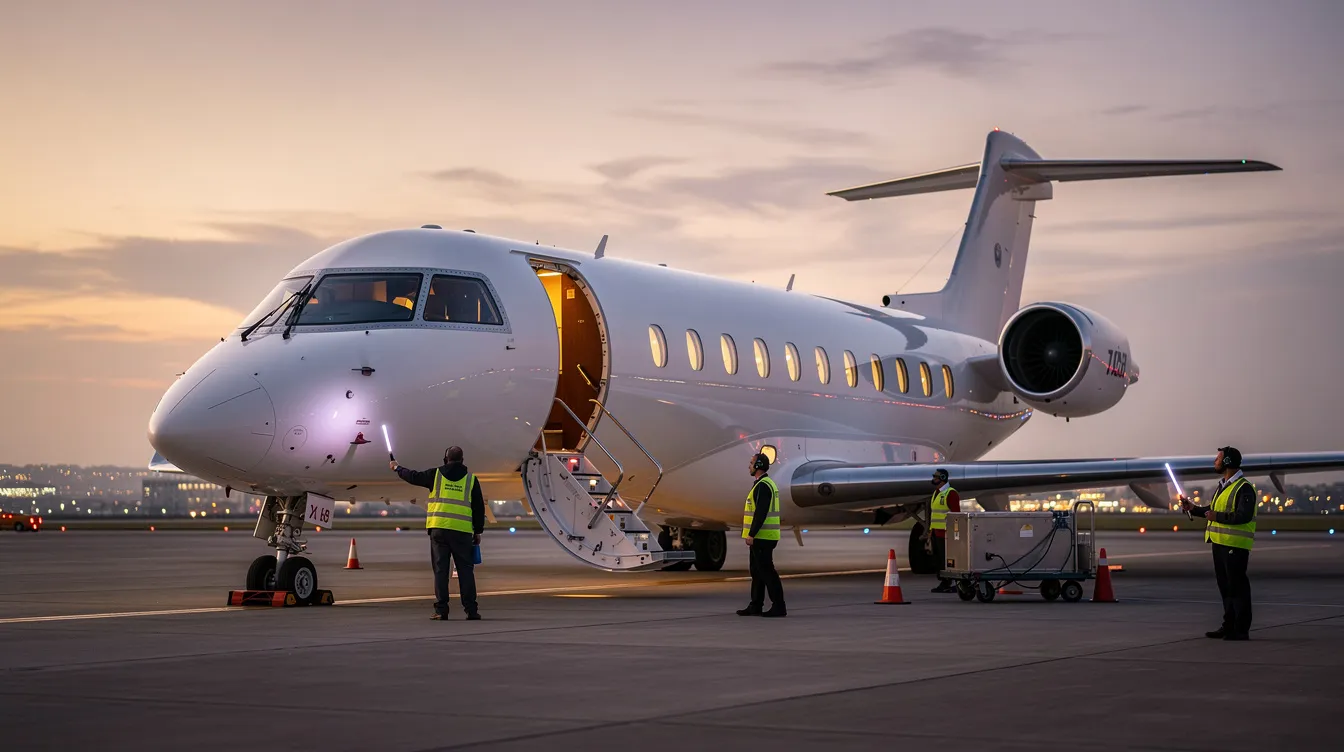
Plane charter prices in 2026 range from about $1,800 per flight hour for a turboprop to over $20,000 per hour for an ultra-long-range aircraft. The final bill depends on the aircraft type, route distance, taxes, crew expenses, and a stack of airport and handling fees that most first-time charter customers don't see coming. This guide breaks down every cost layer with current numbers, real route examples, and practical ways to reduce what you pay.
Private jet charter prices generally range from $1,200 to $15,000+ per billable flight hour, and the total cost of any trip is typically 20–40% higher than the base hourly rate once taxes, fees, and extras are added. Here are the core points:
Private jet charter costs are priced per hour for the entire aircraft, not per seat. Chartering a private plane involves a dynamic pricing structure rather than a flat fee; peak demand and seasonality can push rates higher.
Typical 2026 hourly rate bands: chartering a turboprop costs about $1,800 to $2,500 per hour; light jets run $2,500 to $4,000 per hour; midsize jets $4,000 to $8,000; heavy jets $8,000 to $14,000; ultra-long-range jets $12,000 to $20,000+.
U.S. domestic charter flights carry a 7.5% federal excise tax plus segment fees of about $4.50 to $5.30 per passenger per leg, along with landing and handling charges that vary by airport.
Empty leg flights can save 25–75% on charter costs when travelers have flexible schedules and can match an available repositioning flight.
Jettly is a digital private jet charter platform offering instant route-specific quotes, access to 20,000+ charter aircraft, and tools to compare plane charter prices side by side, including empty leg options.
How much does it cost to charter a plane? The short answer: charter costs range from $5,600 to $22,900 per flight hour depending on aircraft category, with total trip prices running from a few thousand dollars for a short turboprop hop to well over $100,000 for intercontinental heavy jet missions. Pricing is per hour for the whole aircraft, not per person.
Here are three concrete 2026 route examples:
New York (TEB) to Miami (OPF) on a light jet: roughly 2.5 flight hours at $5,500–$7,300/hr all-in. Add federal excise tax, segment fees, landing fees, and catering, and the total charter cost lands between $17,000 and $22,000.
Los Angeles (VNY) to Las Vegas (HND) on a very light jet or light jet: about 1.5 hours. Total cost roughly $8,500 to $10,000 including fees.
London to Dubai on an ultra-long-range jet: approximately 7.5–8 hours at $13,500–$22,000/hr. With overflight fees, international handling, and customs, the final cost can reach $120,000 to $220,000+.
Quoted prices usually exclude optional extras like premium catering, high-end ground transportation, and carbon offsets. Budget those separately.
Jettly's platform calculates these estimates automatically based on route, aircraft category, dates, and current market conditions, helping travelers benchmark fair plane charter prices in seconds. Use the charter cost estimator to see route-specific numbers for your trip.
A "per hour" rate in private aviation means the cost from wheels-up to wheels-down, plus standard taxi time. This is the billable flight hour. Aircraft category is the single largest cost driver because it determines fuel burn, crew requirements, cabin space, and range. Larger, faster, and more luxurious planes command higher hourly rates. Private jet hourly rates range from $5,600 to $22,900 across the full spectrum of categories.
Hourly rates for aircraft are determined based on several factors: fuel consumption, crew costs, insurance, maintenance reserves, and the age and configuration of the specific airframe. Aircraft type influences charter pricing more than any other single variable. Jettly's instant pricing engine pulls live hourly rate data from a global fleet of over 20,000 aircraft, so actual quotes may sit at either end of these ranges depending on route and demand.
The posted hourly rate is the starting point, not the finish line. Total private jet flight costs follow a formula:
Total charter price ≈ (Hourly rate × billable flight hours) + taxes + airport and handling fees + crew expenses + positioning fees + extras (catering, Wi-Fi, de-icing)
Flight duration directly affects the core charter quote calculated from takeoff to landing plus standard taxi time. Costs scale with total billable flight hours, and longer flights incur higher fuel and crew costs. Charter companies typically enforce a daily minimum billing threshold of 1.5 to 2 hours per day, so a 45-minute hop still gets billed at the minimum.
If the aircraft is not stationed at the departure airport, repositioning fees may apply. These aircraft positioning fees can add 1–3 extra billable hours to a seemingly short trip. Overnight pilot expenses can add $200 to $600 per person per night on longer trips requiring crew layover, turning a simple overnight into a line item worth $400–$1,200 for a two-pilot crew.
The chosen departure airport, peak vs. off-peak timing, and one-way vs. round-trip patterns all influence the final cost. Prices can increase during holidays and peak travel seasons due to limited aircraft availability. Private jet prices tend to spike during peak demand periods such as major holidays and events.
Jettly focuses on fully itemized quotes so customers can see exactly where their money goes.
In the U.S., federal excise tax and segment fees apply to most private jet travel under FAA Part 135. These are mandatory additions to plane charter prices and cannot be negotiated away.
Federal excise tax is 7.5% on domestic flights. On a $20,000 base charter flight cost, that adds $1,500. Federal excise tax adds 7.5% to domestic charter flights across the board. (FAA, 2026 Tax Structure)
Segment fees are about $4.50 to $5.30 per passenger per segment in 2026. For a round trip with 6 passengers, that's roughly $53–$64 in segment fees alone. On multi-leg itineraries, these stack with each takeoff and landing.
Landing and handling fees charge for the use of airport facilities and services, varying by location. Landing fees range from $100 to $1,500 per flight depending on aircraft weight and airport class. Handling fees typically range from $100 to $800 per flight. Major hubs and premium FBOs sit at the high end; smaller regional airports cost less.
International flights add customs, overflight, and navigation fees. Dynamic fuel surcharges and government taxes are added on top of the base flight cost for both domestic and international routes. The final charter cost can increase with additional fees such as taxes and surcharges that vary by jurisdiction.
Jettly's quotes account for applicable taxes and fees upfront so there are no post-trip surprises.
Aircraft size and range capabilities are major price levers. Choosing the right size avoids overpaying for cabin space or range you don't need while still meeting comfort and luggage requirements.
Turboprops and very light jets handle short hops of 300–800 nm. A Pilatus PC-12 or Phenom 100 on a route like Dallas–Houston (about 1 hour) might run $4,500–$6,500 total. These are the most affordable private aircraft for regional travel, with small plane charter costs starting around $1,800 per hour.
Light jets like the Citation CJ3+ or Phenom 300 cover 2–3 hour missions. Los Angeles to Las Vegas on a light jet runs $8,500–$10,000 total. Toronto to New York falls in a similar range. Light jets offer stand-up cabins in some models and seat 6–8 passengers.
Midsize jets (Citation XLS+, Hawker 800XP) and super-midsize jets (Challenger 350) handle coast-to-coast domestic flights. New York to Chicago on a midsize jet costs roughly $15,000–$22,000; New York to Los Angeles on a super-midsize runs $30,000–$45,000. Larger aircraft consume more fuel, resulting in higher operating costs, but the per-person math improves with a full passenger count.
Heavy jets and ultra-long-range aircraft (Gulfstream G650, Global 6000, Falcon 7X) serve transatlantic and intercontinental routes. New York to London on a heavy jet starts around $80,000–$130,000. Los Angeles to Hong Kong on an ultra-long-range jet can exceed $200,000. Crew overnight expenses, higher fuel burn, and overflight fees drive these numbers.
The same aircraft category can produce very different totals depending on route distance, airport choice, and whether the charter flight is one-way or round trip. Flight costs can vary greatly depending on the departure and arrival airports due to varying fees and aircraft availability.
|
Route |
Aircraft Category |
Est. Flight Time |
Total Cost Range |
|---|---|---|---|
|
Teterboro (TEB) – Miami (OPF) |
Light Jet |
2.5 hrs |
$17,000–$22,000 |
|
Van Nuys (VNY) – Las Vegas (HND) |
VLJ / Light Jet |
1.5 hrs |
$8,500–$10,000 |
|
Chicago (MDW) – Aspen (ASE) |
Midsize Jet |
2.5 hrs |
$18,000–$25,000 |
|
London (LTN) – Nice (NCE) |
Light / Midsize |
2 hrs |
€12,000–€18,000 |
|
Dubai (DWC) – Malé (MLE) |
Heavy Jet |
4.5 hrs |
$50,000–$70,000 |
Airport choice matters. Flying into Teterboro instead of JFK can shave thousands in handling and landing fees and cut ground time. Airports charge landing and handling fees that vary by airport congestion and location, and premium FBOs at major hubs carry steeper price tags than those at smaller regional airports, so using an airport locator tool to compare nearby options can meaningfully change your total trip cost.
For less-trafficked routes, the aircraft may need to arrive empty from a different city, adding 1–3 extra billable hours. Jettly's system automatically searches multiple nearby airports and aircraft home bases to minimize repositioning distance and total cost, drawing on its global private charter aircraft network.
Most private travelers fly too few hours per year to justify buying and operating their own business jet. On-demand charter is cheaper for fewer than 50–75 hours yearly, and even moderate flyers often find charter more economical below 150–200 hours.
Ownership costs for a light jet include acquisition ($3–$10 million), hangar fees, insurance, two-pilot crew salaries, scheduled and unscheduled maintenance, engine reserves, and regulatory compliance. At 200 flight hours per year, the total annual cost of owning a light jet runs $700,000 to $1.2 million. Chartering that same 200 hours at $3,500/hr costs $700,000 before taxes and fees, with zero fixed overhead.
Charter and on-demand private jet rental allow changing the aircraft category per mission. A turboprop for a 300-mile hop on Monday, a super-midsize for a coast-to-coast trip on Wednesday, and back to a private cabin on a light jet on Friday. On-demand services allow booking without long-term contracts or deposits and can be compared directly with the total cost of owning a private jet. Ownership locks you into the same aircraft whether it fits the mission or not.
Jettly's marketplace model converts ownership-style fixed costs into flexible per-trip expenses. For frequent flyers who want predictable cost-per-hour pricing, the platform also offers optional jet card programs and private jet memberships with different benefit levels and pricing structures.

Jettly is a global digital private aviation platform that aggregates more than 20,000 aircraft and provides instant pricing. Customers see real-time plane charter prices without calling multiple charter brokers for phone quotes and can access affordable private jet charter options tailored to their route and budget.
Transparent, side-by-side comparisons of aircraft category, hourly rate, operator safety ratings, and total estimated trip cost help travelers avoid overpaying for capacity or range they don't need. A traveler requesting a midsize jet for a 400-mile trip can instantly see that a light jet covers the same route at $2,000–$3,000 less per hour.
Technology reduces overhead, allowing more competitive all-in charter pricing for both occasional and frequent private jet travel. Jettly's platform also integrates ground transportation options, in-flight catering services, carbon offset add-ons, and digital itinerary management.
Learn more about Jettly's charter options at https://www.jettly.com.
Private jet cost will always exceed most commercial flights, but smart decisions can cut total spend by 20–50% while preserving comfort and flexibility.
Right-size the aircraft. If only 4 passengers are traveling 500 miles, a light jet or even a very light jet handles the mission. Booking a heavy jet for a short domestic hop wastes thousands per hour.
Use secondary airports. Flying into Teterboro instead of JFK, or Henderson instead of Las Vegas McCarran, means lower landing fees and faster ground handling. Understanding one-flight charter cost breakdowns for different airport choices helps quantify these savings.
Book off-peak. Midweek departures (Tuesday through Thursday) and non-holiday periods reduce demand-driven rate spikes, especially for super-midsize and ultra long range jets; this is one of several tactics covered in guides on how much it costs to rent a private jet.
Target empty leg flights. These flights occur when an aircraft repositions without passengers. Operators sell empty leg seats at discounts of 25–75% below standard charter prices or may even crowdsource private jet flights and share empty seats to reduce everyone’s cost. Empty leg availability is listed in real time on charter platforms like Jettly. Travelers with flexible itineraries benefit most from empty legs because departure times and airports may shift. For strategies on finding these deals, read about empty leg tricks.
A $12,000 light jet charter for six passengers works out to $2,000 per person, comparable to a same-day business-class fare on popular U.S. routes during peak periods. When the private aircraft is full, the per-person math narrows the gap with premium commercial airlines.
Non-price value factors are where flying private pulls ahead. Private jet travel provides access to thousands more airports than commercial flights, cuts door-to-door travel time (often by 2–4 hours per trip), and lets passengers depart on their own schedule. A private cabin allows confidential work, family time, or sleep without interruption, while those exploring smaller budgets can look at affordable aeroplane rental options as a stepping stone into private flying.
For executives and project teams, saving several hours per trip creates productive time that can offset higher travel costs. This matters most when multiple people share the entire aircraft cost or even buy a single seat on a private jet on shared or semi-private services. Read a deeper cost-of-flying-private comparison for route-specific breakdowns.
Jettly's transparent pricing and wide aircraft selection help businesses and families quickly determine when charter makes financial sense compared with premium commercial options.
Private aviation has a larger per-passenger carbon footprint than most commercial flights. This is a fact, and it influences how some customers evaluate plane charter prices.
Newer, more fuel-efficient aircraft reduce both fuel burn and operating costs per flight hour. A late-model light jet burns less fuel per nautical mile than a 1990s-era equivalent, which can justify a slightly higher hourly rate through lower repositioning needs and better reliability, as detailed in private jet operating cost breakdowns.
Sustainable aviation fuel (SAF) is available at a growing number of FBOs. It increases direct fuel costs today, but some travelers choose it as part of a broader sustainability strategy. Carbon offset programs, priced on a per-flight-hour or per-ton CO₂ basis, add a modest percentage to total private jet cost.
Jettly can connect clients with operators and partners that prioritize efficient aircraft, optimized routing, and optional offset programs.
The most reliable way to understand private jet cost is to request a fully itemized quote for a specific itinerary, aircraft category, and date window. Here's what to prepare:
Departure and arrival cities, plus acceptable nearby airports
Dates and time windows
Passenger count and luggage profile (weight and volume)
Special needs: pets, catering level, Wi-Fi, medical support
A transparent quote should itemize:
Base hourly rate and estimated billable flight hours
Federal excise tax (7.5% for domestic flights)
Segment fees per passenger
Landing fees and handling charges
Crew overnight expenses if applicable
De-icing, fuel surcharges, and optional services
Be cautious of vague "all-in" numbers that don't break down assumptions like estimated flight hour duration or fuel price thresholds. These can lead to unexpected adjustments after the trip.
Use Jettly's online tools at https://www.jettly.com to get instant, route-specific estimates. For those considering prepaid hours, a dedicated jet card flight cost estimator can clarify whether jet cards make sense for your pattern of use. For complex itineraries, follow up with how to charter a private jet guidance and speak with a charter specialist.
These FAQs address recurring questions about plane charter prices, focusing on details not fully covered in the main sections above.
Booking 2–6 weeks in advance typically offers the best balance between aircraft availability and competitive pricing, especially for popular routes on midsize jets or super-midsize jets. Last-minute bookings are possible but may carry a premium unless an empty leg matches the requested route and timing. Major holidays, large sporting events, and peak summer travel (June through August) can require 6–8 weeks of lead time for heavy jets and ultra-long-range aircraft.
If you’re comparing multiple operators, consulting an ultimate list of charter airlines can give context on how different providers structure pricing around peak and off-peak demand.
Unlike commercial flights, private jet cost is not tied to fixed fare buckets. Instead, it follows supply and demand patterns. Departures early in the morning or late in the evening on weekdays tend to cost more on business routes due to higher demand. Travelers with flexible schedules can save by choosing midday departures or shifting trips from Friday and Sunday to Tuesday through Thursday.
Hourly rates and total trip pricing vary by region. North America and Europe have mature, competitive charter markets with deep aircraft supply. Parts of Africa, South America, and remote island destinations may incur higher positioning and handling costs due to thinner fleet coverage. City-specific markets such as private jet charter in Kolkata illustrate how local fees and aircraft availability shape pricing. Jettly's global network allows customers to see regional differences in real time and source locally based aircraft to reduce repositioning charges.
Fixed hourly rates are typically available through private jet memberships and jet card-style products offered by various providers. Some travelers compare these against NetJets alternatives like Jettly to balance flexibility, cost, and commitment level.
Many providers offer jet card programs or membership programs that convert variable charter pricing into fixed hourly rates within specific aircraft categories. These programs usually require an upfront deposit of $50,000 or more but can shield frequent flyers from seasonal price swings and short-notice surcharges. Membership programs offer predictable pricing for frequent flyers. Jet cards lock users into fixed hourly rates and commitments; understanding jet card costs and pricing structures is essential before committing. Jettly combines on-demand private jet rental with optional membership structures so customers can choose between pay-as-you-go flexibility and more predictable per-hour pricing based on their annual flight hours.
Extra time is usually billed at the same hourly rate defined in your agreement, so comparing top private jet charter companies and their contract terms is important. Regional pages, such as services for private jet charter in New Delhi, often outline how local operators handle overruns, minimums, and wait-time charges.
Private jet cost is typically billed on actual billable flight hour usage. Unexpected rerouting, headwinds, holding patterns, or last-minute itinerary changes can increase total billed hours and plane charter prices. Reputable brokers estimate flight times using conservative planning assumptions but cannot guarantee block time to the exact minute due to air traffic and weather factors. Review contract language on how additional flight hours, de-icing, or unscheduled overnight crew expenses are handled. Jettly's itemized quotes make these conditions transparent before booking.
Plane charter prices in 2026 are driven by aircraft category, billable flight hour duration, taxes, and operational logistics. Understanding these inputs turns a confusing quote into a budgetable expense. The right aircraft category (from very light jets through heavy jets, ultra-long-range options, or even high-capacity aircraft like the Boeing 737-800), flexible timing, and cost-efficient airports can reduce private jet cost without compromising safety or comfort.
Jettly's digital platform, global aircraft network, and transparent pricing help travelers answer "How much does it cost to charter a private jet?" for their exact route in seconds.
Ready to see what your next private flight costs? Explore live plane charter prices or request a custom quote at https://www.jettly.com.
Share this post:
Jay Franco Serevilla
Nov 2, 2026
|
5
min read
Discover tips and trends in the industry.
5
min read
Private Jet Charter Cost in 2026 (Real All-In Pricing, Fees, and 3 Line-Item Examples)
Understanding private jet charter costs in 2026 can be complex due to various fees beyond the hourly rate. This guide breaks down the all-in pricing, including examples and factors affecting costs, ensuring travelers can make informed decisions. Learn how to request accurate quotes and avoid hidden charges.
Read More
5
min read
Hub for Alaska Airlines: Key Airports, Routes, and Private Jet Alternatives
Alaska Airlines operates a focused hub network primarily along the West Coast, enhancing connectivity to Alaska, Hawaii, and beyond. This guide details key airports, routes, and how private jet alternatives like Jettly can complement commercial flights for a seamless travel experience.
Read MoreStay updated with our latest insights and tips to elevate your journey with us.
MEMBERSHIPS AND ASSOCIATIONS



Disclaimer: Jettly operates as a charter broker, offering access to a global digital jet charter marketplace. Jettly is not a direct air carrier and does not own or operate aircraft. All advertised flights are conducted by third-party air carriers that are fully licensed and hold the appropriate Part 135 or Part 121 certifications issued by the Federal Aviation Administration (FAA) or equivalent regulatory authorities under U.S. or foreign law. Jettly complies fully with the U.S. Department of Transportation's Part 295 and Part 298 Charter Broker regulations. Jettly does not carry additional liability insurance. Passengers are covered by aircraft operator insurance. TICO: 50023770


