



Login
Get Instant Pricing On 23,000+ Aircraft

>
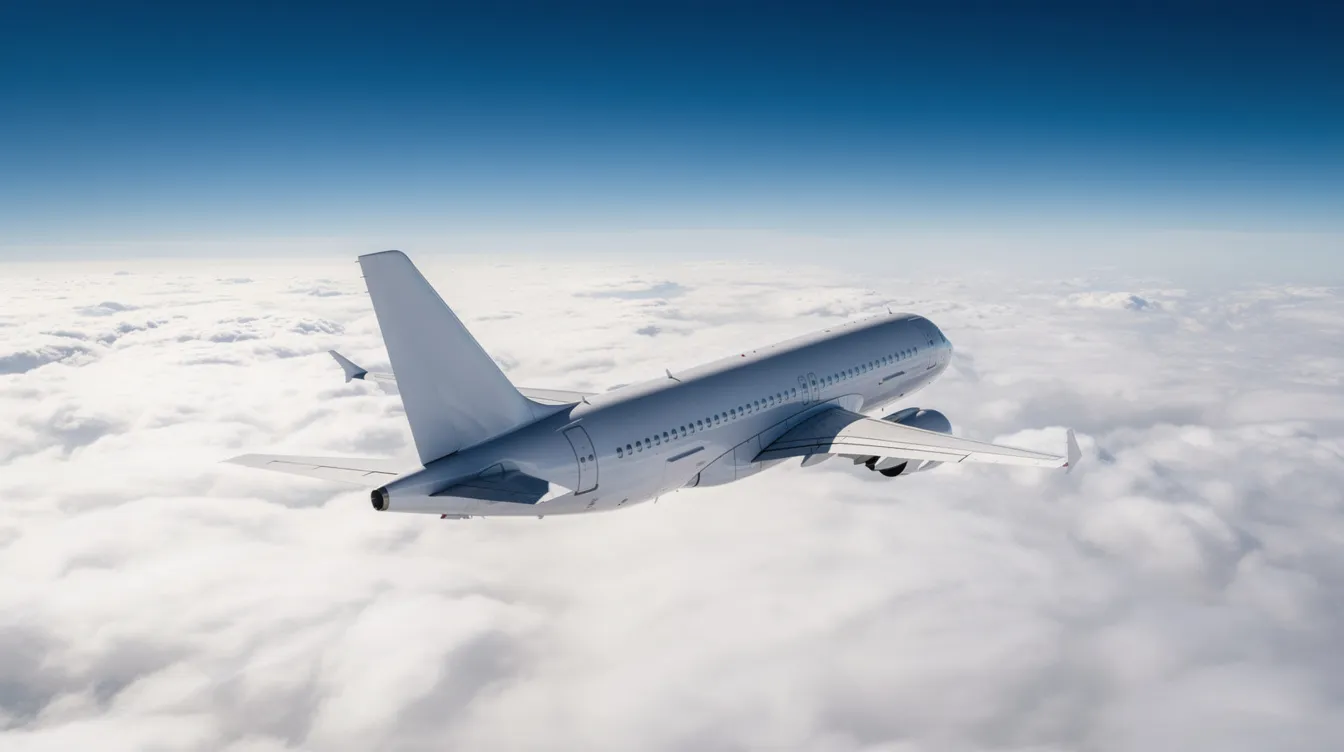
Ever wonder about the actual plane flying height in km when you look down from a window seat? Most commercial planes fly at roughly 9 to 12 km above sea level, while private jets often push higher, and helicopters stay far closer to the ground. The altitude an aircraft uses is never random. It reflects a careful balance of fuel efficiency, safety, air traffic rules, and passenger comfort. This guide breaks down the real numbers behind how high planes fly in kilometers, across every major aircraft type.
Most commercial airliners cruise between about 9 and 12 km (roughly 30,000–42,000 ft), placing them in the lower stratosphere above most weather systems.
Many private jets used on Jettly charters can fly higher, often between 12 and 15.5 km (~41,000–51,000 ft), to bypass congestion and find smoother air.
Military aircraft reach extreme altitudes-fighter jets hit 50,000 to 65,000 ft (~15–20 km), while the U-2 reconnaissance aircraft flies at or above 70,000 feet (~21 km).
Flight altitude is chosen to balance fuel efficiency, aircraft performance, air traffic control requirements, and passenger safety-not simply to reach maximum altitude.
Fixed-wing aircraft like commercial airliners and business jets usually fly in the lower stratosphere, while helicopters and small planes stay far lower in the troposphere. Jettly helps travelers choose aircraft and altitude profiles that best match their route, schedule, and comfort preferences.
This section explains how altitude units work-km, feet, and flight levels-and why aviation still uses feet while passengers in most of the world think in kilometers.
Flight altitude refers to the vertical distance above mean sea level. Aviation worldwide standardizes this measurement in feet, not kilometers. Quick conversions: 10 km ≈ 32,800 ft, 11 km ≈ 36,100 ft, 12 km ≈ 39,400 ft.
Commercial planes fly using standardized flight levels rather than raw altitude readings. Flight levels express pressure altitude in hundreds of feet under standard atmospheric pressure. For example, FL350 means roughly 35,000 ft, which equals about 10.7 km.
In radio phraseology, a pilot might hear "climb to flight level three seven zero," meaning FL370 or approximately 37,000 ft (~11.3 km). Other common assignments include FL330 (~10.1 km) and FL380 (~11.6 km). These standardized levels keep air traffic control communications clear globally.
Passengers typically see altitude displayed in feet on seatback screens. Throughout this article, approximate values in kilometers are highlighted alongside feet for clarity.
The atmosphere is layered, and where an aircraft operates depends on its design and mission.
The troposphere extends from the surface to roughly 8–18 km depending on latitude (lower at the poles, higher at the equator). This is where most weather occurs. Turboprops, small piston aircraft, and helicopters fly and cruise within this layer, generally between 1 and 10 km.
The lower stratosphere, starting around 10–12 km, is the primary zone for commercial airliners and many private jets. Air here is calmer, with far less convective turbulence. Most commercial aircraft operate in this band during long cruise segments.
Military aircraft push much higher. Military fighter jets can reach altitudes of 50,000 to 65,000 feet (~15–20 km), well into the mid-stratosphere. The U-2 reconnaissance aircraft flies at or above 70,000 feet-roughly 21 km-making it one of the highest-flying fixed-wing aircraft in regular service. Rocket-powered aircraft and experimental platforms have reached even higher, with some altitude record attempts exceeding 30–35 km.
Beyond about 35 km, only balloons, experimental vehicles, and rockets operate. No commercial flights come anywhere close.
Most modern commercial airliners cruise between about 9 and 13 km above sea level. In feet, commercial planes typically cruise between 30,000 and 42,000 feet. That puts most commercial airplanes in the lower stratosphere for the majority of any flight.
Typical cruising altitudes by model:
Boeing 737 / Airbus A320 family: roughly 10–12 km (~33,000–39,000 ft)
Boeing 787 Dreamliner: approximately 11–13 km (~36,000–43,000 ft)
Boeing 777: commonly 10.7–12 km (~35,000–39,000 ft)
Commercial airliners typically cruise in these altitude bands because they offer the best trade-off between fuel consumption, cabin comfort, and separation from weather. Most long- and medium-haul commercial jets operate most efficiently between 10 and 11 kilometers.
Heavy long-haul commercial flights often start cruising closer to 9–10 km because the aircraft's maximum continuous power cannot sustain a higher initial climb with a full fuel load, then move into more efficient altitude bands later in the flight. As fuel burns off and the plane gets lighter, pilots perform "step climbs" toward 11–12 km, where altitude increases reduce drag but also affect performance as the air gets thinner. For a deeper look at these dynamics, see How High Do Planes Fly? (And Why Private Jets Often Fly Higher).
Air traffic controllers assign specific flight levels in feet, but for passengers these equate to roughly ten to twelve kilometers above the Earth on most commercial flights.
Many private jets used on Jettly charters cruise higher than most commercial planes, often between about 12 and 15.5 km.
Light and midsize private jets typically cruise around 10–12 km, sharing similar efficient altitude bands with commercial airliners. Super-midsize and long-range business jets often fly at 12–15 km for better fuel efficiency and smoother air. Private jets often cruise at altitudes between 41,000 and 45,000 feet (~12.5–13.7 km), with some reaching even higher.
Concrete examples:
Gulfstream G650 / G700: maximum certified altitude near 51,000 ft (~15.5 km). Some private jets can reach maximum altitudes of 51,000 feet.
Bombardier Global 7500: service ceiling around 51,000 ft (~15.5 km)
Cessna Citation X+: ceiling near 51,000 ft
Private jets fly at these higher flight altitude bands to avoid commercial air traffic, reduce delays, and access more direct flight paths-especially on busy North American and European corridors. Flying above the typical commercial cruising altitudes lets them find more direct flight paths with less congestion. For more on altitude advantages, see How High Does a Private Jet Fly? Exploring Optimal Cruising Altitudes.
Jettly's platform lets travelers compare different private jets by range, cruising altitude in km and feet, and airport access, tailoring the flight altitude profile to each mission.
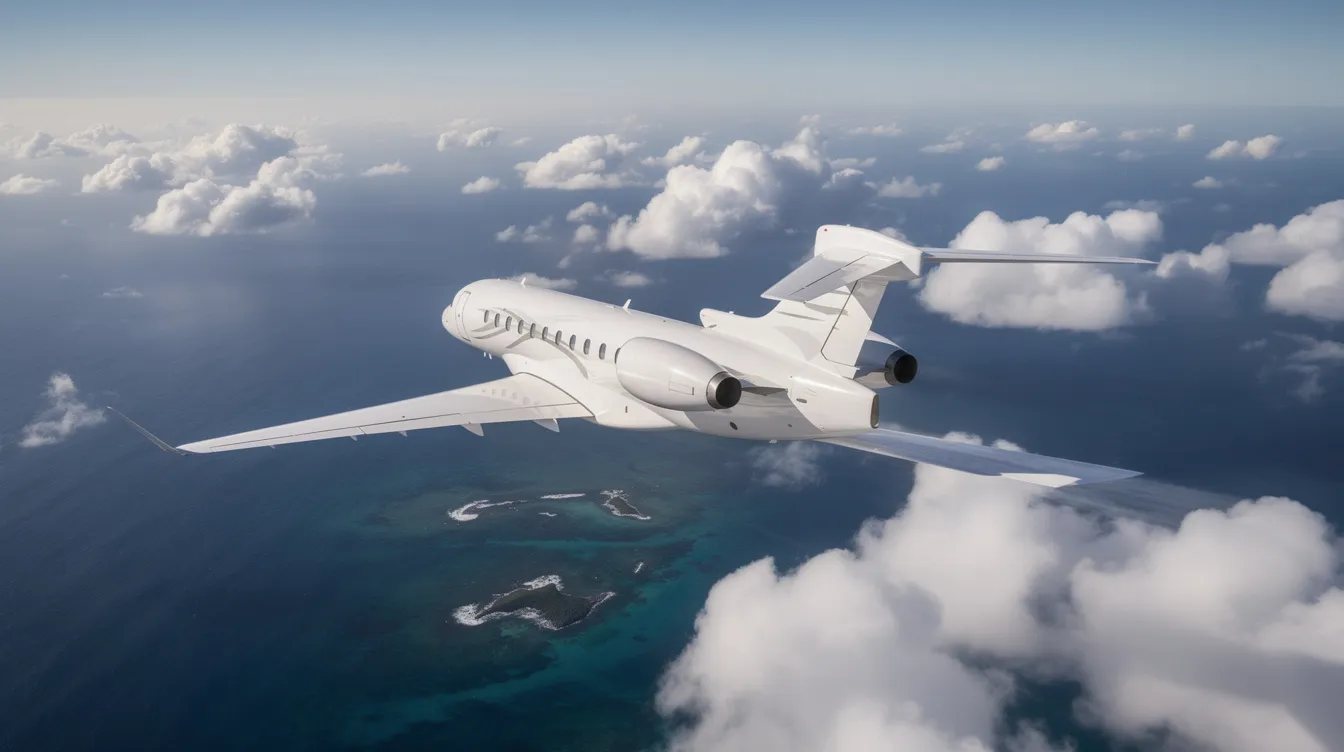
Here is a simplified comparison of approximate cruising altitude ranges in kilometers across aircraft categories:
Commercial airliners: ~9–12 km (~30,000–42,000 ft). Most commercial airplanes fly within this band during cruise.
Private jets: ~10–15.5 km (~33,000–51,000 ft). Long-range jets reach the top of this band.
Turboprops / regional aircraft: ~6–9 km (~20,000–30,000 ft). Service ceiling for models like the ATR-72 is around 7.6 km (~25,000 ft).
Small piston / light aircraft: ~1–4.5 km (~3,000–15,000 ft). Limited by oxygen requirements and unpressurized aircraft cabins.
Ultralight aircraft and gliders: common recreational altitudes between about 0.9 and 3 km, though exceptional wave flights by specialist glider pilots can approach 20+ km.
Helicopters: mostly 0.3–3 km (~1,000–10,000 ft). Helicopters fly at lower altitudes due to rotor performance limits and mission profiles.
These altitude ranges are typical envelopes, not strict limits. Each specific aircraft's published service ceiling defines its upper safe band.
No single "ideal" flying height exists. Pilots and dispatchers balance several factors affecting flight altitude for every route.
Aircraft performance is the core factor. Engine type (piston, turboprop, or jet engines), wing design, and certified flight ceiling in km and feet together define how high planes can go under their own power. Jet engines operate most efficiently at high altitudes where low air pressure optimizes combustion.
Environmental conditions matter significantly. Outside air temperature, air density, and weather systems change the effective density altitude in which the aircraft is flying. Air density decreases with altitude, directly affecting aircraft performance and the ability to gain altitude. On very hot days, density altitude rises, reducing an engine's ability to produce maximum continuous power.
Air traffic control constraints include assigned flight levels, RVSM (Reduced Vertical Separation Minimum) requirements, and vertical separation standards between commercial planes, private jets, and military aircraft. Controllers ensure no two aircraft share the same altitude on converging paths.
Payload and fuel load influence initial cruise height. A heavier aircraft may initially fly roughly 1 km lower than its most efficient band before climbing higher later in the flight as fuel burns off. This step-climb technique is standard on long-haul flight operations.
Every fixed-wing aircraft has a practical and certified maximum altitude-usually stated in feet but easily expressed in kilometers.
The service ceiling is the altitude where the maximum climb rate drops to about 100 ft/min. At that point, the aircraft can still gain altitude slowly but has very limited climb performance. Typical service ceiling values:
Most commercial aircraft: ~12–13.7 km (~40,000–45,000 ft)
High-end business jets (Gulfstream G650): ~15.5 km (~51,000 ft)
ATR-72 turboprop: ~7.6 km (~25,000 ft)
The absolute ceiling (or flight ceiling) is the altitude at which the aircraft can just sustain level flight-no climb capability remains. Operating close to this boundary greatly reduces safety margins.
At very high altitudes, the "coffin corner" phenomenon emerges. Stall speed increases (because thin air provides less lift), while the critical Mach number decreases (because the speed of sound drops with temperature changes). These two speeds converge, leaving an extremely narrow speed window to maintain cruise speed safely. This is why flying "as high as possible" is not desirable for routine commercial flights. Most aircraft stay well below their absolute ceiling to preserve healthy margins.
The band around 10–12 km offers a sweet spot between low drag, engine efficiency, and manageable temperatures for most jet-powered aircraft.
Higher altitudes reduce drag, improving fuel efficiency. The air is much thinner at higher altitudes, creating less aerodynamic drag. This reduced air resistance allows the aircraft to fly faster and burn significantly less fuel per kilometer traveled. High-altitude flight improves fuel efficiency by 10–15% compared to flying at lower cruising altitudes.
Jet engines reach optimal specific fuel consumption at these altitudes. Cooler, lower-pressure air improves compression and combustion efficiency. The combination of reduced drag and better engine performance makes 10–12 km the most productive altitude range for most commercial jets.
This band usually sits above the busiest weather systems, providing smoother rides and more predictable winds-key benefits for both commercial flights and private charter operations.
Private jets on platforms like Jettly can often climb slightly higher than scheduled airliners, up toward 13–15 km, for even cleaner air and better routing when conditions and performance allow.
Wind and weather patterns at different heights strongly influence the chosen cruising altitude for any flight.
Major jet streams typically sit around 9–12 km. Airliners and private jets use these strong tailwinds on routes like New York–London or Toronto–Vancouver to reduce flight time and fuel burn. A strong jet stream tailwind at FL350 (~10.7 km) can add 150+ km/h to ground speed.
Headwinds at the same altitude can significantly slow ground speed. Pilots and dispatchers may select flight levels roughly 1–2 km higher or lower to find more favorable winds-a small altitude change that can save hundreds of liters of fuel on a long leg.
Flying above 10 kilometers puts planes well above most clouds and turbulence. Flying above weather systems minimizes turbulence and lightning exposure for both commercial and charter operations, making the ride smoother and more predictable.
Clear-air turbulence can still occur around jet stream boundaries at these altitudes. Private and commercial crews continuously adjust flight levels within the 9–15 km band for comfort and passenger safety.

While an aircraft might be flying at 10–15 km outside, the cabin is pressurized to feel much lower. Cabin pressurization systems maintain an internal air pressure equivalent to 6,000 to 8,000 feet (~1.8–2.4 km) above sea level. Cabin pressurization systems maintain safe conditions at high altitudes, keeping passengers comfortable despite the extreme environment outside.
Newer commercial jets like the Boeing 787 and high-end business jets target even lower cabin altitude-sometimes as low as 1,800 m-reducing fatigue on long flights. This is a key selling point for modern business jets.
During a rapid decompression event at high flight altitude, oxygen masks deploy automatically. The crew initiates an emergency descent toward safer altitudes around 3 km or below, where outside air pressure supports normal breathing.
Unpressurized light aircraft typically avoid sustained flight above about 3–3.8 km without supplemental oxygen. Regulatory thresholds in most countries require oxygen use above approximately 3.8 km (~12,500 ft) for extended periods. For a closer look at how this applies to a popular training aircraft, see How High Can Cessna 172 Fly?.
Modern airliners and business jets undergo strict certification and maintenance to safely operate at such high altitudes. Passengers can feel confident that aircraft cabins are engineered for these conditions.
Safe flight at high altitude relies on strict vertical separation rules managed by air traffic control using standardized flight levels. High altitudes allow for structured air traffic flow across the world's busiest corridors.
Commercial flights and private jets are stacked at different flight levels with 300–600 m of vertical separation depending on the airspace:
|
Flight Level |
Approximate Altitude (ft) |
Approximate Altitude (km) |
|---|---|---|
|
FL340 |
34,000 ft |
~10.4 km |
|
FL370 |
37,000 ft |
~11.3 km |
|
FL390 |
39,000 ft |
~11.9 km |
|
FL410 |
41,000 ft |
~12.5 km |
|
FL450 |
45,000 ft |
~13.7 km |
The eastbound/odd and westbound/even flight level convention reduces mid-air collision risk on busy tracks like the North Atlantic and trans-European corridors. Eastbound flights might use FL330, FL350, FL370, while westbound traffic gets FL340, FL360, FL380.
Air traffic controllers may step an aircraft up or down by about 600–1,200 m to avoid turbulence, traffic conflicts, or restricted airspace while keeping it within an efficient altitude band.
Digital platforms like Jettly coordinate with certified operators who comply with all ATC requirements, ensuring private charter flights integrate safely with scheduled commercial air traffic at similar altitudes.
The ideal plane flying height in km changes depending on stage length, total weight, and route structure.
Short-haul flights under about 90 minutes often cruise lower, around 7–10 km. There is simply not enough time to climb to and benefit from higher levels before the descent phase begins. The fuel spent climbing would outweigh the drag savings.
Long-haul intercontinental flights often begin around 9–10 km and gradually step climb into the 11–13 km band as fuel burns off. This progressive approach optimizes fuel consumption and engine performance across a flight that might last 10–14 hours.
Private jet itineraries booked through Jettly follow similar logic. Short business hops-like Los Angeles to Las Vegas-often stay near 8–10 km. Longer legs, such as New York to Los Angeles, can see private jets reaching 12–14 km. For route-specific details, Jettly's Private Jets Comparison tool helps travelers match aircraft to distance.
Winds aloft and air traffic control may cause real-world cruising heights to deviate by one or two kilometers from the theoretical optimum on any given day.
Not all aircraft cruise at the 10–12 km range. Many mission types require low-altitude operations much closer to the ground.
Helicopters typically fly between about 0.3 and 3 km. Rotor performance limits, mission needs (search and rescue, medevac, urban transfers), and airspace constraints keep them low. Specialized high altitude helicopter operations exist but remain rare. Jettly also offers helicopter charter services for short urban and regional transfers.
Turboprop aircraft like the King Air or ATR-72 operate mainly around 6–8 km. They serve regional routes where shorter climbs, lower operating costs, and access to smaller airports matter more than maximum altitude. For more on turboprop capabilities, see Turboprop Private Jet: The Smarter Choice for Regional Private Flights.
General aviation piston aircraft like Cessna 172s commonly cruise between about 1 and 3 km, with service ceilings near 4–4.5 km. Regulatory and oxygen considerations limit practical height. These light aircraft typically lack cabin pressurization systems, making sustained flight above 3.8 km impractical without supplemental oxygen.
Aircraft design and mission profile largely determine whether a craft flies at 2 km, 8 km, or 12 km.
Jettly's digital marketplace helps travelers match trip requirements with aircraft whose typical cruising altitudes in km align with speed, comfort, and airport access needs.
Travelers can choose between:
Turboprops: efficient at around 6–8 km for regional hops into smaller airfields
Light and midsize jets: usually 9–12 km for short to medium-haul routes
Long-range jets: capable of 12–15.5 km for intercontinental missions
Jettly's instant pricing and aircraft comparison tools let customers see trade-offs between aircraft type, cruising altitude band, and cost for routes like Toronto–Vancouver or New York–Miami.
Flying higher in a suitable jet can reduce exposure to congestion and turbulence, while choosing a turboprop at a lower altitude can be more efficient for shorter legs into smaller airfields. The platform balances these variables so travelers don't have to.
Learn more about Jettly's charter options and altitude capabilities at https://www.jettly.com.
Suits your trip? Explore flight options or request a quote at https://www.jettly.com.
Passengers usually cannot directly sense the outside altitude difference between 10 and 13 km. Cabin pressure is regulated to feel like roughly 1.8–2.4 km in both cases. What passengers do notice is changes in turbulence, noise, and flight duration-all of which can improve at higher cruising levels when air is smoother and routes are more direct. Some private jets feature lower cabin altitude and quieter aircraft cabins, making high altitude flights feel less fatiguing even if the outside height in km is not obvious.
Higher is not automatically safer. Safe flight altitude depends on staying within the aircraft's certified service ceiling, maintaining performance margins, and avoiding severe weather. Operating too close to an aircraft's absolute ceiling-even a few hundred meters above the recommended band-can reduce climb performance and leave less room to maneuver in emergencies. Pilots and dispatchers aim for an altitude in km that balances good performance with healthy safety margins, not simply the record altitude the airframe can reach.
Common reasons include short stage length (where climbing higher brings little benefit), strong headwinds at high levels, or air traffic control constraints in crowded airspace. Aircraft weight or performance restrictions on very hot days can also keep flights a kilometer or two below their usual cruising levels. For passengers, the main differences may be a slightly bumpier ride or marginally longer flight time, but safety remains carefully managed at all approved altitudes.
Cruising at the most efficient altitude band-often 10–12 km for jets-reduces drag and improves engine efficiency, lowering fuel consumption per kilometer flown. Thinner air allows the aircraft to fly faster and burn significantly less fuel. Airlines and charter operators factor expected fuel burn at a given cruising height into pricing, meaning better-optimized altitudes can support more competitive fares or charter quotes. On Jettly, customers may see cost differences between a turboprop cruising around 6–8 km and a jet at 11–13 km on the same route, reflecting trade-offs between speed, comfort, and fuel efficiency.
While altitude is standardized globally in feet and flight levels for aviation, regional procedures differ. Transition altitude-where pilots switch between local pressure settings and standard pressure-might sit around 3–5 km in some regions and higher or lower in others. A small number of countries (including China and parts of Russian airspace) historically used meters for altitude assignment. Professional crews and operators flying commercial aircraft and private jets through platforms like Jettly follow the local ATC rules in each country to maintain safe vertical separation regardless of unit systems.
Most commercial planes fly around 912 km, while many private jets operate between 10 and 15.5 km. Helicopters and small planes stay much lower, in the 0.34.5 km band. The chosen flight altitude in kilometers is a compromise between aircraft performance, flight altitude limits, air traffic control, and passenger comfort96not a race to the highest possible height.
Understanding these altitude ranges helps travelers appreciate why commercial aircraft and charter jets feel smoother or faster at certain levels, and why some routes cruise higher than others. Whether considering plane flying height in km for a business trip or a family vacation, altitude directly influences travel time, fuel costs, and ride quality.
Jettly can match travelers with aircraft whose altitude capabilities, range, and comfort features suit their needs across North America and worldwide. Learn more about Jettly's charter options at https://www.jettly.com.
Ready to fly at the altitude that suits your trip? Explore flight options or request a quote at https://www.jettly.com.
Share this post:
Jay Franco Serevilla
Sep 12, 2026
|
5
min read
Discover tips and trends in the industry.
5
min read
Delta Food Menu: What to Expect on Delta Flights vs. Private Jet Dining
Delta's food menu varies by cabin class, route, and season, offering everything from snacks on short domestic flights to gourmet meals in Delta One. In contrast, private jet dining through Jettly provides fully customized meal options tailored to individual preferences and dietary needs. This guide compares the dining experiences on Delta flights with the flexibility of private jet catering.
Read More
5
min read
Private Jet Manchester: Charter Guide to MAN & Liverpool John Lennon
This guide provides essential information for chartering private jets from Manchester and Liverpool John Lennon airports. It covers airport details, costs, aircraft options, and the convenience of using Jettly's platform for seamless booking. Whether for business or leisure, private jet travel offers unmatched flexibility and luxury.
Read MoreStay updated with our latest insights and tips to elevate your journey with us.
MEMBERSHIPS AND ASSOCIATIONS



Disclaimer: Jettly operates as a charter broker, offering access to a global digital jet charter marketplace. Jettly is not a direct air carrier and does not own or operate aircraft. All advertised flights are conducted by third-party air carriers that are fully licensed and hold the appropriate Part 135 or Part 121 certifications issued by the Federal Aviation Administration (FAA) or equivalent regulatory authorities under U.S. or foreign law. Jettly complies fully with the U.S. Department of Transportation's Part 295 and Part 298 Charter Broker regulations. Jettly does not carry additional liability insurance. Passengers are covered by aircraft operator insurance. TICO: 50023770


