


Login
Get Instant Pricing On 23,000+ Aircraft

>
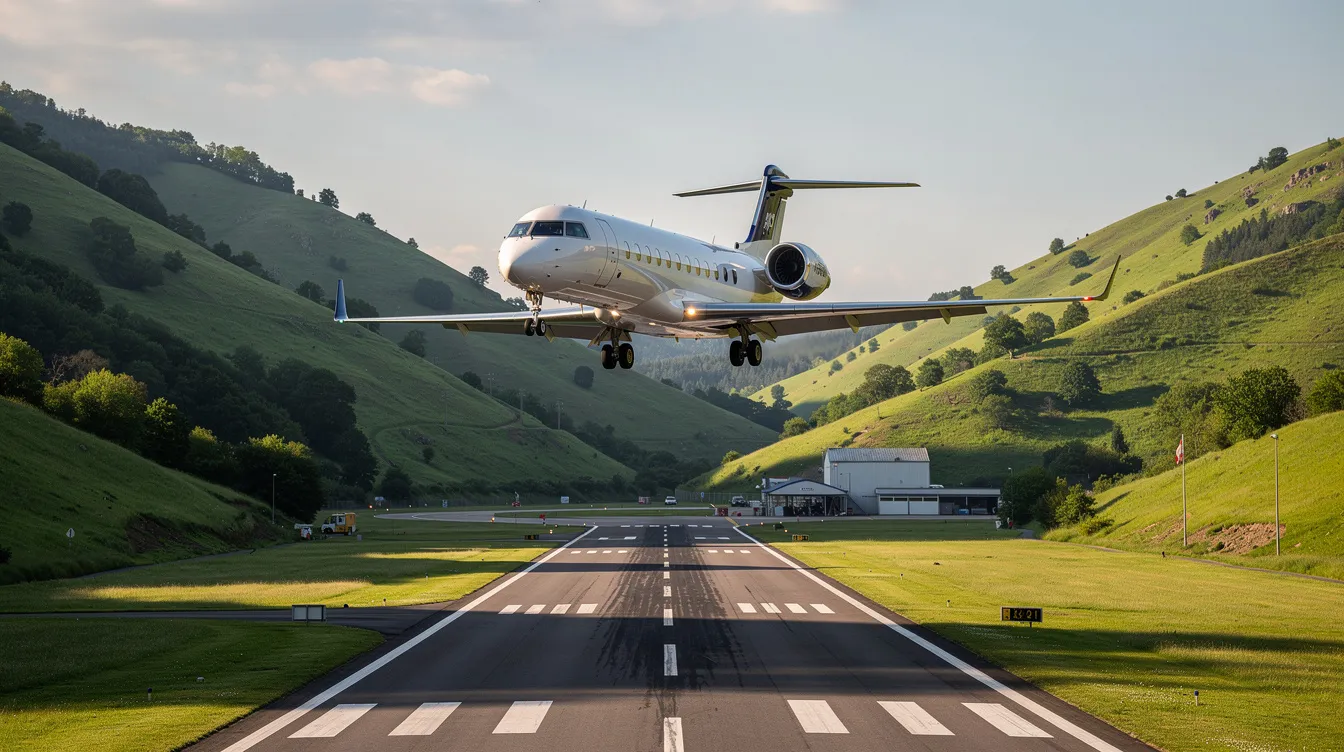
Plane landings consist of distinct phases-final approach, round-out, flare, touchdown, and rollout-and mastering each phase is crucial for safety and passenger comfort.
Factors like wind direction, runway length, runway surface condition, and aircraft weight determine whether a pilot uses normal landings, crosswind landings, short-field, or soft-field landing techniques.
Private jet operations often use shorter runways and smaller airports, making precise technique and thorough planning essential for charter flights booked through platforms like Jettly.
Digital charter platforms allow travelers to choose aircraft better suited to specific landing conditions, such as short or unpaved runways.
This article walks through each landing phase, special techniques, and how modern private aviation manages both risk and comfort.
Landing an aircraft is one of the most critical phases of flight. Plane landings compress aerodynamics, pilot skill, and real-time decision-making into roughly five to ten minutes. That short window concentrates most of the cockpit workload and a significant share of accident risk, especially on busy routes where more travelers are discovering easy ways to get a seat on a private jet.
Every landing follows a sequence: final approach, round-out, flare, touchdown, and rollout. Understanding these phases helps passengers and aviation enthusiasts interpret what they feel and see from the cabin; for private jet charter, where flights often arrive at smaller airports with varied runway surfaces, professional technique and the right airplane selection matter even more.
Planning for landing typically begins 50 to 100 nautical miles before the airport. Crews nominate a descent point for a 3° approach profile, setting up a controlled descent toward the field. A pre-landing briefing increases situational awareness: the crew reviews which runway is in use, runway length, runway surface condition, expected approach type (ILS, RNAV, or visual), and the missed-approach plan.
Wind direction affects runway selection for landings. Runway numbers indicate their alignment with compass directions, so a shift in wind can change the active runway entirely. Crews confirm landing configuration-including flaps, landing gear, spoilers, and thrust reversers-using structured checklists. Many general aviation pilots use the GUMPS checklist before landing to avoid missing items like gas, undercarriage, mixture, propeller, and seatbelts.
Flaps and slats allow the aircraft to fly stably at low speeds during approach, which is essential for maintaining control at reduced airspeed. Private jet operators flying for Jettly customers follow strict SOPs and regulatory standards under FAA Part 135 or EASA equivalents that govern landing performance margins and weather minima.
For example, a business jet crew descending into Teterboro (KTEB) would review NOTAMs, current runway conditions, and crosswind limits during their arrival brief, then coordinate with air traffic control on runway assignment before joining the final approach path—a level of planning that also influences affordable private jet charter pricing.
The final approach segment typically begins around 1,000 feet above runway elevation, with the aircraft aligned with the runway centerline and tracking toward the threshold. A stabilized approach is crucial for a successful landing; good landings result from good stabilized approaches.
A stabilized approach requires constant target airspeed and descent rate. Pilots manage pitch for speed and power for the glide path, and many aim to be fully configured with full flaps by 500 feet on a stabilized approach, maintaining approach speed close to 1.3 times the stall speed and a descent rate around 600 to 800 feet per minute. Approach speed is crucial for preventing stalls or long floats down the runway. A 3° descent profile ensures a stabilized approach, and instrument approaches help establish a predictable path toward the runway when visibility is poor, even on flights arranged through shared and crowdsourced private jet services.
Pilots should be stable at 500 feet before landing. A go-around is necessary if not stabilized at 500 feet. According to FAA data, approximately 11% of approaches remain unstable below these altitude thresholds, with excessive descent rate being the most frequently violated parameter. From the cabin, passengers notice a steady engine hum, gradual descent, and limited turns during this phase.
As the aircraft nears the runway, the pilot transitions from steady descent to a level-off called the round-out, which begins as they cross the runway threshold, followed by the flare. This maneuver usually starts around 20 to 50 feet above the runway for jets and closer to 10 to 20 feet for lighter single-engine aircraft.
The pilot gradually applies back pressure on the control column, raising the nose to reduce the descent rate. At this point, the airplane is entering ground effect, which helps cushion the flare. Speed decays toward the best glide speed reference (Vref) while the airplane stays aligned with the centerline. Pilot workload and decision-making impact landing safety and efficiency during this brief but demanding sequence. The flare aims to let the main wheels touch first with minimal vertical speed, reducing stress on landing gear and improving passenger comfort, whether you’re on a one-off charter or flying regularly with a fractional ownership provider like NetJets.
From the cabin, passengers see the runway expanding in the windscreen, feel a slight nose-up pitch, and hear engines spool to idle just before the wheels touch as the aircraft settles at a slow rate onto the runway—a sensation that can vary depending on whether you’re in a large jet or one of the cheapest private aircraft options.
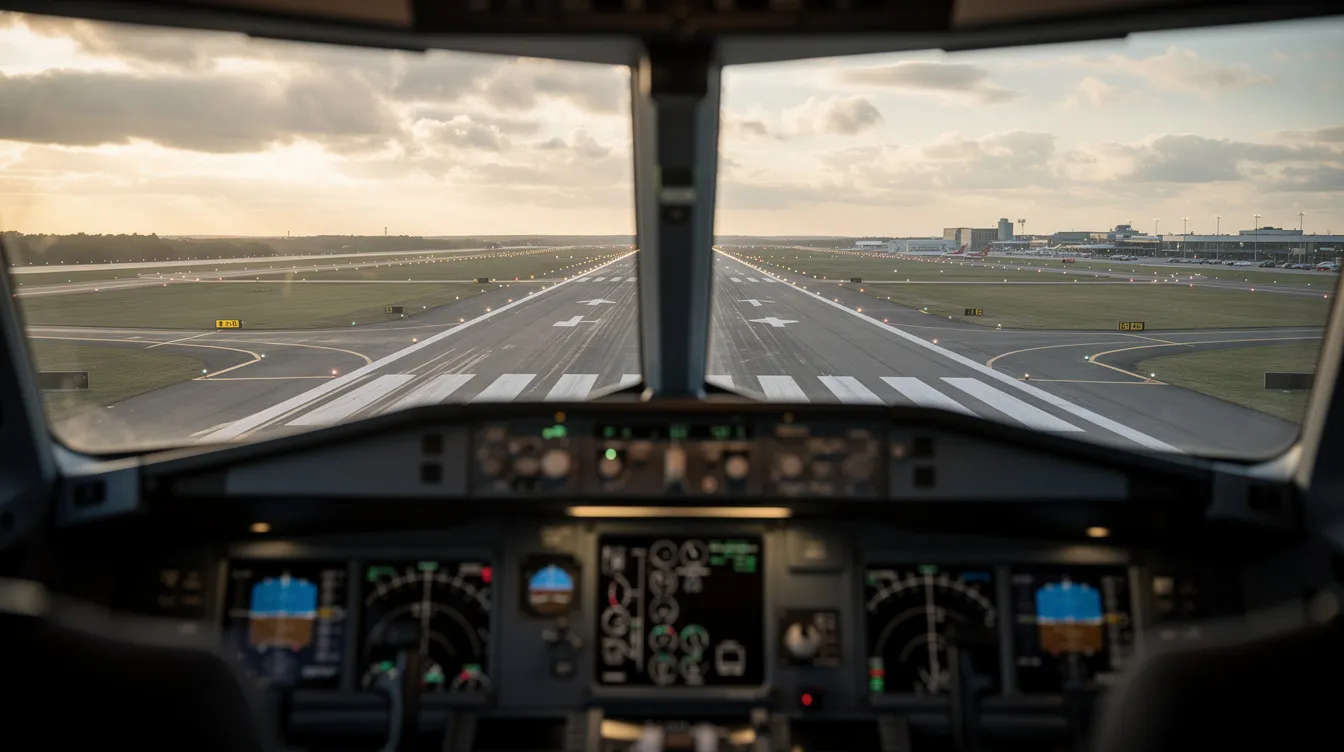
Touchdown is the moment the main gear contacts the runway. In most jets, spoilers deploy automatically and thrust reversers may activate-especially on wet or shorter runways-to help the aircraft decelerate. Touchdown techniques vary depending on aircraft type and environmental conditions.
Wet runways increase the risk of hydroplaning during landings and during rollout. Pilots should apply smooth braking to mitigate aquaplaning risks, and mechanical and avionics systems reliability affects aircraft deceleration and steering upon touchdown. The pilot keeps the nose wheel light initially, then lowers it to the runway surface for directional control, using rudder and aileron inputs to maintain alignment through any crosswind.
On a 10,000-foot runway with good conditions, moderate braking suffices. On a 5,000-foot runway, the crew targets a precise touchdown point near the aiming point markings and applies firmer braking with full reverse thrust. That difference in strategy is why accurate performance planning-factoring aircraft weight, altitude, and temperature-is non-negotiable.
Performance calculations for plane landings depend heavily on runway length, elevation, temperature, and surface condition. Runway length, width, and slope influence pilot visual reference and landing safety margins. A heavier aircraft requires a higher approach speed and longer stopping distance. Wind has multiple effects on landing performance, including headwind reducing landing distance.
Pilots and dispatchers use performance charts or onboard software to confirm the aircraft can stop within available runway length plus regulatory safety margins. Different runway surfaces change the equation significantly:
|
Surface Condition |
Light Jet Landing Distance (Approx.) |
|---|---|
|
Dry paved runway |
~2,600 ft |
|
Wet paved runway |
~3,500 ft |
|
Contaminated (water/slush) |
~4,600 ft |
Some turboprops and light jets serve airfields with grass or compacted gravel surfaces, where braking action reports (good, medium, poor) directly inform technique. For details on how specific aircraft classes handle varied runway requirements, choosing the right personal aircraft for your missions and destinations is essential.
Short-field landings require touching down at minimum controllable airspeed. Soft-field landings aim to keep the nose wheel off the ground. A power-off landing involves cutting engine power at 1000 feet AGL. Touchdown techniques vary depending on aircraft type and environmental conditions.
When runway length or surface conditions are limiting, pilots shift from normal landings to specialized techniques.
Short-field landing: The crew flies the final approach at minimum controllable airspeed, targeting a precise aiming point. When obstacles or limited runway require a tighter arrival, pilots may adjust the approach end used for touchdown planning to control where the wheels meet the runway. At touchdown, spoilers deploy immediately, and the pilot applies maximum braking to minimize ground roll. Every foot of ground matters.
Soft field landing: On grass, gravel, or snow, the goal changes. Pilots carry slightly more power through the flare for a gentle touchdown, keeping the nose wheel off the ground as long as possible to avoid digging into the surface. They also try to remain in ground effect as long as practical to ease the airplane onto the surface. Heavy braking is avoided entirely.
Power-off landing: A training technique where the pilot cuts engine power at 1,000 feet AGL and manages energy through glide speed and configuration alone-building skill for engine-out emergencies.
These techniques connect directly to aircraft selection. Turboprops and some light jets often outperform large cabin jets on short and soft fields. A family chartering a turboprop via Jettly into a 3,200-foot grass runway near a remote lodge gains access that airlines simply cannot provide, illustrating the range of where private jets can land.
Wind direction and strength significantly affect landing technique. Crews also account for wind before they turn base so the final approach remains stabilized. Headwinds generally help by reducing ground speed and shortening the landing roll. Crosswinds require pilots to adjust landing techniques significantly-and wind speed, crosswinds, and wind shear can dramatically alter aircraft control and braking efficiency, especially for frequent flyers using jet card programs for private travel.
Each aircraft type has a demonstrated maximum crosswind limit that crews must respect. The HondaJet, for example, carries a 20-knot crosswind limit. Crosswinds require special landing techniques like crab or slip:
Crab method: The pilot points the nose into the wind to maintain the final approach path alignment, then uses rudder to de-crab just before the main wheels touch.
Sideslip (wing-low): The slip landing technique uses ailerons and rudder for control, banking into the wind while applying opposite rudder to keep the fuselage aligned with the runway.
Crab-and-slip: A crab-and-slip method is commonly taught for crosswind landings, combining elements of both techniques.
Pilots align the flight path with the runway during crosswinds, and passengers may feel a slight sideways tilt or brief yaw just before a smooth touchdown. Notably, 20% of taildragger accidents are due to crosswind landing errors-highlighting how crucial proper technique is. Gusty conditions or contamination may require higher approach speeds and firmer touchdowns to reduce hydroplaning risk.
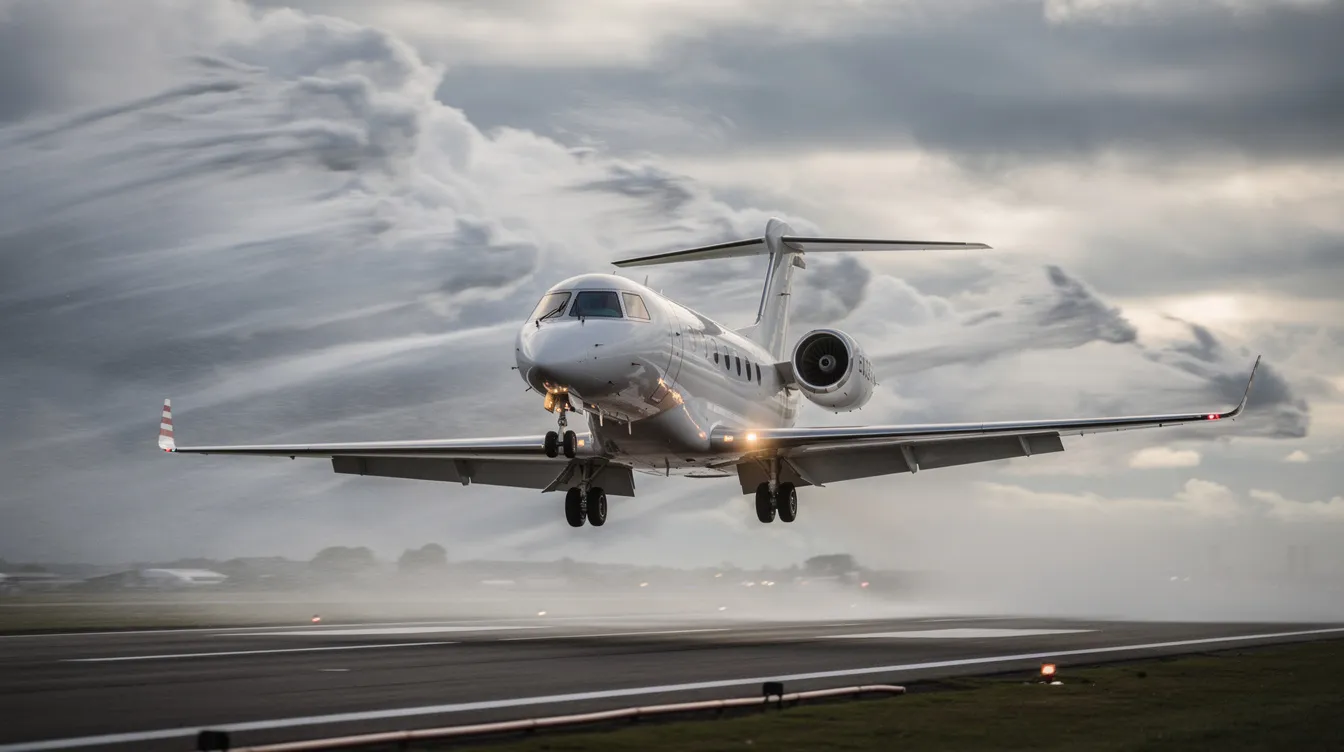
Plane landings cover a wide range of scenarios across the aviation world, from everyday aircraft arrivals to reusable rocket first stage recoveries. Here are the most common:
Normal landings: Standard technique for routine arrivals on adequate runways with manageable weather.
Power-off or simulated engine-out landings: Used in training to build emergency skills for single-engine aircraft and multi-engine planes alike.
Touch-and-go: A training exercise where the pilot lands and immediately applies takeoff power without stopping-common at flight schools.
Autoland: Modern airliners and larger business jets can conduct fully automated landings on suitable runways. Reduced visibility requires reliance on instrument landing systems or automated landing systems. Boeing 737 autoland operations, for instance, allow crosswinds up to about 20 knots.
Emergency or precautionary landings: Diversions for medical issues, technical malfunctions, or weather-including rare off-airport landings- with the goal always being a safe landing even if the aircraft stops away from a normal runway.
Effective crew resource management minimizes human error during landing phases across all these scenarios. Private jet charter adds flexibility during emergencies, as access to a broader range of alternate airports—including for international private jet flights—can shorten diversion times and bring passengers closer to medical facilities or meetings.
The physics of landing remain the same whether flying commercial or private. But private jet operations often use smaller airports closer to city centers, ski resorts, or island destinations-places like Aspen (KASE), London City (EGLC), or St. Barths (TFFJ)-which travelers can identify quickly with an airport locator tool.
Platforms like Jettly connect travelers to private charter aircraft specifically capable of operating from shorter runways or unique surfaces. Charter operators calculate landing performance for each flight, considering passenger count, baggage, fuel load, runway length, elevation, and temperature before selecting appropriate aircraft and alternates.
The passenger experience at touchdown reflects these differences: reduced taxiing time from runway to terminal, parking on the ramp just meters from the FBO lounge, and coordinated ground transportation awaiting arrival. To explore aircraft categories and suitable airports for your next trip, visit Jettly for quotes and route ideas or compare the benefits of private jet memberships if you fly frequently.
Modern aviation safety records are built on intensive pilot training, strict regulation, and advanced avionics, supported by increasingly sophisticated private jet tracking tools that enhance situational awareness. Charter and airline pilots typically undergo simulator checks every 6 to 12 months, practicing abnormal scenarios including engine failures on the final approach, wind shear encounters, and rejected landings. In true emergencies, crews prepare for the worst but hope for the best outcome while following trained procedures.
Technology supports safer landings at every stage:
TAWS (Terrain Awareness and Warning Systems) prevents controlled flight into terrain
EVS (Enhanced Vision Systems) and HUD (Head-Up Displays) improve visual contact in low visibility
RNP approaches provide precise vertical and lateral guidance to runways lacking traditional ILS
Flight data monitoring programs analyze thousands of real landings to identify unstable approaches or excessive touchdown speeds, and standardized targets help free pilot attention for situational awareness and aircraft control during high-workload phases, driving continuous improvement. Reputable platforms like Jettly partner only with Part 135 operators that meet strict safety standards and modern equipment requirements, carefully vetting their network of private charter aircraft.
Required landing distance depends on aircraft type and weight, runway length, elevation, air temperature, wind, and runway surface condition (dry, wet, or icy). A light jet at sea level on dry pavement might need around 2,600 to 3,500 feet, while the same jet at a hot, high-altitude airport could require hundreds of feet more. Operators add regulatory and company safety margins on top of calculated distances before accepting any runway for use, similar to the careful planning behind renting a plane for private travel.
A firm touchdown is often deliberate. On wet or contaminated runways, pilots need the wheels to break through any water layer to safely achieve good braking. Aircraft type and seating position also influence perception-passengers near the tail feel more vertical movement than those over the wing. Within certified limits, a firm landing is a normal, safe technique rather than a sign of poor piloting.
Many private jets and turboprops are designed to operate from shorter runways-sometimes under 4,000 feet-and from airports closer to destinations that commercial carriers cannot serve. However, not every aircraft can use every runway. Performance data, runway surface type, and local regulations determine suitability. Platforms like Jettly help match trip requirements to aircraft that can legally and safely use the desired airport, complementing broader guidance on affordable aeroplane rental options.
Landings in low visibility or strong winds are governed by strict weather minima. If conditions fall below those limits, pilots must hold or divert to an alternate airport. ILS, RNP approaches, autoland systems, and anti-skid braking enable safe operations in poor conditions when allowed. Safety decisions are conservative: if pilots are not satisfied with stability or conditions at any point, they will execute a go-around or choose an alternate.
Most plane landings-including many airline and private jet arrivals-are flown manually by pilots once established on final approach. Autoland is available on some aircraft and runways, mainly used in very low visibility (below 600 meters RVR) or for training and standardization. Even when automation handles the flare and touchdown, pilots monitor every system closely and remain fully responsible for the safe outcome of the flight.
Plane landings combine careful planning, precise flying, and technique matched to conditions-whether that means adjusting for crosswinds, accounting for runway length, or choosing the right runway surface for the aircraft, all of which vary across different private and charter airlines. For passengers, the landing phase should feel predictable and controlled, even when weather or airport constraints call for advanced techniques like short-field or soft-field landing procedures.
Every landing is a heavily trained, standardized operation in both airline and private jet environments. For travelers interested in private aviation, tailored aircraft selection and airport choice can dramatically improve travel time and access while maintaining high safety margins, especially when using a NetJets alternative like Jettly.
Ready to experience private travel on your terms? You can start by using a private jet charter cost estimator to understand pricing, then explore flight options or request a quote at https://www.jettly.com.
Share this post:
Jay Franco Serevilla
Oct 1, 2026
|
5
min read
Discover tips and trends in the industry.
5
min read
Delta First Class Seat Width: How Comfortable Are Delta's First Class Seats?
Delta's First Class seats offer a width ranging from 19.5 to 21 inches, providing a significant upgrade in comfort compared to economy class. With added legroom, deeper recline, and premium amenities, these seats enhance the travel experience, especially on longer flights. For those seeking even more space and customization, private jet charters through platforms like Jettly are an appealing alternative.
Read More
5
min read
Delta Air Company: How Delta Air Lines Serves Major Hubs and How Private Charter with Jettly Compares
Delta Air Lines is a major U.S. airline operating thousands of daily flights from key hubs like Atlanta and New York. In contrast, Jettly offers on-demand private charter services, providing flexibility and personalized travel options that complement Delta's scheduled routes.
Read MoreStay updated with our latest insights and tips to elevate your journey with us.
MEMBERSHIPS AND ASSOCIATIONS



Disclaimer: Jettly operates as a charter broker, offering access to a global digital jet charter marketplace. Jettly is not a direct air carrier and does not own or operate aircraft. All advertised flights are conducted by third-party air carriers that are fully licensed and hold the appropriate Part 135 or Part 121 certifications issued by the Federal Aviation Administration (FAA) or equivalent regulatory authorities under U.S. or foreign law. Jettly complies fully with the U.S. Department of Transportation's Part 295 and Part 298 Charter Broker regulations. Jettly does not carry additional liability insurance. Passengers are covered by aircraft operator insurance. TICO: 50023770


