


Login
Get Instant Pricing On 23,000+ Aircraft

>
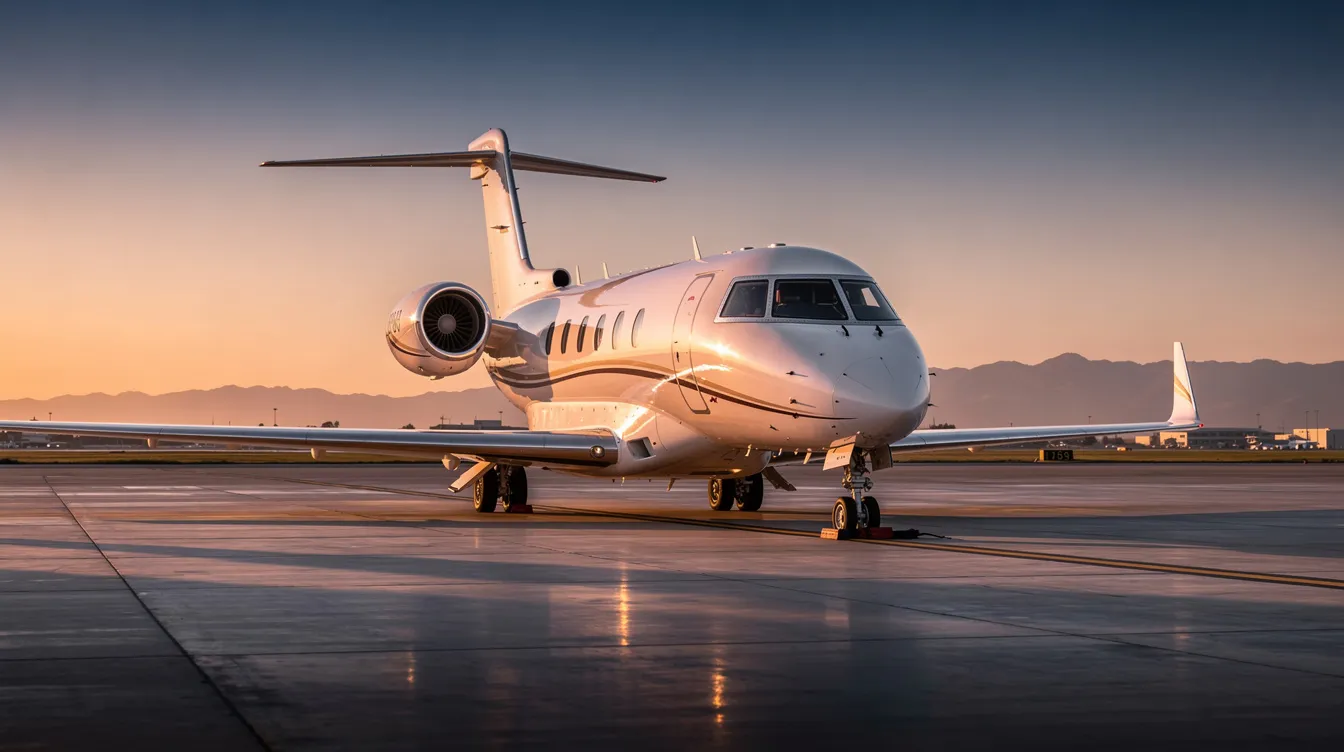
Understanding private airplane costs means looking at three distinct price layers: chartering individual flights, purchasing an aircraft outright, and covering the ongoing costs of keeping it operational, all of which are explored in depth in Jettly's guide on how much a private jet really costs. Here is what the numbers look like in 2026:
Charter rates per hour range from roughly $2,000 for turboprop aircraft to $3,500–$6,500 for a light jet, $5,000–$8,500 for a midsize jet, and $10,000–$14,000+ for ultra-long-range jets. VIP airliners cost $16,000 to $23,000+ per hour. Prices are per aircraft, not per passenger.
Purchase prices start around $3.5M for a new light jet and climb to $9M–$25M for midsize models, with large and ultra-long-range aircraft like the Bombardier Global 7500 or Gulfstream G700 reaching $50M–$81M+. Customization can add millions to the price of a private jet.
Annual operating costs for private jet owners include fixed expenses such as management fees for staffing and maintenance that can amount to tens of thousands annually, crew salaries typically ranging from $100,000 to over $200,000 per pilot per year, hangar fees between $150 and $2,000 per month, insurance costs that vary significantly, and mandatory annual inspections to ensure airworthiness. These fixed costs easily total $500,000 to $2 million or more per year, plus variable costs like jet fuel, maintenance, and trip fees that can add $1,000 to $5,000+ per flight hour.
Private jet insurance is a significant part of operating costs, generally running between 1–3% of the aircraft's hull value annually. This cost varies based on factors like aircraft type, usage, and coverage levels.
Break-even point: Full ownership typically makes financial sense only above 200–250 flight hours per year. Below that, chartering a private jet is usually more cost-effective.
Alternatives to ownership include fractional ownership, usually ranging from 1/16 to 1/2 share, leasing that eliminates high upfront costs and depreciation risks, and chartering, which offers private aviation without ownership commitments.
Charter cost-saving strategies include booking in advance to avoid repositioning fees, using jet cards with fixed hourly rates, choosing smaller aircraft to lower costs, sharing flights with fellow passengers to split expenses, and taking advantage of empty leg flights that can offer discounts up to 75% off regular prices.
Additional fees such as a 7.5% Federal Excise Tax on all domestic flights, airport landing fees ranging from $100 to $1,500 per flight, fuel surcharges of $300 or more per hour, and aircraft positioning fees can significantly affect total charter costs.
Jettly's digital charter marketplace lets travelers skip ownership and ongoing costs entirely, paying only for the flights they take with transparent pricing, a jet card flight cost estimator, and instant quotes at https://www.jettly.com.
The question "how much does it cost to fly private?" doesn't have a single answer. Private airplanes cost anywhere from about $2,000 to more than $14,000 per flight hour to charter, roughly $3.5 million to $81 million or more to buy new, and often $500,000 to $2 million+ a year to operate—so for many travelers flying fewer than 200–250 hours annually, chartering or private jet rentals are more cost-effective than ownership.
Consider a concrete example. A commercial flight from New York to Miami takes roughly 3 hours gate-to-gate, but factor in airport arrival time, security, boarding, and baggage claim, and the door-to-door total stretches past 5–6 hours. The same route on a light jet charter takes about 2.5 hours in the air, with 15 minutes of pre-departure and a car waiting on the ramp. The 2026 charter cost for that trip runs approximately $12,000–$18,000 one way for the entire jet, not per seat.
Private jet price depends on several variables:
Aircraft type: turboprop, light jet, midsize, heavy, or ultra-long-range
Flight distance and route complexity
Passenger count and baggage
Whether you are comparing chartering, private jet rentals, leasing, or owning
For corporate executives, high-net-worth individuals, families, and businesses weighing flexible private travel, the real decision is not just price but which model delivers the best mix of convenience, transparency, and commitment. This article starts with charter pricing, then breaks down purchase prices, annual operating costs, the main factors that move those numbers, and alternatives such as fractional ownership and leasing, before showing how Jettly's digital marketplace helps travelers book on-demand private flights with clearer pricing and fewer ownership burdens.
Before diving into details, here is a high-level comparison of what private aviation costs in 2026.
Charter hourly rates by category:
|
Aircraft Category |
Seats |
Hourly Rate (2026) |
|---|---|---|
|
Turboprops |
4–9 |
$2,000–$2,500 |
|
Very Light Jets |
4–6 |
$2,500–$3,200 |
|
Light Jets |
6–8 |
$3,500–$6,500 |
|
Midsize Jets |
7–9 |
$5,000–$8,500 |
|
Super-Midsize Jets |
8–10 |
$6,500–$10,000 |
|
Heavy / Large Jets |
10–16 |
$8,000–$15,000 |
|
Ultra Long Range Jets |
10–19 |
$10,000–$14,000+ |
|
VIP Airliners (Boeing Business Jet, etc.) |
16–50+ |
$16,000–$23,000+ |
Purchase price bands:
Small turboprops: ~$3M–$6M new
Light jets: ~$3.5M–$9M (newer models like the Citation CJ4 Gen2 trade at $11.3–$13.5M)
Midsize / super-midsize: ~$9M–$30M
Large-cabin / ultra-long range: $50M–$81M+ (Bombardier Global 7500 lists around $81M)
Annual ownership budgets (200–300 hours/year):
Light jet: ~$500K–$900K
Midsize jet: ~$800K–$1.5M
Heavy / ultra long range: ~$1.5M–$4M+
For most travelers, chartering via Jettly's cost estimator is more economical than owning unless someone flies well over 200–250 hours per year and values full control of the aircraft remaining on hand at all times.
Private jet charter cost is shaped by a handful of predictable factors: aircraft size, flight time and distance, airport fees and handling, timing, repositioning legs, and add-on services. All-inclusive quotes typically bundle the aircraft, crew members, fuel, and mandatory taxes like the U.S. federal excise tax. Jettly's platform factors all of these into instant pricing so travelers see realistic estimates before committing.
One important note: charter pricing is per aircraft, not per seat, and the same is true for private jet rentals, which are quoted for the whole aircraft rather than for individual travelers. That makes private charter particularly attractive when traveling with 4–10 passengers on the same itinerary, since the cost is split among a group rather than multiplied.
Larger aircraft burn more fuel, carry higher crew costs, and demand more maintenance, all of which raise the hourly rate. Here is how it breaks down by category:
Turboprops (e.g., Pilatus PC-12, King Air 350i): ~$2,000–$2,500/hr. Best for short regional flights under 800 miles and 4–8 passengers.
Light jets (e.g., Cessna Citation CJ3+, Phenom 300E): ~$3,500–$6,500/hr. Ideal for 6–8 passengers on 2–3-hour hops.
Mid-size jets (e.g., Embraer Praetor 500, Citation XLS+): ~$5,000–$8,500/hr. Stand-up cabins for 7–9 passengers on flights up to ~3,000 miles.
Super-midsize (e.g., Praetor 600, Citation Longitude): ~$6,500–$10,000/hr. 8–10 passengers; ranges to ~4,000 miles.
Heavy/large jets (e.g., Gulfstream G450, Challenger 605): ~$8,000–$15,000/hr. Coast-to-coast or international flights with 10–16 passengers.
Ultra-long range (e.g., Global 7500, Gulfstream G650/G700): ~$10,000–$14,000+/hr. Intercontinental nonstop capability that makes international private jet travel practical for global business and leisure itineraries.
Aircraft size is the single biggest driver of how much a private jet flight will cost.
Charter quotes are based on billable flight hours, typically including taxi time, with minimums of 1.0–2.0 hours per leg. Here are concrete 2026 examples:
New York–Miami on a light jet (~2.5 hrs): approximately $12,000–$18,000 one way, including federal excise tax
Los Angeles–Aspen on a light jet (~2 hrs): roughly $10,000–$15,000
London–Ibiza on a midsize jet (~2.5 hrs): approximately $14,000–$22,000
Longer routes, like New York–London, require ultra-long-range jets with higher hourly rates but eliminate costly fuel stops. The flight distance and aircraft category interact to determine the final number.
High-demand routes with more private aircraft nearby tend to have better pricing compared with obscure pairings that require expensive aircraft positioning, and tools like Jettly's airport locator help travelers identify convenient airports that can further optimize routing and cost.
Airport-related fees can add thousands to a mission:
Landing fees: $100–$1,500+ depending on airport authority and aircraft weight
Ramp and handling fees: $100–$500+
De-icing (winter operations): $500–$2,000+
Overnight parking and storage fees vary by location
In the U.S., the federal excise tax adds 7.5% to domestic charter flight charges plus per-passenger segment fees. On a $15,000 charter leg, FET alone adds over $1,100. International head taxes apply when flying to or from the U.S.
Business travelers often choose smaller executive airports over congested commercial hubs, drawing on an understanding of where private jets can land to maximize convenience and minimize ground time. The airport may charge slightly more, but the time savings and convenience offset the additional costs.
Aircraft positioning - flying the jet empty to your departure city or back to its base after a one-way trip - can add a high cost. If the jet must reposition 2 hours each way, that is effectively doubling the flight time billed.
Jettly's global network helps minimize this by matching customers with aircraft already near their departure airport. The platform's empty leg flights page lists repositioning segments sold at discounts of 30–75% off standard charter rates. For example, a Los Angeles–Las Vegas leg flight that normally costs $8,000–$10,000 might be available as an empty leg for $3,000–$5,000.
Empty leg flights are less flexible on timing and routing, but they can dramatically lower private jet rental costs for travelers with adaptable schedules, especially when combined with Jettly's platform for crowdsourcing and sharing empty seats.
Common add-ons that move a quote from "base" to "all-in" include:
In-flight catering: $250–$2,000+ per leg, with services like Jettly Eats in-flight catering coordinating menus across major private aviation airports
Premium beverages: $100–$500
Wi-Fi/data charges on international flights vary by aircraft
Ground transportation: chauffeured transfers starting at ~$200 per city
Special handling: pets, sports equipment, oversized luggage
Jettly integrates many of these into the booking process, so travelers see expected additional costs upfront. When comparing quotes from any charter company, always confirm whether these extras are included or separate. The difference between a base quote and an all-in number can be 25–40% or more.
This section provides clear 2026 hourly price bands by category to help estimate private jet rental prices and compare private jet rentals before requesting a tailored quote through Jettly's charter cost page or a more detailed guide on how much it costs to rent a private jet. All ranges are approximate and vary by region, demand, and specific model.
Turboprop aircraft like the Pilatus PC-12 and King Air 350i charter at roughly $2,000–$2,500/hr in 2026. Very light jets such as the Embraer Phenom 100E and HondaJet run about $2,500–$3,200/hr.
A same-day round-trip from Boston to Washington, D.C. on a turboprop (about 1.5 hours each way) totals approximately $7,000–$9,000, including federal excise tax and landing fees.
The trade-off: turboprops are slower than jets but offer lower fuel burn, reduced operating costs, and the ability to access shorter runways at remote airports. They are a smart pick for flights under 800 miles where improved fuel efficiency matters more than speed.
A new light jet like the Cessna Citation CJ3+ or Embraer Phenom 300E typically seats 6–8 passengers with a range of around 1,500–2,000 miles. Charter price bands run roughly $3,500–$6,500 per flight hour.
A New York–Chicago leg on a light jet (~2 hours) costs approximately $10,000–$16,000 all-in. Light jets are often the best value for small teams or families on regional trips that are too long for turboprops but do not require midsize capacity. When a client needs more speed, weather performance, or cabin comfort than a turboprop offers, the upgrade to a light jet is the logical step.
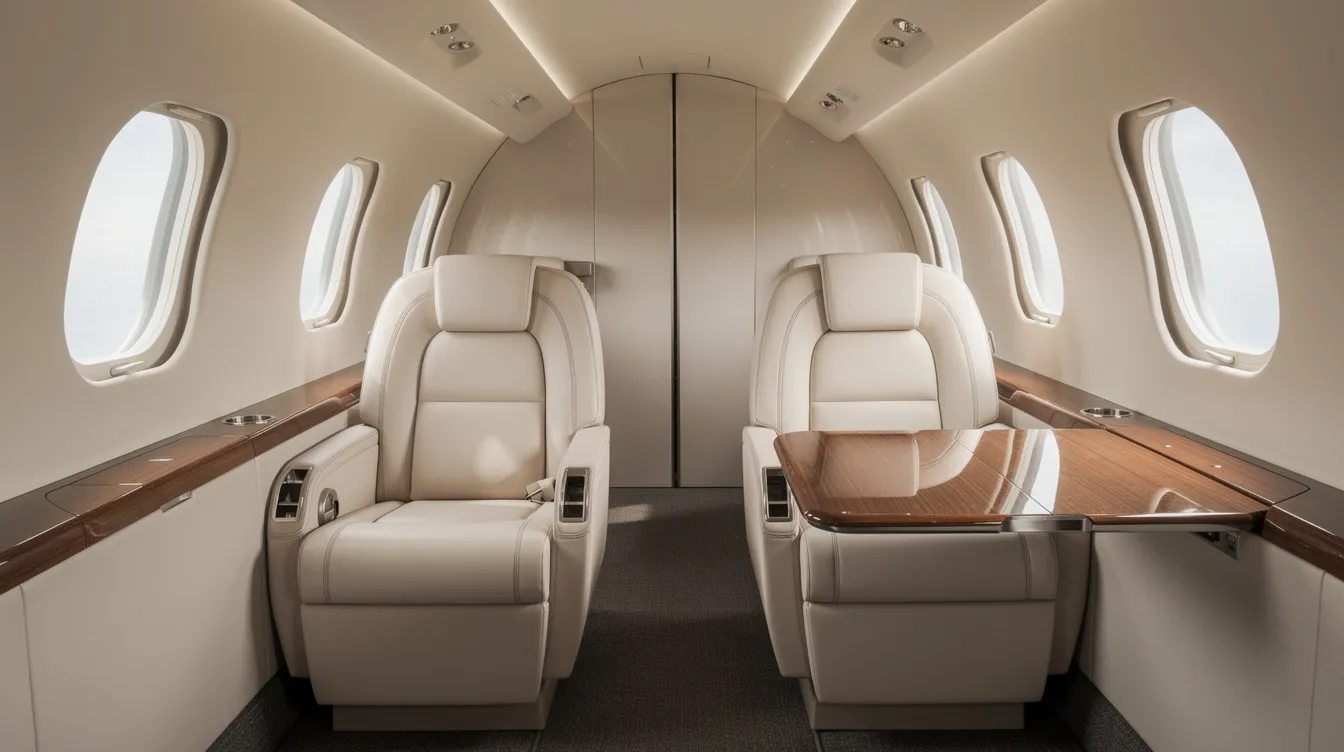
Midsize jets like the Learjet 75, Citation XLS+, and Embraer Praetor 500 handle 7–9 passengers and flights up to ~3,000 miles at $5,000–$8,500/hr. Super-midsize jets such as the Embraer Praetor 600 and Challenger 300 carry 8–10 passengers with ranges of ~4,000 miles at $6,500–$10,000/hr.
Route examples:
New York–Dallas on a midsize jet (~3.5 hrs): approximately $20,000–$30,000 one way
London–Dubai on a super-midsize (~6.5 hrs): roughly $45,000–$65,000
Benefits over light jets include stand-up cabins, more baggage capacity, and better nonstop performance on longer legs. For business jets used on coast-to-coast or transatlantic missions, the super-midsize category hits a strong balance of range and cost.
Heavy jets - the Gulfstream G450, Challenger 605, Dassault Falcon 900 - charter at approximately $8,000–$15,000/hr. Ultra-long-range jets like the Gulfstream G550, Global 6000/7500, and Gulfstream G650 run $10,000–$14,000+/hr. VIP airliners, including the Boeing business jet, can cost upwards of $16,000–$23,000/hr.
Long-haul route estimates:
New York–London on an ultra-long-range jet (~7 hrs): $75,000–$100,000+ one way
Los Angeles–Tokyo (~11 hrs): $120,000–$160,000+
These larger aircraft minimize fuel stops on international flights, offer fully flat beds, multiple cabin zones, and often carry two flight attendants. The higher operating costs deliver maximum range and comfort for long-flight-duration missions.
Acquisition costs range from under $2M for some older jets to $75M+ for new ultra-long-range flagships. But the purchase price is only the starting point. Buyers must also budget for taxes, pre-purchase inspections, legal and registration fees, and any desired upgrades.
As of mid-2026, market conditions have normalized somewhat after pandemic-era spikes, but desirable low-time pre-owned aircraft still command premiums. Learn more about private aircraft price ranges in Jettly's dedicated guide.
Concrete 2026 price examples:
|
Aircraft |
New Price |
Pre-Owned Range |
|---|---|---|
|
Citation CJ4 Gen2 |
~$10M–$12M |
$11.3M–$13.5M (low-hour scarcity) |
|
Embraer Praetor 600 |
~$21M–$29M |
$17M–$26M |
|
Gulfstream G650 |
~$70M+ new |
$45M–$60M used |
|
Bombardier Global 7500 |
~$81M |
Limited pre-owned supply |
Pre-owned jets that are 5–10 years old typically trade 20–50% below new prices, depending on hours, avionics, and engine program enrollment. Strong residual values exist for in-demand models like the Praetor 600, which holds roughly 78% of its new private jet price at five years.
Pre-owned aircraft offer lower upfront costs but require careful inspection of the maintenance history. Older jets without engine program enrollment can carry hidden maintenance costs that erase the purchase discount.
Interior refurbishment - new seating, carpets, veneers, and lighting - ranges from a few hundred thousand dollars for light jets to several million for large-cabin aircraft. Avionics upgrades (e.g., Garmin G5000 retrofits, Starlink connectivity) typically cost $200,000–$1M+ and can significantly boost resale value.
High-end bespoke interiors on ultra-long-range jets can add tens of millions, but most business users aim for functional, modern finishes rather than extravagant builds. When considering older airframes - for example, a 1990s Gulfstream IVSP with fresh inspections but a dated interior - factor refurbishment into total acquisition cost.
Pre-purchase inspections at brand-authorized service centers run in the low- to mid-six figures, depending on aircraft size. Title searches, legal work, and escrow fees add tens of thousands more.
Buyers may owe sales tax or value-added tax depending on the jurisdiction. Some U.S. states charge significant sales tax, while other structures (e.g., importing through specific states or using an entity in the UAE) can reduce or eliminate it. Always consult aviation tax specialists before closing. Some advertised prices are specifically structured for cross-border buyers, underlining how important tax planning is in private jet ownership.
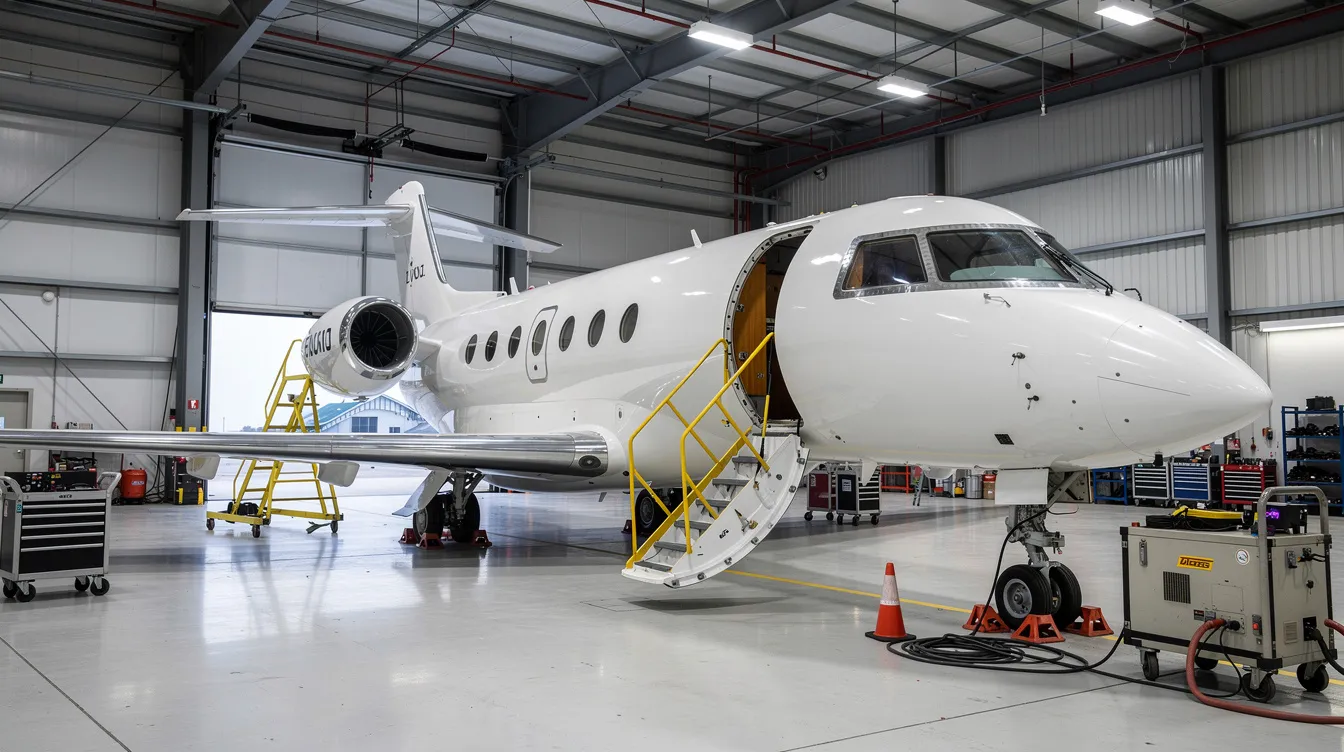
Fixed costs are expenses incurred whether the plane is flown or not (Fact: 'Fixed costs for aircraft are incurred whether the plane is flown or not.' - <fact>2</fact>). Variable costs increase directly with flight hours (Fact: 'Variable costs increase directly with flight hours.' - <fact>3</fact>). Owning a private airplane involves significant fixed and variable costs (Fact: 'Owning a private airplane involves significant fixed and variable costs.' - <fact>1</fact>).
Annual operating costs for private jet ownership include both fixed and variable expenses. Fixed costs apply even if the aircraft is not flown, whereas variable costs scale with usage. For example, fixed costs for a midsize jet like the Praetor 600 can reach approximately $875,000 per year at 350 flight hours, highlighting why many travelers opt to charter rather than own.
Jettly users avoid all these ongoing costs. Certified operators handle crew, maintenance, insurance, and hangaring, while the traveler simply pays per charter flight.
Crew salaries: A captain and first officer together cost $200,000–$400,000+/yr plus benefits. Add cabin crew for larger jets, and crew expenses push toward $300,000–$500,000 annually.
Hangar fees: ~$150–$2,000/month depending on location ($1,800–$24,000/yr). Premium or large-cabin hangars at congested airports can exceed $50,000–$200,000+/yr.
Private jet insurance: Hull and liability coverage generally run 1–3% of hull value per year - about $20,000 for small jets to $300,000+ for large-cabin aircraft, varying widely by aircraft type and coverage.
Management fees: Third-party management companies charge tens of thousands to $250,000/yr for scheduling, regulatory compliance, crew training, and accounting.
Annual inspections: Required for all aircraft to ensure airworthiness and regulatory compliance, adding to ongoing maintenance budgets.
Variable costs per flight hour by category:
Light jets: ~$1,000–$1,100/hr
Midsize jets: ~$2,000–$3,500/hr
Large-cabin jets: ~$2,700–$5,500+/hr
Fuel costs dominate: midsize jets burn roughly 200–300 gallons/hour, and with current fuel prices, that translates to $1,400–$2,100/hr just for jet fuel. Fuel surcharges and sustainable aviation fuel (SAF) mandates in Europe are pushing these numbers higher.
Trip-specific expenses add up quickly: crew hotel stays ($200–$600 per crew member per night), catering, handling, de-icing ($500–$15,000 per event), and navigation or overflight charges on international missions. Many owners enroll in engine and maintenance programs (e.g., JSSI, MSP) that convert unpredictable maintenance fees into per-hour reserves, smoothing cash flow at the expense of a higher hourly rate.
Annual budgets shift dramatically with utilization:
|
Usage Level |
Light Jet |
Midsize Jet |
Heavy / Ultra Long Range |
|---|---|---|---|
|
200 hrs/yr |
~$500K–$900K |
~$800K–$1.5M |
~$1.5M–$2.5M |
|
300 hrs/yr |
~$700K–$1.1M |
~$1.2M–$2.0M |
~$2.0M–$3.5M |
|
400 hrs/yr |
~$900K–$1.4M |
~$1.5M–$2.5M |
~$2.5M–$4M+ |
The "break-even" point where full ownership becomes more economical than charter falls at roughly 200–250 hours/year for light and midsize jets, and 300+ hours/year for large jets. For many business travelers flying 50–150 hours/year, on-demand charter through Jettly or fractional ownership with a detailed cost breakdown often makes better financial sense.
Travelers who value private aviation but want to avoid multi-million-dollar commitments have three main paths: fractional jet ownership with its own pros, cons, and costs, leasing, and chartering a private jet on demand. Charter through Jettly is the most flexible for individuals and companies flying fewer than ~200 hours per year or with highly variable itineraries.
Fractional ownership allows buyers to purchase shares (e.g., 1/16th, 1/8th) of a specific aircraft type, with guaranteed hours per year and fixed hourly charges, but a full evaluation of fractional private jet ownership pros and cons is essential before committing. The cost structure includes an initial capital outlay (hundreds of thousands to a few million), monthly management fees, and hourly charges covering fuel, maintenance, and crew.
While fractional ownership lowers upfront costs compared with owning your own private jet outright, it still locks you into long-term contracts and monthly payments. It works best for predictable flying needs. Shares typically range from 1/16 to 1/2 ownership, and travelers can compare leading programs and providers through guides to the best fractional jet ownership companies.
A dry lease means renting the private plane without crew or maintenance - the lessee hires pilots, arranges insurance, and covers all operating costs. A wet lease bundles the aircraft, crew, maintenance, and insurance into a single package.
Leases typically require deposits, monthly minimums, and multi-month or multi-year terms. Leasing suits companies needing consistent access - such as seasonal shuttle operations or project-based travel - but not wanting to tie up capital, and a detailed look at private jet lease costs can clarify how leases compare with other options. Leasing eliminates high upfront costs and depreciation risks.
On-demand charter works much like private jet rentals: you book individual flights as needed and pay only for flight time and trip-specific charges. There is no asset depreciation, no long-term contract, and no responsibility for crew salaries or maintenance.
Jettly provides access to 20,000+ unique private charter aircraft worldwide, instant pricing, and a transparent breakdown of costs, including federal excise tax on U.S. legs. Customers can select the best aircraft type per trip - a turboprop for a 45-minute hop or an ultra-long-range jet for a transoceanic mission - optimizing cost on each route.
The platform also offers membership options that reduce per-flight costs for frequent flyers while preserving complete flexibility.
Private jet travel almost always costs more per passenger than a commercial flight. But the comparison is not purely about ticket price. Consider a multi-city executive roadshow - Toronto to Chicago to Dallas to San Francisco in one day. That itinerary is nearly impossible on commercial schedules but achievable with a midsize private jet service, one of many options outlined in comprehensive guides to charter airlines and private flights.
Door-to-door travel time shrinks dramatically with private aviation:
Commercial (New York–Detroit): ~5–6 hours door-to-door including airport time
Private jet (same route): ~3–3.5 hours total, using Teterboro or White Plains
Those reclaimed hours translate into productive work time. Quiet cabins, meeting-friendly layouts, and secure Wi-Fi make private aircraft into mobile offices. For senior executives or large project teams, the value of reclaimed time can offset a substantial portion of the charter cost.
Private charter offers scheduling flexibility that no commercial flight can match: departures timed to the client, last-minute changes, and multiple cities in a single day. Privacy is another factor - confidential discussions, secure document review, and control over who is on board matter for deal-making and high-profile individuals.
Flying privately also opens access to remote or underserved airports that lack regular commercial service - mountain towns, small islands, or rural business hubs - especially with turboprops and light jets designed for shorter runways. Jettly's inventory and global reach make it possible to rent a private jet even for non-standard destinations.

Full ownership typically makes sense for individuals or organizations flying 200–400+ hours per year on missions with relatively predictable range and passenger count. Here is a simplified example:
8-seat midsize jet, 300 hours/year, 10-year horizon:
Purchase price: ~$18M (pre-owned)
Residual value at year 10: ~$7M
Net depreciation: ~$11M ($1.1M/yr)
Annual operating costs: ~$1.3M/yr
Total annual cost: ~$2.4M, or ~$8,000/hr
Compare that to chartering the same category at $5,000–$8,500/hr with no capital at risk. At 300 hours, ownership starts to compete - but the owner takes on depreciation risk, exposure to newer aircraft models eroding resale value, and the operational burden of managing crew, maintenance, and compliance with the Federal Aviation Administration.
For many individuals and mid-sized companies, chartering through Jettly preserves virtually all the benefits of private aviation without tying up capital or taking on operational risk, making it an attractive NetJets alternative for those comparing solutions.
Private jets produce higher emissions per passenger than most commercial flights. But newer aircraft models and efficient routing can meaningfully reduce fuel burn. Ultra-long-range aircraft like the Global 7500 and Gulfstream G700 feature aerodynamic improvements that lower fuel costs per mile compared with older large-cabin models.
Some operators on Jettly's platform offer carbon offset programs. Environmentally conscious travelers can also consider aircraft size and load factor - filling more seats on a smaller jet reduces per-passenger impact. The availability of sustainable aviation fuel (SAF) is expanding, particularly in Europe, where mandates are driving adoption, though SAF currently adds a modest surcharge to operating costs.
Jettly operates as a digital charter marketplace and charter broker, connecting travelers with a global inventory of more than 20,000 aircraft. No jet cards required. No fractional ownership commitment.
Here is how it works:
Instant pricing: Enter your route, dates, and passenger count. Receive transparent offers from multiple operators showing aircraft type, estimated operating costs, taxes, and any additional fees, so travelers can compare private jet rentals across multiple operators in one place.
Aircraft flexibility: Choose a turboprop for a 45-minute hop or an ultra-long-range jet for an intercontinental mission. Match the right aircraft to each trip to avoid overpaying.
Pay-as-you-go or membership: Occasional travelers pay per trip. Frequent flyers can access membership options that lower per-hour or per-trip rates.
Curated safety standards with properly certified operators, so travelers benefit from rigorous maintenance, trained crew members, and appropriate insurance coverage.
Integrated services: Ground transportation, catering, and complex itinerary support are built into the booking process.
Ready to experience private travel on your terms? Explore flight options or request a quote at https://www.jettly.com.
Booking 7–14 days ahead usually gives a strong balance between aircraft availability and competitive pricing, especially on popular routes like New York–Florida or London–Mediterranean during peak seasons. Same-day or next-day charters are often possible via Jettly but may carry a premium due to limited availability and crew repositioning.
For major events - Art Basel Miami, the World Economic Forum, or big sports finals - booking several weeks in advance is advisable to avoid surge pricing and ensure the right aircraft category is available.
Charter pricing is per aircraft, not per seat. Adding or removing passengers within the certified capacity generally does not change the base price for the entire jet. Exceptions arise with extremely light aircraft that have tight weight-and-balance limits, or when an upgrade to a larger aircraft category is required for space or safety.
Confirm passenger counts and baggage details when quoting on Jettly so the platform can match the right aircraft to your group.
Crew salaries and standard daily crew costs are built into the hourly charter rate or all-in quote. Clients do not pay pilots' or flight attendants' salaries directly when chartering. Discretionary tipping is appreciated but not mandatory - where customary, typical gratuities fall in the 5–10% range of the charter cost or a flat amount handed to the captain or cabin crew. Jettly quotes do not automatically add gratuity.
Operators are required to carry liability and hull insurance that covers passengers, with minimum levels governed by authorities (e.g., FAA, EASA). Reputable operators often exceed those minimums. High-net-worth individuals may want to verify liability limits during the quoting process and consider personal umbrella coverage if needed.
Jettly works only with properly certified operators and encourages clients to review safety and insurance details before confirming a charter.
Shared charter or seat-sharing models exist on some routes, allowing passengers to book individual seats on a private jet rather than the entire aircraft. Availability varies by region and date, but there are now multiple strategies for getting a seat on a private jet easily without paying for a full aircraft charter. Jettly focuses primarily on whole-aircraft charter and empty-leg flights, but users can coordinate with colleagues or friends to split the cost among multiple travelers.
Groups of 6–8 passengers on a midsize jet can often achieve per-person pricing that approaches business-class fares on commercial flights, particularly on time-critical routes where flying privately saves hours of travel.
Buying a private jet means committing millions to acquisition and hundreds of thousands to millions annually in operating costs. Chartering delivers the same core benefits - time savings, flexibility, privacy, and access to thousands of airports - without ownership risk. And private jet costs are ultimately driven by aircraft type, flight distance, and operational factors like crew expenses, fuel prices, and airport fees.
For most travelers - executives, families, and frequent flyers - on-demand charter through a transparent digital platform like Jettly is the most flexible and financially efficient choice. Use the data in this guide to estimate your likely usage pattern, compare ownership, fractional, and charter options, and then test real numbers with Jettly's instant pricing tools.
Ready to experience private travel on your terms? Explore aircraft options, view estimated costs, and request a personalized quote at https://www.jettly.com.
Share this post:
Jay Franco Serevilla
Jul 3, 2026
|
5
min read
Discover tips and trends in the industry.
5
min read
What Airline Has the Most Crashes 2026 (And What That Really Means for Air Travel Safety)
In 2026, no major airline has been identified as having the most crashes, with serious incidents primarily involving smaller operators. Despite 61 reported crashes resulting in 397 fatalities, commercial flying remains one of the safest modes of transportation due to stringent regulations and advanced safety technologies. Understanding aviation safety statistics is crucial for travelers to make informed decisions about their air travel options.
Read More
5
min read
Survival Rate of Plane Crashes: What the Data Really Shows
The survival rate of plane crashes is significantly higher than commonly believed, with around 90% of accidents being survivable. Factors such as seat location, crew training, and aircraft design play crucial roles in enhancing safety. By choosing regulated operators like Jettly, travelers can further ensure high safety standards in private aviation.
Read MoreStay updated with our latest insights and tips to elevate your journey with us.
MEMBERSHIPS AND ASSOCIATIONS



Disclaimer: Jettly operates as a charter broker, offering access to a global digital jet charter marketplace. Jettly is not a direct air carrier and does not own or operate aircraft. All advertised flights are conducted by third-party air carriers that are fully licensed and hold the appropriate Part 135 or Part 121 certifications issued by the Federal Aviation Administration (FAA) or equivalent regulatory authorities under U.S. or foreign law. Jettly complies fully with the U.S. Department of Transportation's Part 295 and Part 298 Charter Broker regulations. Jettly does not carry additional liability insurance. Passengers are covered by aircraft operator insurance. TICO: 50023770


