


Login
Get Instant Pricing On 23,000+ Aircraft

>

The recent U.S. government shutdown left tens of thousands of planes grounded and travelers scrambling to find last-minute solutions to reach their destinations. Some chose other modes of transportation, such as trains and cars, while the ones who could afford it splurged on private flights.
The reason this was possible has to do with a Federal Aviation Administration (FAA) emergency order that required commercial operators to cut flights until the situation is resolved. This move was necessary due to a severe shortage of air traffic controllers and other essential personnel at 40 of the country's biggest airports.
Since private operators typically do not use major airports, they were not as affected. As a result, demand for chartered flights surged.
In this article, Jettly examines how the government shutdown impacted the commercial air travel system and how private aviation was not as affected.
The U.S. commercial flight sector was already understaffed, and the recent government shutdown made things significantly worse. It made it clear that, no matter how big, an airport can’t function without proper funding and staff.
Essential workers, such as air traffic controllers, were mandated to come to work even if they didn’t get paid. However, FAA Administrator Bryan Bedford told journalists that between 20% and 40% of the controllers did not show up for work during this period.
This left key airport facilities critically understaffed, leading to mass delays and flight cancellations that rippled across the National Airspace System (NAS). But travelers and airport workers were not the only ones affected.
Air cargo operations were also disrupted, affecting high-value, time-sensitive goods like electronics and pharmaceuticals. Even after the shutdown ended, experts predict the system will take weeks to stabilize. Planes, pilots, and crews are still out of position, and the underlying ATC shortage remains a major, persistent issue.
At the end of the day, the shutdown showed that the commercial air travel industry's reliability and safety standards are directly tied to the consistent, paid labor of its federal workforce and that years of unaddressed staffing shortages can turn a political impasse into a functional and safety crisis for millions of travelers.
Private jet rental remains a niche service, catering to only a fraction of travelers. During the latest government shutdown, private jet rental companies did register a surge in demand, but this trend is unsustainable in the long term.
Private jet companies operate within the NAS and rely on the FAA ATCs for safe guidance. As long as the staff shortage problem persists, both sectors will suffer.
Some discussions proposed privatizing the ATC. However, experts and industry groups, citing international examples, such as Canada, have argued that privatization can lead to underinvestment in personnel and infrastructure, thereby containing costs but potentially worsening the controller shortage and safety concerns.
Then there’s the capacity issue. Private aviation cannot absorb the demands of commercial travelers. Even if every private jet in the country flew at full capacity, they could not absorb the millions of passengers who were delayed or canceled during the shutdown.
Both sectors need to work together for safety, national connectivity, and economic vitality.
The public sector (government agencies such as the FAA, TSA, and state/local airport authorities) serves most travelers and provides the framework for safety, security, and infrastructure that private aviation also uses.
Private jets can use smaller regional airports that commercial airlines cannot serve, so passengers often land much closer to their final destination, significantly reducing ground travel time.
If the shutdown highlighted anything, it’s that ongoing staffing challenges in air traffic control affect both commercial and private aviation operators nationwide.
Share this post:
Jay Franco Serevilla
Nov 28, 2025
|
5
min read
Discover tips and trends in the industry.
5
min read
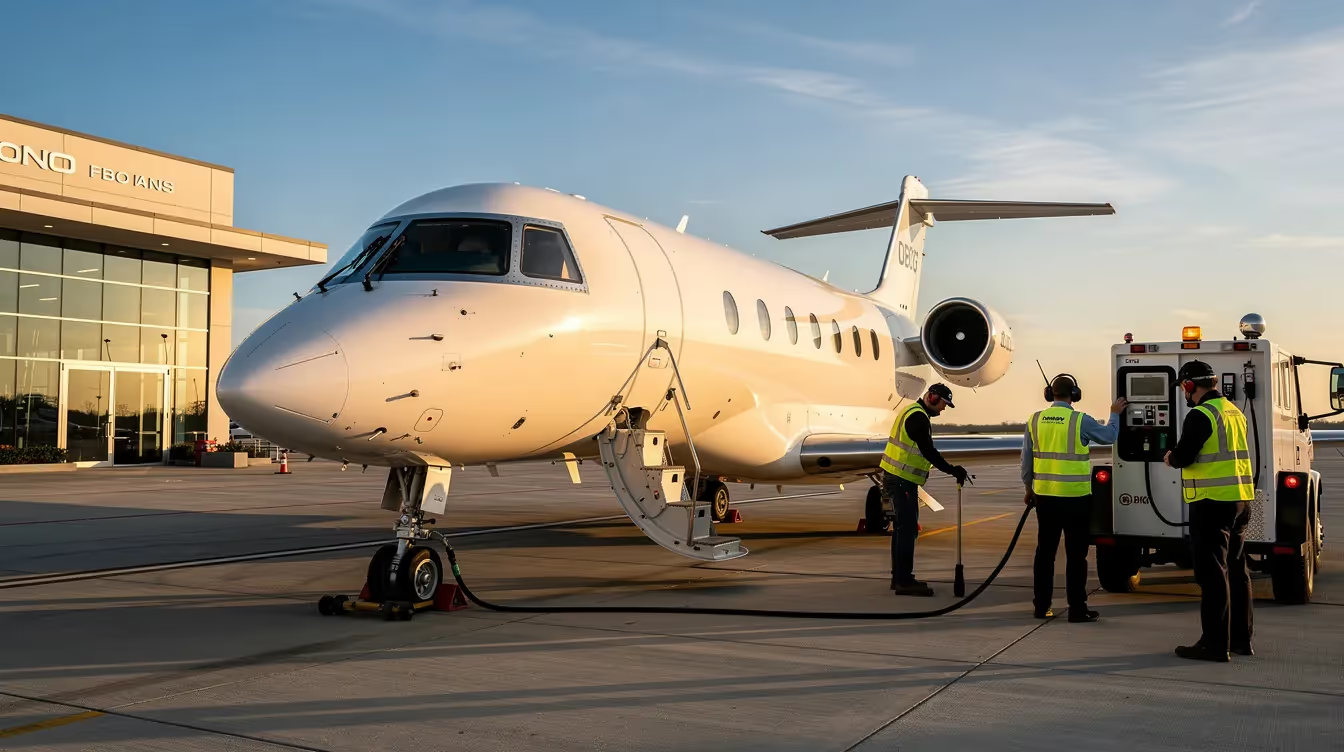
Cost of Aviation Fuel: What Drives Jet Fuel Prices in 2026?
Aviation fuel is a major expense in private jet travel, accounting for 20%–40% of operating costs, which significantly impacts charter pricing. In March 2026, U.S. aviation fuel averaged $3.13 per gallon, reflecting a 30.9% increase from February, driven by crude oil prices, geopolitical tensions, and supply chain disruptions. Platforms like Jettly provide transparent, real-time pricing that includes fuel costs, helping travelers avoid unexpected surcharges and manage budgets effectively. Understanding the factors influencing fuel prices, such as regional variations and aircraft efficiency, allows travelers to make informed decisions for cost-effective private jet travel.
Read More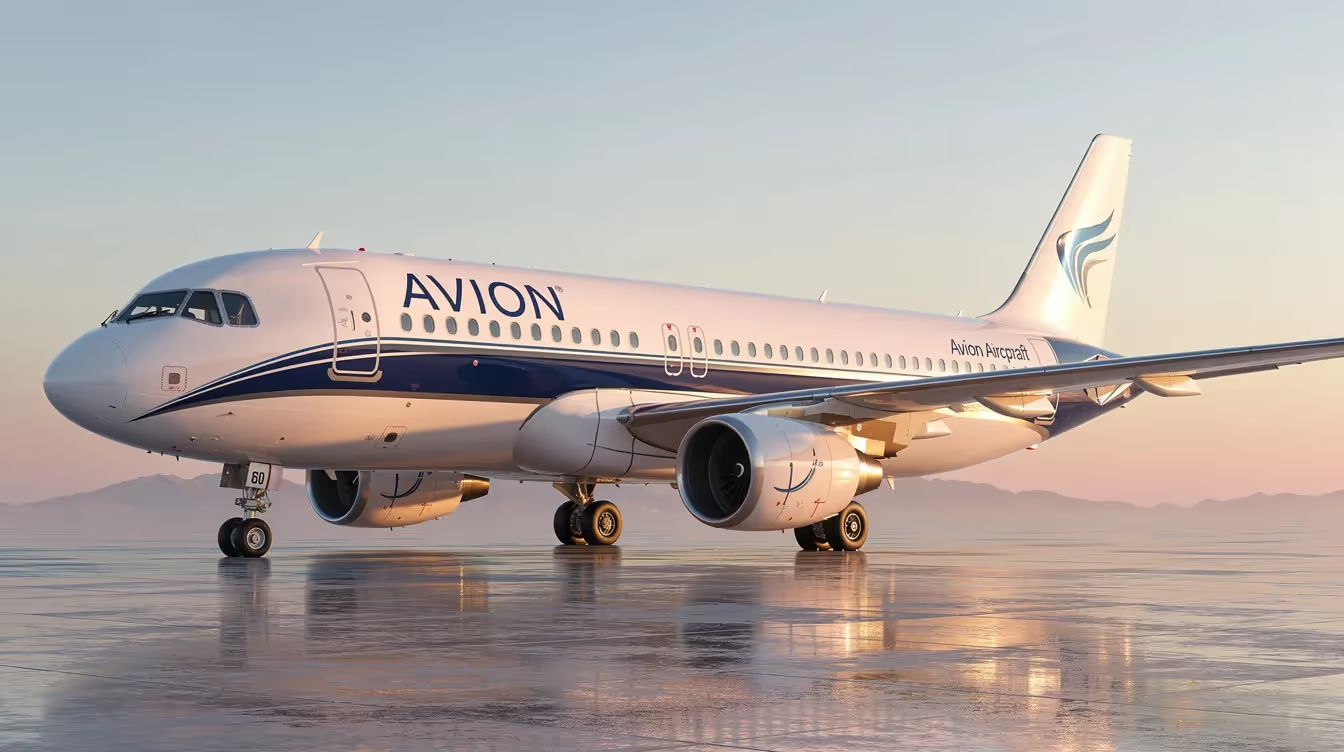
5
min read
Avion Aircraft Charter with Jettly: Modern Private Travel Made Simple
Avion Aircraft Charter, facilitated by Jettly, offers travelers access to a diverse fleet of over 20,000 private aircraft for both business and leisure travel. Jettly operates as a digital marketplace, allowing users to compare aircraft types and receive instant pricing without the need for fractional ownership. The platform emphasizes safety, transparent pricing, and personalized service, catering to various travel needs, from last-minute meetings to family getaways. With a focus on flexibility and efficiency, Jettly simplifies the private air travel experience, making it an attractive option for those seeking convenience and comfort.
Read MoreStay updated with our latest insights and tips to elevate your journey with us.
MEMBERSHIPS AND ASSOCIATIONS



Disclaimer: Jettly operates as a charter broker, offering access to a global digital jet charter marketplace. Jettly is not a direct air carrier and does not own or operate aircraft. All advertised flights are conducted by third-party air carriers that are fully licensed and hold the appropriate Part 135 or Part 121 certifications issued by the Federal Aviation Administration (FAA) or equivalent regulatory authorities under U.S. or foreign law. Jettly complies fully with the U.S. Department of Transportation's Part 295 and Part 298 Charter Broker regulations. Jettly does not carry additional liability insurance. Passengers are covered by aircraft operator insurance. TICO: 50023770


