


Login
Get Instant Pricing On 23,000+ Aircraft

>
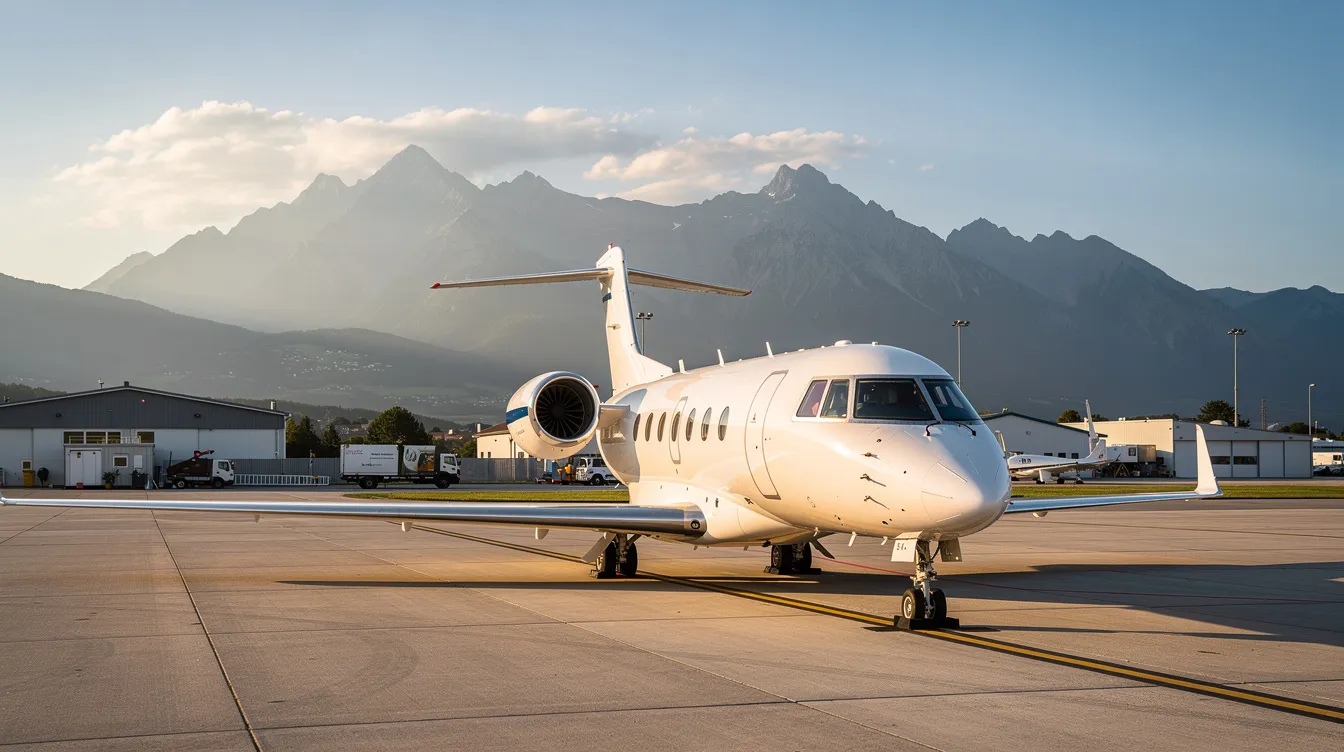
Private jets are no longer the exclusive domain of Fortune 500 CEOs and celebrities. Through mid-2026, the private jet market has stayed roughly 35% above 2019 levels in flight activity, with global business jet departures reaching approximately 1.95 million in the first half of the year alone. That number isn't a blip—it represents a fundamental shift in how people think about private jet travel and air travel more broadly.
This article digs into the data behind that shift across the broader business aviation landscape. It covers demand drivers, private jet industry statistics, who is actually flying, regional hotspots, and how digital charter platforms fit into the picture. Jettly, a global digital charter marketplace with access to over 20,000 private aircraft, is one example of how travelers can tap into this growing demand without owning a jet. Whether you're evaluating market trends, considering your first charter flight, or weighing fractional ownership against a jet card, the sections below offer concrete numbers and practical takeaways.
The core tension is straightforward: demand remains high, supply is tight, and the ways people access private aviation are evolving fast.
Between 2020 and 2022, commercial airlines slashed schedules and grounded fleets. Private aircraft activity, by contrast, rebounded quickly. By late 2021, business jet departures had recovered to—and in many cases surpassed—equivalent 2019 levels, while commercial flights still lagged far behind. Demand for private jets surged over 20% during the pandemic, and private jet industry values surged by 10–20% in that same window.
Several behavioral changes drove this:
Safety concerns and the need to maintain social distancing pushed affluent travelers out of business class cabins and into private jets. Social distancing was easier when you controlled the entire cabin.
Access to private terminals and smaller airports meant avoiding crowded airports entirely—fewer people, faster screening, less exposure.
Flexible departure times and control over the passenger list turned private jet travel into a practical risk-management tool, not just a status symbol.
Leisure travel exploded in the charter segment: ski trips, remote villa holidays, and family getaways all moved onto private flights.
Travel restrictions affected commercial routes far more than charter, since private operators could adapt faster to shifting regulations.
Among those who started flying privately during COVID, roughly 95% continued to do so even after restrictions eased. What began as a temporary spike became a lasting habit—one that has reshaped the private aviation industry.
Early-pandemic "panic flying" has matured into steady, structural growth. Here are the numbers that prove private jet demand is more than a fad:
Demand for private jets remains well above pre-pandemic levels. Departures in summer 2026 ran approximately 35% above the same stretch in 2019, and trailing-twelve-month departures through June 2026 reached 3.97 million, up nearly 5% year over year.
Five million private flights were taken in 2023, a 15% rise since the pandemic began—a milestone that underscored the shift from niche to near-mainstream among high-income travelers.
The pool of pre-owned business jets listed for sale remains below historical norms: just 6.5% of the active fleet in mid-2026, versus a 10-year average around 8–10%.
New business jet deliveries totaled roughly 854 units globally in 2025, up about 11.8% over 2024. North America accounted for 64% of global business jet deliveries.
The private jet market was worth $21.24 billion in 2024, according to Fortune Business Insights. The private jet charter market is expected to reach $28.9 billion in 2025, with the broader market expected to grow to $24.28 billion that same year.
Looking ahead, forecasts project roughly $247 billion in combined new and pre-owned transaction volume between 2026 and 2030, with significant growth in heavy and ultra-long-range categories.
The average global utilization of private aircraft reached about 21.4 hours per month in 2026, exceeding 2019 levels—a sign that fleets are being worked harder than ever.
The private aviation market is experiencing tighter supply with long delivery backlogs for new aircraft, which keeps pre-owned demand elevated and pricing firm.
The customer base has widened dramatically since 2020. New customers are increasingly using private jets for the first time—not just billionaires, but tech founders, family groups, and small-to-mid-size companies testing charter for investor roadshows and team travel. Even content creators and influencers are participating in ultra-high-ticket affiliate programs tied to private aviation services.
First-time users are now a significant demographic in private aviation. Jettly's guide for first-time private jet flyers reflects just how many potential customers are entering the market without prior experience.
Millennials are increasingly using private jets for travel, driven by growing wealth in tech, finance, and entrepreneurship. Private jet travel is becoming the norm for business class among this cohort.
The global ultra-high-net-worth population reached more than 684,000 in 2025, expanding the pool of wealthy individuals who can afford regular private travel.
Leisure-focused itineraries now rival business travel in volume: ski weekends, remote villas, sports events, and group trips where friends or families split costs via on-demand charter.
Corporate clients still drive a large share of demand, but many are shifting from ownership to flexible access—charter, memberships, or fractional shares, often after comparing the best fractional jet ownership companies and weighing fractional jet ownership pros, cons, and costs.
Real-world scenario: a startup team flies from Toronto to San Francisco on a light jet for investor meetings, avoiding a six-hour commercial itinerary with connections. They arrive refreshed and hold a full day of meetings—something that digital platforms like Jettly make simple to book, whether you're buying a single seat on a private jet or using strategies on how to get a seat on a private jet easily.
Private jet demand is uneven globally. North America dominates, holding roughly 70–80% of global fleet activity. In H1 2026, the region accounted for about 71.8% of departures in the global total and saw approximately 5% year-over-year growth.
Major North American hubs include New York, Miami, Dallas, Houston, Los Angeles, and Toronto. Popular routes like New York–Miami and LA–Vegas see consistently high demand. For a deeper look at the U.S. charter landscape, see Jettly's American jet charter guide.
Europe holds a large share of international travel in private jets, with busy corridors like London–Nice, Paris–Geneva, and charter demand peaking around events such as Davos, Cannes, and major football tournaments. In the UK, chartered air passengers rose 27% from 2010 to 2016, reflecting a longer-term trajectory of continued growth.
On-demand private jet services increased by 12% in Asia-Pacific, with long-range missions like Singapore–Sydney showing rising demand from emerging markets. On-demand charter service demand rose 12% in Asia-Pacific, confirming the region as a fast-growing frontier.
The Middle East saw a sharp drop in H1 2026 (down roughly 17.8%) due to geopolitical airspace closures, though corridors like Dubai–London remain active when conditions allow.
Seasonal peaks matter everywhere: summer coasts in the Northern Hemisphere, winter ski destinations (Aspen, Courchevel), and major conference seasons all spike demand.
Jettly's global aircraft inventory lets customers match demand in all these regions, accessing local operators instead of relying on one branded fleet—a meaningful advantage for international travel.

Privacy and Security: Private aviation offers increased privacy and security compared to commercial airlines. Bypassing crowded terminals and controlling the passenger list keeps private jet travel attractive long after COVID-19 restrictions ended.
Airport Access: Private jets can access thousands of smaller airports that commercial airlines cannot. This additional layer of convenience—flying into a secondary field minutes from your destination—saves hours compared to hub-and-spoke commercial routing.
Time Efficiency: The global demand for private jets has been driven by the need for time efficiency. Consider a same-day New York–Chicago–Dallas–New York roadshow: impossible on commercial schedules, entirely feasible on a business aircraft.
Flexible Scheduling: Flexibility of scheduling is a significant driver for private jet customers. Departure times adjust to the traveler's needs, not the airline's timetable. This matters for both business travel and personal trips on tight timelines.
Tax and Finance Incentives: Bonus depreciation and other business-aircraft incentives in the U.S. make corporate aircraft purchases more financially attractive, indirectly supporting the charter and fractional markets as more jets enter the available fleet.
Flexible Access Models: High-net-worth individuals increasingly seek flexibility in airline access models rather than outright ownership. Many users don't want the complexity of managing a business jet—they prefer charter, private jet memberships, or fractional ownership to capture utility without tying up capital. Jettly's private charter aircraft marketplace and cost breakdown tools help travelers compare these options transparently.
Growing private jet demand is spread across several access models. Each suits different flying patterns, budgets, and levels of commitment. The table below summarizes the main access models:
|
Access Model |
Definition & Features |
Ideal For |
|---|---|---|
|
On-demand Charter |
Book flights as needed with no long-term commitment or monthly fees. Flexible and pay-per-trip. |
Travelers flying <75 hours/year |
|
Jet Card Programs |
Prepay for a set number of flight hours at a locked-in rate. Jet card programs guarantee access but not specific aircraft. Users draw down hours as needed. Capacity constraints may occur during peak periods. Jet card programs experienced capacity constraints in 2025–2026 at some large providers, with jet card sales sometimes paused during peak periods. For a detailed rate comparison and a jet card flight cost estimator, see the jet card pricing guide. |
Frequent flyers who want predictable pricing and guaranteed access, but do not require a specific aircraft. |
|
Fractional Ownership |
Purchase a share (as little as 1/16) of a private aircraft, typically yielding around 50 flight hours annually. Owners pay monthly management and hourly usage fees. Fractional ownership grew departures by 11.5% in 2026, making it an increasingly popular access model for consistent flyers. For more details, see Jettly's fractional ownership cost breakdown. |
Consistent flyers seeking partial ownership and guaranteed access. |
|
Empty-leg Flights |
Book discounted flights on jets repositioning for their next scheduled trip. Flexible on timing and route. Find empty-leg flights or crowdsource private jet flights. |
Flexible travelers seeking cost savings. |
Jettly differentiates itself by combining digital booking, transparent pricing, and a large third-party aircraft network of over 20,000 private jets offered worldwide, positioning itself as a flexible NetJets alternative so travelers avoid long-term commitments yet still benefit from professional planning.
Demand growth isn't uniform across aircraft categories. Light jets and super-midsize jets have seen the sharpest sustained interest over the past decade, while heavy jets remain critical for intercontinental routes.
Light jets (Embraer Phenom 300, Citation CJ series) are the backbone of regional private jet travel. They seat 2–6 passengers and handle routes like New York–Miami or Toronto–Chicago efficiently. Charter companies rely heavily on these airframes for high-frequency, shorter missions.
Midsize jets (Citation Latitude, Challenger 350, Gulfstream G280) are the preferred choice for coast-to-coast U.S. flights and transcontinental hops in Europe and Asia. Demand for midsize and large-cabin aircraft is heavily skewed toward intercontinental travel, making these the sweet spot for many charter operators.
Heavy and ultra-long-range jets (Global 6000, Gulfstream G650/G700) handle nonstop international travel such as Los Angeles–London or Dubai–Singapore. Supply is tightest here: for-sale inventory for heavy jets sat at just 5.2% in mid-2026. New aircraft lead times stretch 2–4 years, and operating costs for private jets in these categories are among the highest in business aviation. For a broader look at categories, see Jettly's private jet model guide.
Jettly's platform surfaces all these categories side by side with instant pricing, so customers can see cost versus range versus cabin trade-offs rather than guessing. The fleet capacity across its operator network spans turboprops through ultra-long-range cabins.
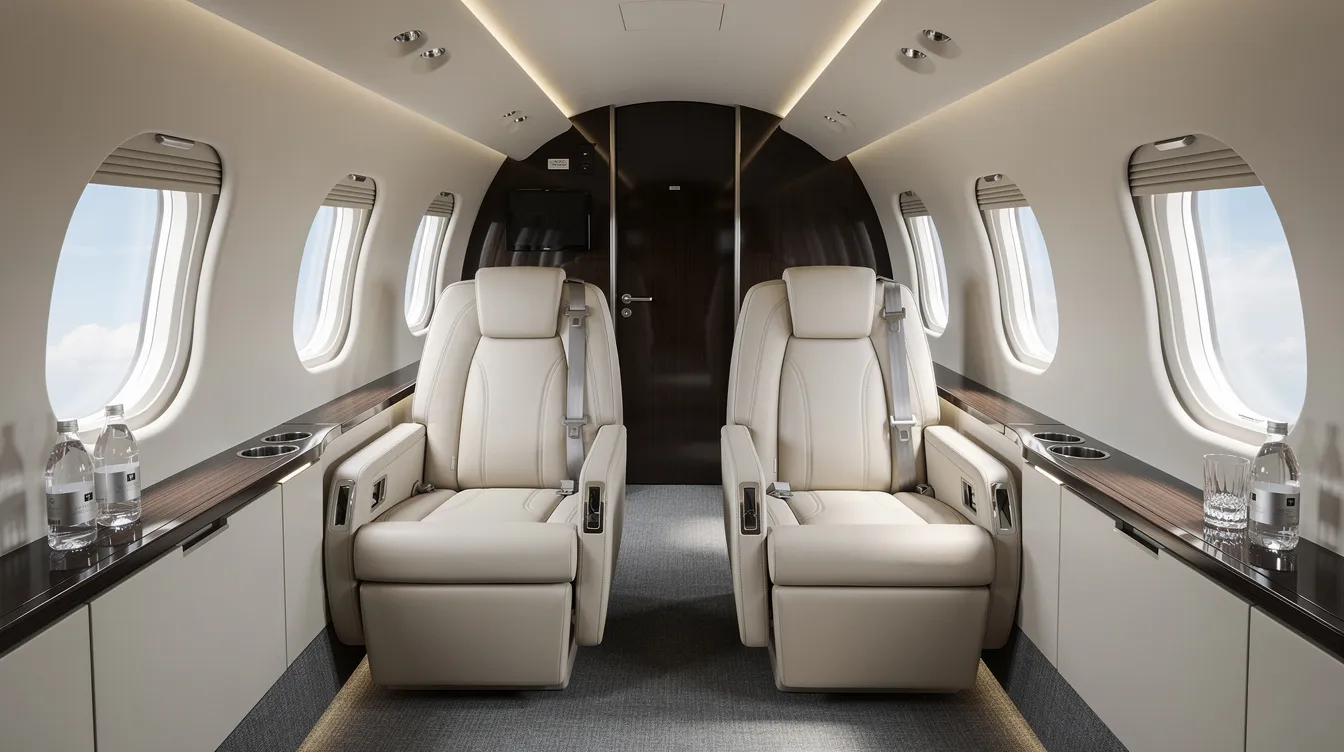
Technology has transformed the private jet charter industry. Real-time pricing information is now available through AI-powered tools, replacing the old model of calling a broker, waiting for callbacks, and comparing opaque quotes.
AI tools optimize flight paths and reduce fuel costs by routing more efficiently and surfacing repositioning flights that would otherwise fly empty. Dynamic pricing algorithms adjust rates based on demand, aircraft positioning, and seasonal patterns.
Digital booking platforms enhance customer experience in private aviation. A marketplace like Jettly shows users a search bar, aircraft filters (light jets, midsize jets, turboprops, helicopters), transparent pricing, and integrated extras such as in-flight catering for private jets or ground transfers. Many more affluent travelers prefer instant digital booking for private jet travel over traditional phone-based brokerage.
Industry estimates suggest roughly 40–45% of charter transactions are now booked or initiated via digital channels. This tech layer helps match customers to otherwise idle available aircraft, partially offsetting pilot and hangar constraints that limit fleet capacity.

Even with strong market demand, real constraints exist: high charter prices, limited airport capacity, aircraft and crew shortages, and shifting regulatory landscapes.
Typical private jet charter price ranges start at roughly $2,000–$4,000 per hour for many light jets and climb well into five figures for long-range aircraft ($12,000–$25,000+ per hour for heavy jets). Operating expenses in private aviation have been pushed higher by fuel price pressures, crew salary increases, and maintenance costs. For detailed pricing, Jettly's private jet cost calculator provides instant estimates.
Capacity bottlenecks include crew training pipelines, hangar space in congested hubs, and maintenance slot shortages. These factors led some fractional and jet card programs to pause or ration new sales in 2025–2026.
Regulatory and tax changes also shape demand. UK Air Passenger Duty increases on private jets, for example, can affect demand for charter flights starting in that country. In contrast, U.S. bonus depreciation rules continue to make business aircraft acquisitions more attractive.
Smart charter brokers and digital platforms like Jettly help customers navigate these barriers by sourcing across thousands of operators, identifying lower-cost airports, and recommending off-peak times or empty-leg opportunities while still offering affordable private jet charter options.
A 15% rise in private flights since the pandemic began has put real pressure on infrastructure that was sized for a smaller market. Planning is no longer optional during peak seasons.
Environmental scrutiny has grown alongside private jet demand, making sustainability a central topic for the private aviation industry through 2030. Climate change concerns are now part of the conversation every time a new fleet order is announced.
Sustainable aviation fuel is increasingly used in private jets. SAFs are derived from sustainable sources, unlike fossil fuels—feedstocks include waste oils, agricultural residues, and synthetic processes. Some operators now fly blends of up to 50% SAF on select routes in Europe and North America.
Private aviation companies are investing in fuel-efficient aircraft. Newer aircraft designs emphasize lighter materials, more efficient engines, and improved aerodynamics. Light jets and modern turboprops often deliver better per-seat fuel burn than older heavy jets.
Near-term steps include carbon offset programs, route optimization, and load-factor improvements. Total emissions from UK chartered flights grew by only 0.2% over a period when passenger numbers rose 27%—evidence that efficiency gains can partially offset volume growth, even in rapidly expanding markets like private jet charter in Kolkata and other emerging hubs.
Electric and hybrid private aircraft remain in early stages. Wide adoption for jet-range travel is unlikely before the next decade, but the direction is clear.
Many Jettly customers ask about greener options. Routing, aircraft choice, and SAF availability can all be addressed transparently through a digital platform, often alongside detailed guidance on how much a private jet really costs over its lifecycle—a meaningful differentiator in an era when the future of private aviation hinges partly on environmental credibility.
The surge is driven by safety concerns during the pandemic, increased flexibility, time savings, and a broader demographic including millennials and first-time flyers. Digital booking platforms and evolving access models like fractional ownership and on-demand charter also play key roles.
Fractional ownership involves buying a share of a specific aircraft with associated management fees, ideal for consistent flyers. Jet cards prepay for flight hours on a fleet without guaranteeing a specific aircraft, offering flexibility but sometimes limited availability during peak times.
Yes. On-demand charter services allow travelers to book flights as needed without long-term commitments. Platforms like Jettly provide instant pricing and access to thousands of aircraft globally for specific trips.
Private aviation is adopting sustainable aviation fuels (SAFs), investing in fuel-efficient aircraft, and optimizing routes to reduce emissions. While private jets have a higher carbon footprint per flight, these initiatives help mitigate environmental impact.
Booking earlier is advisable, especially during peak seasons, due to tighter supply and capacity constraints. Planning improves aircraft availability and choice.
Light jets suit regional trips and short-haul flights. Midsize jets handle coast-to-coast and transcontinental flights efficiently. Heavy and ultra-long-range jets are best for nonstop international travel.
Jettly offers transparent pricing, instant digital booking, and access to a large network of over 20,000 aircraft worldwide, providing flexibility without long-term ownership commitments.
Private jet demand is structurally higher than before 2020. It's driven by new customers entering the market, evolving access models from charter to fractional ownership, better technology, and a broader demographic base that now includes millennials and first-time flyers alongside traditional corporate clients. The private jet industry is projected to grow at 3% annually over the next decade, which may sound modest until you consider the compounding effect on a market already running well above historical baselines.
What should travelers expect through 2030? Tighter availability on peak dates is a near certainty. Continued strength in light jets and super-midsize categories will persist, as will rising use of digital marketplaces. The future of private aviation will also involve more attention to sustainability and regulation—private aviation companies that invest early in SAF infrastructure and fuel-efficient fleets will hold competitive advantages. Emerging markets in Asia-Pacific and Latin America will see the fastest percentage growth, even as North America remains the dominant region.
For anyone looking to fly privately in this new era, the practical advice is straightforward: plan ahead, stay flexible on airports and aircraft type, and use a transparent platform that sources across a deep network of operators. This is an exciting time for private aviation trends, but it's also one where informed decisions matter more than ever. The demand for private jets shows no sign of retreating to pre-pandemic norms. Learn more about Jettly's charter options, explore the best fractional jet ownership companies, check out our private jet cost calculator, or discover tips on how to get a seat on a private jet easily.
Ready to experience private travel on your terms? Explore flight options or request a quote at https://www.jettly.com.
Share this post:
Jeff Ryan Serevilla
Oct 8, 2026
|
5
min read
Discover tips and trends in the industry.
5
min read
Private Jet Demand: How the Market Evolved, Who's Flying, and What It Means for Charter in 2026–2030
The private jet market has seen a significant surge in demand, remaining 35% above pre-pandemic levels through mid-2026. This trend is driven by a broader demographic of first-time flyers, increased flexibility, and the rise of digital booking platforms. As the industry evolves, travelers can expect tighter availability and a focus on sustainability through 2030.
Read More
5
min read
Private Flight Club Membership Cost: What You Really Pay For
Private flight club memberships offer a range of costs influenced by initiation fees, monthly dues, and hourly rates. Understanding these components helps travelers make informed decisions between membership and on-demand charter options. With costs varying significantly based on aircraft type and usage, it's essential to evaluate personal travel needs and frequency before committing.
Read MoreStay updated with our latest insights and tips to elevate your journey with us.
MEMBERSHIPS AND ASSOCIATIONS



Disclaimer: Jettly operates as a charter broker, offering access to a global digital jet charter marketplace. Jettly is not a direct air carrier and does not own or operate aircraft. All advertised flights are conducted by third-party air carriers that are fully licensed and hold the appropriate Part 135 or Part 121 certifications issued by the Federal Aviation Administration (FAA) or equivalent regulatory authorities under U.S. or foreign law. Jettly complies fully with the U.S. Department of Transportation's Part 295 and Part 298 Charter Broker regulations. Jettly does not carry additional liability insurance. Passengers are covered by aircraft operator insurance. TICO: 50023770


