


Login
Get Instant Pricing On 23,000+ Aircraft

>
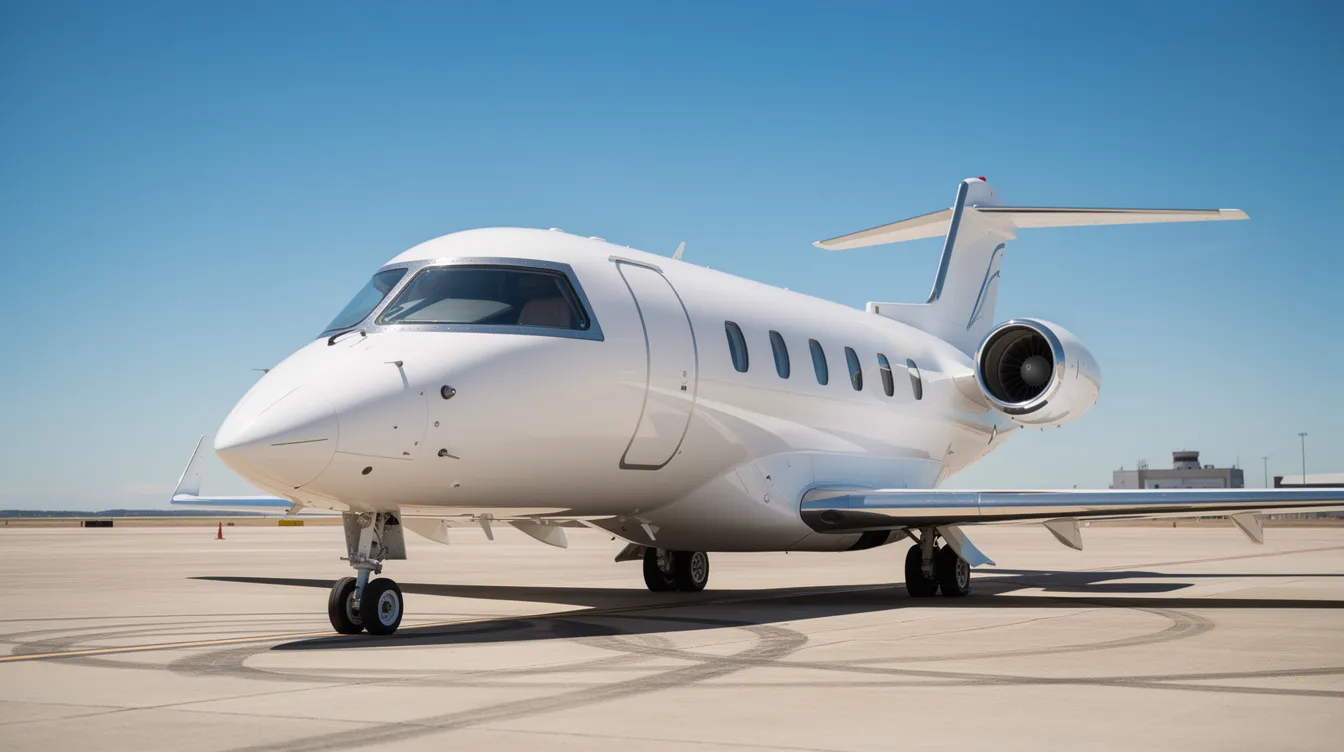
The private jet manufacturing industry features several iconic brands known for distinct engineering philosophies. Whether someone is booking a two-hour regional hop or a nonstop flight halfway around the globe, understanding private jet makes helps travelers match the right aircraft to the right mission. This guide breaks down the major manufacturers, explains how aircraft categories work, and offers practical advice for choosing the best fit.
The private aviation market features several prominent manufacturers, each with a clear identity. Gulfstream builds large cabin jets designed for speed and range. Bombardier is noted for large-cabin aircraft with long-range capabilities and smooth rides. Dassault Aviation integrates fighter-jet engineering into luxury business jets. Cessna (under Textron Aviation) dominates the light jet segment. Embraer focuses on modern design and efficient light to midsize business jets. At the top end of cabin size, Airbus Corporate Jets and Boeing Business Jets convert commercial airliners into flying offices and residences.
Private jet models are categorized by size, range, and cabin capability. These categories — from very light jets and light jets through midsize jets, super midsize jets, long-range jets, and ultra-long-range jets — matter more to charter customers than brand names alone. Each tier serves different route lengths, passenger counts, and comfort expectations.
Private aviation varies in purpose from leisure to business travel needs. Private jets offer benefits such as lower operating costs compared to full ownership of larger aircraft, access to smaller airports, flexible departure times, and faster boarding and immediate takeoff readiness. Guides to the best private jet charter companies often highlight these advantages, with private jet travel saving 5–10 hours per trip compared to commercial aviation on many routes.
Jettly operates as a digital private jet charter marketplace, giving travelers access to over 20,000 aircraft from all leading private jet manufacturers. The platform offers instant pricing and global coverage, so users can compare options across makes without committing to a single brand.
Key points this article covers:
How categories (light, midsize, super midsize, long range, ultra long range) shape trip planning and pricing
Deep dives into Bombardier, Gulfstream, Dassault, Cessna, Embraer, Airbus Corporate Jets, and Boeing Business Jets
Niche makes like Pilatus, HondaJet, Cirrus, and Piaggio
Practical guidance on choosing the right aircraft type for specific missions
How Jettly connects travelers to diverse private aircraft across every segment
The manufacturer matters, but the aircraft category often determines whether a jet can actually complete a given trip. A Gulfstream badge won't help if the aircraft doesn't have the range for the route or seats for the group. Start with the mission, then narrow by make.
Here is how private jet categories break down:
Very light jets (e.g., HondaJet Elite II, Cirrus Vision Jet) typically seat 4–7 passengers. They handle short hops under 1,000–1,200 nm, ideal for routes like Los Angeles–Las Vegas or Milan–Geneva. Private jet categories include very light jets for short hops all the way up to massive executive airliners.
Light jets (e.g., Cessna Citation CJ3+, Embraer Phenom 300) accommodate 6–8 passengers with a range of around 1,953 nautical miles. They serve regional trips efficiently - think New York–Miami or London–Nice.
Mid-size jets (e.g., Cessna Citation XLS+, Embraer Praetor 500) typically accommodate 8 to 10 passengers and have a range of roughly 2,200 to 3,500 miles. Good for coast-to-coast US missions such as New York–Dallas.
Super mid size jets (e.g., Bombardier Challenger 3500, Cessna Citation Longitude) can carry 10–11 passengers over 3,420 nautical miles. Suitable for transcontinental and some transatlantic flights.
Large jets (e.g., Dassault Falcon 8X, Gulfstream G550, Bombardier Global 6000) typically accommodate 12–19 passengers with a range of 6,500 nautical miles. Heavy jets can accommodate 10 to 16 passengers and offer a range of roughly 4,500 to 6,000 miles at the lower end of this tier. These handle intercontinental routes with ease, including ultra long range options such as the Gulfstream G-V, capable of 6,600 nm nonstop.
Ultra-long-range jets (e.g., Bombardier Global 7500, Gulfstream G700/G800, Boeing Business Jets) can connect cities up to 8,000 nautical miles apart. Ultra-long-range jets can carry 14 to 19 passengers and have a range of approximately 6,500 to 8,000+ miles. Nonstop city pairs like New York–Hong Kong or London–Singapore become possible.
Jettly's platform lets users filter by category, range, and passenger count rather than just brand name, making it straightforward to find the right aircraft for any route.
Bombardier, headquartered in Montreal, shifted its focus entirely to business aviation after exiting commercial rail and airline programs. Today, most business jets in Bombardier's lineup target the super midsize to ultra long-range segments.
The Bombardier Challenger line (Challenger 350, 3500, 650) covers the super midsize to large cabin jet space. These aircraft typically seat 8–12 passengers with ranges of 3,200–4,000 nm, making them popular for transcontinental North American charter flights.
Challenger jets feature flat floors, stand-up cabin height, wide seats, and in-flight baggage access. The Challenger 3500, for example, offers roughly 3,400 nm range at Mach 0.77, with standard accommodation for nine passengers.
The Global series represents Bombardier's long-range and ultra-long-range jets. The lineup includes the Global 5500, 6500, Global 7500, and the upcoming Global 8000, with ranges from around 5,700 to nearly 8,000 nm.
The Bombardier Global 7500 has a range of 7,700 nautical miles, a top speed near Mach 0.925, and a four-zone cabin that typically seats up to 14 passengers. Private jets can cruise at speeds around Mach 0.85 to Mach 0.90, and the Global 7500 sits at the top of that band.
The Bombardier Global 8000 has a range of 8,000 nautical miles and a speed close to Mach 0.94, positioning it as one of the fastest business jets anticipated in the private jet market.
Example use cases: nonstop New York–Tokyo in a Global 7500, or London–Buenos Aires in a Global 6500 for executives needing true overnight long-haul flights. Jettly can also arrange Gulfstream charter rentals comparable to a G-450 for similar long-range missions.
Jettly often sources Bombardier Challenger and Bombardier Global aircraft for clients prioritizing range, cabin comfort, and long-haul productivity.
Gulfstream Aerospace is recognized for ultra-long-range business jets with high-speed travel. Based in Savannah, Georgia, Gulfstream has built its reputation on large cabin comfort and intercontinental range.
Iconic design elements define Gulfstream aircraft: large oval windows, low cabin altitude (the G700 maintains around 2,840 ft cabin altitude at 41,000 ft cruise), and quiet cabins. Cabin wellness features may include low cabin altitude pressure and advanced air filtration systems, both of which reduce fatigue on flights exceeding six hours.
Key models span several categories: the G280 (super midsize), the G400/G500/G600 (large cabin, long range), the G650ER and G550 (proven ultra long range workhorses), and the next-generation G700 and G800 (ultra long range jets with 7,500–8,000+ nm ranges).
The Gulfstream G700 is the fastest Gulfstream jet at Mach 0.935. Its maximum range reaches approximately 7,750 nm at Mach 0.85, with up to five cabin zones for work, dining, and rest. It seats up to 19 passengers. The G700 earned FAA certification in March 2024.
The G800 targets roughly an 8,000 nm range, competing directly with Bombardier's longest-range aircraft in the ultra-long-range segment.
Sample mission profile: a Gulfstream G650ER flying Dubai–New York nonstop with 12–14 passengers, covering about 7,000 nm with time to spare on fuel reserves.
Jettly clients often request Gulfstream aircraft for executive roadshows, multinational tours, and high-profile family trips requiring long legs and spacious cabins. These luxury private jets combine speed, range, and the widest cabin dimensions in their respective classes, while Jettly also provides detailed guidance on affordable private jet charter costs for travelers comparing options.
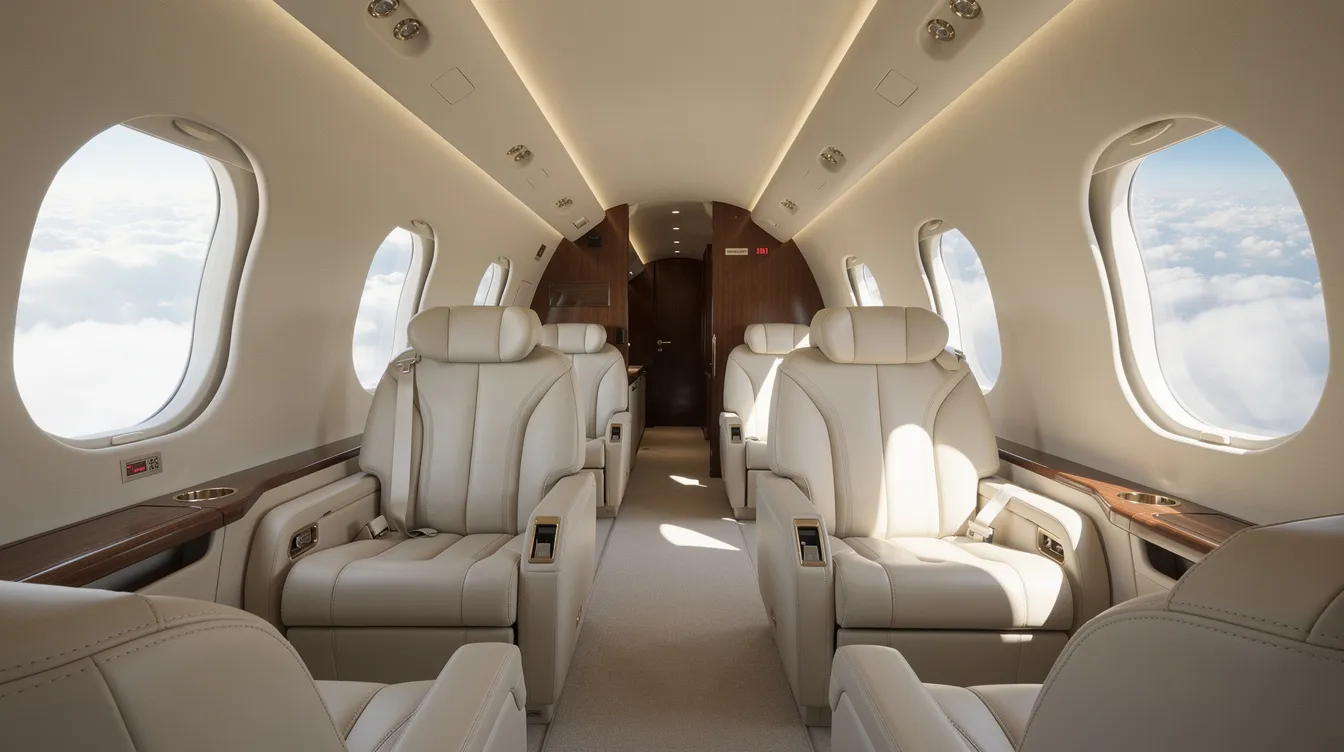
Dassault Aviation brings decades of military heritage to business aviation. The French manufacturer's fighter-jet engineering translates into efficient, high-performance business aircraft that excel where other larger aircraft struggle.
The Dassault Falcon family spans super mid size to ultra-long-range jets: Falcon 2000LXS, 900LX, 6X, 7X, 8X, and the in-development Falcon 10X.
Tri-jet designs like the Falcon 7X and Falcon 8X use three engines mounted at the rear, providing extra redundancy and performance on long range and challenging routes. The Dassault Falcon 8X excels at challenging airports with a range of 6,450 nautical miles. The Dassault Falcon 8X can access shorter runways efficiently — a critical advantage for airports like London City or mountain-area strips.
Approximate ranges: Falcon 7X around 5,950 nm, Falcon 8X around 6,450 nm, and the Falcon 10X targeting nearly 7,500 nm. That enables routes such as Paris–Tokyo or Los Angeles–London nonstop. The 10X completed its maiden flight on June 19, 2026, and features the widest cabin of any purpose-built business jet at 9 ft 1 in.
Comfort features include three distinct living spaces (multiple zones for lounge, work, and rest), advanced noise insulation, and modern connectivity that appeal to corporate and government users.
Dassault's strength on short runways sets it apart from competitors. Even the large cabin Falcon 10X targets takeoff under 6,000 ft and landing under roughly 2,500 ft, preserving access to small airports that many long range aircraft cannot use.
Jettly may recommend Dassault Falcon aircraft for clients needing long-range capabilities plus access to smaller, more central airports in Europe, Latin America, or mountainous regions, especially for travelers comparing the best private plane manufacturers for every budget and need.
Textron Aviation is recognized for reliable light to super-midsize jets through its Cessna and Beechcraft brands. Together, these lines form the backbone of the global light jet segment and midsize jets market.
Cessna's Citation range covers Very Light Jet to Super Midsize. The family includes the M2 Gen2, CJ3+, CJ4 Gen2, XLS Gen2, upcoming Ascend, Citation Latitude, and Cessna Citation Longitude.
Typical Citation light jets (CJ3+, M2 Gen2) carry 5–7 passengers over 1,200–2,000 nm, ideal for quick business hops and regional leisure trips. Modern jets feature advanced autopilot capabilities for safety, and the Citation line takes full advantage with Garmin G3000-series avionics across most models.
Mid-size and super mid size models like the Citation XLS+ and Citation Longitude handle ranges around 2,100–3,500 nm. The Longitude, for instance, offers roughly 3,500 nm range with a 6-foot stand-up cabin, frequently used for New York–Miami or Dallas–San Francisco missions.
Cabin features across the line include stand-up cabins in midsize jets, club seating, and cost-efficient operating economics — a reason many charter operators build their own fleet around Citations.
The Beechcraft King Air turboprop aircraft (King Air 260, 360, 360ER) are reliable short-runway performers with 6–9 seats. They serve remote destinations that jets cannot reach, including unpaved strips and high-altitude fields across Central America, South America, and the Middle East, where tools like Jettly's airport locator platform help identify suitable airfields.
Many aircraft available through Jettly's marketplace are Cessna Citation or King Air models due to their popularity in commercial operations and charter fleets worldwide.
Embraer is the world's fourth-largest aircraft manufacturer, headquartered in Brazil, with a strong business aviation division that spans light jets to bizliners.
The Phenom series includes the Phenom 100EV (very light jet) and Phenom 300E (light jet), seating 4–8 passengers with ranges around 1,000–2,055 nm. Both are efficient for regional and intra-European or intra-US missions.
The Phenom 300 has consistently been one of the best selling light jet models in the private jets segment, favored for reliability, cabin quality, and low operating costs. It remains a fixture in the light jet segment globally.
The Praetor 500 (midsize) and Praetor 600 (super midsize) offer ranges of roughly 3,000–4,000 nm, enabling longer coast-to-coast and some transatlantic routes under favorable winds.
The Embraer Lineage 1000E is a "bizliner" derived from the E190 regional jet, with about 4,600 nm maximum range and multiple zones including a bedroom, full galley, and optional shower. It seats up to about 19 passengers, functioning as a large cabin jet for corporate shuttles or large groups.
Use-case examples: Phenom 300 for Toronto–Chicago day trips for small groups, Praetor 600 for New York–London flights, Embraer Lineage 1000E for large family or corporate shuttles requiring conference rooms and a full working environment.
Jettly customers often select Embraer jets when they want modern cabins and strong value relative to range and operating cost. Private jet cabins can be customized for passenger comfort, and Embraer's interior design has earned recognition across the industry, making them appealing choices for buyers comparing the best personal aircraft for ownership.
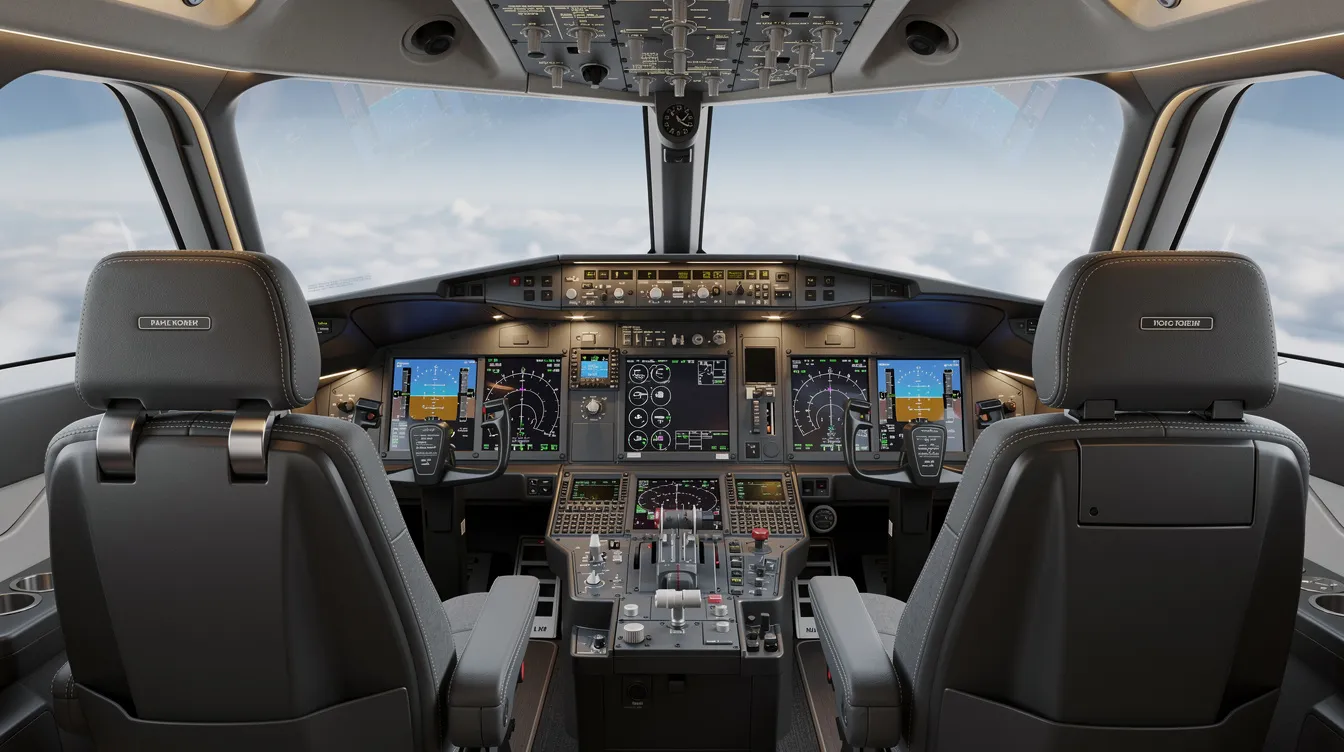
Airbus Corporate Jets and Boeing Business Jets take commercial airliners and transform them into private aircraft with apartment-style interiors. These are the largest jets available in private aviation.
Current Airbus ACJ models include the ACJ319neo, ACJ320neo, ACJ321neo, and ACJ TwoTwenty. Ranges typically reach 6,000–7,000+ nm with multi-zone floorplans covering lounge, office, bedroom, and dining areas. These provide unparalleled luxury in terms of sheer cabin size and volume.
Boeing Business Jets include the BBJ MAX 7, MAX 8, and MAX 9 (based on the 737 MAX), plus the BBJ 787 and BBJ 777X for ultra-long-range missions exceeding 9,000 nm. A Boeing Business jet based on the 787 platform offers ranges that dwarf even the longest-range purpose-built business jets.
Bizliners differ from traditional long-range jets in several ways: much larger cabin size, higher crew requirements, greater operating costs, and more airport restrictions due to aircraft size. These are not small jets — they require commercial-length runways and specialized handling.
Example missions: a BBJ 787 used by heads of state for worldwide tours; an ACJ320neo configured for 19–25 VIP passengers plus staff on intercontinental flights.
Such aircraft occasionally appear on the charter market and can be sourced via Jettly for group travel, diplomatic missions, or sports teams needing space and range. For more on VIP planes in this class and the broader ecosystem of private operators, see Jettly's ultimate list of charter airlines, which covers the full spectrum of commercial airliners converted for private use.
Not all important private jet manufacturers build large cabin jets. Some specialize in niche segments that serve specific missions better than anything else on the market.
Pilatus PC-12 NGX is a single-engine turboprop aircraft seating 6–9 passengers with roughly 1,800 nm range. The PC-24 is a light jet with around 2,000 nm range. Both excel on short runways and semi-prepared surfaces, making them go-to choices for reaching remote destinations in Africa, South America, or northern Canada.
HondaJet Elite II is a leading very light jet with distinctive over-the-wing engines mounted above the fuselage. It seats 4–5 passengers and handles sub-1,000 nm trips efficiently, including single pilot operations for qualified crews.
Cirrus Vision Jet G2+ is a single-engine personal jet with around 1,200 nm range and a unique whole-aircraft parachute system. It serves owner-pilots and very small groups on short regional flights.
Piaggio P.180 Avanti EVO uses a pusher-propeller turboprop configuration to deliver jet-like speed with turboprop fuel efficiency. Its stand-up cabin, roughly 1,600 nm range, and distinctive looks make it popular for cost-sensitive regional flights.
Jettly's inventory includes many of these niche types, which can be ideal for accessing short strips, cost-sensitive regional missions, or flights to small airports where larger aircraft cannot land. Travelers looking to lower costs can also explore options to buy a single seat on a private jet rather than chartering the entire aircraft.
Charter customers rarely need to pick a brand first. The smarter approach is to match the aircraft type to the mission, then refine by manufacturer preference, cabin layout, or specific model features.
Key decision factors:
Route distance: a 900 nm hop needs a light jet; a 7,000 nm intercontinental route demands ultra-long range
Passenger count and baggage capacity: ski gear, golf bags, and extra luggage may push you into a larger aircraft category
Airport options: does the destination have short runways or limited ramp space? Dassault Falcons or Pilatus models may be the only viable options
Cabin features: bedrooms, conference rooms, full galley, Wi-Fi level, and cutting edge technology like circadian lighting systems
Budget: chartering is ideal for those flying less than 200 hours annually. Ownership typically makes sense for those flying over 400–500 hours yearly. A hybrid approach combines ownership with chartering for flexibility, and some travelers also consider fractional ownership programs like NetJets, a leader in private aviation. Owning a private jet incurs high upfront and maintenance costs, while chartering offers flexibility without ownership responsibilities.
How different makes excel:
Bombardier and Gulfstream for ultra-long-range performance
Cessna Citation and Embraer Phenom for cost-effective light jets and midsize jets
Pilatus for rough-field access at remote destinations
Airbus Corporate Jets and Boeing Business for larger aircraft carrying big groups, with Jettly positioned as a flexible NetJets alternative for on-demand and membership-based access
Travelers who fly mainly up to 2–3 hours should focus on light jets and mid size jets. Those regularly crossing oceans should consider long range jets and ultra long range models.
Safety and operator quality matter more than brand name. All major manufacturers meet strict certification standards, and jet operators must balance operational costs with specific mission profiles. Travelers can access these benefits in many ways, from full aircraft charter to easily securing a seat on a private jet. Private jets offer direct access to regional airports and allow flexible departure times — advantages that hold regardless of which make is on the tail.
Sample comparison: for a New York–Miami trip (roughly 1,100 nm), a Cessna Citation XLS+ and a Bombardier Challenger 3500 both work. The Citation XLS+ costs less per flight time hour and suits small groups of 6–8. The Challenger 3500 offers more baggage capacity, a wider cabin, and room for 9–10 passengers - worth the premium for a larger traveling party.
Jettly's platform and support team help users compare aircraft options by make, category, age, and cabin photos before booking.
Jettly is an on-demand charter marketplace connecting travelers to 20,000+ private aircraft worldwide. The platform does not lock clients into a single manufacturer. Users can book small jets for short hops and ultra-long-range aircraft like the Bombardier Global 7500 or Gulfstream G650ER for longer routes - all through the same interface.
Instant pricing and digital booking: travelers input route, dates, and passenger count, then receive options across multiple private jet makes with transparent costs. Jettly’s platform also supports crowdsourcing private jet flights and sharing empty seats to reduce costs for flexible travelers. For details on how it works, see Jettly's guide on how to book a private jet.
Key service features include global coverage, access to empty leg charter flights, ground transportation coordination, and in-flight catering tailored to aircraft capabilities (galley size, oven type). Dedicated services like Jettly Eats for in-flight catering ensure meals match both passenger preferences and aircraft limitations. Personalized service extends to route planning, where the team matches the right aircraft to the specific mission.
Membership vs. on-demand access: frequent flyers can reduce hourly rates while maintaining flexibility across aircraft types and manufacturers. Tools like Jettly’s jet card flight cost estimator and [charter cost estimators](LINK 13) help travelers understand pricing before committing.
Flight safety: Jettly partners only with certified operators that maintain aircraft to manufacturer and regulatory standards. Private jets provide faster boarding and immediate takeoff readiness compared to commercial operations, and Jettly’s private jet membership plans give frequent flyers structured access to these benefits.
Learn more about Jettly's charter options at https://www.jettly.com, including dedicated services for private jet charter in New Delhi and private jet charter in Kolkata.
The private jet market is evolving fast. New models from every major manufacturer deliver better fuel efficiency, smarter avionics, and improved passenger comfort compared to jets built even a decade ago.
Ongoing improvements in aerodynamics, composite materials (like the Falcon 10X's high-aspect ratio composite wing), and next-generation engines from Pratt & Whitney Canada and Rolls-Royce are making new light jets, long-range jets, and ultra-long-range models more fuel-efficient than older generations.
Private jets generate thousands of tons of CO2 emissions annually, even though they carry far fewer passengers than commercial jetliners. Some individuals travel over 350,000 km annually by private jet. These realities have pushed the industry toward action. Sustainable Aviation Fuel (SAF) is increasingly adopted in private aviation, with manufacturers like Dassault testing 100% SAF compatibility on new engines. Carbon offset programs are becoming mainstream in private aviation, and companies like BlackJet ensure carbon-neutral flights for their customers.
Emerging concepts such as hybrid-electric propulsion and eVTOL aircraft may complement, not replace, traditional business jets over the next decade. For now, incremental gains in fuel efficiency and long-range aircraft design drive the most meaningful reductions in environmental impact.
Technology upgrades — satellite connectivity (Ka-band), advanced avionics, and predictive maintenance systems — improve charter reliability and in-flight productivity for Jettly customers. These features are now standard differentiators across commercial aircraft conversions and purpose-built business aircraft alike.
Chartering as-needed via platforms like Jettly can be more efficient than underused owned aircraft sitting idle on the ramp. When most business jets fly fewer than 400 hours per year under private ownership, shared access through charter or structured programs like jet card memberships often represents a smarter use of resources.
Leading private jet makes - including Bombardier, Gulfstream, Dassault, Cessna, Embraer, Airbus, Boeing, Pilatus, HondaJet, and others - cover every segment from light jets to ultra long range aircraft. The private jet market continues to grow and diversify, with each manufacturer carving out strengths in specific mission profiles.
For most travelers, the right choice depends on mission profile more than brand loyalty. Understanding what each manufacturer brings to the table - whether it is Gulfstream's speed, Dassault's runway flexibility, or Cessna's operating economics — helps fine-tune comfort, range, and cost preferences. Jettly simplifies access to diverse aircraft makes through instant pricing, on-demand booking, and expert support across all categories of private jets.
Ready to experience private travel on your terms? Explore flight options or request a quote at https://www.jettly.com.
Share this post:
Jeff Ryan Serevilla
Sep 21, 2026
|
5
min read
Discover tips and trends in the industry.

5
min read
Do Flight Prices Go Down After Thanksgiving? (2026 Guide for Commercial & Private Travel)
Flight prices generally decrease after Thanksgiving, especially for leisure routes, as demand drops. This guide details when to find the best deals and how to navigate the holiday pricing landscape for both commercial and private travel.
Read More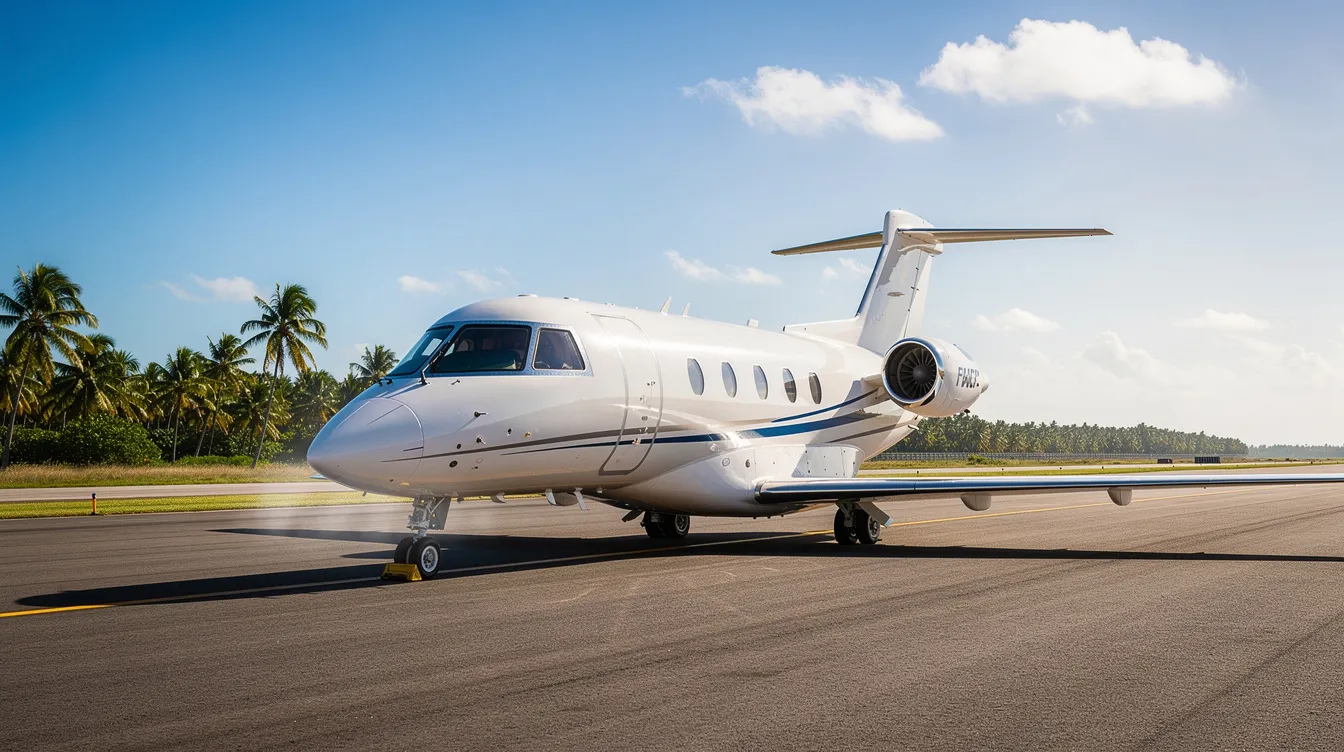
5
min read
Private Jet to Dominican Republic: Charter Guide, Airports, and Pricing
This comprehensive guide explores private jet travel to the Dominican Republic, detailing the benefits, booking process, and key airports. Whether for leisure or business, flying private offers flexibility, comfort, and access to multiple destinations, making it an ideal choice for travelers seeking efficiency and luxury.
Read MoreStay updated with our latest insights and tips to elevate your journey with us.
MEMBERSHIPS AND ASSOCIATIONS



Disclaimer: Jettly operates as a charter broker, offering access to a global digital jet charter marketplace. Jettly is not a direct air carrier and does not own or operate aircraft. All advertised flights are conducted by third-party air carriers that are fully licensed and hold the appropriate Part 135 or Part 121 certifications issued by the Federal Aviation Administration (FAA) or equivalent regulatory authorities under U.S. or foreign law. Jettly complies fully with the U.S. Department of Transportation's Part 295 and Part 298 Charter Broker regulations. Jettly does not carry additional liability insurance. Passengers are covered by aircraft operator insurance. TICO: 50023770


