



Login
Get Instant Pricing On 23,000+ Aircraft

>
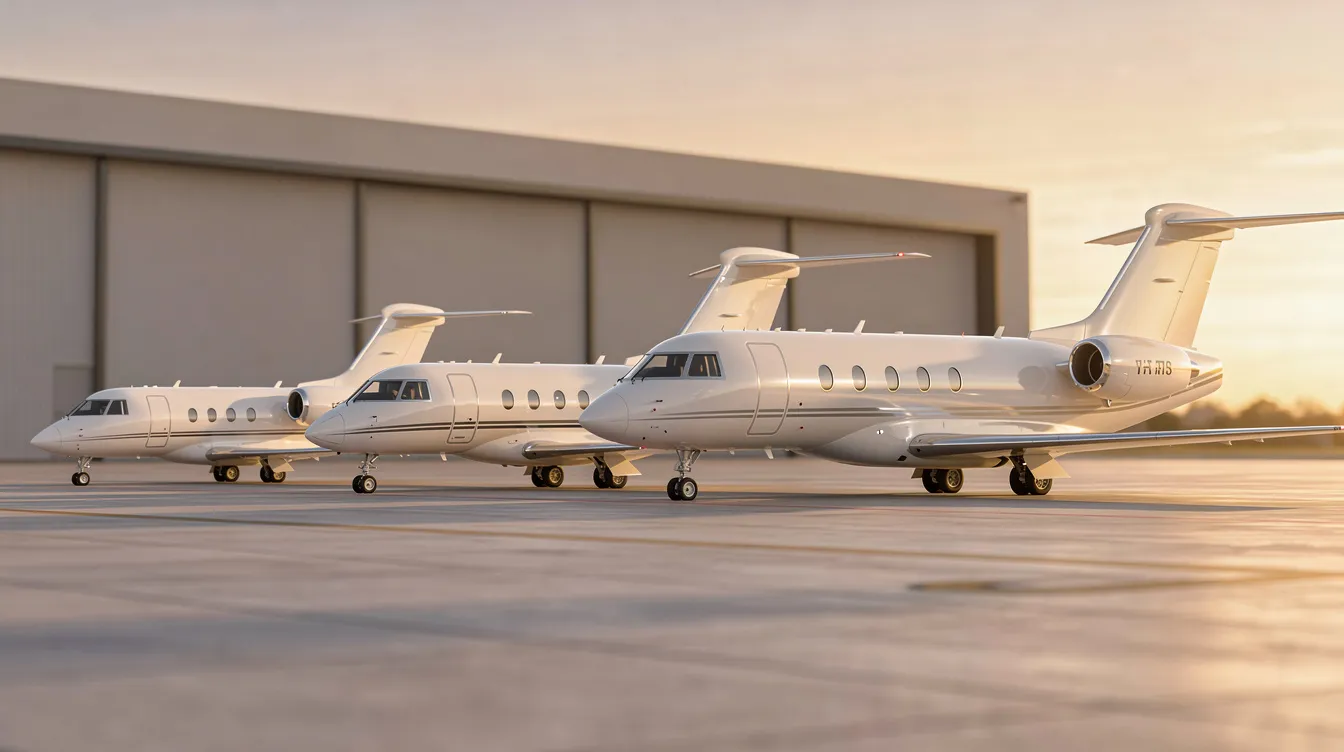
Private jet types get much easier to compare once you stop thinking about status and start thinking about mission. The main private jet size categories are very light jets, light jets, midsize jets, super-midsize jets, and heavy (large-cabin) jets, each trading off cabin space, nonstop range, runway access, baggage volume, and onboard amenities like Wi-Fi and an enclosed lavatory. This guide maps every class to the trips people actually book so you can match seats, realistic range, runway access, baggage, and restroom privacy to the right aircraft. Jettly, a charter broker with access to more than 23,000 aircraft across 190-plus countries, works from these same categories to help you compare real options side by side.
Updated October 30, 2026. Reviewed by Jettly's safety and compliance desk for broker and operator accuracy.
If you remember only one thing, remember that private jet classes aren't standardized like shoe sizes, so the safest way to choose is to match your mission to a category, then confirm seats, baggage, Wi-Fi, and the lavatory on the specific aircraft offered. Brochures quote maximum numbers. Charter planning works with real-world figures that shrink once you add passengers, luggage, headwinds, and required fuel reserves.
Very light jets move small groups on short regional routes at the lowest jet-tier hourly rate.
Light jets add cabin room and range for short to mid-length executive trips.
Midsize jets widen the cabin and improve baggage and lavatory privacy for roughly seven to nine passengers.
Super-midsize jets reach transcontinental range with a larger, frequently stand-up cabin.
Heavy (large-cabin) jets carry bigger groups on long legs with multi-zone cabins and an enclosed lavatory as standard.
Seat count, range, baggage, Wi-Fi, and restroom type all vary by the exact tail number and its interior, so treat category labels as a starting point, not a guarantee. The right category follows your mission: distance, airports, baggage, and amenities. Status has nothing to do with it.
Planning range is the conservative nonstop distance an aircraft can typically fly in charter conditions after accounting for passengers, baggage, headwinds, routing, and required fuel reserves.
Jettly publishes indicative on-demand hourly rate bands by category: turboprops at $1,800 to $2,800, very light jets at $2,000 to $3,500, light jets at $2,800 to $4,500, midsize and super-midsize at $4,000 to $8,000, and heavy or ultra-long-range jets at $8,000 to $15,000 and up. Use these as market signposts, then get a route-specific quote.
|
Category |
Comfortable seats |
Typical planning range |
Runway access |
Baggage fit |
Wi-Fi expectation |
Lavatory |
Best for |
|---|---|---|---|---|---|---|---|
|
Very light |
4-6 |
~1,000-1,300 nm |
Tier A |
Small |
Rare |
Compact |
Short regional hops |
|
Light |
6-8 |
~1,500-2,000 nm |
Tier A-B |
Small to medium |
Sometimes |
Compact to enclosed |
Short executive trips |
|
Midsize |
7-9 |
~2,000-2,800 nm |
Tier B |
Medium |
Often |
Often enclosed |
Comfort and value |
|
Super-midsize |
8-10 |
~3,000-3,600 nm |
Tier B-C |
Medium to bulky |
Often |
Usually enclosed |
Coast-to-coast |
|
Heavy |
10-16 |
~4,000-7,000+ nm |
Tier C |
Bulky |
Typical |
Enclosed |
International, large groups |
All values are typical ranges; confirm aircraft-specific details before booking. New to this? Our guide to first time flying private covers what to expect at the terminal and onboard.
Comparing light vs midsize vs super-midsize vs heavy jets comes down to what changes for your trip: comfort, restroom privacy, baggage, airport access, and how predictable the price feels.
Light jets seat about six to eight, suit trips up to roughly two to three hours, feel snug but efficient, often include a compact restroom, and handle modest baggage.
Midsize jets seat about seven to nine, cover mid-length trips comfortably, give you a wider cabin and better work surfaces, usually add a more private lavatory, and swallow bulkier bags.
Super-midsize jets seat about eight to ten, open up coast-to-coast flying, often feel like a stand-up cabin, typically include an enclosed lavatory, and carry golf or ski bags with less fuss.
Heavy jets seat about ten to sixteen, fly long international legs, offer multi-zone cabins, include an enclosed lavatory as standard, and provide the most baggage volume.
An eight-seat jet may seat eight on paper, yet not eight adults with full luggage and long legs on a four-hour leg. Usable capacity matters more than the certified maximum.
Usable passenger capacity is the number of passengers a jet can carry comfortably on your specific trip once baggage, fuel needs, and cabin layout are considered, not just the maximum certified seats.
A stand-up cabin, a truly enclosed lavatory, and a real work setup with facing seats and a table become common starting at midsize and get more consistent at super-midsize and heavy. Heavy jets cost more for concrete reasons: more cabin volume, longer range capability, often multi-zone layouts, sometimes a dedicated flight attendant, and higher fuel and maintenance costs per hour. If you're choosing between categories, the upgrade is usually worth it when you need a more private restroom, noticeably more baggage volume, or a longer nonstop leg with fewer compromises.
|
Upgrade trigger |
Likely category |
|---|---|
|
Lots of luggage for the group |
Midsize or larger |
|
Golf clubs or ski bags |
Midsize or super-midsize |
|
Truly enclosed lavatory |
Midsize or larger |
|
Coast-to-coast nonstop |
Super-midsize or heavy |
|
Consistent working Wi-Fi |
Midsize or larger |
Our full guide to renting a private jet covers the booking steps once you have picked a class.
Specs you see online are maximums under ideal conditions. What you can actually fly depends on your passengers, bags, the weather, and the airports on your route.
Published range assumes favorable conditions. Headwinds, required alternates, fuel reserves, de-icing, and air-traffic routing all trim it. Add passengers and baggage, and payload limits can cut range further, since weight and fuel compete for the same budget.
Runway performance shifts with airport elevation, temperature, runway surface condition, nearby obstacles, and takeoff or landing weight. A jet that clears a short runway on a cool morning at sea level may need far more pavement on a hot afternoon at altitude. That is why private jet runway requirements cannot be reduced to a single number per aircraft category.
Onboard amenities follow the interior configuration, not the model name. Wi-Fi may be absent, slow, or pay-per-use. Lavatory privacy ranges from a curtained corner to a fully walled room with a solid door.
Jettly operates as a charter broker, arranging flights that third-party carriers actually operate under FAA Part 135 or FAA Part 121 rules (or the foreign equivalent). The operating carrier holds operational control, which sits at the center of private jet safety and is worth confirming on every trip.
The operating carrier is the certified air operator that provides the aircraft and crew and retains operational control of the flight; a charter broker arranges the trip but does not operate the aircraft.
Jettly recommends booking 24 to 72 hours ahead for the best availability, with same-day charters sometimes possible in roughly three to six hours, depending on aircraft positioning and crew readiness. Treat every jet offer as aircraft-specific: confirm the exact tail number's seating layout, baggage limits, Wi-Fi system, and lavatory type before you sign the charter agreement.
|
Factor |
What you see online |
What to confirm for your trip |
|---|---|---|
|
Seats |
Maximum certified seats |
Comfortable seats with your bags and legroom |
|
Range |
Brochure maximum |
Nonstop feasibility with your payload and winds |
|
Runway |
One sample figure |
Performance at your airports' elevation, temperature, and weight |
|
Baggage |
Total volume |
Whether your longest items physically fit |
|
Wi-Fi |
"Wi-Fi available" |
The system, speed, coverage, and cost on your route |
|
Restroom |
"Lavatory" |
Compact or fully enclosed |
Very light jets are built for regional city-to-city travel with a small group and light luggage. Most seat four to six people in comfort. The certified maximum can look higher, yet a full load on a two-hour leg starts to feel tight once everyone brings a bag.
Lavatories in this class tend to be compact with limited privacy, so confirm the setup if a real restroom matters. Runway access is often a strength here, though it still depends on the specific aircraft and the day's conditions. The Cessna Citation M2 is one representative very light jet; verify its exact seating, range, and baggage figures for your trip rather than assuming they apply to the whole class.
A very light jet (VLJ) is a small private jet category designed for short-to-mid regional flights, typically carrying about 4 to 6 passengers in comfort with lower hourly charter costs than larger jets.
Jettly lists very light jets in the $2,000 to $3,500 per hour range, which is frequently the entry point to private jet charter. For more ways to save on charter pricing, smaller categories paired with flexible timing do most of the work. Private jet baggage capacity is tightest here, so count bags before you commit. A VLJ is often the best value when you're flying a short route with a small group, but it's usually the first category to run out of baggage space for bulky items like golf clubs.
Quick fit check for a VLJ:
Passenger count (four to six is the comfort zone)
Bags per person
Any bulky items (golf clubs, skis, strollers)
Desired lavatory privacy
Need for Wi-Fi
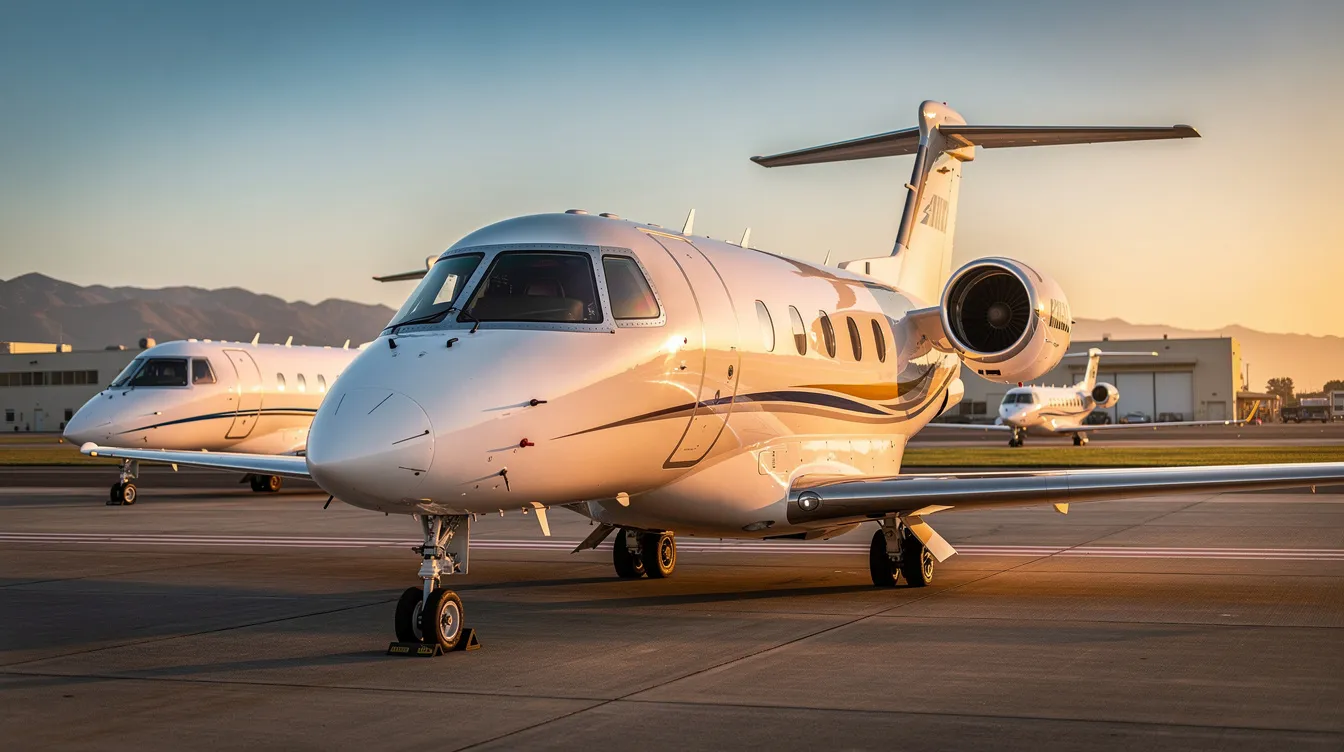
A light jet is the cost-efficient step up from a very light jet, adding cabin room and range without midsize pricing. Light jets are among the most requested aircraft in private jet charter.
Light jets seat about six to eight passengers in comfort. Cabin width and height shape how that feels; most are sit-down cabins rather than stand-up. Range runs from regional to mid-length, and on longer legs or into strong headwinds, a fuel stop is sometimes needed, which is worth checking before you book.
Many light jets include a restroom, yet privacy and enclosure vary from model to model. State your expectation and confirm it. Baggage splits between internal and external compartments, and golf clubs are the classic constraint, since their length does not always fit even when total weight is fine. A model-by-model look such as our light jet comparison shows how configurations change the baggage and restroom picture.
A light jet is a private jet category typically used for short to mid-range trips, often seating about 6 to 8 passengers in comfort with lower charter costs than midsize or larger aircraft.
Jettly places light jets in the $2,800 to $4,500 per hour band. The Learjet 70 is one example of a light jet; treat its published specs as model-specific and verify them at booking. Private jet Wi-Fi is not guaranteed in this class, so ask about the system before you count on a working connection. Light jets are ideal when you want private jet speed and flexibility without midsize costs, but if you need bulky baggage plus a truly private lavatory, midsize is often the smarter upgrade.
|
Good at |
Watch-outs |
|---|---|
|
Cost efficiency |
Baggage volume for bulky items |
|
Speed and flexibility |
Stand-up cabin uncommon |
|
Short-runway airport access |
Wi-Fi not guaranteed |
For eight people, midsize is often the value baseline, unless baggage or amenities push you toward super-midsize. More cabin means a wider aisle, better seat spacing, and usable tables for working or dining.
An enclosed lavatory is more likely here than in smaller classes, though still worth confirming. Wi-Fi is more common on midsize jets than on light jets, yet still aircraft-specific. Ask about the provider, the expected speed, and whether coverage holds on your route. Baggage handling improves too, which makes midsize a frequent pick for golf trips and gear-heavy getaways.
A midsize jet is a private jet category that typically seats about 7 to 9 passengers comfortably and is chosen for a stronger balance of cabin comfort, baggage space, and nonstop capability than light jets.
Jettly lists midsize and super-midsize jets in the $4,000 to $8,000 per hour band. Its cost calculator folds in the U.S. 7.5 percent federal excise tax and per-passenger segment fees, so the estimate reflects more than the raw hourly rate. For a corporate jet charter carrying a leadership team, midsize often checks the boxes for seating, work space, and budget. The Embraer Legacy 450 is one midsize jet example worth studying for cabin and baggage layout.
For most groups of 8, midsize is the don't-overpay category; upgrade to super-midsize when you need more nonstop range, more baggage for bulky items, or a more comfortable work setup.
|
Question |
Light |
Midsize |
Super-midsize |
|---|---|---|---|
|
Comfortable for 8? |
Must confirm |
Typical |
Typical |
|
Enclosed lavatory likely? |
Sometimes |
Often |
Usually |
|
Bulky baggage likely? |
Must confirm |
Often |
Usually |
|
Wi-Fi likely? |
Sometimes |
Often |
Often |
Picture a nonstop from New York to Los Angeles with working Wi-Fi, an enclosed lavatory, and room for everyone's bags. That is the super-midsize sweet spot. This class is worth it when you want transcontinental range and a comfortable working cabin without heavy-jet costs.
These jets are a common transcontinental choice. Verify nonstop feasibility for your exact route, winds, and payload, since a full cabin and strong headwinds can still force a stop. The cabin is more likely to feel like a stand-up cabin, with better work surfaces and seat spacing. An enclosed lavatory is common here, which matters a lot on four to six hour flights.
The Bombardier Challenger 350 and 3500 are common super-midsize examples, and the Cessna Citation X is a notably fast option in this space; confirm specs per tail number. For runway detail, see our Challenger 350 runway breakdown, which shows how weight and conditions change the pavement you need.
A super-midsize jet is a private jet category that bridges midsize and heavy jets, typically offering a larger cabin, more baggage capacity, and frequent transcontinental nonstop capability for about 8 to 10 passengers.
Super-midsize sits in Jettly's $4,000 to $8,000 per hour band, with narrower sub-ranges set by route and availability. Super-midsize jets are often the best value for coast-to-coast private jet charter because they reduce fuel stops and deliver a more comfortable cabin and lavatory experience than smaller categories.
Upgrade from midsize to super-midsize when:
The nonstop leg is long (transcontinental or farther)
You need facing seats and a real work surface for several hours
Baggage includes bulky items for the whole group
Restroom privacy matters on a four to six hour flight
You want to cut the odds of a fuel stop
Heavy jets are tools for long missions, not just bigger cabins for show. A heavy jet comfortably carries ten to sixteen passengers, depending on layout, and its cabin usually splits into zones for working, dining, and resting.
Range suits long international legs with fewer stops. Ultra-long-range jets are a subset built for the farthest nonstops. An enclosed lavatory is standard. Some aircraft add more advanced connectivity, and certain layouts convert to sleeping berths for overnight flights. The Gulfstream G550, Bombardier Global 6000, and Dassault Falcon 7X are representative long-range aircraft; verify current specs at booking rather than treating one model as the whole class.
A heavy (large-cabin) jet is a private jet category built for longer range and larger groups, typically offering a spacious multi-zone cabin, higher baggage capacity, and an enclosed lavatory as a standard expectation.
Jettly lists heavy and ultra-long-range jets at $8,000 to $15,000 and up per hour. Book a heavy jet when the mission demands it, international legs, larger groups, or true cabin zoning, because you're paying for capability (range plus space), not just a bigger aircraft.
Heavy is required when: international legs run beyond super-midsize range, the group tops ten, you want genuine cabin zoning, or you need sleeping berths for overnight flights.
Super-midsize is enough when: coast-to-coast is your longest leg, the group is eight to ten, and you want an enclosed lavatory and work cabin without heavy-jet cost.
For deeper reading on this class, see our heavy jets guide.
This is the checklist that prevents wrong-aircraft bookings. Run your trip against all six factors before you accept a quote.
Seats. Comfortable seating beats maximum seating every time. Eight passengers plus golf clubs can push you up a category, even when the private jet seats technically fit.
Range. Planning range, not brochure range, decides your stops. On a headwind day with a full cabin, a jet rated for your distance on paper may still need fuel along the way. For the mechanics behind this, see our flight planning basics.
Runway. Runway access tiers give a quick sense of flexibility. Tier A aircraft reach the widest set of airports, including short strips; Tier C aircraft need longer runways. The exact numbers still shift with elevation, temperature, weight, and conditions, so confirm private jet runway requirements for your specific airports.
Baggage. Private jet baggage capacity is about shape as much as volume. Golf bags and skis are long; a compartment with enough cubic feet can still reject them. Ask about internal versus external holds and maximum bag dimensions.
Wi-Fi. There is a difference between a jet that has Wi-Fi hardware and one that delivers usable video-call speeds. Coverage can drop over oceans and remote areas. Confirm the private jet Wi-Fi system and its real-world performance.
Restroom. Lavatories range from none to compact to fully enclosed. On legs over three hours, or with a mixed group, an enclosed lavatory changes the experience.
An enclosed lavatory is a fully walled, private restroom space with a solid door; it is materially different from compact or curtained facilities sometimes found on smaller jets.
Bulky items that often force an aircraft category upgrade: golf bags, ski and snowboard bags, large hard suitcases, pet crates, strollers and car seats, bicycles, hunting or fishing gear, large instrument cases, scuba gear, and oversized camera equipment. Jettly's marketplace spans more than 23,000 aircraft across 190-plus countries, which widens the odds of matching all six factors on one tail number. If two aircraft categories both work on paper, runway access and baggage fit are often the real tie-breakers, not cruise speed.
|
Class |
Comfortable seats |
Planning range |
Runway tier |
Baggage notes |
Wi-Fi |
Lavatory |
Best mission |
|---|---|---|---|---|---|---|---|
|
Very light |
4-6 |
~1,000-1,300 nm |
Tier A |
Small bags; bulky items rarely fit |
Rare |
Compact |
Short regional hops |
|
Light |
6-8 |
~1,500-2,000 nm |
Tier A-B |
Golf clubs must confirm |
Sometimes |
Compact to enclosed |
Short executive trips |
|
Midsize |
7-9 |
~2,000-2,800 nm |
Tier B |
Handles most golf and ski bags |
Often |
Often enclosed |
Comfort and value |
|
Super-midsize |
8-10 |
~3,000-3,600 nm |
Tier B-C |
Bulky items usually fit |
Often |
Usually enclosed |
Coast-to-coast with work |
|
Heavy |
10-16 |
~4,000-7,000+ nm |
Tier C |
Most volume |
Typical |
Enclosed standard |
International, large groups |
Prices vary by route, date, aircraft availability, and operator, so use these as planning ranges rather than quotes. Private jet sizes map to fairly consistent hourly bands, but the final total depends on a lot more than the clock.
|
Category |
Typical hourly band |
|---|---|
|
Turboprop |
$1,800 - $2,800 |
|
Very light jet |
$2,000 - $3,500 |
|
Light jet |
$2,800 - $4,500 |
|
Midsize / super-midsize |
$4,000 - $8,000 |
|
Heavy / ultra-long-range |
$8,000 - $15,000+ |
For context on how the clock turns into a total, our private jet hourly rates guide breaks down the mechanics. An all-in price can include taxes, segment fees, overnight crew costs, de-icing, catering, and ground transport. A low hourly rate with these stripped out is not the bargain it looks like.
An occupied hourly rate is billing based on your flight time from takeoff to landing (not positioning legs), which can make costs more predictable than models that bill ferry time.
Before comparing two quotes, confirm the billable-hours logic, any trip minimums, which fees are bundled, cancellation terms, and whether taxes and segment fees are already in the total. Jettly's charter cost calculator factors flight distance, billable hours, the 7.5 percent federal excise tax, and per-passenger segment fees around $4.50 to $5.20, and returns estimates rather than binding quotes. Run your route through the charter cost calculator to get an estimate you can plan around.
Jettly's instant-quote tool handles multi-city, round-trip, and one-way itineraries, its iOS and Android apps keep everything in one place, and its membership programs bill at fixed hourly rates for more predictable on-demand charter costs. The most accurate way to compare private jet charter quotes is to confirm what hours are billable, what fees are included, and whether taxes and segment fees are already in the total.
What changes price fastest:
Peak travel dates and holidays
Short-notice bookings
One-way trips that require repositioning
Overnight stays and crew costs
International permits and handling
Start with mission constraints, then layer in comfort. Here is a five-step selection process that keeps you from overbuying or underbooking.
Count passengers and set a comfort target. Decide whether everyone needs a workspace or just a seat to relax.
Map route distance and your nonstop preference. A nonstop coast-to-coast leg rules out some smaller jets on busy or windy days.
Check departure and arrival runway constraints. Short runways, high elevation, or hot weather narrow your options.
List baggage and bulky items. Golf bags, skis, strollers, and pet crates often decide the category.
Set required amenities. Decide whether private jet Wi-Fi and a fully enclosed lavatory are must-haves.
Fix your budget and flexibility window. A wider departure window can lower the price.
A runway access tier is a simplified way to describe how flexible an aircraft is with shorter runways; the exact takeoff and landing distances still depend on weight, elevation, temperature, and runway conditions.
Start at midsize for comfort and value. Four passengers fit easily, the lavatory is more likely enclosed, and golf clubs travel without drama. Drop to a light jet if the flight is short and the clubs fit the specific hold, which saves money. Move up to super-midsize if the leg is long or you want a roomier cabin. To keep a shared trip affordable, you can split charter costs so each couple receives its own invoice.
Midsize or super-midsize fits most eight-person teams. Confirm the Wi-Fi system and speed, check for facing seats with a table, and ask about billing structure for clean accounting. Our corporate aircraft guide covers recurring-travel setups in detail. Jettly's membership programs bill point to point, with the clock starting at takeoff and stopping at landing, no fuel surcharges, and no positioning fees, which makes costs easier to predict for finance teams. For most 8-person teams, start your search in midsize or super-midsize, then pick the specific aircraft based on Wi-Fi capability, baggage fit, and whether the lavatory is fully enclosed.
On the same eight-passenger coast-to-coast route, a midsize jet may need a fuel stop on a windy day, carries bags well but not lavishly, and usually costs less per hour. A super-midsize jet improves nonstop odds, swallows more baggage, more often has an enclosed lavatory, and costs more. The right pick is the smaller category that still meets your nonstop, baggage, and restroom needs.
|
Group and trip |
Recommended category |
Why |
Must confirm |
|---|---|---|---|
|
2-4, regional |
Very light or light |
Lowest cost, best airport access |
Baggage fit, lavatory privacy |
|
4-6, cross-country |
Midsize or super-midsize |
Nonstop comfort, enclosed lavatory |
Nonstop feasibility, Wi-Fi |
|
6-8, regional |
Light or midsize |
Balance of cost and cabin |
Comfortable seats with bags |
|
8-10, cross-country |
Super-midsize |
Nonstop odds, baggage, work cabin |
Runway at both airports |
|
10-16, international / overnight |
Heavy |
Range, zones, rest space |
Permits, crew rest, catering |
Verify three things before you book: the operator's certification, the aircraft's suitability for your trip, and transparent billing terms. A broker arranges the trip; the operating carrier provides the aircraft and crew and holds operational control. Knowing who that carrier is matters. See how charter works for the full broker and operator breakdown.
Ask for the Part 135 or Part 121 certificate, pilot experience requirements, a high-level view of maintenance tracking, and third-party safety ratings such as ARGUS or Wyvern. Ratings are signals, not guarantees.
A safety rating (such as ARGUS or Wyvern) is a third-party assessment signal; it supports due diligence but does not replace reviewing the specific operator, aircraft, and mission requirements.
Jettly is a DOT-compliant charter broker that works only with certified operators holding ARGUS or Wyvern ratings, monitors compliance, and uses independent safety auditors. Jettly does not carry additional liability insurance; passengers are covered by the aircraft operator's insurance. Each flight is confirmed only after you sign the charter agreement and payment is secured. To verify a private jet charter's safety and legitimacy, identify the operating carrier and confirm its certification and safety standing, then confirm aircraft-specific details like runway performance, Wi-Fi, and the lavatory type.
|
Item to verify |
Why it matters |
Where to find it |
|---|---|---|
|
Operating carrier |
Holds operational control and certification |
Charter agreement, operator confirmation |
|
Part 135/121 certificate |
Legal authority to fly charter |
Operator confirmation |
|
Seating layout |
Comfort for your group and bags |
Aircraft spec sheet |
|
Baggage limit and dimensions |
Whether bulky items fit |
Aircraft spec sheet, operator |
|
Runway feasibility |
Safe use of your airports |
Operator, flight planning |
|
Wi-Fi system |
Usable connectivity on your route |
Aircraft spec sheet, operator |
|
Lavatory type |
Restroom privacy |
Aircraft spec sheet |
|
Total cost with taxes and fees |
True apples-to-apples price |
Quote, charter agreement |
|
Cancellation terms |
Your risk if plans change |
Charter agreement |
This same checklist serves personal travelers and corporate travel managers across every aircraft category in private aviation.
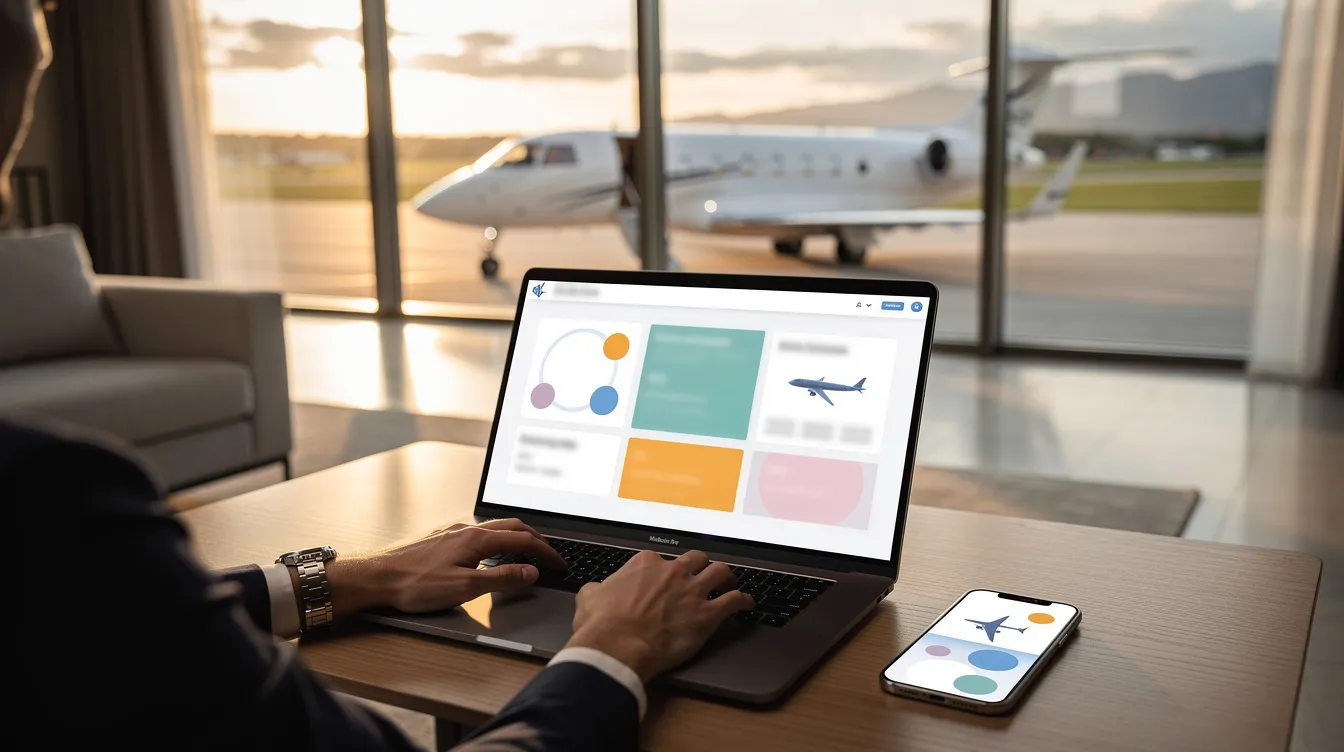
Jettly turns a category choice into a booked aircraft through a six-step flow: request a flight, receive aircraft options, select one, confirm with a signed charter agreement and secured payment, coordinate pre-flight details, and depart from the private terminal. Flights are operated by properly certified third-party carriers; Jettly arranges and coordinates the trip.
With access to more than 23,000 aircraft across 190-plus countries, the marketplace gives you real options to compare rather than a single fleet spanning every category of private jet types and private jet sizes. The instant-quote tool handles multi-city, round-trip, and one-way itineraries, and the iOS and Android apps keep booking and trip management in one place.
For frequent and corporate flyers, Jettly's membership programs bill point to point at fixed hourly rates, with no fuel surcharges and no positioning fees. An optional flexible departure discount rewards a wider departure window, and a complimentary upgrade moves you into a larger available aircraft at no extra charge when one is free at departure.
A charter agreement is the contract that lists the aircraft, itinerary, operator terms, and total cost; your flight is confirmed after it is signed and payment is secured.
Questions go to +1-866-448-2358 or departures@jettly.com, with support available around the clock. For cost drivers beyond the hourly rate, our operating cost breakdown helps frequent flyers plan. The fastest way to get the right jet is to start with the right category, then compare specific aircraft options side by side, confirming baggage fit, Wi-Fi capability, and lavatory privacy before you book.
The main private jet sizes are very light, light, midsize, super-midsize, and heavy (large-cabin) jets, and the best choice depends on your passenger count, nonstop distance, baggage, and amenity needs. Categories overlap at the edges, so a top-end light jet can rival an entry midsize on some specs. Confirm the details on the exact aircraft offered before booking.
As you move up from light to midsize to super-midsize to heavy, you usually gain cabin space, baggage capacity, nonstop range, and lavatory privacy; costs and runway needs tend to increase at the same time. The upgrade usually pays off when you need bulky baggage space, a coast-to-coast nonstop, or a reliable work-and-Wi-Fi setup.
In real charter planning, very light jets often fit about 4 to 6 comfortably, light jets about 6 to 8, midsize about 7 to 9, super-midsize about 8 to 10 or more, and heavy jets about 10 to 16, depending on the exact aircraft and layout. Maximum certified seating can be higher, but baggage and legroom usually set the practical limit.
How far a private jet can fly nonstop depends on the aircraft, passenger and baggage load, winds, routing, and fuel reserves, so the same jet can have different no-stop capability on different days. Use the planning-range bands in the matrix above as a guide, then confirm nonstop feasibility for your exact route with the operator.
Some private jets have Wi-Fi and some don't, and performance varies, so you should confirm the exact Wi-Fi system and coverage area on the specific aircraft offered. Ask about the provider, the expected speed, whether it is included or pay-per-use, and whether coverage holds over water or remote areas.
Many charter jets have a restroom, but the level of privacy ranges from compact facilities to fully enclosed lavatories, so you should confirm the lavatory type before booking. This matters most on legs over two to three hours and for mixed groups who want a private, fully enclosed space.
There isn't one runway length that fits a whole jet category; runway needs depend on the specific aircraft, airport elevation, temperature, runway conditions, obstacles, and takeoff and landing weight. Use runway access tiers for a quick read, then verify performance for your exact departure and arrival airports.
Not always. Many jet categories cruise at similar speeds, and door-to-door time often depends more on airport access, taxi time, and routing than on top speed. A smaller jet that uses a closer airport can beat a larger, faster one overall.
Typical hourly charter prices often run about $2,000 to $3,500 for very light jets, $2,800 to $4,500 for light jets, $4,000 to $8,000 for midsize and super-midsize, and $8,000 to $15,000 or more for heavy jets, depending on route and availability. The most accurate number comes from a route-specific quote that includes taxes and fees.
To compare quotes fairly, confirm what flight time is billable, which fees are included, whether taxes and segment fees are included, and who the operating carrier is. Check these points on every quote:
Billable hours logic and any trip minimums
Included versus extra fees (crew, de-icing, catering, ground)
Taxes and per-passenger segment fees in the total
Cancellation and change terms
The operating carrier and its certification
Picking among private jet types is a mission exercise, not a status one. Match passengers, distance, airports, baggage, and amenities to a category, then confirm seats, Wi-Fi, and the lavatory on the specific aircraft. Light jets win on short, light trips; midsize is the value sweet spot for eight; super-midsize handles coast-to-coast without heavy-jet pricing; heavy jets exist for long international missions and larger groups. Ready to pick the right jet size? Use Jettly to compare real aircraft options for your route, and confirm baggage fit, Wi-Fi capability, and lavatory privacy before you book.
What Are The Different Classes of Private Aircraft? (flyxo.com) - General class definitions used as a category benchmark.
Executive Private Jet Size Categories (stratosjets.com) - Category framing and general range and capacity context.
8 Passenger Private Jet: A Guide to Cost and Models (flyhangar7.com) - Eight-seat planning and cost discussion benchmark.
Large Private Jets (netjets.com) - Large and long-range fleet category positioning benchmark.
Jettly published on-demand hourly rate bands by aircraft category (indicative ranges; verify via live quotes).
Jettly broker disclosure: flights operated by certified third-party carriers under Part 135/121 or foreign equivalent.
Jettly booking lead-time guidance, charter cost calculator methodology, marketplace scale, membership billing mechanics, safety positioning, and booking steps (jettly.com).
Share this post:
Jay Franco Serevilla
Nov 1, 2026
|
5
min read
Discover tips and trends in the industry.
5
min read
Delta Unlimited Flight Pass: What Exists Today, What's a Myth, and Smarter Alternatives
The Delta Unlimited Flight Pass is a myth; Delta Air Lines has never offered a true unlimited flight pass for individual consumers. Instead, frequent travelers can utilize Medallion status, Sky Club access, and co-branded credit cards to enhance their flying experience. For those seeking more flexibility, private jet charters like Jettly offer alternatives without the constraints of traditional airline passes.
Read More
5
min read
flights for dogs
Flying with dogs on private jets offers a stress-free alternative to commercial airlines, allowing pets of all sizes to travel in the cabin with their owners. Private charters provide tailored aircraft options, ensuring comfort and safety while bypassing the risks associated with cargo travel. Jettly simplifies the booking process for pet-friendly flights, making it easier for pet owners to travel with their furry companions.
Read MoreStay updated with our latest insights and tips to elevate your journey with us.
MEMBERSHIPS AND ASSOCIATIONS



Disclaimer: Jettly operates as a charter broker, offering access to a global digital jet charter marketplace. Jettly is not a direct air carrier and does not own or operate aircraft. All advertised flights are conducted by third-party air carriers that are fully licensed and hold the appropriate Part 135 or Part 121 certifications issued by the Federal Aviation Administration (FAA) or equivalent regulatory authorities under U.S. or foreign law. Jettly complies fully with the U.S. Department of Transportation's Part 295 and Part 298 Charter Broker regulations. Jettly does not carry additional liability insurance. Passengers are covered by aircraft operator insurance. TICO: 50023770


