



Login
Get Instant Pricing On 23,000+ Aircraft

>

Private plane flight times vary by distance, aircraft type, routing, and weather, but they are usually much shorter door-to-door than commercial travel. A midsize jet covers New York to Miami in roughly 2.5 to 3 hours. Los Angeles to Las Vegas in a light jet takes about 45 to 60 minutes. New York to London runs 6.5 to 7 hours eastbound in a heavy jet. On more complex routes, private aviation can cut total travel time from 12 hours to as few as 3.5 hours.
For corporate executives, high-net-worth travelers, and families who want the flexibility and convenience of private flying without the burden of ownership, accurate flight-time estimates shape scheduling, aircraft choice, and trip cost. Jettly, a digital private jet charter marketplace with access to over 20,000 aircraft, provides instant, aircraft-specific time estimates and route options to help travelers plan with confidence. This guide explains how private plane flight times are calculated, what changes them in real-world conditions, which popular routes to benchmark, and why getting the estimate right matters for both itinerary planning and budget control.
Private jet flight duration is primarily influenced by distance, aircraft type, and real-time conditions like winds aloft and routing, and understanding the broader private charter airline landscape helps put these variables in context.
Private planes often bypass large hub connections and layovers, and private jets access over 5,000 airports, reducing ground transport time significantly, especially when paired with modern private jet tracking and airport tools.
Private jet flights generally save 50% to 70% in total travel time compared to commercial options, mostly due to faster ground procedures and more direct routing, making platforms like Jettly an attractive NetJets alternative for time-sensitive travelers.
Private jets maintain a 95% on-time performance rate, making schedules more predictable.
Jettly's platform uses a private jet flight time calculator with aircraft-specific performance data to deliver more accurate flight times than generic tools.
Accurate flight times help travelers plan meetings, arrange ground transportation, and estimate final cost based on hourly charter rates when selecting from a broad range of private charter aircraft.
In private aviation, three distinct time measurements matter:
Flight time covers wheels-off to wheels-on — the period the aircraft is airborne.
Block time includes everything from brake release at departure through taxi, takeoff, cruise, landing, and taxi to parking.
Door-to-door time captures the entire journey from your home or office to your final destination.
Private flyers typically arrive at a fixed-base operator (FBO) just 15 to 30 minutes before departure. Private jets allow departure just 15 minutes before takeoff in many cases. Commercial Airlines usually require arriving 2 to 3 hours early for check-in and security. Ground time savings account for much of the total time advantage of private jets.
Consider a New York to Chicago business trip. The airborne time is roughly the same whether flying private or commercial - about 2 hours. But when you factor in airport procedures, security lines, and connections, flying private saves 2 to 3 hours overall. Flight durations for private jets depend on both physical and operational factors, and Jettly's estimates are based on realistic block times rather than cruise-only formulas.
Flight distance and the chosen flight route form the foundation of every time estimate. Planners start with great-circle distance — the shortest path between two locations over the Earth's surface - measured in nautical miles. However, actual routes are typically 3% to 5% longer due to airways, restricted airspace, and ATC instructions.
Some concrete great-circle distance examples:
|
Route |
Approx. Distance (NM) |
|---|---|
|
New York (KTEB) – London (EGGW) |
~3,000 |
|
Los Angeles (KVNY) – Las Vegas (KLAS) |
~210 |
|
New York – Miami |
~950–1,000 |
|
San Francisco – New York |
~2,250 |
Private jets can secure more direct routing than commercial flights, which often follow fixed airways and hub-and-spoke patterns. Flight routing flexibility reduces travel time compared to commercial flights. Private jets can also fly at altitudes above commercial traffic, accessing less congested airspace for straighter paths to departure and arrival points, and modern private jet tracking tools give operators and travelers better visibility into these routes.
Jettly's tools work as a distance calculator, airport locator, and flight route visualizer, showing users how distance calculations convert into time across different aircraft types.
There are two common approaches to estimate flight time for a private jet trip: manual calculation and using a dedicated flight time calculator.
Manual method:
Find the flight distance between two airports in nautical miles.
Choose the average cruising speed for your aircraft category.
Divide distance by cruise speed to get approximate airborne time.
Add 10% to 20% for climb, descent, and taxi.
Worked example: A 1,000 NM leg in a midsize jet cruising at 430 knots gives roughly 2.3 hours airborne. Add 20 to 30 minutes for taxi and procedures, and block time comes to approximately 2.6 to 2.7 hours.
Calculators use average cruising speeds and distances for estimates, but improve on the manual method significantly. Flight time calculators estimate durations based on aircraft type and also estimate costs based on aircraft type and distance. Advanced calculators integrate real-time weather data for accuracy, and private jet calculators can provide estimates for multi-stop flights.
Jettly's jet flight time calculator uses real operator data, actual flight times from comparable trips, and aircraft-specific performance data to provide precise estimates for both one-way and multi-leg itineraries — delivering better flight time accuracy than generic tools.
Accurate flight time estimates depend on far more than just origin and destination airport codes.
Departure and arrival airports: Choosing secondary airports like Teterboro instead of JFK, or Van Nuys instead of LAX, reduces taxi time considerably. Average taxi times at large U.S. hubs run about 27 minutes combined, compared to roughly 20 minutes at smaller airports.
Aircraft type and aircraft category: Private aircraft are categorized by size, weight, and engine power. Aircraft type significantly impacts flight time efficiency — a turboprop covers the same distance far slower than a heavy jet, and some light jets may require fuel stops that add 45 to 60 minutes per stop.
Weather and wind conditions: Jet streams and headwinds significantly affect flight durations. Weather can add 30 to 45 minutes to long-haul flights due to headwinds, and headwinds or tailwinds can alter flight times by 15% to 20% during long flights. Overall, weather conditions can extend flight times by 10% to 20%.
Travel date and wind patterns: Departure time affects winds aloft. Eastbound transatlantic flights benefit from tailwinds, while westbound legs face headwinds adding 30 to 60 minutes.
Passenger preferences: Choosing nonstop-only service, requiring shorter runway length capability, or specifying onboard services can all affect aircraft selection and therefore actual flight times.
Jettly's platform collects these inputs automatically to suggest suitable private charter aircraft and realistic ETAs for each proposed flight route, accounting for temporary flight restrictions and real-time weather.
Aircraft selection is one of the biggest drivers of private plane flight times and overall trip efficiency. Here are typical cruise speed ranges by aircraft category:
|
Category |
Cruise Speed |
Best For |
|---|---|---|
|
Turboprops / VLJs |
300–400 mph (~250–320 knots) |
Short trips under 1,000 NM |
|
Light jets |
450–500 mph (~400–520 knots) |
Regional flights up to 2,000 NM |
|
Midsize jets |
450–500 knots (Mach 0.75–0.82) |
Transcontinental flights |
|
Heavy / ultra-long-range jets |
470–560 mph (~500–550 knots) |
Long-haul and international trips |
Private jets typically cruise at speeds over 500 mph in the midsize category and above. Many mid-size to super-midsize private jets cruise at Mach 0.75 to 0.82. High-end private jets cruise at speeds comparable to commercial airliners, typically Mach 0.85 to 0.93, while commercial airliners cruise at roughly Mach 0.78 to 0.85. Ultra-long-range jets like the Gulfstream G650 can reach Mach 0.925. Cruise speeds for heavy jets can exceed 500 mph, making them suitable for long-haul flights.
Practical comparison: A 900 NM mission takes approximately 3.0 to 3.3 hours in a turboprop versus roughly 2.0 hours in a midsize jet. Private jet flights often have non-stop options if within range, reducing total flight length.
Payload, runway length, temperature, and airport elevation can alter climb performance and may force fuel stops. For long-haul and overwater missions, understanding whether private jets can fly internationally helps clarify which aircraft types are appropriate. Jettly helps travelers match their mission profile to the right aircraft category, balancing speed, range, passenger count, and final cost per hour.
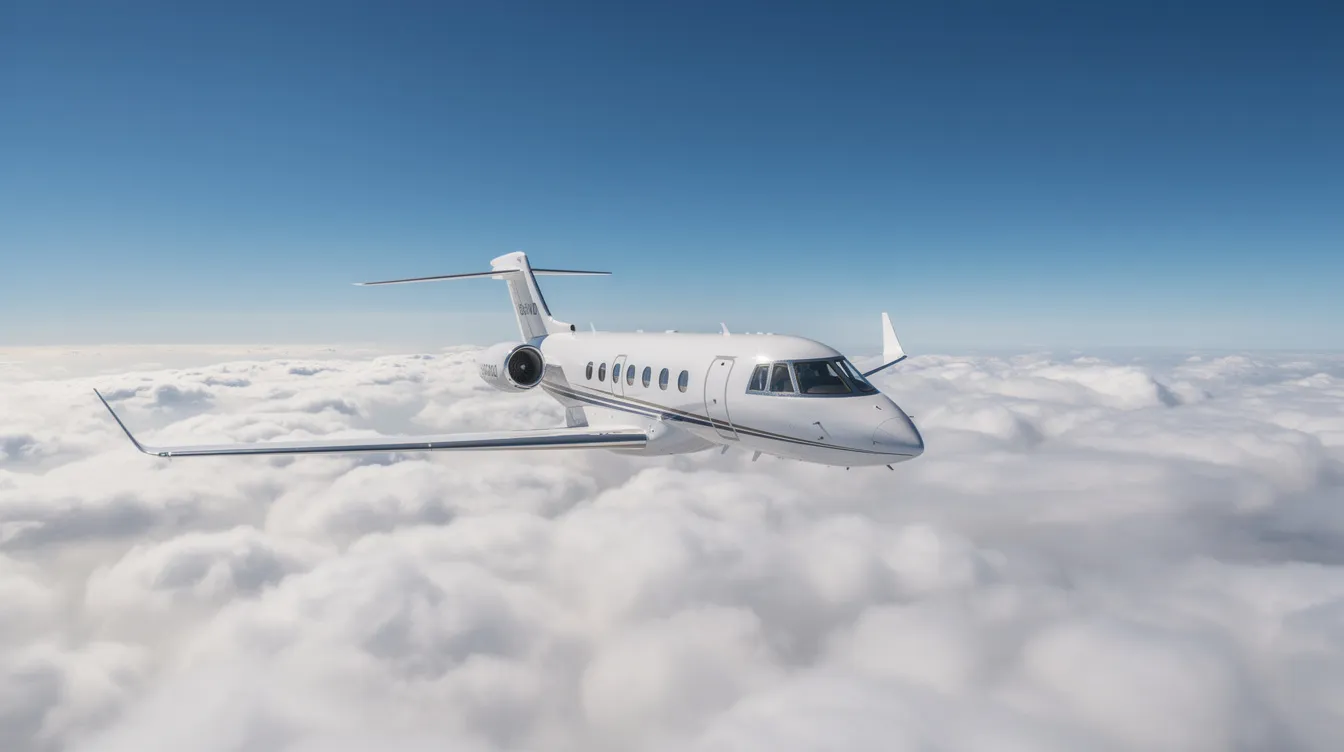
Here is a practical reference of real-world private plane flight times on popular routes:
|
Route |
Aircraft Type |
Approx. Flight Time |
|---|---|---|
|
New York – Miami |
Midsize jet |
2.5–3 hours |
|
Los Angeles – Las Vegas |
Light jet |
45–60 minutes |
|
Chicago – New York |
Super-midsize jet |
~2 hours |
|
Los Angeles – San Francisco |
Light jet |
~1 hour 15 min |
|
San Francisco – New York |
Heavy jet |
4.5–5 hours |
|
New York – London (eastbound) |
Heavy jet |
6.5–7 hours |
|
London – New York (westbound) |
Heavy jet |
7–8 hours |
|
Dallas – Aspen |
Turboprop |
2–2.5 hours |
Return legs on long routes can take notably longer. Westbound transatlantic flights face jet streams head-on, making London to New York often 30 to 60 minutes longer than the eastbound leg.
Private jets often avoid major commercial airport delays more effectively than commercial flights by using regional airports closer to final destinations. Private jets enable same-day multi-city business meetings — a frequent flyer can hit Los Angeles in the morning and Las Vegas in the afternoon without layovers, especially when leveraging crowdsourced and shared private jet flights to reduce costs.
Users can input these routes into Jettly's calculator to see updated, aircraft-specific times and get instant charter quotes. Travelers planning flights to India can also review private jet charter in Chennai for route-specific details. For routes to Florida, Jettly also offers detailed pricing breakdowns.
Most private jet charters are billed by the flight hour, so every minute of flight duration directly impacts what you pay, and broader insights into how much a private jet costs can help frame these hourly rates. Charter prices range from $1,800 to $18,000 per flight hour, with private jet rental prices typically spanning that same range. Here are indicative hourly charter rates:
|
Aircraft Category |
Hourly Rate Range |
|---|---|
|
Turboprops |
$1,800–$3,000 |
|
Light jets |
$3,000–$5,000 |
|
Medium jets |
$3,500–$5,500 |
|
Large jets |
$5,500–$12,000 |
|
Ultra-long-range jets |
$12,000–$18,000+ |
Longer actual flight times increase fuel consumption, crew costs, and sometimes overnight fees and repositioning fees. Airport handling charges and other surcharges also factor into the final cost, and understanding one private jet flight cost in detail can clarify how these components add up. Short flights often carry a minimum block time of 2 hours, making them proportionally more expensive per mile, so reviewing an affordable airplane rental guide can reveal alternatives and ways to optimize value.
A flight calculator that integrates distance calculator functions and real aircraft performance helps prevent underestimates and cost surprises, but it's still important to understand the full breakdown of one private jet flight cost. Jettly connects accurate flight time estimates with transparent pricing on its marketplace through its cost estimator and dedicated jet card flight cost estimator, allowing customers to compare aircraft options and see how a faster jet may change both schedule and total trip cost.
Jettly combines a digital flight calculator, global aircraft inventory, and personalized service to streamline trip planning for private jet travelers. Users enter a departure airport, arrival points, preferred dates, and passenger count to instantly estimate flight times, compare aircraft selection options, and view realistic route maps.
The platform accounts for multi-stop flights, time zones, fuel stops, and airport access to produce more accurate flight times than generic private jet calculators, helping travelers who are simply looking to get a seat on a private jet as easily as possible. It factors in flexible departure times and travel plans that generic aviation tools overlook.
Time-saving benefits include same-day multi-city trips, reduced layovers, and cost-effective scheduling tailored to meetings or family needs, while platforms focused on affordable private jet charter help keep those time savings within budget. Whether it's a short trip, a round trip, or a long journey spanning international trips, Jettly delivers precise time estimates alongside transparent quotes, and frequent flyers can streamline access with flexible private jet memberships.
Learn more about how the booking process works, consider locked-in rates and perks through Jettly's jet card programs, or explore flight plans and request a personalized flight time and cost estimate at https://www.jettly.com.

Knowing realistic private plane flight times is essential for choosing the right aircraft, setting accurate schedules, and forecasting total trip budgets. Flight distance, aircraft type, routing, wind conditions, and airport choice all shape actual flight times and door-to-door duration. Aviation professionals and private jet travelers alike benefit from combining a dedicated private jet flight time calculator with a marketplace that delivers both precise estimates and clear cost visibility.
Ready to fly private on your terms? Explore live flight options or request an instant quote at https://www.jettly.com to see tailored flight time estimates for your next trip.
Share this post:
Jeff Ryan Serevilla
Sep 8, 2026
|
5
min read
Discover tips and trends in the industry.
5
min read
Southwest Airlines Arrival Flights: Real-Time Status, Tips, and Private Alternatives
Tracking Southwest Airlines arrival flights is crucial for smooth pickups and connections. This guide covers real-time status checks, key terms, and how private jet charters through Jettly offer more control over arrival times. Understanding flight status updates can significantly enhance your travel experience.
Read More
5
min read
Flight Track by Tail Number: How It Works, What You Can See, and How Jettly Uses It
Flight tracking by tail number allows users to monitor specific aircraft using their unique registration codes. This method is particularly useful in private aviation, where flights often lack public schedules. Jettly utilizes this technology to enhance safety, operational efficiency, and customer communication for charter services.
Read MoreStay updated with our latest insights and tips to elevate your journey with us.
MEMBERSHIPS AND ASSOCIATIONS



Disclaimer: Jettly operates as a charter broker, offering access to a global digital jet charter marketplace. Jettly is not a direct air carrier and does not own or operate aircraft. All advertised flights are conducted by third-party air carriers that are fully licensed and hold the appropriate Part 135 or Part 121 certifications issued by the Federal Aviation Administration (FAA) or equivalent regulatory authorities under U.S. or foreign law. Jettly complies fully with the U.S. Department of Transportation's Part 295 and Part 298 Charter Broker regulations. Jettly does not carry additional liability insurance. Passengers are covered by aircraft operator insurance. TICO: 50023770


