


Login
Get Instant Pricing On 23,000+ Aircraft

>

Crossing borders by private jet is faster, more flexible, and often more practical than flying commercial. This complete guide covers every step of private plane international travel, from choosing the right aircraft and handling customs paperwork to understanding costs and booking through a digital air charter marketplace.
Private jet charter for international travel saves hours at every stage of the trip. Charter flights typically require only 15-30 minutes for check-in at a private terminal, compared to the 2-3 hours recommended for commercial flights. You skip TSA lines and crowded terminals entirely.
Modern long-range jets can fly nonstop on routes like New York to London or New York to Tokyo. Smaller aircraft may need planned fuel stops, which the charter provider coordinates as part of the flight plan.
Platforms like Jettly handle overflight permits, landing slots, and customs paperwork behind the scenes. Travelers need valid passports, any required visas, and basic passenger details submitted in advance. Arriving 45-60 minutes before an international private flight allows enough time for document checks and customs clearance.
Jettly is a digital air charter marketplace providing access to over 20,000 unique aircraft worldwide, with instant pricing for both business and leisure private aviation.
The basic flow of booking a private jet charter for international flights follows a clear sequence: search for aircraft, select a route, confirm compliance requirements, finalize payment, and fly. This section serves as a complete guide to that process.
Booking a private jet for international travel involves several regulatory logistics. Digital platforms like Jettly connect travelers with licensed operators that own and fly the aircraft, and each flight is operated by experienced pilots under the applicable regulatory framework. These operators hold certifications under frameworks such as FAA Part 135 in the United States, EASA regulations in Europe, or equivalent national authorities. The platform handles the matchmaking; the operator handles the flying.
Key steps in an international booking:
Share departure and arrival cities (e.g., New York to Paris, Toronto to London), dates, passenger count, and any special needs such as pets, medical equipment, or oversized cargo.
Select an aircraft category based on route distance, group size, and cabin preferences.
The operator files the flight plan, secures overflight and landing permits for each country along the route, arranges fuel stops if needed, and coordinates airport slots.
Charter flights can also depart from your preferred airport, subject to airport and permit requirements, and tools like Jettly's airport locator platform help identify suitable private aviation gateways worldwide.
Contracts, payment (wire transfer, credit card, or membership credits), and final confirmation typically happen 24-72 hours before departure. For urgent trips, flights can sometimes be arranged within a few hours, subject to aircraft availability and crew duty-time rules. For a deeper walkthrough, see Jettly's guide on how to book a private jet.
Private jet travel offers clear benefits over commercial flying at every stage of a trip, combining time savings with more control, comfort, and efficiency. The gap between commercial travel and charter flights is clearest on international routes, where airport procedures multiply.
Consider a New York to London flight:
Arrival time: Private FBO arrival 30 minutes before departure vs. 2-3 hours at JFK for a commercial flight.
Security: No TSA lines, no queues. Identity checks happen quickly at the private terminal.
Boarding: Direct car-to-jet boarding. Private aviation allows for zero luggage hassles, and you can relax knowing your luggage is handled by the crew.
Total door-to-door savings: Often 3-5 hours per direction, depending on ground transportation on both ends.
Private jets allow for flexible scheduling based on the passenger's needs. Charter flights allow departure from your preferred airport, depart when the traveler is ready, adjust for weather, and can reroute mid-trip. Commercial flights run on fixed schedules and are subject to airline delays and cancellations. A private jet flight is a more flexible form of private travel for global travel.
Private jets can access thousands of airports globally not served by commercial airlines. Private aviation bypasses major commercial hubs, allowing access to smaller airports conveniently located near city centers or final destinations. In New York, that means Teterboro instead of JFK. In London, Farnborough instead of Heathrow. These airports cut ground-transfer time by 30 minutes to an hour or more.
Privacy and productivity increase as the entire cabin is exclusive to your party, with more space for comfort as well as work. Quiet cabins allow for meetings, secure calls, and focused work, unlike the environment on a commercial flight.
On cost: a private charter is more expensive per seat than economy. But for executives or families flying together, the per-seat cost compared to business or first class, combined with hours saved and the ability to schedule meetings on arrival day, can save money on certain long-range routes; understanding how private jets fly internationally also helps frame the value of global charter options.
Selecting the right aircraft depends on route distance, group size, and cabin requirements. Here is how the main categories of private aviation break down for international private jet charter:
|
Aircraft Category |
Seats |
Typical Range |
Best For |
|---|---|---|---|
|
Light jet (e.g., Phenom 100) |
4-6 |
1,000-2,000 nm |
Short cross-border hops (NY-Toronto, Paris-Geneva) |
|
Midsize jet |
7-9 |
2,000-3,000 nm |
Regional international (NY-Bermuda, London-Istanbul) |
|
Super midsize jet |
8-10 |
3,000-4,000 nm |
Transcontinental and mid-range international |
|
Heavy jet (e.g., Gulfstream G450) |
10-14 |
4,000-5,000 nm |
Long international routes (NY-Reykjavik, London-Dubai) |
|
Ultra long range (e.g., Global 7500) |
12-19 |
6,000-7,700 nm |
Nonstop oceanic crossings (NY-Tokyo, LA-Sydney) |
|
VIP airliner (A320/B737 private) |
20-50+ |
Varies |
Large groups, sports teams, delegations |
The Phenom 100 is a light jet with spacious baggage compartments, suitable for shorter flights. Light jets typically seat 4-6 passengers for shorter flights like New York to Toronto or Paris to Geneva, but they are not practical for long oceanic segments without multiple fuel stops.
Super midsize jets offer greater range and comfort for longer routes. The Gulfstream G450 has a range of 4,350 miles, making it suitable for flights like New York to London with favorable winds, or London to Dubai. Large cabin jets can accommodate up to 12 passengers in luxury on heavy-jet frames. For a comparison of models, see Jettly's aircraft class guide.
Ultra-long-range jets like the Bombardier Global 7500 can fly approximately 7,700 nautical miles nonstop, covering routes such as New York to Hong Kong without a fuel stop. For very large groups, VIP airliners configured for private use, including widebody options like the Boeing 777-200 LR, are available through Jettly's marketplace.
Jettly's search tools let users filter by range, cabin size, and amenities to compare aircraft across a global fleet and match the right option to different international missions, drawing from its extensive private charter aircraft inventory.
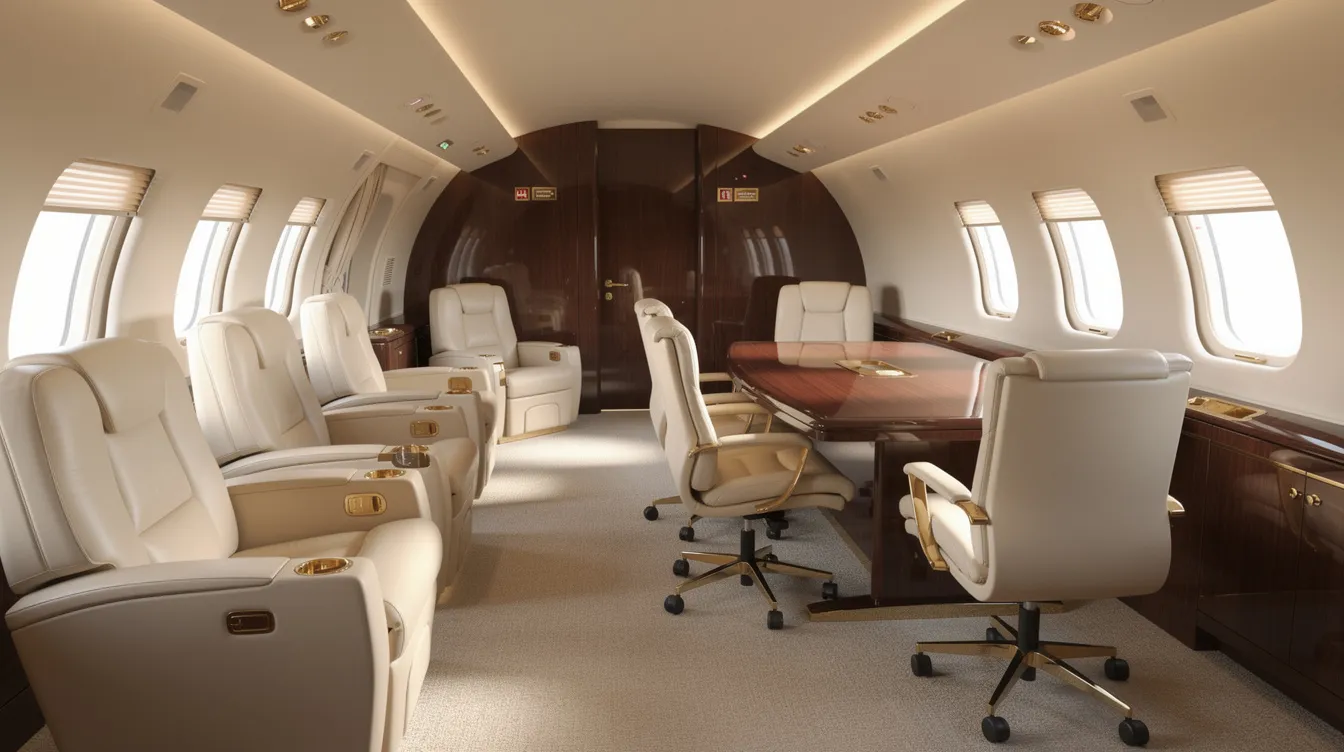
"Long range" in private aviation refers to aircraft capable of flying 3,000 to 7,500+ nautical miles on a single tank. This matters most on ocean crossings, where there are no diversion airports for hundreds of miles.
A Bombardier Global 6000 or Gulfstream G550 can fly New York to London nonstop under normal conditions. A super midsize jet like a Citation X, with less fuel capacity, might need a stop in Shannon or Reykjavik on the same route during strong headwinds.
Charter planners calculate range based on payload (number of passengers and baggage weight), wind forecasts, weather along the route, and required fuel reserves including alternate airport fuel. Sometimes reducing baggage weight or passenger count eliminates the need for an extra fuel stop.
When fuel stops are necessary, they typically add 30-60 minutes of ground time. A common routing for certain aircraft on a New York to Paris trip might include a stop in Reykjavik for refueling and a quick catering check. For travelers, this appears as a short, efficient pause rather than a complex logistics exercise. Operators and platforms like Jettly manage all range planning, routing, and fuel coordination. For more on which jets cover the longest distances, see Jettly's overview of the longest-range private jets.
All standard border rules apply on private jets. Private aviation offers a simplified customs and immigration experience at private terminals, but travelers still need every document that a commercial passenger would.
Documents typically required for international private flights:
Valid passports (most countries require at least 6 months of remaining validity)
Visas for the destination country, depending on nationality (e.g., Schengen Area, UK, U.S.)
Pre-travel authorizations like ESTA (United States) or eTA (Canada)
Health or vaccination credentials, where applicable
Customs clearance for private jets is often handled on the tarmac. Officers may board the aircraft or meet passengers in a private lounge for quick identity and document checks. This differs from commercial flights, where passengers walk through large immigration halls.
Arrive 45-60 minutes early for international private flights. This window allows for customs pre-clearance, document verification, and luggage screening without the queues associated with commercial terminals.
Travelers should share full names as printed on passports, citizenship details, and any special items (high-value goods, pets, professional equipment) with the charter provider well in advance. Jettly's partner operators coordinate with local customs authorities at gateways such as New York, London, Dubai, and Singapore to keep the process fast and organized.
Jettly is a digital private jet charter marketplace built for on-demand international travel and supports private jet charter flights with transparent, instant pricing, similar to the leading operators highlighted in comprehensive guides to charter airlines. Travelers can book private jets through platforms like Jettly without long-term contracts.
How to book:
Visit Jettly.com, enter departure city (e.g., New York), arrival city, travel dates, and passenger count.
Select an aircraft type: light jet, heavy jet, VIP airliner, cargo, or medevac.
Review instant pricing across multiple aircraft and compare options across a worldwide fleet by cost, range, and cabin layout.
Book on-demand or choose a private jet membership option that reduces commissions for frequent international travel.
Jettly's team and technology verify operator certifications, insurance, and safety records before any flight. The platform also assists with ground transportation, customized catering, and hotel coordination at the destination, providing access to personalized service at every stage.
Ready to explore charter flights for your next international trip? Whether you're comparing Jettly against fractional providers like NetJets or other players, resources on choosing a NetJets alternative with Jettly can help refine your decision. Get a quote at https://www.jettly.com.
Private jet charter services are a premium product, with pricing driven by aircraft type, route distance, positioning legs, and airport-specific fees. Understanding that cost structure helps travelers judge value, not just price, before committing serious money.
Approximate hourly rates by category (USD, mid-2020s):
|
Aircraft Type |
Hourly Rate Range |
|---|---|
|
Turboprops |
$1,800-$2,800 |
|
Very light jets |
$2,000-$3,500 |
|
Light jets |
$2,800-$4,500 |
|
Midsize / Super midsize |
$4,000-$8,000 |
|
Heavy / Ultra long range |
$8,000-$15,000+ |
A New York to Toronto round trip on a light jet might cost in the tens of thousands. A New York to London round trip on a long-range jet can reach six to seven figures, depending on the specific aircraft, season, and operator. For detailed breakdowns, Jettly's private jet charter costs page has current examples. While private flying remains a premium option, the right charter setup can save money in some group or time-sensitive scenarios.
Additional charges common on international routes: de-icing (winter), overnight crew rest fees, international handling fees, catering upgrades, and fuel surcharges. Positioning legs, where the aircraft flies empty to reach your departure airport, also add cost.
Jettly improves cost transparency with instant pricing and real-time aircraft comparisons. The platform also surfaces empty leg flights at discounted rates when available, though these come with schedule and direction constraints. Use Jettly's private jet cost calculator to get pricing that reflects current fuel costs and seasonal demand.
Private jet charter supports a wide range of international travel needs. Business aviation departures worldwide reached over 3.5 million flights in 2025, up approximately 6.2% year-over-year.
High-demand corridors include popular North American and European city pairs as well as routes into rapidly growing markets like India, where Jettly offers dedicated services such as private jet charter in Chennai, Tamil Nadu:
North America: New York to London, New York to Paris, Los Angeles to Cabo San Lucas, Toronto to Florida
Europe: London to Geneva, Paris to Nice, France to Switzerland, with onward connectivity supported by services like private jet charter in New Delhi, Delhi
Emerging routes: VistaJet reported a 238% increase on Abu Dhabi to London and 269% growth on Jeddah to Riyadh
Business use cases: executives flying New York to Frankfurt for same-day meetings, teams visiting multiple European cities in one trip, or investors touring sites across the Middle East on a flexible schedule.
Leisure travelers use private charter for ski holidays from New York to Zurich, Mediterranean vacations via Nice, and multi-stop itineraries combining cities and resort destinations like Las Vegas, Palma de Mallorca, the Caribbean, or emerging luxury hubs served by private jet charter in Kolkata, West Bengal.
Time-critical flights also drive demand: medical evacuations (medevac), repatriation, and urgent cargo. Jettly's marketplace includes cargo and medevac aircraft categories alongside standard charter options. Discover route ideas and check approximate flight times at Jettly.com.

Private jet charters operate out of FBOs (Fixed Base Operators), not commercial terminals. An FBO is a private terminal that provides lounges, ground handling, fueling, and boarding services exclusively for general aviation.
The typical flow at an FBO for an international departure:
Drive directly to the FBO entrance (often just steps from the aircraft)
Quick ID check and document review in a private lounge
Luggage is loaded by ground crew while you board
Walk to the aircraft on the ramp; no jet bridges, no gates
Many private terminals feature expedited customs clearance for faster arrivals and departures. Private jet travelers can arrive just 15-30 minutes before departure for domestic flights. For international charter flights, 45-60 minutes is standard to accommodate customs and immigration procedures.
Larger FBOs offer quiet lounges, meeting rooms, refreshments, Wi-Fi, and sometimes shower facilities. Examples of FBOs commonly used for international private aviation: Teterboro and White Plains near New York; Farnborough and Luton near London. These airports are conveniently located closer to city centers than major commercial hubs.
Jettly and its operators, including partners such as Dexter Air Taxi, select FBOs based on runway length, operating hours, fees, and proximity to the traveler's final destination.
International private flights operate under strict regulatory requirements. Charter operators must hold an Air Operator Certificate (AOC) from authorities such as the FAA, Transport Canada, EASA, or equivalent national regulators, all aligned with international standards set by ICAO.
International charter flights must secure overflight permits and landing permissions from every country along the route. Operators' dispatch and flight-planning teams handle this process. International private flights require compliance with APIS (Advance Passenger Information System) data submission, which means passenger details go to border agencies before the flight departs.
Safety audits and rating systems from organizations like ARGUS and Wyvern are commonly used across private aviation. Jettly prioritizes operators with strong safety records and verified compliance histories.
Pilots on international routes typically hold advanced licenses, accumulate extensive flight hours, and receive ongoing training for oceanic procedures, ETOPS routing, and diverse airspace rules. Security screening is more discreet than at commercial airports but still present: baggage inspection and identity checks are adapted to the private environment and local regulations at each airport.
International private aviation carries a higher per-passenger carbon footprint than commercial travel. Many travelers now ask about sustainability options when planning private flights.
Newer long-range jets use advanced aerodynamics and lighter composite materials to reduce fuel burn per mile compared to older aircraft types, much like the efficiency-focused models highlighted in Jettly's guide to finding the best cross-country plane. Common sustainability measures include:
Purchasing verified carbon offsets
Optimizing flight planning for direct routings and efficient altitudes
Using Sustainable Aviation Fuel (SAF) where available
Selecting right-sized aircraft to avoid flying half-empty cabins
Jettly can help clients select more fuel-efficient aircraft and discuss carbon-offset programs as part of trip planning. Travelers who frequently fly private internationally can reduce their footprint by grouping trips, choosing operators investing in greener operations, and requesting SAF at airports that stock it.
A practical checklist for first-time private jet passengers heading abroad:
Documents: Confirm passport and visa validity several weeks before departure. Share all passenger details with the charter provider early. Keep digital and printed copies of travel documents.
Baggage: There is less strict enforcement of luggage size restrictions on private jets, but clarify weight limits with the operator, especially for skis, golf clubs, or bulky equipment.
Timing: Arrive at the FBO 45-60 minutes before an international departure. Keep your phone reachable for any last-minute questions from the flight crew or charter team.
Preferences: Share meal requests, cabin temperature preferences, and ground transportation needs at the destination in advance. Customized catering, including options like Jettly Eats in-flight catering, allows for personalized meal and beverage selections on private jets, and operators can arrange a tailored in-flight experience when given notice.
Clear communication with the charter team before the flight is the single best way to ensure a smooth first international private charter. Embark on your journey prepared, and the logistics will stay invisible.
Most major international airports accept private jets, but some impose slot restrictions, curfews, or limited general aviation capacity. In those cases, nearby secondary airports are used. Operators and platforms like Jettly check runway length, handling facilities, and operating hours to confirm airport suitability before confirming a charter flight. Private jets can fly internationally with additional logistics handled by the operator's planning team.
Using tools such as Jettly's jet card flight cost estimator before booking can also help set expectations on pricing and availability.
Five to ten days' notice is ideal for most international leisure or business trips, especially during peak periods like summer in Europe or winter holidays in the Caribbean. Urgent trips can sometimes be arranged in 4-24 hours, but aircraft availability, permit lead times, and crew duty-time rules may limit options at short notice. For tips on timing, see Jettly's article on when is the best time to book flights.
Travelers who frequently fly similar routes may also benefit from structured programs like Jettly's jet cards for private travel, which offer predictable rates and added perks.
You can travel with pets in the cabin instead of in cargo holds on most private jets. Traveling internationally with pets requires specific health certificates and permits, and import rules vary by country (microchips, vaccinations, and in some cases quarantine). Notify the charter provider early so they can confirm pet policies, required documents, and landing airports equipped to process pet arrivals.
For travelers open to sharing cabins, Jettly's platform also enables crowdsourced private jet flights and shared seats, which can lower per-passenger costs on select international routes.
Many modern midsize, heavy, and long-range jets offer satellite-based Wi-Fi suitable for email, messaging, and video calls on most international routes. Availability and speed vary by aircraft and region. When submitting a charter request through Jettly, travelers can request a Wi-Fi-equipped aircraft to stay connected throughout the journey.
Guides on topics like how renting a plane works can further clarify the difference between full-aircraft charter, rentals, and other private aviation models.
Visit https://www.jettly.com, enter your route (e.g., New York to London), dates, and passenger count, and review instant pricing options across multiple aircraft categories, including options for buying a single seat on a private jet where applicable. Contact Jettly's team through the platform for help comparing aircraft, discussing customs and documentation, and arranging ground transportation or other services for a smooth international trip.
Private plane international travel offers unparalleled convenience, flexibility, and time savings compared to commercial flights. With platforms like Jettly providing instant access to a vast global fleet, transparent pricing, and seamless handling of complex logistics such as customs and permits, private jet charters have never been more accessible. Whether traveling for business meetings, family vacations, or urgent needs, selecting the right aircraft and planning ahead ensures a smooth, efficient journey. For travelers seeking a cost-effective, comfortable, and personalized experience, private jet charter is a compelling alternative to traditional international air travel.
Ready to experience private travel on your terms? Explore flight options or request a quote at https://www.jettly.com.Learn more about Jettly’s charter options at https://www.jettly.com and discover how to choose the right aircraft for your trip at https://jettly.com/post/aircraft-class
Share this post:
Jay Franco Serevilla
Aug 19, 2026
|
5
min read
Discover tips and trends in the industry.

5
min read
McClellan Jet Services: FBO Facilities, Jet Services, and Charter Alternatives
McClellan Jet Services is a premier fixed-base operator (FBO) at McClellan Airport, offering comprehensive ground support and amenities for private jet travelers. With 24/7 operations, it provides fueling, ground handling, and passenger services, while Jettly's digital platform facilitates seamless private jet charter bookings. Together, they enhance the private aviation experience for business and leisure travelers in Northern California.
Read More
5
min read
Arrow Jets: How Jettly Makes Private Jet Travel Simple, Fast, and Transparent
Jettly revolutionizes private jet travel by offering a digital platform that simplifies the booking process for over 20,000 aircraft worldwide. With instant pricing and transparent cost breakdowns, travelers can easily access fast, direct flights tailored to their needs. This on-demand model eliminates the complexities of traditional jet ownership, making private aviation more accessible and efficient.
Read MoreStay updated with our latest insights and tips to elevate your journey with us.
MEMBERSHIPS AND ASSOCIATIONS



Disclaimer: Jettly operates as a charter broker, offering access to a global digital jet charter marketplace. Jettly is not a direct air carrier and does not own or operate aircraft. All advertised flights are conducted by third-party air carriers that are fully licensed and hold the appropriate Part 135 or Part 121 certifications issued by the Federal Aviation Administration (FAA) or equivalent regulatory authorities under U.S. or foreign law. Jettly complies fully with the U.S. Department of Transportation's Part 295 and Part 298 Charter Broker regulations. Jettly does not carry additional liability insurance. Passengers are covered by aircraft operator insurance. TICO: 50023770


