


Login
Get Instant Pricing On 23,000+ Aircraft

>
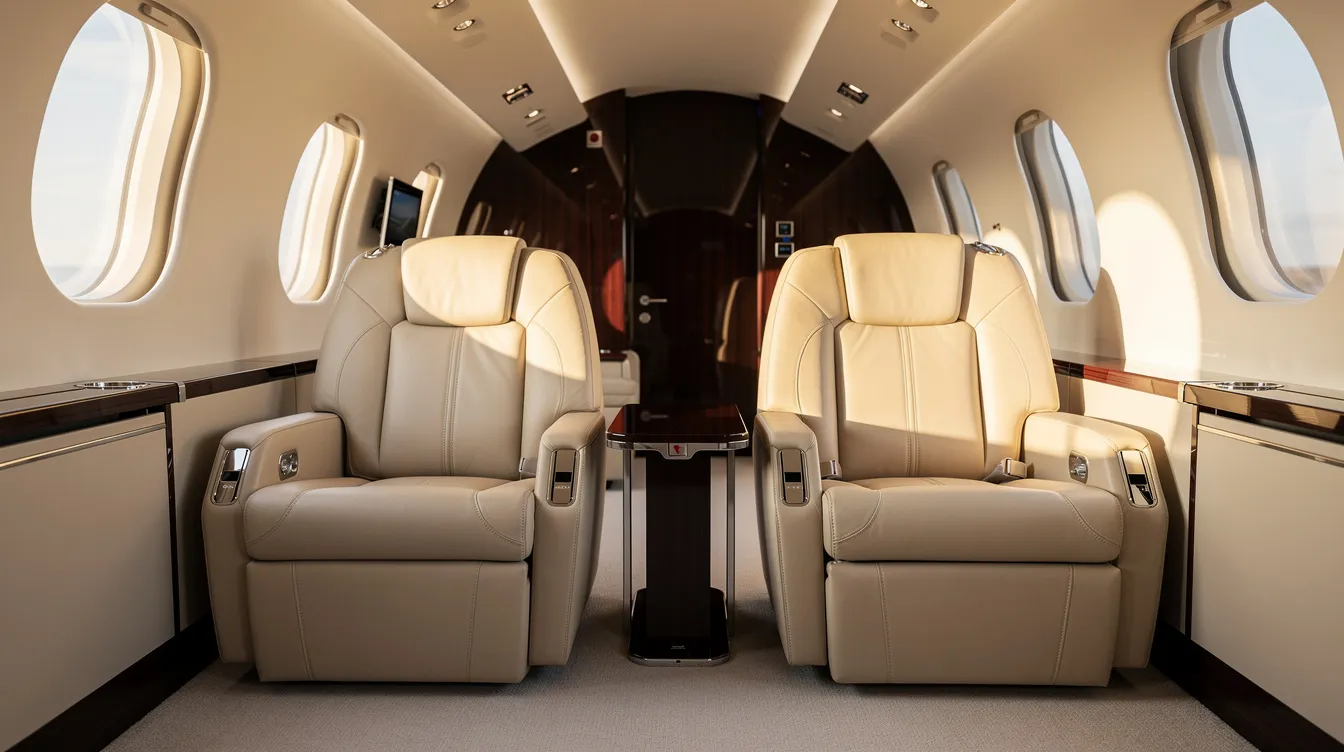
A good private plane magazine does more than showcase glossy interiors and celebrity passengers. It breaks down the private jet world into pieces a reader can actually use: aircraft reviews, route comparisons, pricing data, and honest takes on what flying on an expensive private jet really costs.
That is the approach this article takes. Written from Jettly's perspective as a digital private jet charter platform, the goal here is not to sell a dream but to map out how private aviation works in practice. What types of aircraft exist, what they cost per hour, how booking actually happens, and where digital tools fit into the picture.
Private jet services cater to business and leisure travelers equally, and both groups want the same thing from their reading material: clarity. Whether someone is weighing a same-day New York–Miami hop, a London–Nice weekend trip, or a Toronto–Vancouver family holiday, the questions are consistent. How much will it cost? Which jet makes sense? What does the experience feel like from door to door?
The sections ahead cover exactly those topics, structured like a modern online magazine feature with short paragraphs, real examples, comparison tables, and grounded advice rather than vague luxury language.
The best private plane magazine content blends technical aviation coverage with practical travel advice and cost transparency. A reader should walk away understanding both how an aircraft performs and what that means for their specific trip.
Here are the recurring departments a well-rounded publication typically features:
Aircraft profiles and reviews - deep dives into specific models, covering range, cabin layout, speed, and comfort
Operator and broker insights - differences between charter providers, safety ratings, regulation, and pricing models
Route spotlights - popular city-pairs for corporate and leisure travel with estimated costs and flight times
Passenger experience features - what it is actually like inside the cabin, from catering to connectivity
Cost and budgeting columns - charter vs. ownership math, hidden fees, and empty leg opportunities
Beyond these pillars, private aviation magazines typically cover aircraft reviews and flying techniques, giving readers a view into how pilots handle different airframes and conditions. They cover avionics and technology updates related to private aircraft, helping readers understand what modern cockpits and cabin systems can do. Industry trends in private aviation are regularly reported and analyzed, from fleet expansion data to shifts in charter demand.
Private plane magazines also address the legal and regulatory landscape affecting aviation, including FAA compliance, ICAO standards, and operator certification. They highlight sustainability topics such as sustainable aviation fuel and electric propulsion, which are increasingly relevant as environmental pressure grows. Safety articles and training resources for pilots appear alongside profiles of notable aviation personalities and professionals. And market intelligence and aircraft sales analysis round out the editorial mix, giving readers insight into which models hold value and where the fleet market is heading.
Luxury lifestyle features often explore travel destinations and exclusive experiences, but the strongest editorial teams ground those stories in practical information rather than pure aspiration.
For readers who are not pilots, editorial teams typically break aircraft into categories: very light jets, light jets, midsize, super-midsize, heavy jets, ultra-long-range, turboprops, and helicopters. Each type has trade-offs in range, cabin space, cost, and runway requirements, and a complete guide to luxury private aircraft in 2025 helps put those differences into context.
Common article types include stories like "A day in the life of a corporate traveler on a private jet," "How to choose between a light jet and a turboprop for a 500-mile trip," and "The true cost of flying on an expensive private jet for a family vacation."
Aircraft profiles are a key pillar of any private plane magazine. These are the photo-rich, detail-heavy features that let readers compare specific models side by side and figure out which jet fits their travel patterns.
Here is how a magazine might line up four popular aircraft across different categories:
|
Model |
Category |
Passengers |
Range (nm) |
Key Strength |
|---|---|---|---|---|
|
Cessna Citation CJ3+ |
Light Jet |
6–7 |
~2,000 |
Short-runway access, lower hourly cost |
|
Embraer Phenom 300E |
Light Jet |
7–8 |
~2,010 |
Speed, cabin comfort for its class |
|
Bombardier Challenger 3500 |
Super-Midsize |
8–10 |
~3,400 |
Flat floor, wide cabin, transcontinental range |
|
Gulfstream G650ER |
Ultra-Long-Range |
12–19 |
~7,500 |
Nonstop New York–Tokyo, flagship range |
The Gulfstream G650ER is often cited as a flagship expensive jet, and for good reason. It can fly nonstop from New York to Tokyo at a cruise speed near Mach 0.90, with a cabin large enough for club seating, divans, and an enclosed lavatory. Its baggage hold can manage a lot of luggage for long international private jet trips.
On the other end, the Cessna Citation CJ3+ and Embraer Phenom 300E are light jets built for domestic routes. They offer improved efficiency on shorter hops, lower fuel burn, and access to smaller regional airports that heavier jets cannot use.
Rather than listing technical jargon, the most useful reviews focus on reader-friendly pros and cons:
Fuel efficiency - newer models burn less per nautical mile, which directly affects charter cost
Runway performance - lighter jets can use shorter runways, opening up airports closer to your home or office
Cabin noise levels - modern insulation makes a measurable difference on flights over two hours
Wi-Fi availability - Ka-band connectivity on newer jets supports streaming, not just email
For readers who want to compare private jets across categories, Jettly's platform can show real-time availability and pricing for these aircraft types. That makes each review actionable rather than theoretical. A reader can move from "this jet has 3,400 nm of range" to "here is what it costs next Thursday from Chicago to Miami."

This is the section most readers flip to first. Understanding what private aviation actually costs separates casual interest from informed decision-making.
Hourly charter rates in 2026 vary widely by aircraft type. Here is a realistic breakdown:
|
Aircraft Class |
Passengers |
Approx. Hourly Rate (USD) |
|---|---|---|
|
Turboprop |
4–8 |
$1,500–$3,000 |
|
Very Light Jet |
3–6 |
$3,000–$5,500 |
|
Light Jet |
4–8 |
$4,500–$7,000 |
|
Midsize Jet |
7–9 |
$6,500–$9,500 |
|
Super-Midsize Jet |
8–10 |
$8,500–$13,000 |
|
Heavy Jet |
10–16 |
$11,000–$18,000 |
|
Ultra-Long-Range |
12–19 |
$15,000–$28,000+ |
Source: Lineaum 2026 hourly rate analysis
These rates typically include crew, aircraft, and insurance. But the final invoice often adds 20–40% on top for fuel surcharges, repositioning fees, landing and handling charges, crew overnight costs, and federal excise tax (7.5% in the U.S.). A Jettly charter cost estimator can help travelers see a more complete picture before committing.
Ownership and maintenance of aircraft are common topics in these publications, and for good reason. Readers often want a complete breakdown of private jet operating costs before deciding whether ownership makes sense. There are three main models to consider:
Outright ownership - highest upfront cost (acquisition, crew salaries, hangar, maintenance, insurance). Makes sense only for those flying 300+ hours per year, and many buyers also explore a private jet lease cost breakdown as an alternative path into aircraft access.
Fractional ownership - purchase a share in a jet and receive proportional flight hours. Lower capital than full ownership, but still requires a minimum annual commitment, and leading providers such as NetJets fractional ownership programs are frequent case studies in private aviation coverage.
On-demand charter - pay per trip through a broker or digital marketplace like Jettly. No ownership burden, full flexibility, access to many aircraft types. Higher per-hour cost than a fully utilized owned jet, but far more efficient—and often surprisingly affordable for those who understand how private jet charter pricing works—for travelers flying fewer than 80 hours per year.
Private jet charters eliminate the need for ownership burdens entirely. For someone flying monthly between New York and Houston, a midsize jet charter might run $15,000–$25,000 per one-way trip depending on the aircraft and fees. Owning a jet for the same route would cost less per flight hour-but only if the aircraft is used heavily enough to justify the fixed overhead.
Modern digital platforms give instant charter quotes for common routes, eliminating the "mystery pricing" that older magazine articles used to describe. A traveler can see what a light jet from Teterboro to Fort Lauderdale costs in under a minute and compare a wide range of private charter aircraft options side by side.
A lot of private aviation coverage focuses on numbers. But what actually happens when you board a private jet?
The journey typically starts at a private terminal, known as a Fixed Base Operator (FBO). There are no long security queues. No overhead-bin battles. Passengers arrive 20–30 minutes before departure, check in at a quiet lounge, and walk directly to the aircraft.
On board, modern jets maintain cabin pressurization equivalent to 5,000–6,000 feet at cruise altitude—lower than most commercial cabins, which means less fatigue on arrival. Noise insulation on newer airframes has improved significantly, making conversation and phone calls easy at altitude.
Here are three example itineraries that illustrate the experience across different trip types, each beginning at a specific airport that a reader might first look up using an airport locator tool for private flights:
Same-day business trip: New York–Chicago - depart Teterboro at 8:00 a.m. on a light or midsize jet, land at Chicago Midway roughly two hours later. Hold meetings, return the same evening. Total time away: under 12 hours.
Weekend leisure: Los Angeles–Las Vegas — a 60–90 minute hop, often available as an empty leg flight on weekends, and frequently cited in guides to booking the cheapest private jet flights. Depart Van Nuys mid-afternoon, arrive in time for dinner.
Family holiday: Toronto–Vancouver — four to five hours in a super-midsize or heavy jet. Enough space for a family of six with luggage, meals served in-flight via dedicated private jet catering services, and entertainment for kids on board.
Each of these scenarios connects to Jettly's core value: flexible scheduling, access to smaller airports closer to home or office, and the ability to coordinate ground transport or catering through a single digital platform. For a step-by-step walkthrough, Jettly's guide on how to charter a private jet covers the full process.

This is a comparison that serious private plane magazine readers enjoy dissecting. The differences go beyond comfort.
Time savings
Consider a 7:00 a.m. departure from the New York area:
|
Step |
Commercial (JFK) |
Private (Teterboro) |
|---|---|---|
|
Arrive at airport |
5:00 a.m. (2 hrs early) |
6:30 a.m. (30 min early) |
|
Security / check-in |
30–60 min |
5 min |
|
Board |
6:30 a.m. |
6:50 a.m. |
|
Depart |
7:00 a.m. |
7:00 a.m. |
|
Arrive (Miami example) |
~10:15 a.m. + taxi/deplane |
~9:30 a.m., walk off directly |
|
Baggage |
Wait at carousel |
Already in car |
For a deeper look at the business travel comparison, private travel becomes even more compelling when total trip time and delay risk are considered, especially when factoring in connecting flights.
Flexibility
A private jet departure adjusts to the passenger, not the other way around. If a meeting runs long, the flight waits. If the destination changes, the route can often shift the same day. Commercial aviation offers none of this.
Productivity
A private cabin is a closed-door office. Passengers can hold board-level conversations, join video calls, or sign documents without worrying about seatmates overhearing. Reliable Wi-Fi on most modern jets makes this practical rather than aspirational.
Cost competitiveness for groups
For many readers, the big question is how to get a seat on a private jet easily without paying for the entire aircraft.
For a team of six to eight executives, a private jet can be cost-competitive with last-minute business-class tickets on certain routes. A light jet from New York to Miami might cost $15,000–$22,000 one way. Split across six passengers, that is $2,500–$3,700 per person—comparable to a last-minute commercial business-class fare plus ground transport and the time cost of delays.
Lifestyle-oriented features in a private plane magazine explore interior design trends that affect what passengers see and feel on board.
Current design direction leans toward neutral palettes, configurable LED mood lighting, flat floors (standard in super-midsize and above), and improved noise-reduction materials. The emphasis is on wellness: better air filtration, humidification systems, and lower cabin altitude.
Specific amenity highlights by aircraft type are particularly relevant for readers debating whether to charter regularly or invest in the best personal plane for their needs:
Light jets - club seating for four to six, compact lavatory, Wi-Fi, Bluetooth audio, refreshment center
Midsize jets - stand-up cabin, enclosed lavatory, streaming-capable Wi-Fi, galley with warming capability
Heavy and ultra-long-range jets - fully flat divans or beds, 4K monitors, Ka-band Wi-Fi for streaming, induction cooktops, full galley, multiple cabin zones
Catering scales with flight length. On short hops, expect fresh fruit, snacks, and espresso. On a long-range flight—say, London to Dubai on an expensive private jet—operators can arrange multi-course meals with preferred cuisine, curated wine selections, and dietary accommodations (halal, vegetarian, nut-free). Advance notice of 24–48 hours is typical for specialized catering requests.
Jettly works with operators and local providers to coordinate catering and special requests through its digital platform. Whether it is a children's menu, a celebration cake, or specific dietary needs, these details can be integrated into the quote so the customer sees the full cost upfront, even when travelers are using shared and crowdsourced private jet flights to split costs on a charter.

Private plane magazines increasingly reference digital charter platforms when discussing how readers can act on what they read, often including them in comprehensive guides to charter airlines and private operators. It is one thing to learn about a Bombardier Challenger 3500's range. It is another to see what that aircraft costs for a specific route on a specific date.
That is where Jettly fits. As a global B2C charter marketplace, Jettly offers access to over 20,000 aircraft, powered by a network of verified operators worldwide. Private jet charters provide instant pricing for flights, and Jettly's platform delivers that in seconds without requiring jet cards, fractional contracts, or long-term commitments, even though some travelers will still prefer structured jet card membership programs for fixed-rate access.
The company makes sense as a companion to traditional magazine reading because it covers the "what now?" question. A reader finishes an article about midsize jets, then checks actual availability and cost for their preferred route. Jettly content complements traditional magazines through destination guides, route examples, and explainers on concepts like empty leg flights or private jet membership tiers.
For magazine readers who want to move from inspiration to action, the platform's strengths are straightforward:
Instant online pricing with transparent breakdowns
No minimum annual hours or membership required for on-demand booking
Side-by-side aircraft options across every category
Access to empty legs and one-way charters
Learn more about Jettly's charter options at https://www.jettly.com.
An empty leg flight occurs when a jet returns empty after a charter or flies to a departure city without passengers to pick up the next client. Rather than eat the cost of that repositioning segment, operators sell those flights at a discount.
Empty leg flights can save travelers up to 75% off standard charter rates. Typical discounts fall in the 30–60% range, with deeper savings available on less popular routes, odd-hour departures, or very short notice bookings. These flights are often available at short notice, which makes them ideal for flexible travelers.
The trade-offs are real. Empty legs come with fixed routes and schedules. If the underlying charter cancels, so does your flight. And the departure or arrival airport may not be your first choice.
Jettly surfaces empty leg opportunities directly on its platform, turning what used to be insider knowledge into something any reader of a private plane magazine can access and post about to friends. For travelers looking to fly private for less, empty legs are the most reliable discount mechanism in the market, especially when combined with strategies like flight-sharing platforms and group bookings or structured crowdsourced private jet flights.
Membership vs. on-demand: which model fits?
|
Factor |
On-Demand Charter |
Membership / Jet Card |
|---|---|---|
|
Commitment |
None - pay per trip |
Prepaid hours or annual fee |
|
Per-hour cost |
Higher |
Lower (locked rate) |
|
Flexibility |
Full - any aircraft, any time |
May restrict aircraft type or region |
|
Best for |
Infrequent flyers (under 50 hrs/year) |
Frequent flyers (50+ hrs/year) |
|
Extras |
None standard |
Concierge, priority booking, cancellation ease |
Traveler personas and how they might use Jettly:
CEO commuting monthly between New York and Houston - values time savings and consistency. A membership tier or negotiated repeated-operator rate through Jettly could reduce per-flight cost while maintaining schedule flexibility.
Family taking three holiday trips per year - two shorter domestic hops and one longer flight. On-demand charter through Jettly makes the most sense, with empty leg alerts set for popular vacation routes and guidance drawn from finding the best cross-country plane for their journey.
Sports team chartering seasonally - needs heavy jets or VIP airliners for larger groups. Jettly's broad aircraft inventory lets the team manager compare options across operators and lock in seasonal pricing, often positioning the platform as a compelling NetJets alternative for flying private.
The tone here is intentionally educational. Some travelers will still choose ownership. Others will enjoy fractional programs for the ease and predictability. But for most people who read about private aviation and want to try it, digital charter through a platform like Jettly lowers the barrier to entry without requiring a seven-figure commitment, even as they follow coverage of global private jet fleet growth and trends or deep dives into the best private plane manufacturers.

A modern private plane magazine helps readers understand aircraft options, the costs of flying on a private jet—from compact light jets to the most expensive private jet models on the market—and the end-to-end travel experience from FBO to final destination.
The value of that knowledge increases when it connects to action. Digital charter platforms like Jettly bridge the gap between reading about private aviation and actually booking a flight. With access to over 20,000 aircraft, instant pricing, and no long-term ownership requirements, the platform turns year-round magazine research into real flight plans.
Whether the goal is a quick business hop, a family vacation, or finding a discounted empty leg, the information in this article maps directly to routes and aircraft that can be explored today. The share of travelers moving from commercial to private continues to grow each year, and the tools to make it happen are more transparent than ever.
Ready to experience private travel on your terms? Explore flight options or request a quote at https://www.jettly.com.
Share this post:
Jeff Ryan Serevilla
Sep 26, 2026
|
5
min read
Discover tips and trends in the industry.

5
min read
Jet It: What Happened, What It Means for Private Aviation, and Smarter Alternatives
Jet It, a fractional jet ownership company, ceased operations in mid-2023 due to financial and operational challenges, highlighting the risks of low-cost models in private aviation. Its collapse serves as a cautionary tale for potential buyers, emphasizing the importance of understanding costs and flexibility in private flight options. As a result, many customers are now turning to platforms like Jettly for more reliable and adaptable private aviation solutions.
Read More
5
min read
Hawker Beechcraft: Aircraft Family, History, and Charter Insights
Hawker Beechcraft, a prominent name in private aviation, combined the legacies of Beechcraft and Hawker to produce a diverse fleet of business jets and turboprops. Although the company no longer exists, its aircraft continue to operate globally, supported by Textron Aviation. This guide explores the history, aircraft families, and charter options available through platforms like Jettly.
Read MoreStay updated with our latest insights and tips to elevate your journey with us.
MEMBERSHIPS AND ASSOCIATIONS



Disclaimer: Jettly operates as a charter broker, offering access to a global digital jet charter marketplace. Jettly is not a direct air carrier and does not own or operate aircraft. All advertised flights are conducted by third-party air carriers that are fully licensed and hold the appropriate Part 135 or Part 121 certifications issued by the Federal Aviation Administration (FAA) or equivalent regulatory authorities under U.S. or foreign law. Jettly complies fully with the U.S. Department of Transportation's Part 295 and Part 298 Charter Broker regulations. Jettly does not carry additional liability insurance. Passengers are covered by aircraft operator insurance. TICO: 50023770


