


Login
Get Instant Pricing On 23,000+ Aircraft

>
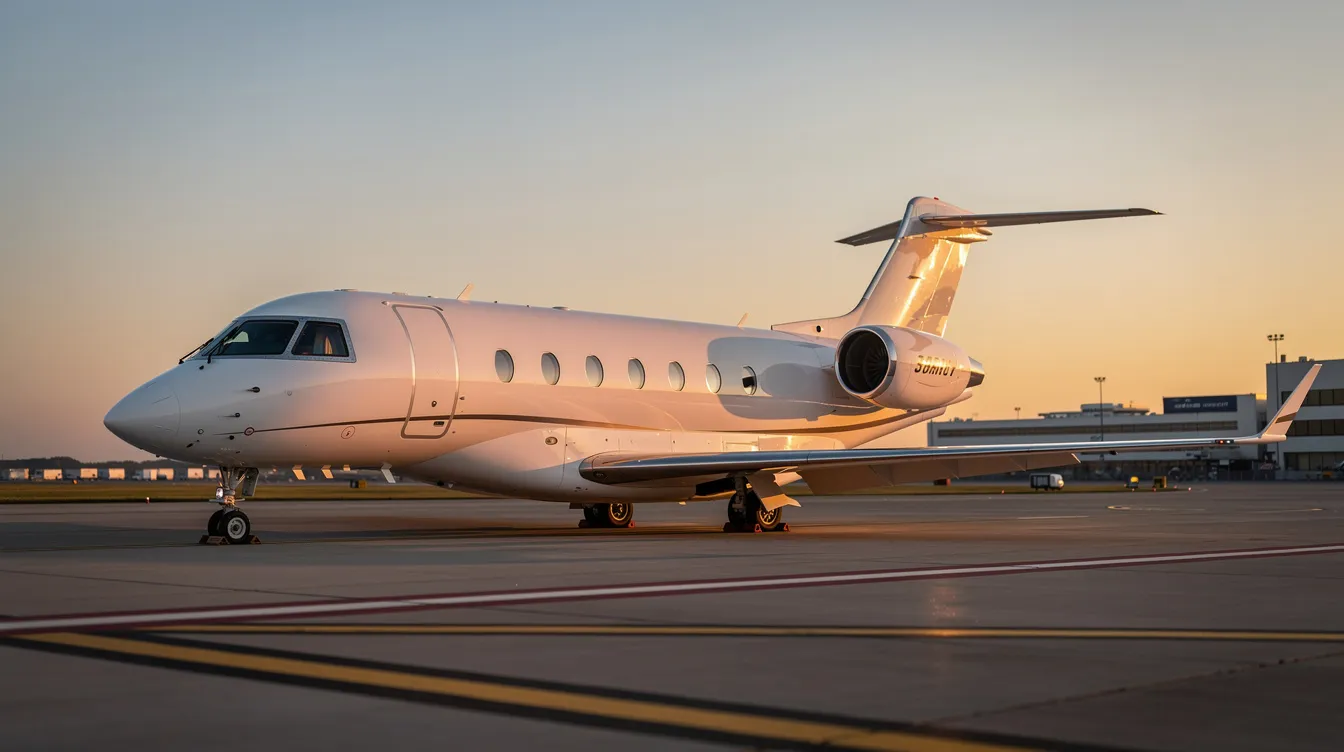
Flying private is no longer reserved for billionaires. But understanding private plane rates still requires cutting through vague marketing and getting to real numbers. This guide is for business travelers, families, and anyone considering private jet charter in 2026. Knowing the real costs and hidden fees helps you avoid surprises and make informed travel decisions. Whether you're considering a turboprop for a short regional hop or an ultra-long-range jet for a transatlantic crossing, the pricing gap between aircraft categories—and the hidden fees layered on top—can swing a quote by tens of thousands of dollars. This guide breaks down every cost component of private jet charter in 2026, from base hourly rates and federal excise tax to fuel surcharges and crew overnights, so you can budget accurately and book with confidence.
Private jet travel pricing in 2026 spans a wide range, from roughly $2,000 per flight hour for turboprops to $20,000+ for ultra-long-range jets. The final bill depends on aircraft category, route distance, taxes, and a stack of ancillary charges that many first-time charter customers don't anticipate.
Light jets on common U.S. routes like New York to Miami typically cost $14,000–$20,000 one way; ultra long range jets on routes like New York to London can exceed $120,000.
Headline hourly rates are only part of the cost; taxes, landing fees, fuel surcharges, and crew logistics can add 15–40% to the total bill.
Choosing the right aircraft category is the biggest factor in controlling private jet cost.
Renting a private plane usually costs $2,000–$16,000 per flight hour, but total price also depends on positioning, taxes, and airport fees.
Jettly's digital marketplace provides instant, itemized pricing on 20,000+ private jets for transparent and comparable rates.
The short answer: most private jet charters cost between $2,000 and $14,000+ per flight hour, and the cost to charter depends on aircraft category and region. A typical U.S. domestic trip totals $8,000–$40,000 once all fees are included. International flights push well beyond that. The private jet rental cost may start at $2,000 to $14,000 per hour at the base level, but the real price is always the trip total.
Here are a few specific examples to anchor expectations:
Los Angeles to Las Vegas on a light jet: approximately $6,000–$9,000 one way for a flight time of roughly 45–60 minutes.
New York to Los Angeles on a super midsize jet: around $28,000–$40,000 round trip inclusive of basic fees.
New York to London on a heavy or ultra-long-range jet: roughly $90,000–$150,000 one way, factoring in fuel, crew, and international fees.
Private jets are priced per aircraft, not per seat, so when you rent a private jet, the overall aircraft choice matters more than the number of passengers. That means renting the entire aircraft affects pricing more than the number of passengers. Filling 6–10 seats can bring per-person pricing closer to business- or first-class commercial flights on certain routes. Private jet costs can be lower when sharing with fellow passengers who split the charter among themselves.
Jettly's platform shows real-time estimates for each route and aircraft category before users commit to a booking. You can enter your departure, arrival, and dates through the charter cost estimator or use the airport locator tool to see numbers instantly.
Aircraft type significantly influences charter pricing. A turboprop and a heavy jet serving similar distances will produce drastically different invoices because aircraft size affects hourly rates—larger aircraft require more fuel, more maintenance, and more expensive crew operations.
Below is a summary of typical 2026 hourly rate bands by aircraft category available through Jettly's private charter aircraft marketplace:
|
Aircraft Category |
2026 Hourly Rate Range |
Passengers |
Typical Range |
|---|---|---|---|
|
Turboprops |
$2,000–$3,000/hr |
4–8 |
Up to 1,500 nm |
|
Very Light Jets |
$2,750–$3,500/hr |
4–6 |
Up to 1,200 nm |
|
Light Jets |
$2,900–$5,000/hr |
6–8 |
Up to 2,000 nm |
|
Midsize Jets |
$4,300–$6,500/hr |
7–9 |
Up to 2,800 nm |
|
Super Midsize Jets |
$6,000–$9,000/hr |
8–10 |
Up to 3,500 nm |
|
Heavy Jets |
$8,000–$14,000/hr |
10–16 |
Up to 5,500 nm |
|
Ultra Long Range Jets |
$11,000–$20,000+/hr |
10–18 |
Up to 7,500+ nm |
|
VIP Airliners (BBJ, ACJ) |
$16,000–$23,000/hr |
20–50+ |
Varies |
Each category maps to a mission profile. Short regional flights under 1,000 miles suit turboprops or very light jets. Transcontinental U.S. routes are the sweet spot for super midsize jets. Intercontinental business and leisure travel calls for heavy or ultra-long-range jets.
Which aircraft category fits which mission profile?
Turboprops and very light jets: Best for short regional flights under 1,000–1,200 miles.
Light jets: Ideal for short to mid-range domestic trips up to about three hours.
Midsize and super midsize jets: Suited for longer domestic, transcontinental, and some short transatlantic routes.
Heavy and ultra-long-range jets: Designed for intercontinental and global missions.
VIP airliners: Serve large groups or special delegations on long-haul routes.
Jettly's inventory covers all categories, letting users filter by cabin size, range, and hourly rate to compare private charter options side by side. VIP airliners like the Boeing Business Jet or Airbus ACJ sit above ultra-long-range jets in pricing—often starting at $16,000–$23,000 per hour—but serve a niche market for large delegations or head-of-state-style missions.
Turboprops and very light jets represent the entry point to private jet rental pricing. They're ideal for short regional flights, access to smaller regional airports with shorter runways, and travelers who prioritize cost over cabin luxury.
Turboprops like the Pilatus PC-12 and Beechcraft King Air 250 typically cost $2,000 to $2,300 per hour in 2026. A two-hour flight on a turboprop costs about $2,500 to $5,000 when basic fees are included.
Very light jets such as the Embraer Phenom 100 or Citation Mustang charge $2,750 to $3,500 per hour, suitable for very short hops with 4–6 passengers and limited baggage.
For a route like New York to Boston or Dallas to Houston, a turboprop charter typically runs $5,000–$8,000 one way for the whole aircraft, excluding federal excise tax, which aligns with broader guidance on affordable aeroplane rental costs and options.
These categories work best for 2–6 passengers, trips under roughly 1,000–1,200 miles, and travelers comfortable with slightly slower cruise speeds. They also access light aircraft–friendly airports that larger jets can't reach.
Jettly's search filters highlight turboprops and very light jets as the lowest-cost options for short-distance private charter missions.
Light jets are the backbone of private jet travel for domestic routes up to about three flight hours and 4–7 passengers. They're fast enough for same-day round trips and large enough for a comfortable cabin with a proper lavatory and reasonable baggage capacity.
In 2026, light jets range from $2,900 to $3,500 per hour at the base level, though premium operators and newer airframes can push toward $5,000. Light jet costs for a 2-hour leg—like Los Angeles to Las Vegas with a same-day return—typically total $12,000–$18,000 including basic fees.
Popular models include:
Cessna Citation CJ3+ - range of about 1,875 nm, 7 passengers
Embraer Phenom 300 - one of the most chartered light aircraft in North America
Learjet 45XR - known for speed, roughly 2,000 nm range
Light jets often strike the best balance between private jet cost and comfort for business routes like New York to Chicago, Miami to Atlanta, or short European hops like London to Geneva.
On Jettly's platform, customers can compare light jets against turboprops on sub-500-mile routes to decide whether the speed and cabin upgrades justify the higher private jet rates.
Midsize and super midsize jets serve 5–9 passengers on longer domestic, transcontinental, and some shorter transatlantic routes. These aircraft begin to offer stand-up cabins, more generous baggage holds, and the ability to fly coast-to-coast nonstop.
Midsize jets cost between $4,300 and $4,750 per hour at the lower end, extending to $6,500 for newer or premium-configured airframes.
Super midsize jets range from roughly $6,000 to $9,000 per hour, depending on age, configuration, and operator.
Concrete trip examples:
New York to Miami on a midsize jet like a Citation XLS+: approximately $22,000–$30,000 round trip.
New York to Los Angeles on a super midsize jet such as a Gulfstream G280 or Bombardier Challenger 350: roughly $45,000–$65,000 round trip.
Popular models in this space include the Citation XLS+, Hawker 800XP, Gulfstream G150, and Gulfstream G280, with typical ranges around 2,000–3,500 nautical miles that directly influence private jet cost by determining whether a fuel stop is needed.
Jettly users running cross-country cost comparisons can focus on midsize jet versus super midsize jets to trade hourly rate against nonstop range and cabin comfort, and those evaluating longer-term access can also explore how much a private jet costs to own and operate.
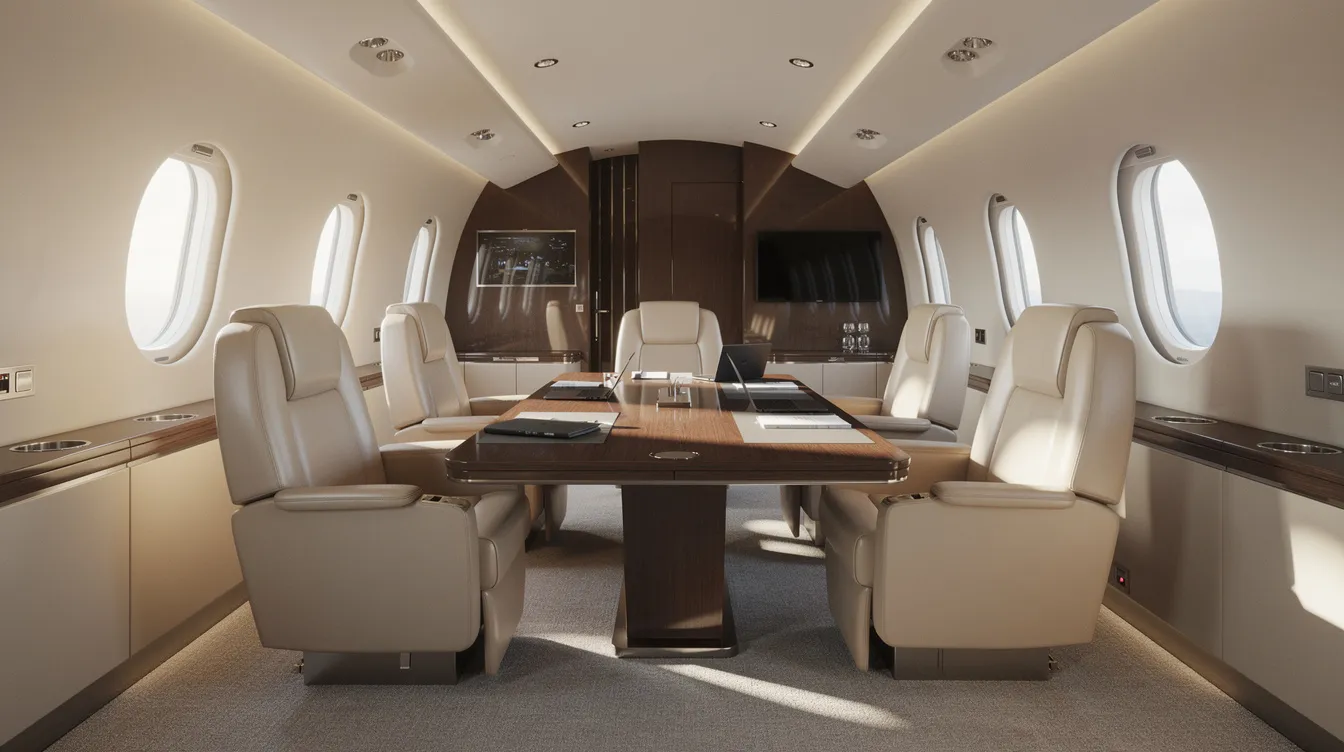
Heavy and ultra long range jets sit at the premium end of private jet charter services. These aircraft carry 10–16 passengers across continents with full galleys, sleeping areas, and multiple cabin zones. They're purpose-built for international flights.
Heavy jets typically charge $8,000 to $14,000 per hour in 2026.
Ultra-long-range jets run approximately $11,000–$20,000+ per hour, reflecting their fuel burn, crew requirements, and cabin size.
Route examples:
New York to London on a Gulfstream G450 or Bombardier Global 6000: approximately $90,000–$150,000 one way.
Los Angeles to Tokyo on a Global 7500 or Gulfstream G700: potentially exceeding $200,000 round trip.
Models commonly flown in this segment include the Gulfstream IV/G450, which is widely regarded in the private aviation industry for its premium cabin and group-travel capability, Bombardier Global 6000, Dassault Falcon 7X, and Gulfstream G650/G700, with ranges of 4,000–7,500+ nautical miles. Heavy jets charge $8,000 to $13,000 per hour at the lower end, while the largest ultra-long-range jets command premium rates that reflect both the aircraft and the complexity of global operations.
Jettly's instant pricing lets users compare heavy and ultra long range jets side by side, making it easier to choose between maximum range, speed, and private jet cost for global itineraries, especially for travelers considering a NetJets alternative with more flexible private flying.
Private jet cost is better understood as a trip total rather than a simple hourly rate. Multiple variables stack on top of the base hourly number, and ignoring them leads to budget surprises.
The primary components affecting private jet travel pricing include:
Billable flight time (not the same as clock time)
Aircraft category and specific model
Route distance and airport selection
Seasonal demand and aircraft availability
Taxes, fees, and surcharges
Flight distance increases operational costs due to higher fuel capacity needs and, on some routes, mandatory fuel stops that add time and landing fees. Quoted hourly rates often exclude taxes, landing and handling fees, fuel surcharges, and crew expenses—extras that can add 15–40% to the final invoice.
Charter quotes should itemize all costs so private jet pricing is transparent and unexpected fees are avoided. Jettly's platform displays itemized estimates showing each component so customers can review route-specific totals for private jet charter flights before confirming a booking.
A practical benchmark: divide total charter cost by the number of seats used to get a per-passenger figure, then compare that against business- or first-class commercial flight tickets on the same route.
Charter operators bill "flight time" differently from how travelers think about door-to-door time. Understanding the distinction prevents invoice shock on short trips.
Billable flight time typically runs from wheels-up to wheels-down, plus any repositioning legs. Some operators expand this to engine start through engine stop, capturing taxi time on both ends. Each billable flight hour counts toward the total private jet cost.
Many operators impose daily minimums—often 1.5–2.0 billable hours per day for light and midsize jets—even if the actual flight is shorter. Short leg fees apply for flights under 30 to 60 minutes, meaning a 35-minute hop between regional airports could be billed as 1.0–1.5 hours due to minimums. This impacts light jet costs more noticeably than heavy jet costs because the minimum represents a larger share of the base rate.
Jettly's quotes show assumed billable hours up front so customers understand how time is being calculated for their private charter and can compare operators on the same aircraft type.
Aircraft positioning is one of the biggest hidden drivers of private plane rates. If the jet you want isn't based near your departure point, someone has to pay for the flight to get it there.
Positioning or "deadhead" flights are segments where the jet flies empty to reach the customer or return to base, and they can affect both the cost and logistics of a private jet service. Those flight hours are billed into the private jet cost. Positioning fees apply when aircraft must travel empty to pick up passengers. For example, chartering a light jet from a smaller city where no jet is based can add 0.5–2.0 extra hours of billable time each way, raising total charter cost by several thousand dollars. These aircraft positioning fees are a normal part of private aviation but easy to overlook.
The upside of positioning flights is empty leg flights (discounted flights where the jet is repositioning without passengers). These are discounted repositioning segments that operators need to fly regardless. Empty leg flights offer discounts of 25 to 75% off standard private jet rates, and platforms that crowdsource private jet flights and share empty seats can make these options even more affordable for flexible travelers willing to adjust dates, times, and sometimes airports. The deepest discounts—50% to 75%—tend to appear within 24–48 hours of departure.
The tradeoffs: empty leg flights are one-way only, carry a risk of cancellation if the original charter shifts, and offer limited schedule control. But for cost-conscious travelers, they're one of the most effective ways to cut private flight expenses.
Jettly aggregates empty leg availability from multiple operators, making it easier to search and book these discounted private charter opportunities in one place.
Beyond operator charges, private jet rentals within and to or from the U.S. carry several government-imposed fees that add directly to private jet flight costs.
The most significant is the federal excise tax (a government tax applied to domestic charter flights) (FET): a 7.5% federal excise tax applies to domestic flights, calculated on the base charter amount. On a $20,000 charter, that's $1,500 in tax alone. A 7.5% federal excise tax applies to all domestic flights booked under Part 135 charter rules.
Additional per-passenger fees include:
Domestic segment fee: approximately $5.30 per passenger per leg (2026 figures), which adds up on multi-leg private jet itineraries.
International facilities fee: about $23.40 per passenger on flights arriving from or departing to foreign countries.
Alaska/Hawaii surcharge: roughly $11.30 per passenger for flights involving those states.
These fees are modest individually but compound across passengers and segments. Jettly's itemized quotes automatically calculate federal excise tax and segment fees so clients see full, tax-inclusive estimates for private jet travel before committing.
Airport-related charges vary widely and can materially change private jet cost on the same route depending on which airfield you use. Pricing includes additional fees for fuel, landing, and handling at specific airports.
Landing fees are based on aircraft weight and airport type. Landing fees range from $100 to $1,500 per flight. A light jet at a small regional field might pay $100–$300, while a heavy jet at LAX can face $1,000–$1,500+ based on maximum takeoff weight. Airport fees vary and can be higher at busy or international airports.
Ramp and handling fees are charged by Fixed Base Operators (FBOs)—the private terminals that service charter flights. Ramp and handling fees typically range from $100 to $500 per visit, covering ground services, terminal access, and crew support. These are sometimes waived with minimum fuel purchases.
Choosing secondary airports can make a meaningful difference. Flying into Teterboro instead of JFK, or Fort Lauderdale Executive instead of Miami International, reduces both fees and ground congestion for private charter travelers. These regional airports also offer faster turnaround and more convenient airport facilities for private aviation.
Jettly's advisors can recommend cost-efficient airport choices without compromising convenience, especially for frequent private jet travel.
Volatile fuel prices and emerging environmental regulations are shaping private jet cost in 2026. Jet fuel represents one of the largest variable expenses in any charter flight.
Fuel surcharges are percentage-based or per-hour add-ons that adjust to jet fuel market levels. Fuel surcharges start at around $300 per hour and can climb higher during price spikes. In periods of elevated crude oil prices, these surcharges may add 10–20% to the base charter cost. Longer flights consume more fuel, increasing costs proportionally—a 3-hour midsize jet flight burning roughly 300 gallons per hour at $6–$7.50 per gallon means $5,400–$6,750 in fuel alone.
Europe's ReFuelEU Aviation mandate requires a minimum 2% sustainable aviation fuel blend starting in 2026. SAF often carries a price premium over conventional jet fuel, and that cost is reflected in some European private jet charters. Some operators also add "green" or environmental surcharges to support SAF purchases or carbon offset programs, listed as separate line items on quotes.
Jettly supports efficient aircraft matching—recommending the right-sized, most fuel-efficient aircraft for each mission—and offers optional carbon offsetting as part of a more environmentally aware private jet travel approach.
Crew and weather logistics can significantly affect private plane rates, particularly on multi-day itineraries and winter routes. These operational costs often surprise first-time charter customers.
Crew expenses may include per diem and accommodation costs for overnight trips. Crew overnight fees can add $200 to $600 per crew member per night, covering hotel, meals, and ground transport. With a two-pilot crew, that's $400–$1,200+ per night added to the private jet cost for each overnight stay.
Hangar fees in cold or storm-prone locations typically run $500–$1,500 per night, used to protect the private aircraft from weather damage and reduce the need for expensive de-icing the next morning.
De-icing itself carries steep costs. Smaller private jets may face $1,500 per treatment, while heavy or ultra-long-range jets during severe winter conditions in places like Denver, Chicago, or Zurich can incur de-icing charges exceeding $10,000.
Jettly's quotes flag when weather or season makes these costs likely so travelers can budget realistically for winter private jet travel.
Catering, Wi-Fi, and ground transportation improve the private jet experience but also add to private charter cost. Additional amenities increase the total cost of private jet rentals, so it's worth understanding what's included and what's extra.
Typical catering ranges:
Basic provisions (snacks, soft drinks, coffee): often included or ~$250 on short light jet legs
Premium catering (multi-course meals, fine wines): $1,000–$2,000+ on long-haul heavy jet flights
Wi-Fi may be included on newer aircraft or billed by data usage (roughly $2–$9 per megabyte) on some models, particularly during international private jet travel segments.
Ground transportation arranged through the operator or via Jettly's partners can range from approximately $200 for a standard sedan transfer to $1,000+ for luxury SUVs or minibuses. Having ground transportation coordinated in advance saves time at both ends of the private flight.
Customers should confirm all extras in advance through Jettly's booking flow to avoid post-flight surprises in their private jet rental invoice.
Private jet travel is a time and flexibility product, not a direct price competitor to economy commercial flights. The comparison makes more sense against business- and first-class commercial airlines on specific routes.
Door-to-door time tells the real story. A New York to Chicago trip via commercial flight—including check-in, security, boarding, flight, deplaning, and baggage claim—takes 4–6 hours. The same trip via private jet, using smaller commercial airports or private terminals, takes roughly 2–3 hours door to door.
Per-person cost comparisons shift when the plane is full. A fully occupied light or midsize jet can approach or undercut last-minute business class fares on busy routes, especially during peak demand.
Qualitative advantages include:
Direct access to 5,000+ U.S. airports (versus ~500 served by commercial airlines)
Ability to hold in-flight meetings with the entire aircraft to yourselves
Privacy and customized scheduling for business teams or families
Semi-private flights allow purchasing individual seats on shared jets on certain routes, offering a middle ground; travelers can also learn how to buy a seat on a private jet through shared and semi-private options
Readers can use Jettly's instant pricing tool to compare specific private charter quotes with business or first-class tickets on the same travel date.
Charter is often more economical than owning or fractional ownership for travelers flying under 150–200 flight hours per year. Above that threshold, ownership math starts to make sense—but even then, the numbers require scrutiny.
Ownership cost components for a large private jet include:
Acquisition price or financing
Hangar fees and insurance
Maintenance reserves and inspections
Full-time crew salaries and training
Unpredictable repairs and upgrades
These costs often reach seven-figure annual totals even when the aircraft sits idle. Aircraft owners absorb all costs regardless of how often they fly.
On-demand private jet rental lets customers pay only for flight time and related trip expenses without long-term capital commitments. For frequent flyers who still want pricing consistency, membership models and jet cards available through platforms like Jettly offer private jet cost predictability without full ownership risk. For a deeper dive into shared ownership, Jettly's guide to the best fractional jet ownership companies explains how leading programs structure costs and benefits. For a deeper look at how these programs compare, see Jettly's guide to jet card programs vs. fractional ownership.
Before deciding to buy, compare five-year total cost of ownership against projected charter hours at current market rates.
Jettly operates as a digital private jet charter marketplace built around transparency, choice, and technology-driven booking, supporting a broad range of aviation services through one platform. The platform is designed to remove the guesswork that has historically made pricing opaque across the private aviation market.
Key features:
20,000+ aircraft worldwide: users access turboprops, light jets, midsize, heavy, and ultra-long-range aircraft in a single interface, filtering by cabin size, range, and price.
Instant pricing: enter route, dates, and passenger count to see estimated private jet cost across multiple aircraft categories in seconds.
Itemized quotes: each quote breaks out hourly rate, estimated billable time, federal excise tax, landing and ramp fees, crew overnights, and fuel surcharges where applicable.
Flexible access models: Jettly offers both membership and on-demand options with transparent pricing rather than lock-in-heavy jet card contracts.
Learn more about how Jettly's booking process works or use the dedicated jet card flight cost estimator to model one-way pricing under different membership options.
The difference between paying per trip and prepaying for hours through a membership or jet card affects both price-per-hour and convenience.
On-demand charter works best for occasional travelers who prioritize flexibility. You pay real-time private plane rates per trip—no commitment beyond the single booking. The downside is that aircraft availability during peak periods isn't guaranteed, and pricing floats with market conditions.
Memberships and jet cards (prepaid programs offering fixed hourly rates and guaranteed availability) require upfront deposits. Jet card memberships require an upfront deposit of $50,000 or more in exchange for fixed hourly rates and guaranteed aircraft availability on private jets. For travelers who fly 25+ hours per year on predictable routes, this model can deliver meaningful per-hour savings and peace of mind.
Jettly offers membership options aimed at improving pricing consistency and access without forcing customers into long, inflexible contracts, while those weighing equity-based solutions can review the pros and cons of fractional private jet ownership.
To decide, evaluate expected annual flight hours, route patterns, and whether cash flow favors pay-as-you-go or prepaid access.
There are practical strategies to lower private jet cost while still flying with reputable, safety-focused private jet operator companies.
Be flexible on timing: shifting departure by a day or choosing off-peak hours can unlock lower rates. Timing and peak demand can drive up rental rates during holidays and special events, so avoiding those windows helps. Peak demand can raise private jet prices by 20 to 40%.
Right-size the aircraft: choose the smallest suitable aircraft category that safely meets range and passenger needs. A turboprop or light jet instead of a super midsize jet can save thousands on short routes.
Target empty leg flights: one-way pricing opportunities and off-peak days like Tuesdays and Wednesdays tend to offer better private jet rental deals.
Consider secondary airports: regional airports often have lower landing fees, faster ground access, and less congestion.
Verify safety credentials: safety ratings from third-party auditors like ARGUS and Wyvern should be verified when selecting a charter operator. Jettly only works with properly regulated operators holding FAA Part 135 certification (or international equivalents) while still enabling competitive pricing.
Flying private doesn't require overpaying. It requires informed choices.
To give a clearer picture, here's a sample comparison table based on typical 2026 private plane rates across several popular routes:
|
Route |
Aircraft Category |
Estimated Cost |
Trip Type |
|---|---|---|---|
|
New York–Miami |
Light Jet |
$14,000–$20,000 |
Round Trip |
|
Los Angeles–Las Vegas |
Light Jet |
$6,000–$9,000 |
One Way |
|
Los Angeles–Aspen |
Midsize Jet |
$25,000–$35,000 |
Round Trip |
|
London–Nice |
Light Jet |
$10,000–$16,000 |
One Way |
|
Paris–Ibiza |
Midsize Jet |
$15,000–$22,000 |
One Way |
|
New York–Paris |
Heavy/Ultra Long Range |
$95,000–$160,000 |
One Way |
North America: The New York–Miami corridor is one of the most popular charter flight routes in the U.S. On a light jet, a round trip runs about $14,000–$20,000. Los Angeles to Aspen on a midsize jet—a common ski-season route—costs roughly $25,000–$35,000 round trip
Europe: London to Nice on a light jet ranges from $10,000–$16,000 one way. Paris to Ibiza on a midsize jet falls around $15,000–$22,000, with seasonal variation pushing summer prices higher.
Transatlantic: New York to Paris on a heavy or ultra-long-range jet like a Falcon 7X or Global 6000 costs approximately $95,000–$160,000 one way, depending on aircraft availability, fuel pricing, and international permits.
These examples are indicative. Jettly's live pricing engine provides route-specific quotes in real time based on current aircraft availability and market conditions.

Whether the premium of private jet travel makes sense depends entirely on the traveler's situation, priorities, and how they value time.
For executives, founders, and project teams, private jets can turn travel time into billable or strategic work time. A four-person executive team flying private on a same-day round trip effectively gains 4–6 additional productive hours compared to commercial airlines. That time has a concrete dollar value that can offset private jet cost.
Family and group travel is another strong use case. Multi-generational trips, time-sensitive events like weddings or funerals, and situations where direct routing and schedule control deliver significant non-monetary value all tilt the equation toward private aviation.
For some long-haul or multi-city itineraries, per-seat costs on a full private charter can compare favorably with last-minute business or first-class commercial flight tickets—particularly during peak demand when commercial fares spike.
Jettly's platform lets users test scenarios and see whether specific trips make financial and practical sense by comparing live private jet rates across categories.
Below are answers to common questions not fully covered elsewhere in this article.
Booking 2–4 weeks ahead for standard trips and 4–6 weeks for peak periods—Christmas, New Year's Eve, major events like the Super Bowl or Monaco Grand Prix—usually yields better aircraft selection and pricing. Booking early can protect against seasonal price spikes that drive rates up during high-demand windows.
Last-minute charters can be arranged within hours on Jettly, but rates may be higher due to limited aircraft availability and necessary aircraft positioning.
Yes. Private jet travel is subject to significant seasonal and day-of-week variation. Fridays, Sundays, and holiday periods (Thanksgiving, summer weekends in Europe, ski season) are typically more expensive. Flying midweek and outside school holidays where possible tends to unlock lower private charter rates.
Charter contracts are for the entire aircraft, so groups can internally share costs among passengers, bringing per-person pricing down considerably. On a light jet seating six, a $12,000 charter works out to $2,000 per person.
Some platforms and operators offer "shared charter" or seat-based services on certain routes. Semi-private flights allow purchasing individual seats on shared jets, offering a middle ground between full charter and commercial. Jettly's core model focuses on full-aircraft private charters for maximum flexibility.
Most private jets are pet-friendly, subject to private jet operator policies. Pet cleaning fees or additional sanitation charges may apply, typically running $150–$500 depending on aircraft and pet size. Disclose pets during the Jettly booking process so operators can confirm acceptance and any related cost adjustments.
Travelers can visit jettly.com, enter departure and arrival airports, dates, and passenger count, then instantly view aircraft options and estimated private plane rates. Final quotes are confirmed by Jettly's team and partner operators, including all taxes and expected fees, before the customer decides to book.
Private jet cost is driven by aircraft category, route distance, billable time, taxes, and ancillary fees—not just a simple hourly rate. The gap between a turboprop at $2,000 per hour and an ultra-long-range jet at $20,000+ is enormous, and the hidden charges in between can reshape any budget.
Use itemized, transparent quotes and compare turboprops, light jets, midsize, heavy, and ultra-long-range aircraft to find the right balance of budget and comfort. Knowing how private plane rates work gives you the leverage to ask the right questions and avoid overpaying.
Jettly's digital marketplace offers instant access to 20,000+ aircraft, transparent pricing, and expert support to make private jet travel planning straightforward—whether it's a 45-minute hop to Las Vegas or a transatlantic crossing to London.
Ready to see what your next private flight costs? Explore flight options or request a quote at https://www.jettly.com.
Share this post:
Jay Franco Serevilla
Aug 19, 2026
|
5
min read
Discover tips and trends in the industry.
5
min read
Cessna 182 Useful Load: Real-World Numbers, Tradeoffs & Planning
The Cessna 182's useful load is crucial for pilots when planning flights, as it determines how much weight can be carried, including passengers and fuel. This guide explores the useful load across various Cessna 182 models, highlighting trade-offs and practical loading scenarios for effective flight planning.
Read More
5
min read
How Much Is Airplane Fuel? Jet Fuel Prices, Costs, and What They Mean for Private Flights
As of May 2026, airplane fuel prices in the U.S. range from $7.00 to $9.20 per gallon for Jet A, significantly impacting private flight costs. Understanding these prices is crucial for frequent flyers, as fuel constitutes a major portion of charter expenses. Jettly offers transparent pricing that incorporates real-time fuel costs to help travelers budget effectively.
Read MoreStay updated with our latest insights and tips to elevate your journey with us.
MEMBERSHIPS AND ASSOCIATIONS



Disclaimer: Jettly operates as a charter broker, offering access to a global digital jet charter marketplace. Jettly is not a direct air carrier and does not own or operate aircraft. All advertised flights are conducted by third-party air carriers that are fully licensed and hold the appropriate Part 135 or Part 121 certifications issued by the Federal Aviation Administration (FAA) or equivalent regulatory authorities under U.S. or foreign law. Jettly complies fully with the U.S. Department of Transportation's Part 295 and Part 298 Charter Broker regulations. Jettly does not carry additional liability insurance. Passengers are covered by aircraft operator insurance. TICO: 50023770


