



Login
Get Instant Pricing On 23,000+ Aircraft

>

The private aviation industry used to run on phone calls, personal networks, and six-figure deposits. That has changed. Public private jet companies now list aircraft, pricing, and safety records online for anyone to review, compare, and book. Whether through on-demand charter platforms, jet card programs, or fractional ownership, flying private has become a structured, transparent process rather than a closed-door negotiation.
This guide covers how these companies work, what each model costs, and how to decide which one fits your travel profile.
Public private jet companies are firms that make private jets publicly bookable through websites, apps, memberships, or open digital marketplaces. They are not invite-only clubs.
Platforms like Jettly provide on-demand private charter access to over 20,000 aircraft worldwide without requiring fractional ownership or long-term contracts. Over 55,000 flights are requested each month through Jettly.
Both domestic and international flights can be arranged, including popular routes like New York to Miami and New York to London, often with time savings of two to three hours versus commercial travel.
Private jet companies offer multiple access models: on-demand charter for occasional flyers, jet cards for moderate users (25 to 50 hours per year), and fractional ownership for frequent flyers (50+ hours per year).
Jettly's instant pricing, global coverage, and digital booking experience position it as a modern alternative to traditional private aviation models that require large upfront commitments.
Public private jet companies are private aviation operators or brokers that offer structured, publicly marketed access to private jets. They publish their services, pricing models, and booking tools online for any qualified customer. This stands in contrast to older brokerage models that relied on personal referrals and closed networks.
The term "public" has two meanings here. Some companies, like Wheels Up (NYSE: UP, listed in 2021), are publicly traded on stock exchanges. More commonly, "public" refers to the fact that these companies make their services visible and accessible through websites and apps.
The ecosystem breaks down into several categories:
Operators own or manage aircraft under regulatory bodies like the FAA (Part 135 in the U.S.) and handle crews, maintenance, and compliance.
Charter brokers and marketplaces like Jettly aggregate supply from multiple operators, vet them for safety, and offer digital booking with instant pricing.
Membership-based fleets such as NetJets and VistaJet sell prepaid hours, shares, or subscriptions with guaranteed availability.
Local-based providers like Jet Linx operate private terminals in specific U.S. cities and focus on personalized service for home-base flyers.
For a first-time buyer, the experience now resembles booking a hotel: enter departure and destination, pick an aircraft type, see the price, and confirm. Private jet companies offer more flexibility in scheduling and routing, along with faster check-in processes, making the barrier to entry lower than ever.
The booking journey for a private charter follows a simple sequence: search, quote, confirm, pay, and fly from a private terminal (also called an FBO, or fixed-base operator).
Consider a same-day trip from New York to Chicago. A traveler opens a digital platform like Jettly, enters the route, passenger count, and preferred departure time. The platform returns options across aircraft categories, each with an instant price. The traveler selects a light or midsize jet, confirms the flight, and pays online. If you need guidance on the process, Jettly's guide on how to book a private jet walks through each step.
On the day of departure, the experience differs from commercial air travel in nearly every way. Private jets allow check-in just 20 minutes before departure. Private fixed-base operator terminals expedite the boarding process, with no TSA lines, no long waits, and no gate changes. Private aviation bypasses traditional airport congestion and allows rapid boarding. Passengers walk from a lounge directly to the aircraft.
In-flight, the cabin is exclusively yours. Private jets allow exclusive cabin use for privacy concerns, and the experience varies by aircraft size: light jets seat four to seven with a compact workspace, while heavy jets feature stand-up cabins, sleeping berths, catering, and Wi-Fi. Private aviation provides customized comfort and personal service tailored to travelers' preferences. Mid-flight changes to arrival plans can often be coordinated through the operator or broker.
Private jets offer flexibility in scheduling and routing for travelers, and private jet companies provide direct routing, avoiding layovers and connecting flights. The result: a New York to Chicago trip with under three hours of flight time door to door, compared to five or more via commercial travel. Private jets also allow significant luggage flexibility compared to public airlines, with no checked-bag limits or overhead bin constraints.
Both domestic flights and international flights are possible, though international travel requires passports, customs coordination, overflight permits, and adherence to country-specific rules.
Private aviation is sold through several distinct models. Each balances cost, commitment, and flexibility differently.
On-demand charter is the simplest entry point. Travelers book flight by flight with no long-term commitment. Pricing varies based on route, aircraft type, availability, and seasonality. On-demand access allows booking without long-term commitments. This is where marketplace platforms like Jettly operate.
Jet card programs involve pre-purchasing a block of flight hours, typically 25 to 50 hours. Membership models often require upfront costs of $150,000 or more. NetJets' jet cards start around $150,000 for 25 hours. Cardholders get fixed or capped hourly rates and guaranteed availability, usually with 24 to 48 hours of advance notice. Membership models often include fixed hourly rates for flights, making budgeting easier; a detailed breakdown of jet card costs and pricing structures can clarify whether this model fits your budget. Learn more about how jet cards compare to fractional ownership.
Fractional ownership, popularized by companies like NetJets and Flexjet, involves buying a share of a specific aircraft (commonly 1/16 or 1/8). A 1/16 share of a midsize jet entitles the owner to roughly 50 occupied flight hours per year over a five-year term. Owners pay an acquisition cost, monthly management fees (covering hangar, crew training, insurance), and hourly fees for each flight. At the end of the term, the share has a resale or remarketing value; prospective buyers should weigh the pros and cons of fractional private jet ownership against jet cards and on-demand charter.
Full ownership with aircraft management suits flyers logging 200 to 300+ hours per year. The owner contracts a management company to handle crew, maintenance, scheduling, and regulatory compliance. When the owner is not flying, the aircraft can generate charter revenue.
Each model has a cost crossover point. Below 25 hours per year, on-demand charter tends to be most cost-effective. Between 25 and 50 hours, jet cards offer better per-hour economics. Above 50 hours, fractional ownership or full ownership begins to pencil out.
Traditional private jet companies build relationships through sales teams, multi-year contracts, and fixed fleets. Digital marketplaces like Jettly take a different approach, offering public-facing charter services with instant search, transparent pricing, and no required long-term commitment.
The advantages of the marketplace model are concrete:
Access to 20,000+ aircraft globally, rather than a single fleet
Immediate price estimates across light jets, midsize, and heavy jets
Ability to switch aircraft categories trip by trip
No need for large upfront deposits or multi-year contracts
Instant digital booking is available for private jet charters
Jettly simplifies booking with a digital marketplace platform. Over 55,000 flights are requested each month through the platform, reflecting the scale of demand for this model.
Traditional fleet-based providers like NetJets, VistaJet, and Jet Linx offer different strengths: guaranteed availability, consistent cabin configurations, and dedicated account teams. But they require contracts or minimum annual spend, which is why some travelers look for a flexible NetJets alternative such as Jettly that focuses on on-demand charter and lighter membership commitments.
Tech-driven platforms improve price discovery, show real aircraft photos and safety ratings, and help users match aircraft category to mission profile. For travelers not ready for fractional ownership or high-value jet cards, Jettly provides a flexible alternative with access to a global inventory and flexibility on every booking.
This section provides an overview of the most recognized public private jet companies, segmented by core business model, complementing broader guides to the best private jet charter companies and luxury options available today.
NetJets pioneered fractional ownership in the 1980s and is now owned by Berkshire Hathaway. It offers three access models: fractional shares, leases, and jet cards. NetJets operates across North America and Europe with a fleet of owned aircraft. Its share program targets frequent flyers who want a consistent aircraft type and crew; those evaluating this route can review an overview of the best fractional jet ownership companies to compare costs and structures. For a deeper comparison with other operators, see this overview of top private jet charter companies.
VistaJet uses a subscription-style model with a branded silver-and-red fleet. Its Program tier targets flyers doing 50+ hours per year, while VJ25 serves those flying 25 to 50 hours annually. VistaJet's pricing ranges from $12,000 to $18,000 per hour for its heavy and long-range aircraft, with fixed rates and guaranteed availability worldwide.
Wheels Up went public on the NYSE in 2021 under the ticker UP. It focuses on membership-access charter and shared flights, primarily in North America. Its model combines owned fleet aircraft with brokered options.
Jet Linx operates as a "local service, national fleet" model with private terminals across U.S. cities. It offers both jet cards and aircraft management services. Jet Linx is among the top 1% of private jet operators for safety and exceeds regulatory requirements for safety standards. The company hosts an annual Safety Summit to improve safety practices across its network.
Jettly is a global digital private jet charter marketplace. It connects travelers to over 20,000 certified aircraft worldwide without requiring ownership or long-term membership.
The platform's core offering includes instant pricing on private jets, helicopters, turboprops, and airliners. Travelers can book private jets without long-term commitments and get transparent quotes covering the full cost of each trip. Jettly provides a seamless booking experience for private aviation, with a digital workflow that handles everything from aircraft selection to confirmation.
Key differentiators:
No traditional jet card required for access
Flexible membership choices for frequent flyers who want lower per-hour rates
Support for complex itineraries, including multi-leg international travel
Instant pricing is available for private jet rentals across all aircraft categories
Typical use cases include executive teams flying between New York and major U.S. hubs, families booking last-minute leisure trips to Miami or the Caribbean, and companies arranging one-off international flights to Europe.
If you're interested in seeing pricing for your next trip, explore charter options or request a quote at jettly.com.
Choosing the right aircraft depends on trip distance, passenger count, and budget. Jettly's platform lets users filter by aircraft type to match each mission, and prospective owners can consult a dedicated guide on choosing the best personal plane if they are considering purchasing an aircraft outright.
|
Aircraft Category |
Hourly Rate (USD) |
Passengers |
Best For |
|---|---|---|---|
|
Turboprop (e.g., King Air) |
$1,800–$3,000 |
4–9 |
Regional hops under 600 miles, small runways |
|
Very Light Jet |
$2,500–$4,800 |
4–6 |
1–2-hour missions, small groups |
|
Light Jet (e.g., Phenom 300, Citation CJ3) |
$3,500–$7,000 |
6–8 |
Short to mid-range routes like New York–Miami or LA–Vegas |
|
Midsize / Super-Midsize (e.g., Citation XLS, Challenger 350) |
$5,000–$12,000 |
7–12 |
Coast-to-coast domestic, NY–Denver, Toronto–Vancouver |
|
Heavy / Long-Range (e.g., Gulfstream G550, Global 6000) |
$12,000–$18,000 |
10–16 |
Nonstop international: New York–London, New York–São Paulo |
|
Ultra-Long-Range / VIP Airliner |
$15,000–$25,000+ |
12–50+ |
Global nonstop routes, large groups, corporate roadshows |
Private jets allow significant luggage flexibility compared to public airlines, removing typical checked-bag limits and overhead bin constraints. Public airlines serve approximately 500 major commercial airports in the U.S., benefiting from standardized infrastructure and predictable scheduling. However, private jets can land at over 5,000 regional airports, giving travelers access to locations much closer to their final destination.
Private aviation bypasses traditional airport congestion and allows rapid boarding, with check-in possible just 20 minutes before departure. This eliminates TSA lines and long waits at airports, providing exclusive cabin use for privacy concerns and customized comfort tailored to travelers' preferences.
Public airlines provide fixed flight schedules and longer security processes, while private jet companies emphasize time-efficiency, flexibility, and personalized service. Private jets offer flexibility in scheduling and routing, providing direct routing that avoids layovers and connecting flights, significantly reducing flight times compared to commercial flights; for travelers exploring options, there are dedicated resources on how to get a seat on a private jet easily using memberships, apps, and last-minute deals.
Digital platforms like Jettly offer access to over 20,000 unique certified aircraft worldwide, allowing instant digital booking without long-term commitments. Over 55,000 flights are requested each month through Jettly, which simplifies booking with a seamless digital marketplace experience and showcases a broad catalog of private charter aircraft across every major category.
Private jet charters can be a cost-effective option for time-sensitive or multi-stop business travel and can be more economical for group travel compared to individual tickets on commercial airlines. Typical hourly charter rates range from $1,800 to $3,000 for turboprops, $2,500 to $4,800 for very light jets, $3,500 to $7,000 for light jets, and $12,000 to $18,000 for heavy jets, but a full picture of how much a private jet really costs also includes acquisition, ownership, and operating expenses for buyers considering long-term commitments. Membership models like NetJets' jet cards often require upfront costs of $150,000 or more and include fixed hourly rates with guaranteed availability; independent comparisons of the best jet card programs available today can help frequent flyers benchmark pricing and benefits across providers.
Empty leg flights, which occur when jets return empty to their base, provide flexible travelers with last-minute, short-notice deals that can save 25 to 75% on costs, offering a cost-effective option for private jet travel. Platforms like Jettly specialize in discounted empty leg flights that help maximize aircraft utilization while lowering passenger costs.
Safety and regulatory compliance are crucial. Jet Linx ranks among the top 1% of private jet operators for safety, exceeding regulatory requirements and hosting annual Safety Summits. Jettly's Quality Management System also exceeds industry safety standards.
Hybrid commercial-private models and integrated aviation solutions are emerging, combining public transportation and private aviation for seamless travel experiences, and comprehensive resources like the ultimate list of charter airlines and private flight options illustrate how these models fit into the wider aviation landscape.
In summary, private jet companies offer unparalleled flexibility, speed, and personalized service compared to public airlines, supported by digital platforms that provide instant pricing, extensive aircraft access, and simplified booking processes.
Light jets and very light jets handle most domestic business corridors efficiently. For a New York to Miami trip with four to six passengers, a light jet keeps the per-hour cost between $3,500 and $7,000 and completes the flight in roughly 2.5 hours.
Heavy jets open up nonstop international flights. An aircraft's performance at this level, including range, cabin volume, and fuel efficiency, makes flights like New York to London feasible without refueling stops.
Turboprops like the King Air remain the practical choice for accessing small regional airports where jet runways are unavailable. Some platforms, including Jettly, also offer access to VIP airliners for large groups and corporate events.

The operational differences between domestic and international private flights come down to documentation, customs, and airport access.
For domestic flights, the advantage is straightforward. Public airlines serve approximately 500 major commercial airports in the U.S. Private jets can land at over 5,000 regional airports in the U.S., giving travelers access to airfields minutes from their final destination rather than hours. A business trip from New York to a meeting in Teterboro, White Plains, or Morristown skips Manhattan traffic and JFK/LaGuardia congestion entirely. Same-day returns and multi-stop itineraries become practical.
International travel adds layers: passports, visas, overflight permits, landing rights, and coordination with customs and immigration. Reputable operators and charter brokers handle these logistics as part of the service. Many airports offer dedicated customs facilities for private flights, reducing arrival processing times, especially on early-morning and late-night arrivals. Travelers weighing global options can also review a comprehensive guide on whether private jets can fly internationally. For more detail on planning international trips, see Jettly's international travel guide.
Consider a New York to London flight comparison. A commercial business-class itinerary involves roughly 90 minutes of airport processing on departure, a 7-hour flight, and 45 to 60 minutes of customs and baggage at Heathrow. The total door-to-door time is 12 to 14 hours. A private jet departs from Teterboro with 20 minutes of check-in, flies 7 to 8 hours nonstop, and clears customs at a private terminal at Farnborough or Luton in under 30 minutes. Door-to-door: roughly 9 to 10 hours. Private aviation can greatly reduce travel time due to increased airport access and direct flights.
Private jet pricing depends on aircraft type, distance, airport fees, positioning legs, and short-notice surcharges. Per-hour costs range from roughly $2,000 for a turboprop to $25,000+ for an ultra-long-range jet.
Beyond the base hourly rate, expect additional cost drivers: U.S. Federal Excise Tax (7.5% on domestic charter), landing fees, ramp fees, fuel surcharges, crew overnight fees, and repositioning costs when the aircraft must fly empty to reach your departure airport. Review your quote for all-in pricing, not just the hourly rate. Jettly's cost calculator and charter cost breakdown help clarify what's included.
Sample one-way route costs (tripfinders.org):
New York → Miami (light jet): $14,000–$20,000
Los Angeles → New York (super-midsize): $28,000–$45,000
New York → London (heavy jet): $90,000–$140,000
Public airlines are significantly cheaper for individual travelers than private jets. Public airlines offer cost-effectiveness and global route infrastructure that private aviation does not replicate. But private jet travel can be more economical for group travel; splitting a $16,000 light jet charter among six passengers can save money for certain groups, bringing the cost to roughly $2,700 per person, comparable to last-minute business-class fares on some routes. Private jet charter can be a cost-effective option for time-sensitive or multi-stop business travel where commercial connections add hotel nights and lost productivity, and travelers who only need a single seat can use step-by-step guides to buying a seat on a private jet to further optimize their budget.
Cost-optimization tactics:
Fly on weekdays instead of peak holiday weekends
Choose a smaller aircraft for short routes
Consider empty leg flights: these flights occur when jets return empty to their base, and flexible travelers can take advantage of last-minute empty leg deals. Empty leg flights can save travelers 25 to 75% on costs. They are often available on short notice and provide a cost-effective option for private jet travel.
Empty legs, flight sharing, and right-sizing the aircraft can create significant savings on some trips; Jettly's crowdsourced private jet flights and shared empty seats model lets travelers split costs by selling or buying individual seats rather than chartering the entire aircraft.
Jettly's instant pricing engine helps customers see cost differences between aircraft types and departure times quickly, supporting transparent decision-making.
Many public private jet companies offer memberships or jet cards to provide predictable pricing and guaranteed availability for frequent flyers.
Core features of typical jet cards are also reflected in Jettly's own jet card flight programs:
Preloaded flight hours (commonly 25 or 50 hours)
Fixed hourly rates within defined service areas
Peak day surcharges during holidays and major events
Expiration terms on unused hours (often 12 to 24 months)
Membership structures vary. Some charge monthly or annual fees that unlock lower per-hour rates, priority access during busy periods, or waived repositioning fees in certain zones. Membership programs typically offer guaranteed availability for flights, subject to advance notice of 24 to 48 hours. Many providers also offer a jet card flight cost estimator so prospective members can model route-specific pricing before committing. For a detailed comparison of programs, see this jet card pricing guide.
When to choose which model:
Under 25 hours per year: On-demand charter. On-demand access can be more cost-effective for infrequent travelers who want more schedule control as a form of private travel, and on-demand services provide flexibility for varied travel schedules.
25 to 50 hours per year: Jet card or membership. The fixed-rate structure and guaranteed availability offset the upfront cost.
50+ hours per year: Fractional ownership or a high-tier membership program. The cost math for fractional ownership favors this level of usage, and a detailed fractional jet ownership cost breakdown helps clarify acquisition, operating, and exit costs.
Jettly offers membership options alongside on-demand charter, so customers can select the model that matches their flying habits and budget. Travelers can enjoy personalized experiences with private jet charters regardless of which model they choose.
Aircraft management is a service where a third-party company handles operations, crew, maintenance, scheduling, and regulatory compliance for a private jet owner.
Many public private jet companies, including Jet Linx and others, offer aircraft management services. Owners who fly fewer hours than their aircraft could support can place their jet into charter service when they are not using it.
A typical aircraft management provider handles:
Hiring, training, and managing pilots
Scheduling maintenance and inspections
Negotiating insurance coverage
Coordinating charter flights under the operator's certificate (FAA Part 135 or equivalent)
Revenue-generating management works like this: the owner receives a share of charter revenue from flights booked while they are not using the aircraft. This revenue can offset fixed ownership costs such as hangar fees, crew salaries, and insurance. The management company controls pricing, fleet scheduling, and client relationships.
Charter customers booking through platforms like Jettly often fly on aircraft that are privately owned but made publicly available through these managed charter programs. This is one reason digital marketplaces can access such large inventories.
Safety and regulatory compliance are crucial in private aviation. Reputable private jet companies operate under strict national aviation regulations.
In the United States, on-demand charter carriers must hold an FAA Part 135 certificate, which sets rules for pilot training, maintenance procedures, crew duty times, and safety management systems. Fractional ownership programs like NetJets operate under a different regulatory framework, FAA Part 91 Subpart K, which applies to shared ownership arrangements.
Key safety elements to evaluate:
Operator certification: Valid Part 135 or equivalent international authorization (Transport Canada, EASA)
Third-party audits: ARGUS, Wyvern, and IS-BAO audits verify safety management systems, maintenance programs, and crew qualifications
Insurance: Adequate liability and hull coverage
Crew qualifications: Recurrent training, type ratings, and experience minimums
Jettly's Quality Management System exceeds industry safety standards. The platform works with vetted operators that hold required certifications and undergo third-party audits. Every operator in Jettly's network is evaluated for regulatory certification, safety audits, maintenance programs, and operational history.
When disruptions occur, such as weather diversions or mechanical issues, reputable charter brokers coordinate backup aircraft, rerouting, and crew scheduling to minimize delays. Ask any provider about their contingency protocols before booking.

Most public private jet companies see repeating demand patterns across three categories: business shuttles, leisure getaways, and urgent travel.
Business corridors: New York to Washington, D.C., New York to Chicago, and Los Angeles to San Francisco are among the busiest private charter routes. These corridors support same-day turnarounds; a New York executive can fly to D.C. for a 10 a.m. meeting and return by 3 p.m. Public air travel benefits from standardized infrastructure and predictable scheduling, but public airlines provide fixed flight schedules and longer security processes that make same-day returns harder to execute.
Leisure routes: New York to Miami is the classic winter escape. Families also book Los Angeles to Cabo San Lucas or New York to Nassau to avoid layovers and commercial flight constraints. For same-day booking on leisure routes, platforms like Jettly can often secure aircraft within hours.
International business: New York to London and Toronto to Paris on long-range jets allow overnight flights where executives arrive rested for morning meetings. Privacy, workspace, and sleeping berths make a 7-hour flight productive rather than exhausting.
Emergency and special use: Last-minute medical trips, urgent M&A deal travel, transporting sports teams, or accessing remote project sites in mining or energy operations. These scenarios demand speed and flexibility that commercial airlines cannot match.
Private jets produce higher emissions per passenger than most commercial flights. That is a fact the industry acknowledges.
Several measures are reducing the gap. Sustainable Aviation Fuel (SAF) is now available at a growing number of airports, though supply and cost vary by region. Fleet modernization also helps: newer aircraft like the Global 7500 and G700 offer improved fuel efficiency and the range to fly nonstop, eliminating emission-heavy fuel stops.
Some public private jet companies now offer carbon offset programs, allowing customers to purchase offsets per flight or annually.
Digital platforms like Jettly play a role by aggregating demand and matching travelers to aircraft already positioned near their departure point, reducing empty repositioning flights. Hybrid commercial-private models are also emerging, where aviation companies offer integrated solutions between public transportation and private aviation for certain route segments. Even onboard services are evolving; specialized offerings such as Jettly Eats in-flight catering for private jets make it easier to coordinate tailored meals without waste across global airports.
Environmentally conscious travelers should ask providers about SAF availability, offset options, and aircraft efficiency when booking private charter flights.
Start by defining your flying profile:
Hours per year: Under 25? On-demand. 25 to 50? Jet card. 50+? Fractional or membership.
Typical routes: Domestic only, or frequent international travel?
Passenger count: Light jet for 4 to 6, heavy jet for 10+?
Flexibility vs. guarantee: Do you need confirmed availability 365 days a year, or do you want more flexibility on timing?
Evaluation criteria:
Safety record and third-party audit ratings (ARGUS, Wyvern, IS-BAO)
Transparency of pricing, including all fees beyond the hourly rate
Quality of customer service and digital tools for booking and managing trips
Network reach for both domestic and international flights
Cancellation policies, peak day surcharges, and aircraft age
Compare models side by side. On-demand charter platforms like Jettly suit occasional and flexible travelers and can offer cost savings for those who do not want to prepay for hours they may not use. Memberships and fractional programs fit high-frequency flyers who prioritize guaranteed availability and consistent aircraft.
Ask specific questions: What happens if weather grounds my flight? What are the peak surcharges? Can I see the aircraft's maintenance history?
Explore Jettly's marketplace as a practical starting point to compare options and request real quotes at jettly.com.

Private jets are a premium service, but digital charter platforms have broadened access. Small businesses, executive teams, and families use private charter for time-critical trips, complex multi-stop itineraries, or group travel where the per-person cost competes with business-class fares. A light jet split among six passengers can run $2,500 to $4,000 per person on short routes, putting it within reach for more travelers than the industry's reputation suggests.
Most public private jet companies allow one-way bookings. The price will reflect any repositioning cost for the aircraft to return to base. Marketplace platforms sometimes list discounted empty leg flights when schedules align. These repositioning flights are how many cost-conscious travelers access private aviation at lower rates.
Booking at least a few days in advance gives you the best aircraft selection and pricing. That said, same-day and next-day flights are frequently available through platforms like Jettly, subject to aircraft and crew availability. Peak travel periods like holidays, major sporting events, and year-end require more advance notice, sometimes weeks.
This is one of the primary advantages. While commercial airlines operate at roughly 500 major airports in the U.S., private jets can use over 5,000 regional airports. This access dramatically reduces ground travel time, whether you are heading to a resort, a remote business site, or a city center served by a nearby executive airport.
Visit jettly.com, enter your departure city, destination, preferred dates, and passenger count. The platform returns instant pricing across available aircraft categories. From there, you can compare options, contact Jettly's team for help choosing the right aircraft, and finalize your booking online. No long-term contract or jet card purchase is required to get started.
Public private jet companies have transformed private aviation into a transparent, accessible, and flexible service for a wide range of travelers. Platforms like Jettly offer instant pricing and access to over 20,000 aircraft worldwide, eliminating the need for ownership or long-term commitments. Whether flying domestically or internationally, private jets provide significant time savings, personalized service, and access to thousands of regional airports beyond commercial hubs.
Choosing the right model—on-demand charter, jet card, or fractional ownership—depends on your travel frequency, budget, and need for guaranteed availability. Safety, transparency, and customer service remain top priorities across reputable providers. With growing options and digital tools, private jet travel is more convenient and approachable than ever.
Ready to experience private travel on your terms? Explore flight options or request a quote at https://www.jettly.com.
Share this post:
Jay Franco Serevilla
Sep 11, 2026
|
5
min read
Discover tips and trends in the industry.
5
min read
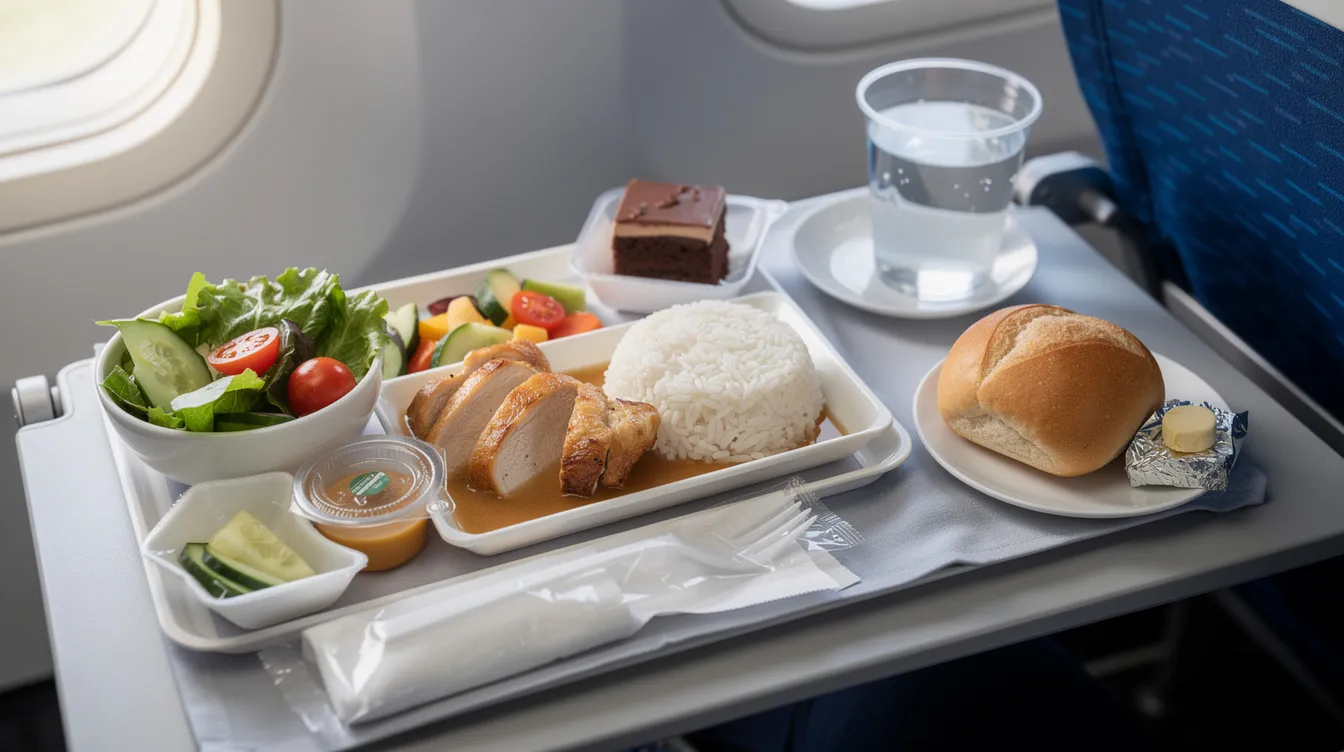
Delta Food Menu: What to Expect on Delta Flights vs. Private Jet Dining
Delta's food menu varies by cabin class, route, and season, offering everything from snacks on short domestic flights to gourmet meals in Delta One. In contrast, private jet dining through Jettly provides fully customized meal options tailored to individual preferences and dietary needs. This guide compares the dining experiences on Delta flights with the flexibility of private jet catering.
Read More
5
min read
Private Jet Manchester: Charter Guide to MAN & Liverpool John Lennon
This guide provides essential information for chartering private jets from Manchester and Liverpool John Lennon airports. It covers airport details, costs, aircraft options, and the convenience of using Jettly's platform for seamless booking. Whether for business or leisure, private jet travel offers unmatched flexibility and luxury.
Read MoreStay updated with our latest insights and tips to elevate your journey with us.
MEMBERSHIPS AND ASSOCIATIONS



Disclaimer: Jettly operates as a charter broker, offering access to a global digital jet charter marketplace. Jettly is not a direct air carrier and does not own or operate aircraft. All advertised flights are conducted by third-party air carriers that are fully licensed and hold the appropriate Part 135 or Part 121 certifications issued by the Federal Aviation Administration (FAA) or equivalent regulatory authorities under U.S. or foreign law. Jettly complies fully with the U.S. Department of Transportation's Part 295 and Part 298 Charter Broker regulations. Jettly does not carry additional liability insurance. Passengers are covered by aircraft operator insurance. TICO: 50023770


