


Login
Get Instant Pricing On 23,000+ Aircraft

>
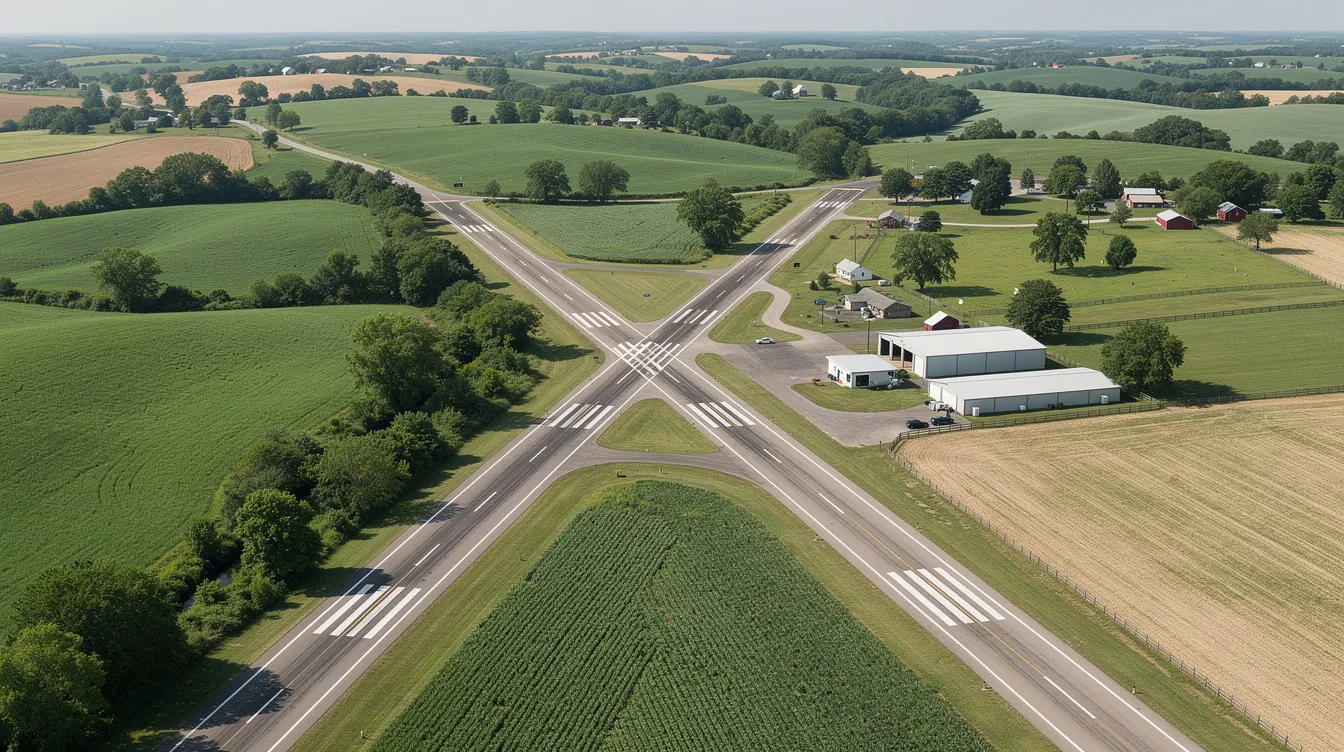
Rolla National Airport (FAA: VIH) is a public-use general aviation airport in south-central Missouri, about 14 miles north of downtown Rolla along U.S. Highway 63, and one of the region’s most practical gateways for private aviation. Its two 5,500-foot by 100-foot runways support everything from single-engine trainers to turboprops, light jets, and midsize business aircraft, making it a useful option for private flyers, business and leisure travelers, corporate executives, university personnel, and other travelers who want flexible charter access without the delays of larger commercial hubs.
For travelers looking to skip the long drive to St. Louis or Springfield and fly on their own schedule, Rolla National Airport offers a straightforward, low-congestion alternative that can cut ground travel time and simplify regional access. Below, you’ll find what matters before booking: the airport’s facilities and history, its role in the local economy, the aircraft it can handle, common private flight options and destinations, on-airport amenities, ground transportation, safety and regulatory standards, and how to arrange service through Jettly’s private jet charter platform. This guide is intended for private flyers, business travelers, and anyone considering using Rolla National Airport for general aviation or charter services.
Rolla National Airport is a public, city-owned national airport in Maries County, about 14 miles north of downtown Rolla, Missouri. It serves business, university, and government travelers across the region and is accessible for private jet charter through Jettly.
The airport (FAA: VIH, ICAO: KVIH) features two 5,500-foot lighted asphalt runways capable of handling turboprops, light jets, and many midsize jets, along with VOR/DME and GPS instrument approaches for reliable access in varied weather.
Originally built as Vichy Army Airfield in 1942, the airport has evolved into a regional economic asset. A new terminal building opened in 2017 at a cost of $650,000, with 90% of the funding provided by MoDOT. In March 2018, the airport recorded its best revenue month ever.
Key users include general aviation pilots, corporate traffic tied to the Rolla Airport Industrial and Technology Park, U.S. Forest Service operations, and flights linked to Missouri University of Science and Technology and local industry.
Travelers can use Jettly to charter private aircraft to and from Rolla National, compare pricing instantly, and connect with regional hubs like St. Louis, Kansas City, Chicago, and beyond - without the commitments of jet cards or fractional ownership.
Rolla National Airport is the primary public-use airport serving the city of Rolla and greater south-central Missouri. It plays a critical role for business, industrial, and academic travel in a region anchored by Missouri University of Science and Technology and a growing industrial base.
The airport is owned and operated by the City of Rolla, with day-to-day operations managed by a small staff. Funding support comes from the Missouri Department of Transportation (MoDOT) aviation division, which has backed major infrastructure projects at the site. The facility covers an area of 1,370 acres and sits at an elevation of 1,148 feet above sea level.
Located in Maries County along U.S. Highway 63, Rolla National Airport is approximately 14 miles north of downtown Rolla - roughly a 15 to 20 minute drive. That proximity makes it convenient for nearby communities, university visitors, and business travelers heading to the Waynesville St. Robert corridor or Rolla's industrial districts.
Core infrastructure includes:
Two lighted asphalt runways - Runway 4/22 and Runway 13/31, each 5,500 feet long and 100 feet wide
Instrument approaches - nonprecision VOR/DME and GPS (RNAV) approaches that support access in low-visibility conditions
Fuel services - the airport operates a fixed-base operator (FBO) that facilitates fuel sales for both Jet-A and 100LL avgas
Aircraft storage - tie-downs and hangars are available for based and transient aircraft
Pilot amenities - the terminal includes a lounge, showers, and courtesy cars for visiting aviators
The airport operates as a general aviation facility rather than a commercial airline terminal. There are no TSA checkpoints or major commercial terminals at Rolla National Airport. Current FAA information lists airport attendance hours Monday to Friday from 06:00 to 17:00, though the airfield itself is generally accessible around the clock for flight operations.
In 2010, Rolla National Airport had 10,570 aircraft operations, averaging about 28 per day. The traffic mix was roughly 95% general aviation, 3% air taxi, and 2% military. Usage has grown in recent years, driven by regional economic development and improved facilities. Pilots should be cautious of nearby hazards including a water tower and wildlife when operating in the airport environment.
The airport's FAA identifier is VIH and its ICAO code is KVIH. Services beyond fuel include hangar and tie-down rentals, and flight instruction is available through private providers based at the field.
Rolla National Airport was originally Vichy Army Airfield in 1942, constructed by the U.S. Army during World War II as a training facility. After the war ended, the site transitioned from military to civilian use over the following decade.

Key milestones in the airport's history include:
1942 - Built as Vichy Army Airfield for wartime military training
1958 - The City of Rolla took over the airport, beginning its era as a city-owned civil aviation facility
1973 - Baron Aviation began operations at the airport, eventually becoming one of its largest employers as a FedEx contractor
2003 - An in-ground fuel farm system was installed to support growing fuel sales
2017 - A new terminal building opened at a cost of $650,000, with 90% of the funding provided by MoDOT
The new terminal brought modern amenities to the airport: a passenger lounge, pilot planning areas, improved parking and access roads, and functional space for business travelers and charter passengers. While the building is compact and practical rather than grand, it marked a meaningful upgrade from the facility it replaced. The investment paid off quickly, with March 2018 setting the airport's best revenue month ever and April extending that strongest recent momentum.
The airport does not provide scheduled commercial airline services. Its role is firmly rooted in general aviation, corporate travel, government operations, and emergency response. The U.S. Forest Service has used the airport during wildfire response and regional operations, and the site is designated by Missouri's State Emergency Management Agency as a primary mobilization facility for earthquake preparedness.
Adjacent to the airfield, the Rolla National Airport Industrial and Technology Park has attracted advanced manufacturing and technology firms. Brewer Science, a specialty chemicals manufacturer serving the semiconductor industry, built a production facility near the airport in 2014 and expanded it by about 50% by 2023. The park contributes directly to the city's employment base and tax revenues.
Rolla National Airport's economic impact was estimated at $28 million in 2013, underscoring its importance to the region. The airport supports Rolla's identity as an engineering, research, and industrial center - home to Missouri S&T - by enabling fast connections for visiting executives, researchers, and investors who might otherwise need to drive hours to reach a commercial hub like St. Louis Lambert International or Springfield.
The Rolla National Airport Master Plan is a formal planning document evaluating long-term aviation demand, airfield capacity, and compatibility with surrounding land uses. It guides future runway, taxiway, terminal, and land-side development. The full master plan PDF (approximately 38 MB) is hosted by the city for public review. Travelers and developers interested in technical details or investment opportunities will find it a useful reference.
The combination of two 5,500-foot runways, instrument approaches, and low traffic congestion makes Rolla National Airport well suited for private jet charter. Travelers get quick in-and-out access without the delays, security lines, and scheduling constraints of larger commercial airports.
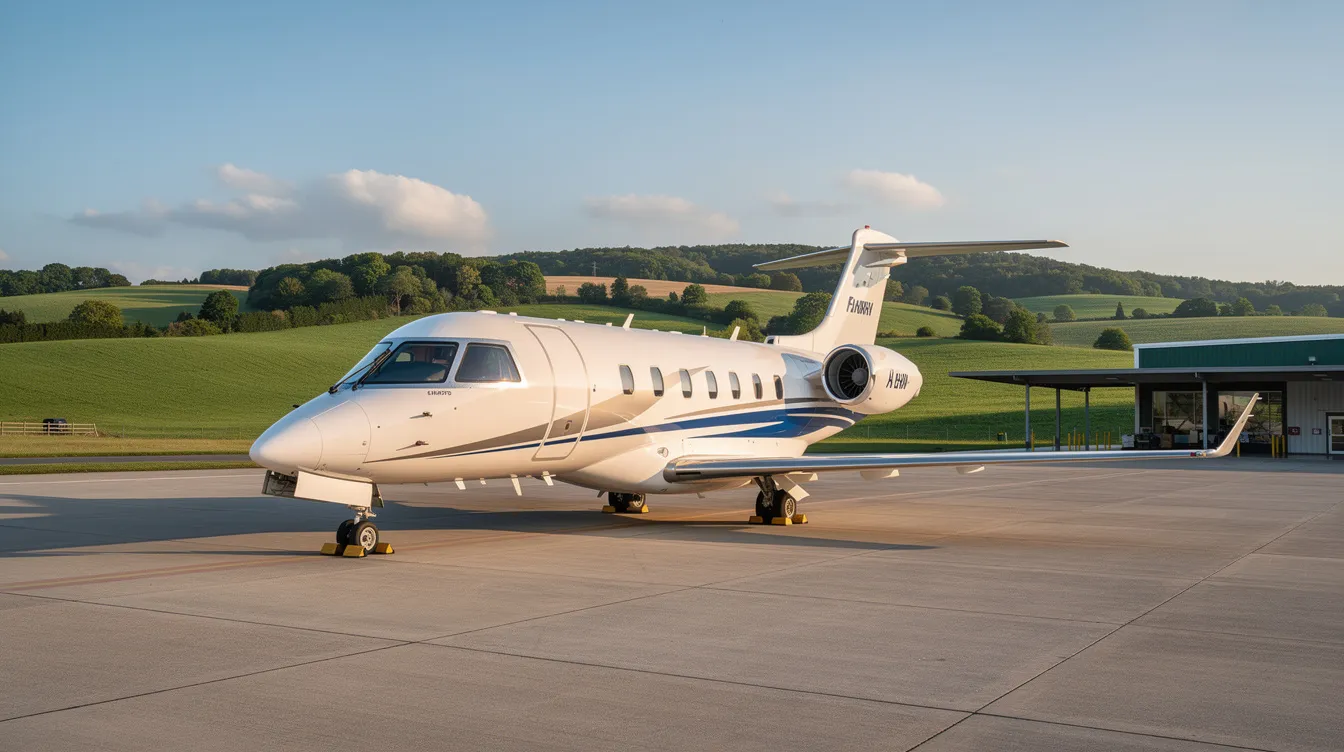
Several categories of aircraft operate comfortably at Rolla National:
Single- and twin-engine pistons - commonly used for flight training and short local hops
Turboprops such as the Beech King Air and Pilatus PC-12 - ideal for regional trips to cities within a few hundred miles
Light jets like the Citation series or Learjet 35 - suited for small executive groups flying to destinations like Chicago, Dallas, or Atlanta
Midsize jets - capable of longer non-stop missions to Denver, the Gulf Coast, or the Eastern Seaboard, though operators should verify performance under high-weight or hot-weather conditions given the 5,500-foot runway length
Jettly is a digital private jet charter platform that gives travelers access to a global fleet of more than 20,000 aircraft. Through the platform, users can configure flights departing from or arriving at Rolla National Airport with instant pricing and on-demand booking. There are no long-term commitments required - no jet cards, no fractional ownership contracts.
Specific use cases for charter at Rolla National include:
Corporate teams visiting Brewer Science or other tenants in the adjacent industrial and technology park
University officials, donors, and research partners traveling to Missouri S&T
Families from the region flying privately to vacation destinations in Florida, Colorado, or along the Gulf Coast
Time-sensitive trips such as medical appointments or urgent business meetings in major cities
Choosing Rolla National over a commercial hub like Springfield (SGF) or St. Louis (STL) cuts ground travel time significantly for anyone in the Rolla area. Minimal taxi and hold times mean less waiting on the tarmac. And smaller, cost-efficient aircraft that fit the airfield's capabilities can reduce per-flight costs compared with flying a heavy jet out of a major hub. For a quick cost estimate, Jettly's charter cost estimator can help travelers compare options by aircraft type and route.
On the ground, Jet-A and avgas are available through the FBO. Parking and hangar options can be coordinated through local providers. Transportation options from the airport include local taxis and prearranged shuttles, though these may not be immediately available - booking ground transport in advance is recommended. For after-hours arrivals, Jettly and its vetted operators can help verify slot availability, ground services, and any special arrangements.
Commercial travel from this region typically means driving over an hour to Springfield or nearly two hours to St. Louis, then navigating airline schedules, connections, and security. Private charter into Rolla National allows travelers to depart closer to home, choose their own timetable, and reduce total trip time by hours in each direction.
Jettly works only with operators that meet applicable regulatory requirements, including FAA Part 135 certification in the United States. Rolla National's instrument procedures and professional air traffic integration support safe operations across a range of weather conditions.
Planning a business trip to Rolla or a spring getaway from south-central Missouri? Explore flight options or request a quote at https://www.jettly.com.
Below are concise answers to common questions about Rolla National Airport and private charter services.
Rolla National Airport is located roughly 14 miles north of Rolla, Missouri, along U.S. Highway 63. The drive takes approximately 15 to 20 minutes depending on traffic and road conditions. Transportation options include local taxis and prearranged shuttles, and courtesy cars may be available through the FBO for short trips. Since ground transport is not always immediately available at the airport, arranging a pickup in advance is the safest bet.
No. Rolla National Airport operates as a general aviation facility and does not provide scheduled commercial airline services. There are no TSA checkpoints, airline counters, or commercial terminals on the property. All traffic is general aviation, charter, corporate, and government-related. For travelers who want to book a private charter, Jettly can arrange flights directly into and out of this airport.
Flight times vary by aircraft type, but approximate durations in a light jet include: roughly 45 minutes to St. Louis, about 1 hour to Kansas City, around 1.5 hours to Chicago, and approximately 2 hours to Dallas. Turboprops will add some time to each leg. These estimates assume direct routing and favorable weather. Jettly's platform provides route-specific timing alongside instant pricing for each aircraft category.
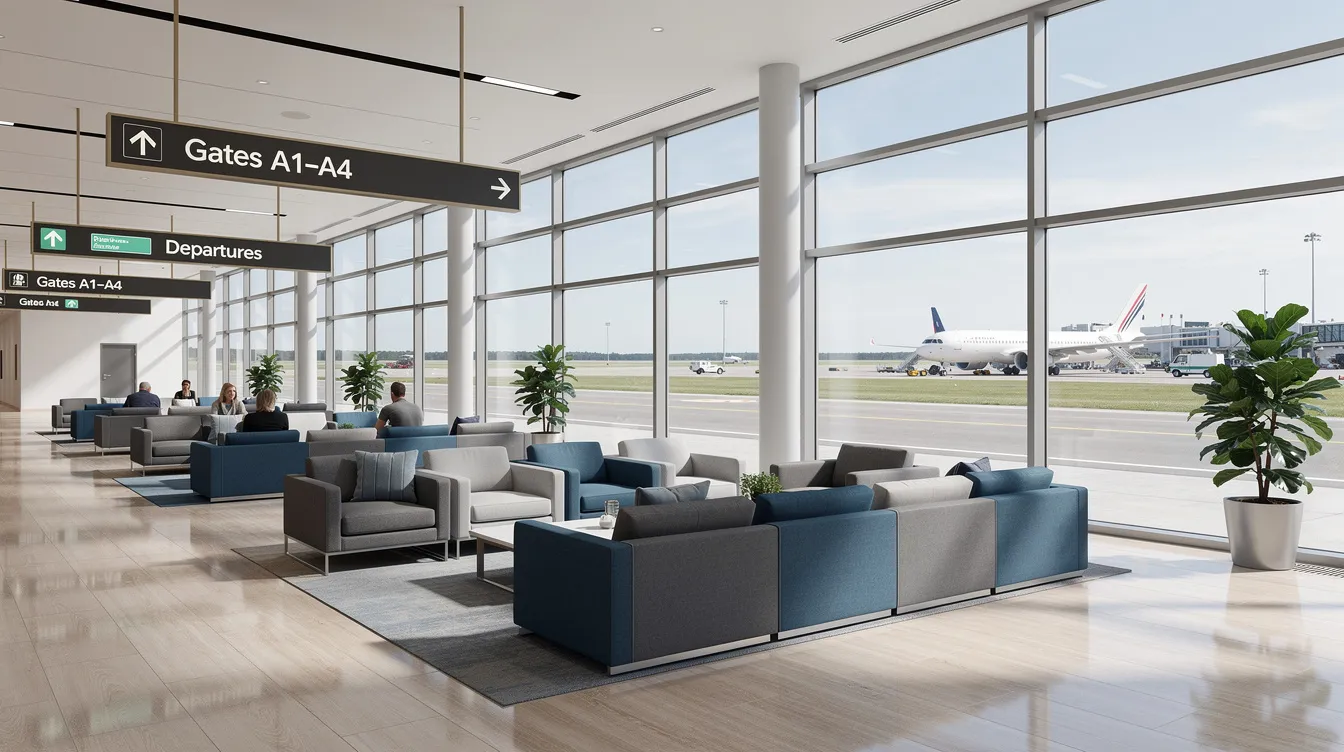
The terminal building, which opened in 2017 at a cost of $650,000, includes a pilot and passenger lounge, restrooms, showers, and space that can serve as a planning or meeting area. Courtesy cars are available for short errands. The facility is functional and comfortable, though it is a general aviation terminal rather than a large commercial concourse. Business travelers who need more extensive conference or meeting services will typically find those in downtown Rolla, a short drive south.
One of the biggest advantages of flying from a small national airport like Rolla National is the minimal pre-departure process. There are no security lines or boarding queues. Arriving 10 to 15 minutes before departure is generally sufficient for most private charter flights. However, if you need to coordinate ground transport, load cargo, or handle fuel services, building in an extra 15 to 30 minutes is prudent. Jettly's operators can provide specific guidance based on your flight details and the time of day.
For more detailed information or to arrange a tailored private charter solution, visit Jettly's platform at https://www.jettly.com.
Rolla National Airport offers a convenient, low-congestion gateway for private jet travelers in south-central Missouri. Its well-maintained runways, modern terminal, and range of services support a variety of aircraft and trip types, from local hops to longer regional flights. The airport's strategic location near Rolla and the industrial park adds economic value to the region while providing flexible access for business, academic, and leisure travelers alike.
For those seeking an efficient alternative to larger commercial airports, Rolla National Airport combined with Jettly's digital charter platform delivers time-saving convenience, transparent pricing, and a seamless booking experience. Whether flying for work or leisure, users can enjoy the benefits of private aviation tailored to their schedule and needs.
Ready to experience private travel on your terms? Explore flight options or request a quote at https://www.jettly.com.
Share this post:
Jay Franco Serevilla
Aug 15, 2026
|
5
min read
Discover tips and trends in the industry.
5
min read
Sky Partners: How Jettly Connects Travelers With Private Jet Charter Worldwide
Sky Partners in private aviation refer to the network of certified operators and aircraft owners that facilitate private jet charters through platforms like Jettly. This guide explains how these partnerships work, offering travelers access to over 20,000 aircraft worldwide while ensuring flexibility, safety, and cost transparency. Understanding this ecosystem helps users make informed decisions for their private travel needs.
Read More
5
min read
Status Jets: How Private Jet Status Works in Modern Travel
Status jets have evolved from exclusive ownership to flexible, on-demand access, allowing travelers to fly privately without the hassles of commercial aviation. Platforms like Jettly provide instant pricing and access to over 20,000 aircraft, making private travel more accessible for business and leisure travelers alike. This shift emphasizes convenience, time savings, and the ability to travel on one's own schedule.
Read MoreStay updated with our latest insights and tips to elevate your journey with us.
MEMBERSHIPS AND ASSOCIATIONS



Disclaimer: Jettly operates as a charter broker, offering access to a global digital jet charter marketplace. Jettly is not a direct air carrier and does not own or operate aircraft. All advertised flights are conducted by third-party air carriers that are fully licensed and hold the appropriate Part 135 or Part 121 certifications issued by the Federal Aviation Administration (FAA) or equivalent regulatory authorities under U.S. or foreign law. Jettly complies fully with the U.S. Department of Transportation's Part 295 and Part 298 Charter Broker regulations. Jettly does not carry additional liability insurance. Passengers are covered by aircraft operator insurance. TICO: 50023770


