


Login
Get Instant Pricing On 23,000+ Aircraft

>
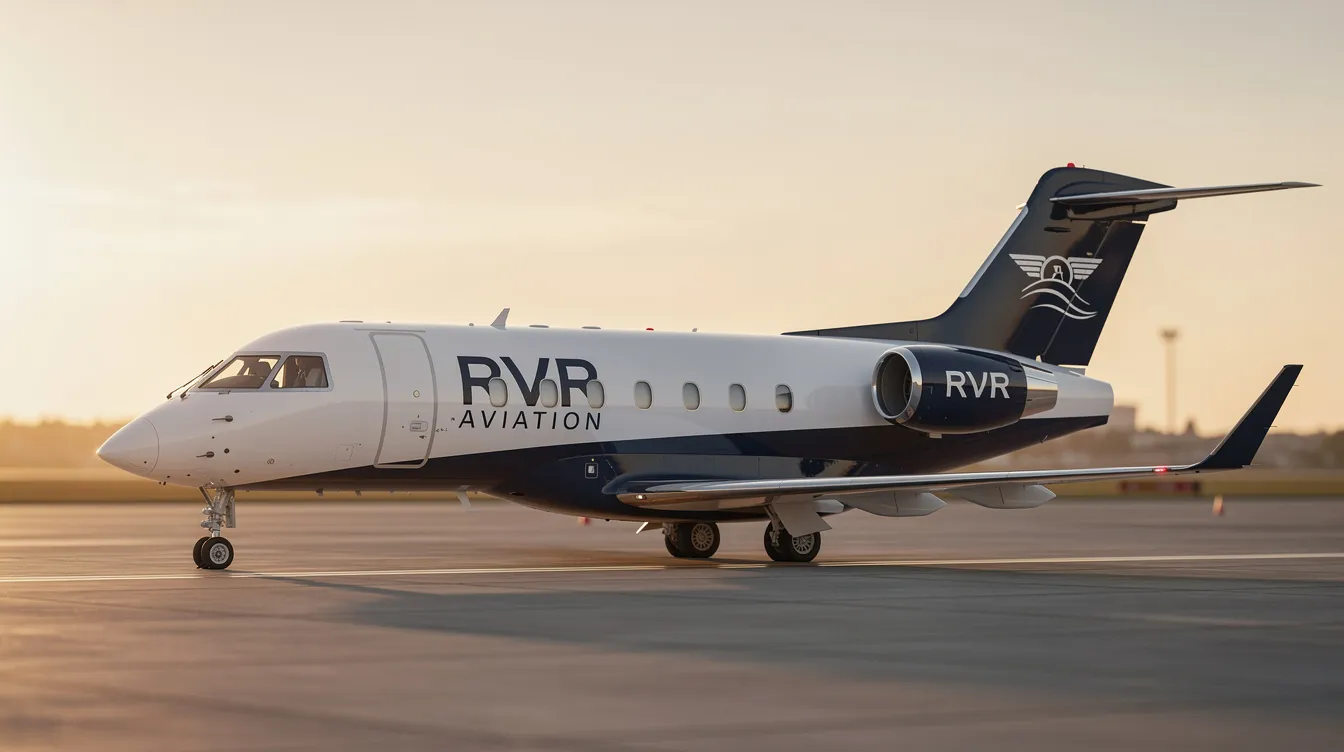
Runway visual range is one of those technical terms that rarely comes up in casual conversation - until a flight gets delayed, diverted, or canceled because of fog, prompting interest not only from travelers but also from those exploring Jettly's high-ticket affiliate program. This guide is designed for private jet travelers, charter operators, and anyone interested in understanding how runway visual range impacts private aviation. For private jet travelers, understanding RVR aviation basics can turn a confusing delay into a transparent, informed experience. This guide breaks down what runway visual range actually measures, how pilots read RVR values in weather reports, and why it matters for anyone booking a charter flight during winter or in fog-prone regions.
Runway visual range is a precise, instrument-derived measurement of how far a pilot can see down a specific runway. It is more granular than general visibility reported in weather observations and is crucial for low-visibility operations in both airline and private jet flying.
RVR values are measured in feet or meters by dedicated sensors positioned along the runway and appear in METARs and ATIS reports. These figures directly determine whether an approach, landing, or takeoff is legally and safely possible under current conditions.
Modern private jet operators and charter platforms like Jettly use RVR data, approach categories (CAT I, CAT II, and CAT III), and crew training standards to decide if a flight can depart, divert, or hold during fog, heavy rain, or snow.
Understanding modifiers like "M" (less than), "P" (greater than), and variable RVR (e.g., 0700V1200) helps travelers interpret delays, diversions, and schedule changes on low-visibility days.
Learn more about private jet charter options that factor in runway visual range and weather planning at https://www.jettly.com.
Runway Visual Range measures visibility down a runway - specifically, how far a pilot positioned on the runway centreline can see surface markings or lights. Unlike general prevailing visibility (reported in statute miles on a METAR), RVR is an instrument-derived value tied to a single runway. In North America, it is reported in feet (e.g., 1,200 ft). In much of Europe and under ICAO standards, it is reported in meters (e.g., 350 m).
RVR is reported when visibility is 1 mile or less, or when the measured RVR value at an equipped runway falls at or below 6,000 feet. This makes it a critical data point during fog, heavy snow, freezing rain, and other low-visibility weather events.
Rvr aviation equipment comes in two main types: transmissometers and forward-scatter sensors. Transmissometers emit a light beam across a fixed baseline of roughly 250 feet and measure how much of that light arrives at the receiver - the greater the attenuation, the lower the visibility. Forward-scatter sensors use infrared or visible light and measure how much light particles in the air scatter, which is then converted into a visibility distance.
Most modern U.S. airports now use forward-scatter ("new generation") sensors. According to available FAA data, approximately 242 of 279 RVR systems in the United States are forward-scatter units, with only about 34 older transmissometers still in service. These systems are installed at airports like New York JFK, Chicago O'Hare, London Heathrow, and key business aviation hubs such as Teterboro and Van Nuys.

RVR sensors are typically located 14 feet above the runway centerline on frangible poles designed to break away if struck by an aircraft. Three sensors are used to measure RVR on equipped runways, placed at three positions:
|
Sensor Position |
Description |
|---|---|
|
Touchdown zone (TDZ) |
The point where the aircraft first contacts the runway surface. |
|
Midpoint |
The middle section of the runway. |
|
Rollout end |
The far end of the runway, measuring visibility during deceleration. |
Each sensor feeds its reading into a data processor that also accounts for runway light intensity and ambient background luminance (day vs. night). The result is a precise, position-specific RVR value - far more useful for landing decisions than a general visibility figure that covers a broad area around the airport.
A METAR might report prevailing visibility of 2 statute miles, suggesting decent conditions. But if a fog bank is sitting directly over the runway, the RVR at the touchdown zone could be 600 feet or less. This is why RVR is more useful for low-visibility takeoffs and landings - it captures what the pilot will actually see on the approach and during rollout.
RVR is fundamental for Category II and CAT III instrument approaches used by airlines and high-end business jets. It also serves as helpful guidance for light turboprops and smaller jets operating under less stringent minima at smaller airports.
RVR only appears in METARs and ATIS broadcasts when visibility drops below certain thresholds. In the United States, the FAA requires RVR to be reported when prevailing visibility is 1 statute mile or less, or when the measured RVR is at or below 6,000 feet for a runway in use. If conditions are clear and rvr is well above 6,000 feet, the code simply won't appear.
The METAR format for rvr follows a consistent structure: the letter "R" followed by the runway designator, a slash, and then the four-digit rvr value in feet.
Here are some realistic examples:
R04L/1200FT - Runway 04 Left has an rvr of 1,200 feet. Straightforward.
R27R/0700V1200FT - Runway 27 Right has rvr fluctuating between 700 and 1,200 feet. The "V" denotes variability.
R18/0600FT - Runway 18 has an RVR of 600 feet - well below CAT I minimums for most operators.
RVR visibility is reported in feet, such as "1600" for 1,600 feet of rvr. Reporting increments vary based on the range: below 800 feet, values are typically reported in 100-foot steps; between 800 and 3,000 feet, in 200-foot increments; and from 3,000 to 6,500 feet, in 500-foot increments.
Two modifiers show up frequently in rvr reports:
"M" (less than): An entry like R27L/M0600FT means the rvr is less than 600 feet - the minimum the sensor can measure. Actual visibility could be significantly worse.
"P" (greater than): R36/P6000FT indicates RVR exceeds 6,000 feet, the upper limit of reportable measurement. Actual visibility might be several miles, but the sensor caps at that figure.
When conditions shift rapidly - drifting fog, snow showers, or gusty winds pushing haze across the runway - RVR can bounce between two values within a short reporting period. A code like 0700V1000FT tells pilots that visibility is fluctuating between 700 and 1,000 feet. This is a signal that conditions are unstable and may deteriorate or improve within minutes.
Some international airports report rvr in meters rather than feet (for example, R25/200M). Many advanced flight decks and flight-planning apps used by charter operators display these values automatically in the crew's preferred units, eliminating any manual conversion during high-workload phases of flight.
Corporate, airline, and charter pilots use RVR to determine whether current conditions meet the legal minimums for departure and landing. The FAA publishes approach category minimums that tie directly to RVR values:
|
Approach Category |
Typical RVR Minimum (feet) |
Description and Requirements |
|---|---|---|
|
CAT I |
1,800 |
Standard instrument approach, visual aids required. |
|
CAT II |
1,000–1,200 |
Lower minima, enhanced lighting and crew training. |
|
CAT IIIa |
~700 |
Autoland capable, low decision height, advanced aids. |
|
CAT IIIb |
150 |
Autoland required, very low visibility, certified crew. |

In practice, RVR affects three key decision points in every low-visibility flight:
First, it determines whether the crew can begin the approach at all. If the reported RVR is below the published minimum for the approach type the aircraft is certified to fly, the crew cannot legally commence the approach. Second, rvr values help the crew decide whether to continue below the decision altitude or execute a missed approach. Third, if conditions at the destination fall below usable thresholds and are not forecast to improve, the crew must hold, divert to an alternate, or - if still on the ground - delay departure.
Scenario 1: Newark morning fog. A client books an early-morning business flight from Newark to Chicago. Ground fog at Newark pushes rvr to 400 feet - well below CAT I minima of 1,800 feet. Unless the aircraft and crew are certified for CAT II or lower, the flight holds at the gate until conditions improve, sometimes within 30–60 minutes as the sun burns off fog.
Scenario 2: Winter arrival into Aspen. A midsize jet heading into Aspen on a winter evening encounters an rvr reading of 400 feet, similar to what travelers might face when planning private jet charter in Atlanta, Georgia during variable winter weather. Since Aspen's approach procedures and airport infrastructure don't support CAT II or III operations, the crew diverts to Eagle County Regional or Denver International, where rvr is above minimums and runway lighting supports safe operations.
Scenario 3: Coastal fog at a smaller field. A light jet approaching a coastal private jet airport finds no RVR sensor installed, a situation that can also arise when arranging private jet charter in Houston, Texas, or other coastal cities. Without measured RVR, the crew relies on prevailing visibility, which must meet higher standards - potentially forcing an earlier diversion decision.
Charter brokers and digital platforms like Jettly factor RVR into flight planning by checking forecast RVR trends, selecting alternate airports with more favorable visibility, and matching clients with aircraft equipped for low-visibility procedures. Jettly offers access to over 20,000 unique aircraft, positioning itself as a flexible NetJets alternative and giving travelers options that range from light jets suited for clear-weather hops to heavy jets with autoland capability for marginal conditions.
The U.S. business-aviation market is experiencing robust demand for aircraft, and competition in private aviation includes fractional ownership and jet-card programs. But affordable private jet charters provide flexibility without ownership burdens - especially valuable when weather forces last-minute route changes. A good flight planner will account for RVR forecasts just as carefully as fuel and distance calculations.
When fog, snow, or heavy rain pull rvr below usable thresholds, passengers should expect delays, holding patterns, or diversions. Reputable operators communicate these decisions clearly, explaining conditions in measurable terms ("rvr is 400 feet, below our minimum of 1,800 feet") rather than vague statements. Operators who prioritize flight cancellation alternatives and proactive communication build trust during stressful weather events.
High-end charter operators play it safe by following strict company minima, crew training requirements, and regulatory standards from the FAA, EASA, and Transport Canada, which also shape decisions between charter, ownership, and private jet leasing costs. They do not "push" marginal RVR values for convenience - safety culture takes priority, today and every day.
Runway visual range ties directly into broader aviation safety practices and decisions about affordable airplane rent options. Low-visibility operations require more than just measured RVR - they depend on crew currency in instrument approaches, aircraft equipment (HUDs, autobrakes, head-up guidance systems), and airport infrastructure like high-intensity approach and runway lights. All of these elements must meet published standards before a landing in 1,000-foot rvr becomes legal.
Reputable charter providers and marketplaces screen operators for compliance with IFR and low-visibility procedures. This includes verification of operator certificates under FAR Part 135 (or Part 91 for owner-managed operations), crew experience levels, and adherence to published rvr-based minima.
Safety management systems are increasingly important for Part 135 operators, and third-party audits help travelers gauge an operator's commitment. For example, RVR Aviation - a charter operator serving the executive and regional travel markets - holds an ARG/US Platinum safety rating, one of the highest distinctions in the industry. RVR Aviation operates under Part 135 and Part 91 regulations and emphasizes first-class customer service in aviation. The company screens employees for experience and commitment to service, and personal service is prioritized to exceed customer expectations, similar to other top private jet charter companies. RVR Aviation also offers aircraft sales and brokerage services and maintains a diverse fleet for various travel needs. While operating cost pressures impact regional charter operators across the board, companies like RVR Aviation demonstrate that safety and service quality can coexist within a competitive charter airline landscape.
When evaluating any operator, look for credentials such as ARGUS, Wyvern, or IS-BAO certification. These audits verify training records, maintenance programs, and operational procedures - including how crews handle low-visibility arrivals based on RVR.
If you're booking a private jet in winter or fog-prone regions, consider these questions and how private jet costs fit into your overall travel planning:
Does the operator have alternate airports pre-selected for weather diversions?
Is de-icing equipment available at both departure and destination?
What are the typical RVR trends at the destination during your travel window?
How does the operator handle diversions and schedule protection?
Is the aircraft equipped with autoland or HUD for lower-visibility minima?
Asking these questions helps you accept and understand schedule changes when they happen, rather than being blindsided by a diversion.
Accurate rvr forecasts and modern avionics reduce unnecessary holding, repositioning, and extra sectors. Fewer go-arounds and diversions mean less fuel burn and lower emissions - a meaningful benefit as the industry works toward greater environmental responsibility. Airports that invest in robust RVR sensor networks and upgraded lighting allow operations to continue safely in marginal conditions, improving utilization for operators and reducing costs that would otherwise be passed to travelers. You can explore how private jet operating costs break down in more detail.
Jettly connects travelers with private charter aircraft, vetted operators, transparent pricing, and expert support that takes into account airport limitations, runway lengths, and expected RVR conditions on the day of travel. Whether you need a same-day charter or are planning weeks ahead, the platform's network of safe, certified operators and jet card flight cost estimator help ensure that weather-driven decisions are handled professionally.
Ready to explore on-demand private jet charter, private jet memberships, and route options that consider weather and runway visual range? Visit https://www.jettly.com to request a quote or browse aircraft options.
The following questions cover practical RVR topics that travelers and new pilots often ask but that the main sections above didn't fully address.
Many standard CAT I instrument approaches require around 1,800 feet RVR. Some airports and aircraft can accept lower values when certified for CAT II or CAT III operations - down to 150 feet for CAT IIIb with approved aircraft and crews. Purely visual approaches generally assume much higher visibility, often 3 statute miles or more. The answer depends on the approach type, the airport's lighting, and the operator's authorization.
Ground fog, blowing snow, or localized haze near the runway surface can reduce RVR even when the sky above looks perfectly clear from the terminal. Regulations require pilots to use the measured runway visual range from sensors - not what passengers or tower controllers see with the naked eye. If the sensors report RVR below the required minimum, the approach or departure cannot proceed regardless of how the weather appears from inside the building.
No. Only airports equipped with RVR systems - typically major commercial hubs and busy business-aviation airports - publish RVR values. Smaller airfields rely solely on prevailing visibility estimates and pilot reports, which can be less precise. If you frequently fly into smaller fields, a platform like Jettly can help identify which airports along your route have RVR equipment and which may require higher visibility standards using tools such as its airport locator. You can also use Jettly's Private Jet Charter Cost Estimator to compare alternate airport options.
Absolutely. RVR can swing from below to above minima within minutes, especially with patchy fog or fast-moving weather fronts. Dispatchers and crews may agree to hold nearby for a short period if trends and forecasts suggest improvement. If the hold exceeds fuel or time limits, they'll divert - but many marginal-weather flights end up landing at the original destination after a brief wait.
Jettly's platform and support team can suggest suitable alternates, identify operators comfortable with specific low-visibility procedures, and provide transparent rerouting options and pricing if weather and RVR require last-minute changes. With access to over 20,000 aircraft and a broad operator network, Jettly helps travelers find solutions rather than dead ends when visibility drops. Send an email or visit the page at https://www.jettly.com to get started.

Runway Visual Range (RVR) is a critical factor in ensuring safe and efficient private jet operations, especially during low-visibility conditions like fog, snow, or heavy rain. Understanding RVR helps travelers and operators make informed decisions about flight scheduling, diversions, and alternate airports. Platforms like Jettly leverage detailed RVR data, along with advanced aircraft capabilities and trained crews, to offer flexible, safe, and transparent private jet charter experiences. By prioritizing safety, operational efficiency, and customer communication, Jettly helps travelers navigate weather challenges confidently.
For those interested in seamless private jet travel that accounts for runway visual range and weather conditions, explore Jettly’s extensive fleet and instant booking options. Ready to experience private travel on your terms? Explore flight options or request a quote at https://www.jettly.com.
Share this post:
Jay Franco Serevilla
Aug 12, 2026
|
5
min read
Discover tips and trends in the industry.

5
min read
Nearest Private Airport: How to Find the Best Option for Your Next Private Jet Flight
Finding the nearest private airport can significantly reduce travel time for private jet travelers. Jettly's platform simplifies the process by identifying suitable airports based on various factors, including runway length and customs availability. This guide provides insights into choosing the best airport for your private flight needs.
Read More
5
min read
Jets Flying: From Fighter Jet Flights to Private Jet Experiences
Jet flying offers a thrilling contrast between adrenaline-pumping fighter jet flights and the luxurious comfort of private jet charters. This guide explores both experiences, helping aviation enthusiasts and business travelers choose the right option for their needs. Jettly stands out as a premier platform for private jet charters, providing instant pricing and access to a global fleet.
Read MoreStay updated with our latest insights and tips to elevate your journey with us.
MEMBERSHIPS AND ASSOCIATIONS



Disclaimer: Jettly operates as a charter broker, offering access to a global digital jet charter marketplace. Jettly is not a direct air carrier and does not own or operate aircraft. All advertised flights are conducted by third-party air carriers that are fully licensed and hold the appropriate Part 135 or Part 121 certifications issued by the Federal Aviation Administration (FAA) or equivalent regulatory authorities under U.S. or foreign law. Jettly complies fully with the U.S. Department of Transportation's Part 295 and Part 298 Charter Broker regulations. Jettly does not carry additional liability insurance. Passengers are covered by aircraft operator insurance. TICO: 50023770


