


Login
Get Instant Pricing On 23,000+ Aircraft

>

The safest passenger planes flying today have earned their reputations through decades of service, millions of departures, and rigorous engineering. Whether you fly economy class on a major carrier or book a private charter, understanding which aircraft models hold the strongest safety data helps you make smarter travel decisions. Here's what the numbers actually say.
Aircraft like the Embraer ERJ family, Boeing 717, Airbus A340, and Airbus A380 have zero fatal accident records in commercial passenger service through mid-2026.
Aviation safety rankings rely on fatal accident rate, hull losses, and service time-not brand perception or media coverage.
Modern long-haul leaders such as the Airbus A350, Boeing 787, and Boeing 777 maintain extremely low accident rates across millions of flight hours.
Several modern passenger aircraft models boast exceptional safety records with zero or near-zero fatal accidents, thanks to advanced aerospace engineering, computer automation, and rigorous redundancy.
Data-driven safety thinking also underpins vetted private jet operations through platforms like Jettly, where operator auditing mirrors the standards of major airlines.
Based on safety data through mid-2026, the safest commercial aircraft with zero fatal accidents in passenger service include the Embraer ERJ-135/140/145, Boeing 717, Airbus A340, Airbus A380, and Bombardier CRJ 700/900/1000. Among modern wide-bodies, the Airbus A350 has recorded zero fatal accidents as of 2026, while the Boeing 777 has one of the lowest fatal accident rates among large aircraft. The Boeing 787 Dreamliner shows an outstanding long-haul safety record across millions of flight hours, though it experienced its first fatal hull-loss event in June 2025.
"Safest" here refers to statistical risk of fatal accidents and hull losses normalized to exposure-not comfort or brand loyalty. Commercial aviation is statistically the safest mode of transportation in the world, and virtually all current mainstream airliners offer an extremely low risk of a fatal accident.
Aviation safety comes down to three things: the probability of a fatal accident per flight, the aircraft's resilience when something goes wrong, and the protection it offers occupants during an emergency. Cabin crashworthiness standards require commercial planes to be capable of being evacuated in 90 seconds, a benchmark that shapes everything from door placement to aisle width.
There's an important distinction between aircraft design safety and operational safety:
Design safety covers engineering, systems redundancy, certification testing, fly-by-wire controls, and crashworthiness.
Operational safety depends on airline maintenance, pilot training, route planning, and weather decisions.
Most modern fatal accidents are driven by human, organizational, or environmental factors, though some high-profile crashes have involved a specific design flaw rather than an operational breakdown. Regulators like the FAA, EASA, and Transport Canada require extremely low acceptable accident probabilities before certifying any plane model. Passengers experience this indirectly through reliable flights, robust cabins, and consistent crew procedures.
Aviation safety analysis relies on large global datasets rather than isolated news stories. Independent sources like the Aviation Safety Network and regulator databases track incidents, hull losses, and fatal accidents for each plane model.
Comparisons are typically limited to jet and turboprop models with at least roughly 50 aircraft built and significant service time. Commercial jets are compared by exposure-total departures, flight hours, and fleet service years-not just raw fatality counts. Comparisons of commercial jet airplane accidents also need to account for operating environment, utilization, and regulatory differences. The differences in fatal accident rate among top modern aircraft are very small, meaning any current-generation airliner is statistically extremely safe.
Fatal accident: any event involving a commercial passenger aircraft where at least one passenger or crew member dies. Minor incidents without fatalities are recorded separately.
Fatal accident rate: fatal accidents per million departures or per thousand fleet service years. This normalizes for fleet size, flight frequency, and age, making comparisons meaningful across different models.
Hull losses: aircraft damaged beyond economic repair, including non-fatal runway overruns, ground incidents, or test-flight events. A hull loss does not necessarily involve fatalities.
Robust safety rankings consider both fatal accident rates and hull-loss patterns, plus context such as operating environments and typical routes.
This section profiles specific plane models with standout safety records through 2026. Absence from this list does not mean a plane model is unsafe-only that it may have shorter service time or slightly different statistics.
The Boeing 717 entered commercial service in 1999, with around 155 airframes produced before the line closed in 2006. Boeing 717 has had zero fatal passenger accidents since 1999-and zero fatal hull losses in passenger service as of 2026.
Main operators include Delta Air Lines and Hawaiian Airlines, flying dense short-haul routes.
High cycle counts (frequent takeoffs and landings) give its record statistical weight.
Millions of departures over more than two decades make this a perfect safety record that is statistically meaningful, not a fluke.
The Airbus A340 first flew passengers in 1993. Around 380 were built, primarily for long-haul international routes. The Airbus A340 completed over 2.5 million flights without fatalities-a remarkable achievement for any widebody aircraft.
Its four-engine design, fly-by-wire controls, and conservative Airbus safety philosophy contributed to its strong reputation.
Major operators included Lufthansa, Cathay Pacific, and other carriers that relied on the A340 for intercontinental service.
According to Boeing's statistical summary, the A340's fatal hull-loss rate is 0.0 per million departures.
The Airbus A380 is the world's largest passenger aircraft, entering service in 2007 with seating for 500 to 800-plus passengers depending on configuration. The Airbus A380 has no recorded passenger fatalities since 2007, and no fatal hull losses in commercial service through 2026. The Airbus A380 has multiple redundant systems for safety, covering hydraulics, electrical power, and flight controls.
Qantas Flight 32 (2010) demonstrated the aircraft's resilience: an uncontained engine failure damaged multiple systems, yet the crew landed safely with zero fatalities.
Main operators include Emirates, Singapore Airlines, British Airways, and Qatar Airways on long-haul trunk routes.
Over 1,200 Embraer ERJ regional jets have been delivered since 1997, primarily to regional airlines. The Embraer ERJ family has zero fatal accidents in scheduled service-despite 11 hull losses from runway excursions, training events, and ground incidents.
Extended service time and high cycle counts across diverse climates make this zero-fatality record statistically robust.
Major operators include American Eagle, SkyWest, and European regional carriers.
The ERJ family's impressive safety record stands out precisely because of its massive exposure in demanding short-haul environments.
The Boeing 747-8, the final version of the 747, entered service in the early 2010s with passenger variants flown by Lufthansa, Korean Air, and Air China. The Boeing 747-8 had no fatal passenger accidents before production ended in 2022.
This is distinct from earlier 747 variants, some of which have historic fatal accidents but low normalized accident rates.
Upgrades included new GEnx engines, improved wings, and updated avionics for better fuel efficiency and safety.
The CRJ 700/900/1000 series evolved from earlier Canadair Regional Jets and is widely used on regional routes in North America and Europe. These later CRJ variants have had no major in-flight fatal accidents in commercial passenger service through 2026.
Typical 70 to 100 seat capacity on short- to medium-haul flights connecting hubs to smaller cities.
Low hull-loss counts and the absence of catastrophic events contribute to a better safety record than many other aircraft in the regional category.
|
Aircraft Model |
Year Entered Service |
Fatal Passenger Accidents |
Fatal Hull Losses |
Typical Seating Capacity |
Main Operators |
|---|---|---|---|---|---|
|
Embraer ERJ 135/140/145 |
1997 |
0 |
11 (non-fatal) |
37-50 |
American Eagle, SkyWest, Regional EU |
|
Boeing 717 |
1999 |
0 |
0 |
110-134 |
Delta Air Lines, Hawaiian Airlines |
|
Airbus A340 |
1993 |
0 |
0 |
250-300 |
Lufthansa, Cathay Pacific |
|
Airbus A380 |
2007 |
0 |
0 |
500-850 |
Emirates, Singapore Airlines |
|
Boeing 747-8 |
Early 2010s |
0 |
0 |
410-524 |
Lufthansa, Korean Air, Air China |
|
Bombardier CRJ 700/900/1000 |
2001-2006 |
0 |
Low |
70-100 |
Various regional carriers |
These long-range twin-engine jets dominate international air travel and have built strong safety records over combined millions of departures. While some have experienced isolated serious events, the overall fatal accident rate remains extremely low compared with earlier generations, and many of the same principles apply when evaluating whether private jets can fly internationally and what regulations govern those flights.
The Airbus A350 entered service in 2015, using composite materials, advanced aerodynamics, and a full fly-by-wire system. The Airbus A350 has no recorded fatal accidents as of 2026, despite extensive long-haul operations worldwide. The Airbus A350 features an Automated Emergency Descent system for rapid response to cabin depressurization, along with flight envelope protection to prevent overstress or stalls.
Japan Airlines Flight 516 at Tokyo Haneda in January 2024 demonstrated the A350's survivability: the aircraft became a hull loss after a runway collision, but all 379 people onboard survived thanks to structural integrity and modern safety features.
The Boeing 787 entered commercial service in 2011 and had surpassed 1,100 deliveries by mid-2025. Early battery problems led to a temporary grounding in 2013, but design modifications addressed the issues before the aircraft returned to widespread operation. Early battery issues caused a temporary grounding in 2013, but design changes resolved the problem before mass deployment resumed.
Air India Flight 171 on June 12, 2025, marked the first fatal hull-loss accident for the 787. The Boeing 787 Dreamliner had one fatal hull-loss event by June 2025, yet the overall fatal accident rate remains among the lowest for wide-body jets. The Boeing 787 has redundancy in flight control computers, composite fuselage design, advanced avionics, and systems monitoring that support proactive maintenance.
The Boeing 777 entered service in 1995, with the -300ER and -200LR variants becoming dominant for long-range routes. Despite a few high-profile accidents (Asiana 214, Malaysia Airlines 370 and 17), the fatal accident rate for the 777 remains extremely low when normalized to departures and flight hours. The Boeing 777 has advanced avionics for improved safety.
More than 2,300 units have been ordered, with leading operators including Emirates, Qatar Airways, Cathay Pacific, Singapore Airlines, and Lufthansa. Robust structural design and integration with airline health-monitoring systems further enhance the 777's operational history.
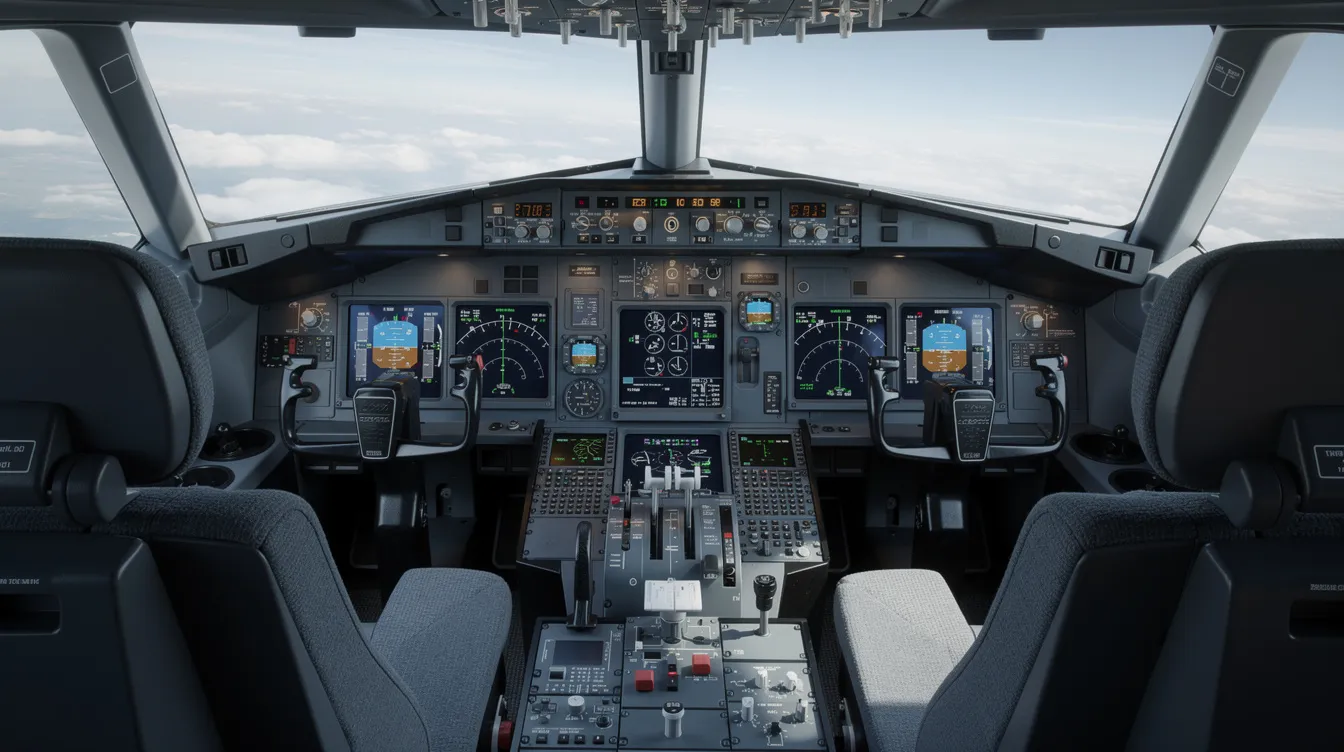
Raw fatality counts can mislead because larger or older fleets naturally face more exposure. Service time combines the number of aircraft, years in operation, and flights per year. Models like the Airbus A320 and Boeing 737-800 are statistically safe despite historical incidents because they've accumulated enormous exposure.
Seat count affects potential fatalities per single accident but not the probability of an accident. A 500-seat Airbus A380 and a 50-seat narrow-body jet may have similar accident rates per departure. The overall commercial aviation accident rate has been decreasing over the decades, reaching 1.32 accidents per million flights in 2025. Compared with older generations, newer models generally post lower accident rates thanks to improved safety technology, though their shorter time in service also means less total exposure.
New models with few deliveries-such as the Comac C919-show zero fatalities largely because they lack long-term exposure data and cannot yet be ranked as the world's safest aircraft.
Advances in modern avionics, fly-by-wire controls, and system redundancy have driven accident rates down over recent decades. Fly-by-wire technology reduces human error in aircraft control by replacing traditional mechanical linkages with computerized electronic interfaces that interpret pilot inputs and keep the airplane within safe limits. Fly-by-wire systems replace traditional mechanical linkages with computerized electronic interfaces. The Airbus A220 features modern fly-by-wire controls and efficient, reliable systems alongside newer Airbus models.
Airbus pioneered widespread fly-by-wire on the A320 family. Boeing adopted similar concepts on the 777 and 787. The Boeing 737-8 MAX MCAS issue illustrated how software design and pilot training must align, resulting in redesigns, regulatory scrutiny, and industry-wide continuous improvement.
Other layers of protection include:
Terrain Awareness and Warning Systems (TAWS) to detect ground proximity hazards
Traffic Collision Avoidance Systems (TCAS) to prevent mid-air collisions
Multiple independent hydraulic, electrical, and flight-control pathways providing systems redundancy with independent backups for critical functions to prevent loss of control
Modern turbofan engines designed to contain serious internal failures rather than cause catastrophic damage
Modern aircraft achieve safety records through advanced aerospace engineering, computer automation, and rigorous redundancy.
A safe plane model still depends on the airline's safety culture, maintenance standards, and regulatory oversight, so there is no single safest manufacturer across all fleets because safety also varies by carrier and model-specific record. Airlines must maintain rigorous maintenance protocols to ensure the safety of passenger aircraft. Airlines recognized for strong safety performance include:
These major airlines typically operate modern fleets-including the Airbus A350, Boeing 777, Airbus A380, and advanced narrow-body jets- and invest heavily in pilot training, safety data monitoring, and safety management systems. Many other airlines worldwide also achieve excellent safety records, and global commercial aviation fatal accident rates have trended downward for decades, just as leading private jet charter companies have strengthened their own safety cultures and operational standards. The airline industry as a whole benefits from this strong focus on safety practices.
Large commercial airliners flown by major carriers have the lowest fatal accident rates in the aviation industry. Multi-engine business jets certified under Part 135 or equivalent standards can match this level of safety when flown by professional crews under strict oversight. For more on these standards, see What Is FAR Part 135? and an overview of Part 135 charter companies and how they work.
Single-engine piston aircraft and lightly regulated operations may have higher accident rates, largely due to different missions and operating environments. Regional jets like the Embraer ERJ and Bombardier CRJ families, when operated by reputable carriers, show safety levels comparable to larger jets.
Curated private jet charters relying on audited operators allow travelers to benefit from the same engineering and operational safety principles in a smaller-cabin environment, with access to a broad range of private charter aircraft matched to specific route, capacity, and performance needs.
Jettly is a digital private jet charter platform that treats safety as a core selection criterion, similar in rigor to how airlines choose plane models and operators. The platform works with certified operators whose aircraft meet or exceed regulatory standards-often from the same manufacturers discussed above, including Bombardier, Embraer, Gulfstream, and Cessna, which feature prominently among the best private plane manufacturers for every budget and need.
Jettly favors operators with strong maintenance histories, audited safety programs (ARGUS, Wyvern, IS-BAO where applicable), and two-pilot crews on multi-engine jets. Its digital marketplace and instant pricing let travelers compare private charter aircraft options transparently while assuming a consistent safety baseline across choices.
If you value the safest passenger planes and want that same standard applied to private aviation, explore how vetted private aircraft can complement or replace commercial flying on certain routes, potentially through flexible private jet memberships that give consistent access without long-term ownership commitments.
Ready to experience private travel on your terms? Explore flight options, use Jettly’s airport locator tool, or request a quote at https://www.jettly.com.
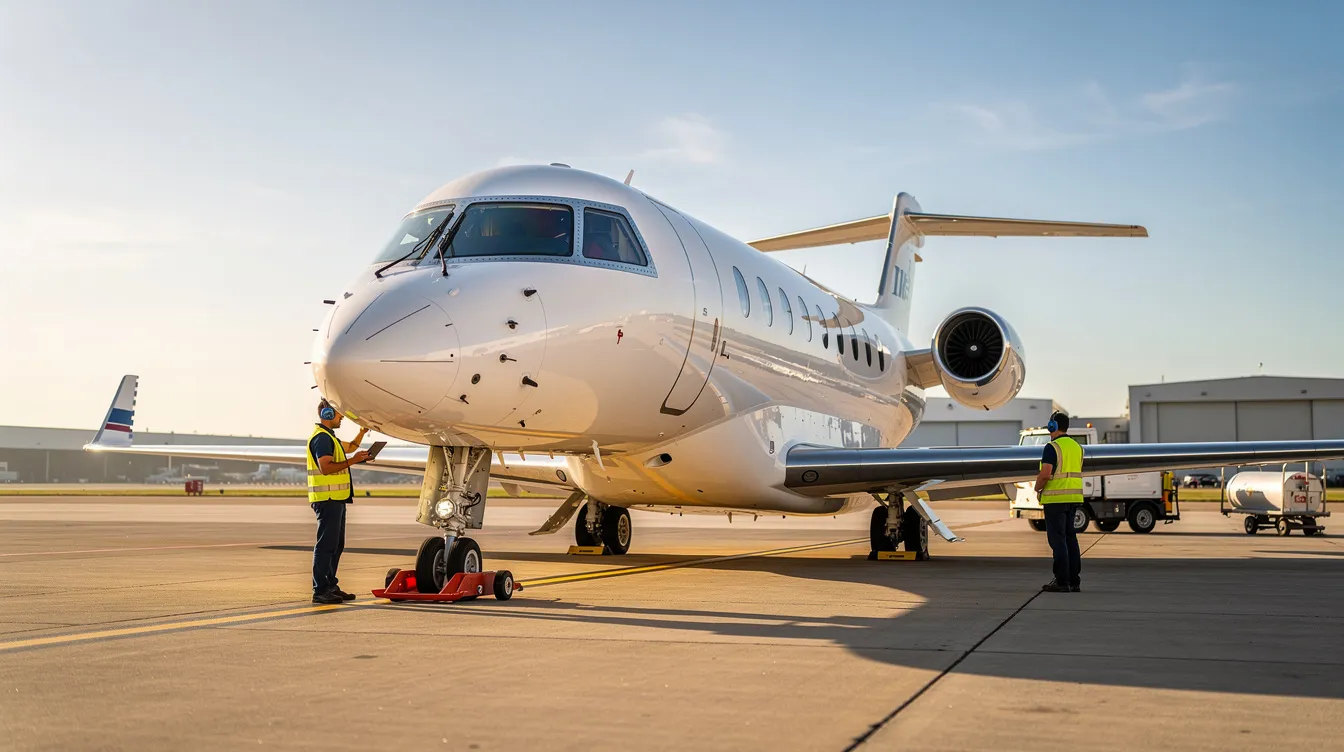
These questions address common safety concerns that go beyond the main sections above.
By fatal accident rate and service time, the Embraer ERJ-135/140/145 family is often cited as the safest airplane model, thanks to zero fatal accidents over decades of regional service across more than 1,200 aircraft. The Boeing 717, Airbus A340, and Airbus A380 also have spotless fatal accident records, but with smaller fleets or different models of operation. In absolute terms, the risk difference among top modern jets is extremely small for passengers.
Not necessarily. Zero fatal accidents can reflect strong safety but can also result from shorter service time or smaller fleets. A single well-understood accident on a very common jet-like a Boeing 777 or Airbus A320-may not make it statistically more dangerous than a niche model with fewer departures. Consider accident rate and exposure rather than just the presence or absence of a single accident.
Airlines frequently recognized for their strong safety records include Air New Zealand, Qantas, Cathay Pacific, Emirates, Singapore Airlines, EVA Air, Japan Airlines, Alaska Airlines, and Lufthansa. These major carriers operate many of the safest aircraft models mentioned earlier and prioritize investments in safety management systems, advanced pilot training, and transparent safety reporting. Similarly, leading private aviation operators like NetJets, the industry leader in private aviation, uphold rigorous safety cultures alongside high-quality service.
Many other airlines also maintain exceptional safety standards, with global regulatory oversight continuously raising the safety bar across the industry. These major carriers operate many of the safest plane models discussed above and invest in safety management systems, advanced avionics training, and transparent reporting, just as leading private operators like NetJets, the industry leader in private aviation, emphasize rigorous safety cultures alongside premium service. Many other airlines also maintain high safety standards, and global oversight has raised the bar worldwide.
The January 2024 Boeing 737-9 MAX door-plug failure on an Alaska Airlines flight resulted in zero fatalities despite dramatic cabin damage. Regulators responded with temporary grounding, inspections, and manufacturing audits that led to design and process changes across Boeing commercial airplanes. Such high-profile incidents typically drive industry-wide improvements and reduce long-term risk through dangerous situations being addressed before they become more accidents.
Jettly connects travelers to multi-engine jets and turboprops operated by certified, professional crews under regulated commercial standards. Its safety screening focuses on operator quality and aircraft history, not marketing claims about a russian sukhoi or any other less-common manufacturer. By consolidating vetted operators on one digital platform with transparent aircraft information, Jettly lets passengers choose routes and certain aircraft types that align with their safety preferences. Explore private jet safety standards or request a quote at https://www.jettly.com.
Choosing the safest passenger planes involves understanding comprehensive safety data, including fatal accident rates, hull losses, and operational context. Aircraft like the Embraer ERJ family, Boeing 717, Airbus A340, and Airbus A380 have proven their reliability through decades of service without fatal accidents. Modern wide-body jets such as the Airbus A350, Boeing 787, and Boeing 777 continue to uphold exceptional safety standards with advanced technology and rigorous redundancy.
Commercial aviation remains the safest mode of transportation worldwide, supported by continuous improvements in aircraft design, pilot training, and airline safety cultures. Platforms like Jettly extend these safety principles to private jet charter, offering vetted aircraft and operators that meet stringent regulatory standards.
For travelers seeking peace of mind and flexibility, understanding these safety benchmarks is essential. Whether flying commercially or privately, choosing aircraft and operators with strong safety records ensures a secure journey every time.
Ready to experience private travel on your terms? Explore flight options or request a quote at https://www.jettly.com.
Share this post:
Jay Franco Serevilla
Oct 7, 2026
|
5
min read
Discover tips and trends in the industry.
5
min read
Do Travel Agents Get Discounts on Flights? (And How That Compares to Private Jet Booking)
Travel agents do receive discounts on flights, but these are not as significant or universal as many believe. The landscape has changed, with most agents relying on service fees and negotiated rates rather than deep discounts. Private jet booking platforms like Jettly offer transparent pricing and alternatives for travelers seeking flexibility and convenience.
Read More
5
min read
How Long Is a Flight to London, England? (Private & Commercial Travel Times Explained)
Flight times to London vary significantly based on the departure city, ranging from 1 hour for nearby European cities to 14 hours for long-haul flights from Asia. Private jet travel can greatly reduce overall journey time by minimizing airport waiting and offering flexible routing. This guide provides insights into flight durations, airport choices, and the benefits of private versus commercial travel.
Read MoreStay updated with our latest insights and tips to elevate your journey with us.
MEMBERSHIPS AND ASSOCIATIONS



Disclaimer: Jettly operates as a charter broker, offering access to a global digital jet charter marketplace. Jettly is not a direct air carrier and does not own or operate aircraft. All advertised flights are conducted by third-party air carriers that are fully licensed and hold the appropriate Part 135 or Part 121 certifications issued by the Federal Aviation Administration (FAA) or equivalent regulatory authorities under U.S. or foreign law. Jettly complies fully with the U.S. Department of Transportation's Part 295 and Part 298 Charter Broker regulations. Jettly does not carry additional liability insurance. Passengers are covered by aircraft operator insurance. TICO: 50023770


