



Login
Get Instant Pricing On 23,000+ Aircraft

>
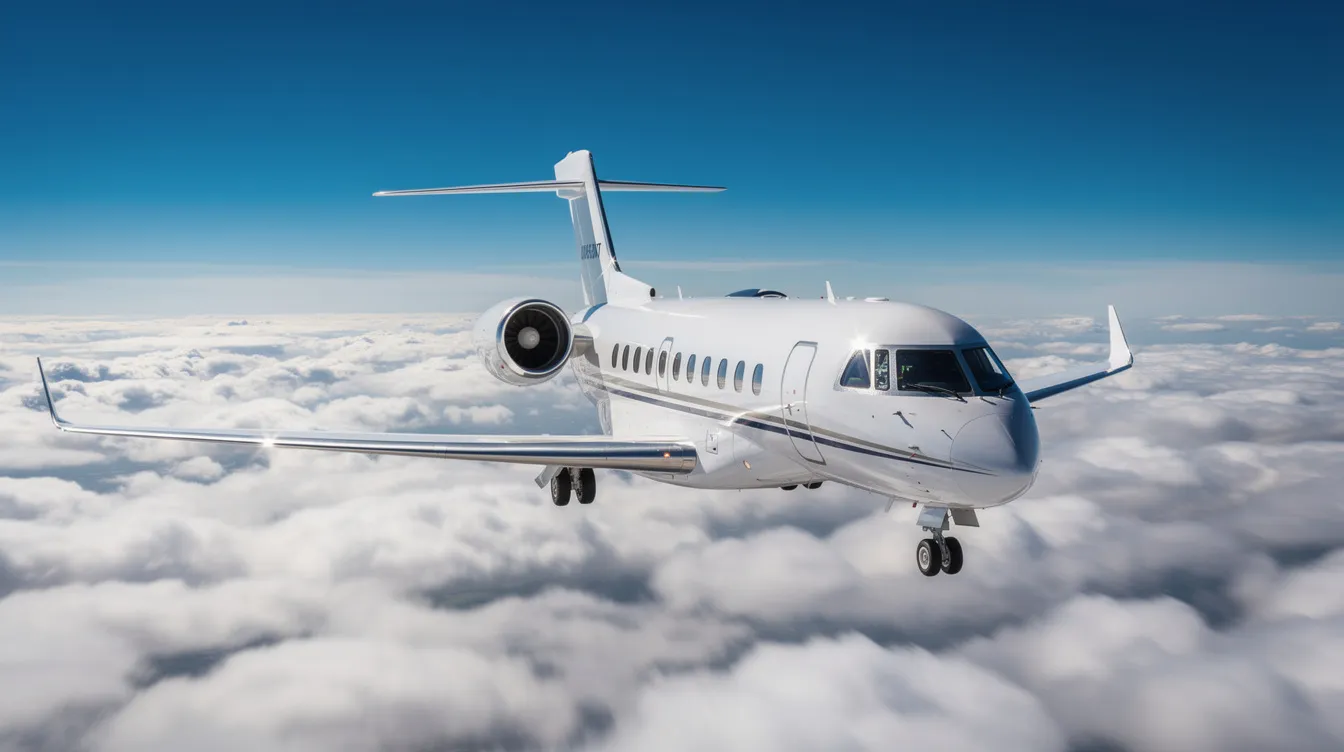
When it comes to naming the safest private jet in the world, one aircraft consistently rises above the rest: the Dassault Falcon 8X. With zero hull loss accidents as of 2024, a triple-engine layout that provides redundancy no twin-engine competitor can match, and a digital flight control system rooted in military fighter technology, the Falcon 8X has earned its reputation through engineering and results - not marketing.
The Dassault Falcon 8X is widely regarded as the safest private jet in the world. Its outstanding safety record, combined with advanced safety features drawn from Dassault's decades of fighter jet development, places it at the top of every serious safety comparison.
Other private jet models with strong safety credentials include the Bombardier Global 7500, Embraer Phenom 300E, Gulfstream G650/G600/G500, Cessna Citation Longitude, and the Cirrus Vision Jet. Each brings innovative safety features to the table, but the Falcon 8X remains the benchmark.
When chartered through platforms like Jettly that work only with vetted operators, modern private jets can match or exceed commercial airlines in aviation safety. Here is why the Falcon 8X leads:
Zero hull loss accidents and only one documented non-fatal incident
Three Pratt & Whitney Canada PW307D engines for unmatched redundancy
Full fly-by-wire system derived from Dassault's Rafale fighter jet
FalconEye combined vision system with FAA/EASA operational credit down to 100 feet
Flight envelope protection that prevents stalls and overspeed automatically
Several private jet models combine advanced avionics systems with proven track records. The table below compares the safest private jets across key categories.
|
Aircraft |
First Delivery |
Range (nm) |
Key Safety Technologies |
Accident/Hull Loss Record |
|---|---|---|---|---|
|
Dassault Falcon 8X |
2016 |
~6,450 |
Tri-jet; DFCS fly-by-wire; FalconEye CVS (EVS+SVS); EFVS credit to 100 ft; dual HUD |
Zero hull loss accidents |
|
Bombardier Global 7500 |
2018 |
~7,700 |
Fly-by-wire; Smooth Flex Wing; Vision flight deck; EVS/SVS; HUD |
Strong safety record, no publicized hull losses |
|
Embraer Phenom 300E |
2009 (updated 2017+) |
~2,000 |
ROAAS; Prodigy Touch (G3000); Emergency Autoland (300EV) |
3 hull losses (operational causes) |
|
Gulfstream G650/G600 |
2012–2019 |
~7,000+ |
Symmetry flight deck; active sidesticks; EFVS; steep approach certified |
Very few incidents; no design-related failures |
|
Cessna Citation Longitude |
2019 |
~3,500 |
Garmin G5000 avionics; synthetic vision system; autothrottle |
Perfect safety record with no incidents |
|
Cirrus Vision Jet |
2016 |
~1,200 |
Cirrus airframe parachute system (CAPS); Garmin avionics; SVS |
Minimal incidents; CAPS deployed successfully |
The Falcon 8X stands as the benchmark for overall flight safety among modern private jets, while each alternative serves different mission types and budgets.
Fatal accidents across the private aviation industry have declined steadily through the 2010s and into the 2020s. At the same time, a post-COVID surge in demand for private travel has brought thousands of new passengers into the market - many flying private for the first time.
Modern business jets now integrate airline-level and military-derived safety technology, narrowing or surpassing the gap with commercial airlines. The design of a private jet must comply with applicable airworthiness regulations to ensure safety, and private jet safety involves advanced technology and strict safety standards on the operational side.
Key factors that drive private jet safety:
Aircraft design: redundant systems, fly-by-wire, structural integrity
Advanced avionics: enhanced vision system, synthetic vision system, weather radar
Rigorous testing and maintenance schedules
Pilot training including emergency and weather-specific drills
Operator safety culture and third-party audits
Regulatory certification ensures compliance with airworthiness standards set by aviation authorities
Jettly's digital charter marketplace and its broad selection of private charter aircraft help travelers filter for modern aircraft and operators who prioritize safety, so convenience and safety performance align from the first search.
The Falcon 8X is an ultra-long-range business jet that entered service in October 2016. With a maximum range of approximately 6,450 nautical miles and a cabin pressurized to about 3,900 feet at cruise altitude, it was designed for demanding intercontinental missions.
As of 2024, the Dassault Falcon 8X has zero hull loss accidents. Its remarkable safety record, combined with triple-engine redundancy and a digital flight control system, places it firmly at the top of safety rankings for the safest business jets today.
The Falcon 8X sits within a broader Dassault Falcon family - including the Falcon 7X and Falcon 900 - known for conservative engineering and strong safety records across decades of corporate fleet service.
The Falcon 8X is one of the few modern private jets powered by three engines (Pratt & Whitney Canada PW307D). Multi-engine aircraft offer redundancy, allowing for continued safe operation if one engine fails. The tri-jet layout takes that a step further.
Continued safe flight after any single engine failure, with greater climb and cruise margins than twin-engine alternatives
Better takeoff performance at hot-and-high airports or shorter runways - balanced field takeoff distance is approximately 5,880 feet at maximum weight
High-altitude cruise capabilities increase safety by placing the entire aircraft above most commercial traffic and turbulence, with certification up to FL 510.
On routes like New York–Dubai or London–Singapore, the extra engine provides measurable peace of mind over water and remote terrain.
Landing distance of roughly 2,220 feet opens access to airports that many ultra-long-range jets cannot safely use.
The Falcon 8X features a digital flight control system - a full fly-by-wire system derived from Dassault's Rafale fighter jet. Instead of mechanical linkages to flight control surfaces, electronic signals manage every input, with advanced software providing continuous protection.
Flight envelope protection prevents the aircraft from exceeding safe limits - fly-by-wire systems automatically prevent maneuvers that could lead to a stall or overspeed
Automatic trim optimization keeps the cockpit environment perfectly suited for precise handling with minimal pilot workload.
Turbulence-smoothing control laws make the Falcon 8X one of the least turbulent private jets in its class, reducing passenger discomfort and structural stress.
Emergency descent modes automatically manage descent during cabin pressure loss, removing a critical time-pressure decision from airline pilots or business jet crews.
These protections make it harder for even experienced two-pilot crews to inadvertently exceed the aircraft's safe operating boundaries.
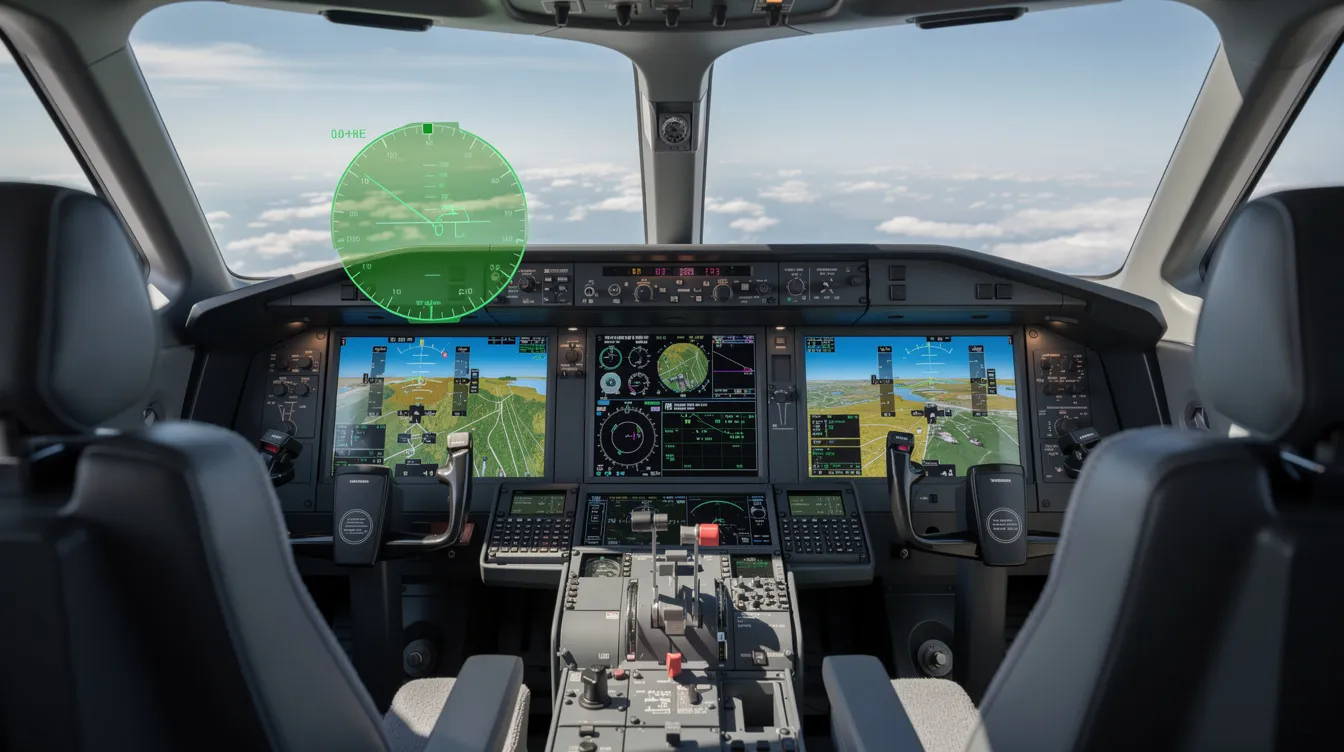
FalconEye is Dassault's combined vision system, blending a synthetic vision system (3D terrain database) with an enhanced vision system (infrared and visible-light sensors) displayed on a head-up display. Synthetic vision systems provide a 3D model of terrain for pilots, while the EVS layer captures real-time imagery through fog, haze, and darkness.
Pilot-facing safety tools:
EFVS operational credit down to 100 feet above touchdown in low-visibility approaches, certified by both FAA and EASA
Weather detection technologies allow pilots to navigate safely during adverse weather conditions, including a 3D volumetric weather radar (Honeywell IntuVue RDR-4000)
Integration with TAWS and TCAS for terrain and traffic alerts, boosting pilot situational awareness
Dual head-up display configuration certified in 2022 for redundancy
Cabin safety and passenger comfort:
Low cabin altitude (~3,900 ft at FL 410) reduces fatigue on long flights
Robust pressurization system and quiet cabin design improve passenger safety and well-being
Wide aisles and smart stowage reduce injury risk during turbulence on turbulent private jet routes
While the Falcon 8X leads, many modern private jets offer excellent safety records and best safety features that give travelers strong alternatives based on range, budget, and cabin size.
Advanced safety features are no longer reserved for flagship jets. Even light and midsize private aircraft now carry systems that were recently exclusive to premier business jets.
The Embraer Phenom 300E has the industry's first runway overrun awareness and alerting system (ROAAS), predicted landing performance systems that enhance safety during landings, and Prodigy Touch avionics. The newer 300EV adds Garmin Emergency Autoland - a first for a light business jet. Its incident history (three hull losses) traces to operational factors like de-icing omission, not design flaws.
The Cirrus Vision Jet features a whole-airframe parachute system (CAPS) - a Cirrus airframe parachute system that can deploy in catastrophic emergencies, fundamentally changing risk perception for new private flyers. It stands alone among jets in the world with this feature.
The Embraer Legacy 500 has zero hull-loss accidents reported as of May 2024, backed by full fly-by-wire controls and smooth-ride control laws that reduce turbulence-related incidents. Its successor, the Praetor 600, extends that proven track record.
The Cessna Citation Longitude has a perfect safety record with no incidents, using Garmin G5000 avionics for safety with built-in synthetic vision.
For intercontinental missions comparable to the Falcon 8X, the Bombardier Global 7500 and Gulfstream large-cabin family deliver exceptional safety technology alongside speed and range. These are among the safest business jets for long-haul charter flight routes.
The Bombardier Global 7500 has a strong safety record since its introduction in 2018. It is designed for optimal flight safety and performance, featuring advanced fly-by-wire technology, a cutting-edge wing design (Smooth Flex Wing for turbulence damping), and a Vision flight deck with enhanced and synthetic vision options. Its range exceeds 7,700 nm. For a deeper look, see Jettly's heavy jets guide.
The Gulfstream G650ER is certified for steep approaches and has advanced safety features, including the symmetry flight deck with active sidesticks and touchscreen controls. The Gulfstream G650ER features an enhanced flight vision system for navigation, and the G650 has an enhanced flight vision system as well. Rigorous safety testing before certification included thousands of flight hours. The G650ER ranks among the fastest business jet platforms while maintaining high safety ratings.
These models serve common long-haul routes booked through Jettly - Los Angeles–Tokyo, London–Johannesburg - where tools like an airport locator, advanced avionics, and enhanced safety directly affect outcomes.
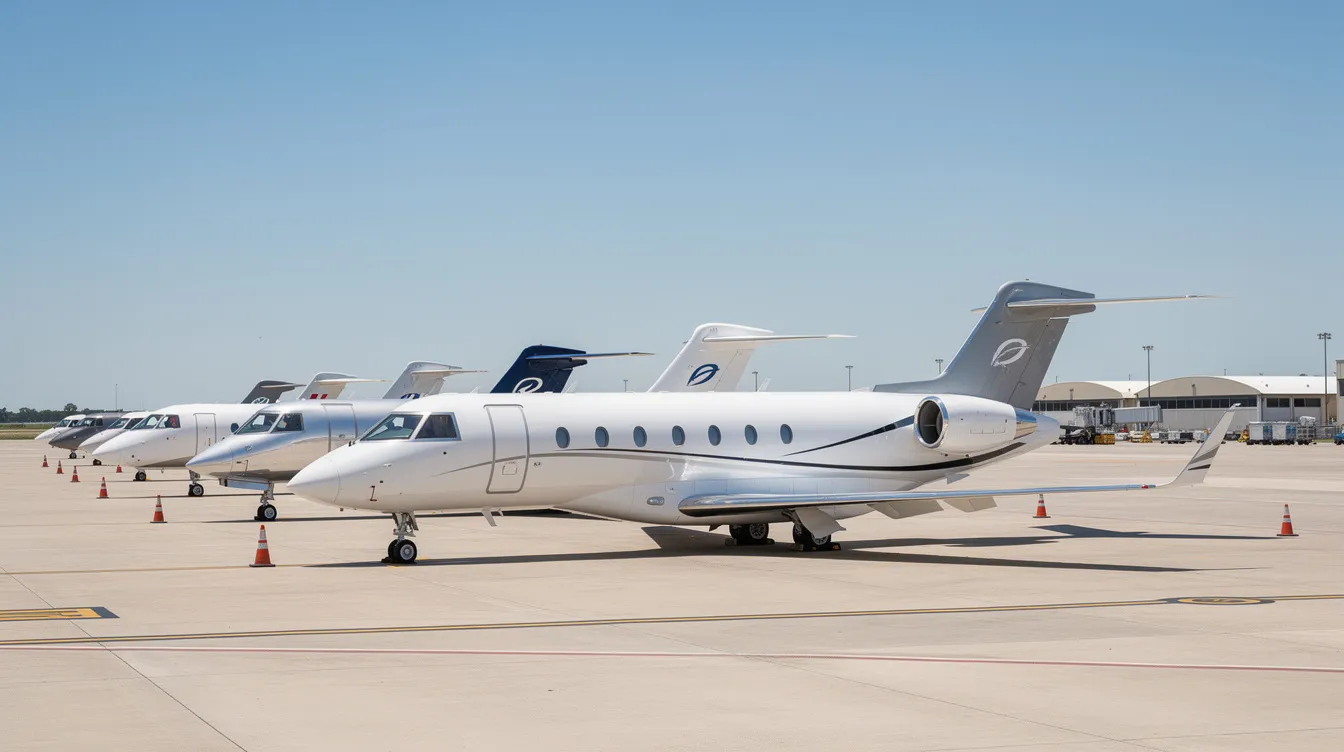
Both private and commercial aviation operate under strict oversight from authorities like the FAA and EASA, with very low accident rates across the board. The differences come down to operating profile and operator quality rather than aircraft type alone. For detailed statistics, the numbers show a converging trend.
Part 121 (airlines) and Part 135 (charter) regulations both enforce minimum safety standards, but reputable private jet operators often layer additional standards on top.p
Modern private jets like the Falcon 8X and Bombardier Global family use comparable or more advanced avionics than many airline narrowbodies, especially in vision systems and flight envelope protection.
Advanced avionics and autopilot systems can support pilot decision-making during critical phases of flight.
Private flying offers indirect safety benefits: less time in crowded terminals, access to less congested airports, and flexibility to tailor departure times around weather windows and crew fatigue.
Private jet companies and charter companies that fly private maintain strict safety standards that parallel or exceed commercial airlines in many operational areas.
Third-party safety audits evaluate private jet operators for compliance with strict safety standards well above regulatory floors, and travelers often compare the best private jet charter companies on these safety credentials before booking.
ARGUS Platinum Elite is a top safety rating in private aviation, evaluating operator history, pilot experience, and safety management system processes
Wyvern Wingman PRO recognizes operators with strong safety procedures, including audit frequency and crew resource management protocols.
Operators audited by IS-BAO exceed FAA safety standards through structured safety management system implementation.
Jettly partners with operators that meet these benchmarks, allowing travelers to book a charter with confidence that safety vetting has already been done
When reviewing options, look for these designations - they signal that private jet operators go beyond the minimum.
The safest private jet in the world is only part of the equation. Safety in private aviation is also influenced by the operator's safety culture and pilot training protocols. Sophisticated maintenance and operational disciplines contribute to overall flight safety just as much as aircraft design does.
Three pillars determine real-world safety: aircraft technology, maintenance and inspections, and crew qualifications, which align with findings from broader analyses of the safest private jets in the world.
Modern safety features common across leading private jets include, and are increasingly prevalent across the global private jet fleet:
Fly-by-wire and digital flight control systems with flight envelope protection (Falcon 8X DFCS, Bombardier Global 7500 fly-by-wire)
Synthetic and enhanced vision head-up displays (FalconEye, Gulfstream G650 enhanced flight vision system, Cessna Citation Longitude Garmin G5000 synthetic vision)
Runway overrun awareness systems like the Embraer Phenom 300E ROAAS
Whole-airframe parachute on the Cirrus Vision Jet
Traffic and terrain warning systems (TCAS, TAWS)
Predicted landing performance systems enhance safety during landings across multiple platforms.
Each technology translates into a concrete benefit: safer landings in low visibility, reduced chance of runway overrun, more stable rides through turbulence, and stronger cabin safety overall.
Operators must follow maintenance schedules and inspections governed by strict safety standards, based on flight hours, calendar intervals, and OEM directives.
Pre-flight inspections and scheduled heavy checks keep the entire aircraft in peak condition.
Real-time aircraft health monitoring and predictive maintenance software flag anomalies before they become problems.
Leading charter operators often exceed minimum inspection intervals and use only OEM-approved parts.
Jettly maintains relationships with operators who welcome independent audits and transparent maintenance records.
When booking a charter flight, ask about the aircraft's maintenance program, last major inspection, and whether the operator uses predictive monitoring; broader guides to charter airlines and private flights can also help you benchmark operator standards.
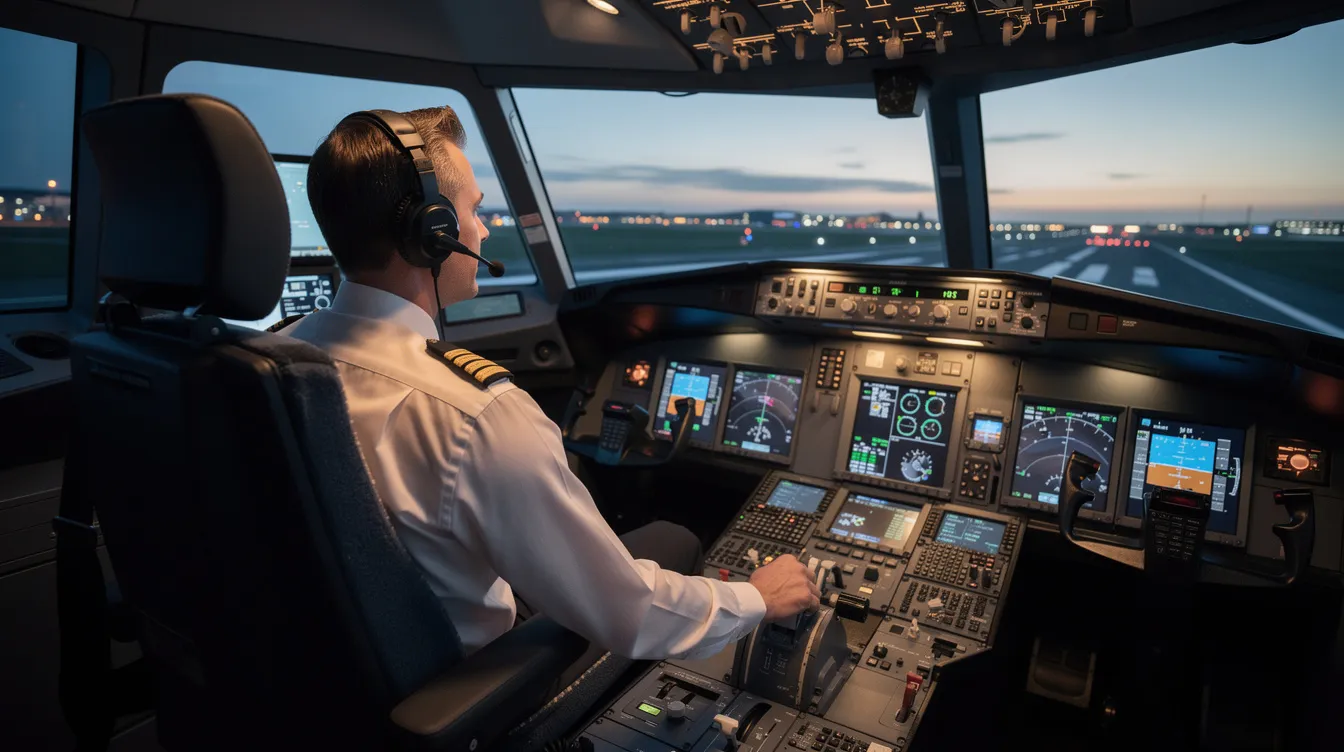
Pilot training is a critical safety layer. Business jet captains typically hold an Airline Transport Pilot license with a type rating for the specific aircraft, plus thousands of total flight hours.
Recurrent simulator training every 6–12 months covers emergency procedures, low-visibility approaches with HUD, and upset recovery.
Crew resource management training ensures that two pilots work as a coordinated team, reducing single-point-of-failure risk.
Training focus areas include handling fly-by-wire systems, weather-specific drills, and emergency descent scenarios.
When evaluating an operator, ask about captain total time, type rating currency, duty-time limits, and training provider (e.g., FlightSafety, CAE)
Two-pilot operations on complex jets like the Falcon 8X and Bombardier Global 7500 provide redundancy in both flying skills and decision-making - a standard that all serious private jet operators maintain, whether they use fractional providers like NetJets or NetJets alternatives such as Jettly.
Jettly is a global digital private jet charter marketplace giving access to over 20,000 aircraft through flexible private jet memberships. The platform emphasizes transparent pricing, on-demand booking, and safety-focused operator partnerships.
The safest private jet for any trip depends on matching the right aircraft classification - light, midsize, super-midsize, or ultra-long-range - to the mission profile and using a private jet charter cost estimator to understand how those choices affect your budget. Travelers can request or prioritize aircraft like the Falcon 8X, Bombardier Global 7500, or Phenom 300E when available, or select operators with specific safety ratings, or even lock in predictable pricing through jet card programs.
Before booking, use this checklist:
Confirm operator certifications: ARGUS Platinum, Wyvern Wingman, IS-BAO to help verify operators meet strict safety standards
Ask about aircraft age, total flight hours, and maintenance program details
Verify captain and first officer type ratings, total hours, and recurrent training schedule
Check for onboard safety equipment: head-up display, enhanced vision system, ROAAS, autoland capability, or CAPS (for Cirrus Vision Jet)
Review the operator's safety management system and incident history
Jettly simplifies this by aggregating operator and aircraft data so clients can make informed choices quickly, and by offering tools like a jet card flight cost estimator for frequent flyers. For example, a family chartering a Falcon 8X for a transatlantic flight can compare it against a Bombardier Global option - reviewing safety tech, cabin layout, options to crowdsource and share empty seats, and charter costs - all within the same platform.
The Falcon 8X features triple-engine redundancy, a fighter-jet-derived digital flight control system with fly-by-wire technology, the FalconEye combined vision system, and flight envelope protection. It has zero hull-loss accidents as of 2024, making it a benchmark in private jet safety.
When operated by reputable providers, modern private jets can match or even exceed the safety standards of commercial airlines. They benefit from advanced avionics, less congested airspace, and stringent operator safety practices.
Check for operator certifications such as ARGUS Platinum, Wyvern Wingman, and IS-BAO. Also, inquire about aircraft age, maintenance history, pilot qualifications, and onboard safety technologies like enhanced vision systems and runway overrun awareness.
Common features include fly-by-wire control systems, synthetic and enhanced vision systems, traffic and terrain collision avoidance, runway overrun awareness systems, and advanced autopilot with emergency descent modes.
Yes, Jettly partners only with vetted operators who meet or exceed global safety standards. The platform provides transparent operator and aircraft information, helping travelers make informed, safety-conscious choices.
The Dassault Falcon 8X stands out as the safest private jet in the world. Its triple-engine redundancy, fighter-derived digital flight control system, FalconEye combined vision, and a perfect safety record with zero hull loss accidents set it apart from every competitor. Other jets like the Bombardier Global 7500, Embraer Phenom 300E, Cessna Citation Longitude, and Cirrus Vision Jet also deliver excellent safety performance across different categories and budgets, and there are now more ways than ever to buy a seat on a private jet without chartering the whole aircraft.
True flight safety is a combination of aircraft design, modern safety features, rigorous maintenance, and professional crews - all of which travelers can optimize by choosing carefully vetted charter providers. Whether the mission calls for a light jet on a short hop or an ultra-long-range Falcon 8X for intercontinental travel, the right platform makes the difference.
Ready to fly on your terms? Explore charter flight options or request a quote at https://www.jettly.com, discover our ULTRA high-ticket affiliate program, compare with industry leaders like NetJets, arrange bespoke in-flight dining through Jettly Eats catering, or book region-specific services such as private jet charter in Kolkata or New Delhi, along with vetted operators like DEXTER Air Taxi and ZENFLIGHT.
Share this post:
Jeff Ryan Serevilla
Oct 19, 2026
|
5
min read
Discover tips and trends in the industry.
5
min read
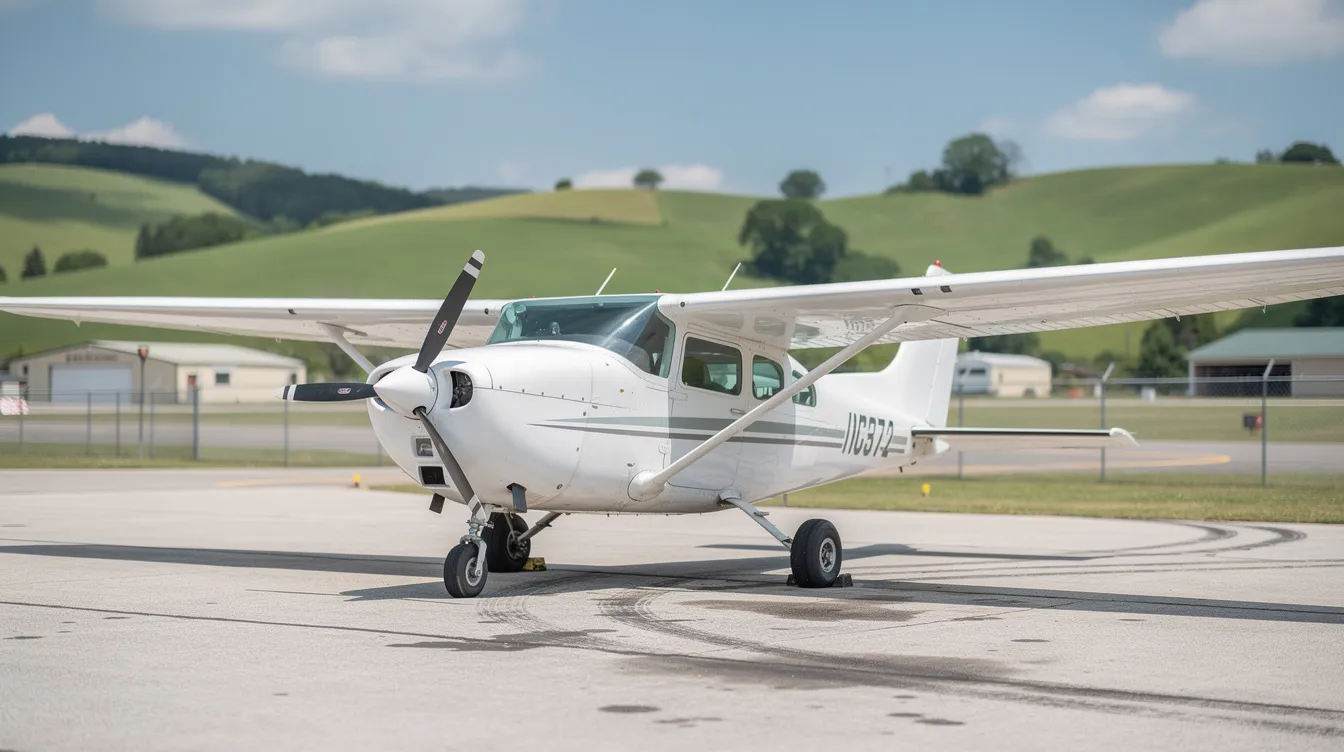
Cessna 182 Cost of Ownership in 2026: Fixed Costs, Operating Costs, and Realistic Budgets
In 2026, owning a Cessna 182 Skylane involves navigating fixed and variable costs that can range from $180 to $350 per flight hour. Fixed costs typically amount to $6,500 to $19,500 annually, while variable costs, including fuel and maintenance, can add another $100 to $200 per hour. Understanding these expenses is crucial for pilots considering ownership versus alternatives like chartering.
Read More
5
min read
US Military Base Oman: Strategic Access, RAFO Thumrait, and Travel Options
Oman hosts U.S. military access through key facilities like RAFO Thumrait, Masirah Island Airbase, and Duqm Port, but does not have sovereign U.S. bases. This strategic partnership enhances regional security and logistics while maintaining Omani sovereignty. Travelers can utilize civil airports in Muscat and Salalah for access, with private jet services available through Jettly.
Read MoreStay updated with our latest insights and tips to elevate your journey with us.
MEMBERSHIPS AND ASSOCIATIONS



Disclaimer: Jettly operates as a charter broker, offering access to a global digital jet charter marketplace. Jettly is not a direct air carrier and does not own or operate aircraft. All advertised flights are conducted by third-party air carriers that are fully licensed and hold the appropriate Part 135 or Part 121 certifications issued by the Federal Aviation Administration (FAA) or equivalent regulatory authorities under U.S. or foreign law. Jettly complies fully with the U.S. Department of Transportation's Part 295 and Part 298 Charter Broker regulations. Jettly does not carry additional liability insurance. Passengers are covered by aircraft operator insurance. TICO: 50023770


