



Login
Get Instant Pricing On 23,000+ Aircraft

>
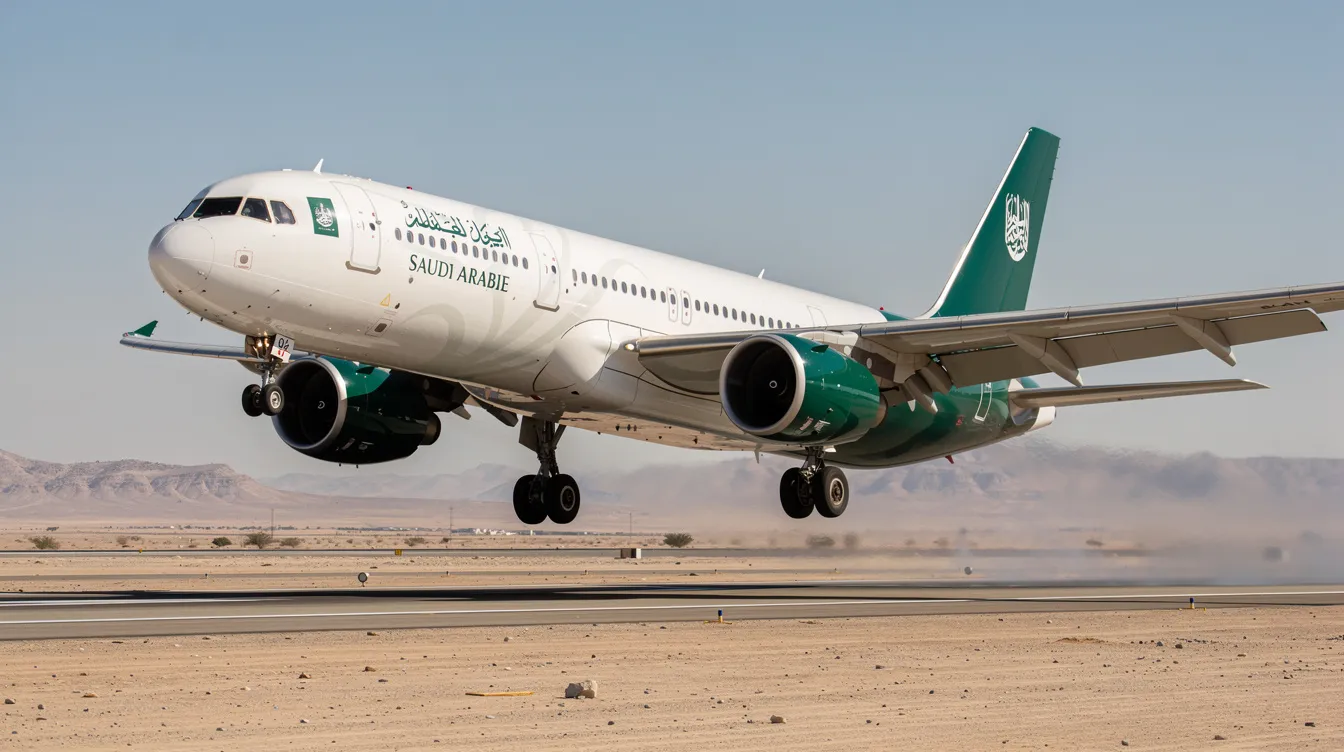
Two high-profile Saudi Arabia plane incidents in late 2026 forced aviation authorities, airlines, and travelers to reconsider how safe the region's airspace and airports really are. A Flydubai aircraft bound for Tel Aviv was diverted after a co-pilot attacked the captain mid-flight. Days later, a Houthi missile destroyed a Saudia jet parked at Riyadh Airport. This article breaks down what happened, how airline security failed and held up, and what options private aviation offers travelers flying in this environment.
This article is intended for travelers, aviation professionals, and anyone concerned about airline safety in the Middle East. It covers the details of recent Saudi Arabia plane incidents, analyzes airline and airport security protocols, and explores private jet alternatives for safer, more flexible travel.
On September 30, 2026, Flydubai Flight FZ1073 from Dubai to Tel Aviv diverted to Tabuk, Saudi Arabia, after one pilot stabbed another pilot in an apparent attempt to crash the plane. The aircraft dropped 17,400 feet in less than two minutes before passengers and crew subdued the attacker, and the plane landed safely.
On October 8, 2026, a Houthi-launched projectile struck and destroyed a parked Saudia Airbus A320 at King Khalid International Airport in Riyadh. Saudi Arabia canceled hundreds of flights after the attack, and airlines including Lufthansa and Air India suspended Riyadh service temporarily.
Both incidents raise questions about crew vetting, cockpit access protocols, and airport apron defense in Saudi Arabia and the wider Gulf region.
Private jet charter through a platform like Jettly provides tighter control over passenger lists, routing flexibility, and access to less congested airports, offering a practical alternative for security-conscious travelers in the region.
Explore private charter options and instant pricing at https://www.jettly.com.
On Thursday morning, September 30, 2026, Flydubai Flight FZ1073 departed Dubai International Airport en route to Ben Gurion International Airport near Tel Aviv. The Boeing 737 MAX 8 (registration A6-FKF) carried 174 passengers and 6 crew members.
Roughly two hours and twenty minutes into the flight, a violent struggle broke out in the cockpit. The co-pilot, an Omani national, allegedly stabbed the captain, an Indian national, and forced the aircraft into a dive. Israel's Prime Minister Benjamin Netanyahu later called the incident an attempted terrorist attack.
At 8:44 a.m. local Saudi time, Tabuk air traffic control received a distress call. The plane was diverted from its route and made an emergency landing at Prince Sultan bin Abdulaziz International Airport in Tabuk, Saudi Arabia, touching down at approximately 9:45 a.m. All passengers and crew survived. Passengers were transferred to a replacement Flydubai flight and later flown onward to Ben Gurion International Airport after Saudi clearance.
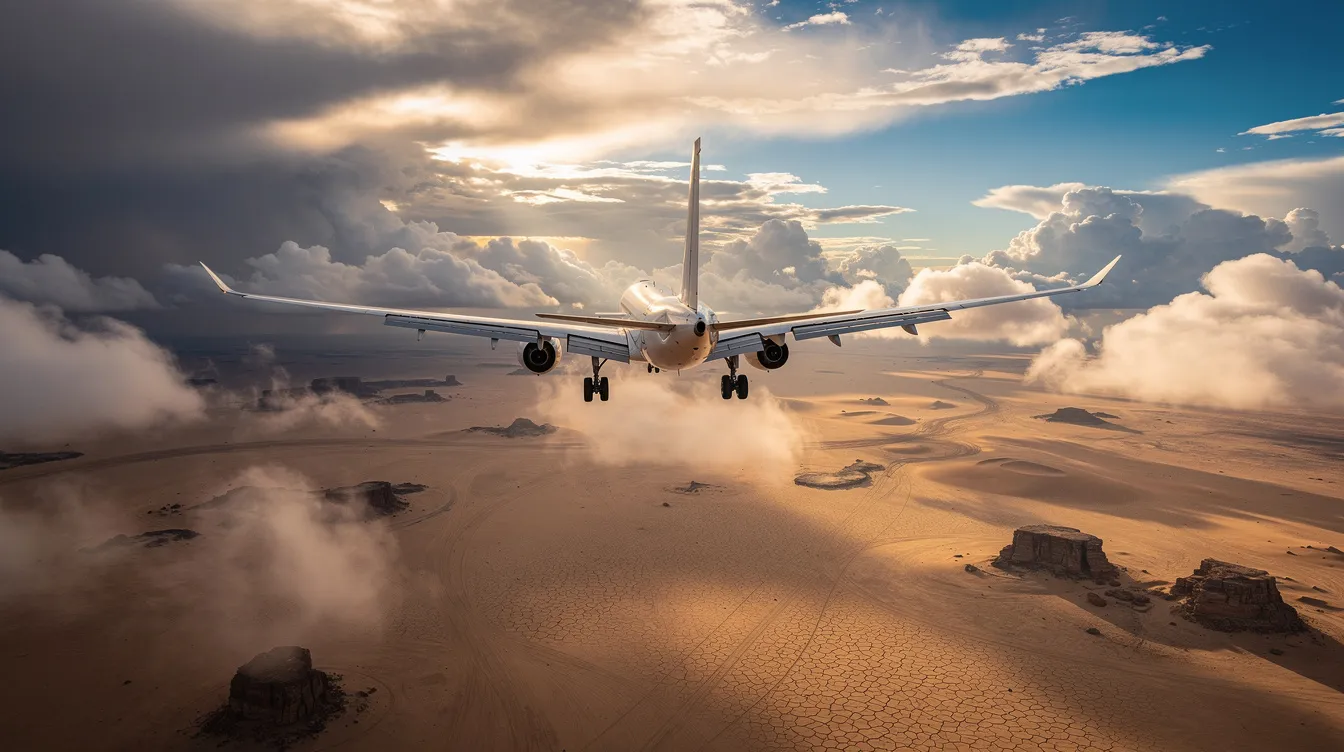
The captain and first officer were at cruise altitude of approximately 33,000 feet when the attack began. According to flight data, the aircraft dropped 17,400 feet in less than two minutes, falling from roughly 34,000 feet to around 17,000 feet. The descent triggered overspeed warnings in the cockpit and panic in the cabin.
During the dive, the transponder broadcast squawk code 7700 (general emergency) and squawk code 7500 (unlawful interference). These codes alerted Saudi air traffic control that the plane was in distress and facing a potential hijack scenario.
After the aircraft was stabilized, Flydubai operations and Saudi air traffic control coordinated the diversion to Tabuk. Both pilots were hospitalized in Saudi Arabia after landing. The captain sustained serious stab wounds. Saudi authorities arrested the co-pilot and opened a criminal investigation into the security incident.
The stabbed captain reportedly managed to open the reinforced cockpit door from inside, which enabled passengers and crew to enter the cockpit and physically restrain the attacker. Passengers and crew subdued the attacker quickly, pulling him away from the flight controls.
Reports cited by the Associated Press described a passenger placing the attacker in a chokehold while others helped stabilize the aircraft using basic control inputs. Off-duty pilots who happened to be on board took over the flight deck and flew the aircraft to its emergency landing in Saudi Arabia.
Israeli Prime Minister Netanyahu discussed the incident with President Trump and publicly praised the actions of the Israeli passengers and crew members who intervened. He stated that their actions prevented a catastrophic mid-air disaster. Several officials in Israel and the UAE echoed that assessment, noting that without the renewed fighting inside the cockpit to overpower the attacker, the flight carrying passengers toward Tel Aviv would not have survived.
On October 8, 2026, a separate Saudi Arabia plane incident occurred at Riyadh Airport. A Houthi-launched projectile struck a parked Saudia Airlines Airbus A320 at King Khalid International Airport, which serves as a major political and commercial hub in Riyadh. The aircraft was destroyed on the apron, producing thick black smoke visible across the tarmac. Images of the debris circulated on Facebook and across international media within hours.
Houthi rebels claimed responsibility for the missile attack on Riyadh Airport. Earlier Houthi-linked strikes had killed one person at Riyadh Airport and two people in a separate strike on Abha Airport in the southwest. No passengers were believed to be on board the destroyed aircraft at the time. Several explosions were heard across Riyadh, and the attack prompted a wave of cancellations. Saudi Arabia canceled hundreds of flights after the Houthi missile attacks. Nearly half of Riyadh Airport departures were canceled by that afternoon. Airlines including Lufthansa, Air India, and Saudia itself suspended service temporarily.
Multinational firms in Riyadh's King Abdullah Financial District moved staff to remote work for the day. The ground reality around the airport forced officials to issue advisories for passengers to check flight status before traveling. Saudia, recognized among the top 15 airlines globally according to Skytrax rankings, faced reputational pressure alongside the operational disruption. The Royal Saudi Air Force, which operates over 700 active military airframes in its fleet (including Pilatus PC-21 trainers for pilot development), activated air defense protocols across the country. The Royal Saudi Air Force is Saudi Arabia's military aviation branch, responsible for national air defense and pilot training using aircraft such as the Pilatus PC-21.
For more on how regional military tensions affect air travel in Saudi Arabia, Jettly's coverage of the best private jet charter companies and safety-focused operators provides additional context.
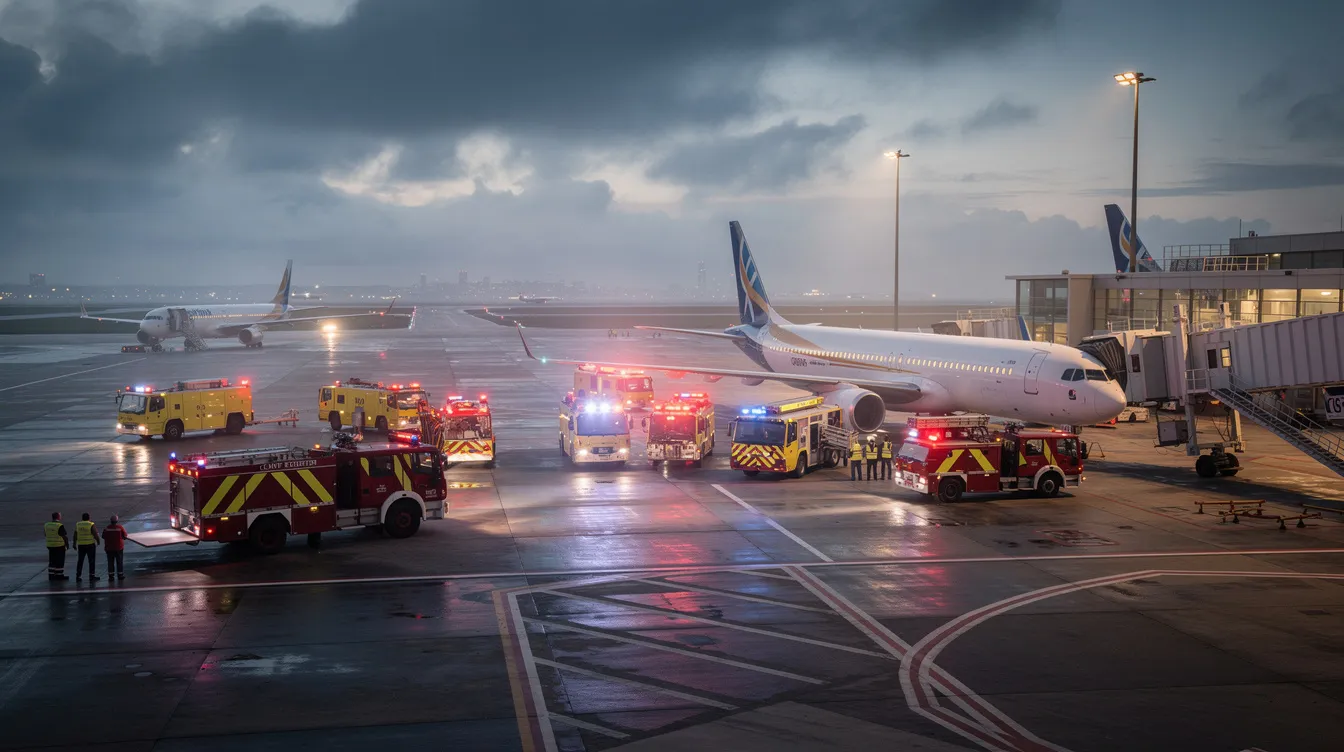
Pilots undergo rigorous screening at airport checkpoints. Background checks for pilots include criminal and employment history. Recurrent medical evaluations, drug and alcohol testing, and psychological assessments form part of the civil aviation licensing process in jurisdictions like the UAE, Saudi Arabia, the US, and the EU.
Israel has some of the world's strictest airline security measures. Flights heading to Tel Aviv typically involve additional questioning and baggage checks for all passengers and crew.
Cockpit doors are locked during flights for security. The cockpit door standard was established after the 9/11 attacks, making reinforced, locked cockpit doors mandatory worldwide. The design prevents hijackers from entering the flight deck. But it creates a problem when the threat originates inside the cockpit itself.
Rare failures show this gap. The 2015 Germanwings crash, where a co-pilot locked the captain out and deliberately flew the plane into a mountainside in England, killing all 150 on board, prompted regulators to re-examine mental-health assessments and dual-pilot rules. The Flydubai incident has renewed that same discussion, with regulators in the UAE, Saudi Arabia, and Israel reviewing cockpit access protocols and whether continuous psychological monitoring should replace periodic check-ins.
Flydubai temporarily suspended flights to and from Israel after the incident. Before the attack, Flydubai operated around 10 daily return flights between Dubai and Tel Aviv. The suspension cut a high-volume commercial link between the two cities.
The diversion and landing in Saudi Arabia created diplomatic complications. Saudi Arabia declined to allow an Israeli aircraft to fly to Tabuk to pick up passengers. Instead, Flydubai sent two replacement aircraft from Dubai. The embassy coordination required to move Israeli passengers through Saudi territory added hours to an already traumatic day.
Key policy questions remain under investigation: how a weapon or knife was brought into the cockpit despite airport screening in Dubai; whether the co-pilot's assignment to the Tel Aviv route was reviewed given Oman's lack of formal diplomatic ties with Israel; and what new warning systems or monitoring tools might catch similar threats before boarding. The Flydubai flight incident was labeled an attempted terrorist attack by Israeli officials, placing it in a category that triggers international review protocols across civil aviation authorities.
Passenger accounts described the cabin losing power and air conditioning during the rapid descent. People were thrown into aisles. Oxygen masks failed to deploy in some rows. Families said goodbye to each other mid-flight, fearing the plane would crash.
After the plane landed safely in Tabuk, the aftermath was not over. Passengers reported anxiety and confusion during the hours spent on the ground in Saudi Arabia waiting for clearance. Boarding the replacement flight to Tel Aviv required overcoming fear that another incident could occur. Some passengers described injuries from being thrown during the descent.
Crew members coordinated first aid for the injured captain while simultaneously keeping the attacker restrained until Saudi authorities boarded the aircraft on the ground. Flight attendants organized the cabin, calmed passengers, and managed the transfer to replacement aircraft.
These experiences illustrate why some frequent travelers seek more control over their flying environment: smaller cabins, known passenger manifests, and flexible scheduling that avoids high-profile routes during periods of heightened tension, often weighing shared charter flights versus full charters as they balance privacy, cost, and security.
Commercial airlines handle hundreds of passengers per flight, relying on standardized screening at hubs like Riyadh Airport or Dubai International. Private jet operators work with smaller passenger lists, often verified in advance. The difference in scale changes the security equation.
Private jets still follow national aviation and airline security regulations. In Saudi Arabia, the General Authority of Civil Aviation (GACA) governs all operations. Operators must hold appropriate certificates under GACAR Parts 119, 125, or 135. But private flights typically depart from dedicated FBOs and private terminals with more controlled access, shorter processing times, and the option to use a private jet charter cost estimator to plan secure, bespoke routings.
For travelers concerned about high-profile routes or airports under threat, private charter aircraft with tailored security protocols offer the ability to choose departure points, avoid congested hubs, and fly indirect routings when direct options are restricted. Learn more about how private jet security compares to commercial screening and why private jets are considered safe for security-conscious travelers.

Jettly is a digital private jet charter marketplace connecting travelers to over 20,000 private charter aircraft globally, including options that can operate to, from, or over Saudi Arabia under applicable regulations. The platform provides instant pricing for city pairs like Dubai to Riyadh, Riyadh to European hubs, or indirect routings that connect to Tel Aviv via permitted third countries.
In the context of recent airline security concerns, Jettly's model offers control over the passenger list, smaller cabin environments, tailored departure times, and the ability to use airports beyond the major hubs. Travelers can explore private jet charter options in Riyadh, Jeddah, or Medina directly through the platform, or secure access through private jet memberships if they expect to fly frequently, or learn how to book a private jet for the first time.
Saudi Arabia's aviation sector relies on a mix of advanced narrow-body and wide-body aircraft for its commercial fleet. Narrow-body aircraft like the Airbus A320 and A321 are used for short-to-medium-haul domestic and regional routes. Wide-body aircraft such as the Airbus A330 (heavily utilized for medium-to-long-range regional operations) and the Boeing 777-300ER (used for long-haul international passenger transport) serve pilgrimage operations and intercontinental routes. Flynas is Saudi Arabia's leading low-cost carrier providing domestic and international flights, while Riyadh Air is a digital-first airline aiming to connect Riyadh to global destinations.
Saudi Arabia features several major international airports for domestic and international travel. King Abdulaziz International Airport is the busiest hub in Saudi Arabia. King Fahd International Airport is geographically the largest airport in the world by land area. AlUla International Airport is a boutique airport for visitors to Saudi Arabia's heritage sites. Saudi Arabia's cargo aviation supports major logistics hubs and international trade, and fits into a broader ecosystem of charter airlines and private flight providers that connect the region to global markets.
For private charter, the aircraft choice depends on distance and passenger count, as well as service expectations like in-flight catering for private jets through Jettly Eats. Here is a comparison for routes touching Saudi Arabia:
|
Aircraft Category |
Range |
Passengers |
Example Routes |
|---|---|---|---|
|
Turboprop / Light Jet |
Up to 1,500 nm |
4–8 |
Dubai–Riyadh, Riyadh–Tabuk, Jeddah–Medina |
|
Midsize Jet |
2,000–3,000 nm |
7–9 |
Riyadh–Athens, Riyadh–Cairo, Dubai–Istanbul |
|
Super-Midsize Jet |
3,000–4,000 nm |
8–10 |
Riyadh–Rome, Jeddah–London, Dubai–Geneva |
|
Heavy / Ultra-Long-Range Jet |
5,000–7,500 nm |
10–16 |
Riyadh–London, Riyadh–New York, Jeddah–Singapore |
Hot-weather performance, runway lengths at secondary airports, and overflight permissions around conflict zones all affect routing, making it useful to consult an airport locator and planning tool when evaluating alternatives. Jettly's platform and support team help match travelers to aircraft and operators compliant with local regulations. For a deeper look at aircraft options, see Jettly's private jets comparison guide and detailed private charter aircraft listings.
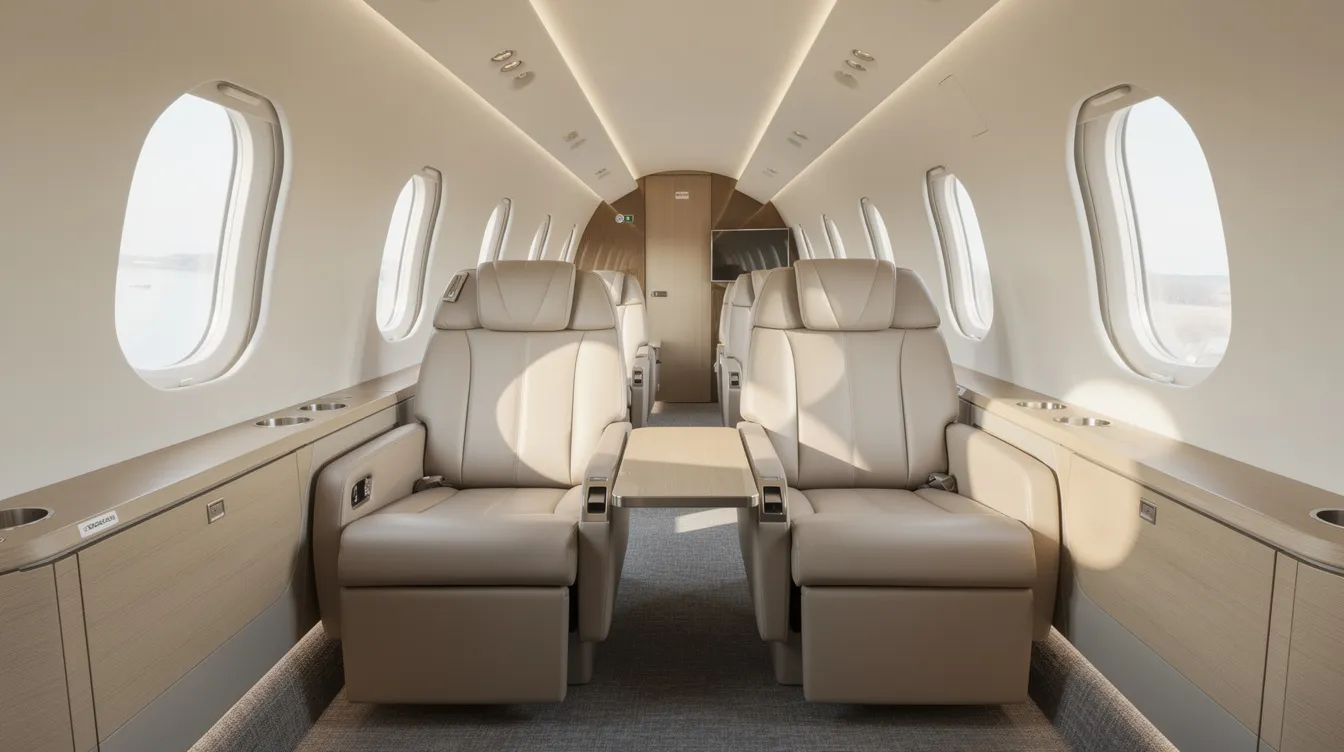
Jettly allows travelers to build itineraries that factor in current airline security alerts and geopolitical developments. A corporate executive flying to Riyadh for meetings can continue to European capitals without backtracking through a congested hub, especially when supported by jet card programs designed for frequent corporate travel. Families connecting from the Gulf to Mediterranean resorts can route around areas with active NOTAMs, and may even reduce costs by using crowdsourced private jet flights and shared empty seats on select segments. Urgent medical or evacuation flights during regional disruptions can depart within hours rather than days, and travelers can still apply many of the same tactics used to get a seat on a private jet easily when time and routing flexibility are critical.
On-demand charter through the platform differs from scheduled airline travel: no fixed timetable, the option to change departure times, and access to private terminals that provide faster screening and boarding through instant-book private jet marketplaces like Zenflight. For executives, Jettly's secure travel for executives guide covers how private aviation reduces exposure to certain airline security vulnerabilities.
No form of flying is risk-free. But informed planning, reputable operators, and the flexibility of private charters—especially when using a NetJets alternative like Jettly for on-demand private flights—reduce exposure to many of the factors that made recent weeks so disruptive for commercial passengers in the region.
Saudi Arabia's aviation sector is rapidly modernizing under Vision 2030. Saudi Arabia's aviation network supports booming tourism and business sectors, and the country is expanding general aviation infrastructure to accommodate growing private charter demand. Foreign operators like AirX Charter (permitted in February 2026) and FlexJet (December 2025) have obtained Saudi operator certificates, reflecting this liberalization.
Operators available through Jettly must comply with GACA rules, international safety standards, and any temporary restrictions affecting Saudi and neighboring airspace. Travelers can ask about carbon offset programs, newer aircraft with lower per-seat emissions, and optimized routing that balances safety with sustainability, using tools like an airport locator for global private jet operations to identify suitable alternatives to congested hubs.
Regulatory conditions, particularly regarding direct flights to Tel Aviv or overflights involving Saudi Arabia, can change. Itineraries should always be confirmed close to departure.
These questions address common concerns about flying in and around Saudi Arabia following recent incidents.
Commercial flights remain heavily regulated and statistically very safe. Authorities in Saudi Arabia, the UAE, and Israel continuously review airline security protocols after any security incident or missile attack. Travelers should monitor official travel advisories, airline updates, and NOTAMs when planning trips that involve Saudi airspace or airports like Riyadh Airport.
Direct flights between Saudi Arabia and Tel Aviv depend on current diplomatic relations, bilateral agreements, and civil aviation regulations. These conditions change over time and can also influence pricing, which tools like a private jet charter cost estimator can help clarify. Travelers planning such routes should consult Jettly or another qualified aviation professional for up-to-date guidance on what routings are legally and operationally possible.
Private jet passengers still pass through security but typically in dedicated FBOs or private terminals with shorter lines, identity verification, and tailored procedures. Smaller passenger numbers and pre-known manifests allow operators to manage security more individually than mass-market commercial flights, while travelers can explore affordable private jet charter options and cost-saving strategies. For more detail, see Jettly's guide on private jet privacy and security.
Private jets follow standardized emergency procedures, including diversion to the nearest suitable airport, immediate coordination with air traffic control, and support from local authorities on landing. Smaller cabins and known passengers make it easier for crew to respond quickly and coordinate with everyone on board.
Outline your preferred origin, destination, dates, and any regions or airports you wish to avoid when requesting a quote through Jettly, especially if you are considering buying just a seat on a private jet via shared or semi-private options. The platform and support staff can propose compliant routings and aircraft options that reflect current airline security advisories and airspace restrictions. Start at https://www.jettly.com.
Two Saudi Arabia plane incidents in late 2026 put airline security in the region under a spotlight. A Flydubai flight carrying passengers to Tel Aviv nearly ended in a catastrophic crash after a cockpit attack. A Saudia aircraft was destroyed on the ground at Riyadh Airport by a Houthi missile. Both events disrupted operations, forced route suspensions, and left passengers questioning how much control they have over their own safety in the air.
Commercial aviation remains statistically safe. But rare events create real demand for alternatives. Private jet charter via Jettly offers on-demand access to a global fleet of over 20,000 aircraft, instant pricing, transparent costs, and the ability to tailor flights involving Saudi Arabia to individual schedules and risk tolerance.
Ready to explore private flights on your terms? Review charter options, compare aircraft, or request a quote for upcoming trips at https://www.jettly.com.
Share this post:
Jay Franco Serevilla
Oct 29, 2026
|
5
min read
Discover tips and trends in the industry.
5
min read
Saudi Arabia Plane: Security Incident, Riyadh Airport Disruption, and Private Jet Alternatives
Recent security incidents involving commercial flights in Saudi Arabia have raised significant concerns about aviation safety in the region. A Flydubai flight experienced a mid-air attack, while a Saudia aircraft was destroyed by a missile at Riyadh Airport. These events highlight the need for travelers to consider private jet alternatives for safer and more flexible travel options.
Read More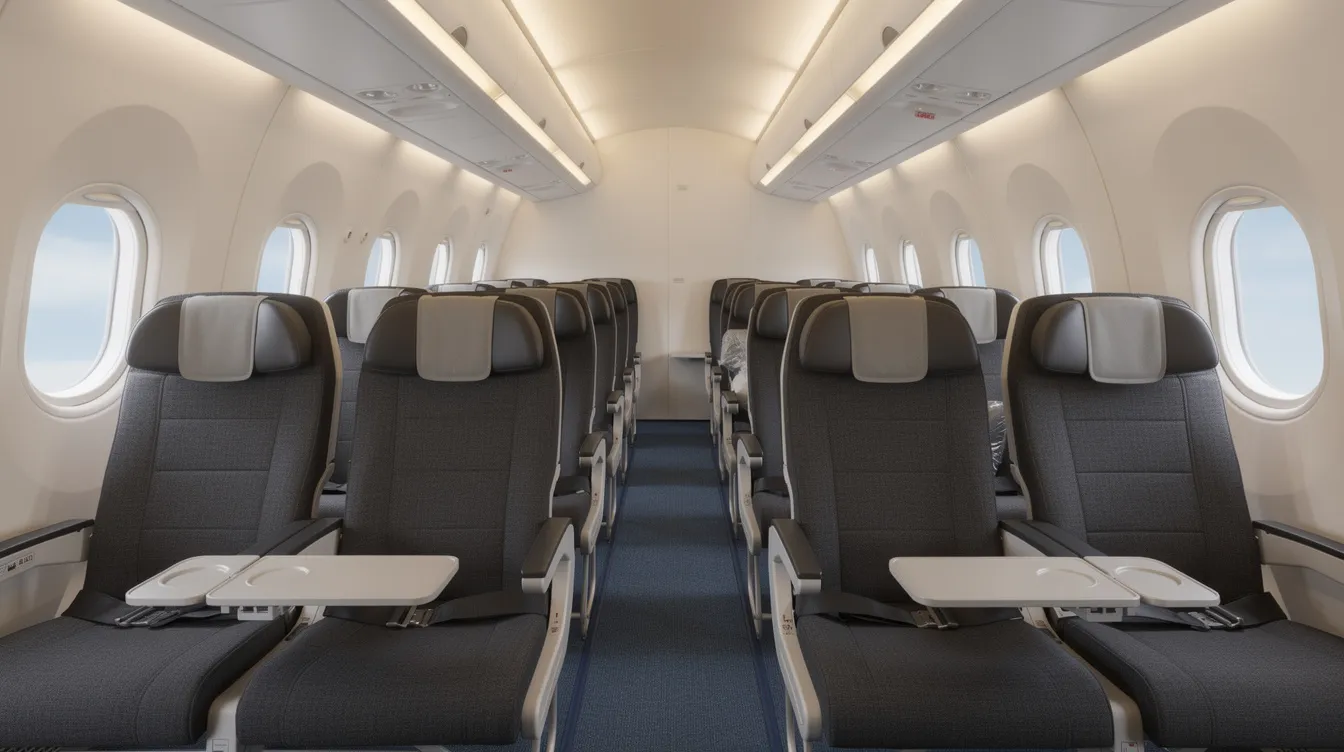
5
min read
Airplane Seat Back Etiquette, Comfort, and Design: A Practical Guide for Modern Travelers
Airplane seat back etiquette is crucial for a comfortable flying experience. Understanding the balance between reclining and respecting fellow passengers can enhance relationships and productivity during flights. This guide explores the design, comfort, and best practices for using airplane seat backs, comparing commercial and private jet experiences.
Read MoreStay updated with our latest insights and tips to elevate your journey with us.
MEMBERSHIPS AND ASSOCIATIONS



Disclaimer: Jettly operates as a charter broker, offering access to a global digital jet charter marketplace. Jettly is not a direct air carrier and does not own or operate aircraft. All advertised flights are conducted by third-party air carriers that are fully licensed and hold the appropriate Part 135 or Part 121 certifications issued by the Federal Aviation Administration (FAA) or equivalent regulatory authorities under U.S. or foreign law. Jettly complies fully with the U.S. Department of Transportation's Part 295 and Part 298 Charter Broker regulations. Jettly does not carry additional liability insurance. Passengers are covered by aircraft operator insurance. TICO: 50023770


