


Login
Get Instant Pricing On 23,000+ Aircraft

>
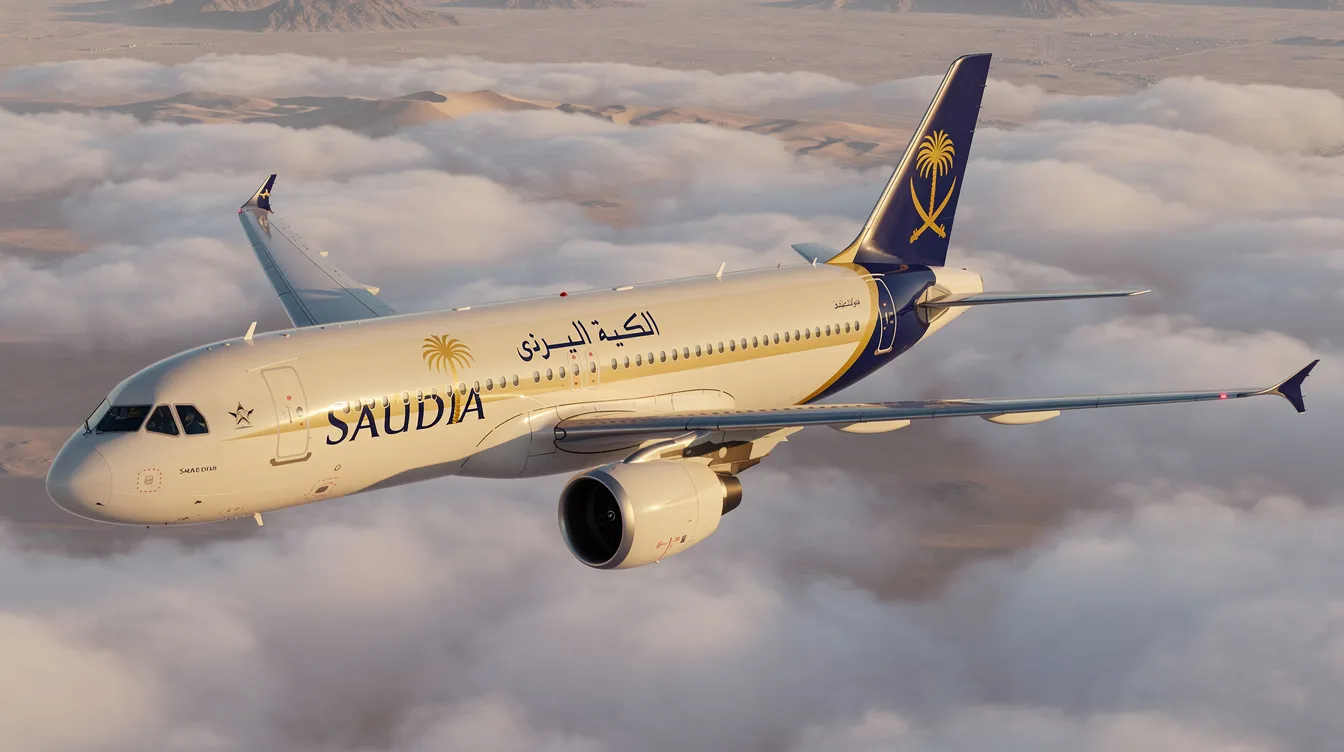
When the phrase "Saudi jet" appears in news headlines, it almost always points to a fighter jet incident involving Saudi Arabia's military operations near Yemen or tensions with Iran. These events shape regional security across the Middle East and ripple outward to affect global oil markets, shipping routes, and aviation corridors used by millions of passengers every year.
This article breaks down the documented incidents, explains why they matter, and connects the dots between military aircraft activity and the practical realities of flying commercially or privately in and around Saudi Arabia.
The term "Saudi jet" in media coverage typically refers to Royal Saudi Air Force fighter jet losses or confrontations near Yemen, not civilian aircraft. Recent incidents—including a claimed F-15SA shoot-down over Marib governorate in September 2026—highlight escalating risks along the Saudi–Yemen frontier.
Documented events like the Bahraini F-16 crash in Saudi Arabia and multiple coalition aircraft losses since 2015 illustrate a volatile airspace environment that aviation authorities actively monitor and manage.
Despite military tensions, civilian and private aviation operates under separate, highly regulated corridors. Authorities issue NOTAMs and conflict zone bulletins that keep non-military flights away from danger areas.
Regulated private jet charter platforms like Jettly connect travellers with vetted operators who follow these advisories in real time, providing safe, flexible access to destinations across the kingdom and the wider Gulf region.
Travellers will find an FAQ section below addressing common safety questions, routing costs, and how to explore charter options for itineraries involving Saudi Arabia and neighbouring countries.
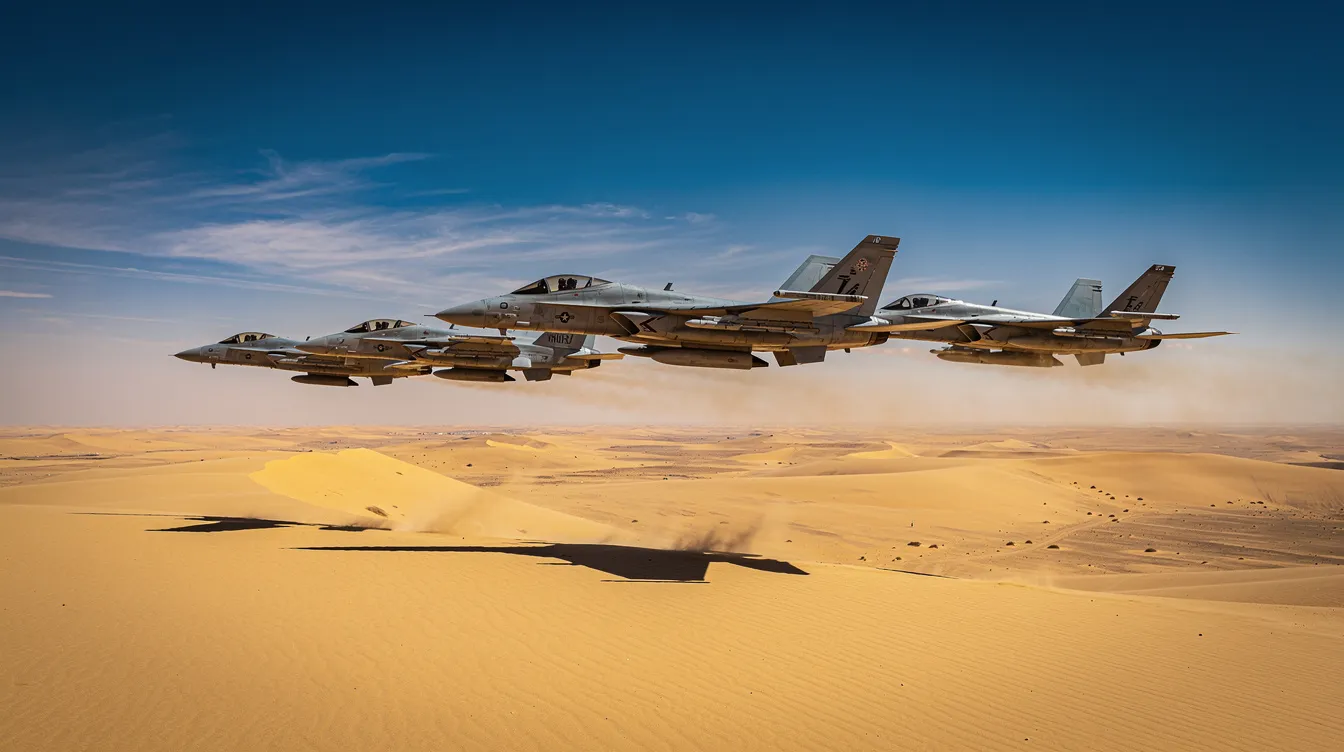
In this context, "Saudi jet" refers to military aircraft operated by the Royal Saudi Air Force, particularly multirole fighter jets deployed near Iran and Yemen. This section provides factual background on the incidents that drive headlines rather than commentary on the politics behind them.
The Royal Saudi Air Force (RSAF) operates one of the largest and most advanced air arms in the Middle East. The RSAF relies primarily on a mix of American and European platforms. Its combat aircraft inventory includes over 200 operational airframes of the Boeing F-15 Eagle family (spanning F-15C/D, F-15S, and the advanced F-15SA variants), 72 Eurofighter Typhoons acquired through defence agreements with European nations including Italy and the United Kingdom, and roughly 80 Panavia Tornado IDS jets. The Panavia Tornado IDS is utilised for low-level, high-speed penetration bombing roles and is being gradually phased out. Beyond these frontline platforms, Saudi Arabia's military aircraft inventory includes various support, surveillance, and training jets that round out a force designed for both defensive and offensive operations. Since the mid-2010s, this air force has been central to the Saudi-led coalition campaign in Yemen.
Saudi media reported extensively on the September 2026 incident in which the Iran-aligned Houthi group released video and a photo claiming to have shot down an F-15SA Advanced Eagle over Marib governorate using a locally manufactured surface-to-air missile. Defence analysts identified the wreckage as an F-15SA based on its distinctive electronic warfare apertures and tail markings. Saudi officials had not confirmed the loss in an official statement at the time reports emerged, and the status of the two crew members remained unknown.
Each time a Saudi jet is lost or claimed lost in contested skies, the risk of escalation between the two countries—Saudi Arabia and Iran—rises. Maritime routes near the Red Sea and Gulf of Aden come under pressure, oil traders factor in disruption premiums, and insurance costs for shipping climb.
The broader Iran–Saudi rivalry stretches across proxy conflicts in Yemen, Syria, and Lebanon. Fighter jet encounters and shoot-downs are among the most visible flashpoints in this war of influence. While these military developments occur far from civilian corridors, each high-profile Saudi jet incident prompts temporary airspace reviews, notices to airmen (NOTAMs), and heightened monitoring for commercial and private operators flying anywhere near the kingdom's southern borders.
This subsection highlights concrete events, including the Bahraini F-16 crash in Saudi Arabia and major Saudi fighter jet losses tied to the Yemen conflict.
The Bahraini F-16 fighter jet crash occurred in September 2018 near Saudi Arabia's Jazan region during coalition operations over Yemen.
The crash was attributed to a technical failure rather than hostile fire. Coalition and Bahraini sources confirmed no attack was involved.
The Bahraini pilot, a captain, safely ejected from the plane. He was taken to a nearby medical facility on a Thursday morning and later transferred to Saudi Arabia's Armed Forces Hospital, where officials reported his condition as stable.
Saudi security forces and coalition units quickly secured the crash site and aircraft debris, preventing any further risk to personnel or civilians in the area.
Beyond the F-16 incident, multiple coalition fighter jet losses have been documented over Yemen since the war began in March 2015. Saudi F-15 variants and Tornado jets have been reported lost to ground fire or technical issues. Each loss led to tactical adjustments—changes in sortie altitudes, updated countermeasure deployments, revised mission profiles—but none caused a halt in operations.
Most of these fighter jet missions took place close to or across the Saudi–Yemen border, within the context of Saudi-led campaigns like Operation Decisive Storm and Operation Restore Hope. Ground attacks near the border, including missile and drone strikes, have also resulted in casualties among Saudi and Bahraini forces, reinforcing the area's designation as a high-risk zone.
These documented fighter jet losses are carefully monitored by aviation authorities worldwide, informing airspace advisories and routing decisions for all non-military flights in the region.
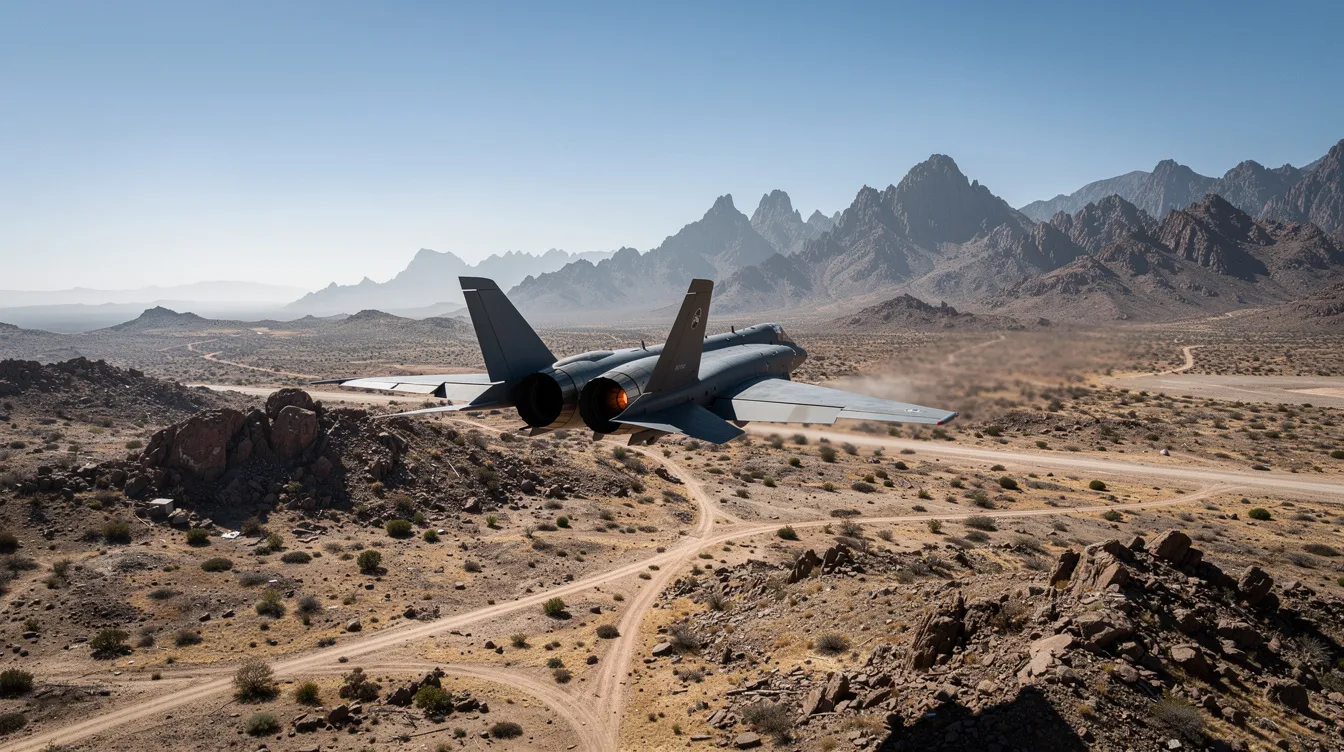
Fighter jets sit at the centre of Saudi Arabia's national security strategy. Their deployment shapes relationships with Iran, Yemen, and the wider Middle East, and their losses or successes carry diplomatic weight far beyond the battlefield.
Saudi Arabia's investment in advanced fighter jets from the United States and Europe—especially the F-15SA program, which was created through a $29.4 billion Foreign Military Sale covering 84 new-build aircraft, upgrades, training, and infrastructure—forms the backbone of its deterrence posture. This project gives KSA the capability to project air power across the Gulf, the Red Sea, and into contested airspace over Yemen. Defence cooperation with countries like the United States, the United Kingdom, and other Gulf Cooperation Council states extends to pilot training, fleet maintenance, and intelligence sharing.
Saudi fighter jets have been central to coalition actions in Yemen since 2015. Missions range from defensive patrols near the southern border to offensive sorties targeting missile launch sites and drone facilities. Saudi media coverage of these operations often frames them as necessary responses to Houthi attack capabilities, including ballistic missiles and armed drones aimed at Saudi cities and infrastructure like Abha airport.
Iran's support for groups active in Yemen contributes to periodic confrontations. Claims of jets being shot down—like the September 2026 incident—or intercepted in disputed airspace are subject to intense verification. BBC Verify and other outlets have used satellite imagery and wreckage analysis to confirm or challenge such claims.
International partners play a significant role. The United States provides not only aircraft but also logistics and intelligence. European countries involved in producing the Eurofighter Typhoon, including Italy, contribute through defence cooperation frameworks and spare parts supply chains. Together, these partnerships are designed to reduce operational risk and maintain readiness.
Every Saudi jet incident feeds into diplomatic narratives. The kingdom seeks support from allies and positions each event within its broader security messaging. Iran or other actors frame the same events to their advantage, and reports circulate quickly through global media. Officials on both sides issue competing versions of events, making independent verification essential.
Global markets react swiftly. When a fighter jet is shot down, or an attack lands near Saudi export infrastructure, oil prices move. Traders and analysts factor in potential disruptions to shipping lanes, and freight costs in the Red Sea corridor can spike within hours.
Saudi Arabia operates a massive and highly sophisticated aviation network that spans both military and civilian domains. On the commercial side, Saudi Arabia's commercial aviation sector is undergoing transformation driven by Vision 2030. Saudia operates a mixed fleet of nearly 150 aircraft from Airbus and Boeing, with the Boeing 787 Dreamliner serving as a key aircraft for long-haul flights in Saudi aviation and the Airbus A320 family commonly used for domestic and regional routes. Meanwhile, Riyadh Air focuses on a fleet of highly fuel-efficient jets as part of the kingdom's push to become a global aviation hub.
All of these security dynamics tie back to airspace management. Regional air navigation service providers, ICAO guidance, and national regulators adjust recommended or restricted flight routes whenever risk assessments change—a process that directly affects every commercial and private flight touching Saudi airspace.
Despite frequent headlines about fighter jets, civilian and private flights are governed by separate, highly regulated corridors designed to maximise safety. Military and civil operations do not share the same airspace without coordination.
Saudi Arabia, Iran, and neighbouring countries publish NOTAMs and occasionally close or restrict specific airspace blocks near conflict zones. EASA has extended its Conflict Zone Information Bulletin for Yemen's Sana'a Flight Information Region through April 30, 2027, designating it as high risk at all altitudes except certain maritime routes. The Jeddah FIR includes a southwestern area subject to emergency security controls that Saudi authorities can activate via NOTAMs when conflict near Yemen escalates.
Airlines routinely reroute commercial traffic to avoid these high-risk areas. Detours can add 20 to 30 minutes to typical Europe-to-Gulf routes, increasing fuel burn and sometimes requiring additional overflight permits from adjacent countries.
Private jet charter operators using platforms like Jettly work only with certified operators who adhere to these official restrictions. Up-to-date route planning tools, combined with continuous monitoring of NOTAMs and regional advisories, ensure that no charter flight enters airspace created as restricted due to Saudi jet operations or tensions with Iran.
When Saudi Arabia or neighbouring states adjust their security postures, authorities can impose altitude floors, no-fly zones, or time-based restrictions. All of these are integrated into flight planning before a charter is confirmed.
For passengers, the result is that much of this complexity stays invisible. Flights are rerouted or rescheduled behind the scenes so that travel remains predictable even when fighter jet activity or regional tensions dominate the day's news cycle.

This section shifts from military Saudi jet incidents to practical considerations for business and leisure travellers booking private flights in and around Saudi Arabia and the wider Middle East.
A digital charter marketplace like Jettly connects travellers with a global inventory of more than 20,000 unique aircraft, including light jets, midsize and heavy jets, turboprops, and helicopters. These aircraft can serve routes to or from Saudi Arabia, the UAE, Bahrain, Qatar, and beyond, with detailed profiles available for each category of private charter aircraft. Private jet charter services cater to business and leisure travellers seeking flexibility that commercial schedules cannot match, and many travellers consult guides to charter airlines and private flights when evaluating their options.
All operators in Jettly's network must comply with national and international regulations, maintain appropriate safety ratings, and use flight planning systems that factor in current NOTAMs and regional security advisories. Third-party auditors such as ARGUS, Wyvern, and IS-BAO evaluate operators on maintenance oversight, pilot qualifications, and operational history. Travellers can read more about these standards on Jettly's safety page or browse Jettly's private charter aircraft options to see how different categories are vetted.
Private jets do not fly combat routes or operate like Saudi fighter jets. They use designated civilian airways and scheduled slots, even when crossing airspace near higher-risk regions. The distinction is important: a private charter is subject to civil aviation authority approval and oversight, not military command structures.
Key benefits of private jet charter in this region include:
Ability to depart from smaller airports and FBOs around Saudi Arabia and the Gulf, minimising ground time.
Flexibility to adjust departure times or routing quickly if security conditions or airspace advisories change. Private jets provide greater flexibility for travellers compared to fixed commercial schedules.
Direct access to business hubs such as Riyadh, Jeddah, Dammam, Dubai, Abu Dhabi, Doha, and Manama without complex connections.
Here are two practical examples, both of which can incorporate tailored amenities through services like Jettly's in-flight catering solution:
A corporate team flying by private jet from Dubai to Riyadh for a same-day meeting, with the route adjusted slightly to avoid temporary restrictions near the Saudi–Yemen border, might use an operator such as Dexter Air Taxi via the Jettly platform. The team can board in the morning, attend meetings, and return the same day without navigating congested commercial terminals.
A family chartering a midsize jet from Jeddah to a Mediterranean destination, benefiting from streamlined border formalities and carefully vetted routing that steers clear of any zones associated with military jet operations, might also consider booking individual seats on shared private flights if they want to balance comfort with cost.
Private jet charters provide instant pricing and booking through Jettly's app, giving travellers transparent cost estimates before they confirm and access to tools like an airport locator for private jet routes. Private travel allows for instant digital booking, and the platform lets users compare aircraft categories side by side. Travellers interested in cost savings can also browse empty leg flights that may cover popular Middle East and Europe routes—or use the private jet charter cost estimator to find competitive pricing.
On environmental considerations, some charter customers opt into carbon offsetting programs or favour fuel-efficient aircraft types when subscribing to a private jet membership or booking on demand. This matters especially when flying near regions whose geopolitical tensions are closely tied to global energy markets.
Even in a region where fighter jets and security incidents attract global attention, private jet charters arranged through regulated platforms remain focused on safety, compliance, and traveller convenience—not on the military side of Saudi aviation.
Informed travellers can ask targeted questions to understand how their flights are planned in relation to Saudi Arabia's military activity and regional tensions. You do not need to be an aviation expert to get useful answers.
Key topics to discuss with a charter representative:
Whether any part of the planned route touches airspace with active conflict advisories.
What regulatory guidance (ICAO, EASA, FAA, local authorities) is being used in routing decisions.
Contingency plans if new NOTAMs appear near departure time, especially around the Saudi–Yemen region.
Passengers can request alternative routings or departure times if they are uncomfortable with any aspect of a proposed flight plan, even when regulators consider the route acceptable. This flexibility is one reason travellers join platforms like Jettly for on-demand access rather than relying solely on fixed commercial schedules.
Operators in Jettly's network often maintain 24/7 operations control centres that monitor changes in Middle East airspace, including any new reports of fighter jet activity or cross-border incidents. These centres can push real-time updates to flight crews before and during a flight.
It is worth balancing media headlines about Saudi jets being shot down or fighter jet crashes with the fact that civilian and private aviation follow different standards, corridors, and risk thresholds. A copy link shared on social media showing dramatic footage does not necessarily mean the airspace used by your charter is affected.
For most itineraries touching Saudi Arabia, the combination of operator due diligence, regulatory oversight, and flexible rerouting keeps private jet travel highly controlled and resilient to sudden regional developments.
Below are answers to common questions not fully covered in the sections above. These focus on safety, routing, and practical considerations for travellers hearing about Saudi jet incidents.
Military and civilian operations are managed separately. They use distinct corridors and altitudes, and private flights must follow strict routing and clearance procedures before takeoff. When authorities consider any airspace segment unsafe due to Saudi or Iranian fighter jet activity, they issue NOTAMs or full closures. Private jets are then routed around those areas automatically.
Certified operators working through platforms like Jettly continuously monitor these advisories. Route changes happen before passengers ever board, meaning travellers rarely encounter last-minute surprises related to military activity.
Yes. International travellers can charter private jets to major Saudi airports such as Riyadh (RUH), Jeddah (JED), and Dammam (DMM), subject to visas, permits, and local entry rules, just as Jettly arranges private jet charter services in Kolkata, West Bengal, for travellers in other regions. Learn more about options for Saudi private aviation or explore routes to cities like Mecca and Medina using an airport locator tool for global private flights.
Charter brokers and operators assist with landing permit approval and coordination with Saudi civil aviation authorities, which are distinct from the military chain of command operating fighter jets. Travellers should plan ahead for documentation, cultural considerations, and any short-notice regulatory changes affecting arrivals and departures.
Operators rely on a layered approach: official notices (NOTAMs), government and industry risk assessments, insurer guidance, and internal safety policies. Some companies adopt a more conservative stance than regulators require, proactively avoiding airspace close to active conflict zones or areas where Saudi and Iranian forces have clashed.
Passengers should feel comfortable asking their operator or Jettly representative which advisories and policies guided the chosen route for their specific flight.
Detours can add flight time and fuel burn, which may slightly increase charter costs compared with the most direct route. Industry data suggests reroutes in the Middle East can add 20 to 30 minutes to Europe-to-Gulf itineraries. Transparent pricing tools, like those offered by Jettly, help travellers see how routing decisions influence total cost before confirming a booking, and broader guides on affordable private jet charter pricing can help set expectations.
Operators prioritise safety and regulatory compliance. Any additional expense from longer routings reflects that focus rather than arbitrary fees.
Use a vetted digital charter platform that offers instant pricing, multiple aircraft options, and clear information about operators' safety standards and route planning practices; many travellers consult comparisons of the best private jet charter companies before choosing a provider. Compare aircraft categories—light jet, midsize, or heavy—based on route length, passenger count, and comfort preferences for Middle East, Europe, or Asia connections. You can also explore how to buy a seat on a private jet and choose the right private jet for your specific needs.
|
Aircraft Model |
Role |
Quantity in Service |
Origin |
Notable Features |
|---|---|---|---|---|
|
Boeing F-15 Eagle |
Air superiority, multirole |
200+ |
United States |
Advanced avionics, electronic warfare (F-15SA) |
|
Eurofighter Typhoon |
Multirole fighter |
72 |
Europe |
Agile, advanced radar, integrated weapons |
|
Panavia Tornado IDS |
Low-level penetration bomber |
~80 |
Europe |
High-speed, terrain-following capabilities |
|
F-16 Fighting Falcon |
Multirole fighter (Bahraini) |
N/A (Bahraini) |
United States |
Versatile, used in coalition operations |
This table summarises the primary combat aircraft associated with Saudi Arabia's military aviation presence, highlighting their roles, numbers, and key capabilities relevant to regional security dynamics.
The term "Saudi jet" often highlights the complex interplay between military tensions and regional security in the Middle East, with significant implications for both military and civilian aviation. While fighter jet incidents near Saudi Arabia and Yemen underscore ongoing conflicts, private and commercial flights operate under stringent regulations and carefully monitored airspace corridors to ensure safety.
Platforms like Jettly play a crucial role in providing travellers with transparent, flexible, and secure access to private jet charters in and around Saudi Arabia. By subscribing to vetted operators and leveraging instant digital booking, travellers can navigate the complexities of regional airspace with confidence. Whether for business or leisure, private jet travel offers unmatched convenience and adaptability, even in geopolitically sensitive regions. Learn more about Jettly’s charter options and how to buy a seat on a private jet.
Ready to experience private travel on your terms? Explore flight options or request a quote at https://jettly.com.
Share this post:
Jay Franco Serevilla
Oct 4, 2026
|
5
min read
Discover tips and trends in the industry.

5
min read
What Days Are the Best Days to Buy Plane Tickets?
Tuesday and Wednesday are typically the best days to buy plane tickets, with Sunday evenings also showing competitive prices. However, dynamic pricing means that the best day can vary based on demand and route. Booking in advance and being flexible with travel dates are key strategies for securing lower fares.
Read More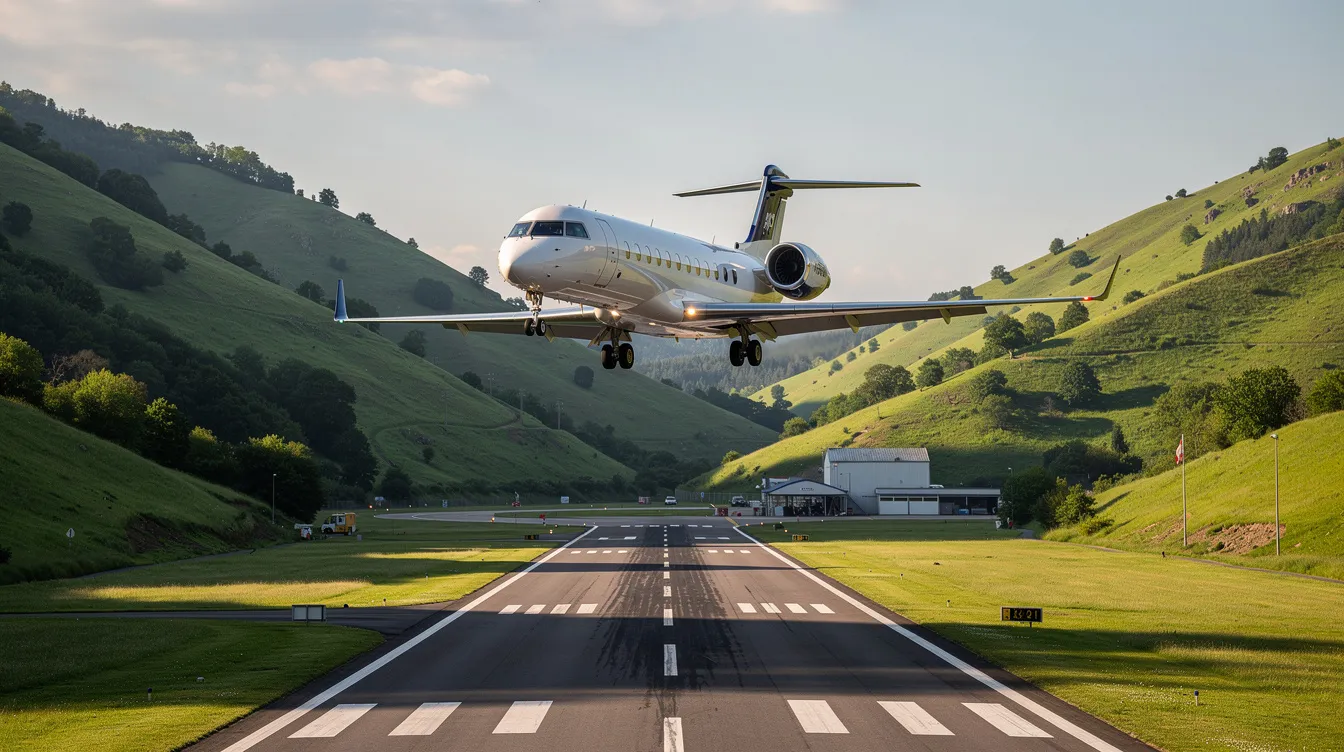
5
min read
Plane Landings: Phases, Techniques, and What Matters Most
Plane landings involve distinct phases that are crucial for safety and passenger comfort. Factors such as wind direction and runway conditions influence landing techniques, particularly in private aviation where shorter runways are common. Understanding these phases and techniques enhances the flying experience, especially for travelers using charter services like Jettly.
Read MoreStay updated with our latest insights and tips to elevate your journey with us.
MEMBERSHIPS AND ASSOCIATIONS



Disclaimer: Jettly operates as a charter broker, offering access to a global digital jet charter marketplace. Jettly is not a direct air carrier and does not own or operate aircraft. All advertised flights are conducted by third-party air carriers that are fully licensed and hold the appropriate Part 135 or Part 121 certifications issued by the Federal Aviation Administration (FAA) or equivalent regulatory authorities under U.S. or foreign law. Jettly complies fully with the U.S. Department of Transportation's Part 295 and Part 298 Charter Broker regulations. Jettly does not carry additional liability insurance. Passengers are covered by aircraft operator insurance. TICO: 50023770


