



Login
Get Instant Pricing On 23,000+ Aircraft

>
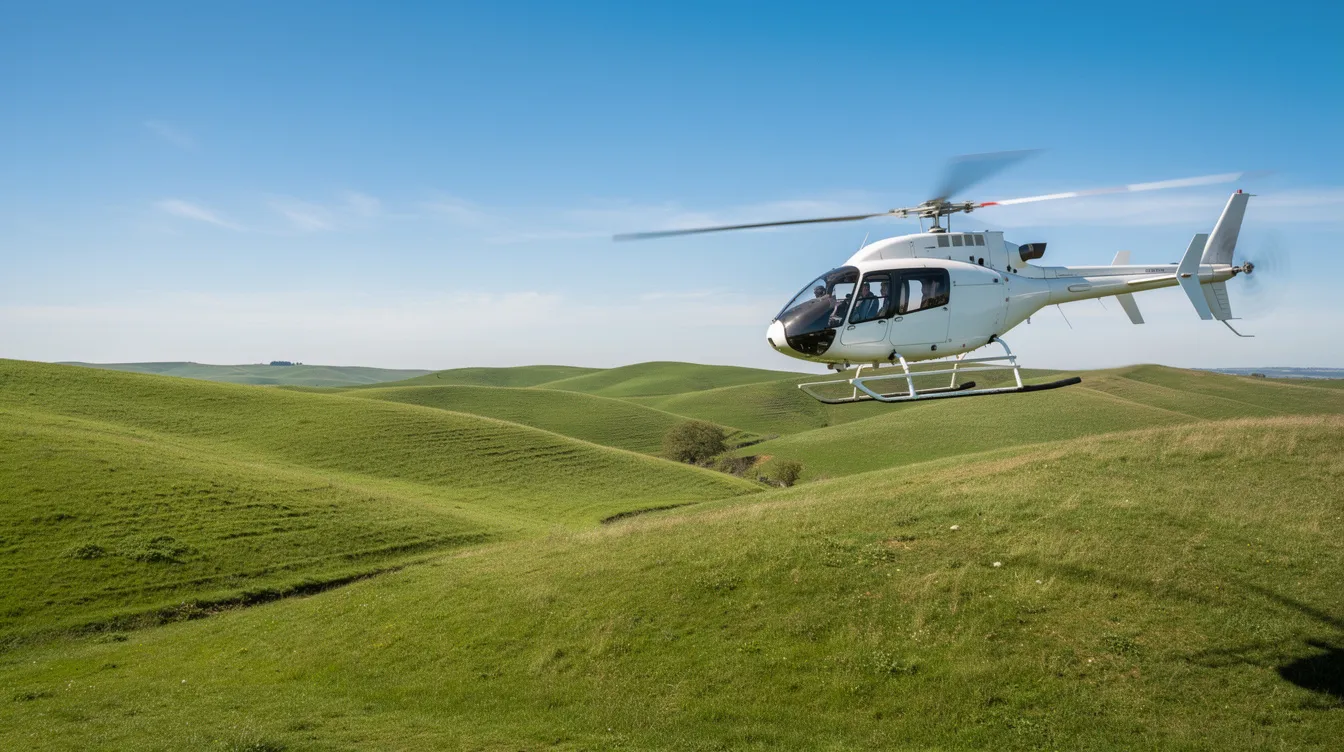
A small helicopter opens doors that fixed-wing aircraft cannot. From ultralight helicopters built in a home workshop to certified four-seat models dispatched through charter platforms like Jettly, these rotorcraft serve hobbyists, private travelers, and professionals who need point-to-point flexibility in tight spaces. This guide breaks down the category, the rules, and the real costs.
A small helicopter typically weighs under 7,000 pounds, seats one to seven people, and covers roles from training and personal transport to utility and emergency medical services.
Ultralight helicopters operating under FAR Part 103 must weigh no more than 254 pounds empty, carry no more than 5 gallons of fuel, and cannot exceed a speed of 55 knots - but FAR Part 103 allows flying without a pilot's license.
Rotor blades, engine type, and composite materials from brands like Composite FX drive performance, flight time, and maintenance needs across the category.
Personal helicopters provide unparalleled freedom and flexibility in travel, yet many personal helicopter owners see ownership as worthwhile only if they frequently fly.
High-net-worth travelers often skip ownership entirely and access small helicopters through on-demand charter platforms instead of dealing with hangar fees, insurance, and maintenance.
A small helicopter is generally a single- or light twin-engine rotorcraft with a maximum takeoff weight under about 7,000 pounds. These aircraft are used for training, personal transport, aerial surveys, and short utility missions around the world.
The category splits into three tiers:
Ultralight helicopters - single-seat machines with an empty weight under 254 pounds, governed by FAR Part 103 in the U.S. Examples include the Innovator Mosquito Air and various Composite FX Mosquito variants.
Experimental amateur-built - two-seat kits like the RotorWay A600 Talon or Safari 400, which require FAA registration and pilot licensing.
Certified light helicopters - factory-produced, fully certified models such as the Robinson R44 Raven II, Airbus H125, and Bell 505, seating three to six passengers.
Light piston helicopters typically have two to four seats and feature piston engines. Light turbine helicopters seat four to seven people, offer higher performance with turbine engines, and are used for law enforcement, news broadcasting, and air ambulance services.
These are distinct from larger twin-engine corporate models like the Leonardo AW139 or Sikorsky S-76, which sit well above the small helicopter category in price, range, and cabin size. Small helicopters can take off and land virtually anywhere suitable and operate in small spaces - making them ideal for short hops between a city center and an airport, yacht helipads, ski resorts, or remote lodges where fixed-wing jets cannot land.
In the U.S., the term ultralight helicopter usually refers to machines operating under FAR Part 103, which significantly reduces regulatory burden. Core limits for Part 103 rotorcraft include:
Empty weight under 254 pounds (314 lb with floats or safety devices)
Max level-flight speed of 55 knots (~63 mph)
Fuel capacity capped at 5 gallons
Single-seat only
Under Part 103, ultralight helicopters do not require FAA registration, airworthiness certificates, pilot licenses, or medical certificates. That said, professional training with a qualified instructor is strongly recommended. Operating a helicopter is generally considered more demanding than flying small airplanes, and hover control takes hours of dedicated practice.
Typical performance is modest: flight time of 30–45 minutes on a full 5-gallon tank, low cruise speeds, and local-area operation rather than cross-country travel. Ultralights are often used for recreational flying and low-cost commuting. The Mosquito Air kit was available for about $20,000, making it an accessible entry point for hobbyists. The Mosquito XEL weighs around 312 pounds with floats, pushing it into experimental territory.
Any helicopter with two seats requires FAA registration and falls into the experimental amateur-built or certified category, requiring at least a sport or private pilot certificate with a helicopter rating.
Many small helicopters fall into the experimental amateur-built category, where owners construct at least 51% of the aircraft from a kit supplied by a manufacturer. Kit helicopters can have lower upfront costs but require assembly time - often hundreds of hours in a workshop with common tools.
These machines offer more capability than ultralights: higher empty weight allowances, more fuel, two seats, greater range, and sometimes enclosed cabins, at the cost of registration, inspections, and licensing requirements, echoing trade-offs discussed in Jettly's overview of the cheapest private aircraft options. Examples include:
RotorWay A600 Talon - two-seat kit, MTOW ~1,500 lb, cruise ~90–100 mph, kit priced around $108,000.
Composite FX Mosquito XE - configurable as experimental; the Mosquito XE starts at around $53,000 as a kit, with a factory-finished option near $88,500.
Safari 400 - another popular two-seat kit with an active builder community.
Some manufacturers offer factory builder-assist programs to speed up the process. Initial flight testing occurs in a designated area under Phase I experimental operating limitations. For anyone exploring affordable kit-built aircraft, build quality, documentation, and adherence to manufacturer recommendations are critical - especially when evaluating a used experimental helicopter in any condition.
Rotor blade design, engine choice, and construction materials determine how a small helicopter flies, how long it can stay airborne, and how much maintenance it needs.
Rotor systems on small helicopters range from two-bladed semi-rigid setups (Robinson R22, R44) to three-bladed fully articulated systems (Airbus H120). Blade count and diameter influence lift capacity and vibration levels, which affect both comfort and structural fatigue over time.
Engine types include:
|
Engine |
Typical Use |
Features |
|---|---|---|
|
2-stroke piston |
Ultralight helicopters |
Lighter, higher power-to-weight, shorter life |
|
4-stroke piston |
R22, R44, training fleet |
More durable, better fuel economy |
|
Small turbine |
H125, Mosquito XET, Helicycle |
Higher performance, higher cost |
The Helicycle is powered by a Solar T62 turbine engine, making it one of the few turbine-equipped experimental kits available to builders. Light piston helicopters are used for pilot training, aerial surveys, and personal transport, while turbine engines open the door to more demanding roles.
Composite materials - carbon fiber rotor blades, composite airframes - are increasingly common. Composite FX's Mosquito series uses composite frames and blades to reduce weight and improve corrosion resistance, directly improving useful load and flight time within max takeoff weight limits.

Here is a practical look at what small helicopters can actually do, using real numbers.
An ultralight helicopter with a 5-gallon tank might offer 30–60 minutes of flight time and 20–40 nautical miles of practical range. A Robinson R44 Raven II cruises around 110 knots (~130 mph) with 2.5–3 hours of endurance and roughly 300 NM of range. The typical cruise speed for light helicopters ranges around 90–130 mph depending on the model and conditions.
The key constraint is empty weight versus useful load. Fuel, pilot, passengers, and baggage must all fit within the useful load margin. On hot days at higher altitudes, density altitude cuts into hover performance and reduces what a small helicopter can carry. Small helicopters generally have a limited range and payload compared to larger aircraft, but helicopters can access remote locations and provide significant time savings for point-to-point travel, much like the strategies outlined in Jettly's guide to affordable aircraft rental options for fixed-wing planes.
Charter operators plan missions conservatively, accounting for reserve fuel requirements (typically 30 minutes), headwinds, and terrain to keep every flight within safe flight time limits. Small helicopters are versatile and can adapt to various roles like training, transport, and emergency response - results that larger, more complex aircraft cannot always deliver in tight spaces.
Owning even a small helicopter is significantly more expensive and time-consuming than most new pilots expect. Helicopter ownership comes with high operating costs including fuel and maintenance, and helicopters generally require stringent maintenance and inspections due to many moving parts.
Purchase prices (2020s ranges):
|
Type |
Price Range |
|---|---|
|
Ultralight kit |
$20,000–$80,000 |
|
Mirocopter SCH-2A |
~$35,000–$38,000 |
|
Mosquito XE kit |
From ~$53,000 |
|
Used Robinson R22 |
$150,000+ |
|
New Robinson R44 |
Several hundred thousand dollars |
Annual maintenance costs for ultralight helicopters run a few thousand dollars. Certified helicopters cost far more: Robinson's 2,200-hour overhaul cycle, life-limited rotor blades, and insurance can push direct operating costs into the hundreds of dollars per flight hour.
Chartering flips this equation. Travelers pay only for the hours they fly, with pricing that includes certified crew, maintenance, and insurance, and Jettly provides guidance on affordable private jet charter pricing to help estimate these costs. For a deeper breakdown, see Jettly's guide on helicopter rental costs. A digital charter platform like Jettly lets users compare small helicopters against light jets or turboprops for short sectors, using tools like Jettly's private jet charter cost estimator to choose the aircraft type that fits their route and budget without long-term ownership commitments.
While Jettly specializes in fixed-wing private charter aircraft and turboprops, small helicopters are part of the broader private aviation toolkit for last-mile connections and short-range missions. Common use cases for Jettly's clientele include city center–to–airport transfers (Manhattan to Teterboro, for example), resort access in the Alps or Rockies, and ship-to-shore movements for yachts, as well as pairing helicopter hops with private jet charter in Houston, Texas, and other major cities.
Many of these missions use single-engine helicopters such as the Robinson R44, Airbus H125, Bell 407, or Eurocopter EC30 - chosen for their balance of cost, performance, and ability to land at rooftop or private helipads where permitted. Helicopters are noisy, which can limit operational areas and create issues with neighbors, so operators carefully select routes and landing zones.
Jettly's marketplace model helps travelers search digitally, get instant or near-instant pricing, and access a wide pool of operators and aircraft types - including helicopters on some routes - similar to the broader private aviation options outlined in its charter airlines guide. For more information on how helicopter charter works, or to compare it with jet options using Jettly's airport locator tool, visit the Jettly website at www.jettly.com.

Helicopters operate in a tightly regulated environment. Safety should always come before speed, novelty, or cost - especially with ultralight and experimental rotorcraft. Key regulatory points include appropriate pilot licensing (private or commercial helicopter rating), maintenance by certified technicians for any registered aircraft, and oversight from national aviation authorities (FAA, EASA, Transport Canada).
The oversight gap between categories is significant: Part 103 ultralight helicopters face minimal regulation, experimental amateur-built aircraft carry airworthiness certificates with operating limitations, and fully certified helicopters used by commercial operators, similar to Part 135 charter companies, meet the highest standards. When chartering, look for operators with third-party audits from organizations like ARGUS, Wyvern, or IS-BAO, plus experienced pilots with strong safety records.
For travelers who mainly want fast, flexible transport without the year-long commitment of building or owning, chartered helicopters through platforms like Jettly offer a compliant, professionally managed alternative, with options to choose between shared and full charter flights depending on budget and privacy needs. Contact the platform to explore what is available in your country and region.
These FAQs address practical questions focused on real-world usage and traveler concerns not fully covered above.
Under U.S. FAR Part 103, no formal pilot license is required for compliant single-seat ultralight helicopters. However, structured training with an instructor - and ideally some time in a two-seat trainer - is strongly recommended. Flying a helicopter is fun but demanding, and safe hover control takes dedicated practice before anyone is truly ready to fly solo.
In most jurisdictions, this is legally and practically complex. Local zoning, noise ordinances, and obstacle clearance rules apply. Professional operators typically require approved helipads or landing zones rather than ad-hoc landings in residential areas. Check your local page of aviation regulations and join community forums for area-specific information before making plans.
At close range, rotor noise and engine sound from a small helicopter can be more intrusive than many small jets on approach. However, helicopters are usually overhead for a shorter time. Newer rotor blade designs and powered flight path management techniques aim to reduce noise footprints, though results vary by model and operation.
Helicopters excel on short sectors - typically under 100–150 nautical miles - where door-to-door time savings from landing closer to the final destination outweigh higher per-mile costs. Light jets suit longer routes between established airports. For a comparison of helicopter taxi pricing, Jettly's guides can help with the math.
Availability varies by region, but travelers can use Jettly's platform to request routes that may be equipped for helicopter service. The support team can then quote appropriate aircraft options - including small helicopters where local operators participate. Explore flight options or request a quote at https://www.jettly.com.
Small helicopters offer unique advantages in flexibility, accessibility, and point-to-point travel, making them valuable assets for personal use, training, and professional missions. Ultralight helicopters provide an affordable entry point with minimal regulatory hurdles, while experimental and certified models offer greater capability at higher costs and complexity. For many travelers, chartering small helicopters through platforms like Jettly delivers the convenience of private rotorcraft without the burdens of ownership. Whether for short urban hops, remote resort access, or last-mile connections, small helicopters complement private aviation by saving time and expanding reach. To explore available helicopter charter options or get a personalized quote, visit Jettly’s website and discover how small helicopters can enhance your travel experience.
Ready to experience private travel on your terms? Explore flight options or request a quote at https://www.jettly.com.
Share this post:
Jay Franco Serevilla
Jul 20, 2026
|
5
min read
Discover tips and trends in the industry.

5
min read
KGRK: Robert Gray Army Airfield & Fort Hood Regional Travel Guide
Robert Gray Army Airfield (KGRK) serves as a vital joint-use airfield for Fort Hood and the Killeen area, facilitating both military and commercial aviation. With a 9,997-foot runway and 24-hour operations, it supports a range of aircraft and offers direct access to Central Texas. This travel guide provides essential information for military personnel, families, and business travelers using KGRK.
Read More
5
min read
KLBO – Floyd W. Jones Lebanon Airport Private Jet Charter Guide
Floyd W. Jones Lebanon Airport (KLBO) is a premier general aviation airport in Lebanon, Missouri, catering to private jet travelers. With a 5,000-foot runway and dedicated FBO services, it offers a convenient alternative to larger airports, ensuring faster turnarounds and less congestion for corporate and leisure travelers alike.
Read MoreStay updated with our latest insights and tips to elevate your journey with us.
MEMBERSHIPS AND ASSOCIATIONS



Disclaimer: Jettly operates as a charter broker, offering access to a global digital jet charter marketplace. Jettly is not a direct air carrier and does not own or operate aircraft. All advertised flights are conducted by third-party air carriers that are fully licensed and hold the appropriate Part 135 or Part 121 certifications issued by the Federal Aviation Administration (FAA) or equivalent regulatory authorities under U.S. or foreign law. Jettly complies fully with the U.S. Department of Transportation's Part 295 and Part 298 Charter Broker regulations. Jettly does not carry additional liability insurance. Passengers are covered by aircraft operator insurance. TICO: 50023770


