


Login
Get Instant Pricing On 23,000+ Aircraft

>
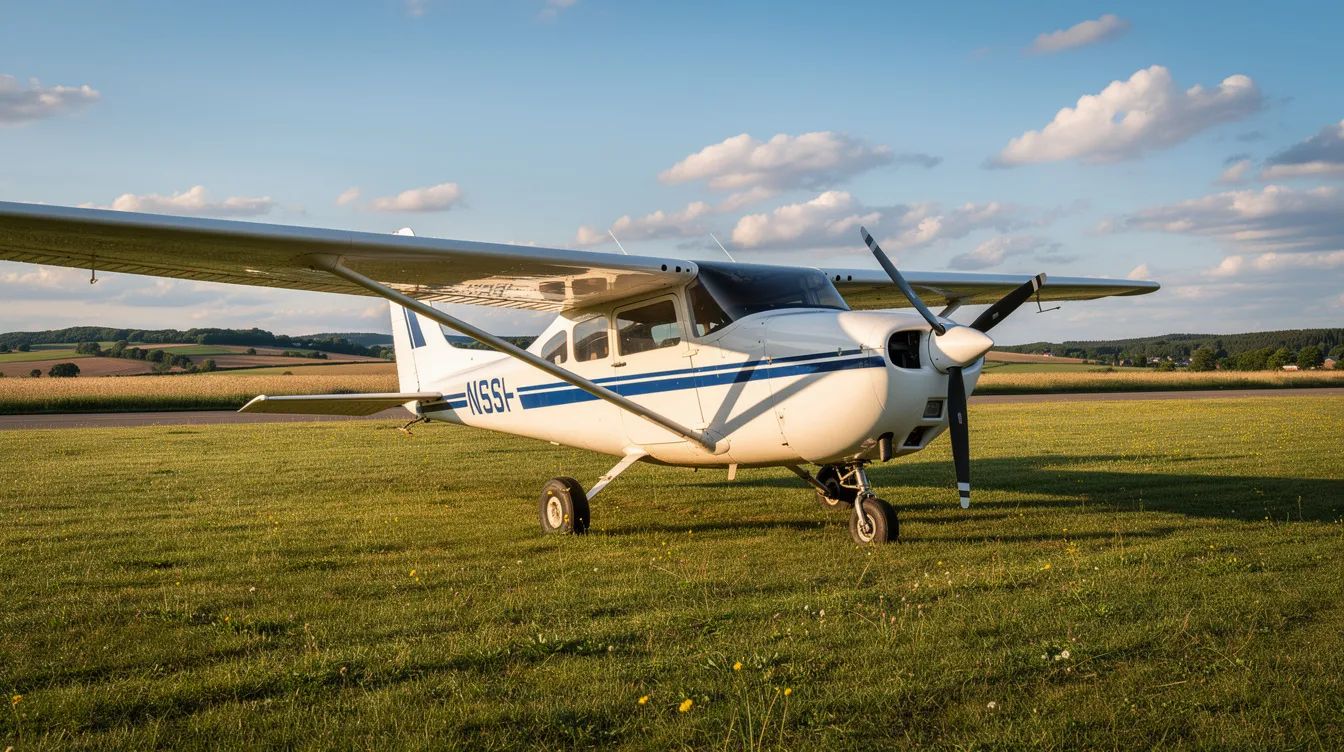
The smallest Cessna plane that saw true mass production is the two-seat Cessna 150, along with its successor, the Cessna 152. These compact, high-wing trainers have introduced more student pilots to the sky than nearly any other aircraft in history. But how do they compare to larger Cessna models, and when does it make sense to fly, rent, or charter one? This guide covers specifications, history, comfort, cost, and how platforms like Jettly connect travelers with the right aircraft for every mission. This article is intended for student pilots, private flyers, and travelers interested in understanding the smallest Cessna aircraft and their practical uses.
The smallest widely produced Cessna aircraft are the Cessna 150 and 152, both two-seat, fixed-gear trainers powered by reliable piston engines with low operating costs.
Cessna 150 and 152 models were produced from 1958 to 1986, with over 31,000 units built globally, making them the most common primary trainer in aviation history.
They are significantly smaller and lighter than the Cessna 172 Skyhawk (the world's most-produced aircraft with over 44,000 units), but still offer modern avionics upgrades and solid safety records when properly maintained.
Platforms like Jettly can connect travelers with small Cessna aircraft for short regional hops, sightseeing, or connecting flights to larger private jets, with hourly charter rates for small Cessnas ranging from $300 to $600.
This article compares buying vs. chartering small Cessna aircraft and answers FAQs about capacity, comfort, and trip planning.
In practical terms, the smallest mainstream Cessna plane is the Cessna 150, a two-seat, high-wing, single engine training aircraft introduced in the late 1950s. The Cessna 150 seats two passengers and remains widely regarded as the entry point into general aviation.
While experimental or very low-production Cessna designs have existed, the 150 (and later 152) stands as the smallest widely produced Cessna model used for flight training, private ownership, and limited charter roles. The Cessna 150 and 152 are the smallest utility/training airplanes produced in mass quantities. Utility/training airplanes are aircraft designed primarily for pilot instruction and basic utility roles, typically featuring two seats, simple controls, and fixed landing gear. The Cessna 150 and 152 are both two-seat, fixed-gear trainers built for simplicity and durability.
"Smallest" here means two seats, a compact cabin, a maximum takeoff weight around 1,600 lb, and short-field performance that lets pilots operate from modest runway lengths. Compare that to the four-seat Cessna 172 Skyhawk or the higher-performance Cessna 182 Skylane, and the size difference becomes immediately clear.
Cessna developed the 150 as a successor to the tailwheel Cessna 140, riding the post-World War II wave of demand for tricycle-gear trainers that were easier for beginners to handle on the ground. The prototype achieved its first flight in September 1957, and production began in 1958 for the 1959 model year. Over the following two decades, more than 23,000 Cessna 150s were built in the United States alone, with additional units assembled through licensed production by Reims Aviation in France.
In 1977, Cessna transitioned to the Cessna 152, which brought a Lycoming O-235 engine, better compatibility with 100LL fuel, and refinements in noise and vibration. Production of the 152 continued until around 1985, adding roughly 7,584 more units to the family total. The Aerobat variant of the Cessna 152 is structurally reinforced for aerobatic maneuvers, adding fun and versatility to the lineup.
French-built Reims F150 and F152 models featured enhanced corrosion protection and slightly different avionics, helping the aircraft reach flight schools and private owners across Europe and beyond. Commonly called "aviation's classroom," the 150/152 is where many pilots took their first flight and first solo, a successful era of training that shaped generations.
Here is a summary of the core numbers that define the Cessna 150 and its 152 successor, drawn from typical late-model data:
Wingspan: approximately 33 ft (10.1 m)
Length: roughly 24 ft (7.3 m)
Empty weight: around 1,100–1,150 lb (500–520 kg)
Maximum takeoff weight: approximately 1,600 lb (150) to 1,670 lb (152)
Seats: strictly 2, with a modest baggage area behind the seats (typically 80–120 lb capacity)
Maximum cruise speed: The Cessna 152 features a maximum cruise speed of approximately 107 knots, while small Cessna planes as a broader range of models cruise at speeds of 110–160 knots depending on type
Maximum range: The Cessna 152 has a maximum range of approximately 415 nautical miles; the 150 covers roughly 300–340 nm with standard fuel
Service ceiling: The Cessna 152 has a service ceiling of 14,700 ft
Fuel burn: roughly 6–8 gallons per hour
Typical useful load: approximately 460–600 lb depending on variant and equipment
Engine details: the 150 is powered by a Continental O-200 producing 100 hp, while the 152 runs a Lycoming O-235 at roughly 110 hp. Both are naturally aspirated, carbureted piston engines with fixed propellers.
The 150/152 sits at the bottom of the classic high-wing Cessna lineup. Here is how it stacks up against other popular models:
Cessna 172 Skyhawk: The Cessna 172 is the world's most-produced aircraft with over 44,000 units. It offers 4 seats, though in practice the Cessna 172 typically seats 2–3 adults with light baggage comfortably. It has a broader range of about 696 nautical miles, more power (160–180 hp), and better visibility of what lies ahead for cross-country flying. Operating cost per hour is higher than a 150/152, but versatility for training and travel is significantly greater. Learn more in this comprehensive overview of the Cessna 172S Skyhawk.
Cessna 182 Skylane: Even larger, the Cessna 182 has a cruise speed of 120–130 knots and can reach up to 930 nautical miles. It carries 3–4 passengers with baggage, handles more complex weight and balance scenarios, and suits family or light business trips far better than a trainer.
Cessna 206 Stationair: The Cessna 206 can carry up to six passengers and has a useful load of over 1,400 pounds, making it a workhorse for cargo, utility, and backcountry operations.
Cessna 162 Skycatcher: This two-seat Light Sport Aircraft, produced around 2009–2013, is technically smaller in some dimensions and lighter than the 150/152. However, its limited production run (roughly 200–275 built) and different regulatory category (LSA) mean it never replaced the 150/152 as the go-to trainer.
Small Cessna planes typically seat 2 to 10 passengers across these models, and small Cessna planes typically have a range of 400–900 nautical miles depending on the specific Cessna model. For a deeper comparison, see the guide on the best Cessna plane for training, travel, and charter.
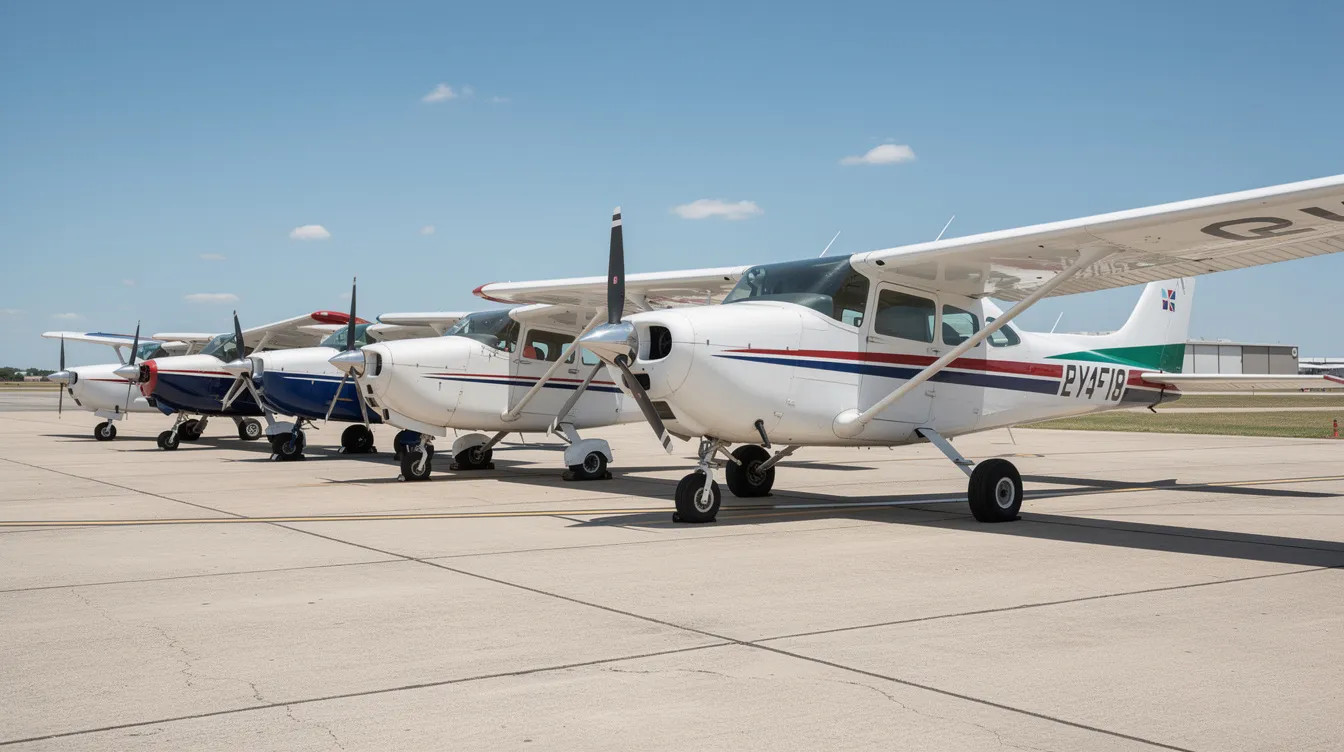
Despite their age, the Cessna 150 and 152 remain active around the world. Thousands are still registered and flying, serving flight schools, private owners, and some commercial operators for specialty tasks.
Their core mission is as a primary trainer. The Cessna 150 and 152 are widely regarded as the premier primary trainers for student pilots. Beginners practice takeoffs, landing patterns, stalls, and emergency procedures at local airports, often flying 1–2 hour lessons. The Cessna 152's fixed tricycle landing gear makes ground handling easier for student pilots, which is one reason schools keep them in rotation. Curious about pilot lessons cost? The low hourly operating cost of these trainers keeps training accessible.
Recreational pilots also fly them for sightseeing, short hops between nearby airfields, or the classic "$100 hamburger" flight with one friend. The aircraft's simplicity and low fuel burn make it fun and affordable.
Niche commercial roles include aerial survey, pipeline patrol, banner towing, and pilot time-building programs, while some operators offset costs by using platforms that crowdsource private jet flights and share empty seats. However, when the mission demands more capacity or range, operators commonly step up to the Cessna 172 or 182, or even larger piston singles such as the Cessna 207 with its six- to seven-passenger capability.
Example scenario: A student pilot at a regional airport rents a Cessna 152 for pattern work at night, logging hours toward a private license. A weekend pilot uses the same aircraft the next morning for a short cross-country hop, saving money compared to renting a larger four-seat aircraft.
The Cessna 150/152 is designed to be practical and durable for daily training rather than luxurious. The cabin is compact but functional.
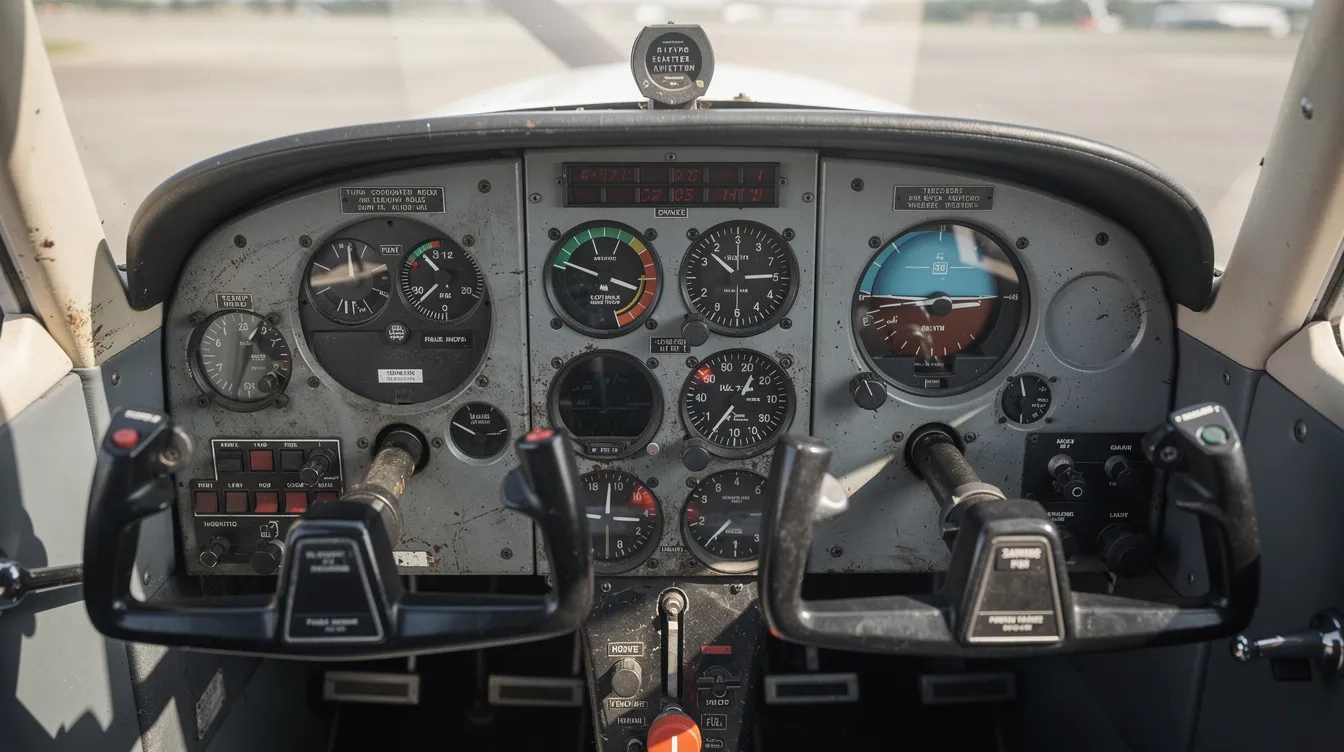
The cockpit layout features side-by-side seating for two, basic flight instruments in the center panel, and engine controls on the lower panel. The Cessna 152 is equipped with high-wing design to provide better downward visibility, and large windows give good forward and side sightlines. The Cessna 152 features a simple cockpit layout with basic analog or upgraded avionics depending on the individual aircraft.
Comfort factors are honest: limited legroom and shoulder width for taller or larger pilots, simple upholstery, ventilation via small sliding windows, and a basic heating system. The door is narrow. For flights under 1–2 hours, it is perfectly adequate. For longer legs, the cabin can feel confining.
Many refurbished aircraft are now equipped with modern avionics, such as Garmin G5 electronic instruments or GTN GPS units, bringing the panel closer to what pilots see in newer trainers. These upgrades improve the aircraft's value and training relevance.
For passengers who value space, luggage capacity, and smoother rides, moving up to a Cessna 172 Skyhawk, a high-performance cabin-class piston such as the Cessna 340 with its business-friendly range and comfort, or a light jet like a Cessna Citation Mustang is usually a better fit.
The Cessna 150/152 has a strong safety record when operated within limits. It is globally recognized and certified as a forgiving training platform with stability that builds student confidence.
Key safety advantages include:, while premium services such as in-flight catering for private jets through Jettly Eats can enhance comfort on longer missions:
Docile stall behavior with no sharp wing drops
Predictable handling across the flight envelope
Robust landing gear for repeated training circuits, reducing injuries from hard landings
Straightforward emergency procedures that form the basis of most pilot syllabi
Regulatory frameworks vary by country. In the United States, these aircraft operate under FAA Part 91 for private use, or Part 141/61 for flight training. Similar rules apply under EASA and other international authorities. A student needs a student pilot license to begin, progressing to a private pilot certificate.
Maintenance is critical for aging airframes. Training aircraft require both annual and 100-hour inspections, along with compliance on airworthiness directives. Professional training operators and charter companies adhere to strict maintenance schedules, which directly contributes to the aircraft's reliability and safety record.
The difference between casual owner flying and professionally maintained operations is significant. Structured procedures, disciplined weather decision-making, and experienced pilots all improve outcomes.
Some readers may be considering ownership of a Cessna 150/152, while others are better served by renting or chartering when needed, potentially through private jet membership programs that offer wholesale charter access.
Acquisition costs: Ownership costs range from $30,000 to $800,000 upfront across small Cessna planes, with used Cessna 150/152s typically falling in the $25,000–$80,000 range depending on condition, engine time, and avionics upgrades. For more on finding value, see Cessna for sale cheap.
Ongoing expenses: Annual fixed costs for ownership range from $20,000 to $40,000 once you factor in maintenance, hangar or tie-down fees, insurance, fuel, and overhaul reserves. While cheaper than larger aircraft, fixed costs still add up.
Chartering or renting: Tools such as a private jet charter cost estimator for on-demand flights can help benchmark pricing, and hourly charter rates for small Cessnas range from $300 to $600. Chartering a small Cessna has no upfront cost, and chartering includes maintenance in the hourly rate, eliminating that burden entirely; frequent flyers may also compare options using a jet card flight cost estimator for one-way private jet trips. Chartering eliminates maintenance responsibilities for the user. For pilots who fly fewer than 100–150 hours per year, renting or chartering often makes more financial sense. Learn more about how much it costs to charter a small plane and explore Jettly’s broader guidance on affordable private jet charter pricing and cost drivers.
Chartering offers flexibility with no long-term commitments, which appeals to travelers who want access without the ongoing obligations of ownership, and there are many options for affordable aeroplane rent, costs, and rental choices that can help match budget to mission.
The Cessna 150/152 is ideal for certain missions but is not a universal solution for all private aviation needs.
Ideal scenarios:
Student pilots beginning training
Licensed pilots maintaining currency with circuits and short flights
Very short-range hops with one passenger and minimal baggage
Limitations:
Tight cabin for taller or multiple passengers
Limited luggage load behind the seats
Lower cruise speed compared with larger Cessnas or turboprops
Reduced performance at high density altitude or in challenging weather over mountainous terrain
When the mission calls for a family trip, a meeting with more than one colleague, or travel beyond roughly 300–400 nautical miles, stepping up to larger Cessna models like the 172 or 182 makes sense, and families can benefit from guidance on the best plane for a family of four when evaluating their options. Explore options in this guide to small aircrafts for modern private travel and consider Jettly as a cost-effective NetJets alternative for flexible private flying.
Customers using a platform such as Jettly typically select the right aircraft that balances capacity, speed, and budget from its broad catalog of private charter aircraft across all major categories. That often means four-seat piston aircraft, turboprops, or light jets rather than two-seat trainers.
Jettly operates as a digital private aviation platform connecting travelers to a global inventory of charter aircraft, from small pistons to heavy jets, and also serves as a broker for operators like DEXTER Air Taxi’s private jet services. While true two-seat trainers like the Cessna 150/152 are primarily used for instruction, Jettly's network offers four-seat and larger aircraft that better meet charter passenger needs, including instant-book partners such as Zenflight’s global private jet service.
Key benefits of using Jettly include instant pricing, transparent cost structures, an airport locator tool for identifying convenient departure and arrival fields, the ability to filter by aircraft size and category, and chartering provides access to over 20,000 aircraft globally for both short regional hops and long-range jet travel.
Example use cases: A traveler books a short Cessna 172 flight into a smaller regional airport, then connects to a light jet for a longer sector, perhaps using regional offerings like private jet charter services in Kolkata, West Bengal as part of a broader itinerary. A family charters a turboprop for a weekend trip to a destination with a short runway. In both cases, the platform makes it flexible and simple to match aircraft to the air travel mission, similar to the broader landscape of operators described in a comprehensive list of private charter airlines and services.
Understanding the capabilities of the smallest Cessna planes helps travelers and pilots make smarter choices about when to use ultra-small trainers, when to move up to larger pistons, and when to select a jet through Jettly's platform or structured jet card programs for frequent corporate flyers.
Ready to explore private travel on your terms? Travelers and content creators can also benefit from Jettly’s ULTRA high ticket affiliate program for referring private aviation clients. Request a quote at https://www.jettly.com.
Here are answers to the most common questions readers have about the smallest Cessna models.
Most flight schools consider the Cessna 150/152 one of the most forgiving trainers available, designed specifically for first-time pilots learning basic skills like takeoffs, landing, and stalls. Its light control forces and stable high-wing design help beginners build confidence quickly. That said, proper instruction, adherence to weight and balance limits, and respect for weather conditions remain essential for safety. For more on choosing a first aircraft, see the guide on picking a good beginner airplane.
Many Cessna 150/152 aircraft are equipped for basic instrument flight training, but equipment levels vary widely. Some have been upgraded with certified GPS navigation and backup instruments suitable for IFR flight. Before planning serious instrument training or IFR cross-country flights, confirm that the specific aircraft is IFR-certified and carries the required avionics.
Comfort is subjective, but pilots over roughly 6 ft (about 183 cm) often find the cabin tight, with limited legroom and headroom compared to larger models like the Cessna 172. Seat adjustments and cushion changes can help, yet sustained flights of more than 1–2 hours may feel cramped for taller or broader-shouldered individuals.
True two-seat trainers are not typically offered for passenger charter because of their limited capacity and training-focused interiors. They are more often rented for instruction or solo practice. Jettly's charter inventory more commonly includes four-seat Cessna 172s, higher-performance 182s, turboprops, and small jets, which provide better comfort, range, and payload for most private travelers.
Consider passenger count, luggage, budget, and desired travel time. Small piston aircraft keep the cost lower but fly slower, while light jets like the Cessna Citation Mustang cost more per hour yet save time and improve comfort on longer sectors. Travelers can use a platform such as Jettly to compare options side-by-side, factoring in airport access, schedule flexibility, and total door-to-door travel time before deciding, drawing on its portfolio of private charter aircraft from light pistons to long-range jets.
The Cessna 150 and 152 remain the smallest widely produced Cessna aircraft, ideal for flight training, recreational flying, and very short regional trips. Their simplicity, low operating costs, and forgiving flight characteristics make them enduring favorites in aviation education and personal flying. While limited in cabin space and range compared to larger models like the Cessna 172 or 182, they offer unmatched accessibility for new pilots and budget-conscious travelers.
For those seeking private charter options, platforms like Jettly provide access to a broad range of small Cessna aircraft suited for short hops and light travel, without the financial commitment and maintenance burden of ownership. Whether for learning to fly, quick regional travel, or connecting to larger jets, the smallest Cessna planes continue to play a valuable role in general aviation.
Ready to take control of your private travel experience? Discover available flights or get a personalized quote at https://www.jettly.com.
Share this post:
Jay Franco Serevilla
Aug 15, 2026
|
5
min read
Discover tips and trends in the industry.

5
min read
Jetout vs. Jettly: How Modern Private Aviation Is Changing for Travelers and Crew
Jetout and Jettly represent two distinct models in private aviation, catering to different traveler needs. Jetout focuses on regional co-ownership with a dedicated fleet, while Jettly offers a global digital marketplace for on-demand charter services. Understanding these options can help travelers make informed decisions based on their flight frequency and preferences.
Read More
5
min read
Sentient Jet LLC: Jet Cards, the Sentient Certified Network, and Modern Private Aviation
Sentient Jet LLC revolutionized private aviation by introducing the jet card model in 1999, offering prepaid flight hours at fixed rates. This article explores the advantages and disadvantages of Sentient Jet's structured approach compared to on-demand charter solutions, helping travelers make informed decisions based on their flying habits and preferences.
Read MoreStay updated with our latest insights and tips to elevate your journey with us.
MEMBERSHIPS AND ASSOCIATIONS



Disclaimer: Jettly operates as a charter broker, offering access to a global digital jet charter marketplace. Jettly is not a direct air carrier and does not own or operate aircraft. All advertised flights are conducted by third-party air carriers that are fully licensed and hold the appropriate Part 135 or Part 121 certifications issued by the Federal Aviation Administration (FAA) or equivalent regulatory authorities under U.S. or foreign law. Jettly complies fully with the U.S. Department of Transportation's Part 295 and Part 298 Charter Broker regulations. Jettly does not carry additional liability insurance. Passengers are covered by aircraft operator insurance. TICO: 50023770


