


Login
Get Instant Pricing On 23,000+ Aircraft

>
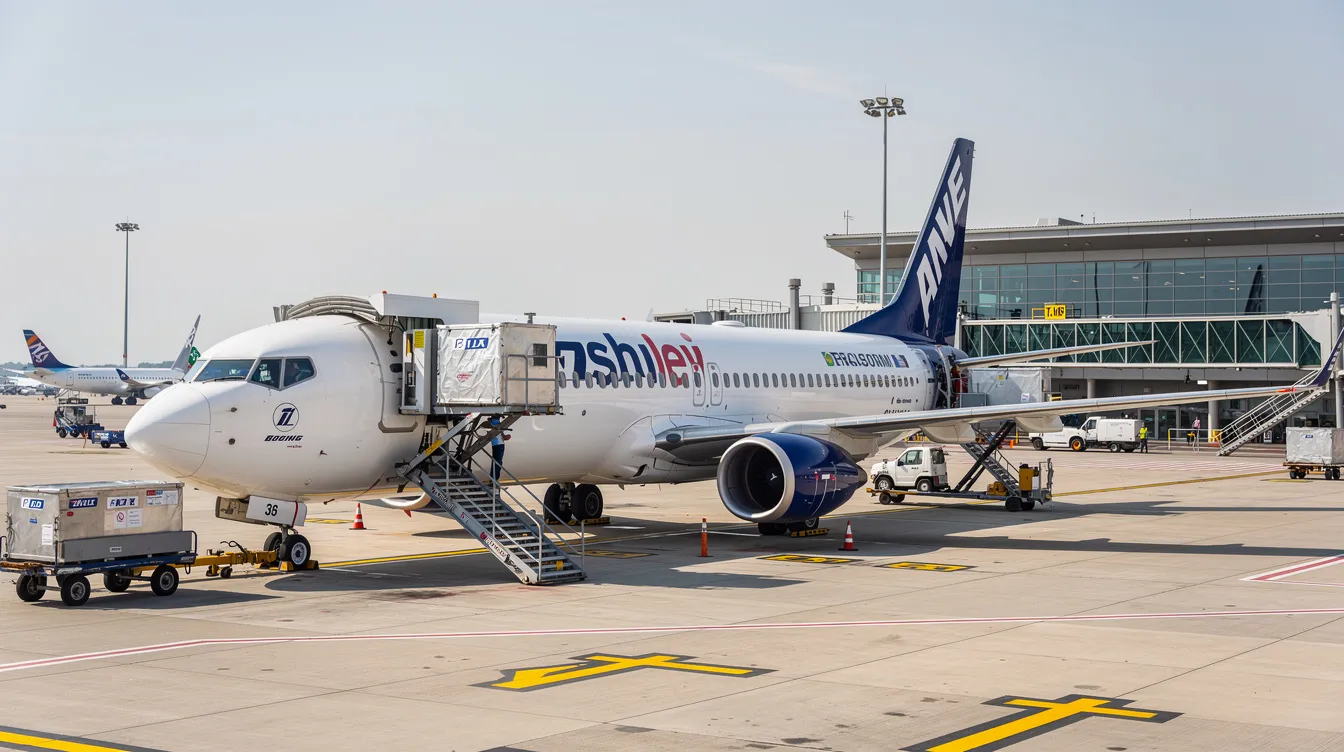
The Southwest Boeing 737- 800 is one of the most common aircraft in domestic aviation today. Whether you fly it weekly for business or once a year for vacation, understanding its cabin layout, fare bundles, and seat selection system can make a real difference in comfort. This guide breaks down what matters on the 737-800 and how the experience stacks up against private jet charter.
Southwest's Boeing 737-800 carries 175 economy class seats in a 3-3 layout, with specific exit rows and bulkhead seats that offer more legroom than the rest of the cabin.
Four fare bundles (Basic, Choice, Choice Preferred, Choice Extra) determine your seat assignment, boarding group, and checked bag allowances. A-List and A-List Preferred status and rapid rewards credit card perks layer on top.
The boarding process now uses groups 1 through 8 based on fare, seat type, and elite status, replacing the older A/B/C open-seating system.
For travelers who find the 175-seat cabin limiting, Jettly's private jet charter model offers full control over seating, schedule, and privacy, with instant pricing for thousands of aircraft worldwide.
The Southwest 737- 800 is a workhorse of the airline's fleet. Southwest Airlines operates a substantial fleet of Boeing 737-800 aircraft, each configured with 175 economy class seats in a single-class, 3-3 layout. The aircraft has been an important part of Southwest Airlines's fleet since 2012, handling high-frequency domestic routes, Mexico, and Caribbean service. It shares a common type rating with the 737-700 and 737 MAX 8, which simplifies crew scheduling and maintenance across the fleet. Southwest Airlines operates an all-Boeing 737 fleet to simplify operations.
The Boeing 737- 800 is designed for domestic and some longer flights, with a maximum range of approximately 2,900 to 3,000 nautical miles and a cruising speed of around Mach 0.79. It is effective on popular transcontinental routes and during busy travel seasons.
Most 737-800s in the fleet feature the standard heart interior with Boeing Sky interior elements: curved ceiling panels, LED mood lighting, and larger overhead storage bins. A smaller number have been updated with the Elevate interior, which includes RECARO R2 seats, USB-A and USB-C power outlets at every seat, and built-in device holders. Since January 27, 2026, all flights use assigned seating, and fare bundles directly affect which seat you can select and when you board.
For many Jettly customers, the 737-800 is the commercial baseline they compare against when considering private jet charter for time-critical or complex trips, and Jettly's dedicated Boeing 737-800 charter overview details how the type performs in a private configuration.
The typical Southwest Boeing 737 cabin has 29 to 30 rows in a single-aisle, 3-3 configuration. All 175 seats are economy class. The Boeing 737- 800 features larger overhead storage bins than earlier 737 models, which helps with carry-on storage on full flights.
The average seat pitch is 32 inches across standard seats, with a seat width of roughly 17 to 17.8 inches depending on the interior version. Extra legroom sections at the front of the cabin (rows 1 through 6) and at exit rows (around rows 14 to 16) offer 34 to 35 inches of pitch.
Key structural features that affect comfort:
Over-wing exits sit around rows 14 through 16, creating both extra legroom zones and some seat restrictions.
Lavatories are located at the front (one) and rear (two), with full-size galleys at both ends.
The rear of the cabin tends to be noisier and slower to deplane.
Certain window seats such as 10A, 11A, and 11F lack windows due to fuselage frame placement. Seats 10A, 11A, and 11F do not have windows, so check the seat map before booking if a view matters to you.
The front section offers faster deplaning and less turbulence. The rear is closest to lavatories and galley noise, which most passengers notice on longer flights.
Not all seats on the 737-800 are created equal. Here's what to know about the most and least desirable options.
Top picks:
Seats 1D, 1E, and 1F sit in the first row. Row 1 has extra legroom and is first to deplane. The trade-off is no under-seat storage during takeoff and landing, and tray tables built into the armrests can make the seat slightly narrower.
Seats 2A through 2C offer extra legroom with the added benefit of under-seat storage, making them strong picks for business travelers.
Row 16A and 16F have virtually unlimited legroom because there is no seat directly in front. These are exit row window seats and among the most sought-after on the aircraft.
Avoid if possible:
The last row (rows 29 to 30) has limited recline, sits near the rear lavatories, and is the slowest to deplane.
Row 13, the last row before the exit rows, often has restricted or no recline.
Parts of row 15 in the heart interior lack window seats at positions A and F, and middle seat passengers may find narrower armrest-mounted trays.
Tall passengers should prioritize exit row seats (particularly 16A or 16F) or front-cabin extra legroom rows. Families traveling together may prefer contiguous rows like 3 through 5 for extra legroom or rows 17 through 20 in Standard or Preferred zones, where they can sit on the same reservation without being split up.
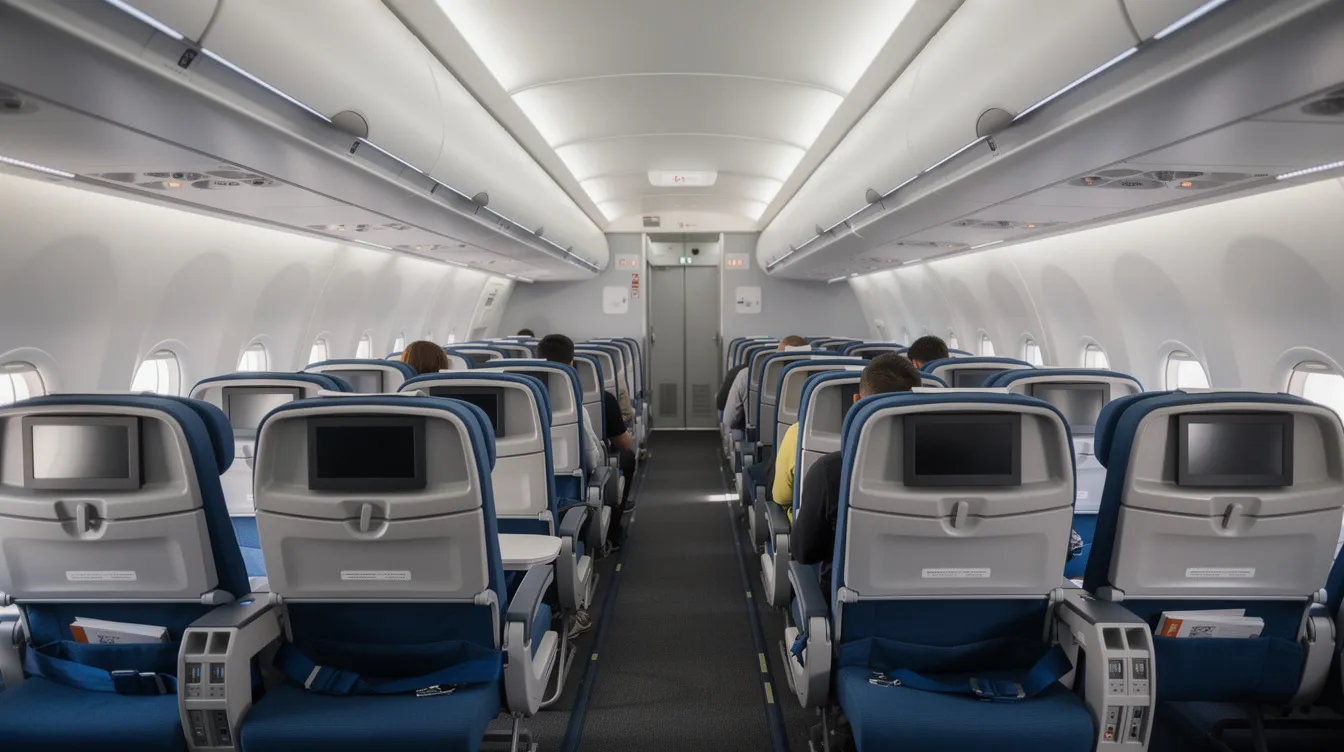
Southwest now divides seats on the Boeing 737- 800 into three categories: Standard, Preferred, and Extra Legroom.
Standard seats are the baseline. They offer about 31 to 32 inches of seat pitch and are found in the mid-to-rear cabin. These are the seats included with Basic and Choice fares.
A preferred seat has the same pitch as Standard but sits in a better cabin location, typically rows 6 through 13, forward of the wing and away from lavatories. Preferred seating is often prioritized for a list of members and Rapid Rewards members with mid-tier fares.
Extra legroom seats offer up to 35 inches of pitch. They are concentrated in the front of the cabin (rows 1 through 6) and at exit rows (14, 15, 16). Not every exit row seat reclines. Row 14 does not recline. Row 15 over-wing exits may have limited recline and missing window positions in the heart interior. Row 16 reclines fully.
All three seat types share the same basic seat shell. The differences come down to pitch, row location, and boarding priority. On short flights under two hours, a standard seat may feel adequate for most passengers. On longer flights of three to four hours, the extra three seats' worth of pitch in the Extra Legroom zone can make a noticeable difference, especially for tall passengers or anyone planning to work on a laptop.
Price deltas between Standard and Extra Legroom vary by route and demand, but bundling Extra Legroom into a Choice Extra fare often costs less than buying the upgrade separately.
Southwest's fare bundles determine your seat assignment, boarding group, and perks on every 737-800 flight.
Basic fare: The lowest price point. No seat selection at booking. Your seat is assigned at check-in, and you'll likely end up in the rear cabin. Flexibility is minimal, and boarding happens in groups 7 or 8. Basic fare passengers board last in groups 7-8.
Choice fare: Mid-tier. You can select seats from available standard seats at booking. Same-day changes are easier, and boarding groups improve over Basic. Rapid rewards credit cardmembers with Choice fares may access earlier boarding groups.
Choice preferred fare: Includes a preferred seat at booking, better boarding group assignment, and more flexibility on changes. This is a practical option for travelers who want a forward seat without paying for extra legroom.
Choice Extra: The top bundle. You get an extra legroom seat selection at booking, priority boarding in groups 1 or 2, two free checked bags, and the highest Rapid Rewards earning rate. On longer flights, this bundle changes the experience significantly. It also offers the most flexibility for cancellations and changes, with no blackout dates on award travel for qualifying members.
Each bundle is available on routes commonly flown by the 737-800. The gap in comfort between a basic fare middle seat in row 28 and a Choice Extra aisle in row 2 is substantial.
|
Feature |
Basic Fare |
Choice Fare |
Choice Preferred |
Choice Extra |
|---|---|---|---|---|
|
Seat Selection at Booking |
No |
Standard seats only |
Preferred seats |
Extra Legroom seats |
|
Boarding Group |
7-8 (last) |
3-5 |
3-5 |
1-2 (priority) |
|
Checked Bags Included |
None |
1 |
1 |
2 |
|
Change/Cancellation Flexibility |
Limited |
Moderate |
Better |
Best |
|
Rapid Rewards Points Bonus |
None |
Standard |
Standard + Bonus |
Highest Bonus |
|
Complimentary Premium Drinks |
No |
No |
No |
Yes (select flights) |
On January 27, 2026, Southwest replaced its decades-old open seating system with assigned seating and numbered boarding groups. Boarding groups range from 1 to 8.
The boarding process works as follows:
Pre-boarding: Passengers with disabilities can preboard before Group 1. Active duty military also pre-board.
Groups 1–2: Extra Legroom seat holders, Choice Extra fares, a list of preferred members, and top-status Rapid Rewards members.
Groups 3–5: Choice and Choice Preferred fare holders, a list of members, and Rapid Rewards credit card holders with earlier boarding benefits.
Groups 6–8: Standard seat holders and basic fare passengers. Basic fares fill groups 7 and 8.
Families traveling together are assigned the same boarding group when booked on the same reservation. Family boarding is smoother under this system because seats are pre-assigned, eliminating the old scramble to find three seats together.
Priority boarding can be purchased within 24 hours of departure for passengers who want to board earlier than their assigned group. This can be useful for securing overhead bin space on a full 737-800 flight.
The shift from A/B/C groups to 1–8 gives passengers more predictability. You know your seat and boarding group before arriving at the airport, much like fixed-rate jet card programs bring predictability to private flight costs and availability.
Rapid Rewards A-List and A-List Preferred status significantly change the 737-800 experience, just as understanding ways to secure a private jet seat can transform how you approach premium travel beyond commercial cabins.
A list members get free access to Standard and Preferred seats at booking and board in Group 1. They also earn bonus points on qualifying flights and receive one free checked bag.
A list preferred members enjoy expanded benefits: they can select any seat available, including extra legroom seats, at the time of booking without any additional charges. From April 30, 2026, a list preferred members board in a dedicated group before Group 1. They also receive two free checked bags and complimentary premium drinks on select longer flights.
These perks interact with Rapid Rewards credit card benefits. Cardholders without A-List status may still access earlier boarding groups and select certain seat types, though not at the same level as elite members, similar to how different options for buying a seat on a private jet offer varying levels of access and perks.
Practical example: A frequent business traveler flying Dallas to Denver on a Choice Extra fare with A-List Preferred status can nearly guarantee a prime extra legroom aisle or window seat in the forward cabin, board before everyone else, and earn accelerated points, all on a 737-800 that operates this route multiple times daily.
Exit rows on the Southwest 737-800 sit at approximately rows 14, 15, and 16. These are coded as extra legroom seats and offer more legroom than standard or preferred rows.
However, exit row seats come with specific trade-offs:
Row 14: Extra legroom but no recline. Armrest-mounted tray tables may narrow effective seat width.
Row 15: Over-wing exit. In heart interior aircraft, window seats A and F may be missing. Limited recline.
Row 16: Full recline. Seats 16A and 16F have virtually unlimited legroom with no seat directly in front.
Regulatory requirements apply. Exit row passengers must be at least 15 years old, physically capable of operating the exit, willing to assist the crew in an emergency, and able to understand crew instructions in English. Families with children are not permitted in exit rows.
Crew members may reseat passengers during boarding if they don't meet eligibility requirements, even if they initially selected those seats online. Tall passengers traveling solo often find exit row seats ideal, but anyone uncertain about the responsibilities should choose a front-cabin extra legroom seat instead.
Most Southwest 737-800s feature the heart interior with Boeing Sky interior elements: sculpted sidewalls, LED mood lighting, and large "Space Bins" for carry-on bags. The aircraft has full-size galleys to improve in-flight service efficiency.
The Collins Meridian slimline seats on the heart interior aircraft have four-way adjustable headrests and modest recline. However, Southwest 737-800s have no power outlets on these aircraft. There are no power outlets available on the standard Heart interior fleet, so passengers should charge devices before boarding and bring a battery pack.
A smaller subset of 737-800s have received the Elevate interior retrofit. Some 737-800s have USB-A/USB-C power at every seat, along with integrated device holders and redesigned tray tables. If power outlets matter, check your specific flight details on the Southwest app or website before travel.
In-flight entertainment is streaming-only via personal devices. Passengers can access streaming entertainment on personal devices through the onboard portal. WiFi is available on Southwest 737-800 aircraft. There are no seatback screens, so downloading the Southwest app before boarding is recommended. A personal device with a full charge is essential on heart interior aircraft.
Food and beverage service includes complimentary soft drinks and snacks. Alcoholic beverages and premium items are available for purchase. A-List Preferred members receive complimentary premium beverages on select flights. Compared to the fully catered, customizable service available on private jets, the 737-800 service is standardized and predictable.
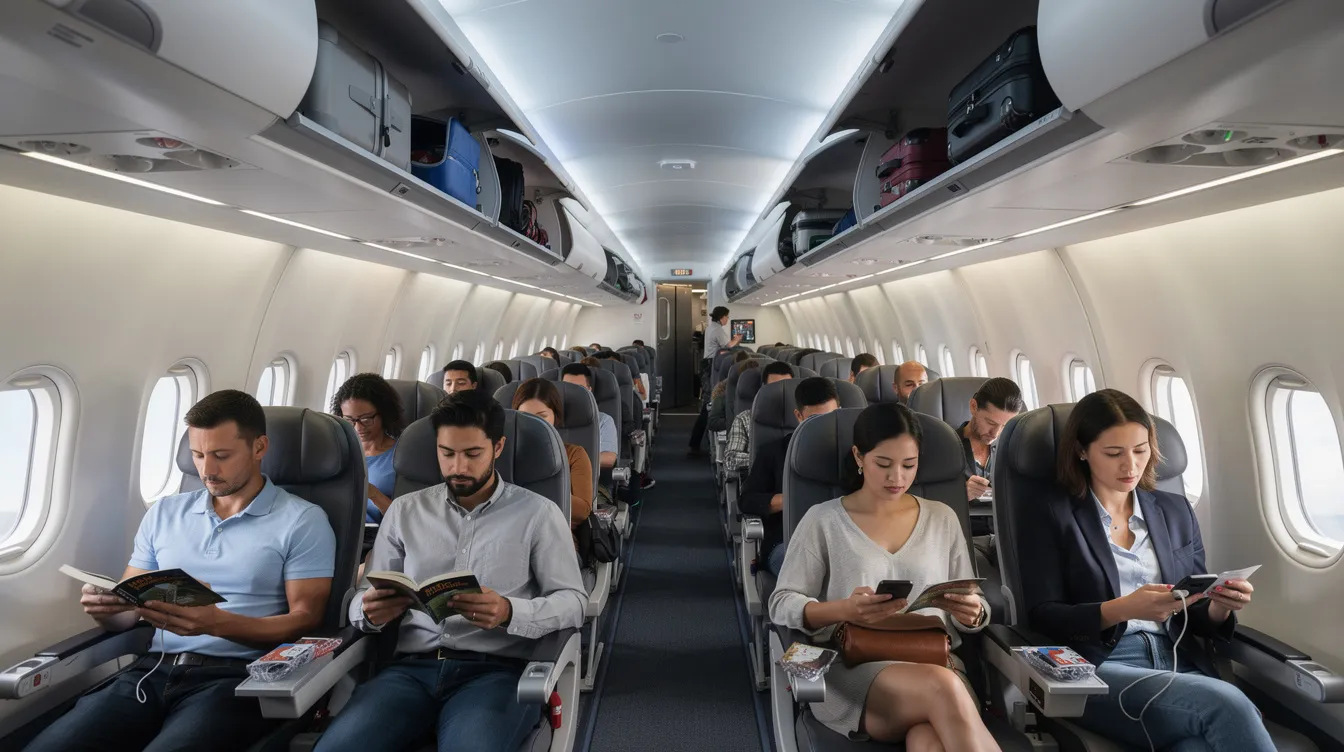
Consider three common 737-800 routes and how fare bundles change the experience, including markets like Houston, where private charter options create viable alternatives on the same city pairs.
A basic fare passenger might end up in row 26, a middle seat, boarding in group 8, even though a private jet charter from Houston offers a more controlled experience for time-sensitive trips. Limited recline, galley noise, and a long wait to deplane. A Choice Extra traveler on the same flight could be in seat 3A with 34 inches of pitch, boarding in group 1, with two checked bags included. On a flight this long, the comfort gap is dramatic.
A choice preferred fare puts you in a preferred seat around row 8 or 9, forward of the wing with decent deplaning time, while routes into major hubs like Atlanta by private jet charter illustrate how charter can reframe similar-length journeys. That may be enough for most passengers who don't need extra legroom but want to avoid the rear cabin.
On a shorter hop, a Standard seat in rows 15 through 20 is adequate for many travelers, though some may compare that to regional private jet options in markets like Kolkata when planning complex international segments. Extra legroom is a nice upgrade but less critical than on four-hour sectors. The price delta between Standard and Extra Legroom may not justify itself for passengers of average height.
The pattern is consistent: flight length determines how much the seat type matters. On sub-two-hour routes, Standard or Preferred works fine. Once you cross the three-hour threshold, Extra Legroom seats measurably improve comfort and productivity. For a list of members, the free access to better seats makes this calculus even simpler.
The Southwest 737-800 experience is defined by scheduled departures, fixed routes, 175 passengers, boarding queues, and limited control over who sits next to you. Private jet charter offers a fundamentally different model.
Key differences:
Time: A typical 737-800 trip includes arriving 90 minutes early, security lines, boarding groups, and taxiing from a major hub. Private charter through Jettly often uses smaller, closer airports with minimal wait times, made easier by tools like Jettly's airport locator and charter platform. Learn how the process works.
Privacy and cabin control: On a 737-800, you share a cabin with 174 other passengers. A private jet configured for 4 to 14 passengers offers workspace, quiet, and full seating control from the moment the flight is confirmed.
Schedule flexibility: Southwest operates fixed schedules. Jettly's platform provides instant pricing for thousands of aircraft worldwide, allowing travelers to pick exact departure times and airports.

When frequent Southwest flyers switch to charter:
A last-minute team trip where four executives need to reach a secondary airport not served by Southwest, where flexible private jet membership access can simplify repeat travel planning.
A family vacation requiring direct access to a regional airport closer to their destination, where crowdsourced and seat-sharing private flights can lower per-person charter costs.
An executive needing to visit two cities in one day, an itinerary impossible on fixed 737-800 schedules.
While a single Southwest seat is cheaper than a private jet, charter costs split across a group can become competitive when factoring in time saved, hotel nights avoided, and productivity during the flight, especially when you compare shared charter flights with full charters to see which model best fits your group.
The Boeing 737 makes practical sense for solo or couple travel on simple point-to-point routes, cost-sensitive trips, and dense city pairs with many daily frequencies. Southwest's 737-800 has lower operational costs per seat on busy routes, and higher seating capacity on the 737-800 lowers the cost per available seat mile, making tickets affordable on competitive corridors.
Private charter through Jettly may be superior for many use cases and is often positioned as a flexible alternative to fractional programs like NetJets for travelers who want on-demand control without ownership commitments:
Complex multi-stop itineraries in one day
Flights to or from secondary or remote airports
Transporting time-sensitive teams or equipment
Trips where schedule control and privacy are top priorities
The qualitative comfort gap is significant. A 175-seat single-class cabin with standardized service is a very different experience from a private cabin with customized seating, workspaces, and tailored in-flight catering. For travelers interested in comparing options, Jettly's cost estimator and dedicated jet card flight cost estimator provide instant quotes without long-term commitments like jet cards or fractional ownership.
Many travelers will continue to fly the 737-800 for everyday trips while selectively turning to private charter for cost comparable to commercial when the time and flexibility advantages are most valuable, especially when they understand how private jet charter pricing works. The two aren't mutually exclusive.
The Boeing 737- 800 is powered by two high-efficiency CFM56-7B turbofan engines, making it one of the more fuel-efficient single-aisle aircraft in service. The 737-800 offers better high-density route economics compared to the 737-700, carrying more passengers per flight and reducing per-seat emissions on busy corridors.
The 737-800 provides access for operations at slot-constrained airports, where Southwest can maximize passenger throughput with fewer daily departures than would be needed with smaller aircraft.
Private jets generally produce higher emissions per passenger, but platforms like Jettly can help optimize routing, private charter aircraft selection, and load factor. Choosing a turboprop or efficient light jet for shorter trips, or filling more seats on a midsize charter, reduces the per-person impact.
Emerging practices like carbon offsetting, sustainable aviation fuel (where available), and route optimization help both commercial airlines and private operators reduce their footprint. A well-timed nonstop 737-800 flight can minimize total emissions compared to multi-stop itineraries. And private charter can avoid unnecessary repositioning flights when planned intelligently.
Travelers who value sustainability should consider both travel frequency and aircraft type when making decisions.
Seats: 175 economy class seats, 3-3 layout, single aisle.
Pitch: Standard seats average 32 inches. Extra legroom seats offer up to 35 inches.
Interiors: Most aircraft have Heart interior (no power outlets). Some have Elevate interior with USB-A/USB-C at every seat.
Entertainment: Streaming only to your personal device via onboard WiFi. No seatback screens. Download the Southwest app before boarding.
Boarding: Groups 1 through 8, determined by fare, seat type, and status.
Bring a fully charged device and a battery pack if flying a heart interior aircraft, since most 737-800s have no power outlets.
Check the seat map before selecting a seat. Avoid 10A, 11A, and 11F if you want a window view.
If you're on a basic fare, check in as early as possible to maximize remaining Standard seat availability.
Rapid Rewards membership and A-List tiers influence seat selection, so factor status into your booking decisions.
Traveling with children? Book on the same reservation so the airline assigns you the same boarding group and contiguous seats.
Information here is current to early 2026. Cabin configurations and policies evolve, so confirm details with Southwest before travel. For trips where managing these details feels too restrictive, a private charter through Jettly offers a simpler model: one booking, a private cabin, and fully known seating from the moment the flight is confirmed.
These FAQs address common questions not fully covered above, focusing on practical details and private charter comparisons.
No. Most Southwest 737-800s feature the Heart interior, which does not include power outlets at the seat. These aircraft rely on the Boeing Sky interior design with sculpted panels and Space Bins but lack USB or AC charging.
However, some 737-800s have been retrofitted with the Elevate interior, which provides USB-A and USB-C power at every seat. There is no guaranteed way to know which interior you'll get until close to departure, though checking your flight details on the Southwest app or website can sometimes reveal the aircraft configuration.
The safest approach: travel with a fully charged battery pack and download any entertainment content to your personal device before boarding.
Booking a Choice Extra fare provides the most reliable access to extra legroom seats on the 737-800, including exit rows like 14 and 16. Holding A-List Preferred status also allows free selection of Extra Legroom seats at booking.
If neither option is available, check the seat map frequently in the weeks before departure. Unsold Extra Legroom inventory sometimes opens to status holders or for paid upgrades within 24 to 48 hours of the flight. Booking early on popular routes also helps, since these new seats are claimed quickly.
Keep in mind that exit row eligibility rules apply regardless of how you booked. Crew have the final say during boarding and can reseat passengers who don't meet the requirements.
On flights under roughly two hours, passengers of average height generally find Standard or Preferred seats adequate. The three extra inches of seat pitch is a "nice to have" rather than a necessity for a quick hop.
Extra Legroom becomes more valuable for tall passengers, those planning to work on laptops, or anyone on flights around three hours or longer. The difference between 32 inches and 35 inches of pitch is noticeable when you're seated for an extended period.
When bundled in a Choice Extra fare, the per-flight incremental cost for Extra Legroom is often modest compared to buying the upgrade separately. Frequent travelers on longer flights will see the most return on this investment.
Private jets cost more than individual airline tickets in almost every case. But the math changes when a group of 4 to 8 travelers shares the charter cost, especially on time-sensitive itineraries or routes requiring multiple connections on commercial airlines.
Consider a team of six visiting two cities in one day. On commercial flights, that might mean two separate bookings, layovers, and possibly an overnight hotel. A private charter arranged through Jettly could complete both legs in a single day, offsetting the higher flight cost with savings on hotels, meals, and lost work hours, whether you opt for shared charter options or a full private charter.
For a quick comparison, use Jettly's charter cost estimator or the dedicated jet card flight cost estimator to see total trip costs (including time) against multiple 737-800 tickets.
Start by identifying your most time-critical or complex trips. Routes where you lose hours to connections, early-morning departures, or overnight stays are the best candidates for charter comparison.
Then visit Jettly's website and input your origin, destination, dates, and passenger count for instant charter pricing, using tools like the airport locator and booking platform to fine-tune routes and departure points. Jettly provides access to a global inventory of more than 20,000 aircraft across categories, from light jets and midsize jets to heavy jets and turboprops, showcased in its private charter aircraft directory, so you can match aircraft size and range to your typical 737-800 routes.
Ready to compare? Learn more or request a quote at https://www.jettly.com.
The Southwest Boeing 737- 800, combined with new fare bundles and assigned seating, delivers a predictable, cost-effective option for domestic and near-international travel. The most important lessons: Extra Legroom matters on longer flights, A-List and A-List Preferred status meaningfully improve seat access and boarding, and Basic fare comes with real trade-offs in comfort and boarding order.
For travelers who already fly the 737-800 regularly and occasionally need more flexibility, privacy, or time savings, private jet charter through Jettly fills the gap. No long-term commitments. No jet cards. Just on-demand access to the right aircraft for the right trip.
Ready to see how private charter compares to your usual Southwest flight? Explore flight options or request a quote at https://www.jettly.com.
Share this post:
Jay Franco Serevilla
Aug 4, 2026
|
5
min read
Discover tips and trends in the industry.
5
min read
Executive Jet Management Pilot Pay: What Pilots Really Earn in Part 135 Operations
Executive jet management pilot pay in U.S. Part 135 operations ranges from $100,000 to over $300,000 annually, influenced by factors like experience and aircraft type. Understanding these compensation structures is vital for pilots and industry professionals, as it aids in career planning and negotiation. Jettly connects travelers with vetted operators, enhancing transparency in pilot compensation.
Read More
5
min read
Best Private Plane for Family: From Piston Singles to Private Jets
Choosing the best private plane for family travel involves evaluating safety, comfort, and budget. This guide covers options from piston singles to private jets, helping families find the right aircraft for their unique travel needs. With insights on ownership versus chartering, families can make informed decisions for both short getaways and long-haul adventures.
Read MoreStay updated with our latest insights and tips to elevate your journey with us.
MEMBERSHIPS AND ASSOCIATIONS



Disclaimer: Jettly operates as a charter broker, offering access to a global digital jet charter marketplace. Jettly is not a direct air carrier and does not own or operate aircraft. All advertised flights are conducted by third-party air carriers that are fully licensed and hold the appropriate Part 135 or Part 121 certifications issued by the Federal Aviation Administration (FAA) or equivalent regulatory authorities under U.S. or foreign law. Jettly complies fully with the U.S. Department of Transportation's Part 295 and Part 298 Charter Broker regulations. Jettly does not carry additional liability insurance. Passengers are covered by aircraft operator insurance. TICO: 50023770


