


Login
Get Instant Pricing On 23,000+ Aircraft

>
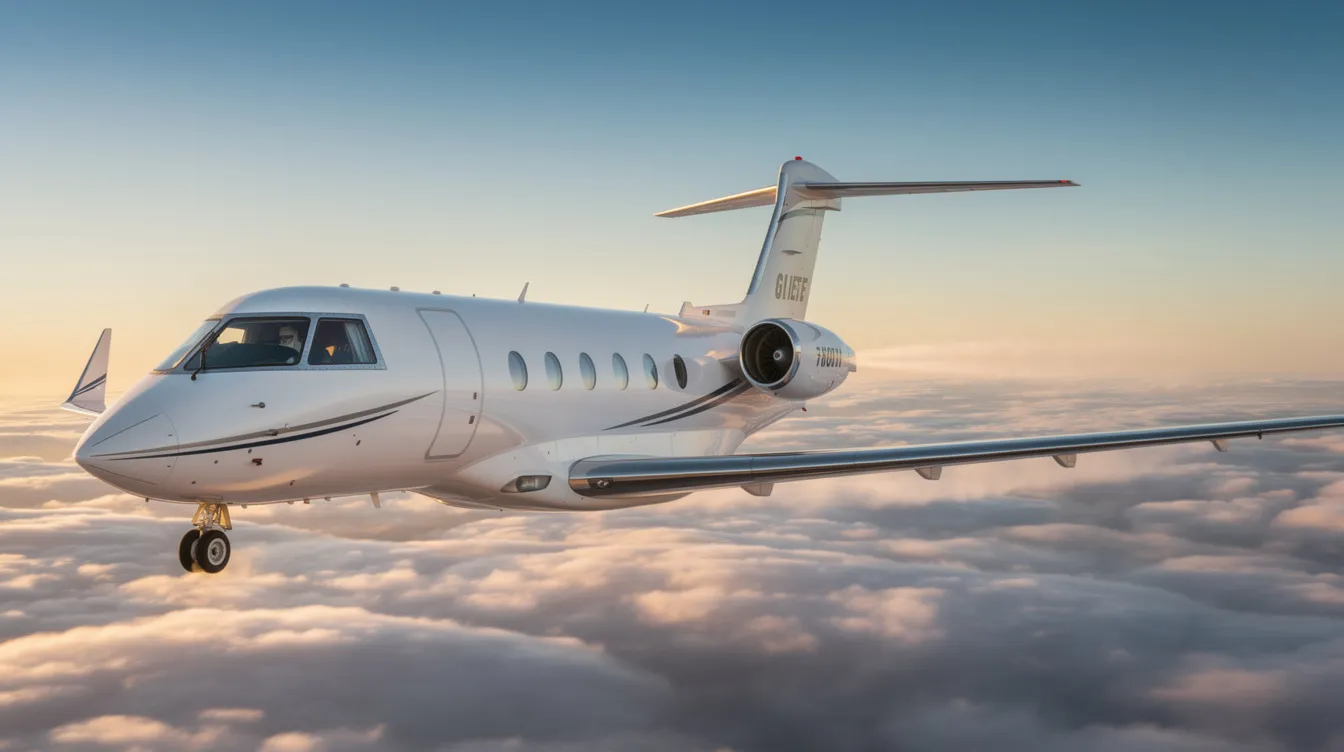
A Stratos plane usually refers to Stratos Aircraft’s high-performance single-engine personal jets—the 714, 716, and 716X—built to deliver roughly 400-knot cruise speeds at altitudes near 41,000 feet, putting jet-class performance into a lighter, more efficient package. The term has become popular with aviation enthusiasts, private travelers, frequent flyers, and business executives comparing fast, flexible alternatives to larger private jets.
Whether your interest is in Stratos Aircraft’s development program or in booking a similar aircraft today, this guide breaks down the 714/716/716X specs, first-flight milestones, cabin comfort, safety and certification differences, and how these jets compare with other private aircraft. It also shows high-net-worth travelers and charter clients how to access comparable high-performance jets through digital platforms like Jettly, giving them a practical way to get speed, range, and luxury without the cost, delay, or commitment of aircraft ownership.
The term Stratos plane most commonly refers to Stratos Aircraft's single-engine jets (714, 716, and 716X), which target a cruise speed of roughly 400 knots and a service ceiling near 41,000 feet. Industry leaders like CEO Michael Lemaire and CTO Carsten Sundin have guided the program through multiple flight milestones.
Stratos Aircraft's first flight achievements and ongoing certification efforts position the 716X as a notable Stratos aircraft in the light jet segment, though it currently remains an experimental aircraft not available for commercial charter.
Travelers do not need to own a Stratos plane to access similar performance. Jettly's platform provides on-demand access to over 20,000 unique aircraft, including many certified light and very light jets with comparable speed, altitude, and range.
This article covers aircraft specs, first flight history, cabin comfort, safety considerations, and how to charter similar jets globally through Jettly's digital marketplace.
When people search for a Stratos plane, they typically mean one of two things. First, the lineup of high-performance single-engine jets built by Stratos Aircraft, an Oregon-based manufacturer developing the 714, 716, and 716X. Second, and more broadly, a category of sleek private jets that cruise at or near the lower stratosphere. A stratospheric plane flies in the stratospheric layer of the atmosphere, which begins around 33,000 feet and extends to about 160,000 feet.
It helps to untangle a few brand names early. Stratos Aircraft is an airplane manufacturer. Stratos Jets is a separate charter broker—an ARGUS Certified broker that organizes over 1,000 charter flights annually and holds a 4.9/5 customer satisfaction rating from 771 reviews. Jettly, on the other hand, is a digital private jet charter marketplace that connects travelers with thousands of operators globally.
This article is written from Jettly's perspective, focusing on how these aircraft fit into real-world private aviation and high-speed charter travel, alongside established providers like NetJets in the private aviation industry.
Stratos Aircraft was founded by Michael Lemaire in Redmond, Oregon, with a focused goal: build a light personal jet that could cruise at 400 knots on a single engine while keeping costs below those of twin-engine competitors. The company set out to fill a gap between fast turboprops and entry-level twin-engine jets, aiming to deliver jet-class speed in a smaller, more efficient airframe.
Early development centered on the Stratos 714 very light personal jet, a proof-of-concept that has been in active development for over a decade. Stratos showed the 714 at EAA AirVenture in Oshkosh, Wisconsin, attracting interest from pilots and owner-operators.
Unlike established business jet OEMs with decades of production behind them, Stratos started as a startup with a limited track record but ambitious targets. The company's plan involved a step-by-step evolution: prove the concept with the 714, refine the design into the larger 716, and offer an experimental 716X kit while pursuing full certification as a long-term investment.
For private flyers and customers who charter through digital platforms like Jettly, innovation at this level matters. Every new high-performance design that enters the certified fleet expands Jettly's ability to offer more aircraft options for on-demand booking.
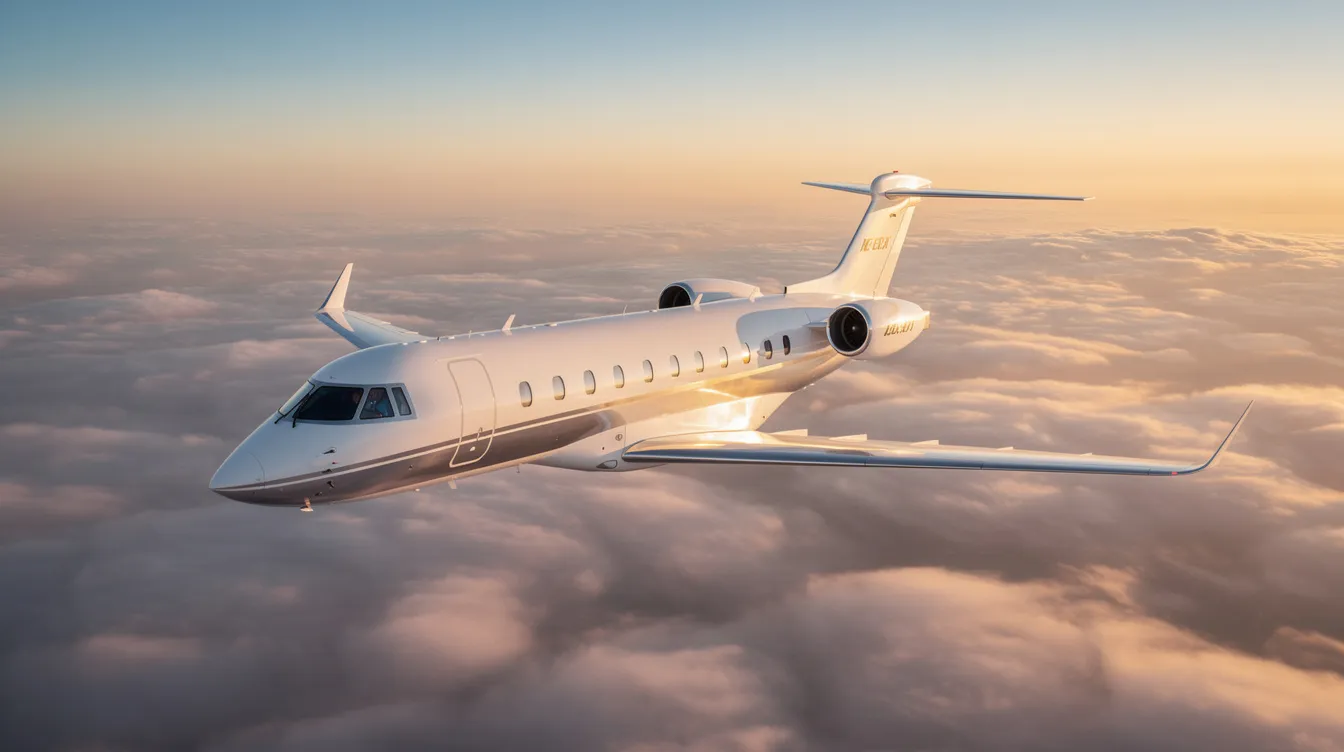
The Stratos 714 and 716 programs have followed a deliberate schedule of testing and refinement. Here are the key milestones:
The Stratos 714 completed its first flight in November 2022, lifting off from Roberts Field Airport in Redmond, Oregon. Test pilot Dave Morss conducted stability and systems checks during the initial test flight, marking the airplane's transition from concept to flying prototype.
After its first test flight, the 714 logged 52 hours in 33 flights. During this phase, engineers evaluated engine performance, handling qualities, and basic flight training profiles at progressively higher speeds and altitudes. Early flights reached approximately 320 knots TAS at around 18,000 feet.
By mid-2018, the prototype had accumulated roughly 185 flight hours, reaching about 25,000 feet in altitude and approximately 370 knots. This testing revealed opportunities to improve the cabin and fuselage, leading the team to stretch the fuselage by 31 inches and widen the cabin by two inches.
Those changes became the foundation of the Stratos 716, unveiled at EAA AirVenture and intended to improve cabin room, range, and overall usability for owner-pilots and charter operations.
While the 716 aims to compete with certified very light and entry-level jets like the Cirrus Vision Jet or Cessna Citation Mustang, its certification trajectory is still evolving. That is why many travelers currently rely on established jets available through platforms such as Jettly rather than waiting for new designs to reach the market.
The Stratos 716X is the experimental, kit-built variant designed to bridge the gap between prototype and fully certified jet. It allows customers to fly and provide feedback while the company works toward eventual certification for the production 716.
The 716X completed its first flight on July 2, 2020, from Roberts Field in Redmond, Oregon. Test pilot Sean VanHatten—who had logged over 5,300 flight hours, including roughly 120 in the 714 proof-of-concept—took the airplane through a 22-minute flight profile that included a full-power takeoff, climb to 13,500 feet in altitude, and basic handling checks.
The Stratos 716 is powered by a Pratt & Whitney JT15D-5 engine, a proven powerplant with a long track record in light jet applications. That choice gives operators and engineers confidence in parts availability, maintenance support, and reliability. The airframe itself is all carbon fiber, with trailing-link landing gear and Garmin G3X avionics screens, a GTN 750 MFD, and automated pressurization.
The 716X is classified as an experimental aircraft, but its structure and systems are engineered from day one with certification in mind. Structural redundancy, cockpit automation, and performance envelopes are all expected to meet FAR Part 23 regulatory standards.
Once aircraft with this performance profile receive certification and enter production at scale, they could appear in modern marketplaces like Jettly, where travelers can charter similar jets on demand without ownership.
The numbers behind the Stratos 716/716X program explain the excitement. Here is a summary of the expected performance envelope for private charter aircraft:
|
Metric |
Stratos 716/716X Target |
|---|---|
|
Cruise speed |
~400–415 KTAS |
|
Service ceiling |
~41,000 ft (FL410) |
|
Range (NBAA IFR reserves) |
~1,500 nautical miles |
|
Payload (occupants + baggage) |
~900 lb |
A cruise speed of 400 knots puts a Stratos plane on par with some of the fastest single-engine aircraft in the world. For context, a commercial airliner typically cruises at 450–500 knots but cannot access the same small airports. Popular business routes like New York to Miami (~950 nm) or Los Angeles to Denver (~690 nm) would fall well within the 716's range with reserves to spare.
Operating near the lower stratosphere offers practical benefits. Stratospheric planes regularly fly above weather disturbances and turbulence, which means smoother rides and more predictable arrival times. Thin air reduces drag and allows aircraft to stay airborne longer, improving fuel efficiency at altitude. Stratospheric aircraft operate efficiently in thin air environments because reduced air density translates to lower parasitic drag at high speeds. Stratospheric planes often use specialized engines designed for thin air to maintain thrust at those altitudes.
High-altitude aircraft can achieve flight ceilings of up to 70,000 feet or more—well beyond where the 716 operates—but even at FL410, passengers experience noticeably calmer conditions than flights at 25,000 to 30,000 feet. Stratospheric aircraft also prioritize maximum endurance and specialized instruments for sustained high-altitude operations.
Operationally, runway length requirements and climb performance under hot-and-high conditions will determine which business airports the airplane can practically use. These are details engineers and pilots continue to refine through test flight data.
The Stratos cabin is designed around four to six passengers in a compact but business-friendly interior. The Stratos 716 cabin width is 4.8 feet, with a cabin height of approximately 4.6 feet and a length that accommodates club seating or alternative layouts. The Stratos 716 offers over 30 inches of legroom per row, which is reasonable for flights in the two- to three-hour range that make up most light jet trips.
Common interior layouts include club seating for four with fold-out tables for laptops or documents, optional side-facing seats, and a small refreshment center suitable for coffee, snacks, and light catering. Baggage space is integrated into the fuselage design, with room for carry-on bags and soft luggage. Private jets provide a more comfortable cabin experience than commercial flights, and even at the very light personal jet level, the difference in noise, privacy, and personal space is significant.
How does the Stratos cabin compare to similar jets? Aircraft like the Embraer Phenom 100 or Cessna Citation Mustang—both common on charter platforms—offer similar cabin dimensions and seating for four to six passengers, and they sit alongside models from the best private plane manufacturers that serve this segment. For travelers exploring small aircraft options, digital charter platforms like Jettly present cabin photos, seating diagrams, and baggage allowances so customers can choose the aircraft that best matches their comfort expectations and group size.
The engineering philosophy behind Stratos Aircraft centers on aerodynamic efficiency, clean-sheet design, and advanced composites. Before the 714 ever left the ground, the team completed five days of wind-tunnel testing on a one-fifth-scale model at the University of Washington Aeronautical Laboratory, running over 90 test runs to refine lift, drag, and stability characteristics.
Lightweight carbon fiber materials are commonly used in stratospheric aircraft, and the Stratos airframe is no exception. The company operates a 41,000-square-foot composite manufacturing facility in Redmond, Oregon, equipped with CNC ply cutters, walk-in cure ovens, gantry routers, and large-volume 3D printers. Stratospheric planes typically have very long, narrow wings for efficient flight, and while the Stratos wingspan follows a more conventional jet layout, the use of all-composite construction keeps weight low and structural integrity high.
Industry leaders inside the company include CEO Michael Lemaire and CTO Carsten Sundin, who have guided the 714 and 716 from concept through flight testing. Test pilots like Dave Morss and Sean VanHatten bring real-world flying experience that directly influences the design process, from cockpit ergonomics to handling quality at various speeds and load conditions.
Similar quality standards apply to certified charter aircraft. Jettly evaluates aircraft types and operators—reviewing maintenance programs, safety culture, and track record—before listing them in a global inventory of more than 20,000 aircraft, comparable to the providers highlighted among the best private jet charter companies.
There is a critical distinction between experimental aircraft like the 716X and fully certified business jets used in commercial charter. The 716X is built for testing, refinement, and private owner use. It cannot legally operate under Part 135 charter rules in most jurisdictions, which require a type-certified airframe, licensed commercial pilots with specific flight training, and rigorous maintenance oversight.
The certification process for a new jet is long and expensive. It typically involves proof-of-concept flights, expanded flight envelopes, extensive systems testing, and eventual type certification by authorities such as the FAA or EASA. For the Stratos 716, this process could take years and cost upward of $100–150 million.
For private travelers, this distinction matters. Aircraft offered through Jettly's platform must be operated by licensed, regulated carriers under Part 135 or international equivalents. ARGUS certification ensures high safety standards for private jet charters. Separately, Stratos Jets—the charter broker—conducts full investigations into air carriers' legal authority, runs ARGUS CHEQ reports to check for incidents, and offers $50 million of non-owned liability insurance for added protection, aligning with broader practices across charter airlines and private operators.
When booking a Stratos aircraft-class flight, travelers should verify operator certificates, pilot experience, safety ratings, and insurance levels. A digital provider like Jettly helps vet these elements on the traveler's behalf, connecting customers only with operators that meet strict safety requirements.
How does a Stratos-class single-engine light jet stack up against other categories available through Jettly? Here is a practical comparison:
|
Category |
Typical Speed |
Range |
Passengers |
Best For |
|---|---|---|---|---|
|
Turboprop |
250–310 ktas |
800–1,200 nm |
4–9 |
Short hops, small airports |
|
Very Light Jet |
350–400 ktas |
900–1,200 nm |
4–5 |
Regional business trips |
|
Light Jet (Stratos class) |
400–430 ktas |
1,200–1,600 nm |
4–6 |
Midrange routes, speed priority |
|
Midsize Jet |
430–480 ktas |
2,000–3,000 nm |
7–9 |
Cross-country, larger groups |
|
Heavy Jet |
480–530 ktas |
4,000–6,000 nm |
10–16 |
International, max comfort |
The trade-offs are straightforward. A turboprop costs less per hour and handles short runways well but flies slower. A midsize or heavy jet carries more passengers farther but at a higher price. The Stratos-class light jet sits in a sweet spot for routes like New York to Miami, Toronto to Vancouver, or Los Angeles to Las Vegas—distances where 400-knot speed helps get the job done efficiently for time-sensitive travelers without the cost of a larger airplane.
Private jet passengers skip TSA lines entirely, and even on a light jet, travelers gain the flexibility of using smaller airports closer to their final destination, especially when using tools like an airport locator platform to identify convenient fields. While Stratos aircraft are not yet common in charter fleets, Jettly can give travelers a head start by matching similar performance requirements with proven models like the cheapest single-pilot jets already in service worldwide.
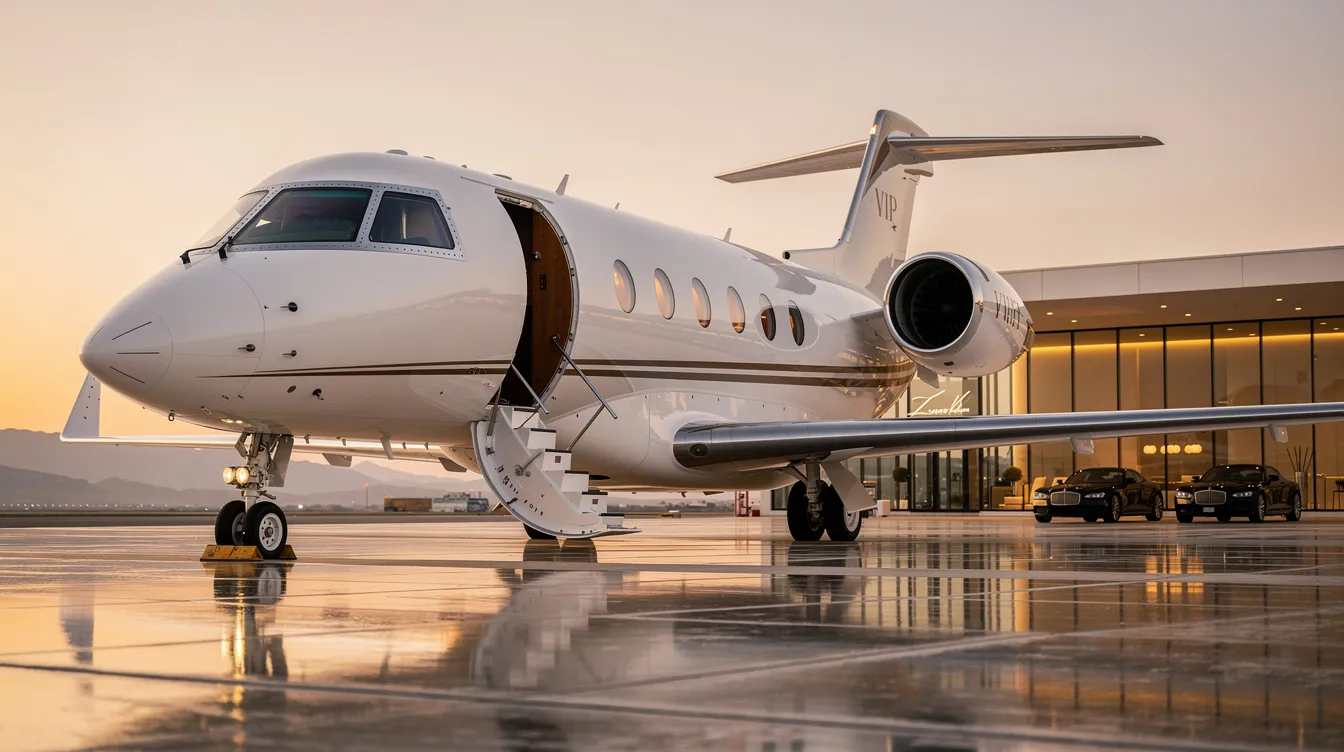
Jettly is a digital private jet charter marketplace giving travelers on-demand access to more than half of the global inventory—over 20,000 unique aircraft—including many that match or exceed Stratos plane performance. Private jet flights can be booked in minutes through digital platforms like Jettly, without the complexity of traditional jet cards or fractional ownership, although structured options like jet card programs remain popular for some frequent flyers.
Here is how the booking process works:
Enter a route, date, and passenger count on the platform.
View instant pricing across available aircraft—light jets, midsize, heavy, turboprops, or helicopters.
Compare options by speed, range, cabin size, and price.
Confirm the flight directly through the platform.
These comparisons help travelers choose aircraft that fit their route, budget, and comfort interests, and in some cases even participate in crowdsourced private jet flights and shared empty seats to reduce costs.
Private jet travel allows for flexible scheduling and last-minute changes, which makes it practical for urgent business trips or spontaneous family travel, especially when paired with flexible private jet memberships that streamline booking and pricing. Private jet membership guarantees fixed rates and flexible cancellations for frequent flyers who want predictable costs, whether they are flying between major hubs like New Delhi with private jet charter services or smaller cities. Jettly's platform lets customers filter for performance similar to a stratos aircraft—cruise speed, range, cabin layout—serving different traveler needs and trip profiles so they can enjoy that level of capability even if the exact model is not yet widespread in the charter market.
Learn more about Jettly's charter options or book a private jet directly through the platform.
Several factors influence pricing for stratos aircraft-class flights. Hourly rates vary by aircraft size, with light jets typically ranging from $3,000 to $6,000 per flight hour depending on the model and region. Fuel burn at high speeds, airport fees, and repositioning costs also affect the final price. Travelers can use a private jet charter cost estimator to get a ballpark figure before requesting a formal quote.
From an ownership perspective, the 716X experimental kit is priced at roughly $2.3–2.5 million, while a certified 716 could reach $3–3.5 million—figures that fit within broader benchmarks of how much a private jet costs. For most travelers, chartering makes more sense than owning—no hangar fees, no insurance burden, no managing maintenance schedules week after week, and clearer visibility into how much it costs to rent a private jet.
Single-engine light jets like the Stratos 716 are designed for efficiency, with potentially lower fuel consumption per passenger-mile than larger aircraft. Many currently chartered jets already incorporate advanced aerodynamics and modern engines to reduce operating costs and environmental impact.
On the environmental front, the aviation industry is making incremental progress with carbon offsetting, efficient routing, and fleet modernization. Jettly can help clients select efficient aircraft and connect with operators that support emissions-reduction measures. Sometimes a modern turboprop or smaller light jet offers a better deal in terms of cost and environmental footprint than a larger cabin, especially on short hops under 500 nautical miles, and guides to affordable private jet charter can help travelers compare these trade-offs. Balancing speed, comfort, and efficiency is part of making a smart private jet charter decision.
Aircraft like the Stratos 716 and 716X signal broader trends in personal and business aviation: greater speed in smaller airframes, advanced materials, and more owner-pilot-friendly designs. High-altitude aircraft are used for environmental monitoring and surveillance, and aircraft in the stratosphere can study ozone layer and atmospheric conditions. Stratospheric planes can gather high-resolution imagery for agricultural analysis, while high-altitude aircraft can act like temporary cell towers for telecommunications—all applications that benefit from the same engineering principles behind high-altitude jet design.
Industry expectations suggest that once certified and produced in volume, jets like the 716 may enter charter fleets and digital marketplaces, giving travelers additional options beyond established providers and NetJets alternatives. Potential technological evolutions include more efficient engines, hybrid-electric assistance on climb phases, and avionics that simplify high-altitude operations for professional crews.
Regardless of how individual programs progress, platforms like Jettly will continue to aggregate aircraft supply. As new certified designs enter service, customers can access them on demand without the investment of ownership. The demand for fast, efficient, accessible private aviation is only growing—and the tools to connect travelers with the right jet, from regional services such as private jet charter in Kolkata to global routes, are already here.
These questions cover practical points for readers considering high-speed private jet travel or researching the Stratos program for the first time.
The 716X is an experimental aircraft designed for testing, refinement, and private owner use. It is not available for public charter under Part 135 regulations. Most charter operators rely on fully certified light jets—such as the Embraer Phenom 100 or HondaJet—for commercial service. Until the 716 receives full FAA or EASA type certification, it will not appear on charter marketplaces.
Jettly's platform includes many certified light and very light jets with comparable cruise speeds, altitudes, and ranges, and there are now multiple ways to get a seat on a private jet easily without chartering the whole aircraft. Travelers can filter and compare options by speed, cabin size, and range to find an aircraft that delivers stratospheric performance on their preferred route. If you have other questions about matching aircraft to your needs or how to buy a seat on a private jet, Jettly's support team can help.
Jettly offers both on-demand access without long-term contracts and optional membership models, including options similar in structure to jet card solutions. On-demand works well for occasional flyers who want flexibility. Membership options provide fixed rates and priority access for frequent travelers who fly multiple times per month.
Most travelers receive instant pricing within minutes through the platform, whether they are planning short regional hops or private jets for international flights. Many trips are confirmable the same day, making private jets practical for same-day business or family travel. The process is designed to be fast and transparent from request to confirmation.
Travelers can explore flight options or request a quote directly through Jettly at jettly.com. The platform's support team is available to help match travelers with the right aircraft type based on route, group size, and performance preferences.
Ready to experience private travel on your terms? Explore flight options or request a quote at jettly.com.
Stratos planes, represented by the innovative 714, 716, and 716X models, showcase the future of high-speed, efficient personal jets designed for cruising near the lower stratosphere. While these aircraft push the boundaries of single-engine jet performance, they are currently experimental or in development stages, limiting direct charter availability. However, travelers seeking similar speed, range, and comfort have practical alternatives through digital platforms like Jettly. With access to over 20,000 certified private jets worldwide, Jettly offers instant pricing, transparent booking, and flexible options tailored to business and leisure needs.
Whether you prioritize time savings, convenience, or cabin comfort, Jettly’s marketplace connects you to the right aircraft without ownership burdens. Explore the possibilities of stratospheric private aviation today by visiting https://jettly.com/ and discover how effortless private jet travel can be.
Share this post:
Jay Franco Serevilla
Aug 2, 2026
|
5
min read
Discover tips and trends in the industry.

5
min read
Delta Routes: How to Use Delta's Network Strategically (and When Private Charter Wins)
Delta Air Lines boasts a vast network of over 1,000 routes across six continents, making it a top choice for travelers. This article explores Delta's upcoming network expansion and highlights scenarios where private jet charters through Jettly can offer superior flexibility and convenience. By understanding both options, travelers can optimize their itineraries for efficiency and comfort.
Read More
5
min read
Statistics on Airline Safety: How Safe Is Modern Air Travel?
Airline safety statistics reveal that modern air travel is exceptionally safe, with a global all-accident rate of just 1.32 per million flights in 2025. The fatal accident rate is approximately one per two billion miles flown, making flying significantly safer than driving. Continuous improvements in aircraft design and safety regulations contribute to this positive trend in aviation safety.
Read MoreStay updated with our latest insights and tips to elevate your journey with us.
MEMBERSHIPS AND ASSOCIATIONS



Disclaimer: Jettly operates as a charter broker, offering access to a global digital jet charter marketplace. Jettly is not a direct air carrier and does not own or operate aircraft. All advertised flights are conducted by third-party air carriers that are fully licensed and hold the appropriate Part 135 or Part 121 certifications issued by the Federal Aviation Administration (FAA) or equivalent regulatory authorities under U.S. or foreign law. Jettly complies fully with the U.S. Department of Transportation's Part 295 and Part 298 Charter Broker regulations. Jettly does not carry additional liability insurance. Passengers are covered by aircraft operator insurance. TICO: 50023770


