



Login
Get Instant Pricing On 23,000+ Aircraft

>
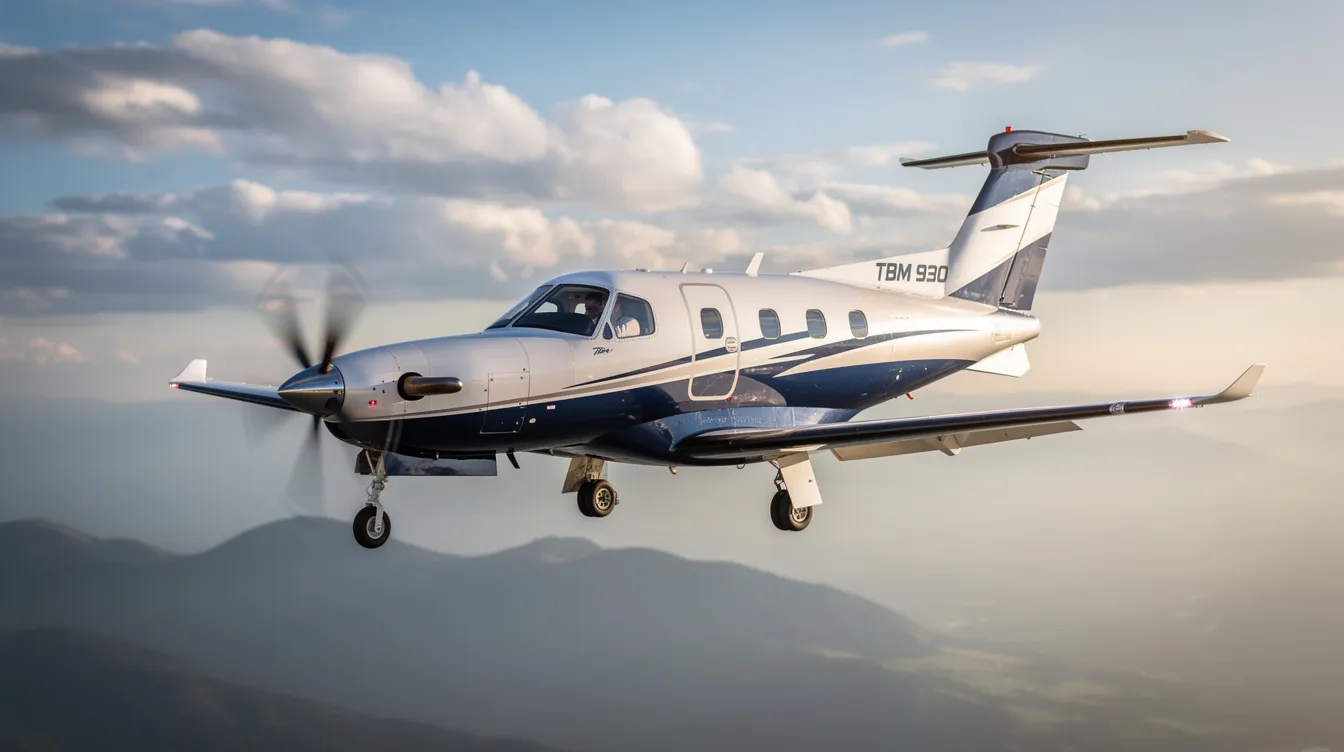
The Daher TBM 930 is a high-performance single-engine turboprop aircraft that cruises at 330 knots, flies up to 1,730 nautical miles, and seats up to six passengers, giving charter users jet-like speed with turboprop operating costs. It has earned a strong reputation among owner-pilots and charter operators since its introduction in April 2016, and for corporate executives, high-net-worth individuals, families, and other frequent travelers comparing private air travel options, it stands out on missions under 1,500 nautical miles where access to smaller airports, lower operating costs, and schedule flexibility matter.
This guide breaks down the TBM 930’s performance, cabin layout, avionics and safety systems, operating economics, where it fits in the TBM family, the types of business and leisure trips it serves best, and how to charter this aircraft through Jettly’s digital platform.
The Socata TBM 930 cruises at up to 330 ktas and covers up to 1,730 nm on a single fuel load, rivaling many light jets on popular business and leisure routes.
Its turboprop efficiency translates to direct operating costs of $2.48 per nautical mile, making it significantly more economical than most jet alternatives on short- to medium-haul legs.
The aircraft operates efficiently from short runways, requiring roughly 2,380 ft for takeoff, which opens access to hundreds of smaller airports that jets cannot reach.
A pressurized, quiet cabin with leather finishes accommodates three to five travelers comfortably for trips of two to four hours.
The Garmin G3000 avionics suite, emergency descent mode, and Electronic Stability and Protection raise the safety and dispatch reliability bar for single-pilot charter operations.
Through platforms like Jettly, travelers can charter a TBM 930 on demand without capital outlay, gaining fast point-to-point travel on their own schedule.
The TBM 930, built by Daher (formerly known as Socata), belongs to the long-running Socata TBM family. Produced from 2016 to roughly 2019, it served as the flagship model before newer variants like the TBM 940 and TBM 960 took over the production line.
Key identity points:
Single-engine turboprop with a low-wing configuration and retractable gear
Pressurized cabin certified for up to six occupants, including the pilot
Shares its airframe and Pratt & Whitney PT6A-66D engine with the TBM 900, but adds the touchscreen Garmin G3000 integrated flight deck as its primary upgrade
Typical roles include business shuttle between regional cities, personal travel to vacation properties, and supplemental lift in charter fleets for missions under 1,500 nm
Many TBM 930s operate across North America and Europe, making this model relatively easy to source through a global charter marketplace such as Jettly
The TBM 930 was introduced in April 2016 as a technology-forward update rather than a clean-sheet new aircraft design, which kept acquisition costs competitive while delivering a modern cockpit experience; Daher announced it in March 2016, and the model entered service shortly after.
The TBM 930 is an evolution of the original TBM 700 concept. Its focus is on aerodynamic refinement, structural durability, and cockpit ergonomics designed for single-pilot operations in demanding conditions.
The airframe uses aluminum and steel construction with a low-drag fuselage. Wings span roughly 42 ft 1 in and feature winglets inherited from the TBM 900 series. Fowler flaps improve slow-speed handling, and retractable landing gear keeps drag low during cruise.
Cockpit layout places two pilots side by side with a single power lever, a simplified overhead panel, and a center console. Noise reduction measures, including a five-blade Hartzell composite propeller and redesigned air intake, keep the cockpit and cabin quieter than earlier TBM variants.
The Pratt & Whitney PT6A-66D engine is conservatively flat-rated to 850 shp from a thermodynamic rating near 1,825 hp. This deliberate torque reduction extends engine life and supports reliability across high-utilization charter schedules, with a time between overhauls of approximately 3,000 hours.
Safety-oriented features include crashworthy seating, energy-absorbing structure, and ice-protection systems (boots, leading-edge heating, inertial separator) that allow the plane to perform in standard all-weather business aviation profiles.
Compared to piston alternatives like a Mooney or similar single-engine aircraft, the TBM 930 occupies a different performance class entirely, bridging the gap between turboprops and light jets.
The TBM 930 is noted for its ability to operate in high-performance conditions while retaining fuel efficiency. This combination makes performance data central for anyone comparing charter options.
Speed: Cruising speeds can reach up to 330 knots (330 ktas) at typical cruise altitudes around FL280 to FL310. At those speeds, the TBM 930 outpaces nearly every turboprop competitor and matches or approaches some light jets, all while burning less fuel per hour.
Range: The Socata TBM 930 has a range of 1,730 nautical miles with IFR reserves at long-range cruise settings (~252 ktas). In practical terms, that covers city pairs like New York to Miami (~1,250 nm), Los Angeles to Dallas, or London to Athens without a fuel stop. At higher cruise speed settings near 326 ktas, range drops to approximately 1,440 nm.
Altitude and climb: The service ceiling is 31,000 ft. Time to climb from sea level to FL310 takes about 18 minutes and 45 seconds. Flying at higher altitude means less turbulence, better fuel burn, and improved weather avoidance.
Field performance: Takeoff distance over a 50 ft obstacle is roughly 2,380 ft at maximum weight. Landing ground roll comes in around 2,430 ft. These short-runway numbers open access to smaller airports, allowing the TBM 930 to use airfields that larger jets cannot, especially when paired with a robust airport locator tool to identify viable runways near your destination.
Efficiency: Direct operating costs are $2.48 per nautical mile, according to industry estimates. Fuel burn runs approximately 65–75 gallons per hour depending on power setting, which is a fraction of what most light jets consume.
|
Specification |
Detail |
|---|---|
|
Maximum Cruise Speed (KTAS) |
330 |
|
Range (nautical miles) |
1,730 |
|
Service Ceiling (feet) |
31,000 |
|
Takeoff Distance (feet) |
2,380 (over 50 ft obstacle) |
|
Landing Distance (feet) |
2,430 |
|
Passenger Capacity |
Up to 6 (including pilot) |
|
Direct Operating Cost |
$2.48 per nautical mile |
|
Engine |
Pratt & Whitney PT6A-66D |
|
Avionics |
Garmin G3000 integrated suite |

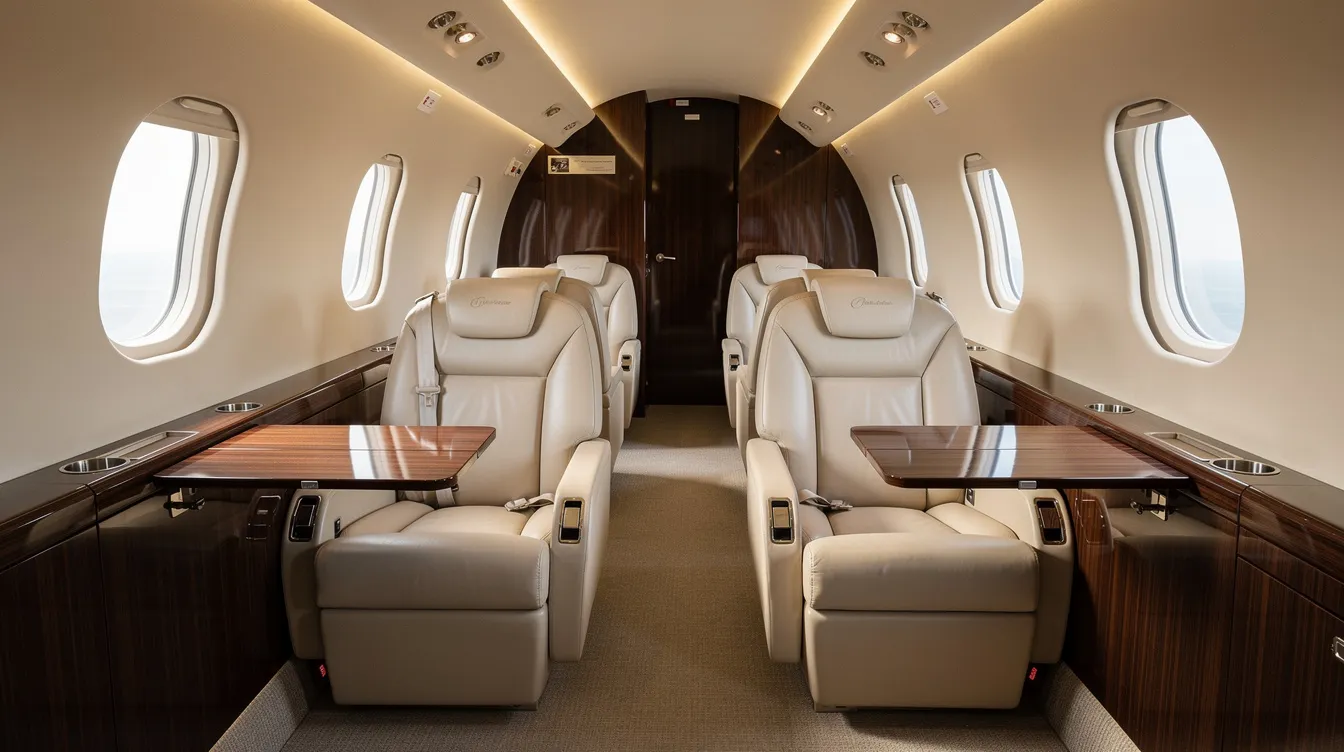
The TBM 930 cabin is a six-seat, pressurized environment tailored for executive and family travel. Pressurization keeps the cabin comfortable during two- to four-hour legs at high altitude, and the rest of the interior is built for practical use rather than excess.
Seating: Two seats in the cockpit and four passenger seats in a club configuration are standard. Some configurations add a sixth rear-facing seat, though most charter operators find three to five adult passengers plus luggage to be the sweet spot for comfort.
Interior finish: The cabin features a luxurious interior with high-quality materials, including leather upholstery, wood or carbon accents, LED lighting, and customizable color schemes. Height is approximately 4.0 ft and width about 3 ft 11 in—compact, but well-appointed for the category.
Baggage compartment: An aft baggage area is accessible from outside the aircraft. Combined with smaller interior stowage, the standard six-seat layout allows roughly 330 lb of luggage. That covers several roller bags and a few carry-ons for a group of four, or a mix that includes golf clubs or ski gear for a weekend trip. Weight limits are subject to payload and fuel load.
Amenities: Most TBM 930s include device-charging ports, climate control, and refreshment storage. Some operators add Wi-Fi capability depending on their fit-out.
Ride quality: The five-blade propeller, airframe refinements, and insulation make the cabin noticeably quieter than earlier Socata TBM models. Passengers can work on laptops or take calls when wearing headsets.
Avionics are the primary differentiator between the TBM 930 and earlier TBM 900 variants. The Garmin G3000 avionics suite transforms the cockpit into a modern integrated flight deck.
G3000 features: Three large high-resolution displays, dual touchscreen controllers (GTC 580), integrated flight management, synthetic vision, and compatibility with ADS-B, traffic alerting, and weather overlays.
Autopilot: The GFC 700 autopilot supports coupled approaches, VNAV, and automatic envelope protection. These functions provide significant workload reduction for pilots flying single-pilot IFR operations.
Safety systems: The TBM 930 includes enhanced safety features such as Electronic Stability and Protection (ESP), which guards against unusual attitudes. Emergency descent mode activates automatically if cabin pressurization is lost. Underspeed Protection helps prevent stall scenarios. Advanced ice-protection modes keep the system operating safely in adverse weather.
Situational awareness: Terrain awareness and warning (TAWS), traffic collision avoidance (TCAS), weather radar, and integrated charts support safer high-utilization operations. These tools give pilots and operators the data they need to make real-time routing decisions.
Charter relevance: For business travelers who value on-time performance, modern avionics reduce weather-related delays and improve dispatch reliability. Operators can fly more consistently, which matters when a same-day return is on the schedule, especially for members using private jet membership plans who fly frequently.
Understanding TBM 930 economics matters whether you are considering ownership or simply want to know what drives charter rates for turboprops, and it fits within the broader question of how much a private jet costs overall.
Annual operating cost: The reported annual operating cost for a TBM 930 is $686,606 at a representative utilization of roughly 325 flight hours per year. This figure combines fixed costs (hangar, insurance, crew training) and variable costs (fuel, maintenance, engine reserves).
Per-hour and per-mile: Variable operating cost runs approximately $1,220 per hour. Total hourly cost including fixed expenses reaches $1,800–$2,200 depending on annual hours. On a per-mile basis, the TBM 930 is responsible for some of the lowest cost-per-nautical-mile figures in its class—roughly $2.48–$4.10/nm depending on mission profile and how operators account for fixed overhead.
Acquisition pricing: During its production years, a new TBM 930 carried a base price of around $3.9–$4.2 million. In the current pre-owned market, prices average approximately $3.68 million, though exact figures vary by year, time on engine, and avionics upgrades. Archived sales data from brokers can provide additional pricing context, and many buyers also compare these figures against affordable private jet charter options before committing to ownership.
Ownership vs. charter: Owning means capital commitment, depreciation, crewing, and regulatory responsibilities. Chartering through a platform like Jettly or using a jet card flight cost estimator to model pre-paid hours eliminates many of those obligations. Travelers pay only when they fly.
How charter rates form: Operators set TBM 930 rates based on repositioning legs, airport fees, fuel surcharges, and seasonal demand. Jettly's private jet charter cost estimator gives users a starting point for a specific quote. This is a clear statement of value for travelers who want pricing transparency.
The TBM 930 sits in a lineage that stretches back to the beginning of the program in the late 1980s.
Milestones: The TBM 700 launched the family. The TBM 850 brought higher cruise speed and updated avionics. The TBM 900 added aerodynamic and propeller improvements. The TBM 930, introduced in 2016, focused on the Garmin G3000 cockpit while keeping the TBM 900's airframe. The TBM 940 (2019) added autothrottle and automatic de-icing. The TBM 960 pushes further with electronic engine and propeller control.
Fleet scale: By October 2019, the TBM fleet had logged 1.76 million flight hours across all variants. By July 2023, 1,155 TBM series aircraft had been produced, a clear indicator of global demand and market confidence.
New TBM positioning: Daher calls the TBM 930 an intended bridge between proven aerodynamics and modern avionics—marketed to pilots seeking cutting-edge technology without stepping up to a jet, while frequent flyers might instead look at structured jet card programs if they prefer jets over turboprops.
Sustainable aviation: The EcoPulse hybrid-electric demonstrator, based on a TBM airframe, hints at future efficiency improvements relevant to environmentally conscious travelers and illustrates how innovation is reshaping the broader charter airline and private aviation landscape.
Competitive context: Compared to the Pilatus PC-12, the TBM 930 trades a larger cabin for faster cruise speed and shorter runway requirements. Against light jets, it offers lower operating costs but a more compact interior. These trade-offs make the TBM 930 the right fit for specific mission profiles rather than a universal solution, and they mirror the factors highlighted when comparing the best private jet charter companies.
Real-world mission profiles show why the TBM 930 is attractive across the board for both private owners and charter clients looking to zoom between cities efficiently, and many of the same advantages carry over when planning international private jet flights.
Business travel: Executives commuting between regional headquarters—Toronto to Chicago, Paris to Berlin—can complete multiple meetings and return the same day. The TBM 930's speed and small-airport access cut ground transfer times dramatically, and there are now many ways to get a seat on a private jet easily without committing to full ownership.
Leisure and family: Families fly from large cities to remote vacation spots with shorter runways. Think Los Angeles to a ski resort town or a lakeside community where commercial service simply does not exist, or even buying a single seat on a shared private jet when a full-aircraft charter is not necessary.
Time-critical missions: Medical specialists, legal teams, or engineers who need to reach a client site on short notice benefit from the TBM 930's combination of speed and field performance. The airplane can land where many jets cannot.
Charter fit: Through a platform like Jettly, travelers can compare a turboprop private jet option like the TBM 930 against light jets or larger turboprops, or even explore crowdsourced private jet flights and shared empty seats to reduce per-passenger costs. For routes under roughly 1,500 nm with three to five passengers, the TBM 930 is often the most cost-effective choice in the world of private aviation.
When to choose something else: Larger groups, longer legs, or passengers who need a stand-up cabin should look at midsize jets or bigger prop planes. Matching the aircraft to the mission is key, especially if you are applying tips for booking the cheapest private jet flights and balancing comfort against budget.
Jettly is a digital private aviation marketplace that connects travelers to TBM 930 aircraft and similar models around the world.
Booking process: Users search routes and dates on the platform, view instant pricing, compare TBM 930 results with other aircraft types, and confirm the itinerary online.
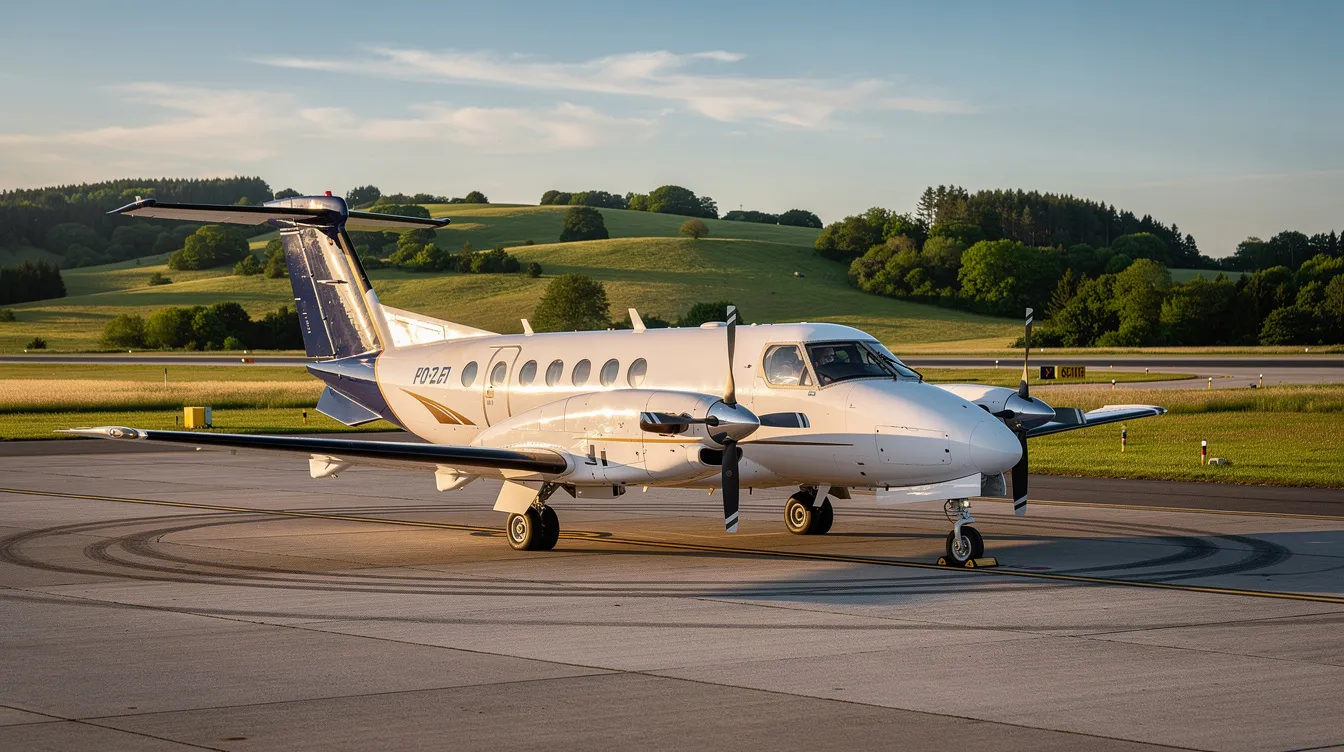
Aircraft network: Jettly provides access to a global network of over 20,000 aircraft, including single-engine turboprops like the TBM 930, multi-engine turboprops like the King Air, and jets at every level. All are operated by licensed and regulated air carriers meeting FAA, EASA, or equivalent standards, and this private charter aircraft inventory spans everything from light jets to ultra-long-range models.
Pricing transparency: Users see clear charter quotes that account for aircraft type, distance, repositioning, crew duty time, and airport fees. This helps travelers understand when a TBM 930 offers the best value versus an entry-level private jet.
Optional services: Ground transportation coordination at smaller airports, in-flight catering tailored to shorter flights, and assistance with last-minute schedule changes are all available.
Get started: Visit the Jettly page at https://www.jettly.com and submit your preferred route for an instant or custom quote.

These questions address practical details about comfort, safety, and booking that complement the information covered above.
While the TBM 930 is certified for up to six occupants including the pilot, most charter missions are most comfortable with three to five adult passengers plus luggage. The cabin height and width are compact—roughly 4 ft by 4 ft—so a full load of five passengers works best when baggage is moderate. For longer legs approaching the 1,730 nm range, operators may suggest fewer passengers or lighter baggage to stay within weight and balance limits and maintain safe performance margins.
Modern single-engine turboprops meet rigorous airworthiness standards under both FAA and EASA certification. The TBM 930's PT6A-66D engine has an established reliability record, and the aircraft carries advanced safety systems including Electronic Stability and Protection, emergency descent mode, underspeed protection, and comprehensive ice protection. Charter operations require professionally trained pilots who hold commercial certificates and complete recurrent training. While some travelers prefer twin-engine aircraft over water or mountainous terrain, the TBM 930's safety record and regulatory approval reflect the level of engineering and oversight behind this airplane.
A group of four can typically bring several medium suitcases and carry-ons within the standard baggage compartment limits of roughly 330 lb in a six-seat configuration. Sports gear such as golf bags or ski equipment can often be accommodated, though bulkier items may require removing the rear seat. It is best to share detailed baggage information when requesting a quote through Jettly so the operator can confirm space and, if needed, suggest a different aircraft type with more cargo capacity, something you can also factor into a quick check with a private jet charter cost estimator.
Hourly charter rates for a TBM 930 are often lower than for light jets because of reduced fuel burn and overall operating costs. On routes within 500–1,200 nm, the savings can be meaningful—sometimes 20–40% less per flight hour. However, final pricing depends on route distance, aircraft availability, repositioning legs, and airport fees. To see real numbers, use Jettly's platform to compare real-time quotes for a TBM 930 versus light jets on the same itinerary or apply general tips for booking the cheapest private jet flights to keep costs under control. In terms of speed, the TBM 930 may add 15–30 minutes on a 1,000 nm leg compared to a light jet, but the cost difference often more than compensates.
Yes. The TBM 930's short-field performance—roughly 2,380 ft for takeoff and 2,430 ft for landing—allows it to operate from many regional and local airports with shorter runways than those required by jets. This capability is subject to runway surface, length, and prevailing weather conditions. Using these smaller airports can cut ground transfer time significantly, sometimes saving an hour or more each way compared to flying into a larger hub. Specify your preferred departure and arrival airports when searching on Jettly to see what is feasible for your route, or use an integrated airport locator tool to explore additional nearby options.
The TBM 930 delivers a maximum cruise speed of 330 ktas, a range of 1,730 nm, an efficient PT6A-66D engine by Pratt & Whitney, advanced Garmin G3000 avionics, and a comfortable six-seat cabin with practical baggage capacity. It is a set of capabilities that few aircraft in this price class can match.
The TBM 930 is an ideal charter choice when:
Routes fall under about 1,500 nm
The group is three to five travelers
The mission benefits from small-airport access
Near-jet speed at turboprop operating costs is the goal
On-demand charter through Jettly lets travelers benefit from TBM-level performance without the responsibilities and capital requirements of aircraft ownership. There is no long-term commitment—just fast, efficient, private travel when you need it.
Ready to experience private travel on your terms? Explore flight options or request a quote at https://www.jettly.com.
Share this post:
Jay Franco Serevilla
Jul 22, 2026
|
5
min read
Discover tips and trends in the industry.
5
min read
Air X: Private Aviation, Diversified Fleets, and Jet Support Explained
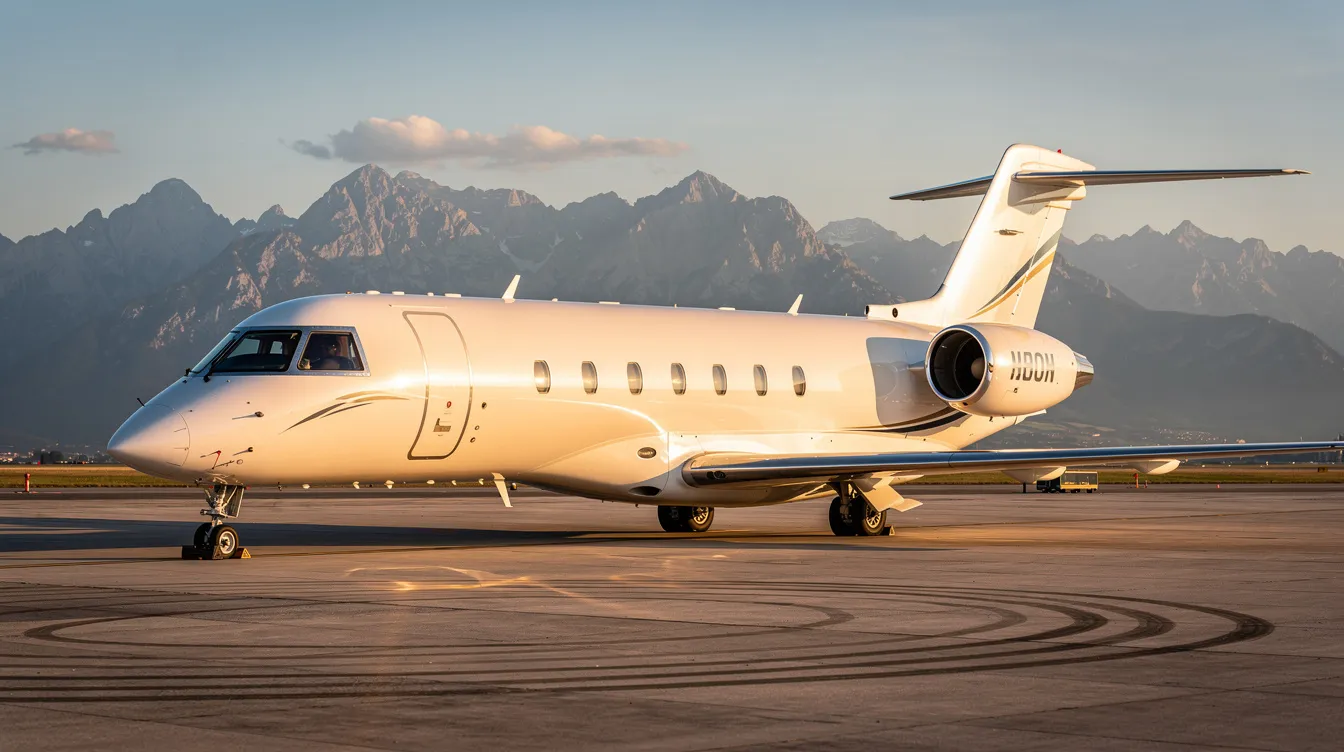
Air X represents a category of private jet charter operators known for their diversified fleets and integrated jet support, ensuring flexibility and safety. With over 7,050 flights in 2023, AirX Charter exemplifies excellence in private aviation, catering to corporate executives and high-net-worth individuals. Digital platforms like Jettly enhance access to these services, allowing travelers to book tailored flights effortlessly.
Read More
5
min read
Helidosa Aviation Group: Private Jet Charter, Safety Insights, and Alternatives
Helidosa Aviation Group is a leading private aviation operator in the Dominican Republic, offering a range of services including private jet charters and helicopter tours. Established in 1992, the company has expanded its fleet and services to cater to leisure and business travelers across the Caribbean and Americas. While Helidosa boasts a strong safety record, it has faced incidents that travelers should consider when booking.
Read MoreStay updated with our latest insights and tips to elevate your journey with us.
MEMBERSHIPS AND ASSOCIATIONS



Disclaimer: Jettly operates as a charter broker, offering access to a global digital jet charter marketplace. Jettly is not a direct air carrier and does not own or operate aircraft. All advertised flights are conducted by third-party air carriers that are fully licensed and hold the appropriate Part 135 or Part 121 certifications issued by the Federal Aviation Administration (FAA) or equivalent regulatory authorities under U.S. or foreign law. Jettly complies fully with the U.S. Department of Transportation's Part 295 and Part 298 Charter Broker regulations. Jettly does not carry additional liability insurance. Passengers are covered by aircraft operator insurance. TICO: 50023770


