


Login
Get Instant Pricing On 23,000+ Aircraft

>
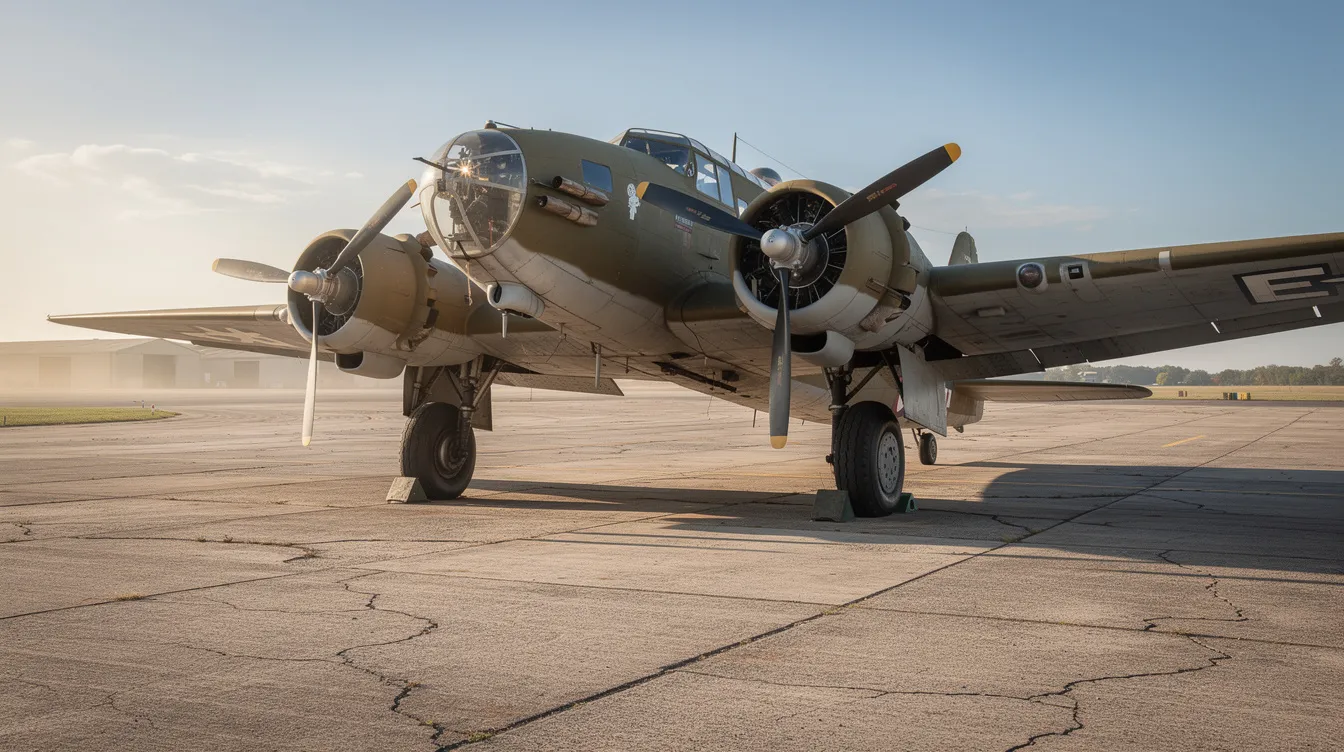
Air Force One serves as a globally recognized symbol of U.S. presidential authority. Air Force One is not only a vital tool for presidential travel but also a symbol of American leadership and technological achievement. The term "Air Force One" is the official air traffic control call sign for any U.S. Air Force aircraft carrying the President of the United States, not a single specific plane. In popular usage, "Air Force One" most commonly refers to the two customized Boeing VC-25A 747-200B presidential aircraft based at Joint Base Andrews in Maryland, which serve as a flying White House with secure communications, office space, living quarters, and onboard medical support for the president and senior staff.
For aviation enthusiasts, historians, frequent flyers, and business or high-net-worth travelers curious about how presidential air travel works, this article examines the history of presidential aircraft, the technical capabilities and interior layout of the current jets, their defensive and security systems, notable moments and retired aircraft, the future VC-25B replacement, and how Air Force One compares with modern private jet charter for non-presidential travelers. Understanding what makes Air Force One unique helps put its symbolism, productivity, flexibility, and comfort into context—especially for readers evaluating the convenience and service parallels of today’s private aviation options.
"Air Force One" is the radio call sign for any air force aircraft carrying the US president, but it most commonly refers to the two VC 25A Boeing 747s that have been in service since 1990.
Air Force One is a globally recognized symbol of U.S. presidential authority.
The current aircraft function as secure flying command centers equipped with advanced communications systems, a medical facility capable of functioning as an operating room, and in-flight refueling capability for global reach.
The VC-25A fleet is being replaced by new VC-25B aircraft based on the Boeing 747-8 platform, with deliveries scheduled for the 2027–2028 timeframe.
Air Force One has played a role in major historical events, from Lyndon B. Johnson's 1963 swearing-in to President George W. Bush's 9/11 flights under fighter escort.
While Air Force One is unique in its mission, private charter platforms like Jettly and other leading private jet charter companies offer comparable benefits in flexibility and productivity for business and high-net-worth travelers.
Dedicated presidential air travel began in the 1940s and evolved through several aircraft before today's VC-25A. Franklin D. Roosevelt was the first president to fly in office. The first aircraft specifically for presidential travel was delivered in 1933. The first purpose-built presidential airlift truly started with the Douglas VC-54C.
VC-54C "Sacred Cow" (1944–1947): Built for Franklin D. Roosevelt, who was the first president to fly in office. The sacred cow featured a rear elevator for Roosevelt's wheelchair, a conference room, and bulletproof windows. Harry S. Truman later signed the National Security Act of 1947 aboard this air force plane.
VC-118 "Independence" (1947–1953): A modified Douglas DC-6 used by Truman, named after his hometown of Independence, Missouri. It introduced pressurized cabins and weather radar to presidential air travel.
VC-121 Columbine II and Columbine III (1953–1961): President Dwight D. Eisenhower's Constellation-based aircraft. President Eisenhower named them after the columbine, Colorado's official state flower. Columbine II was the first aircraft to use the Air Force One call sign in the 1950s, prompted by a near-miss confusion between Air Force 610 and Eastern Airlines 610.
VC-137C Boeing 707 (1962–1998): The call sign 'Air Force One' became official in 1962. President Kennedy adopted the iconic blue-and-white livery designed by Raymond Loewy in 1962. The VC-137C, tail number 26000, served from 1962 to 1998. Lyndon B. Johnson was sworn in aboard SAM 26000 on November 22, 1963, about two hours after Kennedy's assassination, with the first lady Jacqueline Kennedy present. President Nixon later made historic flights to China and the USSR during the Cold War, and the aircraft saw service through the Vietnam War era. When Nixon flew a commercial flight on United Airlines in 1973 to promote fuel conservation, the call sign "Executive One" was used instead.
The transition to Boeing 747-200B-based aircraft came in 1990, ushering in the current era of presidential airlift. The first VC-25A flew as 'Air Force One' on September 6, 1990.
With this historical background, let's examine the current aircraft that serve as Air Force One.
The VC-25A is a heavily modified Boeing 747-200B, forming the core of modern presidential airlift. The current fleet consists of two Boeing VC-25A aircraft, tail numbers 28000 and 29000. Both entered service in 1990 and are operated by the presidential airlift group of the 89th Airlift Wing at Joint Base Andrews. The first VC-25A flew as "Air Force One" on September 6, 1990.
When the president is aboard, the air force designation switches to "Air Force One." Otherwise, the aircraft uses a standard military sign such as "SAM 28000." Air Force One can accommodate over 70 passengers and 30 crew members, including the president, senior staff, Secret Service agents, military aides, security personnel, medical staff, media, and flight crew. The principal differences between a VC-25A and a standard private charter 747 include secure communications networks, defensive countermeasures, and self-contained ground-handling equipment.
With an understanding of the current fleet, let's explore the technical specifications and performance that make Air Force One a unique flying command center.
Air Force One must balance range, speed, redundancy, and survivability to keep the president accessible anywhere in the world. Key specifications include:
|
Specification |
Detail |
|---|---|
|
Length |
231 ft 10 in |
|
Wingspan |
195 ft 8 in |
|
Height |
63 ft 5 in |
|
Engines |
Four General Electric CF6-80C2B1 turbofans |
|
Thrust per Engine |
~56,700 lb |
|
Maximum Speed |
630 miles per hour (Mach 0.92) |
|
Service Ceiling |
45,100 feet |
|
Range (unrefueled) |
7,800 statute miles |
|
Maximum Takeoff Weight |
833,000 pounds |
The aircraft can fly at a maximum speed of 630 miles per hour and can operate at altitudes up to 45,100 feet above most commercial traffic and certain threats. Air Force One has a range of 7,800 statute miles, enough for nonstop flights from Washington to parts of Asia or Europe.
It can be refueled in mid-air during flights via a flying boom system, theoretically enabling the aircraft to stay aloft for extended periods in crisis situations. No president is publicly known to have refueled mid-flight. The interior configuration prioritizes office and support space over passenger density, unlike commercial 747 layouts.
Now that we've covered the aircraft's performance, let's take a closer look inside Air Force One to see how its interior is organized for presidential duties.
Air Force One has a 4,000-square-foot interior divided over multiple levels. The following table breaks down the main areas and their functions:
|
Area |
Description |
|---|---|
|
Presidential Suite |
The president's suite includes a stateroom and office—often called the "Oval Office in the sky"—plus sleeping quarters, a shower, and a sitting area for briefings and family use. |
|
Conference/Dining Room |
Includes a conference/dining room for meetings with advisors, cabinet members, and foreign leaders. Secure briefings happen here aboard Air Force One. |
|
Medical Facility |
The aircraft includes a medical suite capable of functioning as an operating room, staffed by a military physician and flight surgeon with a small pharmacy and medical supplies. |
|
Staff and Press Sections |
The middle and aft sections hold workspaces with communications consoles for senior staff, seating for Secret Service and security personnel, and a separate press section for accredited journalists. |
|
Galleys and Lavatories |
The aircraft has two galleys providing 100 meals at once, mirroring the emphasis on premium in-flight catering for private jets. There are six lavatories, including disabled access facilities. |
|
Self-Contained Features |
Built-in forward and aft air stairs and a self-contained baggage loader allow operations at airports without specialized 747 ground equipment. |
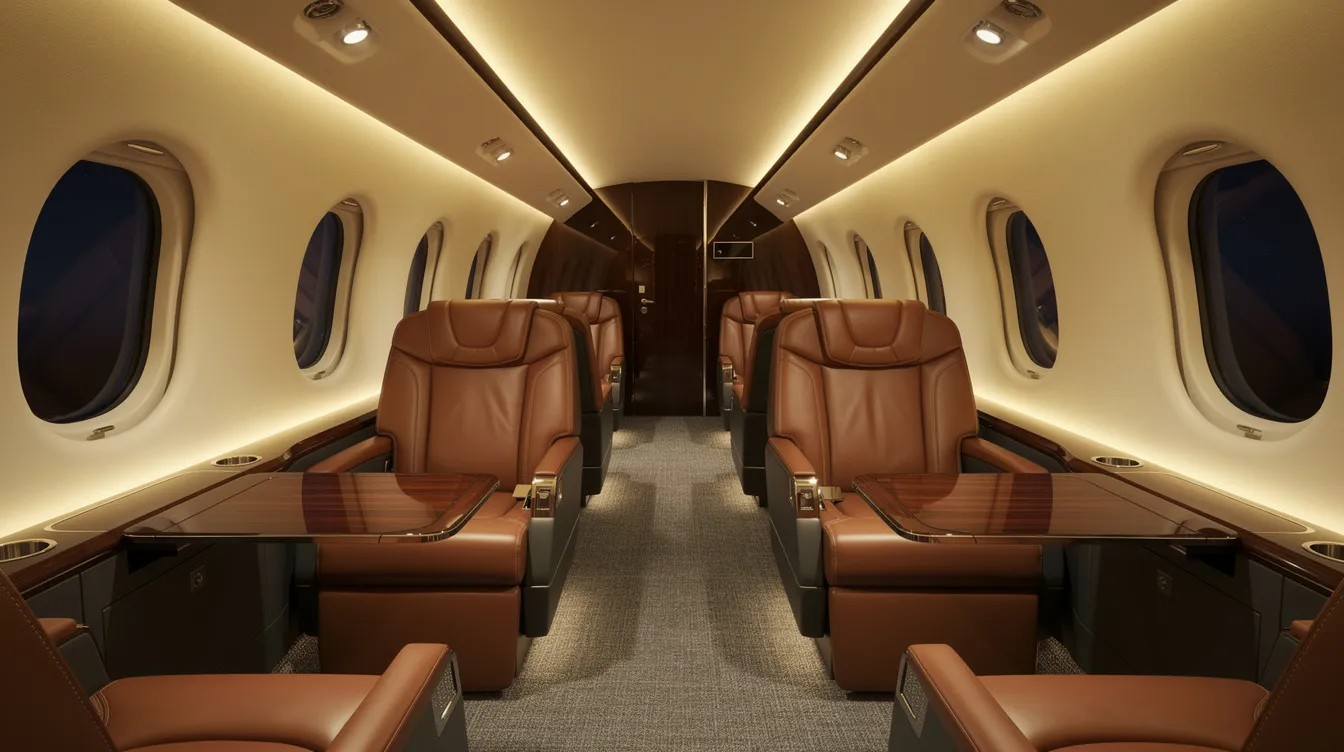
The president's suite includes a stateroom and office—often called the "Oval Office in the sky"—plus sleeping quarters, a shower, and a sitting area for briefings and family use.
Includes a conference/dining room for meetings with advisors, cabinet members, and foreign leaders. Secure briefings happen here aboard Air Force One.
The aircraft includes a medical suite capable of functioning as an operating room, staffed by a military physician and flight surgeon with a small pharmacy and medical supplies.
The middle and aft sections hold workspaces with communications consoles for senior staff, seating for Secret Service and security personnel, and a separate press section for accredited journalists.
The aircraft has two galleys providing 100 meals at once, mirroring the emphasis on premium in-flight catering for private jets. There are six lavatories, including disabled access facilities.
Built-in forward and aft air stairs and a self-contained baggage loader allow operations at airports without specialized 747 ground equipment.
With the interior layout in mind, let's move on to the advanced communications systems that make Air Force One a true flying command center.
One of the air force planes carrying the president's core missions is keeping the commander-in-chief connected at all times. The aircraft features advanced communications systems for secure operations across multiple networks.
Air Force One has 87 telephones across three secure networks, alongside fax and data links for classified and unclassified information. Multi-frequency radios handle air-to-air, air-to-ground, and satellite communications, enabling coordination with the Pentagon, the White House Situation Room, and global leaders. The aircraft is equipped to function like the White House Situation Room during crises, with the communications equipment necessary for the president to address the nation, conduct secure video-teleconferences, and issue military commands from aboard.
After the 9/11 attacks, these systems were upgraded significantly. Ongoing modernization through the 2020s includes investments in low-latency worldwide data connectivity and advanced datalinks. In a major crisis, Air Force One functions as a mobile command node within the broader presidential pilot office network, complementing ground facilities and other airborne command posts.
Having explored communications, let's now examine the defensive and security measures that protect Air Force One and its occupants.
Many specifics of Air Force One's defenses remain highly classified, but several features are publicly known. The following are the major defense features:
EMP Hardening: The aircraft's body is hardened against electromagnetic pulse from nuclear detonations, ensuring critical electronics remain functional in extreme environments.
Infrared Countermeasures: Air Force One has multiple infrared countermeasures to misguide missiles, including systems like the AN/ALQ-204 Matador that alter emitted IR signatures to confuse enemy aircraft missile seekers tracking engine exhaust.
Advanced Jammers: It features advanced jammers designed to disrupt missile sensors, reducing the risk of missile lock-on.
Chaff and Flares: Chaff disperses metallic fibers to disrupt radar-guided weapons, while flares burn hotter than the aircraft's engines to decoy infrared-guided missiles.
Non-Technical Layers: Secret flight plans, escort fighters when warranted (as on 9/11 with F-16s), strict access control, and coordination with Secret Service and host-nation security forces on the ground.
With security addressed, let's look at some of the most historic moments that have taken place aboard Air Force One.
Air Force One has witnessed defining episodes in U.S. political and military history:
LBJ's Swearing-In (1963): Lyndon B. Johnson took the oath of office aboard SAM 26000 at Dallas Love Field, about two hours after President Kennedy's assassination, with Judge Sarah T. Hughes administering the oath.
Nixon's Cold War Diplomacy: Richard Nixon's 1972 trips to Beijing and Moscow aboard VC-137 aircraft symbolized diplomatic breakthroughs during the Cold War and the administration's broader foreign policy.
September 11, 2001: President George W. Bush's Air Force One departed Sarasota, Florida, under threat, making stops at Barksdale AFB and Offutt AFB before returning to Washington under fighter escort. The aircraft's communications proved essential for maintaining command continuity during the attack.
Conflict Zone Visits: Presidents have flown aboard Air Force One to Iraq and Afghanistan under tight secrecy, with two planes sometimes deployed—one as a decoy, highlighting the aircraft's strategic and symbolic value.
Having reviewed these historic moments, let's see what happens to retired presidential aircraft.
Retired presidential aircraft are typically preserved at the National Museum of the U.S. Air Force or presidential libraries rather than scrapped.
Used from the Nixon through the Bush administrations, now displayed at the Ronald Reagan Presidential Library in Simi Valley, California.
Initially sold into private hands after retirement, later rescued for restoration to preserve its role as the first Air Force One by call sign.
Truman's DC-6 is preserved at the National Museum of the U.S. Air Force in Dayton, Ohio.
Pop Culture Note: The 1997 film "Air Force One," starring Harrison Ford as a fictional president and Gary Oldman as the hijacker, used a carefully researched replica of the presidential cabin. The movie famously featured a fictional escape pod, which does not exist on the real aircraft. The film also featured Vice President Kathryn Bennett as a key character in the storyline. The film remains one of the most recognizable symbols of Air Force One in popular culture.
With the legacy of retired aircraft in mind, let's look ahead to the future of presidential air travel.
The U.S. Air Force is replacing the aging VC-25A jets due to rising maintenance costs, fuel inefficiency, and the need to modernize communications and defensive systems. The Boeing 747-8 Intercontinental was selected as the platform, with an overall program budget estimated at around $4.3 billion. Two undelivered 747-8I airframes originally built for commercial customers were acquired, reducing acquisition costs.
The new livery features a white upper fuselage, a dark navy lower section, and red and gold stripes. As of mid-2026, VC-25B deliveries are targeted for the 2027–2028 timeframe. Early-2020 contracts with companies like Exosonic, Hermeus, and Boom explored long-term supersonic or hypersonic presidential aircraft concepts.
Initial exploratory contracts focused on conceptual designs for a future supersonic presidential transport. These projects remain in research and development, with no supersonic replacement formally selected as of 2026. A "bridge" aircraft—a heavily modified wide-body gifted by Qatar and converted by L3Harris—has been delivered to Joint Base Andrews as of June 2026 to augment VC-25A operations. Any future platform would still retain the force one call sign when the president is aboard.
With the future in mind, let's review the other aircraft and call signs used for presidential and vice-presidential travel.
The president and vice president fly several aircraft types depending on mission length, destination, and airfield constraints.
C-32A (Boeing 757): Used for shorter runways or regional trips. It uses the air force designation "Air Force One" when the president is aboard and "Air Force Two" for the vice president.
Support Aircraft: Cargo planes typically accompany Air Force One to provide vehicles and secure services. C-17 Globemaster III transports carry motorcades and large delegations.
Marine One: Marine Corps helicopters (VH-3D Sea King, VH-92A) use the call sign "Marine One" when the president is on board for short-range travel near the White House.
Historic Call Signs: "Executive One" was used for Nixon's 1973 commercial flight, and "Navy One" for the S-3B Viking that landed Bush on USS Abraham Lincoln in 2003.
Smaller Platforms: VC-6A King Airs, Gulfstream variants (C-20C, C-37), and other air force aircraft have served in presidential or vice-presidential roles depending on mission needs. Air traffic controllers coordinate all these flights with heightened protocols.
Now, let's compare Air Force One to the experience of modern private jet travel.
While Air Force One is unique in its security and command-and-control role, some of its core benefits—privacy, productivity, and schedule flexibility—are mirrored in high-end private aviation.
|
Feature |
Air Force One (VC-25A) |
Private Charter (Large Cabin) |
|---|---|---|
|
Operating Cost/Hr |
~$177,843 |
|
|
Defensive Systems |
Military-grade |
Not applicable |
|
Onboard Office |
Full presidential suite |
Dedicated workspace |
|
Catering |
Two galleys, 100 meals |
Tailored in-flight catering |
|
Airport Access |
Any capable runway |
Thousands of secondary airports |
|
Schedule Flexibility |
Mission-driven |
Fully on-demand |
Private charter platforms give travelers access to a large global inventory of aircraft, enabling mission-specific choices through extensive private charter aircraft networks. Executives who value direct routing, privacy, and the ability to work securely in transit often turn to on-demand charter solutions or structured jet card membership programs rather than the hassle of a commercial flight. The benefits of private jet travel over commercial flights echo many advantages that make Air Force One effective, just without the fighter escort, especially when leveraging flexible private jet membership options.
With these comparisons in mind, let's see how Jettly brings Air Force One–style flexibility to private travelers.
Jettly is a digital private aviation marketplace that simplifies access to on-demand flights, with tools such as an airport locator for private jets echoing the convenience of a dedicated presidential airlift for business and leisure travelers. The platform connects users to a global network of more than 20,000 aircraft, from turboprops and light jets to large-cabin private jets and VIP airliners, comparable to those featured in an overview of charter airlines and private fleets.
Jettly focuses on transparent, up-front pricing and instant quoting, allowing travelers to compare options quickly. Digital booking tools, integrated ground transportation, and catering options help executives replicate some of the productivity benefits found aboard a dedicated presidential aircraft. The platform emphasizes regulatory compliance and safety by working with certified operators, aligning with the high standards expected by frequent flyers accustomed to secure executive travel and rigorously vetted Part 135 charter companies.
Next, let's address some of the most frequently asked questions about Air Force One.
The following questions address common topics not fully covered in the main article.
Only the president, invited guests, staff, Secret Service, media pool, and essential crew fly on the presidential aircraft. There is no way for the general public to book seats or charter Air Force One. However, some former presidential aircraft are open to visitors at museums like the National Museum of the U.S. Air Force in Dayton, Ohio, allowing the public to walk through historical cabins.
U.S. Air Force estimates place the VC-25A's operating cost at approximately $177,843 per flight hour as of FY 2021, covering fuel, maintenance, crew, and overhaul. This does not include support flights, ground security, or motorcade logistics. By contrast, typical private jet charter rates range from a few thousand dollars per hour for light jets to around $20,000+ per hour for large-cabin and VIP airliner charters.
Because Air Force One is a heavily modified Boeing 747 with added weight and systems, it is generally less fuel-efficient per passenger than a high-density commercial airliner. The VC-25B's 747-8 platform offers improvements, but low passenger counts and added equipment limit overall efficiency. In private aviation, travelers can make more environmentally conscious choices by selecting aircraft optimized for mission size.
The VC-25A's unrefueled range is around 7,800 statute miles, enabling nonstop flights from Washington, D.C., to parts of Asia or Europe. Air Force One can refuel in mid-air, theoretically extending endurance for extreme circumstances, though this has not been publicly documented with a sitting president aboard.
No private jet offers the full military-grade defensive suite of Air Force One. However, high-profile clients can arrange enhanced security, encrypted communications, and tailored cabin layouts through certified charter operators, and even lower costs by using shared and crowdsourced private jet flights. Business travelers who prioritize secure work environments in flight can specify their needs when booking through a marketplace like Jettly to ensure appropriate aircraft and operator matching, choosing between shared charter flights and full charters based on privacy and budget.
With these answers in mind, let's conclude by reflecting on why Air Force One continues to captivate and what travelers can learn from its example.
Air Force One, embodied today by the VC-25A and soon by the VC-25B, remains one of the most recognizable symbols of U.S. leadership in America and around the world. It combines global reach, secure communications, and robust defenses in a single airframe operated by an elite pilot and crew. From the sacred cow era to today's 747-based fleet, presidential aircraft have evolved dramatically.
While only the president gets to fly aboard Air Force One, many of its practical advantages—flexible schedules, direct access to secondary airports, and a customized onboard experience—are accessible through modern private jet charter solutions. Executives, families, and high-net-worth travelers can board aircraft tailored to their needs without the complexity of ownership, using modern platforms that make it easy to get a seat on a private jet.
Ready to experience private travel on your terms? Explore flight options or request a quote at Jettly, compare NetJets and other leading providers, discover family-friendly private planes and the appeal of celebrity private jets, or learn about private jet costs and how to book a single seat. Travelers focused on value can consider Jettly as a NetJets alternative, explore crowdsourced and regional operators like Dexter Air Taxi, join Jettly’s high-ticket affiliate program, or arrange private jet charter in Kolkata, West Bengal.
Share this post:
Jay Franco Serevilla
Jun 28, 2026
|
5
min read
Discover tips and trends in the industry.
5
min read
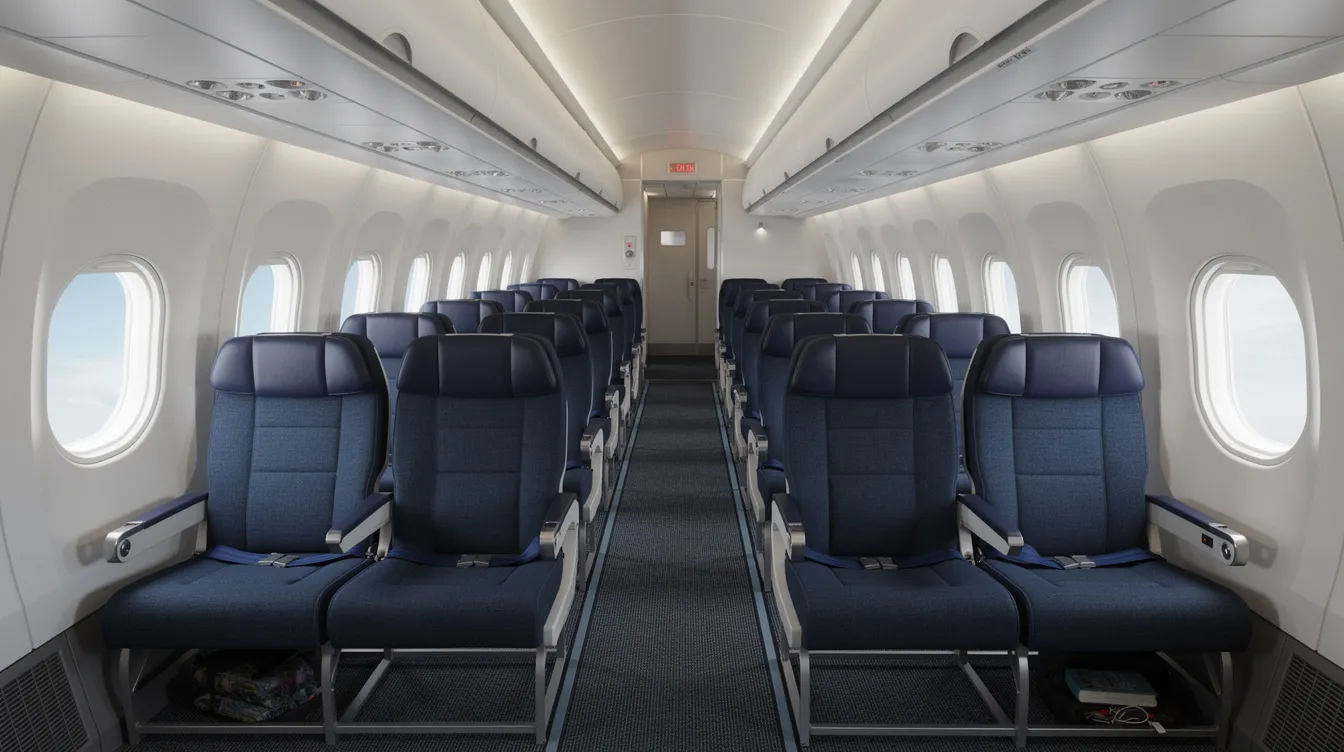
Delta Comfort Plus Seat Width: What to Expect (and When to Upgrade)
Delta Comfort Plus seats typically range from 17.2 to 18.6 inches in width, similar to Main Cabin seats. The primary benefits include extra legroom, priority boarding, and enhanced service rather than a wider seat. For those needing more space, options like Delta Premium Select or private jet charters may be more suitable.
Read More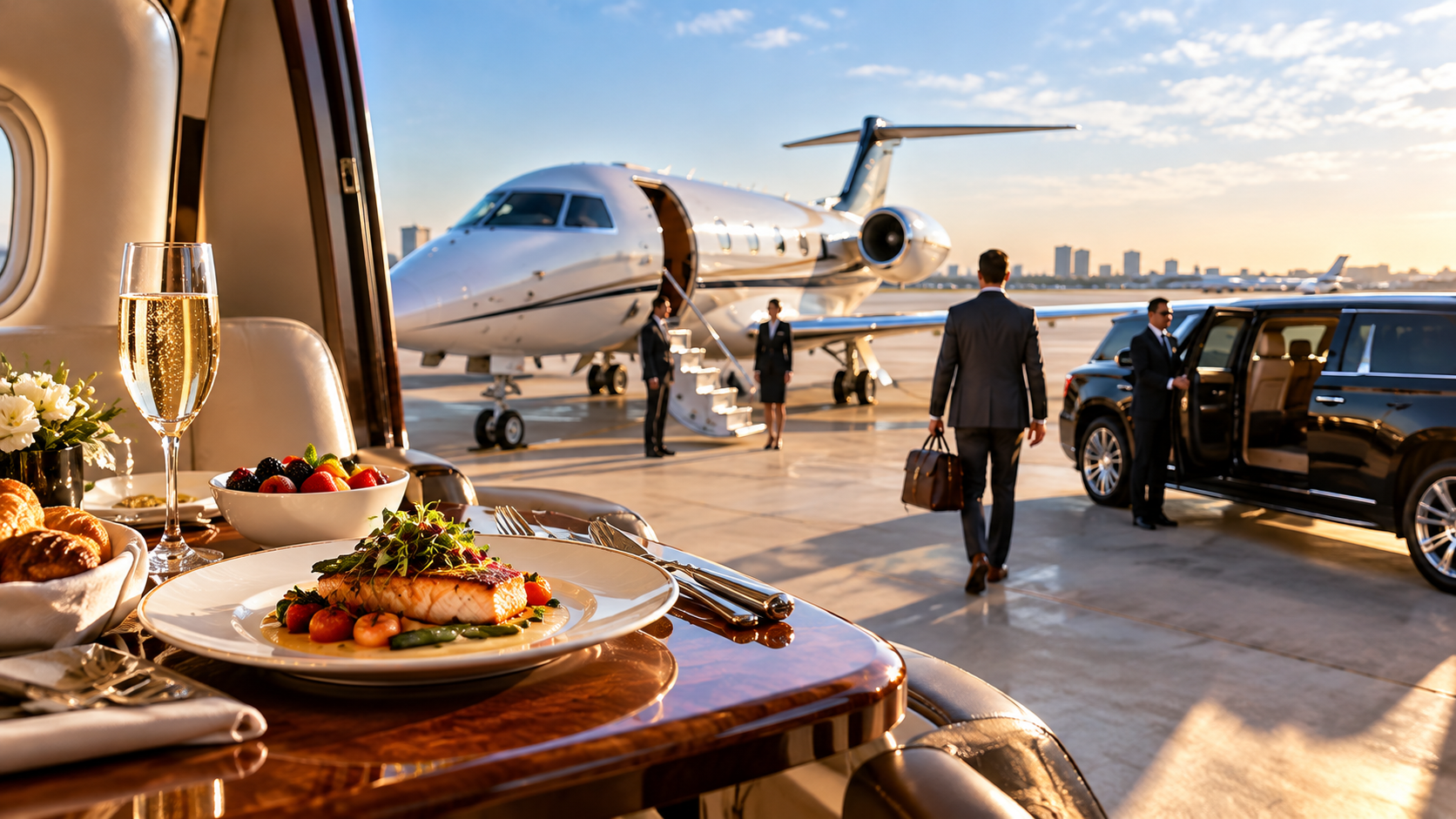
5
min read
What’s Included in Private Jet Catering & Ground Transportation
Private jet catering and ground transportation are essential components of a charter flight experience, ranging from basic snacks to gourmet meals and various vehicle options. This guide provides detailed timelines, dietary accommodations, and a checklist to streamline the booking process, ensuring a smooth and luxurious travel experience. Understanding what's included and how to coordinate these services can help avoid surprises on departure day.
Read MoreStay updated with our latest insights and tips to elevate your journey with us.
MEMBERSHIPS AND ASSOCIATIONS



Disclaimer: Jettly operates as a charter broker, offering access to a global digital jet charter marketplace. Jettly is not a direct air carrier and does not own or operate aircraft. All advertised flights are conducted by third-party air carriers that are fully licensed and hold the appropriate Part 135 or Part 121 certifications issued by the Federal Aviation Administration (FAA) or equivalent regulatory authorities under U.S. or foreign law. Jettly complies fully with the U.S. Department of Transportation's Part 295 and Part 298 Charter Broker regulations. Jettly does not carry additional liability insurance. Passengers are covered by aircraft operator insurance. TICO: 50023770


