


Login
Get Instant Pricing On 23,000+ Aircraft

>
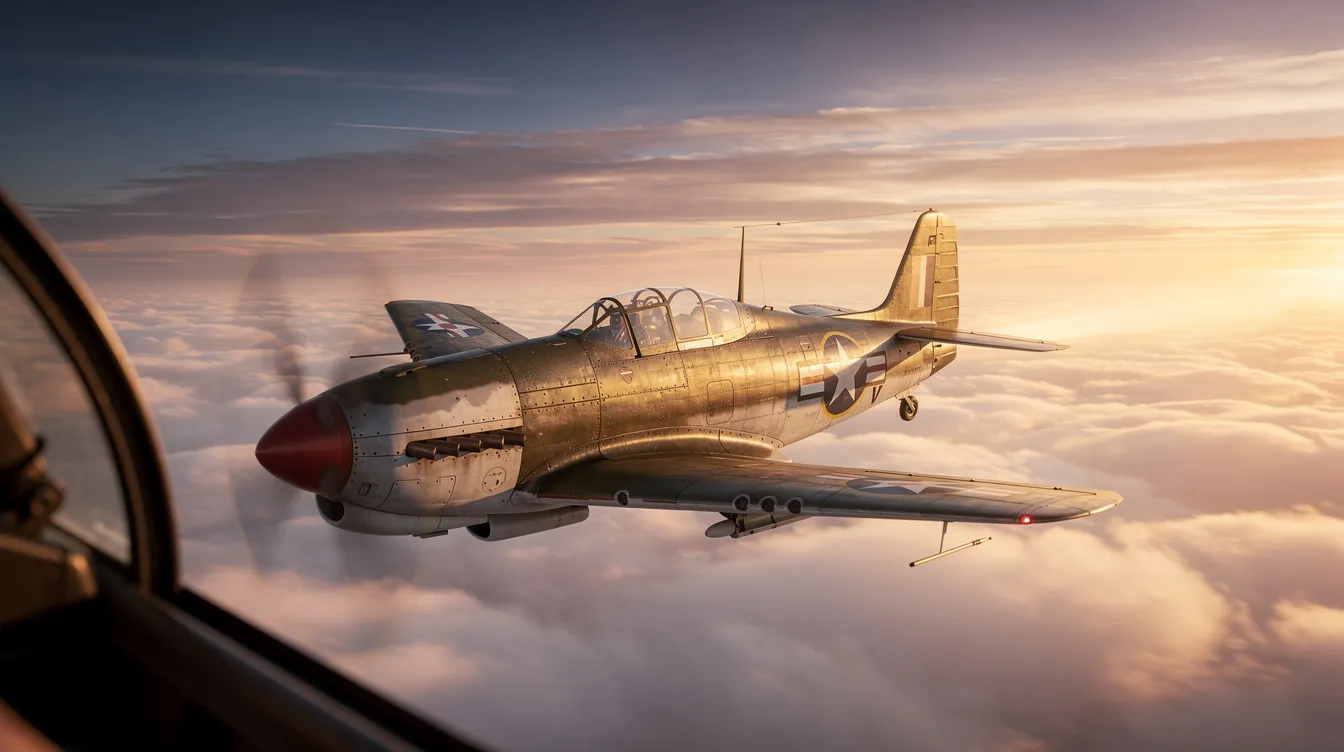
Military jets cover several roles—fighter jets, bombers, close air support, electronic warfare, and trainers—each with distinct designs and missions.
Fighter jet generations range from early subsonic World War II–era designs to fifth-generation fighters like the F-22 Raptor and F-35 Lightning II.
Jet engines, supersonic performance, and sensor fusion have transformed air combat tactics and air superiority since the mid-1940s.
Iconic US fighter jets (F-16, F-15, F-35, F-22) and international designs (MiG-21, Su-27, Eurofighter Typhoon, Dassault Rafale) illustrate each generation's advances.
Military jet innovation eventually benefits civilian and business aviation, improving the range, safety, and reliability of private charter aircraft.
Military jets are combat-capable aircraft powered by jet engines, and they entered large-scale service during the final years of World War II. The German Me 262, operational in 1944, marked the moment fighter jets moved from concept to reality. Military aircraft types differ in size, speed, sensor technology, and payload capacity, and they are classified by their primary mission profiles. Military jets are categorized by combat and support roles, and they are designed for specific tactical and strategic objectives in warfare.
This article covers the main types of military jets—from US fighter jets like the F-15 and F-16 to fourth-generation fighters and fifth-generation fighters with supersonic performance and stealth. It also explains how "generations" (1st through 5th, plus 4.5) organize jet fighter history. Many technologies born in military aircraft—radar, fly-by-wire control, composites—later shaped modern business and private jets used on platforms such as Jettly.
Not every military jet is a pure fighter. Roles span air superiority, multirole combat, attack and close air support, strategic bombing, electronic warfare, and training. Fighter jets are designed for air superiority and multirole combat, and they are highly maneuverable and equipped with advanced radar systems. Here is how each role breaks down:
Air superiority fighters dominate air combat and control the skies. The F-15 Eagle is an air superiority fighter, purpose-built to defeat enemy jet fighters. During Operation Desert Storm in 1991, F-15s eliminated Iraqi MiGs early and secured allied control of the airspace. The Su-27 Flanker filled a similar role for the Soviet Union.
Multirole fighters perform both air-to-air and air-to-ground missions. The F-16 Fighting Falcon and Dassault Rafale are prime examples. NATO and allied air forces adopted multirole fleets from the late 1970s onward to reduce costs and increase mission flexibility.
Close air support and attack aircraft protect ground troops from low altitude. The A-10 Thunderbolt II provides close air support for ground troops in conflicts like Iraq and Afghanistan. Attack jets feature heavily armored cockpits and can carry precision-guided munitions. The Russian Su-25 fills an equivalent role.
Bombers carry heavy payloads against strategic ground targets. Models like the B-52H, B-1B, and B-2A Spirit form the backbone of US strategic deterrence.
Electronic warfare jets disrupt enemy radar and communications. The EA-18G Growler, for instance, helps derive battlefield advantages by disrupting enemy systems.
Reconnaissance jets are used for gathering intelligence and tracking enemy movements, often flying at high altitude or using advanced sensor pods.
In Kosovo in 1999, NATO combined air superiority fighters, multirole jets, and electronic warfare aircraft to achieve a different objective than Desert Storm—precision strikes with minimal ground forces.
World War II marked the turning point where military aviation shifted from piston fighters like the Spitfire, Bf 109, and P-51 Mustang to the first jet fighters. The German Messerschmitt Me 262, operational in 1944, and the British Gloster Meteor were the first jet-powered combat aircraft to see service.
These early jets were subsonic. They had primitive avionics, no radar worth mentioning, and relied entirely on guns with basic sights. Reliability issues, short range, and production challenges limited their wartime impact. But the period established a clear picture: jet engines would dominate the future of air combat. Millions of armed personnel and thousands of aircraft participated in the war, and the speed advantage jets delivered over propeller-driven fighters was impossible to ignore. These experiments led directly to the first generation of subsonic fighters in the late 1940s and early 1950s.
First-generation fighters operated in the subsonic regime. They featured straight or lightly swept wings, basic or no radar, and gun-based armament—machine guns, cannons, unguided rockets, and free-fall bombs. No guided missiles existed yet.
Key examples include the F-80 Shooting Star (US), MiG-15 (USSR), MiG-17, and early F-86 Saber variants. Jet engines without afterburners limited speed to just below the sound barrier, keeping dogfights at relatively close range.
Combat over Korea's MiG Alley during the Korean War (1950–1953) proved that jets held decisive advantages over propeller-driven fighters in climb rate and speed. It also forced air forces worldwide to rethink pilot training, maintenance logistics, and tactics, just as modern travelers must weigh safety records, fleets, and service models when comparing the best private jet charter companies. The history of that conflict reflects how quickly aviation adapts under threat.
The second generation (mid-1950s to early 1960s) and third generation (early 1960s to roughly 1970) brought major advances in supersonic speeds and weapons systems.
Second-generation fighters introduced air-to-air radar and guided missiles—both infrared- and radar-guided missiles. Aircraft like the F-104 Starfighter, F-5, MiG-19, and MiG-21 achieved sustained supersonic performance through afterburning jet engines, thin swept or delta wings, and basic radar warning receivers that improved survivability.
Third-generation fighters allowed beyond-visual-range engagements. The F-4 Phantom II, Mirage III, and MiG-23 added improved Doppler radar, better maneuverability, and early multirole capabilities. But the Vietnam War (1964–1973) exposed hard lessons: early missiles were unreliable in air-to-air combat, guns still mattered, and pilot training needed a complete overhaul. These insights shaped development of the next generation and advances in "look-down/shoot-down" capability.
Fourth generation fighters (circa 1970 to late 1980s) represented a major leap. They featured fly-by-wire technology and multirole capabilities, with digital avionics that gave each pilot far greater situational awareness than anything before.
Key innovations included relaxed static stability for agility, head-up displays, pulse-Doppler radar, and early data links. Many modern military jets from this era are classified as multirole aircraft, blurring the line between air-to-air and strike missions.
Iconic fourth-generation fighters include:
F-15 Eagle - twin-engine air superiority, optimized for speed and climb rate
F-16 Fighting Falcon - lightweight, cost-effective multirole; the F-16 has over 2,100 units in operation worldwide
F/A-18 Hornet - naval multirole, carrier-capable
MiG-29 Fulcrum - agile Soviet frontline fighter
Su-27 Flanker - long-range, heavy-payload air superiority
These jets proved their ability in the Gulf War (1991), Kosovo (1999), and early operations in Afghanistan and Iraq. Many current US fighter jets in 2026—upgraded F-15s, F-16s, and Hornet derivatives—are evolved fourth-generation designs still flying combat missions, just as modern business jets from leading private plane manufacturers like Dassault, Bombardier, and Gulfstream are evolved from earlier airframes.
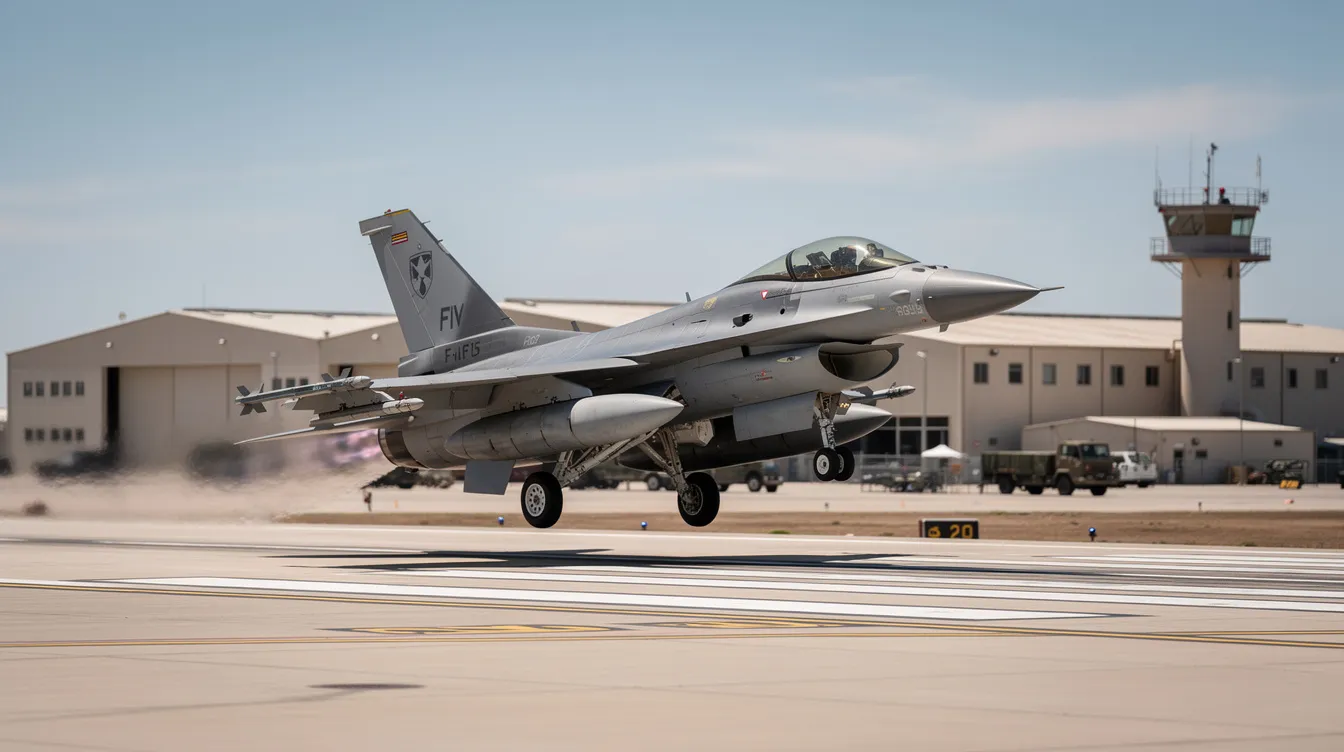
Generation 4.5 fighters are upgraded fourth-gen airframes with partial stealth, AESA radar, and network-centric warfare capabilities. Notable examples include the F/A-18E/F Super Hornet, Eurofighter Typhoon, Dassault Rafale, and the modernized F-15EX Eagle II. Software upgrades and new sensors keep these jets competitive well into the 2030s.
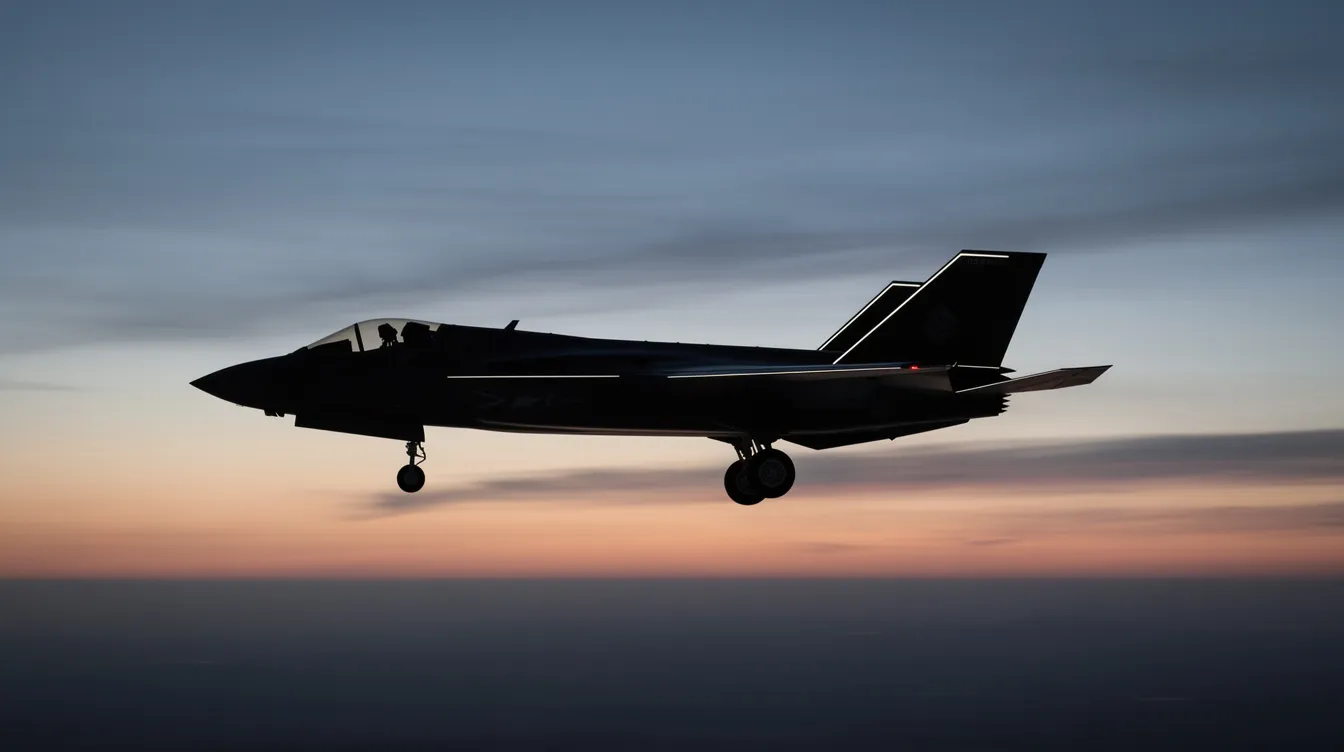
Fifth-generation fighters include stealth technologies and advanced sensors that represent a fundamentally different approach to air combat. Defining traits are all-aspect stealth, internal weapons bays, sensor fusion, and supercruise—sustained supersonic flight without afterburner. Radar-absorbent materials and angular shaping reduce detectability to a degree that older airframes cannot match.
Concrete examples:
F-22 Raptor - The F-22 Raptor was introduced as a fifth-generation fighter in 2005 by Lockheed Martin. It has a radar cross-section comparable to a marble, twin canted tails, thrust vectoring, and supercruise around Mach 1.8. About 185 remain in USAF inventory.
F-35 Lightning II - Also built by Lockheed Martin, the F-35 has 7 million lines of code in its software and over 1,300 delivered globally by the mid-2020s. It emphasizes sensor fusion—combining radar, infrared, data links, and electronic warfare into one unified picture for the pilot.
Su-57 (Russia) and Chengdu J-20 (China) - The Chengdu J-20 has a weapons payload of 24,000 lbs and represents China's bid for regional air superiority.
Sensor fusion and supercruise give pilots information superiority, not just speed. Unmanned combat aerial vehicles are also used for surveillance and precision strikes, increasingly paired with manned fighters.
Future sixth-generation programs—including Boeing's F-47 under the US NGAD effort, the European FCAS, and the UK-Japan-Italy Tempest/GCAP-aim for service entry in the 2030s with AI teaming and adaptive engines, just as new technologies shape decisions when choosing the best personal plane for individual owners.
Modern air forces depend on specialized jet-powered platforms beyond fighter jets:
Strategic bombers deliver heavy payloads against strategic ground targets. Bombers are large aircraft designed to carry heavy loads over long distances. The USAF bomber fleet includes roughly 76 B-52H Stratofortresses (average age over 60 years), 46 B-1B Lancers, and 20 B-2A Spirits—about 142 total as of the mid-2020s, a small fraction compared with the global fleet of private jets that now numbers in the tens of thousands. Stealth capabilities are important for modern bombers to evade radar, which is why the new B-21 Raider is in development. Bomber jets are designed for strategic long-range bombing campaigns across decades of conflict.
Close air support - The A-10C and AC-130J Ghostrider gunship provide slow-speed precision fire in ground combat. These aircraft proved essential in Iraq and Afghanistan, much as more modest, budget-conscious options among the cheapest private aircraft have opened private flying to a wider audience.
Trainer jets are used to build pilots' skills for high-performance flight. Models like the T-38 Talon and the new T-7A Red Hawk (a Boeing design) prepare pilots before they tap into frontline fighters.
Special-mission jets — AEW&C platforms like the E-3 Sentry provide airborne command and control, maritime patrol aircraft like the P-8A Poseidon handle anti-submarine warfare, and the EA-18G Growler handles electronic warfare. Electronic warfare jets disrupt enemy radar and communications across the battlespace.
Many modern US fighter jets look similar at a glance, but key visual cues make identification easier.
Fourth-generation US fighters:
F-15 Eagle - Twin engines, twin vertical tails, broad fixed wings. Large and unmistakable in silhouette.
F-16 Fighting Falcon - Single engine, single vertical tail, blended wing-fuselage with a distinctive bubble canopy.
F/A-18 Hornet - Twin engines, canted vertical tails angled outward, compact folding wings for carrier operations.
Fifth-generation US fighters:
F-22 Raptor - Diamond-shaped wings, twin canted tails, gold-tinted canopy, and wide air intakes. Internal weapon bays keep the exterior clean.
F-35 Lightning II - Single engine, chiseled fuselage, distinctive chin air intake, and angular edges. Radar-reflective panel lines are carefully aligned to minimize returns.
Internal weapon bays on both fifth-gen types aid stealth by keeping munitions hidden. You can welcome the chance to spot these jets at airshows or near bases abroad—F-16s regularly operate across Europe, and F-35s are deployed throughout the Pacific, including Japan—or even explore curated military jet experience flights that let civilians ride in high-performance ex-military trainers under strict safety controls.
Technology derived from fighter jets and other military aircraft routinely transitions into civilian and business aviation. Jet engines with improved fuel efficiency, fly-by-wire control systems, composite materials, satellite navigation, and advanced avionics all started in military programs before reaching commercial certification.
These advances improve range, reliability, and safety for private jet travelers. Long-haul routes, operations in challenging weather, and precision navigation owe much to decades of defense-funded research. The date a technology enters military service often predicts when civilian versions arrive—typically within 10 to 20 years, and the spread of these innovations is visible across private charter airlines and operators worldwide.
Digital platforms like Jettly connect travelers to a global inventory of over 20,000 private charter aircraft and provide tools such as an airport locator that benefit from this innovation. Where fighter jets prioritize survivability, supersonic performance, and agility, private jets focus on cabin comfort, quiet operation, fuel efficiency, and time savings. Both share the same engineering DNA, from the most advanced fighters to the best private airplanes available in 2025. If you're curious about comparing private aircraft types, estimating costs with a private jet charter cost estimator, or understanding how private jet safety and overall private jet cost considerations reflect military-grade standards, Jettly's resources can help.
Here are answers to questions readers frequently ask about military jets, along with context on how tools for tracking private jets in real time intersect with modern aviation technology.
Generations are informal groupings used by analysts and manufacturers rather than a single global standard. They reflect combinations of era, avionics, weapons integration, and stealth features. No international body issues an official "generation" label—the framework simply helps organize decades of rapid development into digestible categories.
While nearly all frontline fighter jets fly at supersonic speeds, many specialized military aircraft remain subsonic by design. Gunships like the AC-130J, certain trainers, helicopters, and transport jets prioritize endurance and payload over raw speed. Subsonic performance is not a limitation for these platforms—it reflects a different objective.
Angular shapes, carefully aligned edges, and internal weapon bays help scatter or absorb radar waves. This reduces an aircraft's radar cross-section far below what older rounded airframes achieve. Combined with radar-absorbent materials and controlled emissions, these design choices make stealth fighters far harder to detect and track.
Active frontline fighters are restricted to military use. However, some countries allow civilians to fly in demilitarized trainers or high-performance aircraft under strict safety regulations, while others turn to established providers such as NetJets and similar private aviation leaders for non-combat high-performance travel. For those who simply want the thrill of modern jet travel without combat maneuvers, private charters through platforms like Jettly or even shared and crowdsourced private flights offer comfort, speed, and flexibility.
Advances in jet engines, navigation software, cockpit displays, and wire-based flight control systems proven in military service eventually appear in certified business jets. These upgrades enhance the performance and reliability of aircraft available through charter platforms such as Jettly, making every journey smoother and safer than what was possible even a decade ago, especially for frequent flyers using flexible private jet memberships.
Different types of military jets—from first-generation subsonic fighters to today's fifth-generation stealth aircraft—reflect changing needs in air superiority, close air support, and strategic deterrence. Modern fighter jets rely on advanced jet engines, sensor fusion, and networked tactics to control the skies, and each new aircraft pushes the boundaries of what's possible in aviation.
Many comforts and safety features in private jets owe their origins to decades of military research and development. Discover how that legacy shapes your travel experience today.
Ready to experience modern jet travel on your terms? Whether you’re looking for a NetJets alternative with flexible on-demand charter, want to explore affordable private jet charter pricing, want to explore flight options, or want to request a quote at https://www.jettly.com.
Share this post:
Jay Franco Serevilla
Oct 11, 2026
|
5
min read
Discover tips and trends in the industry.

5
min read
Which Airlines Have the Most Accidents? (And What That Really Means for Safety)
When evaluating airline safety, historical accident totals can be misleading. Airlines with the most accidents, like American Airlines and Aeroflot, have improved significantly due to modern safety standards and regulations. Today, flying is statistically the safest form of long-distance transport, with a focus on accident rates per million flights providing a clearer picture of safety.
Read More
5
min read
Jet Airways: From Full-Service Icon to Modern Travel Alternatives
Jet Airways, once a leading full-service airline in India, ceased operations in 2019 and is now under liquidation. With no new tickets available, travelers are seeking alternatives for their air travel needs. Private jet charter services like Jettly offer flexible and convenient options for those looking to navigate the skies post-Jet Airways.
Read MoreStay updated with our latest insights and tips to elevate your journey with us.
MEMBERSHIPS AND ASSOCIATIONS



Disclaimer: Jettly operates as a charter broker, offering access to a global digital jet charter marketplace. Jettly is not a direct air carrier and does not own or operate aircraft. All advertised flights are conducted by third-party air carriers that are fully licensed and hold the appropriate Part 135 or Part 121 certifications issued by the Federal Aviation Administration (FAA) or equivalent regulatory authorities under U.S. or foreign law. Jettly complies fully with the U.S. Department of Transportation's Part 295 and Part 298 Charter Broker regulations. Jettly does not carry additional liability insurance. Passengers are covered by aircraft operator insurance. TICO: 50023770


