



Login
Get Instant Pricing On 23,000+ Aircraft

>
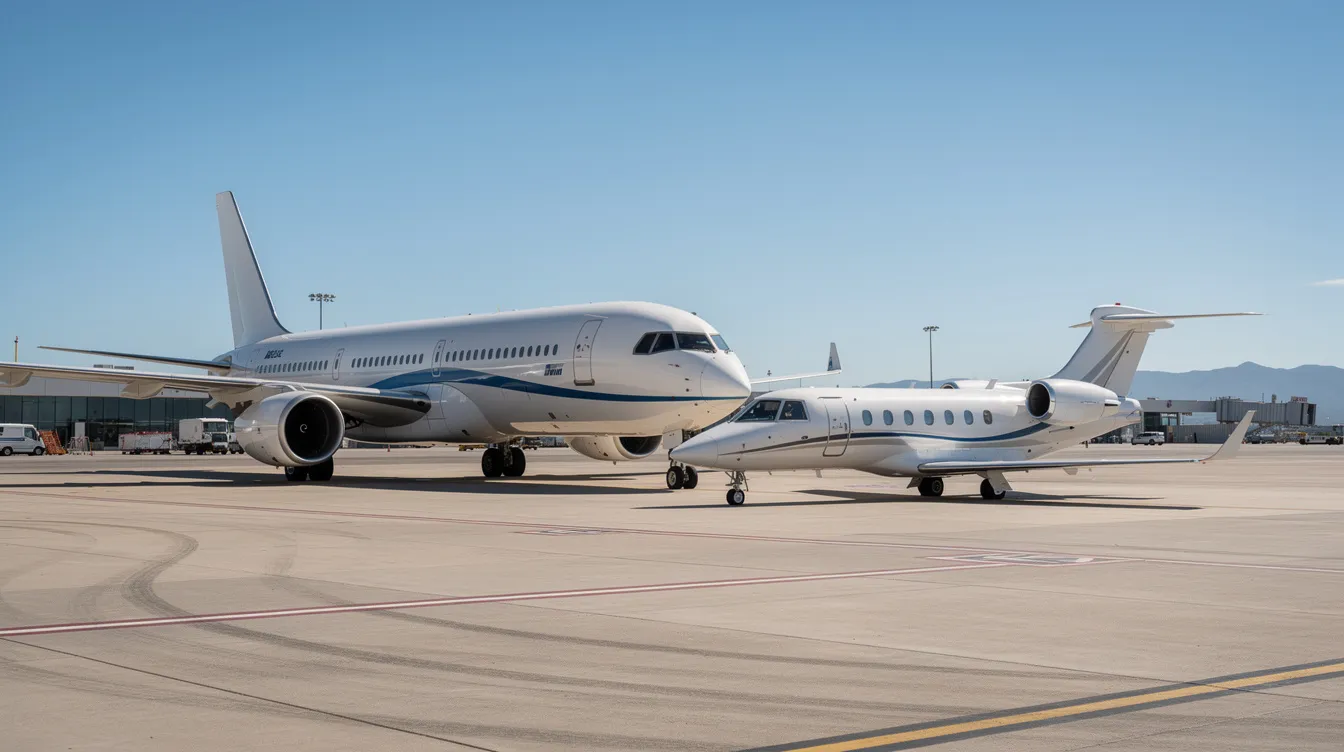
Civil aviation covers everything from 400-seat widebody airliners crossing oceans to four-seat turboprops landing on grass strips. Understanding the types of planes available helps travelers, business owners, and aviation enthusiasts make smarter decisions about how they fly. This guide breaks down every major aircraft category in civil aviation, from commercial airliners and cargo freighters to private jets and specialty aircraft, with practical guidance on matching the right plane to the right mission.
Aircraft category, aircraft class, and aircraft type are formal regulatory terms defined by the Federal Aviation Administration (FAA) and the International Civil Aviation Organization (ICAO). These terms govern aircraft certification, pilot licensing, and safety standards across the aviation industry.
Civil aircraft span a wide range: commercial airliners (regional jets, narrowbodies, widebodies), private jets (very light through ultra-long-range), cargo aircraft, turboprop planes, rotorcraft, lighter-than-air aircraft, gliders, and powered lift aircraft.
Different aircraft types suit different missions. A turboprop handles a 200 nm hop efficiently; a heavy jet flies New York to London nonstop. Passenger count, range, luggage needs, and budget all factor into the choice.
Platforms like Jettly use these categories to match travelers with over 20,000 aircraft worldwide, offering instant pricing, flexible booking, and transparent cost comparison across aircraft types.
This guide covers typical routes such as New York to Miami, Los Angeles to Las Vegas, and Toronto to Vancouver, matching each to the aircraft category that fits best.
Civil aviation spans commercial airliners carrying hundreds of passengers on fixed schedules, private jets serving small groups on demand, cargo aircraft moving freight across continents, and special-mission planes used for everything from firefighting to aerial survey. Airplanes may also be categorized by their mission profile, including military and cargo uses; this guide focuses on the civil side.
The term "aircraft types" connects to a formal regulatory hierarchy. Aviation organizations like the FAA and ICAO classify aircraft into categories, classes, and types, each affecting how the aircraft is certified, who can fly it, and how it must be maintained. These distinctions matter because they determine safety standards, insurance requirements, and operational limits, and an aircraft refers to a machine whose approved flight envelope sets limits for airspeed, load factor, and altitude.
Commercial airlines serve fixed routes with scheduled departures, and commercial flights require 60 to 120 minutes of airport dwell time for check-in, security, and boarding. On-demand private charters through digital platforms like Jettly cut that overhead: private jets eliminate security queues and boarding delays, letting passengers arrive minutes before departure. According to IATA fleet data, the global commercial fleet averages about 156 seats per flight, while private jets typically carry between 4 and 16 passengers on any given leg.
Aviation authorities organize all aircraft into high-level aircraft categories for safety and regulatory purposes. The FAA, EASA in Europe, and ICAO globally each maintain classification systems that feed into pilot licensing, maintenance schedules, and operational rules. For a deeper breakdown, see Jettly's guide to aircraft classification.
Aircraft categories include airplanes, rotorcraft, and gliders, along with several others. Here are the main civil aircraft categories:
Airplane (fixed-wing aircraft): Heavier-than-air aircraft using wings and engines for sustained flight. This covers everything from single-engine trainers to widebody airliners.
Rotorcraft: Helicopters and gyroplanes that generate lift through rotor lift from rotating blades rather than fixed wings.
Glider: Unpowered aircraft relying on rising air currents for lift, used mostly for sport and training.
Lighter-than-air: Balloons and airships that use buoyancy to achieve flight. Lighter-than-air aircraft include both hot air balloons and helium-filled dirigibles, which rise because they are buoyant relative to the surrounding air.
Powered lift aircraft: Aircraft capable of vertical takeoff that can transition to forward flight, a category now formally recognized by the FAA for emerging air taxi designs.
Unmanned aerial vehicles: Drones and remotely piloted systems, increasingly used in civil aviation for surveying, delivery, and inspection.
Airplanes are divided into main categories based on design, engine configuration, and operational function. This article focuses primarily on heavier-than-air fixed-wing civil aircraft, with brief coverage of rotorcraft and lighter-than-air craft. Each aircraft category influences pilot licensing pathways; a pilot's license for airplanes, for instance, does not automatically qualify someone to fly rotorcraft.
Commercial airliners are the backbone of global civil aviation. They carried over 4 billion passengers annually before the pandemic and have since exceeded that figure. Commercial airliners prioritize fuel efficiency, passenger capacity, and long-range capability, with each model designed for specific route structures.
Three subcategories define the fleet:
Regional jets (50 to 110 seats): Serve lower-demand routes and feed passengers into airline hubs. Examples include the Embraer E175 and legacy Bombardier CRJ series.
Narrowbody / single-aisle jets (120 to 240 seats): Dominate domestic and intra-continental flying. The Boeing 737-800, 737 MAX 8, Airbus A320, and A321neo are the workhorses.
Widebody / twin-aisle jets (250 to 400+ seats): Handle long-haul international routes across oceans and continents. The Boeing 787-9, 777-300ER, and Airbus A350-900 lead this segment.
Jet aircraft typically rely on turbine engines that produce thrust through high-speed exhaust, and each commercial airliner type requires specific aircraft type ratings for pilots. Before entering service, every model passes rigorous aircraft certification processes under FAA Part 25 or EASA CS-25 transport-category standards.
Widebody aircraft are large civil aircraft with two aisles, typically carrying 250 to 400+ passengers over ranges of 5,000 to 8,000+ nautical miles. According to IATA data, the average widebody carries about 274 passengers per flight and flies approximately 4,800 km per sector.
The Airbus A380 is the world's largest passenger airliner, entering service in 2007 with a capacity of over 500 seats in a typical two-class configuration. The Boeing 747-400, first delivered in 1989, defined long-haul travel for decades and remains in limited passenger service alongside the newer 747-8.
Modern twin-engine widebodies have largely replaced four-engine types. The Boeing 777-300ER, Boeing 787-9 (first delivered 2014), and Airbus A350-900 (first delivered 2014) use composite materials and advanced engines to reduce fuel burn per seat compared with older widebodies. For more detail on these aircraft, see Jettly's overview of widebody airliners.
Cabin configurations on widebody airliners range from dense all-economy layouts to multi-class cabins with lie-flat business seats and enclosed first-class suites. This differs from the fully private cabin environment of business jets, where the entire aircraft is at the passenger's disposal. Private charters sometimes use converted widebody aircraft for VIP or group missions, though this remains a niche segment reserved for delegations, sports teams, or heads of state.

Narrowbody airliners dominate domestic and intra-continental routes. According to IATA, narrowbodies account for about 56% of global available seat-kilometers (ASK) and carry an average of 171 passengers per flight. Aircraft like the Boeing 737-800 exemplify this segment, while regional jets contribute about 2.4% of ASK, averaging around 80 seats.
Common narrowbody types include the Boeing 737 family (737-800, 737 MAX 8), the Airbus A320 family (A319, A320, A321neo), and the newer Airbus A220. Regional jets include the Embraer E175 and E190, plus the legacy CRJ variants. Typical capacity runs from about 50 to 110 seats for regional jets and 140 to 240 for narrowbodies, with ranges between 1,000 and 3,500 nautical miles.
The trade-off with commercial narrowbody flights is clear: high frequency and low cost per seat, but less flexibility and longer door-to-door travel time. A Los Angeles to San Francisco flight on a commercial A320 takes about 90 minutes in the air, but total door-to-door time including airport procedures often reaches 4 to 5 hours. A private light jet on the same route can cut that to under 2 hours total. London to Berlin and Toronto to New York are other routes where narrowbodies and regional jets see heavy commercial traffic.
Cargo aircraft are engineered with large fuselages and heavy-lift capacities to transport commercial freight. They play a central role in global logistics, e-commerce supply chains, and time-sensitive shipments like pharmaceuticals and perishable goods.
Main types include:
Purpose-built freighters: Boeing 777F, 747-8F, designed from the start for cargo with nose doors, reinforced floors, and pallet systems.
Converted passenger jets: Airbus A321P2F, Boeing 767-300BCF, retired from passenger service and modified with large cargo doors and stripped interiors.
Heavy-lift aircraft: The Antonov An-124 Ruslan handles outsized cargo like industrial equipment and military vehicles. The Antonov An-225, a single-airframe aircraft, was the heaviest aircraft ever built before its destruction in 2022.
Design differences from passenger types include reinforced floors rated for concentrated loads, cargo fire suppression systems, and containerized loading equipment. Aircraft certification standards for freighters address secure loading, fire containment in cargo holds, and crew rest facilities for long-haul missions.
Best practices in cargo safety, including maintenance culture, crew training, and operational standards, carry over to private and commercial passenger aviation. The same regulatory framework governs both, and many private operators and charter airlines apply these standards across diverse fleets.
Private jets are civil aircraft optimized for flexibility, privacy, and time savings. They serve business travelers, high-net-worth families, and anyone who values schedule control over ticket price. Private jets operate from over 5,000 airports worldwide, compared with roughly 500 airports served by major commercial airlines. Private jets allow for customizable cabin environments and services, from catering to Wi-Fi to conference seating.
Main business jet categories break down as follows:
|
Category |
Passengers |
Typical Range (NM) |
|---|---|---|
|
Very Light Jet |
4–6 |
1,000–1,400 |
|
Light Jet |
6–8 |
1,000–1,800 |
|
Midsize Jet |
7–9 |
2,000–3,000 |
|
Super-Midsize Jet |
8–10 |
3,000–3,600+ |
|
Heavy Jet |
10–14+ |
4,000–6,800 |
|
Ultra-Long-Range |
13–19 |
6,500–7,700+ |
On-demand charter marketplaces like Jettly give access to thousands of private charter aircraft across these segments without requiring ownership, jet cards, or fractional shares. Aircraft category and aircraft class in this context affect airport access, nonstop range (New York to Miami vs. New York to London), onboard amenities, and hourly operating cost.
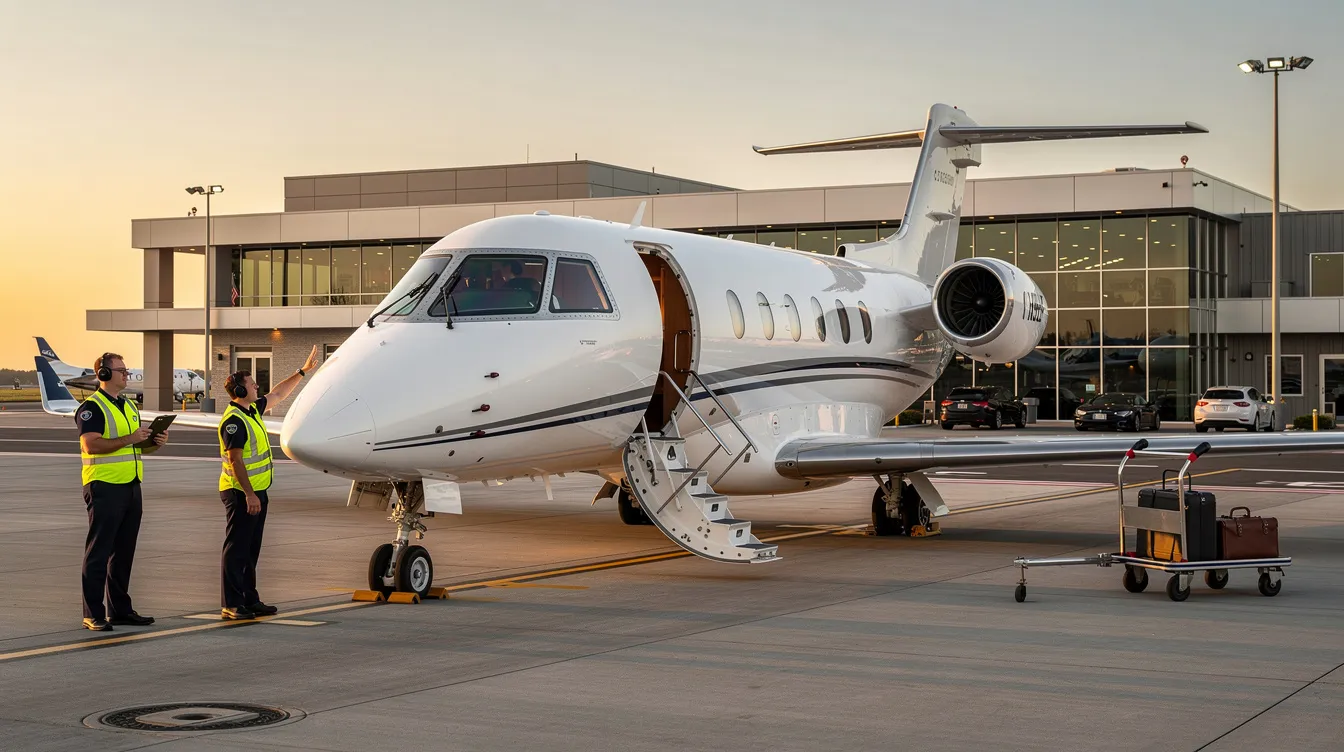
Very light jets (VLJs) and light jets are small, fuel-efficient aircraft built for regional missions. Very light jets typically seat 4 to 6 passengers, while light jets carry 6 to 8 on routes up to about 1,800 nautical miles. Light jets can fly 1,000 to 1,800 nautical miles, making them suitable for most domestic legs.
Concrete aircraft type examples:
HondaJet HA-420 (first delivery 2015): over-the-wing engine mounts, seats up to 6.
Cessna Citation M2 (first delivery 2013): VLJ class, popular for owner-operators.
Cessna Citation CJ3+ (first delivery 2014): light jet with coast-to-coast range in favorable conditions.
Embraer Phenom 300E (updated 2020): the best-selling light jet in the world for several consecutive years.
For more on compact aircraft options, see Jettly's guide to the best small jet aircraft.
Ideal missions include regional business trips (New York to Boston, London to Geneva), weekend getaways, or day-return flights where passengers want to avoid major hubs. These jets access shorter runways and secondary airports that narrowbody airliners cannot use, and their hourly charter rates run lower than midsize or heavy jets. A traveler using Jettly might filter for light jets when searching for cost-effective, sub-1,500 nm trips with a small group.
Midsize and super-midsize jets fill the gap between light jets and large-cabin aircraft. Travelers choose them for coast-to-coast or intra-Europe routes where they want more space, a stand-up cabin, and a full lavatory. Midsize jets usually accommodate 7 to 9 passengers. Super-midsize jets have ranges of 3,000 to 3,600+ nautical miles.
Examples in this segment, which are built by leading private plane manufacturers, include:
Cessna Citation Latitude: midsize, seats 9, range about 2,700 NM.
Embraer Praetor 600: super-midsize, range about 3,900 NM with intercontinental capability.
Gulfstream G280: super-midsize, range about 3,600 NM, known for steep-approach certification giving access to challenging airports like London City.
Bombardier Challenger 350/3500: super-midsize, seats 8 to 10, range about 3,200 NM.
Cabin features include stand-up headroom, Wi-Fi, work tables, and a small galley. These jets suit corporate roadshows and family vacations alike. A Toronto to Vancouver flight (~2,100 NM) fits comfortably within a super-midsize jet's range. New York to Dallas (~1,370 NM) works well in a midsize. London to Marrakesh (~1,600 NM) is another natural fit.
These jets require specific type rating training for pilots and are certified under transport-category rules similar to commercial airliners. For a cost overview, see Jettly's private jet charter costs page.
Heavy jets and ultra-long-range business jets are large-cabin aircraft carrying 10 to 14+ passengers on routes up to 7,700 nautical miles nonstop. Heavy jets can carry 10 to 14+ passengers. Ultra-long-range jets can fly up to 7,700 nautical miles nonstop, covering city pairs like New York to Tokyo or London to Singapore without a fuel stop.
Flagship models include:
Gulfstream G650ER: range of about 7,500 NM, seats up to 19, first delivery in 2014.
Gulfstream G700: range of about 7,500 NM, largest cabin in the Gulfstream lineup, entering service in 2022.
Bombardier Global 7500: range of about 7,700 NM, four distinct cabin zones, first delivery in 2018.
Dassault Falcon 8X: range of about 6,450 NM, trijet design for redundancy, first delivery in 2016.
Interiors on these jets feature multiple cabin zones, lie-flat beds, conference areas, advanced noise reduction, and controlled humidity and pressure systems designed to reduce jet lag. Optional services like in-flight catering for private jets can further customize the onboard experience. Common missions include intercontinental business travel, global tours, and high-security government or corporate transport.
Jettly's platform shows real-time availability and instant pricing for these aircraft types, letting travelers compare an ultra-long-range jet against a heavy jet with one fuel stop for the same route, or evaluate the best private planes for families when comfort and cabin layout are priorities.
Propeller aircraft cover a broad spectrum. General aviation encompasses a wide variety of smaller aircraft used for private flying and flight training, and propeller-driven planes make up the majority of that fleet.
Piston aircraft use internal combustion engines, and these piston-engine transports are central to personal flying and flight training. Piston engines are commonly used in small single-engine aircraft for flight training and recreation. The Cessna 172, the most-produced aircraft in history with over 44,000 built, is the standard trainer, and planes like it are among the most common training aircraft. The Cirrus SR22 offers a whole-airframe parachute system and is popular among recreational pilots. Many piston-engine transports capable of carrying 2 to 4 passengers are used for recreation, personal travel, and instruction. They are aircraft intended for training and short personal trips.
Turboprop planes are jet engine transports rated for medium altitudes and speeds, where turboprop engines provide efficiency at medium altitudes and speeds, and are popular for regional commuter flights. Examples include the Pilatus PC-12 (single-engine, seats 6 to 9, range about 1,800 NM), the Beechcraft King Air 350 (multi-engine propeller aircraft, twin-engine, about 1,800 NM range), and the De Havilland Canada Dash 8 (regional airline service, 37 to 90 seats). Turboprops operate from shorter or unpaved runways with lower fuel burn than jet aircraft at similar distances.
Utility and special-role propeller planes handle skydiving, medical evacuation, cargo in remote areas, and agricultural spraying. Agricultural aircraft are specialized for crop dusting and land management tasks. Some of these are available via on-demand charter. Passengers choosing turboprops through Jettly trade a modest speed reduction for cost savings and access to smaller regional airports.
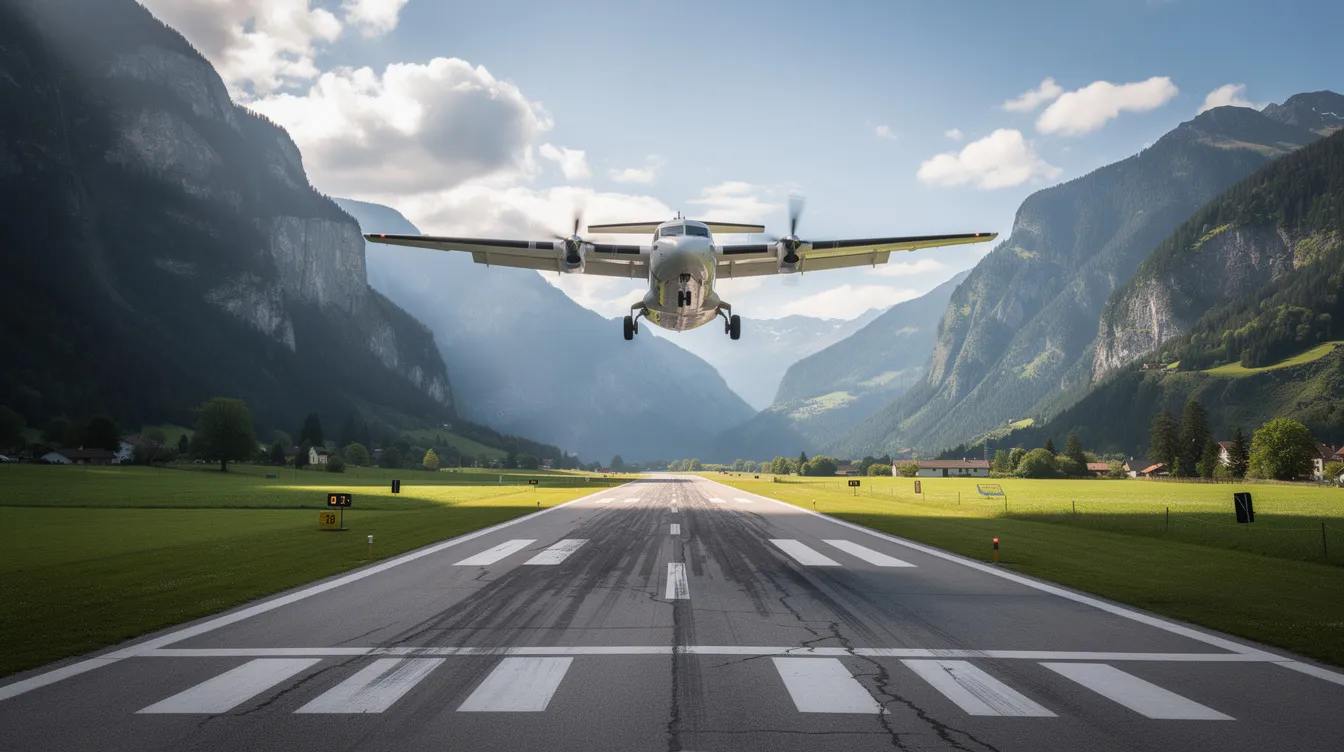
Aircraft are classified based on engine type, including piston, turboprop, jet, and electric. Each engine type suits a different operating environment and mission distance.
Not all civil aircraft are fixed-wing. Some rely on rotors or buoyant gases, serving niche missions in civil aviation.
Rotorcraft include helicopters and autogyros using rotating blades for lift. Rotorcraft generate lift using rotating blades, allowing them to hover, take off vertically, and land in confined spaces. This makes them ideal for city-center landings, offshore oil platforms, search-and-rescue operations, and medical transport. Conventional aircraft with fixed wings cannot match a helicopter's ability to access rooftops or unprepared landing zones.
Lighter-than-air aircraft use buoyancy to achieve flight. Hot air balloons carry passengers for sightseeing. Blimps and modern airships serve advertising at sporting events and, in some cases, atmospheric research. Their speed and payload remain limited compared with powered aircraft.
Gliders and sailplanes are unpowered aircraft relying on air currents for lift. Recreational pilots and competitive soaring pilots use gliders to ride thermals and ridge lift for sustained flight covering hundreds of kilometers without an engine. Some gliders are capable of performing aerobatic flight and limited aerobatic maneuvers.
Seaplanes are designed to take off from and land on water, crucial for operations in remote areas without paved runways. Amphibious aircraft can operate on both land and water, advantageous for rescue and transport operations. Aircraft can be classified according to their takeoff and landing capabilities, such as landplanes and seaplanes, and some models, known as flying boats, have hull-shaped fuselages for water operations.
Powered lift aircraft can take off vertically and transition to forward flight. The FAA recently formalized the powered lift category to accommodate emerging air taxi and eVTOL designs, a development that may reshape low-speed flight and urban air mobility.
While these aircraft categories are less common in premium passenger charter, they round out the landscape of aircraft types recognized in civil aviation.
"Aircraft category," "aircraft class," and "aircraft type" are formal regulatory concepts used by the Federal Aviation Administration and EASA. Airplanes are classified by regulatory bodies using a hierarchy of categories, classes, and types. Serial classifications help explain what an airplane is designed to do and how it operates.
Aircraft category is the broadest level: airplane, rotorcraft, glider, lighter-than-air, powered lift. The airplane category includes everything from Cessna 172s to Boeing 777s.
Aircraft class is a subdivision within a category. For airplanes, classes include single-engine land, multi-engine land, single-engine sea, and multi-engine sea. For rotorcraft, the class might be helicopter vs. gyroplane. These appear on a pilot's license. For further reading, see Jettly's guide to aircraft class.
Aircraft type refers to a specific make and model — "Gulfstream G650ER," "Boeing 737-800," or "Embraer Phenom 300." Pilots must hold a type rating for aircraft over 12,500 lbs maximum takeoff weight or any turbojet-powered aircraft.
Military aircraft follow separate classification schemes, including mission roles used by the Air Force for bombers, fighter jets, and transport planes. Fighter aircraft are designed for air-to-air combat and air superiority. Bombers carry heavy payloads to attack ground targets. Transport planes move troops and cargo for military operations. Military aircraft must withstand hostile environments and damage. Military aircraft modified for civilian use sometimes enter the general aviation fleet, though this is uncommon. Stealth aircraft and combat aircraft remain outside the civil aviation framework. For more on military types, see Jettly's overview of types of military jets.
All aircraft offered on Jettly are operated by properly certified air carriers with appropriately type-rated crews, following national and international safety rules.
Aircraft certification is the process by which regulators approve a design, each individual aircraft, and ongoing operations to ensure airworthiness. The FAA classifies airplanes into various categories like normal, utility, and aerobatic for regulatory purposes. The normal category covers most general aviation; the utility category allows some limited aerobatic maneuvers; aerobatic flight certification permits full aerobatic maneuvers.
Commercial airliners and larger business jets are certified under transport-category standards (FAA Part 25, EASA CS-25), the most stringent tier. These standards mandate:
Structural load factors and fatigue testing
Redundant flight control system design
Fire suppression in cargo and engine compartments
Evacuation demonstrations for passenger aircraft
Two-pilot crew requirements
Beyond baseline certification, many charter operators pursue third-party safety audits. Programs like ARGUS, Wyvern, and IS-BAO (International Standard for Business Aviation Operations) assess operational safety culture, crew training records, maintenance oversight, and incident history.
Maintenance schedules, crew flight hours limitations, and operational procedures are all tied to the aircraft category and type. Legitimate charter marketplaces list only aircraft that meet regulatory and insurance criteria. An aircraft's weight, performance, and systems dictate which maintenance intervals apply and how many flight hours a crew can log per duty cycle.
Aviation contributes roughly 2 to 3% of global CO2 emissions. Fuel efficiency varies across aircraft types: turboprop planes burn less fuel per passenger-mile on short sectors than jet engine aircraft, while modern aircraft like the Boeing 787 and Airbus A350 cut fuel burn per seat by about 20 to 25% compared with the widebodies they replace. According to IATA, the global widebody fleet averages about 18 years in age, while the entire aircraft fleet averages 14.8 years; older aircraft consume more fuel.
Newer commercial airliners and business jets use efficient turbofan engines, advanced aerodynamic lift designs, and lightweight composite materials. The Embraer Praetor 600 and Gulfstream G700 both incorporate these advances. Additional thrust engines paired with aerodynamic improvements continue to push efficiency gains in aircraft manufactured after 2015.
Electric aircraft and hybrid-electric regional planes are under development for routes under 500 NM. The FAA's recognition of the powered lift category opens the door for eVTOL air taxis designed for urban air mobility and short-range point-to-point trips. No large commercial electric jet engine transports capable of long-range operations have been certified as of 2026, but several regional electric aircraft are in flight testing.
In private aviation, sustainable aviation fuel (SAF) is gaining traction. Carbon offset programs and optimized flight planning reduce unnecessary fuel consumption. Conscious travelers can inquire through Jettly about modern aircraft types with lower emissions or carbon-offset options when booking flights, or consider Jettly as a NetJets alternative that emphasizes flexibility and efficiency.
The ideal aircraft type depends on distance, passenger count, luggage volume, airport options, and desired onboard experience. The operational range of an airplane depends on its model, payload, fuel, and operating conditions, so real mission range is often 10 to 20% below manufacturer brochure numbers. Flight range categories include short-range, medium-range, long-range, and ultra-long-range airplanes.
Simple range-based guidance:
|
Distance |
Recommended Category |
Example Route |
|---|---|---|
|
Under 500 NM |
Turboprop or Very Light Jet |
Los Angeles to Las Vegas (~230 NM) |
|
500–1,500 NM |
Light Jet or Midsize Jet |
New York to Miami (~1,090 NM) |
|
1,500–3,500 NM |
Super-Midsize Jet |
Toronto to Vancouver (~2,100 NM) |
|
3,500+ NM |
Heavy or Ultra-Long-Range Jet |
New York to London (~3,450 NM) |
Scenario examples, which also relate to broader decisions about affordable aeroplane rent options, include:
New York to Miami family vacation: A light jet handles the ~1,090 NM nonstop with 6 passengers and luggage, fitting well with many of the best private planes for families. Total door-to-door time: about 4 hours, compared with 6+ hours on commercial.
Los Angeles to Las Vegas weekend: A very light jet or turboprop covers the ~230 NM leg in under an hour, accessing Henderson Executive Airport instead of crowded McCarran, and illustrates many of the principles in Jettly's guide on how renting a plane works.
Toronto to Vancouver day-return business trip: A super-midsize jet covers the ~2,100 NM each way with a stand-up cabin and conference seating for productive travel, comparable in comfort to major providers like NetJets but available on an on-demand basis.
Jettly's digital platform filters results by aircraft class, range, and cabin size, delivering instant pricing so users can compare multiple aircraft types for the same route, and includes an airport locator tool to match your trip with convenient departure and arrival fields. Learn more about the booking process in Jettly's guide on how to charter a plane.
Factor in airport convenience, meeting schedules, and total door-to-door time rather than just cruise speed when selecting a plane. The closest airport to your final destination may save more time than a faster jet flying into a distant hub.

These questions cover practical concerns travelers have when navigating different aircraft categories, private jets versus commercial flights, and safety or cost issues. Each answer is self-contained.
Safety depends more on aircraft certification, maintenance rigor, and operator standards than on whether the plane is a turboprop, light jet, or widebody airliner. Modern transport-category jets, both commercial airliners and larger business jets, are designed with multiple redundancies in flight controls, hydraulics, and electrical systems. They must meet strict regulatory benchmarks before carrying a single passenger.
Private charter flights arranged through reputable platforms like Jettly use certified operators following the same or higher safety standards as scheduled airlines. Many operators hold third-party safety audits from ARGUS, Wyvern, or IS-BAO, adding another layer of verification beyond government requirements.
Hourly charter rates rise from turboprops through ultra-long-range jets. A turboprop may charter for roughly $2,000 to $2,500 per hour, while a light jet runs about $3,000 to $3,600. Midsize jets fall in the $3,300 to $4,500 range. Heavy and ultra-long-range jets reach $7,000 to $14,000+ per hour, reflecting higher fuel consumption, crew costs, and cabin size. Use Jettly's jet card flight cost estimator or general charter cost estimator to compare pricing for a given route across categories.
Costs also include positioning fees (if the aircraft must fly empty to reach you), landing fees, and crew expenses. Travelers who fly frequently may compare on-demand pricing with jet card programs. Jettly's platform shows instant pricing across multiple aircraft categories for a given route, making it straightforward to compare options.
Many private jets, especially turboprops, very light jets, and light jets, can operate from shorter runways and regional airports that large commercial airliners cannot use. The Embraer Phenom 300E, for example, needs roughly 3,200 feet of runway; a Boeing 737 needs 6,000 to 8,000+ feet.
Benefits include reduced ground congestion, closer proximity to final destinations, and shorter door-to-door travel times for travelers on tight schedules. Through options like crowdsourced private jet flights and shared empty seats, Jettly users can also lower costs while selecting preferred departure and arrival airports to see which aircraft categories can serve those fields.
Travelers do not need formal knowledge of aircraft categories or classes to book a private flight. The platform and operators handle all regulatory details, from type ratings to airworthiness compliance, and frequent flyers can simplify bookings further through private jet memberships.
Understanding basic differences between turboprops, light jets, and heavy jets helps customers align comfort, cost, and range expectations. Travelers or prospective pilots may also come across these categories while researching flight training at Epic Flight Academy. Jettly's filters and support channels guide users who are unsure which aircraft type best matches their route and passenger needs, and resources on how to get a seat on a private jet easily make the process more accessible.
Larger aircraft types (midsize, super-midsize, heavy jets) offer more baggage volume and weight allowance than very light or light jets. A Citation M2 may hold 3 to 4 small bags; a Challenger 350 can accommodate 8+ large suitcases plus ski bags or golf clubs.
Some turboprops, like the Pilatus PC-12, offer generous cargo doors and flexible cabins, making them ideal for bulky items on shorter routes. For more detail on how many passengers and bags different categories can accommodate, see Jettly's guide on how many passengers a private jet can carry. Confirm luggage requirements during the quoting process on Jettly so the selected aircraft type can accommodate all passengers and bags safely.
Ready to experience private travel on your terms? Explore flight options or request a quote at jettly.com.
Understanding the different types of planes in civil aviation empowers travelers to choose the right aircraft for their specific needs, balancing factors like range, passenger count, comfort, and cost. Whether flying on a commercial airliner, a turboprop, or a private jet, knowing the distinctions helps optimize travel plans for efficiency and convenience.
Jettly’s platform offers seamless access to a wide range of aircraft types with instant pricing and flexible booking options. To learn more about the business jet categories, explore detailed widebody airliners, or understand how to charter a plane, visit Jettly’s resources. Travelers can also book through vetted operators such as Dexter Air Taxi within Jettly’s network. Ready to experience private travel on your terms? Explore flight options or request a quote at jettly.com.
Share this post:
Jay Franco Serevilla
Oct 23, 2026
|
5
min read
Discover tips and trends in the industry.

5
min read
Helidosa Aviation Group: Private Jet Charter, Safety Insights, and Alternatives
Helidosa Aviation Group is a leading private aviation operator in the Dominican Republic, offering a range of services including private jet charters and helicopter tours. Established in 1992, the company has expanded its fleet and services to cater to leisure and business travelers across the Caribbean and Americas. While Helidosa boasts a strong safety record, it has faced incidents that travelers should consider when booking.
Read More
5
min read
Jet Number: How Private Jet Tail Numbers, Registration, and Tracking Really Work
Every private jet has a unique jet number, also known as a tail number, which serves as its identification in the aviation world. This alphanumeric code is crucial for air traffic control, legal records, and flight tracking, ensuring safety and compliance. Understanding jet numbers can enhance the private jet booking experience, providing travelers with essential information about the aircraft.
Read MoreStay updated with our latest insights and tips to elevate your journey with us.
MEMBERSHIPS AND ASSOCIATIONS



Disclaimer: Jettly operates as a charter broker, offering access to a global digital jet charter marketplace. Jettly is not a direct air carrier and does not own or operate aircraft. All advertised flights are conducted by third-party air carriers that are fully licensed and hold the appropriate Part 135 or Part 121 certifications issued by the Federal Aviation Administration (FAA) or equivalent regulatory authorities under U.S. or foreign law. Jettly complies fully with the U.S. Department of Transportation's Part 295 and Part 298 Charter Broker regulations. Jettly does not carry additional liability insurance. Passengers are covered by aircraft operator insurance. TICO: 50023770


