


Login
Get Instant Pricing On 23,000+ Aircraft

>
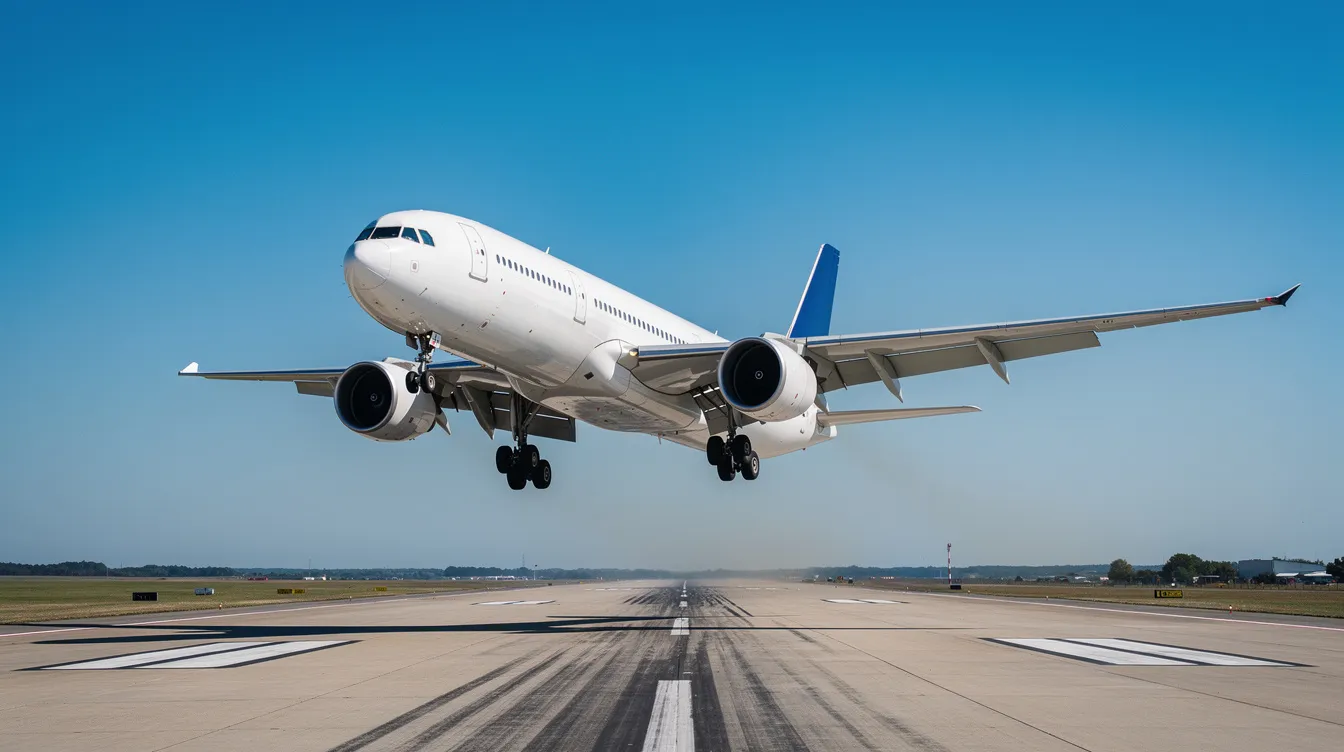
The Boeing 777 family spans operating empty weights from roughly 134 tonnes for the baseline 777-200 up to about 171 tonnes for the 777-300ER, with maximum takeoff weight ranging from about 545,000 pounds to 805,000 pounds depending on the variant.
The 777-200ER has a maximum takeoff weight of 656,000 lb, the 777-300ER reaches approximately 775,000 lb (351,530 kg), and the upcoming 777X pushes even higher.
The weight of Boeing 777 variants directly affects range, fuel burn, runway length requirements, airport compatibility, and cargo capacity, all of which shape airline economics and route planning.
For private charter clients, understanding wide-body commercial aircraft weight helps frame comparisons with lighter, more flexible business jets. Jettly, a digital private jet charter platform, specializes in matching travelers with aircraft that balance range, payload, and airport access for tailored missions.
The Boeing 777 varies significantly by variant in weight and range: operating empty weight (OEW) runs from about 134 tonnes for the 777-200 to roughly 171 tonnes for the 777-300ER, while maximum takeoff weight (MTOW) spans from about 545,000 pounds to 805,000 pounds. These figures influence how far the airplane can fly, how much it can carry, and which airports it can serve. Known as the "Triple Seven," the Boeing 777 is the world's largest twinjet and was Boeing's first fly-by-wire commercial aircraft. It features the largest-diameter turbofan engines of any aircraft and has been a staple of international aviation since its first rollout on April 9, 1994, with entry into service on June 7, 1995.
The Boeing 777 family offers a range of models with seating capacities typically from 314 to 451 passengers. Its range varies from about 5,235 nautical miles for the 777-200 to as much as 9,380 nautical miles for newer variants. Notably, the 777-200 has a range of 5,240 nautical miles, the 777-300ER a maximum range of 7,370 nautical miles, and the 777-200LR can fly up to 8,555 nautical miles. The 777-300, at 242.4 feet long, was the longest airliner produced at its introduction. The latest 777-9 variant can carry over 400 passengers, combining size and efficiency.
This article breaks down OEW, MTOW, payload limits, and fuel capacity for major variants, including the 777-200, 777-200ER, 777-200LR, 777-300, 777-300ER, and the 777X program launched in November 2013. It also explains how weight affects range, airport access, and airline economics.
The MTOW of a Boeing 777 varies by variant, and operational conditions such as runway length and temperature may impose lower allowable takeoff weights on specific flights. Fuel burn is a primary factor reducing weight during flight, while payload including passengers and cargo significantly impacts takeoff weight. For example, a fully loaded 777-300ER weighs about 175 U.S. tons at takeoff, or roughly 351.5 tonnes, with fuel, passengers, and cargo combined.
For frequent flyers, corporate executives, families, and private charter clients comparing wide-body commercial aircraft with private jets, these weight figures help judge carrying capacity, nonstop range, and practical travel options. Jettly operates as a digital private jet charter platform and assists clients in evaluating private charter aircraft that balance range, payload, and airport access for tailored missions.
Every weight figure published for the Boeing 777 relies on standard industry terminology. Before diving into variant-specific numbers, here are the key definitions.
Operating Empty Weight (OEW): The weight of the aircraft with standard equipment, crew, and fluids but no payload or usable fuel. OEW includes the airframe, engines, hydraulic systems, avionics, and standard furnishings. It does not include passengers, baggage, cargo, or trip fuel.
Maximum Taxi Weight (MTW): The highest certified weight for ground movement, slightly above MTOW to account for fuel burned during taxi.
Maximum Takeoff Weight (MTOW): The structural limit for takeoff. This is the combined weight of OEW, payload, and fuel that the aircraft is certified to carry at liftoff. The maximum takeoff weight does not change during flight, even as fuel burns off.
Maximum Landing Weight (MLW): The highest weight allowed at touchdown. If the aircraft is above MLW, it must burn or dump fuel before landing.
Maximum Zero Fuel Weight (MZFW): The maximum combined weight of OEW plus payload, excluding usable fuel. This protects the wing root from excessive bending loads.
Fuel Capacity: The total usable fuel the aircraft can carry, which on long-haul flights can represent a very large share of total weight.
Payload, including passengers and cargo, significantly affects the aircraft's takeoff weight. The maximum allowable weight for a particular takeoff may be lower than the certified MTOW due to operational conditions like runway length, temperature, or obstacle clearance.
As a quick example: a 777-300ER with an OEW of about 168 tonnes might add 45 tonnes of passengers and baggage, 15 tonnes of belly cargo, and 120 tonnes of fuel, bringing the total to roughly 348 tonnes—well within its 351.5-tonne MTOW. For ultra-long-range missions, airlines and VIP operators may instead select the Boeing 777-200 LR, which trades some payload for exceptional nonstop range.
The Boeing 777-200 is the first generation of the Triple Seven family. The first flight occurred on June 12, 1994, and Boeing delivered the first 777 to United Airlines on May 15, 1995. Designed for medium to long-haul routes, it quickly gained popularity with major airlines worldwide.
Typical weight figures for the 777-200 baseline:
|
Metric |
Approximate Value |
|---|---|
|
OEW |
134–138 tonnes (295,000–305,000 lb) |
|
MTOW |
242–247 tonnes (533,000–545,000 lb) |
|
MLW |
201–208 tonnes (445,000–460,000 lb) |
The 777-200 has a maximum takeoff weight of 545,000 lb in its highest gross-weight configuration. Engine options included the GE90, Pratt & Whitney PW4000, and Rolls-Royce Trent 800, each with thrust ratings from 77,200 to 98,000 lbf, introducing small variations in certified weights and performance.
A typical two-class cabin layout accommodates roughly 314–320 passengers. When dispatchers calculate takeoff weight, they model each passenger plus baggage at approximately 100 kg (220 lb), so a full cabin adds around 31–32 tonnes before any belly cargo is loaded.
Although less common today than extended range variants, the 777-200's comparatively lower weight makes it suitable for regional wide-body missions where runway length is limited. Eight major airlines originally ordered the type, establishing a fleet presence that shaped Boeing's subsequent development of longer-range models.
The 777-200ER is the increased-range evolution of the baseline model. It first flew on October 7, 1996, and entered service with British Airways in February 1997. This model is trusted for long-haul transatlantic and transpacific flying.
Key weight figures for the 777-200ER:
|
Metric |
Approximate Value |
|---|---|
|
OEW |
138–142 tonnes (304,000–313,000 lb) |
|
MTOW |
~297 tonnes (656,000 lb) |
|
MLW |
213–214 tonnes (470,000–475,000 lb) |
|
MZFW |
~195 tonnes (430,000 lb) |
The 777-200ER has a maximum takeoff weight of 656,000 lb and a range of 7,065 nautical miles. The extended range results from a higher MTOW and greater fuel capacity of about 45,220 US gallons, roughly 137 tonnes of usable fuel at full tanks.
Higher structural weight in wings and landing gear supports these loads. Each main landing gear assembly features six wheels arranged in a triple-tandem configuration, distributing the aircraft's weight during taxi, takeoff, and landing.
Airlines configure the 777-200ER in three-class or denser two-class layouts. This model remains active on "thin" long routes today, although many carriers have shifted to the 777-300ER and 787.
The 777-200LR, nicknamed the Worldliner, pushes twin-engine range capability boundaries. In November 2005, it set a world record for the longest nonstop commercial flight, flying 11,664 nautical miles eastbound from Hong Kong to London. It has a maximum design range of 8,555 nautical miles.
Weight characteristics:
|
Metric |
Approximate Value |
|---|---|
|
OEW |
145–152 tonnes (320,000–335,000 lb) |
|
MTOW |
~347 tonnes (766,000 lb) |
|
MLW |
~237 tonnes (523,000 lb) |
Higher OEW compared to the 777-200ER reflects reinforced structure, optional auxiliary fuel tanks, stronger landing gear, and additional systems for flights exceeding 16 hours. At maximum range, fuel load can exceed 160 tonnes, limiting payload under the 347-tonne MTOW ceiling.
This creates a trade-off: on ultra-long sectors, fuel weight consumes most of the MTOW, restricting passengers and cargo.
For context, a Gulfstream G650ER chartered through Jettly has an MTOW of roughly 45 tonnes and carries 19 passengers over 7,500 nautical miles. The 777-200LR carries far more passengers but lacks the smaller-airport flexibility of private jets, whose passenger capacity by jet size ranges from a few travelers on light jets to large groups on VIP airliners.
The 777-300 is the stretched version of the early 777 family. It made its first flight on October 16, 1997, and entered service on May 27, 1998, with Cathay Pacific. At 242.4 feet long, it was the longest airliner produced at the time.
Indicative weight figures:
|
Metric |
Approximate Value |
|---|---|
|
OEW |
150–156 tonnes (331,000–344,000 lb) |
|
MTOW |
~299 tonnes (659,000 lb) |
|
MLW |
224–233 tonnes (495,000–515,000 lb) |
The fuselage stretch adds structural weight and requires higher-thrust engines and reinforced landing gear but increases seating capacity by roughly 20% over the 777-200. In high-density configurations exceeding 450 passengers, passenger and baggage weight can approach payload limits on shorter routes.
The 777-300 features a blade-shaped tail cone reducing aerodynamic drag and a cabin width of about 19.5 feet (5.87 m), comparable to a 747.
Many airlines later preferred the 777-300ER for very long sectors due to higher MTOW and efficient GE90-115B engines, despite the 300ER's slightly higher empty weight. All Nippon Airways operated the 777-300 on dense domestic routes where extra capacity was valued, while shorter-haul missions are often assigned to narrow-bodies like the Boeing 737-800 with lower weight and range.
The 777-300ER is the most widely produced long-haul variant. It first flew on February 24, 2003, was certified in 2004, and the first delivery went to Air France on April 29, 2004.
Core weight figures:
|
Metric |
Approximate Value |
|---|---|
|
OEW |
167–171 tonnes (368,000–377,000 lb) |
|
MTOW |
351.5 tonnes (775,000 lb) |
|
MLW |
251–252 tonnes (554,000 lb) |
|
MZFW |
~237 tonnes (524,000 lb) |
|
MTW |
~345.6 tonnes (762,000 lb) |
A fully loaded 777-300ER weighs about 175 U.S. tons at takeoff, roughly 351.5 tonnes. It can carry up to 392 passengers in a two-class layout, with most airlines opting for three-class configurations seating 300–365 passengers.
The 777-300ER's maximum range is 7,370 nautical miles, powered by two GE90-115B engines, among the most powerful turbofans ever built. It burns about 17,300 lb of fuel per hour at cruise, consuming over 100 tonnes on a 14-hour flight.
Extended raked wingtips improve aerodynamic efficiency, reducing drag and environmental impact. Post-2010 improvements include lighter materials and refined wing design, lowering fuel burn and OEW.
Airlines like Emirates, Qatar Airways, Cathay Pacific, and Air France rely on the 777-300ER for trunk routes such as Dubai–Sydney, London–Singapore, and New York–Hong Kong. Its high payload, long range, and heavy jet capability set the benchmark for wide-body aircraft.
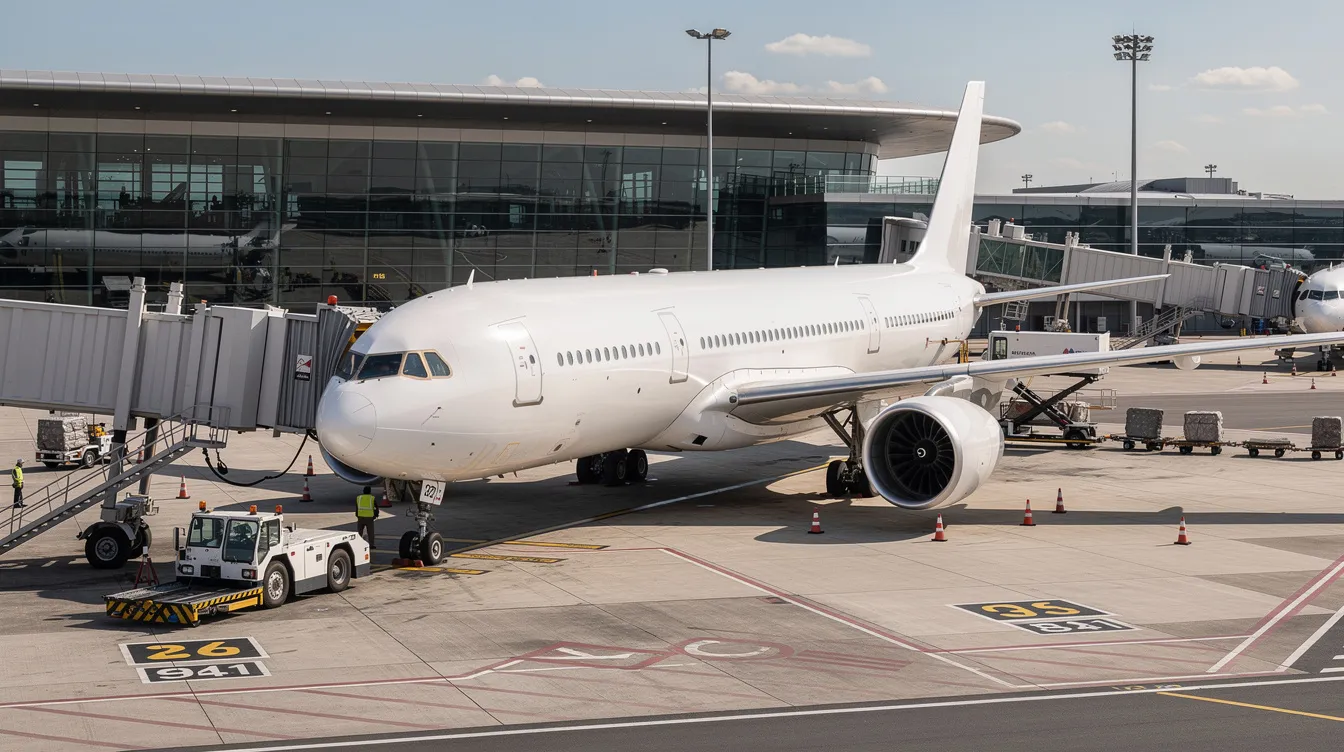
The 777F is the dedicated cargo version derived from the 777-200LR platform. It rolled out on May 23, 2008, with first delivery to Air France on February 19, 2009.
|
Metric |
Approximate Value |
|---|---|
|
OEW |
145–150 tonnes (318,000–331,000 lb) |
|
MTOW |
~347 tonnes (766,800 lb) |
|
Structural Payload |
~102–107 tonnes (225,000–235,000 lb) |
The freighter's cabin is optimized for pallets and containers rather than passenger fittings, resulting in a different empty weight distribution, though MTOW is similar to the 777-200LR. The main deck cargo door and reinforced floor allow heavy freight loads.
Operators balance payload against fuel for intercontinental missions. On near-maximum fuel routes, cargo may be below structural payload limits; on shorter routes, full payload capacity is achievable.
While Jettly primarily arranges passenger charters, some clients require dedicated freighter services for urgent or oversized cargo. The 777F serves as a reference for how commercial airline charters scale compared with smaller cargo-friendly business jets and turboprops.
Launched in November 2013, the 777X program aims for a new generation of Triple Sevens with improved fuel efficiency and range. The first 777-9 rolled out in March 2019 and flew in January 2020. Entry into service is expected in the late 2020s.
Projected weights:
|
Metric |
777-9 (Projected) |
777-8 (Projected) |
|---|---|---|
|
MTOW |
~351–353 tonnes (775,000–780,000 lb) |
~351 tonnes (up to 805,000 lb for 777-8F) |
|
OEW |
Mid-to-high 170-tonne range |
Slightly lower than 777-9 |
|
Passengers |
Over 400 (two-class) |
~350 (two-class) |
The 777-9 seats over 400 passengers with a range of 8,200 nautical miles, extending single-airplane capability. It features composite wings with folding wingtips, a first for commercial aircraft, allowing use of existing airport gates despite larger wingspan.
Folding and raked wingtips improve lift-to-drag ratios, offsetting weight growth from a longer fuselage and new systems. Larger cabin windows and fly-by-wire controls mark a generational shift from earlier 777 designs.
Regulatory changes and updated safety requirements in the 2020s influenced structural design and certification timelines. Heavier 777X aircraft may offer denser premium cabins on ultra-long nonstop flights, but many travelers will still prefer the agility and flexibility of lighter private jets facilitated by Jettly.
Every Boeing 777 flight balances payload and range within MTOW limits. Adding payload reduces fuel capacity and thus range. To fly maximum range, airlines limit payload, sometimes leaving seats empty or offloading cargo.
Fuel burn reduces weight during flight. The 777-300ER burns about 17,300 lb (7.8 tonnes) per hour at cruise; a 14-hour flight consumes over 100 tonnes, significantly lowering weight by landing.
For example, a 777-300ER fully loaded with passengers and cargo may comfortably reach 5,000–6,000 nautical miles but must offload cargo or seats to approach its 7,370-nautical-mile maximum range.
Environmental factors such as hot-and-high airports and strong headwinds further limit takeoff weight and range.
For travelers, heavier loading means longer takeoff rolls and higher approach speeds, limiting airport options. Lighter aircraft, including private jets chartered through Jettly, face fewer constraints and access more airports closer to final destinations, often discovered using an airport locator tool that highlights suitable runways and facilities.
Aircraft weight determines runway length needed for safe takeoff and landing. A 777-300ER near its 351.5-tonne MTOW typically requires runways longer than 3,000 meters (9,800 feet) with pavement strength for heavy operations.
This confines 777 operations to major international hubs like London Heathrow, Dubai International, Los Angeles International, and Singapore Changi.
Landing weight limits add complexity. Returning to an airport shortly after takeoff may require fuel burn or dump if above maximum landing weight.
The 777's six-wheel main landing gear assemblies distribute weight to protect pavement and support heavy operations.
In contrast, lighter private jets like the Bombardier Global 7500 or Dassault Falcon 8X operate from runways as short as 1,800 meters, accessing secondary airports nearer city centers. This reduces total travel time, a key advantage for business travelers and families using Jettly.
The 777 family offers generous belly cargo capacity. The 777-300ER lower hold can accommodate dozens of LD3 containers or larger pallets, adding significant revenue on long-haul flights.
Standard LD3 containers provide about 4.2 cubic meters volume with light tare weight; PMC pallets offer larger volume per unit.
Cargo loading depends on density and route demand. Airlines may "cube out" (fill volume before weight limit) or "weigh out" (reach weight limit before volume fills).
On a fully loaded 777-300ER, planners might allocate 40–50 tonnes passenger weight and 15–20 tonnes belly cargo, balancing MZFW and MTOW limits. Increased fuel needs reduce cargo first.
For charter clients, business jets on Jettly carry less cargo by weight but benefit from lower total mass and faster turnarounds, valuable for urgent business or medical missions. Smaller aircraft such as the Cessna 207 can even operate from short or semi-prepared runways that are far beyond the capabilities of a 777.
Total weight is only half the story; distribution affects center of gravity and safe handling.
Load controllers assign passengers and cargo to maintain balance within certified limits.
Fuel burn shifts weight distribution during flight; flight management systems adjust accordingly.
The 777's fly-by-wire controls and envelope protection maintain safe handling across weight and balance variations.
Pilots use conventional yoke controls, with computers preventing inputs exceeding structural or aerodynamic limits.
Similar principles apply to private jets and charter aircraft. Jettly partners with certified Part 135 charter companies performing formal weight-and-balance calculations before every flight.
The 777, especially the 777-300ER and 777X, ranks among the heaviest twin-engine airliners.
|
Aircraft |
Approx. OEW (tonnes) |
Approx. MTOW (tonnes) |
Engines |
|---|---|---|---|
|
Boeing 777-300ER |
167–171 |
351.5 |
2 (GE90-115B) |
|
Boeing 747-400 |
178–183 |
~397 (875,000 lb) |
4 (various) |
|
Airbus A350-1000 |
145–150 |
~310 (683,000 lb) |
2 (Trent XWB) |
|
Boeing 787-10 |
~135 |
~254 |
2 (GEnx/Trent 1000) |
|
Boeing 767-300ER |
~90 |
~187 |
2 (various) |
The 777-300ER's MTOW of about 775,000 lb is below the older 747-400's roughly 875,000 lb but surpasses most other twin-engine wide-bodies.
Twin-engine designs like the 777 and A350 match four-engine jets in payload-range performance with lower structural and fuel weight, improving efficiency and emissions per seat.
The 787 family is lighter and more efficient per seat but optimized for smaller passenger loads and different routes, complementing rather than replacing 777 capacity. Some VIP and charter operators instead choose wide-bodies like the Boeing 767-300ER for long-range missions where airline-level capacity and luxury are required.
For travelers, heavier aircraft like the 777 offer economies of scale on trunk routes. Lighter aircraft, including private jets accessible through Jettly, offer flexibility and access to airports the 777 cannot use, often via a range of charter airlines and private operators that specialize in bespoke missions.
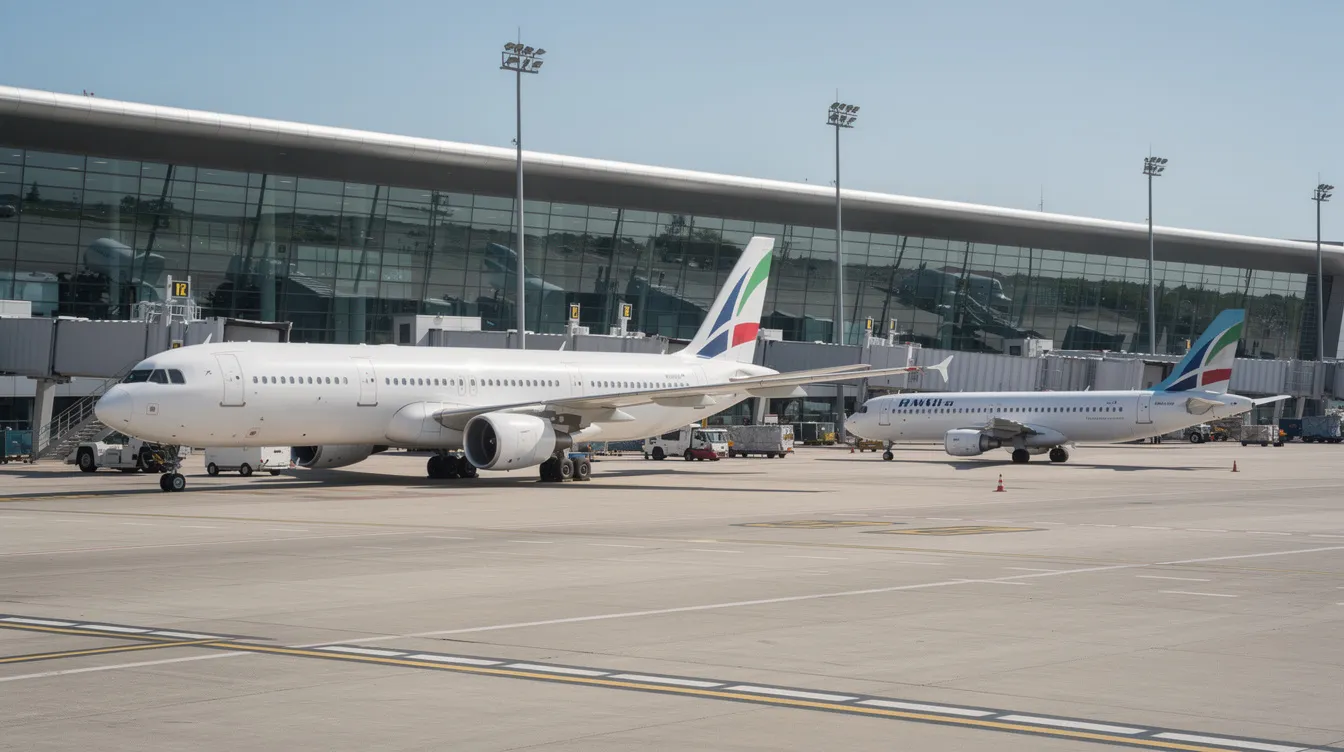
Aircraft weight drives key economic metrics: fuel burn, maintenance, airport fees, and revenue potential.
Each kilogram of structural weight on a 777-300ER adds recurring fuel cost over its lifetime. Reducing 500 kg via lighter interiors or wing refinements can save thousands of gallons of fuel annually across a fleet.
Airport charges and navigation fees scale with MTOW categories. A 777-300ER pays higher landing fees than narrow-body or midsize business jets. Overflight charges also use weight-based formulas, adding cost on long sectors.
Airlines optimize cabin layouts and baggage policies to manage operating weights. Denser seating increases revenue but raises takeoff weight and fuel burn, shaping ticket pricing and route profitability.
For private jet charter clients, economics differ. Jettly customers pay for the entire aircraft and operating costs but benefit from time savings, tailored schedules, and convenient airport access. Understanding how much a private jet costs, including ownership, leasing, and charter options, explains why most private travelers prefer right-sized business jets.
The Boeing 777 is a heavy, long-range wide-body airliner. Jettly's private charter marketplace mostly offers light, midsize, super-midsize, heavy, ultra-long-range jets, turboprops, and helicopters, comparable to the fleets operated by the best private jet charter companies worldwide.
The scale difference is dramatic. A heavy business jet like the Gulfstream G650 has an MTOW around 45–52 tonnes; a 777-300ER is nearly seven times heavier. This weight gap limits airport access: the G650 can land at thousands of airports worldwide, while the 777 requires a few hundred runways with adequate length and pavement strength.
Private jet charter focuses on smaller groups (4 to 14 passengers) flying from secondary airports, reducing total journey time. The 777 moves hundreds efficiently on trunk routes but cannot match the door-to-door speed of private charters, whose passenger capacities across jet categories are optimized for right-sized groups.
Some VIP airliner charters and government transports use 777-class platforms for large groups or special missions. Jettly can help clients decide between large airliners, smaller wide-bodies, or business jets based on weight, cost, and access. With over 20,000 aircraft and transparent pricing, Jettly simplifies booking the right aircraft.
Boeing 777 weights range from roughly 134 tonnes empty for the 777-200 to over 170 tonnes for the 777-300ER, with MTOW reaching 351.5 tonnes and beyond for the 777X. Each variant balances fuel, passengers, and cargo differently to serve routes from 5,235 to 9,380 nautical miles.
Weight influences runway needs, range, payload, pricing, cargo, and airport access. Airlines with large 777 fleets manage these variables on every flight.
For travelers and charter clients, understanding aircraft weight basics aids in choosing between scheduled long-haul flights and flexible private jets. Matching aircraft capability to mission needs produces better travel outcomes.
Ready to experience private travel on your terms? Explore flight options or request a quote at https://www.jettly.com or compare flexible private jet memberships that provide wholesale rates and priority access.
These FAQs address practical questions beyond technical details, focusing on real-world travel and charter scenarios.
A 777-300ER at or near maximum takeoff weight can reach about 351.5 tonnes (775,000 lb), roughly 175 U.S. tons. This includes aircraft structure, fuel, passengers, baggage, and cargo. Actual takeoff weight depends on route length, passenger count, and cargo load, often below structural max on shorter sectors.
On long intercontinental sectors, a 777-300ER may carry 100 to 145 tonnes of jet fuel. At a cruise burn rate of about 17,300 lb per hour, a 14-hour flight consumes roughly 110 tonnes. Fuel often represents 30–40% of total takeoff weight on longest routes, requiring careful payload management.
Each passenger plus baggage is modeled at about 100 kg (220 lb). Removing 100 passengers saves roughly 10 tonnes, aiding range and fuel efficiency. However, fuel and aircraft structure dominate total weight. Passenger weight is meaningful but not dominant.
The 777's high MTOW and landing weight require long runways—typically over 3,000 meters—and pavement rated for heavy aircraft with six wheels per main gear. Many regional or executive airports lack infrastructure for this size and weight. Light and midsize private jets, with MTOWs often below 20 tonnes, operate from shorter runways at thousands of additional airports.
Most private charters use smaller business jets and turboprops for groups of 4 to 14 passengers. However, airliner charters—including wide-bodies like the 777—can sometimes be arranged for large groups, events, or special missions. Jettly offers access to over 20,000 aircraft globally and helps clients evaluate whether a large airliner or a right-sized business jet best fits their needs. Visit https://www.jettly.com to explore options.
Understanding the weight of Boeing 777 variants is essential for grasping their operational capabilities and limitations. From the baseline 777-200 to the advanced 777X, weight directly influences range, payload, fuel efficiency, runway requirements, and airport accessibility. These factors shape airline route planning, economics, and passenger experience. While the 777 excels in transporting large numbers of passengers and cargo over long distances, its substantial weight necessitates specialized infrastructure and limits access to smaller airports.
For private travelers and charter clients, recognizing these weight dynamics highlights the contrast between heavy commercial aircraft like the Boeing 777 and lighter, more flexible business jets available through platforms like Jettly. By matching aircraft size and weight to mission needs, travelers can optimize convenience, cost, and travel time.
Ready to experience private travel on your terms? Explore flight options or request a quote at https://www.jettly.com. You can use tools like Jettly’s private jet charter cost estimator, compare jet card programs, or review a guide to affordable aeroplane rent to understand how aircraft weight and size affect pricing. If you’re evaluating a NetJets alternative, want to enhance your trip with in-flight catering for private jets, or simply seek affordable private jet charter for routes such as private jet charter in Kolkata, Jettly provides options ranging from traditional on-demand charter to crowdsourced shared flights and a wide network of charter airlines and private operators.
Share this post:
Jay Franco Serevilla
Aug 2, 2026
|
5
min read
Discover tips and trends in the industry.
5
min read
Nicest Private Jet: A 2026 Guide to the Pinnacle of Private Aviation
In 2026, the definition of the nicest private jet has evolved, focusing on ultra-long-range performance, refined design, and nonstop capabilities. This guide helps travelers and aviation enthusiasts understand the key features that distinguish top private jets, including models like the Bombardier Global 7500 and Gulfstream G700. With insights on aircraft categories and practical advice for selecting the right jet, readers can make informed choices for their private aviation needs.
Read More
5
min read
San Jose Private Jet Charter with Jettly
San Jose private jet charter services by Jettly offer a seamless travel experience for both business and leisure travelers. With access to over 20,000 aircraft and multiple airport options, Jettly ensures quick and efficient bookings, allowing travelers to maximize productivity and minimize travel stress.
Read MoreStay updated with our latest insights and tips to elevate your journey with us.
MEMBERSHIPS AND ASSOCIATIONS



Disclaimer: Jettly operates as a charter broker, offering access to a global digital jet charter marketplace. Jettly is not a direct air carrier and does not own or operate aircraft. All advertised flights are conducted by third-party air carriers that are fully licensed and hold the appropriate Part 135 or Part 121 certifications issued by the Federal Aviation Administration (FAA) or equivalent regulatory authorities under U.S. or foreign law. Jettly complies fully with the U.S. Department of Transportation's Part 295 and Part 298 Charter Broker regulations. Jettly does not carry additional liability insurance. Passengers are covered by aircraft operator insurance. TICO: 50023770


