



Login
Get Instant Pricing On 23,000+ Aircraft

>

There is no single magic day when all plane tickets suddenly drop in price. Instead, when airfare goes on sale depends on the route, season, demand, and how far in advance you book; the best deals often appear about 1 to 3 months before domestic trips and 2 to 8 months before international travel. For frequent flyers, business executives, high-net-worth travellers, families, and leisure travellers, comparing commercial airfare and private options through Jettly and knowing these booking windows can mean lower costs, more flexibility, and fewer last-minute compromises. This guide breaks down when fares tend to dip for domestic flights, international flights, and private jet charters, including empty-leg opportunities, day-of-week and holiday timing, common airfare myths, and tools—like price alerts and flexible-date searches—that help you buy smarter instead of guessing.
Airfare doesn't go on sale at a specific time or date. Airlines use dynamic pricing systems that adjust ticket prices thousands of times per day based on demand, competition, and how many seats remain in each fare bucket.
Book domestic flights 1 to 3 months before departure. The cheapest domestic flights typically appear 21 to 60 days out, with a sweet spot around 35 to 45 days. For example, a July 2026 Austin–Denver trip usually hits its low point in early June.
Book international flights 2 to 8 months ahead. Long-haul routes to Europe, Asia, or Africa often need 3 to 6 months of lead time; short-haul cross-border trips to Mexico or Canada can be booked 1 to 3 months out.
The cheapest days to fly are usually Tuesday, Wednesday, and Saturday, while Fridays and Sundays tend to be the most expensive days.
Private jet travel follows different patterns entirely. Empty leg flights—repositioning segments sold at discounted rates—can appear 24 to 72 hours before departure at 30 to 75% off standard charter cost. Private jets are priced per aircraft and mission, not per seat, and pricing through platforms like Jettly is transparent and instant.

Commercial airline tickets do not have a single on-sale moment. Revenue management systems adjust fares many times per day, opening and closing fare buckets as bookings fill and demand forecasts shift.
The lowest fare buckets appear first when airlines open a route's schedule. As those cheap flights sell, prices tend to rise into higher fare classes, and some travellers book late and pay more, which is one reason airlines keep higher fare classes available closer to departure. What most travellers perceive as a "sale" is typically one of three things:
Soft demand on a specific route, causing the airline to reopen lower buckets.
New competition on a city pair, triggering price matching.
Seasonal promotions (e.g., January sales for spring travel or Black Friday deals for winter routes).
Most visible airfare sales are limited to specific dates, routes, or travel windows. They often exclude peak periods like late June, July, and late December when demand is already strong.
Private jet charter works differently. Fares are based on aircraft type, schedule, repositioning needs, and operating costs. There is no weekly sale cycle, but one-off bargains like empty leg flights do appear when operators need to reposition aircraft.
The phrase "when airfare goes on sale" mostly describes the booking window where cheaper fares are most likely to appear. Here is the rough guidance:
|
Trip Type |
Optimal Booking Window |
|---|---|
|
Domestic (U.S./Canada) |
1–3 months before departure |
|
Nearby international (Mexico, Caribbean) |
1–3 months |
|
Long-haul international (Europe, Asia, Africa) |
3–6+ months |
|
Private jet charter |
Same-day to months in advance |
|
These windows shift for peak dates like school holidays, major events, and Christmas. |
Cheap flights on major U.S. routes-Los Angeles–New York, Chicago–Miami, Dallas–Denver-often appear 21 to 60 days before departure. Multiple studies, including Google Flights data, point to a sweet spot around 39 to 44 days out.
Concrete examples:
For a July 15, 2026 Austin–Denver trip, fares usually stabilise in early June. Buying by mid-June captures the low point.
For an October 2026 Seattle–San Diego flight, begin searching in August and buy airline tickets by mid-September.
Booking too early can lead to higher prices for flights. At 8 to 11 months out, only the highest fare classes are loaded. Discounts are released later as demand becomes clearer. On the other end, last-minute bookings in the final 7 to 14 days usually see steep increases, especially for nonstop routes.
Low-cost carriers may launch early promotional fares, but once the cheapest buckets sell, ticket prices rise sharply near departure.
International airline tickets often hit their lowest range 60 to 150 days before travel. Booking international flights 50 to 150 days in advance saves money on most routes.
Specific date examples:
New York–London in late June 2026: Best prices usually appear late February to April 2026.
Toronto–Cancún in February 2027: Check September and book by November 2026.
Regional breakdown:
Europe and North Africa: Often cheapest 3 to 4 months out.
Asia and Oceania: More like 4 to 7 months, especially around summer and Lunar New Year.
Caribbean and Mexico: 1 to 3 months, except peak holidays where earlier is safer.
International ticket prices typically rise sharply in the last 45 to 60 days. Waiting for a sale within 30 days of departure for long-haul economy rarely pays off and can leave travellers with poor times or long connections.
Private jet prices do not follow public sales like airlines. The best time to buy flights depends on aircraft availability, route efficiency, and traveller flexibility. Private jet charters can be booked same-day to months ahead.
For fixed-need charters—a board meeting in Houston, a wedding in Napa, a same-day round trip—book weeks or months ahead to secure the right aircraft type and preferred airports.
Empty leg flights are repositioning flights sold at discounted rates. They appear when an aircraft needs to fly back empty after dropping off passengers. Last-minute empty leg flights often appear 24 to 72 hours before departure, with discounts often in the 30 to 75% range off standard charter cost. Booking empty leg flights can yield significant savings if flexible on routes and times.
Jettly's marketplace shows real-time empty leg inventory and instant pricing. For frequent private flyers, membership and jet card programs can smooth out price spikes by providing more predictable hourly rates.

The popular advice about Tuesday at 3 p.m. being the magic hour is mostly outdated. Modern systems update fares continuously across all days.
Google's study found that booking on Tuesdays, Wednesdays, or Thursdays versus weekends yields only about a 1.9% difference in price. That is real but small compared with choosing the right booking window and travel dates.
Some datasets show Sunday bookings with modest savings for international economy, while Tuesday and Wednesday continue to show good availability after midweek fare adjustments. The best way to catch sudden fare drops is searching multiple days a week rather than waiting for one specific day.
Private jet quotes are unaffected by the day of the week. Pricing through Jettly is driven by schedule, demand, repositioning, and operating costs—not which day a traveller happens to request a quote.
When does airfare go on sale is really two questions: when to buy airline tickets and which days to fly for lower ticket prices.
Flying on Tuesdays and Wednesdays typically yields cheaper fares than weekends. The cheapest days to fly domestically are Tuesdays, Wednesdays, and Saturdays, which avoid business peaks (Monday and Friday) and weekend leisure peaks (Sunday).
Examples of the difference:
A Friday–Sunday round trip from Boston to Orlando in March 2027 can cost 20 to 40% more than a Tuesday–Saturday itinerary.
Shifting a New York–Miami flight from Sunday evening to Wednesday night or Monday morning may reduce the price significantly.
Early morning and late-night departures tend to have lower fares than mid-morning or late-afternoon peaks.
Jettly users can exploit off-peak slots by flying outside peak hours at busy hubs and choosing regional airports, which can lower private charter costs while saving time on the ground.
Airlines adjust base fares by season: high season (summer, Christmas, spring breaks), shoulder season (April–May, September–October), and low season (January–early February in many regions).
Airfare sales usually align with predictable lulls in consumer demand. Sales often occur during shoulder seasons and major retail promotional windows like Black Friday and Travel Tuesday. The cheapest months for airfare generally include January, August, and September. January and February are typical months for significant airfare discounts after holiday travel. September and October are prime months for discounted airfare as travel demand drops after summer.
Seasonal guidance for 2026–2027:
U.S. Thanksgiving (late November): Prices start climbing by mid-October.
Christmas–New Year (Dec 20–Jan 3): Fares for this window are best purchased 3 to 6 months ahead.
Peak European summer (mid-June to late August): Book by March or April.
Shoulder seasons offer lower prices and better availability with shorter booking windows. Travellers should book flights during predictable seasonal patterns to save money.
For private jets, holiday weekends like Memorial Day, Labour Day, and New Year's Eve need early booking because of limited aircraft, crew duty constraints, and parking at popular airports.
Holiday travel is where travellers most often ask when airfare goes on sale for fixed dates they cannot change. Airline sales often happen after peak holiday seasons, but the tickets themselves for those holidays must be purchased well in advance.
Thanksgiving 2026: Monitor prices from early September. The best deals typically appear between late September and mid-October—roughly 24 to 60 days before travel. Google data shows domestic Thanksgiving fares hit lowest averages about 52 days before departure.
Christmas 2026 and New Year: Optimal booking windows tend to fall 32 to 70 days before departure. For a December 23 departure, that means buying in late October or early November. Christmas fares bottom out around 56 days ahead.
Flying on the holiday itself—November 26 for Thanksgiving Day, December 25 for Christmas Day—is often cheaper than the surrounding expensive days.
For private travel, charter prices often rise around holidays due to congested airports and limited crews. Jettly users should plan holiday private flights several months in advance and stay flexible on smaller airports nearby.
There is no one secret date to unlock the best deals. Instead, use tools and flexibility to mirror the effect of catching fares the moment they go on sale.
Key tactics:
Set price alerts on Google Flights, Skyscanner, or Kayak for your travel dates. Setting price alerts helps travellers monitor fare drops and secure better deals.
Search flexible date ranges rather than locking into specific dates.
Consider nearby airports and compare one-way versus round trip to see which yields better pricing.
Define a personal "good price" by tracking typical ranges for at least 7 to 10 days before committing.
If you book early and the fare drops later, you may be able to rebook at the lower price depending on the ticket rules.
For business and first class, watching fare trends 60 to 120 days out and acting on dips is often better than waiting for a formal sale.
When commercial premium fares stay high, private jet charter through Jettly can sometimes match or beat per-person cost for groups of four or more on routes like New York–Washington or Los Angeles–Las Vegas. Learn more about the real cost of flying private.
Technology now replaces the need to guess when airlines quietly put fares on sale.
How to use price alerts effectively:
Set alerts on Google Flights or Kayak for both specific dates and flexible date ranges.
Start 3 to 6 months ahead for international travel and at least 2 months for domestic.
Track the normal price band for your route (e.g., $350–$450 round trip for Los Angeles–Honolulu in low season).
Commit to buying when prices fall 10 to 20% below the usual floor.
Exploring nearby airports can produce real savings. Oakland instead of SFO, Gatwick instead of Heathrow, or Burbank instead of LAX. Being open to one-stop itineraries also helps reduce ticket cost during peak months.
Note: if a site shows a message like "je verzoek wordt geverifieerd" or asks you to "een paar seconden doorgaan" and "vernieuw deze pagina niet," that is simply a verification check—not a sign that the site is blocking deals.
Jettly provides instant private jet quotes across hundreds of departure and arrival airports, so travellers can see how using a smaller, closer airfield might shorten total door-to-door travel time.
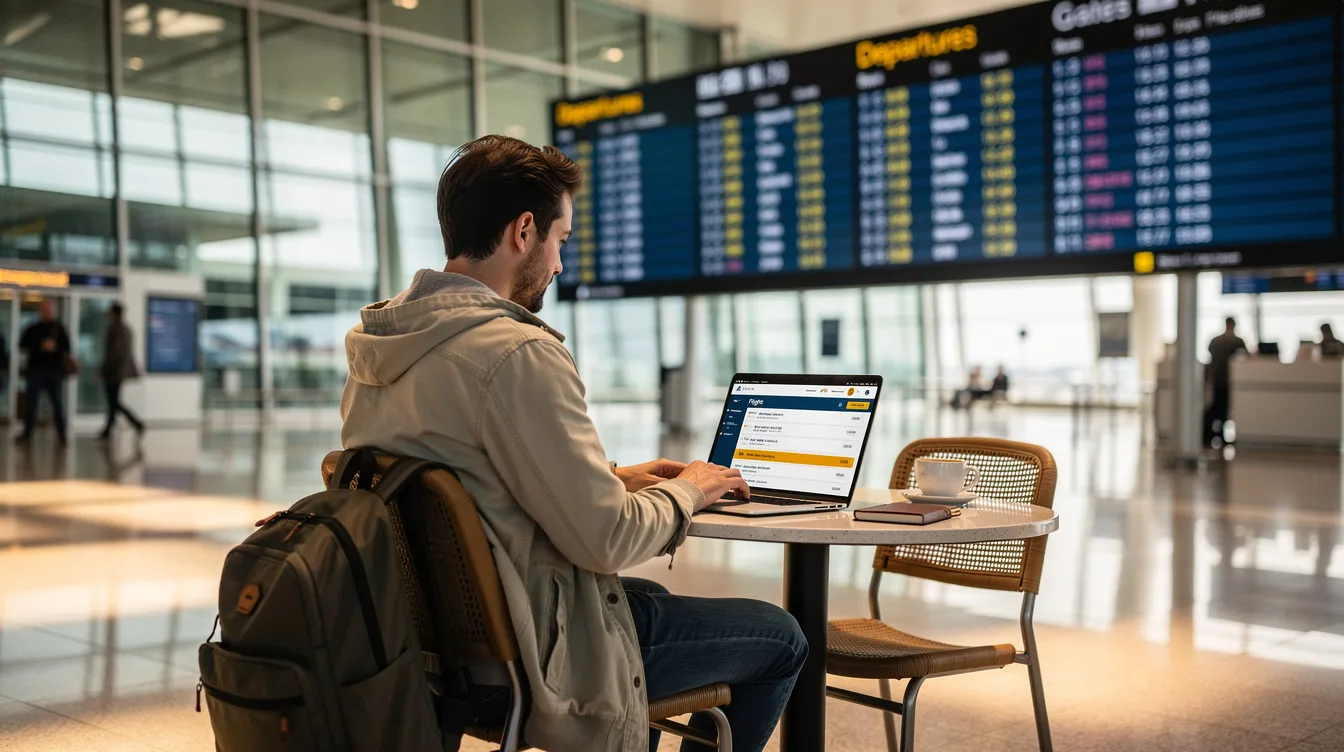
Finding value in private aviation works differently than chasing cheap flights on commercial airlines. The levers are timing, routing, aircraft size, and willingness to use empty legs.
Private jet pricing is based on aircraft type and routing efficiency. Moving from a heavy jet to a light jet or turboprop can cut total cost dramatically on short routes, even if departure time stays the same.
Real-world use case: a family of five flying Toronto–New York for a long weekend may find that a light jet booked through Jettly rivals business class fare totals when commercial prices surge during peak travel dates.
Choosing regional airports with shorter runway requirements, then matching them to smaller aircraft, often reduces both flight price and total door-to-door travel time. Jettly's marketplace allows side-by-side comparison of multiple aircraft categories, helping travellers trade speed, cabin size, baggage capacity, and Wi-Fi availability against cost.
There is no universal sale day, and simple tricks do not unlock secret prices. Rely on data, not folklore. Here are the biggest myths that cause travellers to miss solid fares while waiting for a miracle drop.
Private jet charter prices do not respond to browser tricks either. Transparent online marketplaces like Jettly show live quotes based on real operating costs—what you see is what the flight costs.
In earlier decades, many airlines loaded new fares on Tuesday, creating a brief pattern that became an overstated rule. Modern revenue management systems update prices constantly across all days.
While some datasets occasionally show slightly better averages on certain weekdays, the gaps are usually small and route-dependent. The best way to save is buying within ideal lead-time windows and grabbing a good fare when it appears—not delaying purchase solely to wait for Tuesday afternoon.
Empty leg flights can be 30 to 75% off standard rates, and those discounts are not tied to any particular weekday either.
The common belief is that airlines raise ticket prices when they detect repeat searches. Serious studies have found little evidence that cookies alone drive fare increases. Changes are usually due to inventory updates or other customers booking seats.
Checking fares late at night may coincide with routine system updates, but it does not universally trigger lower prices. Compare across devices and tools if you suspect an anomaly, but do not rely on browsing tricks instead of solid fare-tracking.
Jettly's pricing is transparent and not manipulated based on user search history or time of day.
While occasional last-minute deals exist on lightly booked routes, most commercial ticket prices rise sharply in the last 14 to 21 days before departure. Families and groups with fixed specific dates are especially unlikely to benefit from last-minute hunting.
The main exception is private jet empty leg flights, which can become cheaper closer to departure if the operator has not found a buyer. Empty leg flights can be 30 to 75% cheaper than standard rates. But they come with strict constraints: fixed origin, destination, and departure window.
Use Jettly's tools to watch for empty legs while keeping a backup plan, rather than counting solely on last-minute luck.
These questions address targeted gaps about cheap flights, ticket timing, and private jet booking not fully covered above.
Most airlines open their schedule 330 to 360 days before departure—that is the earliest travellers can buy flights for specific dates. However, booking the moment flights appear rarely produces the cheapest fares. Only the highest fare classes are typically loaded at that point. The typical sweet spot remains 1 to 3 months for domestic and 2 to 8 months for international, depending on route and season. Private jet trips through Jettly can be booked months ahead for complex itineraries or closer to departure when flexibility exists.
Many legacy carriers still price round-trip tickets slightly cheaper than two separate one-way segments, especially on international routes. Low-cost carriers and competitive city pairs may show similar one-way and round-trip pricing, letting travellers mix airlines for the best prices and times. For private jets, cost often favours same-day or tightly grouped round-trip missions because repositioning is minimised. Compare both options and factor in change and cancellation rules as part of total value.
There is no consistent pattern of fares going on sale on calendar milestones like the 1st, 10th, or 15th. Revenue managers adjust prices when demand deviates from forecasts, not because of the date alone. Track prices for your specific dates at least one to two weeks before buying and act when a significant drop appears. Jettly's charter pricing updates based on aircraft schedules, not calendar rituals.
Start monitoring fares as soon as schedules open. Identify a realistic target price band and commit to buying within the recommended advance window rather than waiting for a perfect sale. Book earlier than average for peak school holidays, conferences, or major events. Private jet charter via Jettly can be a strategic alternative for mission-critical trips where missing a connection is more costly than a higher ticket. Jettly's instant-quote tools let travellers compare different aircraft types and airports for the most efficient plan.
Jettly is a digital private jet charter broker offering access to over 20,000 aircraft globally, with transparent, instant pricing instead of opaque sales cycles. The platform lets travellers choose exact departure times, smaller airports closer to home, and aircraft categories that match group size and budget. Empty leg listings on Jettly can deliver substantial savings for flexible travellers, sometimes rivalling last-minute business class ticket prices on popular routes.
Understanding when airfare goes on sale is less about finding a single magic moment and more about knowing the patterns and tools that reveal the best booking windows. For domestic flights, the cheapest time to book generally falls 1 to 3 months before departure, while international trips often require booking 2 to 8 months ahead to secure the best fares. Flying on Tuesdays, Wednesdays, and Saturdays typically offers the lowest prices, and being flexible with dates and airports can unlock additional savings.
Private jet travel through platforms like Jettly operates on different timing rules, with prices based on aircraft type, route efficiency, and availability rather than fixed sale dates. Empty leg flights provide unique last-minute opportunities for significant discounts, often appearing 24 to 72 hours before departure at 30 to 75% off standard charter rates.
By combining awareness of these booking windows, leveraging price alerts, and using flexible search strategies, travellers can avoid common myths and make informed decisions that save both time and money. Jettly’s transparent pricing, instant booking, and extensive aircraft network empower travellers seeking convenience and value in private aviation.
Ready to experience private travel on your terms? Explore flight options or request a quote at https://www.jettly.com.
Share this post:
Jay Franco Serevilla
Oct 31, 2026
|
5
min read
Discover tips and trends in the industry.

5
min read
Aircraft Time: How Flight Time Is Calculated, Planned, and Used in Private Aviation
Understanding aircraft time is essential in private aviation, influencing trip planning, pricing, and safety compliance. Flight time varies by region and is calculated differently, affecting everything from crew scheduling to fuel needs. Platforms like Jettly provide tools to accurately estimate flight time and costs, ensuring a seamless booking experience.
Read More
5
min read
Propeller Planes: How They Work, When to Use Them, and What Matters for Private Charters
Propeller planes, particularly turboprops, are essential for short-haul and remote private flights, offering efficiency and cost savings. They generate thrust through rotating blades, making them versatile for various missions. With the ability to access smaller airports, they provide significant advantages over jets for regional travel.
Read MoreStay updated with our latest insights and tips to elevate your journey with us.
MEMBERSHIPS AND ASSOCIATIONS



Disclaimer: Jettly operates as a charter broker, offering access to a global digital jet charter marketplace. Jettly is not a direct air carrier and does not own or operate aircraft. All advertised flights are conducted by third-party air carriers that are fully licensed and hold the appropriate Part 135 or Part 121 certifications issued by the Federal Aviation Administration (FAA) or equivalent regulatory authorities under U.S. or foreign law. Jettly complies fully with the U.S. Department of Transportation's Part 295 and Part 298 Charter Broker regulations. Jettly does not carry additional liability insurance. Passengers are covered by aircraft operator insurance. TICO: 50023770


