


Login
Get Instant Pricing On 23,000+ Aircraft

>

Traditional fractional programs were designed when aircraft access was scarce, pricing was opaque, and flexibility didn’t exist.
Share this post:
Jay Franco
Jan 13, 2026
|
5
min read
Discover tips and trends in the industry.
5
min read
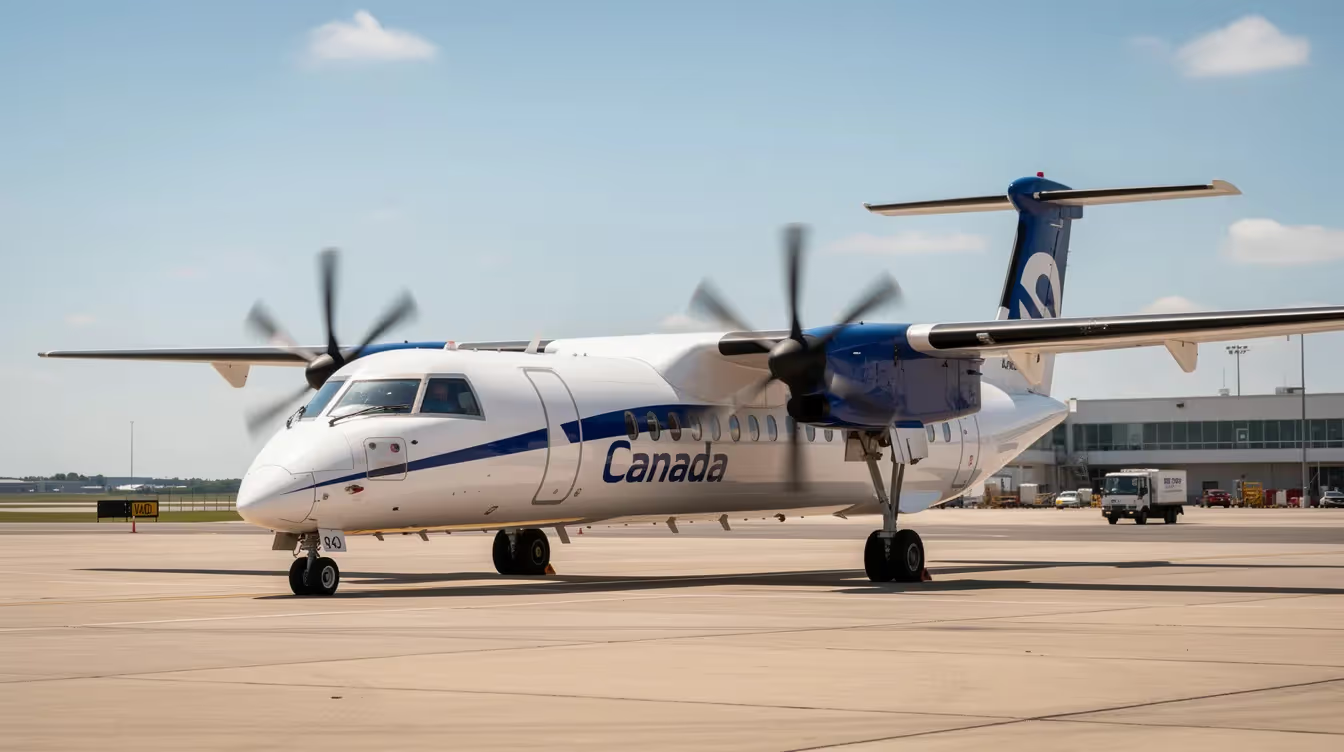
Dash 8-200: Guide to the De Havilland Canada Regional Turboprop
The Dash 8-200 is a twin-engine regional turboprop airliner that seats 37-39 passengers and is designed for short-haul routes, offering improved performance and fuel efficiency compared to its predecessor, the Dash 8-100. With a maximum range of 1,125 nautical miles and the ability to operate from short runways, it is particularly suited for regional airlines and charter operators in remote areas. The aircraft's operational reliability, low operating costs, and flexible cabin configurations make it a popular choice for various missions, including corporate shuttles and emergency transport. Jettly provides charter options for the Dash 8-200, allowing travelers to customize their flight experience with tailored services and competitive pricing.
Read More
5
min read
Powered Sailplane: A Modern Guide to Motor Gliders, Performance and Private Travel
Powered sailplanes, or motor gliders, combine the aerodynamic efficiency of traditional gliders with onboard propulsion systems, allowing for self-launching and extended flights. They are categorized into sustainer, self-launching, and touring motor gliders, each offering unique performance characteristics and operational flexibility. While powered sailplanes excel in sport and recreational aviation, providing pilots with enhanced safety and independence, they are not as practical for time-sensitive travel compared to private jet charters, which offer speed and comfort. As electric and hybrid technologies advance, powered sailplanes are likely to influence broader trends in private aviation toward lower emissions and improved efficiency.
Read MoreStay updated with our latest insights and tips to elevate your journey with us.
MEMBERSHIPS AND ASSOCIATIONS



Disclaimer: Jettly operates as a charter broker, offering access to a global digital jet charter marketplace. Jettly is not a direct air carrier and does not own or operate aircraft. All advertised flights are conducted by third-party air carriers that are fully licensed and hold the appropriate Part 135 or Part 121 certifications issued by the Federal Aviation Administration (FAA) or equivalent regulatory authorities under U.S. or foreign law. Jettly complies fully with the U.S. Department of Transportation's Part 295 and Part 298 Charter Broker regulations. Jettly does not carry additional liability insurance. Passengers are covered by aircraft operator insurance. TICO: 50023770


