



Login
Get Instant Pricing On 23,000+ Aircraft

>
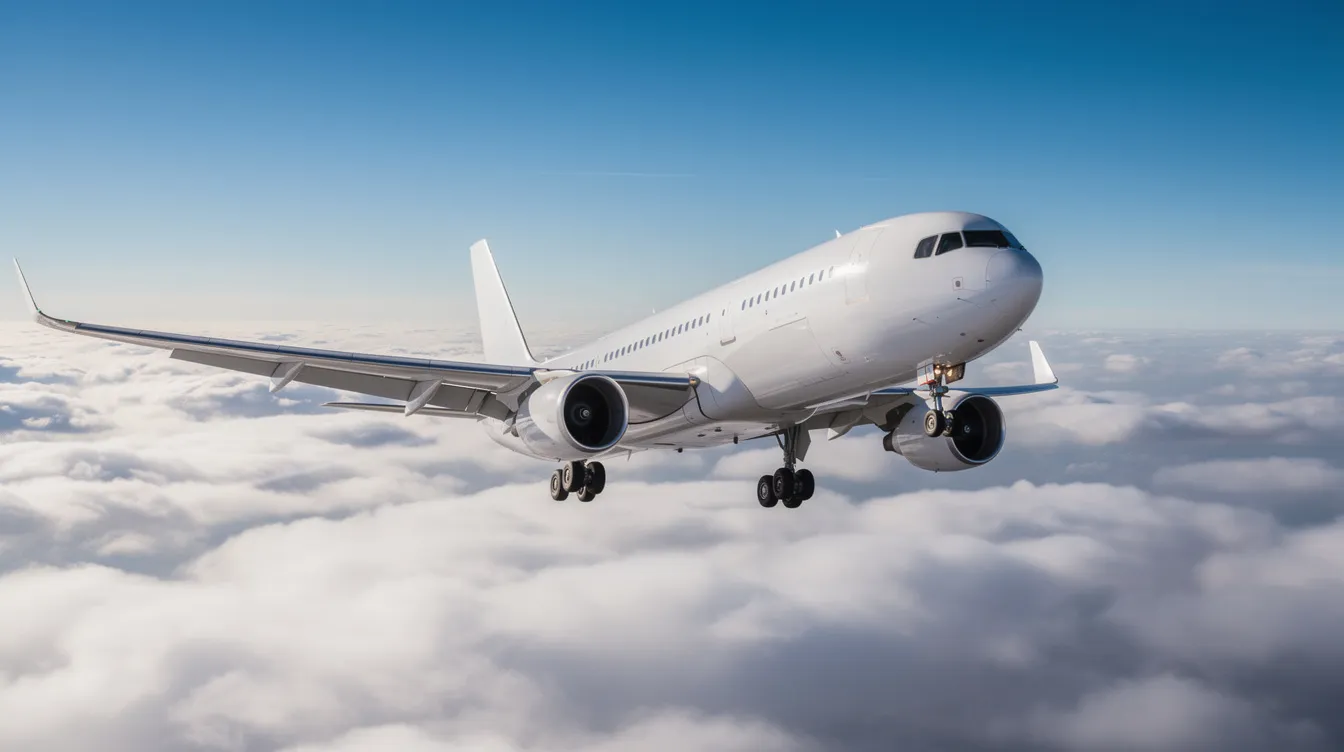
Widebody airliners carry the bulk of the world's long-haul passengers. These twin-aisle aircraft seat between 200 and 850 people per flight, connect cities across oceans, and hold enough belly cargo to supply entire regions. Whether you fly economy class on a Boeing 787 Dreamliner to Tokyo or sit in a first-class suite on an Airbus A380 to Dubai, the plane under you is almost certainly a widebody. This guide covers what makes these aircraft distinct, which models dominate today's skies, how cabin design affects passenger comfort, and where private jet charter fits into the picture, complementing resources on top private jet charter companies and options.
Two passenger aisles and a fuselage 20–25 feet wide, seating 7–10 passengers per row; built for medium- to long-haul transcontinental and intercontinental routes.
Classic four-engine jets like the Boeing 747 and Airbus A380 are being replaced by fuel-efficient twinjets: Boeing 777, Boeing 787 Dreamliner, Airbus A330, and Airbus A350 now handle most long-haul flights.
Widebodies are central to global airline networks (e.g., Emirates, British Airways); private charter platforms like Jettly use smaller jets but often connect travelers to and from these commercial flights.
Modern widebody design emphasizes fuel efficiency, passenger comfort, and reduced environmental impact through composite materials and advanced engines.
Travelers can combine commercial widebody flights with private jet charter connections via Jettly for time-saving, door-to-door itineraries.
A widebody airliner, also called a twin-aisle aircraft, has a fuselage wide enough to support two aisles and typically seats 7 to 10 passengers per row. The wider fuselage usually measures 5 to 6 meters (roughly 20 to 25 feet) in external diameter, giving airlines room for multi-class configurations including first class and premium economy.
Wide-body aircraft can carry 200 to 850 passengers depending on layout. At the low end, the Boeing 767 seats around 200 in three-class service. At the high end, the Airbus A380 can exceed 850 in a hypothetical all-economy setup. Here is what defines these planes:
Two aisles per cabin, allowing faster boarding and easier movement during flight
Seating from 7-abreast (on smaller widebodies like the 767) to 10 or 11-abreast on the A380's main deck
Designed primarily for long-haul routes such as London to New York, Dubai to Sydney, or Los Angeles to Singapore
Deployed on dense short-haul sectors in some markets; several Asian and European carriers use widebodies on 2- to 4-hour flights where demand justifies the capacity
Cabin layouts vary by airline. A single aircraft type might carry 250 passengers in a three-class layout for one carrier and 400 in a two-class high-density layout for another. For a broader look at how aircraft are grouped, Jettly's guide on aircraft classification covers categories from turboprops to heavy jets, while its insights on finding the best cross-country plane for your travel journey explain how different aircraft types match specific mission profiles.
In contrast, a narrow-body aircraft has a single aisle and seats 4 to 6 abreast. Aircraft like the Boeing 737 and Airbus A320 handle shorter flights and thinner routes where a widebody's capacity would be excessive.
The widebody era began with a single aircraft. The Boeing 747 made its maiden flight in 1969 and entered commercial service with Pan Am in January 1970. It was the world's largest passenger airliner at the time and redefined international travel by making mass long-haul flying economically viable.
Through the 1970s and 1980s, other manufacturers followed:
McDonnell Douglas DC-10 (1971) and Lockheed L-1011 TriStar (1972) introduced three-engine widebody designs for transcontinental and transatlantic missions.
Airbus A300 entered service in 1974 as the first twin-engine widebody, proving that two large engines could handle medium-haul routes.
Boeing 767 arrived in 1982 and became the first twin-engine jet certified for ETOPS in 1985, opening transatlantic routes to twinjets for the first time.
The Airbus A340 was a pioneer of long-haul flying with four engines and held records for the longest commercial flights. But the economic case for quadjets weakened as engine technology improved. In-flight shutdown rates dropped so low that regulators extended ETOPS approvals from 90 minutes to 120, then 180, and eventually 330 minutes for types like the Boeing 777 and Airbus A350.
This regulatory shift made twin-engine wide-body aircraft capable of flying virtually any route a quadjet could, at lower fuel consumption and maintenance cost. Unlike other wide-body aircraft optimized around twin-engine efficiency, the Airbus A380 (first delivered in 2007) and Boeing 747-8 represented the peak of very large jumbo jet production, but airlines increasingly favored flexible twins. Airbus ended A380 production in 2021. Boeing delivered its last 747 in January 2023, closing a 54-year production run of 1,574 aircraft.
These two planes define the jumbo jet era. Both carry four engines, seat hundreds of passengers, and became symbols of long-haul international travel.
The Boeing 747 earned its "Queen of the Skies" nickname for good reason. Its distinctive upper deck hump, four engines, and sheer size made it instantly recognizable for over five decades. Key milestones and variants:
747-100/200: Original models that launched the jumbo era. Pan Am operated the first commercial flight in January 1970.
747-400: Introduced canted winglets and a glass cockpit, reducing fuel burn and extending range. This variant became the backbone of long-haul fleets worldwide through the 1990s and 2000s.
747-8I and 747-8F: Stretched fuselage, modern GEnx engines, and improved wings. The freighter version remains in cargo service with operators like Atlas Air and UPS.
The 747 also serves as the platform for Air Force One and has also carried heads of state around the world in VIP and special-mission roles. Its combination of range, capacity, and cargo volume kept it relevant for decades, even as twins overtook it in passenger service.
The Airbus A380 is the world's largest commercial passenger aircraft. It is the only full-length double-deck twin-aisle airliner, with an upper deck running the entire length of the fuselage. Singapore Airlines operated the first commercial A380 flight in October 2007.
In typical three-class layouts, the A380 seats around 500 to 600 passengers. Emirates, with 116 A380s in its fleet, remains the dominant operator. Other airlines such as British Airways, Qantas, Singapore Airlines, and Lufthansa continue to fly the type on trunk routes like London to Dubai, Sydney to Singapore, and Paris to New York.
As of early 2026, approximately 189 A380s remained in existence, with about 159 actively flying. Several airlines reactivated stored A380s post-pandemic to meet demand on high-capacity haul routes. Qantas plans retirements from 2028; Lufthansa around 2030.
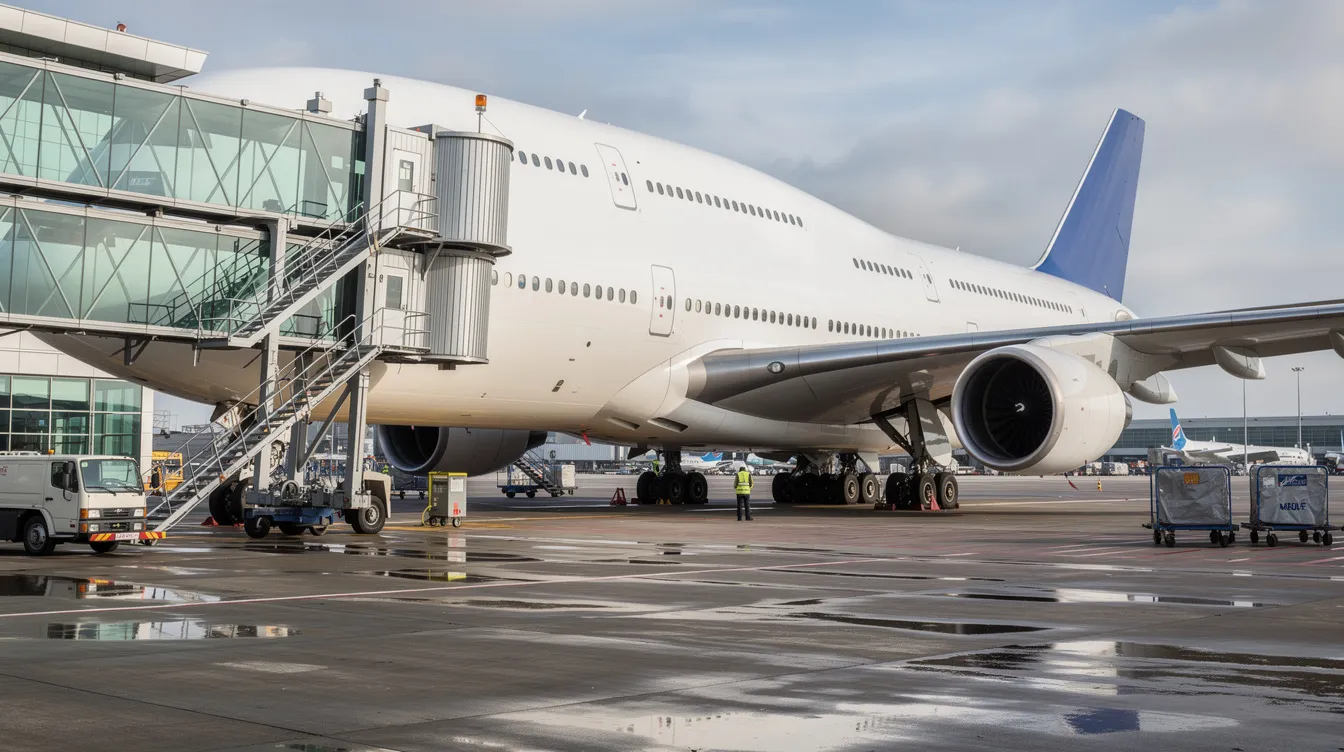
Most widebody aircraft flying today are single-deck twins. They serve everything from 5-hour transatlantic hops to 18-hour ultra-long-haul missions.
One of the smallest wide-body aircraft still in regular use. The 767 pioneered twin-engine transatlantic operations after its 1985 ETOPS certification. Most passenger examples have been retired or converted. Cargo variants (767-300F) remain common with freight operators like FedEx and Amazon Air.
The Boeing 777 has over 2,000 orders, the most in history for a widebody. The 777-300ER is a backbone of many airlines' long-haul fleets, powered by GE90 engines. The 777-300ER has the world's most powerful commercial jet engine, the GE90-115B, with a fan diameter of 128 inches. The 777-200LR holds the record for the longest-range twin.
The upcoming 777X introduces folding wingtips (to fit existing gates) and GE9X engines with an even larger fan diameter, targeting the capacity segment where older quadjets once dominated. Widebody aircraft enable airlines to serve high-demand routes effectively with larger passenger volumes, and the 777 family exemplifies this.
The Airbus A330 is a versatile medium-to-long haul workhorse. Economy class typically uses a 2-4-2 layout. The A330neo (new engine option) upgrades the original with Rolls-Royce Trent 7000 engines and the Airspace cabin, reducing fuel consumption per seat by about 14% compared to the CEO variant. Airlines operate the A330 on routes ranging from shorter flights within Asia to transatlantic sectors.
These represent the newest generation of popular wide-body aircraft, built with composite materials for lower weight and better fuel efficiency.
|
Feature |
Boeing 787 Dreamliner |
Airbus A350 |
|---|---|---|
|
Typical seating (3-class) |
240–330 |
300–410 |
|
Range |
6,330–7,565 nm |
7,400–9,700 nm |
|
Fuselage width (external) |
~5.77 m |
~5.96 m |
|
Engine options |
GEnx-1B or Trent 1000 |
Trent XWB |
|
Composite airframe |
~50% by weight |
~53% by weight |
The Boeing 787 Dreamliner features large windows and a quiet cabin, with cabin pressure maintained at a lower equivalent altitude than older jets. The Airbus A350 has lower cabin pressure at 6,000 feet (versus ~8,000 feet on older types), reducing fatigue on long-haul flights. Singapore Airlines uses the A350-900ULR on its Singapore to New York route, covering roughly 9,500 nautical miles nonstop.
While most passenger airlines now favor newer models, several classic widebody types remain active in cargo, charter, and government roles.
Airbus A300 and A310: These early twinjets pioneered the European widebody market. Passenger service has ended for most operators, but freighter conversions fly with cargo carriers.
McDonnell Douglas DC-10/MD-11: Both trijets served as important widebody airliners through the 1980s and 1990s. The MD-11 remains in freighter service with FedEx and UPS, carrying large numbers of packages daily.
Lockheed L-1011 TriStar: Now fully retired from commercial service, the TriStar was known for its advanced autopilot systems and quiet cabin. A small number survive in preservation.
Ilyushin Il-96: This rare Russian four-engine widebody sees limited use, mostly for government flights. Few aviation enthusiasts will spot one outside Russia.
Understanding these types matters for cargo charter clients and spotters. Some heavy jet charter operations interact with widebody freighter logistics when coordinating outsized or time-sensitive cargo shipments, and a broader view of charter airlines and private aviation services helps put these operations in industry context.
Twin aisle cabins allow airlines to separate traffic flows, speed up meal service, and offer varied seating classes on the same flight. Widebodies can offer multi-class configurations including first class and premium economy, giving passengers a range of price and comfort options.
Seat layout depends on fuselage width:
Airbus A330: 2-4-2 (eight abreast), giving most passengers an aisle or window
Boeing 777: 3-3-3 or 3-4-3 (nine or ten abreast), depending on airline
Boeing 787 and Airbus A350: 3-3-3 (nine abreast) is standard, though some carriers squeeze in 3-3-3 with narrower seats
The Airbus A350 is considered the quietest twin-aisle aircraft, a tangible benefit on flights exceeding 10 hours.
Business class on widebodies typically features lie-flat seats in staggered or herringbone layouts. Some airlines add privacy doors.
First class exists on select widebodies; Emirates' A380 suites include fully enclosed rooms with showers.
For more on premium flying, see Jettly's guide to luxury first class flights and its perspective as a NetJets alternative for flexible private flying.
Widebodies often feature larger overhead bins and increased cabin comfort compared to older aircraft. For private travelers, dedicated services like Jettly Eats in-flight catering for private jets further enhance the onboard experience. New-generation planes add:
LED mood lighting that adjusts with time zones
Higher humidity levels (reducing dry skin and fatigue)
Cabin pressure equivalent to 6,000 feet altitude on the A350 and 787, versus ~8,000 feet on older jets
Large windows on the 787 with electrochromic dimming instead of plastic shades
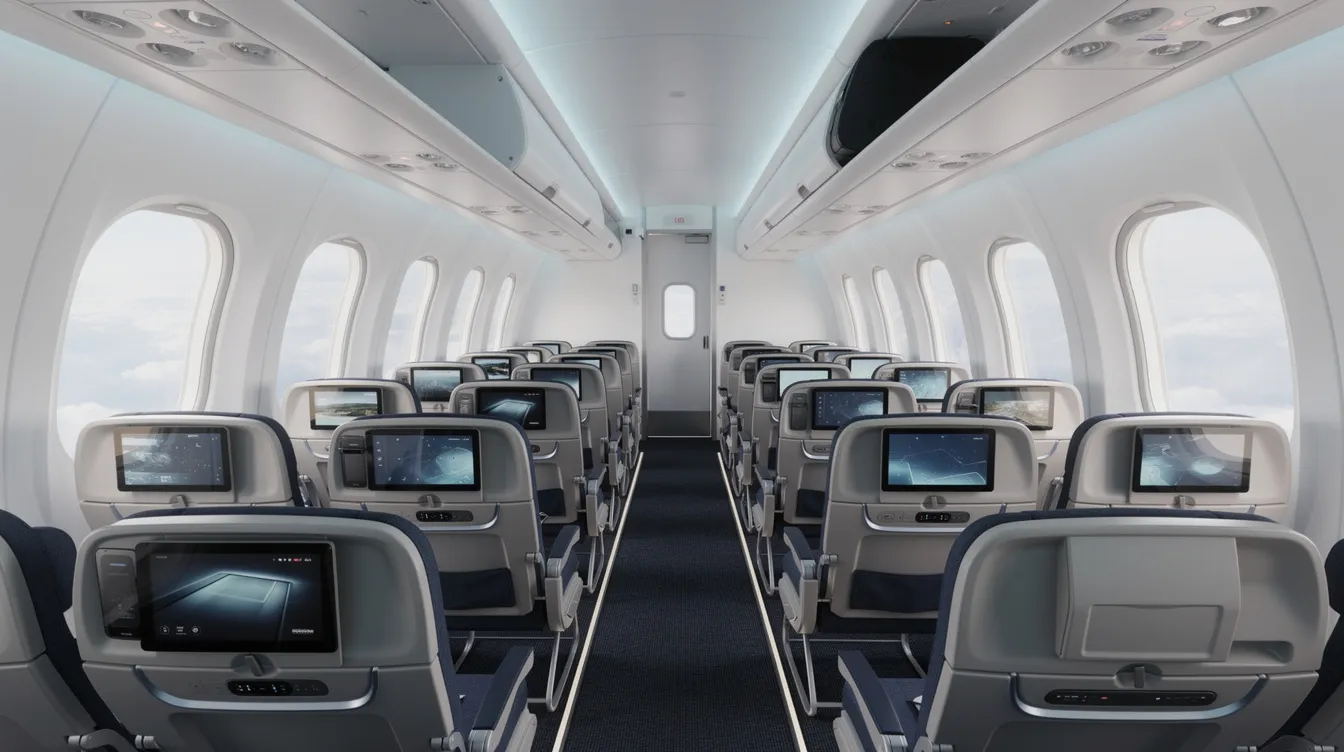
Widebody aircraft are commonly used for long-haul international flights. Their range, cruise speed, and payload capacity determine which routes they serve.
Most current widebody aircraft cruise between Mach 0.84 and 0.89. The longest-range variants can cover over 9,000 nautical miles nonstop, connecting city pairs that would have required refueling stops a generation ago, while dedicated private charter aircraft fill similar long-range roles for smaller groups.
ETOPS regulations made this possible. By certifying twin-engine aircraft for 330-minute diversion times, regulators allowed the Boeing 777, Boeing 787, Airbus A330, and Airbus A350 to fly polar, Pacific, and Indian Ocean routes without needing the redundancy of four engines.
Singapore–New York: A350-900ULR (~9,500 nm)
London–Sydney (via stopover): A380, 787-9 (~9,200 nm per leg)
Dubai–Auckland: 777-200LR (~7,700 nm)
New York–Tokyo: 777-300ER, 787-9 (~5,800 nm)
Widebodies have substantial under-floor cargo spaces for freight and baggage.
Cargo capability in widebody airliners can accommodate standard LD3 freight containers, making belly freight a meaningful revenue source.
Dedicated freighter variants (747-8F, 777F, converted 767s and A330s) carry the world's time-sensitive goods: electronics, pharmaceuticals, perishables, and e-commerce shipments.
The large mass and wingspan of widebodies create operational requirements that differ from smaller aircraft. Air traffic control applies specific separation rules based on wake turbulence categories.
ICAO categories: Most large widebodies fall into the "heavy" category. The Airbus A380 is classified as "super," the only commercial aircraft with that designation.
Separation: ATC increases spacing behind heavy and super aircraft on approach and departure. A light aircraft following an A380 may need 8 nautical miles of separation to avoid dangerous wake vortices.
Call sign suffixes: In many airspaces, pilots of heavy and super widebody aircraft include the suffix in radio calls (e.g., "Speedbird 26 Heavy") so controllers and other pilots know what's ahead.
Airport compatibility adds another layer. The A380 requires Code F gates (wingspan up to 80 meters), reinforced taxiways, and dual jet bridges for upper and lower deck boarding. Runway length at maximum takeoff weight can exceed 3,000 meters for the largest types, which is one reason travelers may weigh shared charter flights versus full charters when choosing how to access busy hubs.
Hundreds of airlines operate twin-aisle fleets, but a small number of large network carriers hold the majority of active widebody aircraft. At the same time, regional hubs such as Atlanta private jet charter services connect seamlessly with these long-haul networks for bespoke travel.
Emirates runs a widebody-only fleet: 116 A380s, 127 Boeing 777s, and 29 A350-900s. British Airways mixes Boeing 777s, Airbus A350s, and Boeing 787 Dreamliners across its long-haul network.
Key trends shaping widebody fleets:
Shift from quadjets to twinjets: Airlines are retiring four-engine planes and replacing them with A350s and 787s. Operating widebody aircraft with four engines generally incurs higher total operational costs than running twinjets on the same routes.
Environmental pressure: New-generation aircraft burn less fuel per seat. The A350 and 787 reduce CO₂ per passenger-kilometer by roughly 20-25% compared to the aircraft they replace.
Post-COVID recovery: Many widebodies were stored during 2020-2021. Demand on trunk routes brought A380s back into service at Emirates, British Airways, and Singapore Airlines.
Narrowbody competition: Modern long-range narrowbody jets like the Airbus A321XLR can operate previously widebody-dominated routes, particularly on thinner transatlantic city pairs.
Next-generation models: The Boeing 777X targets the space between today's 777-300ER and retired 747s, offering quadjet capacity with twin-engine efficiency.
Jettly's core inventory covers private aircraft from light jets to intercontinental private jets, with flexible private jet memberships for frequent flyers. Most clients do not need a widebody for their private flights. But many travelers combine widebody airline services with private charter legs.
Typical use cases:
A business traveler flies intercontinental in a premium cabin on a Boeing 787 Dreamliner or Airbus A350, then uses Jettly to charter a private jet for the final 90-minute segment to a smaller regional airport, using a private jet charter cost estimator to budget the trip in advance.
A family lands at a major hub after a long haul flight and boards a private aircraft to reach a resort destination without an overnight layover, potentially leveraging discounted empty leg flights when schedules align.
A corporate group coordinates private legs around fixed widebody schedules, avoiding irregular connections at congested hubs, and may opt for crowdsourced and shared charter flights to control costs on certain routes.
Jettly's digital platform provides instant pricing and access to over 20,000 aircraft worldwide, letting clients plan around scheduled long-haul widebody services operated by major airlines and use tools like its jet card flight cost estimator to compare program options.
A widebody has two aisles and a wider fuselage that typically seats 7 to 10 people per row. A narrowbody aircraft has a single aisle and about 4 to 6 seats per row. Wide-body aircraft serve long-haul or high-demand medium-haul routes. Narrowbodies handle short to medium-haul flights, with popular models like the Boeing 737-800 narrowbody, though newer variants such as the A321XLR are beginning to overlap on some traditionally widebody routes.
The Boeing 777 family, Boeing 787 Dreamliner, Airbus A330 (including the A330neo), and Airbus A350 account for the vast majority of intercontinental widebody flights. The Airbus A380 and remaining Boeing 747s appear on a smaller set of flagship routes for carriers like Emirates and British Airways, while major international gateways such as Kolkata private jet charter services link regional travelers into these long-haul networks.
Safety standards are equally strict for all commercial airliners regardless of size. Both widebody and narrowbody jets must meet the same certification and maintenance requirements set by EASA, the FAA, and other regulators. Widebodies often carry additional redundancy and advanced avionics suited to their long-haul missions, but overall safety depends on airline operations, crew training, and regulatory oversight rather than fuselage width.
Most private charters use business jets and smaller aircraft. On some routes and for large groups (corporate events, sports teams, incentive travel), Jettly can connect clients with larger airliners through its global operator network. Availability, minimum usage requirements, and costs for chartering a widebody are much higher than for typical private jets, making this option most relevant for specialized group travel or structured jet card programs.
On a per-seat basis, modern widebodies like the Airbus A350 and Boeing 787 are among the most fuel-efficient aircraft in service, particularly at high load factors on long routes. Absolute emissions remain substantial because these planes carry many passengers over thousands of miles. Airlines and charter platforms increasingly pursue carbon offsetting, sustainable aviation fuel, and efficient routing to reduce impact.
Widebody airliners are essential to modern long-haul aviation, providing the capacity, range, and comfort needed for global travel. Iconic models like the Boeing 747 and Airbus A380 defined the jumbo jet era, while newer twin-engine aircraft such as the Boeing 777, 787 Dreamliner, Airbus A330, and A350 lead today’s fleets with improved fuel efficiency and passenger experience. These twin-aisle aircraft enable airlines to serve high-demand international routes effectively, balancing operational costs and environmental considerations.
For travelers seeking flexibility and convenience, platforms like Jettly offer seamless integration of private jet charters with commercial widebody flights, enhancing door-to-door travel options. Whether for business or leisure, understanding widebody airliners helps passengers appreciate the technology and logistics behind their long-haul journeys.
Ready to experience private travel on your terms? Explore flight options or request a quote at https://www.jettly.com.
Share this post:
Jay Franco Serevilla
Oct 20, 2026
|
5
min read
Discover tips and trends in the industry.
5
min read
Private Jet NYC to Vegas: Charter Guide, Costs & Best Jets
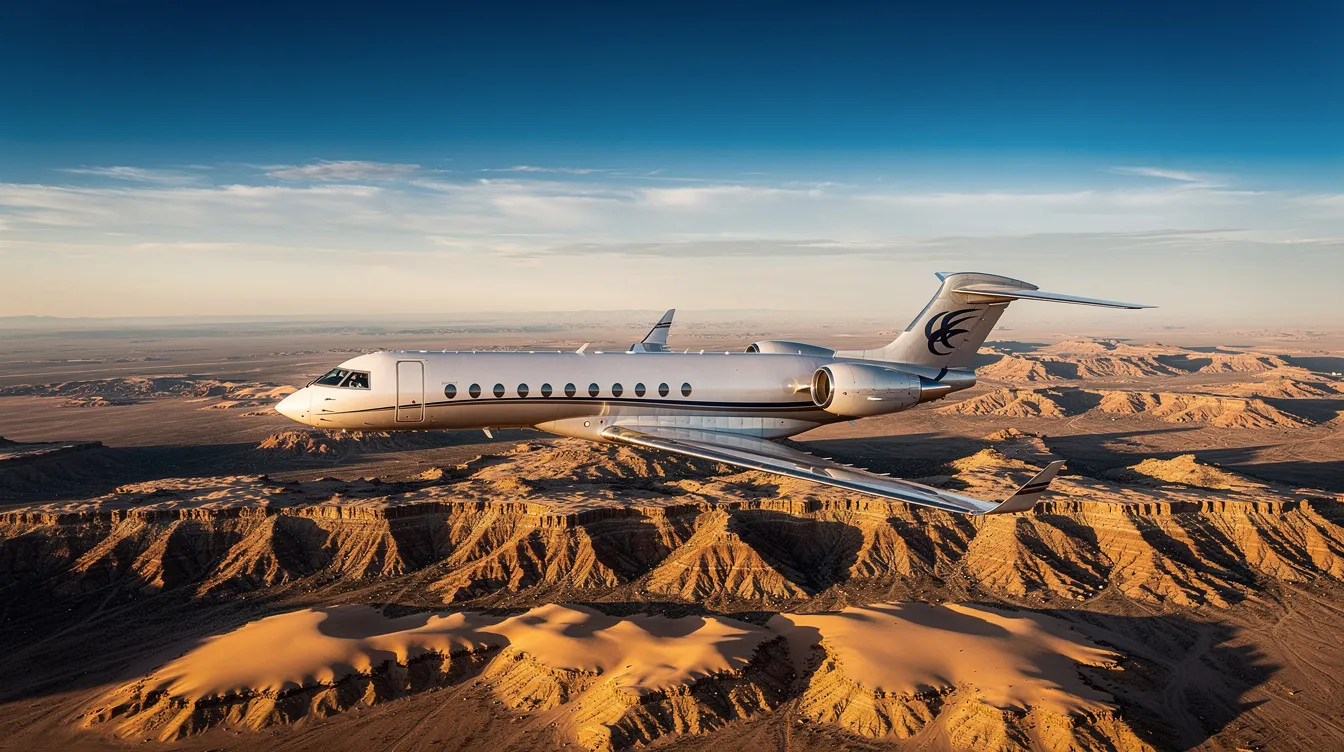
Chartering a private jet from NYC to Vegas offers unmatched convenience and comfort, with flight times of 5 to 6 hours. Prices range from $28,000 to $70,000, depending on the aircraft type and travel dates. Jettly provides a marketplace with over 20,000 aircraft, ensuring travelers can find the perfect jet for their needs.
Read More
5
min read
Boeing 737-700 Safety: What Passengers and Private Charter Flyers Should Know
The Boeing 737-700 boasts a strong safety record since its introduction in 1998, distinct from the 737 MAX series. Governed by the FAA and other global regulators, its safety is maintained through rigorous inspections and operator compliance. Passengers can trust the 737-700 for both commercial and private charters, as it lacks the controversial MCAS system found in the MAX models.
Read MoreStay updated with our latest insights and tips to elevate your journey with us.
MEMBERSHIPS AND ASSOCIATIONS



Disclaimer: Jettly operates as a charter broker, offering access to a global digital jet charter marketplace. Jettly is not a direct air carrier and does not own or operate aircraft. All advertised flights are conducted by third-party air carriers that are fully licensed and hold the appropriate Part 135 or Part 121 certifications issued by the Federal Aviation Administration (FAA) or equivalent regulatory authorities under U.S. or foreign law. Jettly complies fully with the U.S. Department of Transportation's Part 295 and Part 298 Charter Broker regulations. Jettly does not carry additional liability insurance. Passengers are covered by aircraft operator insurance. TICO: 50023770


