


Login
Get Instant Pricing On 23,000+ Aircraft

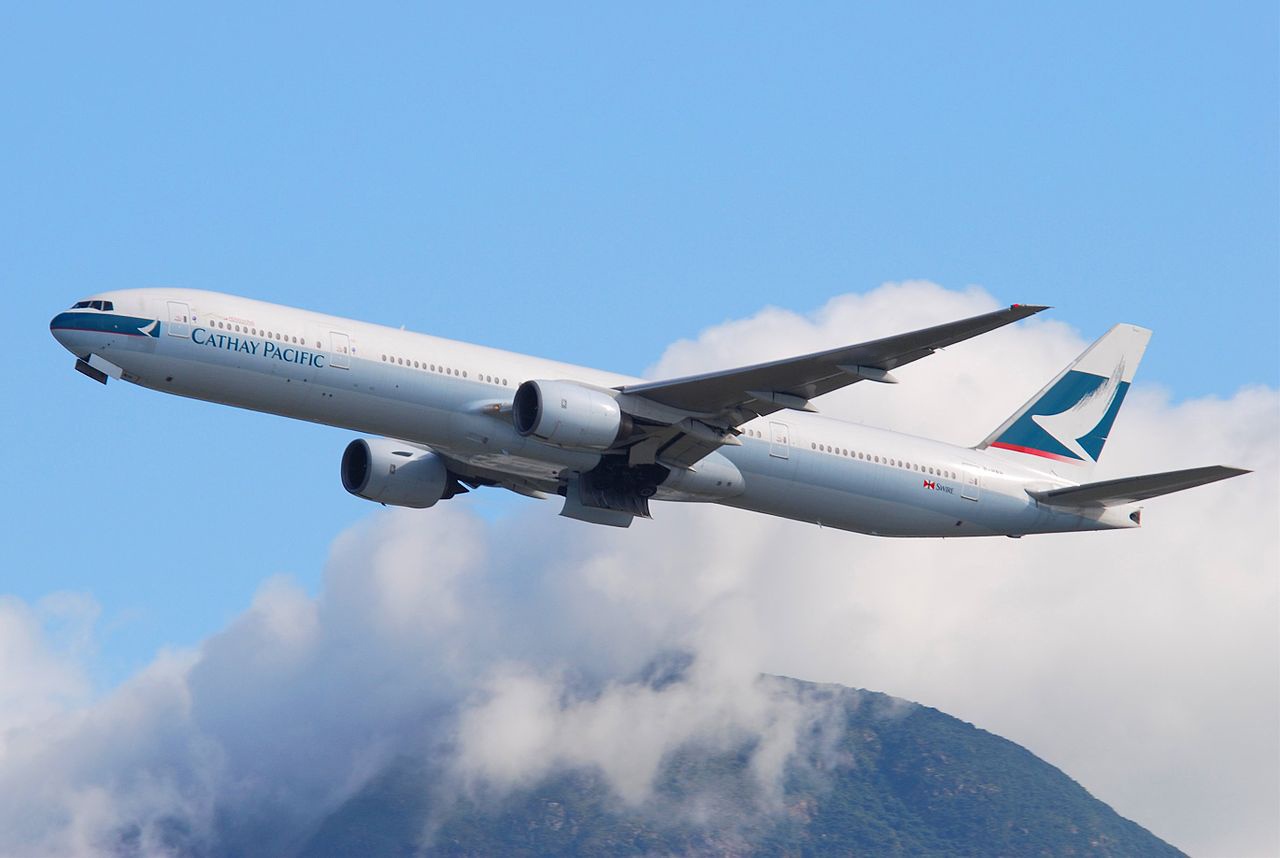

Aircraft class:
Cargo
Passenger capacity:
Crew:
2 pilots, loadmaster
Range:
High-speed cruise:
Long-range cruise:
Service ceiling:
Engines:
Two GE90-115B turbofans
Thrust:
Takeoff distance:
Landing distance:
Average fuel burn:
Baggage capacity:
First delivered:
Late 1990s
The figures below summarize the performance and dimensions that matter most when you are matching an aircraft to a trip. They reflect typical configurations; exact numbers vary with weight, weather, and how a given aircraft is equipped.
With a maximum range exceeding 11,000 miles, the Boeing 777-300 is engineered for nonstop intercontinental missions, connecting major cargo hubs such as Hong Kong and New York, London and Sydney, or Dubai and Los Angeles with ease. | Its high cruise speed of 490 knots ensures rapid delivery cycles, while the wide-body configuration accommodates vast payloads—making it the preferred choice for urgent or heavy-lift freight. The aircraft’s robust landing gear and advanced wing design enable it to operate efficiently from a variety of international airports, even with full cargo loads. | For logistics clients, this translates into fewer stops, seamless global coverage, and minimized transfer times—delivering your freight where it matters most, precisely when it’s needed.
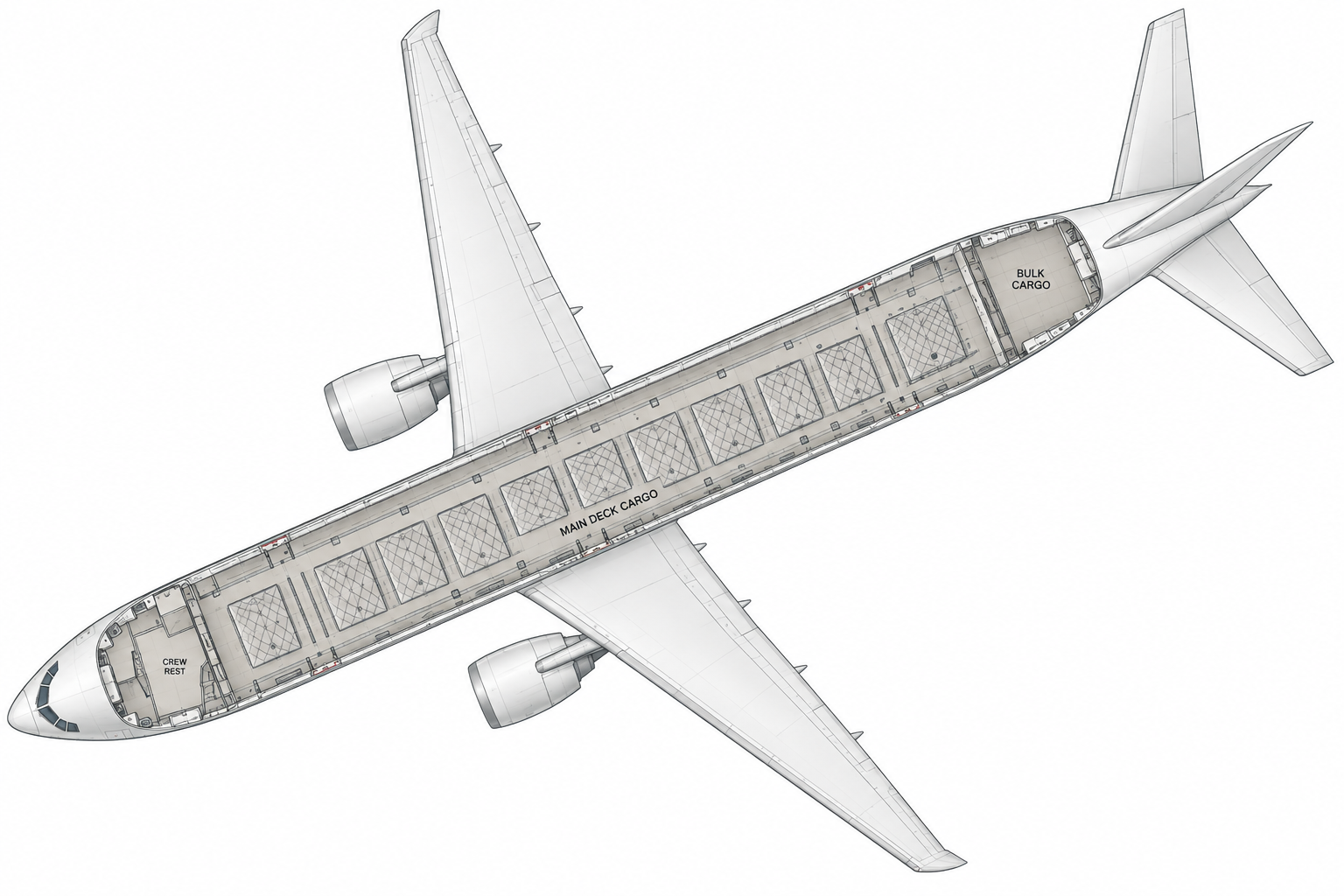
The Boeing 777-300’s cargo hold is designed for maximum efficiency and adaptability, featuring a spacious, unobstructed main deck that accommodates containers, pallets, or irregularly shaped freight with ease. | Temperature-controlled zones, reinforced flooring, and advanced loading systems ensure secure transport of delicate, valuable, or perishable goods. The aircraft is engineered for rapid loading and unloading, minimizing ground time and maximizing turnaround for urgent shipments. | While this model is dedicated to cargo, onboard amenities for crew include a modern rest area and advanced avionics suite, supporting long-duration flights and complex logistics missions in comfort and safety.


.avif)
.avif)
.avif)
.avif)
.avif)
While the Boeing 777-300 excels at ultra-long-haul missions, its scale and operating costs make it less suited for short regional routes or lightly loaded trips, where smaller freighters offer greater efficiency. For large-scale, global operations where time, reliability, and capacity are paramount, the 777-300 is the premier solution.
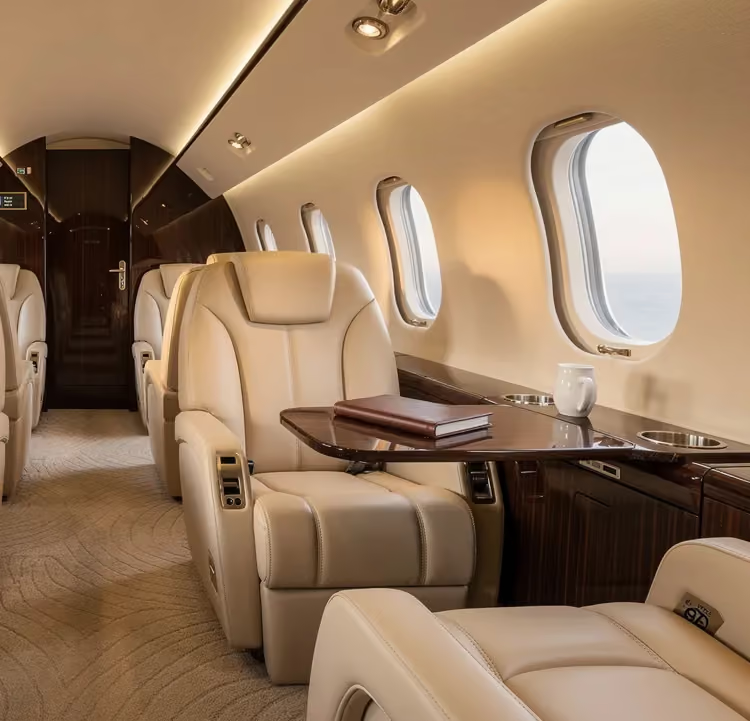

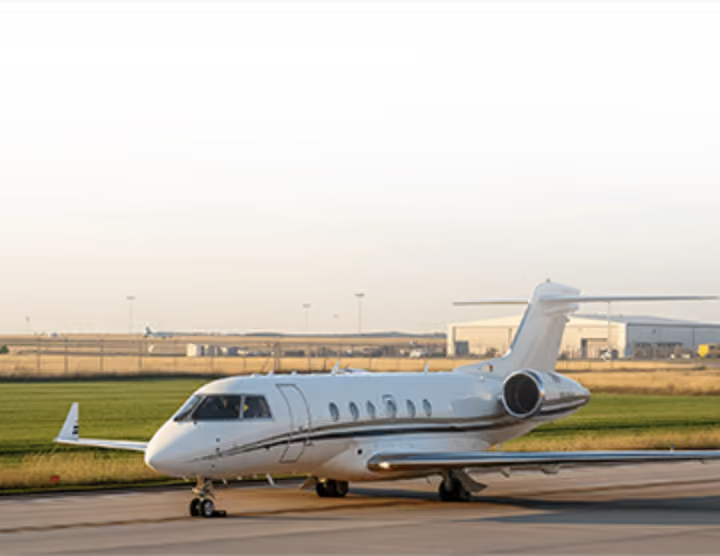

The Boeing 777-300 is dedicated to cargo operations and does not have a traditional passenger cabin—its entire interior is optimized for freight, accommodating a vast range of container types and oversized shipments.
Yes. The 777-300’s main deck offers a clear, wide cargo hold with reinforced flooring and advanced environmental controls, ensuring secure, temperature-stable transport for even the most sensitive or valuable goods.
Absolutely. The range and payload capacity of the 777-300 allow for direct, nonstop cargo flights between most major global cities, minimizing the need for intermediate stops and maximizing efficiency for urgent shipments.
MEMBERSHIPS AND ASSOCIATIONS



Disclaimer: Jettly operates as a charter broker, offering access to a global digital jet charter marketplace. Jettly is not a direct air carrier and does not own or operate aircraft. All advertised flights are conducted by third-party air carriers that are fully licensed and hold the appropriate Part 135 or Part 121 certifications issued by the Federal Aviation Administration (FAA) or equivalent regulatory authorities under U.S. or foreign law. Jettly complies fully with the U.S. Department of Transportation's Part 295 and Part 298 Charter Broker regulations. Jettly does not carry additional liability insurance. Passengers are covered by aircraft operator insurance. TICO: 50023770


